
Posted on 12/07/2025 5:27:43 AM PST by fidelis
Second Sunday of Advent
“I am baptizing you with water, for repentance, but the one who is coming after me is mightier than I. I am not worthy to carry his sandals. He will baptize you with the Holy Spirit and fire. His winnowing fan is in his hand. He will clear his threshing floor and gather his wheat into his barn, but the chaff he will burn with unquenchable fire.” Matthew 3:11–12
This passage comes just before Jesus is baptized and begins His public ministry. John the Baptist had been ministering in the desert of Judea, preaching, “Repent, for the kingdom of heaven is at hand!” Many came to him to be baptized with a baptism of repentance. But when John saw many scribes and Pharisees coming to him, he said, “You brood of vipers! Who warned you to flee from the coming wrath? Produce good fruit as evidence of your repentance.” The passage above is John’s warning to them—and to us—about what will happen if we fail to repent.
At that time, when wheat was harvested, it was left to dry. Then, a winnowing fan was used to blow the wheat and chaff into the air. The lighter chaff would blow away, while the grains of wheat would fall to the ground to be gathered, milled into flour, and used for baking. John uses this familiar image to depict what Jesus will do with the righteous and the wicked. The righteous are like the grains of wheat that will be gathered and brought to Heaven. The wicked are like the chaff that, once separated from the righteous, will burn in the unquenchable fire of hell.
Though it is comforting to speak of the glories of Heaven and to anticipate being brought there by our Lord, it is necessary to also consider the reality of the unquenchable fires of hell. Pondering the reality of those unquenchable fires is something we should not neglect.
In his spiritual classic, The Spiritual Exercises, Saint Ignatius of Loyola presents a format for a thirty-day directed silent retreat, considered by many to be the ideal retreat experience. During the first week of that retreat, the retreatant focuses primarily upon mortal sin and its consequences—the unquenchable fires of hell. Why would Saint Ignatius begin his retreat this way? Because he understood that the foundation of our growth in union with God is repentance, and repentance requires an honest and thorough examination of sin and its consequences.
Reflect today on the unquenchable fires of hell, and allow yourself to foster a burning desire to flee from every sin that leads to that end. As we enter the second week of the penitential season of Advent, ponder this warning from Saint John the Baptist. Hear him speak those words directly to you. We must fear sin and avoid it, as much as we want to avoid the unquenchable fires of hell. Start with this foundational truth, so that having fostered deep repentance, you are ready to turn your heart and mind toward the glorious promise of Heaven.
Jesus, our Just Judge, You hold the winnowing fan in Your sacred hand and separate the righteous from the sinner. Please grant me the grace to see my sin clearly, so that I may humbly acknowledge it and turn from it with all my might. May I build this foundation of repentance during Advent, so that Christmas becomes an even greater time of union with You. Jesus, I trust in You.
Please keep in mind that this is a Catholic Caucus/Devotional thread for the purpose of prayerful reflection on the Sacred Scriptures and is closed to debate of any kind. Per FR policy on Religion Caucus threads, off-topic, argumentative, and abusive comments are not allowed and will be submitted to the Mods for deletion. Thanks, and God bless you.
The Month of December is Dedicated to the Immaculate Conception

“ In the sixth month the angel Gabriel was sent from God to a city of Galilee named Nazareth, to a virgin betrothed to a man whose name was Joseph, of the house of David; and the virgin’s name was Mary. And he came to her and said, “Hail, full of grace, the Lord is with you!”” (Luke 1:26-28)

Pope Leo XIV’s prayer intentions for the month of December, 2025:
For Christians in areas of conflict
Let us pray that Christians living in areas of war or conflict, especially in the Middle East, might be seeds of peace, reconciliation, and hope.

First Reading
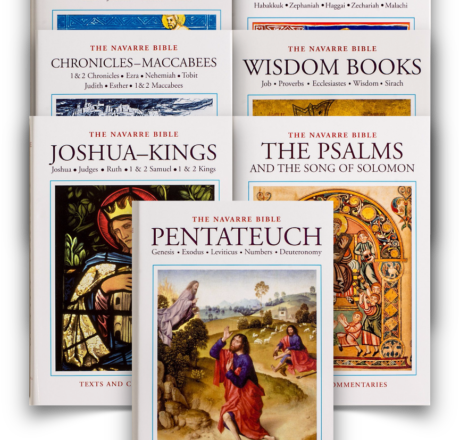
From: Isaiah 11:1-10
The New Descendant of David
---------------------------
[1] There shall come forth a shoot from the stump of Jesse, and a branch shall grow out of his roots. [2] And the Spirit of the Lord shall rest upon him, the spirit of wisdom and understanding, the spirit of counsel and might, the spirit of knowledge and the fear of the Lord. [3] And his delight shall be in the fear of the Lord. He shall not judge by what his eyes see, or decide by what his ears hear; [4] but with righteousness he shall judge the poor, and decide with equity for the meek of the earth; and he shall smite the earth with the rod of his mouth, and with the breath of his lips he shall slay the wicked. [5] Righteousness shall be the girdle of his waist, and faithfulness the girdle of his loins. [6] The wolf shall dwell with the lamb, and the leopard shall lie down with the kid, and the calf and the lion and the failing together, and a little child shall lead them. [7] The cow and the bear shall feed; their young shall lie down together; and the lion shall eat straw like the ox. [8] The sucking child shall play over the hole of the asp, and the weaned child shall put his hand on the adders den. [9] They shall not hurt or destroy in all my holy mountain; for the earth shall be full of the knowledge of the Lord as the waters cover the sea.
The Return of the Exiles
------------------------
[10] In that day the root of Jesse shall stand as an ensign to the peoples; him shall the nations seek, and his dwellings shall be glorious.
***********************************************************************
Commentary:
11:1-9. This passage, which is regarded as the third Immanuel oracle, has two parts to it. The first (vv.1-5) announces that the shoot will spring from the stump of Jesse (David's father) at some future date. The second (vv. 6-9) describes the good things associated with his reign, using imagery to do with messianic peace: creation will be restored to its state of original justice.
The first part is a formal announcement of the accession of a new king in the line of David--humble, because he comes from a tree that has been pruned yet has all the vitality of a tender shoot. It refers to a future king (“there shall come ...”) and not the reigning monarch. The new king will be endowed with exceptional qualities that equip him to rule, thanks to the Holy Spirit who will descend upon him. The divine Spirit is an inner strength, a gift that God gives to key figures in salvation history to enable them to accomplish a difficult and dangerous mission--Moses (cf. Num 11:17), the judges (cf. 3:10; 6:34) and David (1 Sam 16:13). The new descendent of David will rule over the people not in a heavy-handed way like the kings of the time, but with a charismatic dynamism that comes from God. Six gifts of the Spirit are mentioned, in pairs--wisdom and understanding, referring to the skill and prudence that ensure that he will judge rightly; counsel and fortitude, the characteristics of an astute strategist like David; knowledge and the fear of the Lord, which have to do with the religious sphere, for the king must not forget that he is God’s representative.
The second part describes very beautifully the messianic peace that will flower with this new “shoot”. It paints a panorama of the harmony that reigned at the dawn of creation, only to be broken by sin. Even among wild beasts violence will disappear. No longer will man in his pride desire to be “like God, knowing good and evil”(Gen 3:5); instead he will be filled with the divine gift of the “knowledge of the Lord” (v. 9). The “child”, mentioned twice (vv. 6, 8) is not directly connected with the child-king of the oracle found in 9:6 or with the Immanuel (7:14); however, in the mind of the prophet they must have had many points of contact, given the reference to the child having a leadership role (v. 6).
The image of the “shoot” from the royal line who will bring peace has been interpreted in Christian tradition as finding fulfillment in Jesus Christ. St Thomas Aquinas read this passage as referring to Christ, who brought about the restoration of mankind; he points out: “First, the birth of Christ the ‘restorer’, is spoken of (v. 1); then, his holiness (vv. 2-9) and his dignity (v. 10) are described” ("Expositio Super lsaiam", 11). And John Paul II comments: “Alluding to the coming of a mysterious personage, which the New Testament revelation will identify with Jesus, Isaiah connects his person and mission with a particular action of the Spirit of God--the Spirit of the Lord. These are the words of the prophet ‘There shall come forth a shoot from the stump of Jesse, and a branch shall grow out of his roots. And "the Spirit of the Lord shall rest upon him", the spirit of wisdom and understanding, the spirit of counsel and might, the spirit of knowledge and the fear of the Lord. And his delight shall be the fear of the Lord’ (Is 11:1-3). This text is important for the whole pneumatology of the Old Testament, because it constitutes a kind of bridge between the ancient biblical concept of ‘spirit,’ understood primarily as a 'charismatic breath of wind’, and the ‘Spirit’ as a person and as a gift, a gift for the person. The Messiah of the lineage of David (‘from the stump of Jesse’) is precisely that person upon whom the Spirit of the Lord ‘shall rest’. It is obvious that in this case one cannot yet speak of a revelation of the Paraclete. However, with this veiled reference to the figure of the future Messiah there begins, so to speak, the path towards the full revelation of the Holy Spirit in the unity of the Trinitarian mystery, a mystery which will finally be manifested in the New Covenant” ("Dominum Et Vivificantem", 15).
A Christian reading of these words finds in them a reference to the action of the Holy Spirit in souls; the “spirits” that repose in the Messiah; are stable “gifts” through which the Holy Spirit acts. There are six of these gifts, according to the Hebrew text (which the New Vulgate and the RSV follow). The Greek translation of the Septuagint and the Vulgate divide the gift of fear into two--piety and fear of the Lord. That is why catechesis and theology speak of there being seven gifts: “The seven 'gifts' of the Holy Spirit are wisdom, understanding, counsel, fortitude, knowledge, piety and fear of the Lord. They belong in their fullness to Christ, Son of David (cf. Is 11:1-2). They complete and perfect the virtues of those who receive them. They make the faithful docile in readily obeying divine inspirations?” ("Catechism of the Catholic Church", 1831).
-------------------------
Second Reading
From: Romans 15:4-9
The Example of Christ (Continuation)
-----------------------------------------------------
[4] For whatever was written in former days was written for our instruction, that by steadfastness and by the encouragement of the scriptures we might have hope. [5] May the God of steadfastness and encouragement grant you to live in such harmony with one another, in accord with Christ Jesus, [6] that together you may with one voice glorify the God and Father of our Lord Jesus Christ.
[7] Welcome one another, therefore, as Christ has welcomed you, for the glory of God. [8] For I tell you that Christ became a servant to the circumcised to show God's truthfulness, in order to confirm the promises given to the patriarchs, [9] and in order that the Gentiles might glorify God for his mercy. As it is written, "Therefore I will praise thee among the Gentiles, and sing to thy name".
***********************************************************************
Commentary:
4. The excellence of Scripture and its sacred character derive from the fact that God is its author. This means that there is a consistency and unity running right through Sacred Scripture, a coherence which integrates both Testaments, Old and New: The Old Testament contains—prophetically and by way of prefigurement—what happens in the New; and in the New the prophecy and prefigurement of the Old are fulfilled. Since Scripture is the word of God, it is of the highest order: "All scripture is inspired by God and profitable for teaching, for reproof, for correction, and for training in righteousness, that the man of God may be complete, equipped for every good work" (2 Tim 3:16). This strength and authority of Scripture is useful not only for instruction in the faith but also for enlivening our hope and consoling us in every kind of trial, interior and exterior: the examples which we find in Scripture encourage us to be patient and also spur us on to fight. By reflecting on those examples we become convinced that if God asks sacrifice of "his own", he does so because he has a greater reward in store for them.
These truths led the Second Vatican Council to teach that in "the sacred books the Father who is in heaven comes lovingly to meet his children, and talks with them. And such is the force and power of the word of God that it can serve the Church as her support and vigor, and the children of the Church as strength for their faith, food for the soul, and a pure and lasting fount of spiritual life" ("Dei Verbum", 21).
8-13. "It was necessary that the word of God should be spoken first to you. Since you thrust it from you, and judge yourselves unworthy of eternal life, behold, we turn to the Gentiles. For so the Lord has commanded us" (Acts 13:46-47): this is what Paul and Barnabas said to Jews who opposed their preaching. Christ himself said that he had been sent only to seek out the lost sheep of the house of Israel, and that was the scope of the Apostles' first mission (cf. Mt 15:24; 10:5). However, God's plans never discriminated in favor of the Jews: they, once converted, were to preach the Good News to the Gentiles. After the Resurrection, Jesus sent his disciples to all nations (cf. Mt 28:18ff). Those who proclaimed the Gospel were Jews who had accepted Christ, and they addressed their preaching first to Jews and then to Gentiles.
This present passage refers to the fulfillment of God's designs through Christ. By becoming man God made good his promises to the Jews, kept faith with them. By the entry of the Gentiles into the Church his mercy towards all men is revealed, for his blessings are thereby extended to those who do not belong to Israel according to the flesh. Our Lord explained this very graphically in the parable of the two sons (Mt 21 :28- 32). He first calls the older son (the Gentiles), who refuses to obey him and afterwards repents and accepts his father's invitation and goes to work in the vineyard. The younger son (most of the Jewish people), on the other hand, seems to be ready to do his father's bidding but in fact does not. Many Jews were so hard of heart that not even the repentance and conversion of the Gentiles moved them to repent.
--------------------------
Gospel Reading
From: Matthew 3:1-12
The Preaching of John the Baptist
-------------------------------------------------
[1] ln those days came John the Baptist, preaching in the wilderness of Judea, [2] "Repent, for the kingdom of heaven is at hand." [3] For this is he who was spoken of by the prophet Isaiah when he said, "The voice of one crying in the wilderness: Prepare the way of the Lord, make his paths straight."
[4] Now John wore a garment of camel's hair, and a leather girdle around his waist; and his food was locusts and wild honey. [5] Then went out to him Jerusalem and all Judea and all the region about the Jordan, [6] and they were baptized by him in the river Jordan, confessing their sins.
[7] But when he saw many of the Pharisees and Sadducees coming for baptism, he said to them, "You brood of vipers! Who warned you to flee from the wrath to come? [8] Bear fruit that befits repentance, [9] and do not presume to say to yourselves, 'We have Abraham as our father'—for I tell you, God is able from these stones to raise up children to Abraham.' [10] Even now the axe is laid to the root of the trees; every tree therefore that does not bear good fruit is cut down and thrown into the fire.
[11] I baptize you with water for repentance, but he who is coming after me is mightier than I, whose sandals I am not worthy to carry; he will baptize you with the Holy Spirit and with fire. [12] His winnowing fork is in his hand, and he will clear his threshing floor and gather his wheat into the granary, but the chaff he will burn with unquenchable fire."
***********************************************************************
Commentary:
1. The expression "in those days" does not specify the exact time of the event in question. It is sometimes used merely as an opening phrase to mark the beginning of a new episode. In this case, in fact, it can be calculated that some twenty-five years have elapsed since the Holy Family's return from Egypt. This is only an estimate, because the exact date of their return has not been established.
On the date of the start of John the Baptist's preaching, see Luke 3:1-3. The word "wilderness" has a wider meaning here than we give it today. It does not refer to a sandy or rocky desert, but rather to arid regions, low in vegetation.
2. "Repent": Christ's redeeming work ushers in a new era in the Kingdom of God. This brings such advance in salvation history, that what is required from now on is a radical change in man's behavior towards God. The coming of the Kingdom means that God has intervened in a special way to save mankind, but it also implies that we must be open to God's grace and reform our ways. Christ's life on earth compels people to take a stand--either for God or against him ("He who is not with me is against me, and he who does not gather with me scatters": Lk 11:23). Given man's sinful state after original sin, the newly-arrived Kingdom requires that all men repent of their past life. To put it another way, they have to stop going away from God and instead try to get closer to him. Since sin hinders this conversion, it is impossible to turn back to God without performing acts of penance. Conversion is not simply a question of making a good resolution to mend our ways; we have to fulfill that resolution, even if we find it difficult. Penance grows only where there is humility--and everyone should admit sincerely that he is a sinner (cf. 1 Jn 1 :8-10). Obedience also goes hand in hand with penance; everyone ought to obey God and keep his commandments (cf. 1 Jn 2:3-6).
The literal translation of the Greek is "Repent". But precisely because the very essence of conversion consists in doing penance, as we have said, the New Vulgate has "paenitentiam agite" ("do penance"). This translation conveys the deeper meaning of the text.
Man's whole life, in fact, consists in constantly correcting his behavior, and therefore implies a continual doing of penance. This turning back to God was preached continually by the prophets in the Old Testament. Now, however, with the coming of Christ, this penance and turning to God are absolutely essential. That Christ took on our sins and suffered for us does not excuse us from making a true conversion; on the contrary, it demands it of us (cf. Col 1:24).
"Kingdom of heaven": this expression is identical to "Kingdom of God". The former is the one most used by St Matthew, and is more in line with the Jewish turn of phrase. Out of reverence, the Jews avoided pronouncing the name of God and substituted other words for it, as in this case. "Kingdom of God" or "Kingdom of heaven" was a concept used already in the Old Testament and in religious circles at the time of Christ. But it occurs particularly frequently in Jesus' preaching.
The phrase "Kingdom of God" can refer in a general way to God's dominion over creatures; but normally, as in this text, it refers to God's sovereign and merciful involvement in the life of his people. Man's rebellion and sin broke the order originally established in creation. To re-establish it, God's intervention was needed again; this consisted in the redeeming work of Christ, Messiah and Son of God. It was preceded by a series of preliminary stages in salvation history throughout the Old Testament.
Consequently, the Kingdom of God, announced as imminent by John the Baptist, is brought into being by Jesus. However, this is an entirely spiritual one and does not have the nationalistic dimension expected by Jesus' contemporaries. He comes to save his people and all mankind from the slavery of sin, from death and from the devil, thereby opening up the way of salvation.
In the period between the first and second comings of Christ, this Kingdom of God (or Kingdom of heaven) is, in fact, the Church. The Church makes Christ (and therefore also God) present among all peoples and calls them to eternal salvation. The Kingdom of God will be brought to completion only at the end of this world, that is, when our Lord comes to judge the living and the dead at the end of time. Then God will reign over the blessed in a perfect way.
In the passage we are considering, John the Baptist, the last of the Old Testament prophets, preaches the imminence of the Kingdom of God, ushered in by the coming of the Messiah.
3. By quoting Isaiah 40:3, St Matthew makes it clear that St John the Baptist has a mission as a prophet. This mission has two purposes--first, to prepare the people to receive the Kingdom of God; second, to testify before the people that Jesus is the Messiah who is bringing that Kingdom.
4. The Gospel gives a brief outline of the extremely austere life of St John the Baptist. His style of life is in line with that of certain Old Testament prophets and is particularly reminiscent of Elijah (cf. 2 Kings 1:8; 2:8-13ff.). The kind of food and dress described are of the most rudimentary for the region in question. The locust was a kind of grasshopper; the wild honey probably refers to substances excreted by certain local shrubs rather than to bees' honey. In view of the imminent coming of the Messiah, John underlines, with his example, the attitude of penance preceding great religious festivals (similarly, in its Advent liturgy the Church puts John before us as a model and invites us to practice mortification and penance). In this way, the point made in the previous verse (concerning John's view of his mission as precursor of Christ) is fulfilled. A Christian's entire life is a preparation for his meeting with Christ. Consequently, mortification and penance play a significant part in his life.
6. John's baptism did not have the power to cleanse the soul from sin as Christian Baptism does. The latter is a sacrament, a sign, which produces the grace it signifies. Concerning the value of John's baptism, see the note on Mt 3:11.
7. St John reproaches the Pharisees and Sadducees for their attitude towards him. His preaching and baptism are not simply one more purification rite. Rather, they demand a true interior conversion of the soul, as a necessary predisposition to reach the grace of faith in Jesus. In the light of this explanation, we can understand why the prophetic words of St John the Baptist were so hard-hitting; as it turned out, most of these people did not accept Jesus as the Messiah.
"Pharisees": these constituted the most important religious group in Jesus'' time. They kept the Law of Moses rigorously and also the oral traditions which had built up around it. They gave as much importance to these latter, indeed, as to the Law itself. They strongly opposed the influence of Greek paganism and totally rejected the homage paid to the Roman emperor. Among them there were men of great spiritual eminence and sincere piety; but there were many others who exaggerated pharisaical religiosity to the extreme of fanaticism, pride and hypocrisy. It was this perversion of the true Israelite religion that John the Baptist (and later our Lord) castigated.
"Sadducees": The Sadducees constituted a smaller religious group than the Pharisees, but they included many influential people, most of them from the main priestly families. They accepted the written Law, but, unlike the Pharisees, they rejected oral tradition. They also rejected certain important truths, such as the resurrection of the dead. On the political front, they went along easily with the terms dictated by the Romans, and they acquiesced in the introduction of pagan customs into the country Their opposition to Christ was even more pronounced than that of the Pharisees.
9-10. St John the Baptist's listeners believe their salvation is assured because they are descendants of Abraham according to the flesh. But St John " warns them that to pass God's judgment it is not enough to belong to the chosen people; they must also yield the good fruit of a holy life. If they fail to do this, they will be thrown into the fire, that is, into hell, the eternal punishment, because they did not do penance for their sins. See the note on Mt 25:46.
11. St John the Baptist did not limit himself to preaching penance and repentance; he encouraged people to receive his baptism. This baptism was a way of interiorly preparing them and helping them to realize that the coming of Christ was imminent. By his words of encouragement and by their humble recognition of their sins, they were prepared to receive Christ's grace through Baptism with fire and the Holy Spirit. To put it another way, John's baptism did not produce justification, whereas Christian Baptism is the sacrament of initiation which forgives sin and bestows sanctifying grace. The effectiveness of the sacrament of Christian Baptism is expressed in Catholic teaching when it says that the sacrament gives grace "ex opera operato". This means that grace is given by virtue of Christ who acts through the sacrament, and not by virtue of the merits of either the minister or the recipient of the sacrament. "When Peter baptizes, it is Christ who baptizes [...]. When Judas baptizes, it is Christ who baptizes" (St Augustine, "ln loann. Evang.", 6).
The word "fire" points in a metaphorical way to the effectiveness of the Holy Spirit's action in totally wiping out sins. It also shows the life-giving power of grace in the person baptized.
Foremost among the personal qualities of St John the Baptist is his remarkable humility; he resolutely rejects the temptation of accepting the dignity of Messiah which the crowds apparently wanted to bestow on him. Carrying the sandals of one's master was a job for the lowest of servants.
12. Verses 10 and 12 refer to judgment by the Messiah. This judgment has two parts: the first occurs throughout each man's life and ends in the Particular Judgment immediately after death; the second occurs at the time of the Last Judgment. Christ is the judge in both instances. Let us remember the words of St Peter in Acts 10:42: "And he commanded us to preach to the people, and to testify that he [Jesus] is the one ordained by God to be judge of the living and the dead." The judgment will give to each person the reward or punishment merited by his good or bad actions.
It is worth noting that the word "chaff' does not refer only to bad deeds; it refers also to useless ones, for example, lives lacking in service to God and men. God will judge us, therefore, for our omissions and our lost opportunities.
"Don't let your life be barren. Be useful. Make yourself felt. Shine forth with the torch of your faith and your love. With your apostolic life, wipe out the trail of filth and slime left by the unclean sowers of hatred. And set aflame all the ways of the earth with the fire of Christ that you bear in your heart" (St J. Escriva, "The Way", 1).
Disclaimer: Opinions posted on Free Republic are those of the individual posters and do not necessarily represent the opinion of Free Republic or its management. All materials posted herein are protected by copyright law and the exemption for fair use of copyrighted works.



