Free Republic
Browse · Search
Religion
Topics · Post Article

Skip to comments.

Catholic Caucus: Daily Mass Readings 5-December-2025
Universalis/Jerusalem Bible ^

Posted on 12/05/2025 6:11:10 AM PST by annalex

5 December 2025

Friday of the 1st week of Advent


Tomb of Saint Sabbas, Mar Saba, the West Bank

Readings at Mass

Liturgical Colour: Violet. Year: A(II).


First readingIsaiah 29:17-24

In a very short time, the deaf will hear and the eyes of the blind will see

The Lord says this:
In a short time, a very short time,
shall not Lebanon become fertile land
and fertile land turn into forest?
The deaf, that day,
will hear the words of a book
and, after shadow and darkness,
the eyes of the blind will see.
But the lowly will rejoice in the Lord even more
and the poorest exult in the Holy One of Israel;
for tyrants shall be no more, and scoffers vanish,
and all be destroyed who are disposed to do evil:
those who gossip to incriminate others,
those who try at the gate to trip the arbitrator
and get the upright man’s case dismissed for groundless reasons.
Therefore the Lord speaks,
the God of the House of Jacob,
Abraham’s redeemer:
No longer shall Jacob be ashamed,
no more shall his face grow pale,
for he shall see what my hands have done in his midst,
he shall hold my name holy.
They will hallow the Holy One of Jacob,
stand in awe of the God of Israel.
Erring spirits will learn wisdom
and murmurers accept instruction.


Responsorial Psalm
Psalm 26(27):1,4,13-14
The Lord is my light and my help.
The Lord is my light and my help;
  whom shall I fear?
The Lord is the stronghold of my life;
  before whom shall I shrink?
The Lord is my light and my help.
There is one thing I ask of the Lord,
  for this I long,
to live in the house of the Lord,
  all the days of my life,
to savour the sweetness of the Lord,
  to behold his temple.
The Lord is my light and my help.
I am sure I shall see the Lord’s goodness
  in the land of the living.
Hope in him, hold firm and take heart.
  Hope in the Lord!
The Lord is my light and my help.

Gospel Acclamationcf.Is45:8
Alleluia, alleluia!
Send victory like a dew, you heavens,
  and let the clouds rain it down.
Let the earth open and bring forth the saviour.
Alleluia!
Or:
Alleluia, alleluia!
Behold, our Lord will come with power
and will enlighten the eyes of his servants.
Alleluia!

GospelMatthew 9:27-31

'Take care that no-one learns about this'

As Jesus went on his way two blind men followed him shouting, ‘Take pity on us, Son of David.’ And when Jesus reached the house the blind men came up with him and he said to them, ‘Do you believe I can do this?’ They said, ‘Sir, we do.’ Then he touched their eyes saying, ‘Your faith deserves it, so let this be done for you.’ And their sight returned. Then Jesus sternly warned them, ‘Take care that no one learns about this.’ But when they had gone, they talked about him all over the countryside.

You can also view this page with the New Testament in Greek and English.

Universalis podcast: The week ahead – from 7 to 13 December

More Isaiah. Rejoicing. Joy and pleasure and the true meaning of Christmas. Church liturgy and family liturgy. The story of the flaming Christmas pudding. How the Gospels this week explain Isaiah. The Immaculate Conception. Our Lady of Guadalupe and Saint Juan Diego Cuauhtlatoatzin. (23 minutes)
Episode notes.Play

Christian Art

Illustration

Each day, The Christian Art website gives a picture and reflection on the Gospel of the day.

The readings on this page are from the Jerusalem Bible, which is used at Mass in most of the English-speaking world. The New American Bible readings, which are used at Mass in the United States, are available in the Universalis apps, programs and downloads.

You can also view this page with the Gospel in Greek and English.


TOPICS: Catholic; General Discusssion; Prayer; Worship
KEYWORDS: catholic; mt9; ordinarytime; prayer
For your reading, reflection, faith-sharing, comments, questions, discussion.

1 posted on 12/05/2025 6:11:10 AM PST by annalex
[ Post Reply | Private Reply | View Replies]

To: All

KEYWORDS: catholic; mt9; ordinarytime; prayer;


2 posted on 12/05/2025 6:11:41 AM PST by annalex (fear them not)
[ Post Reply | Private Reply | To 1 | View Replies]

To: nickcarraway; NYer; ELS; Pyro7480; livius; ArrogantBustard; Catholicguy; RobbyS; marshmallow; ...


Alleluia Ping

Please FReepmail me to get on/off the Alleluia Ping List.


3 posted on 12/05/2025 6:15:33 AM PST by annalex (fear them not)
[ Post Reply | Private Reply | To 1 | View Replies]

To: annalex
Chris Robinson: My Dad [our Jim Robinson] Passed Away Peacefully Monday Night (October 27th) In Our Home.
Jim still needs our prayers. Thread 2
Prayer thread for Salvation's recovery
Pray for Ukraine
Prayer thread for Fidelis' recovery
Update on Jim Robinson's health issues
4 posted on 12/05/2025 6:16:07 AM PST by annalex (fear them not)
[ Post Reply | Private Reply | To 3 | View Replies]

To: annalex
Matthew
 English: Douay-RheimsLatin: Vulgata ClementinaGreek NT: Byzantine/Majority Text (2000)
 Matthew 9
27And as Jesus passed from thence, there followed him two blind men crying out and saying, Have mercy on us, O Son of David. Et transeunte inde Jesu, secuti sunt eum duo cæci, clamantes, et dicentes : Miserere nostri, fili David.και παραγοντι εκειθεν τω ιησου ηκολουθησαν αυτω δυο τυφλοι κραζοντες και λεγοντες ελεησον ημας υιε δαυιδ
28And when he was come to the house, the blind men came to him. And Jesus saith to them, Do you believe, that I can do this unto you? They say to him, Yea, Lord. Cum autem venisset domum, accesserunt ad eum cæci. Et dicit eis Jesus : Creditis quia hoc possum facere vobis ? Dicunt ei : Utique, Domine.ελθοντι δε εις την οικιαν προσηλθον αυτω οι τυφλοι και λεγει αυτοις ο ιησους πιστευετε οτι δυναμαι τουτο ποιησαι λεγουσιν αυτω ναι κυριε
29Then he touched their eyes, saying, According to your faith, be it done unto you. Tunc tetigit oculos eorum, dicens : Secundum fidem vestram, fiat vobis.τοτε ηψατο των οφθαλμων αυτων λεγων κατα την πιστιν υμων γενηθητω υμιν
30And their eyes were opened, and Jesus strictly charged them, saying, See that no man know this. Et aperti sunt oculi eorum : et comminatus est illis Jesus, dicens : Videte ne quis sciat.και ανεωχθησαν αυτων οι οφθαλμοι και ενεβριμησατο αυτοις ο ιησους λεγων ορατε μηδεις γινωσκετω
31But they going out, spread his fame abroad in all that country. Illi autem exeuntes, diffamaverunt eum in tota terra illa.οι δε εξελθοντες διεφημισαν αυτον εν ολη τη γη εκεινη

5 posted on 12/05/2025 6:18:55 AM PST by annalex (fear them not)
[ Post Reply | Private Reply | To 4 | View Replies]

To: annalex

9:27–31

27. And when Jesus departed thence, two blind men followed him, crying, and saying, Thou Son of David, have mercy on us.

28. And when he was come into the house, the blind men came to him: and Jesus saith unto them, Believe ye that I am able to do this? They said unto him, Yea, Lord.

29. Then touched he their eyes, saying, According to your faith be it unto you.

30. And their eyes were opened: and Jesus straitly charged them, saying, See that no man know it.

31. But they, when they were departed, spread abroad his fame in all that country.

JEROME. The miracles that had gone before of the ruler’s daughter, and the woman with the issue of blood, are now followed by that of two blind men, that what death and disease had there witnessed, that blindness might now witness. And as Jesus passed thence, that is, from the ruler’s house, there followed him two blind men, crying, and saying, Have mercy on us, thou Son of David.

CHRYSOSTOM. (Hom. xxxii.) Here is no small charge against the Jews, that these men, having lost their sight, yet believe by means of their heaving only; while they who had sight, would not believe the miracles that were done. Observe their eagerness; they do not simply come to Him, but with crying, and asking for nothing but mercy; they call Him Son of David, because that seemed to be a name of honour.

REMIGIUS. Rightly they call Him Son of David, because the Virgin Mary was of the line of David.

JEROME. Let Marcion and Manichæus, and the other heretics who mangle the Old Testament, hear this, and learn that the Saviour is called the Son of David; for if He was not born in the flesh, how is He the Son of David?

CHRYSOSTOM. Observe that the Lord oftentimes desired to be asked to heal, that none should think that He was eager to seize an occasion of display.

JEROME. Yet were they not healed by the way-side and in passing as they had thought to be; but when He was entered into the house, they come unto Him; and first their faith is made proof of, that so they may receive the light of the true faith. And when he was come into the house, the blind men came unto him; and Jesus said unto them, Believe ye that I am able to do this?

CHRYSOSTOM. Here again He teaches us to exclude the desire of fame; because there was a house hard by, He takes them there to heal them apart.

REMIGIUS. He who was able to give sight to the blind, was not ignorant whether they believed; but He asked them, in order that the faith which they bare in their hearts, being confessed by their mouth might be made deserving of a higher reward, according to that of the Apostle, By the mouth confession is made unto salvation. (Rom. 10:10.)

CHRYSOSTOM. And not for this reason only, but that He might make manifest that they were worthy of healing, and that none might object, that if mercy alone saved, then ought all to be saved. Therefore also He requires faith of them, that He may thereby raise their thoughts higher; they had called Him the Son of David, therefore He instructs them that they should think higher things of Him. Thus He does not say to them, Believe ye that I can ask the Father? But, Believe ye that I am able to do this? They say unto him, Yea, Lord. They call Him no more Son of David, but exalt Him higher, and confess His dominion. Then He lays His hand upon them; as it follows, Then he touched their eyes, saying, According to your faith be it unto you. This He says confirming their faith, and testifying that what they had said were not words of flattery. Then follows the cure, And their eyes were opened. And after this, His injunction that they should tell it to no man; and this not a simple command, but with much earnestness, And Jesus straitly charged them, saying, See that no man know it; but they went forth, and spread abroad the fame of him through the whole country.

JEROME. The Lord from humility shunning the fame of His glorious works, gave them this charge, and they from gratitude cannot be silent respecting so great benefit.

CHRYSOSTOM. That He said to another man, Go, and proclaim the glory of God, (Luke 8:39.) is not contrary to this; for what He would teach is, that we should hinder those that would commend us for ourselves. But when it is the Lord’s glory that is to be praised, we ought not to forbid, but to promote it ourselves.

HILARY. Or He enjoins silence on the blind men, because to preach was the Apostles’ office.

GREGORY. (Mor. xix. 23.) We must enquire how this is that the Almighty, whose will and power are coextensive, should have here willed that His excellent works should be hid in silence, and is yet preached against His will, as it were, by these men who have received their sight. It is only that He herein has left an example to His servants who follow Him, that they should desire their own good deeds to be hid, and that notwithstanding they should be made known against their will, that others may profit by their example. They should then be hid by design, and published of compulsion; their concealment is by our own watchfulness, their betrayal is for others’ profit.

REMIGIUS. Allegorically; By these two blind men are denoted the two nations of Jews and Gentiles, or the two nations of the Jewish race; for in the time of Roboam his kingdom was Split into two parts. Out of both nations such as believed on Him Christ gave sight to in the house, by which is understood the Church; for without the unity of the Church no man can be saved. And they of the Jews who had believed the Lord’s coming spread the knowledge thereof throughout the whole earth.

RABANUS. The house of the ruler is the Synagogue which was ruled by Moses; the house of Jesus is the heavenly Jerusalem. As the Lord passed through this world and was returning to His own house, two blind men followed Him; that is, when the Gospel was preached by the Apostles, many of the Jews and Gentiles began to follow Him. But when He ascended into Heaven, then He entered His house, that is, into the confession of one faith which is in the Catholic Church, and in that they were enlightened.

Catena Aurea Matthew 9
6 posted on 12/05/2025 6:20:06 AM PST by annalex (fear them not)
[ Post Reply | Private Reply | To 5 | View Replies]

To: annalex


Jesus heals two blind men, with an apostle behind him.

Mosaic (6th c.)

Sant'Apollinare Nuovo, Ravenna, Italy

7 posted on 12/05/2025 6:20:23 AM PST by annalex (fear them not)
[ Post Reply | Private Reply | To 6 | View Replies]

To: annalex

The Life of St. Sabbas

Our Holy Father Sabbas the Sanctified (pronounced “Sava”) was born in 439 A.D. of pious and wealthy parents, John and Sofia, in the village Moutalaske of Cappadocia. His father was an officer, was forced to leave for Alexandria with his wife Sofia and thus entrusted the upbringing of the five-year-old Sabbas to Ermias, his brother-in-law, on his wife’s side.​ A few years later, Sabbas, who was dissatisfied by his aunt’s behavior and the subsequent dispute between his uncles Ermias and Gregory over his upbringing and the administration of his parent’s property, took refuge in the monastery of Phlavianae near his hometown. There, he applied himself to learning the Psalter and other monastic duties and the practice of godly virtues and was distinguished by his abstinence, humility and obedience, in which he surpassed his sixty or seventy fellow monks. Foreshadowing Sabbas’ holiness, God graced him with unshakable and miraculous faith: on one occasion he entered a burning oven armed with the sign of the Cross, and emerged safe and unhurt, carrying the clothes that the baker had left therein.

IMG_5782_edited.png

St. Sabbas continued to lead a life of such great piety for ten years, until Theoktistos died, and two further years till Maris, Theoktistos’ successor, died, after which Sabbas asked the new abbot, Longinos, to allow him to lead the hesychastic life. In the light of Sabbas’ extreme virtue and with Euthymios’ consent, Longinos conceded to Sabbas’ desire and for the ensuing five years, Sabbas lived in a cave south of the monastery, praying, and working and eating nothing at all for five days of the week. Only on Saturdays and Sundays did he return to the monastery to bring in his handicraft and take part in common prayer. During Lent, Sabbas stayed with Euthymios and his disciple Dometianos in the great Rouba desert, between the Kidron Valley and the Dead Sea fasting, drinking little, praying and keeping vigil. The saint continued this way of life in later years as well. On January 20, 473, our great father Euthymios slept in peace.

Then St. Sabbas – at age thirty-five – did not return to the coenobium but left for the eastern desert, Rouba and Coutila, at a time when St. Gerasimos of Jordan shone in the Jordan desert. Sabbas remained in this desert, for four years and there he was spiritually connected with St. Theodosios the Coenobiarch through the monk Anthos. It was there that his deep belief in God and his extreme virtue enabled to attain complete fearlessness of the demons and the wild beasts and gain the respect of the barbarians. Later, summoned by an angel on the Mount of Evdokia, he moved to a cave on the eastern side of the Kidron Valley, still referred to today as the cave of St. Sabbas, opposite the Laura.

The original St. Sabbas Monastery in Jerusalem

IMG_0030-65.jpeg

Five years later, about seventy hermits and anchorites, all blessed men, started gathering around Sabbas. They composed the first brotherhood of the Laura in 483, and following the initial organization of the Laura and the miraculous appearance of a spring of agiasma (holy water), in answer to the saint’s prayer, Sabbas saw a fiery pillar rising to heaven on the western bank, opposite his cave. On examination of this place the next day, he found a God-built cave which was suitably shaped for a church.  St. Sabbas made this place the center of his Laura.  At that time his company numbered a hundred and fifty monks.

For such a holy work, it was impossible to avoid confrontation with the temptation of the devil and scandals.  St Sabbas was scorned and slandered by his own monks who asked Patriarch Sallustios to replace Sabbas as abbot.  Sallustios, however, knowing that Sabbas was a holy man, ordained him as presbyter and consecrated the Theoktistos Church on December 12, 491.

St. Sabbas in Harper Woods, Michigan

IMG_4524.JPG

St. Sabbas’ heavenly way of life on earth continued. More monks joined him, mainly Armenians, attracted by his example, his life, his ascesis and miracles. During Lent, Sabbas led a superhuman life in the great desert. The Laura was joined by the most holy John, who despite being the bishop of Colonia, lived the life of a simple monk, later becoming famous for his virtue. In 492, St. Sabbas came to the Kastellion fortress in the desert northeast of the Laura, where he drove away the demons dwelling there and founded a coenobium and started a monastic brotherhood. Later, Patriarch Sallustios appointed Sabbas to be the head and ruler of all the Anchorites, in the area of the Holy City area and Theodosios the Coenobiarch head and archimandrite of all the coenobia. St. Sabbas once jokingly told Theodosios that he himself was “abbot of the abbots” while Theodosios was “abbot of children,” i.e. of beginners.

Reconstruction work on the Great Church of the Theotokos started in 494 and the Church was consecrated on July 1, 502. This work was necessary because the Theoktistos Church and the small prayer house were too small for the worship needs of the Laura.

Nevertheless, the monks who had previously slandered the saint, revolted again and St. Sabbas, wishing to appease them, was forced to leave the Laura.  His absence lasted five years (503-508 A.D.) and during these years he organized two new coenobia at Gadara and Nicopolis, placed joined by Christians who wanted to become monks near him.  Finally the reinstatement of the saint to the office of abbot forced the revolting monks to leave the Great Laura and settle in the New Laura. St. Sabbas, ever-forbearing, nonetheless even helped them build and organize their own Laura, appointing John, a holy man, as their abbot.

Archimandrite Evdokimos (L), abbot of St. Sabbas in Jerusalem, with Archimandrite Pachomy at the tomb of St. Sabbas

IMG_4561-2.JPG

The saint then dedicated himself to the fostering of his spiritual children and, before his death, built two more lauras, the Heptastomos Laura (512 A.D.) and the Laura of Jeremias and two more Coenobia, those of Spelaion (509 A.D.) and Scholarios (512 A.D.). The last twenty years of his life were rendered brilliant with activities which were very significant for ecclesiastical and worldwide history. Under the pressure of the monophysite emperor Anastasios (491-518) and the leading monophysites “Akephalioi” Severos, Philoxenos and Soterichos, the Orthodox Churches of the East gradually fell into the hands of monophysite bishops. St. Sabbas, urged by the Orthodox patriarch of Jerusalem, Elias (494-516), went to Constantinople in 512 and there – through his reputation and holiness – managed to persuade the emperor to annul Elias’ displacement. In the following year – when the Orthodox patriarch was displaced by the emperor – St. Sabbas gathered all the desert monks in Jerusalem to protect Elias and he anathematized the heretical delegates of the emperor. He organized a similar movement of the monks three years later, in 516, in order to support the new patriarch of Jerusalem, John III (516-524), with the help of St. Theodosios the Coenobiarch. This movement helped the Church of Jerusalem to retain its Orthodox faith at a time when the Churches of Constantinople, Alexandria and Antioch had fallen into the hands of monophysite patriarchs. 

Not long after, Orthodoxy was restored everywhere.

Archimandrite Pachomy (L) with a monk of St. Sabbas

mar saba.jpeg

St. Sabbas visited Constantinople for a second time twenty-four years later, in 530 A.D., at the age of ninety. The Saint managed to deliver Palestine from measures Emperor Justinian meant to impose in response to the riots caused by the uprising of the Samaritans and the Jews (529). The saint even urged the pious king, who had already sensed Sabbas’ holiness through a vision, to undertake public works in Palestine and drive out the heresies of Arios, Nestorios and Origen in exchange of which he would gain the expansion of the empire in Africa and Italy. This prophesy and blessing were indeed fulfilled. The victories of the generals Velissarios and Narsis returned the western areas of the Empire to the rule of Constantinople, fulfilling Sabbas’ prophecy. 

It is impossible to list the numerous miracles the saint performed. He was gifted with such a grace that stopped the five-year long drought in Jerusalem caused by the unfair displacement of Patriarch Elias and God’s subsequent wrath (in 520). Yet, his return from Constantinople was the beginning of the end of his earthly life. Our Holy Father Sabbas the Sanctified was delivered from his toils on December 5, 532 A.D. He had lived in the Phlavianae coenobium for ten years, till the age of eighteen, seventeen years in St. Theoktistos’ coenobium, in Palestine, and fifty-nine years in the deserts and the Great Laura. In 547 his holy relics were found in the grave, safe and uncorrupted, and were transferred to Constantinople many centuries later and thence to Venice by the Crusaders in 1204. In 1965 they were finally returned to his Great Laura. The unprecedented impact of his life on the pious Christians resulted in Cyril of Skythopolis composing the life of St Sabbas as early as 557 A.D.

IMG_4529.JPG

According to our Lord’s infallible words, each man’s character is known by his fruits. Accordingly, the historical path of St. Sabbas’ Laura is the fruit of the saint’s godly virtue and proof of his glory and his boldness before God, through which he ensures even today the safety of the main monastic establishment in the Judean desert. One recognizes not only the numerous miracles of the Saint but also the impact of the monastic life of the Laura as it became a model which played a decisive role in the formation of the monastic life and ecclesiastical order throughout the entire Church and from which came a multitude of holy men, amongst whom stands out the greatest theologian of the eighth century, St. John of Damascus.  St. Sabbas’ veneration spread rapidly from Rome to Georgia. His successors in the abbacy helped the Laura become an Orthodox fortress in Palestine, standing against Origenism, monothelitism, iconoclasm, and papism with the panorthodox reach of the world over. During the Middle Ages, the Laura became a school of the Holy Sepulcher Brotherhood, whose members were instructed in the Laura on the monastic way of life and gained experience in ecclesiastical matters. All this is owed to St. Sabbas’ intercessions and example:  “How brilliant are the divine gifts of our enlightened Father Sabbas, his way of life glorious, his life virtuous, and his faith Orthodox. And this has, in part, already been shown by all that has been heretofore said.”

Taken from an album published by St Sabbas the Sanctified Monastery in Jerusalem in 2002 as part of their celebration of 1,500 unceasing years of monasticism.


stsabbas.org

8 posted on 12/05/2025 6:28:48 AM PST by annalex (fear them not)
[ Post Reply | Private Reply | To 7 | View Replies]

To: annalex

9 posted on 12/05/2025 6:33:39 AM PST by annalex (fear them not)
[ Post Reply | Private Reply | To 8 | View Replies]

To: annalex

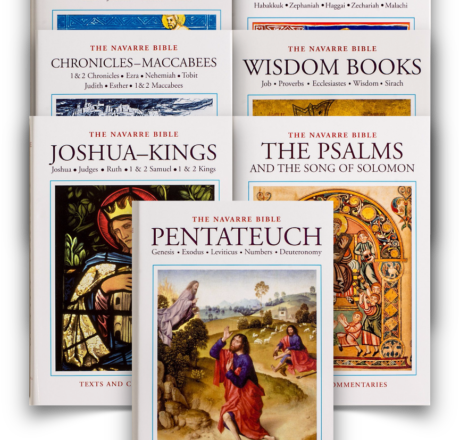
NAVARRE BIBLE COMMENTARY(RSV)

Ad Majorem Dei Gloriam (To the Greater Glory of God)

First Reading:

From: Isaiah 29:17-24

Against Those Who Hide from the Lord (Continuation)
---------------------------------------------------
[17] Is it not yet a very little while until Lebanon shall be turned into a fruitful field,
and the fruitful field shall be regarded as a forest?
[18] In that day the deaf shall hear the words of a book,
and out of their gloom and darkness the eyes of the blind shall see.
[19] The meek shall obtain fresh joy in the Lord,
and the poor among men shall exult in the Holy One of Israel.
[20] For the ruthless shall come to nought and the scoffer cease,
and all who watch to do evil shall be cut off,
[21] who by a word make a man out to be an offender,
and lay a snare for him who reproves in the gate,
and with an empty plea turn aside him who is in the right.
[22] Therefore thus says the Lord, who redeemed Abraham, concerning the house of Jacob:
“Jacob shall no more be ashamed,
no more shall his face grow pale.
[23] For when he sees his children,
the work of my hands, in his midst,
they will sanctify my name;
they will sanctify the Holy One of Jacob,
and will stand in awe of the God of Israel.
[24] And those who err in spirit will come to understanding,
and those who murmur will accept instruction.”

*************************************************
Commentary:

29:15-24. The third “woe” marks the start of the third lamentation. First, it describes the ridiculous situation of someone who thinks he can escape divine judgment (vv. 15-16). The simile of the clay and the potter (cf. the note on Jer 18:1-12) shows how senseless it is to deny that man has a “Maker”, or to try to tell God that he doesn’t know what he is doing. The prophet denounces the folly shown by the people of Judah who have wandered away from God. In Romans 9:20-21, St Paul will use the argument of v. 16 to show that God is free to do as he wishes with nations and individuals (cf. 45:9).

However, things will change (vv. 17-24). The Lord is going to take action and when he does, no one will be able to evade him: the deaf will hear, the blind will see, there will be no more oppression or hardness of heart.

Cure of illnesses, specifically release from deafness and blindness (vv. 18-19; cf. 35:5), is a feature of messianic times; it will be the signal that the kingdom has been reconstituted. St Matthew says that when Jesus was told about the questions asked by the disciples of John--was Jesus he who was to come, or should they wait for another--he replied: “Go and tell John what you hear and see: the blind receive their sight and the lame walk, lepers are cleansed and the deaf hear, and the dead are raised up, and the poor have good news preached to them. And blessed is he who takes no offense at me” (Mt 11:4-6; cf. Is 26:19; 35:5-6; 61:1-3). Thus, by referring to these actions of his, Jesus is showing that he is the Messiah, whose mission is to establish the Kingdom of God, just as Isaiah had prophesied.

The last promise (vv. 22-24) is deeply rooted in patriarchal tradition. The vocation of Abraham (this is the only place in the Bible where he is described as “redeemed”) and the story of Jacob who managed to survive all kinds of dangers, form the foundation for all hope of an enduring deliverance and salvation.

10 posted on 12/05/2025 8:00:08 AM PST by fidelis (Ecce Crucem Domini! Fugite partes adversae! Vicit Leo de tribu Juda, Radix David! Alleluia!)
[ Post Reply | Private Reply | To 9 | View Replies]

Gospel Reading:

From: Matthew 9:27-31

The Curing of Two Blind Men
--------------------------------------
[27] And as Jesus passed on from there, two blind men followed him, crying aloud, "Have mercy on us, Son of David." [28] When he entered the house, the blind men came to him; and Jesus said to them, "Do you believe that I am able to do this?" They said to him, "Yes, Lord." [29] Then he touched their eyes, saying, " According to your faith be it done to you." [30] And their eyes were opened. And Jesus sternly charged them, "See that no one knows it." [31] But they went away and spread his fame through all that district.

***********************************************************************
Commentary:

27-34. The evangelist shows people's different reactions to miracles. Everyone admits that God is at work in these events--everyone, that is, except the Pharisees who attribute them to the power of the devil. A pharisaical attitude so hardens a person's heart that he becomes closed to any possibility of salvation. The fact that the blind men recognize Jesus as the Messiah (they call him "Son of David": v. 27) may have exasperated the Pharisees. Despite Jesus' sublime teaching, despite his miracles, they remain entrenched in their opposition.

In the light of this episode it is easy enough to see that the paradox is true: there are blind people who in fact see God and seers who see no trace of him.

30. Why did our Lord not want them to publicize the miracle? Because his plan was to gradually manifest himself as the Messiah, the Son of God. He did not want to anticipate events which would occur in their own good time; nor did he want the crowd to start hailing him as Messiah King, because their notion of messiah was a nationalistic, not a spiritual one. However, the crowd did in fact proclaim him when he worked the miracles of the loaves and the fish (Jn 6:14-15): "When the people saw the sign which he had done, they said, 'This is indeed the prophet who is to come into the world!' Perceiving then that they were about to come and take him by force to make him king, Jesus withdrew, again to the hills by himself."

31. St Jerome (cf. "Comm. on Matth.", 9, 31) says that the blind men spread the news of their cure, not out of disobedience to Jesus, but because it was the only way they could find to express their gratitude.

11 posted on 12/05/2025 8:00:22 AM PST by fidelis (Ecce Crucem Domini! Fugite partes adversae! Vicit Leo de tribu Juda, Radix David! Alleluia!)
[ Post Reply | Private Reply | To 10 | View Replies]

Click here to go to the My Catholic Life! Devotional thread for a meditation on today’s Gospel Reading.

12 posted on 12/05/2025 8:00:57 AM PST by fidelis (Ecce Crucem Domini! Fugite partes adversae! Vicit Leo de tribu Juda, Radix David! Alleluia!)
[ Post Reply | Private Reply | To 11 | View Replies]

Disclaimer: Opinions posted on Free Republic are those of the individual posters and do not necessarily represent the opinion of Free Republic or its management. All materials posted herein are protected by copyright law and the exemption for fair use of copyrighted works.

Free Republic
Browse · Search
Religion
Topics · Post Article

FreeRepublic, LLC, PO BOX 9771, FRESNO, CA 93794
FreeRepublic.com is powered by software copyright 2000-2008 John Robinson