Skip to comments.
Catholic Caucus: Daily Mass Readings xx-November-2025
Universalis/Jerusalem Bible ^
Posted on 11/29/2025 8:17:47 AM PST by annalex
29 November 2025
Saturday of week 34 in Ordinary Time

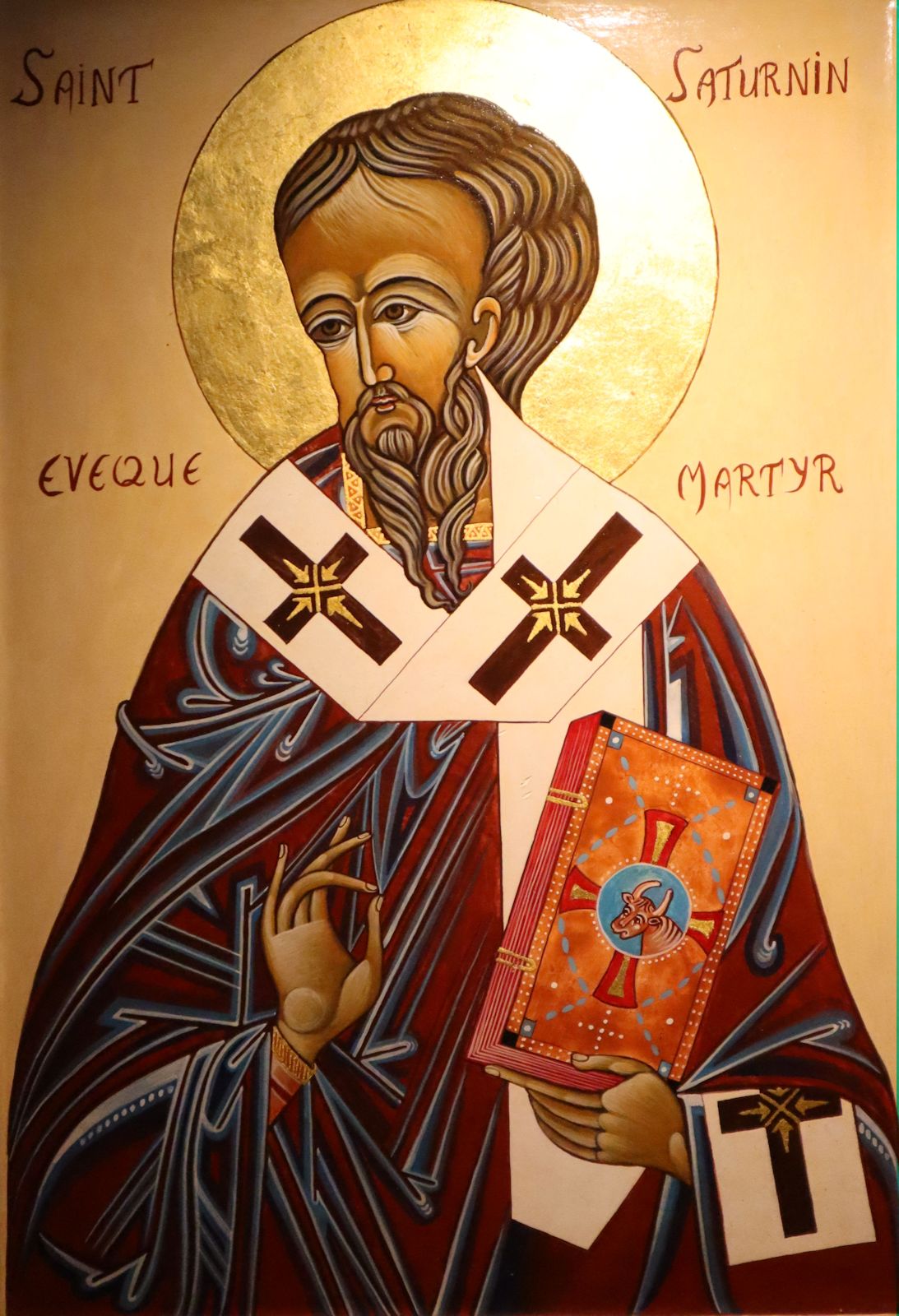
The Basilica of Saint Saturnin in ToulouseReadings at MassLiturgical Colour: Green. Year: C(I).
| First reading | Daniel 7:15-27 |
|---|
His sovereignty will be an eternal sovereigntyI, Daniel, was deeply disturbed and the visions that passed through my head alarmed me. So I approached one of those who were standing by and asked him to tell me the truth about all this. And in reply he revealed to me what these things meant. “These four great beasts are four kings who will rise from the earth. Those who are granted sovereignty are the saints of the Most High, and the kingdom will be theirs for ever, for ever and ever.” Then I asked to know the truth about the fourth beast, different from all the rest, very terrifying, with iron teeth and bronze claws, eating, crushing and trampling underfoot what remained; and the truth about the ten horns on its head – and why the other horn sprouted and the three original horns fell, and why this horn had eyes and a mouth that was full of boasts, and why it made a greater show than the other horns. This was the horn I had watched making war on the saints and proving the stronger, until the coming of the one of great age who gave judgement in favour of the saints of the Most High, when the time came for the saints to take over the kingdom. This is what he said: ‘The fourth beast is to be a fourth kingdom on earth, different from all other kingdoms. It will devour the whole earth, trample it underfoot and crush it. As for the ten horns: from this kingdom will rise ten kings, and another after them; this one will be different from the previous ones and will bring down three kings; he is going to speak words against the Most High, and harass the saints of the Most High. He will consider changing seasons and the Law, and the saints will be put into his power for a time, two times, and half a time. But a court will be held and his power will be stripped from him, consumed, and utterly destroyed. And sovereignty and kingship, and the splendours of all the kingdoms under heaven will be given to the people of the saints of the Most High. His sovereignty is an eternal sovereignty and every empire will serve and obey him.’
| Responsorial Psalm | Daniel 3:82-87 |
|---|
Sons of men! bless the Lord. Give glory and eternal praise to him! Israel! bless the Lord. Give glory and eternal praise to him! Priests! bless the Lord. Give glory and eternal praise to him! Servants of the Lord! bless the Lord. Give glory and eternal praise to him! Spirits and souls of the virtuous! bless the Lord. Give glory and eternal praise to him! Devout and humble-hearted men! bless the Lord. Give glory and eternal praise to him!
| Gospel Acclamation | Mt24:42,44 |
|---|
Alleluia, alleluia! Stay awake and stand ready, because you do not know the hour when the Son of Man is coming. Alleluia! Alleluia, alleluia! Stay awake, praying at all times for the strength to stand with confidence before the Son of Man. Alleluia!
That day will be sprung on you suddenly, like a trapJesus said to his disciples: ‘Watch yourselves, or your hearts will be coarsened with debauchery and drunkenness and the cares of life, and that day will be sprung on you suddenly, like a trap. For it will come down on every living man on the face of the earth. Stay awake, praying at all times for the strength to survive all that is going to happen, and to stand with confidence before the Son of Man.’ You can also view this page with the New Testament in Greek and English. Universalis podcast: The week ahead – from 30 November to 6 DecemberLooking forward to the unknown Chr–––––s which is coming, just as the Jews looked forward to the unsuspected glory of the Nativity. Isaiah teaches us by looking beyond the turbulent history of his time. His daily prophecies, day by day. Subscribing to Universalis and giving it as a gift. Saint Francis Xavier; Saint Nicholas. (22 minutes)
Episode notes.Play Christian Art Each day, The Christian Art website gives a picture and reflection on the Gospel of the day. The readings on this page are from the Jerusalem Bible, which is used at Mass in most of the English-speaking world. The New American Bible readings, which are used at Mass in the United States, are available in the Universalis apps, programs and downloads.
You can also view this page with the Gospel in Greek and English. |
TOPICS: Catholic; General Discusssion; Prayer; Worship
KEYWORDS: catholic; lk21; ordinarytime; prayer
For your reading, reflection, faith-sharing, comments, questions, discussion.
1
posted on
11/29/2025 8:17:47 AM PST
by
annalex
To: All
KEYWORDS: catholic; lk21; ordinarytime; prayer;
2
posted on
11/29/2025 8:18:27 AM PST
by
annalex
(fear them not)
To: nickcarraway; NYer; ELS; Pyro7480; livius; ArrogantBustard; Catholicguy; RobbyS; marshmallow; ...

Alleluia Ping Please FReepmail me to get on/off the Alleluia Ping List.
3
posted on
11/29/2025 8:19:28 AM PST
by
annalex
(fear them not)
To: annalex
4
posted on
11/29/2025 8:19:49 AM PST
by
annalex
(fear them not)
To: annalex
| Luke |
| | English: Douay-Rheims | Latin: Vulgata Clementina | Greek NT: Byzantine/Majority Text (2000) |
| | Luke 21
|
| 34. | And take heed to yourselves, lest perhaps your hearts be overcharged with surfeiting and drunkenness, and the cares of this life, and that day come upon you suddenly. | Attendite autem vobis, ne forte graventur corda vestra in crapula, et ebrietate, et curis hujus vitæ, et superveniat in vos repentina dies illa : | προσεχετε δε εαυτοις μηποτε βαρηθωσιν υμων αι καρδιαι εν κραιπαλη και μεθη και μεριμναις βιωτικαις και αιφνιδιος εφ υμας επιστη η ημερα εκεινη |
| 35. | For as a snare shall it come upon all that sit upon the face of the whole earth. | tamquam laqueus enim superveniet in omnes qui sedent super faciem omnis terræ. | ως παγις γαρ επελευσεται επι παντας τους καθημενους επι προσωπον πασης της γης |
| 36. | Watch ye, therefore, praying at all times, that you may be accounted worthy to escape all these things that are to come, and to stand before the Son of man. | Vigilate itaque, omni tempore orantes, ut digni habeamini fugere ista omnia quæ futura sunt, et stare ante Filium hominis. | αγρυπνειτε ουν εν παντι καιρω δεομενοι ινα καταξιωθητε εκφυγειν παντα τα μελλοντα γινεσθαι και σταθηναι εμπροσθεν του υιου του ανθρωπου |
5
posted on
11/29/2025 8:22:10 AM PST
by
annalex
(fear them not)
To: annalex

Catena Aurea by St. Thomas Aguinas
21:34–36
34. And take heed to yourselves, lest at any time your hearts be overcharged with surfeiting, and drunkenness, and cares of this life, and so that day come upon you unawares.
35. For as a snare shall it come on all them that dwell on the face of the whole earth.
36. Watch ye therefore, and pray always, that ye may be accounted worthy to escape all these things that shall come to pass, and to stand before the Son of man.
THEOPHYLACT. Our Lord declared above the fearful and sensible signs of the evils which should overtake sinners, against which the only remedy is watching and prayer, as it is said, And take heed to yourselves, lest at any time, &c.
BASIL. (Hom. 1. in illud Atten de tibi.) Every animal has within itself certain instincts which it has received from God, for the preservation of its own being. Wherefore Christ has also given us this warning, that what comes to them by nature, may be ours by the aid of reason and prudence: that we may flee from sin as the brute creatures shun deadly food, but that we seek after righteousness, as they wholesome herbs. Therefore saith He, Take heed to yourselves, that is, that you may distinguish the noxious from the wholesome. But since there are two ways of taking heed to ourselves, the one with the bodily eyes, the other by the faculties of the soul, and the bodily eye does not reach to virtue; it remains that we speak of the operations of the soul. Take heed, that is, Look around you on all sides, keeping an ever watchful eye to the guardianship of your soul. He says not, Take heed to your own or to the things around, but to yourselves. For ye are mind and spirit, your body is only of sense. Around you are riches, arts, and all the appendages of life, you must not mind these, but your soul, of which you must take especial care. The same admonition tends both to the healing of the sick, and the perfecting of those that are well, namely, such as are the guardians of the present, the providers of the future, not judging the actions of others, but strictly searching their own, not suffering the mind to be the slave of their passions, but subduing the irrational part of the soul to the rational. But the reason why we should take heed He adds as follows, Lest at any time your hearts be overcharged, &c.
TITUS BOSTRENSIS. As if He says, Beware lest the eyes of your mind wax heavy. For the cares of this life, and surfeiting, and drunkenness, scare away prudence, shatter and make shipwreck of faith.
CLEMENT OF ALEXENDRIA. (Clem. Al. lib. ii. Pædag. c. 2.) Drunkenness is an excessive use of wine; crapula1 is the uneasiness, and nausea attendant on drunkenness, a Greek word so called from the motion of the head. And a little below. As then we must partake of food lest we suffer hunger, so also of drink lest we thirst, but with still greater care to avoid falling into excess. For the indulgence of wine is deceitful, and the soul when free from wine will be the wisest and best, but steeped in the fumes of wine is lost as in a cloud.
BASIL. (in Reg. Brev. ad int. 88.) But carefulness, or the care of this life, although it seems to have nothing unlawful in it, nevertheless if it conduce not to religion, must be avoided. And the reason why He said this He shews by what comes next, And so that day come upon you unawares.
THEOPHYLACT. For that day will not come when men are expecting it, but unlooked for and by stealth, taking as a snare those who are unwary. For as a snare shall it come upon all them that sit upon the face of the earth. But this we may diligently keep far from us. For that day will take those that sit on the face of the earth, as the unthinking and slothful. But as many as are prompt and active in the way of good, not sitting and loitering on the ground, but rising from it, saying to themselves, Rise up, begone, for here there is no rest for thee. To such that day is not as a perilous snare, but a day of rejoicing.
EUSEBIUS. He taught them therefore to take heed unto the things we have just before mentioned, lest they fall into the indolence resulting therefrom. Hence it follows, Watch ye therefore, and pray always, that ye may be accounted worthy to escape all those things that shall come to pass.
THEOPHYLACT. Namely, hunger, pestilence, and such like, which for a time only threaten the elect and others, and those things also which are hereafter the lot of the guilty for ever. For these we can in no wise escape, save by watching and prayer.
AUGUSTINE. (de Con. Ev. l. ii. c. 77.) This is supposed to be that flight which Matthew mentions; which must not be in the winter or on the sabbath day. To the winter belong the cares of this life, which are mournful as the winter, but to the sabbath surfeiting and drunkenness, which drowns and buries the heart in carnal luxury and delight, since on that day the Jews are immersed in worldly pleasure, while they are lost to a spiritual sabbath.
THEOPHYLACT. And because a Christian needs not only to flee evil, but to strive to obtain glory, He adds, And to stand before the Son of man. For this is the glory of angels, to stand before the Son of man, our God, and always to behold His face.
BEDE. Now supposing a physician should bid us beware of the juice of a certain herb, lest a sudden death overtake us, we should most earnestly attend to his command; but when our Saviour warns us to shun drunkenness and surfeiting, and the cares of this world, men have no fear of being wounded and destroyed by them; for the faith which they put in the caution of the physician, they disdain to give to the words of God.
Catena Aurea Luke 21
6
posted on
11/29/2025 8:23:23 AM PST
by
annalex
(fear them not)
To: annalex
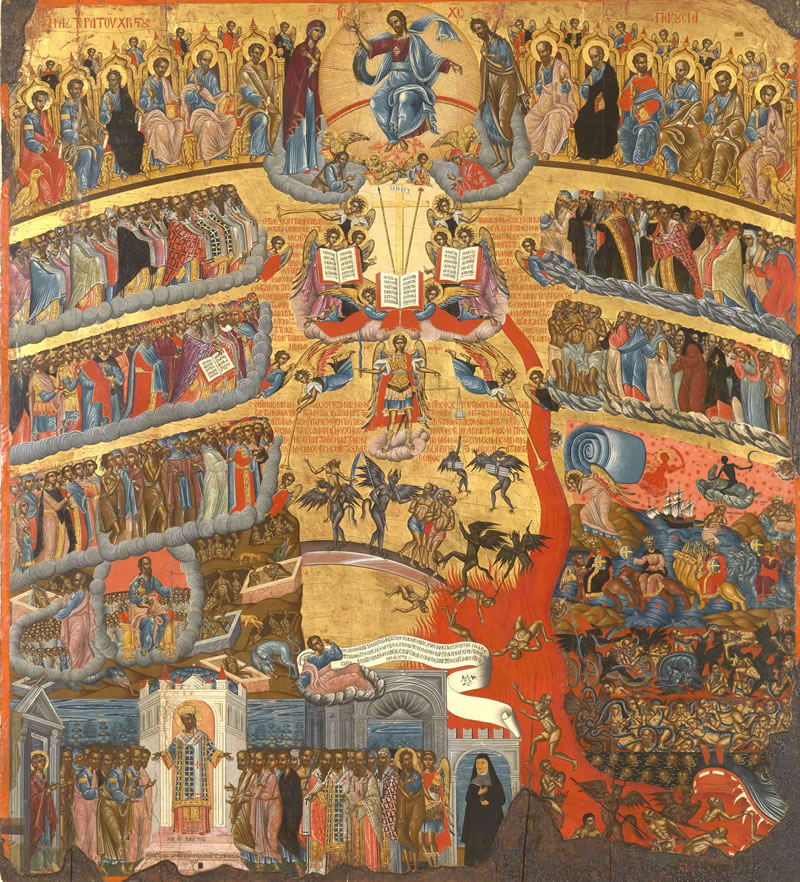
The Second Coming of Christ
7
posted on
11/29/2025 8:23:39 AM PST
by
annalex
(fear them not)
To: annalex
St. Saturnin, Martyr
3rd century–c. 257 AD
Patron Saint of Toulouse, France
St. Saturnin, also known as St. Sernin, was the first bishop of Toulouse, in Gaul (modern-day France), and one of the earliest Christian missionaries to the region. During the 3rd century, Christians suffered severe persecution under the Roman emperor Decius.
Pope Fabian sent St. Saturnin to Gaul to evangelize the region and rebuild the persecuted Christian community in Toulouse. Upon his arrival, he began preaching boldly about Christ, baptizing many, and building up the Christian community. His missionary work quickly drew the hostility of the pagan priests.
To reach the church, St. Saturnin had to pass by the Capitol, where a pagan temple stood. The pagan priests kept a watchful eye on him. One day, as he was passing by, a pagan sacrificial rite was underway. The pagan priests seized St. Saturnin and forced him to offer worship to their gods. When he refused, the enraged crowd tied him to a wild bull and drove the animal down the steps of the Capitol. St. Saturnin was then dragged through the streets and battered to death. His companions later recovered his body and reverently buried him outside the city walls.
St. Saturnin’s martyrdom made a deep impression on the people of Toulouse. A church was soon built over his tomb, which became a place of pilgrimage. In the 11th century, the grand Basilica of St. Sernin was erected on the same site in his honor, and it remains a significant church of Roman architecture in Europe and a primary pilgrimage site.
The sacrifice of saints like St. Saturnin demonstrates that the blood of martyrs played a crucial role in spreading Christianity across Europe and beyond, making the Gospel message available to us today.
Discover More About St. Saturnin, Martyr
What do we know about St. Saturnin?
There is little information about the life of St. Saturnin, also known as St. Sernin. He was the first bishop of Toulouse and an early Christian missionary in Gaul (modern-day France). St. Saturnin was regarded as one of the most illustrious French martyrs of his era. He was sent there as the first bishop of Gaul between 250 and 251 AD. He was part of a group of seven bishops, known as the “Apostles to the Gauls,” who were sent by Pope Fabian to evangelize the region and rebuild the Christian community in Toulouse, which was weakened by persecution under Emperor Decius.
The story of St. Saturnin’s death was recorded in a historical account called the Acts of St. Saturnin, which chronicled the life and martyrdom of the saint. Unfortunately, these writings were lost, and parts of their content are known only through the records of historian Gregory of Tours and other early sources written 300 years later.
missions.ewtn.com
8
posted on
11/29/2025 8:28:01 AM PST
by
annalex
(fear them not)
To: annalex
9
posted on
11/29/2025 8:30:23 AM PST
by
annalex
(fear them not)
To: annalex
NAVARRE BIBLE COMMENTARY(RSV)
Ad Majorem Dei Gloriam (To the Greater Glory of God)
First Reading:
From: Daniel 7:15-27
The Vision Interpreted
----------------------
[15] “As for me, Daniel, my spirit within me was anxious and the visions of my head alarmed me. [16] I approached one of those who stood there and asked him the truth concerning all this. So he told me, and made known to me the interpretation of the things. [17] ’These four great beasts are four kings who shall arise out of the earth. [18] But the saints of the Most High shall receive the kingdom, and possess the kingdom for ever, for ever and ever.’
[19] ”Then I desired to know the truth concerning the fourth beast which was different from all the rest, exceedingly terrible, with its teeth of iron and claws of bronze; and which devoured and broke in pieces and stamped the residue with its feet, [20] and concerning the ten horns that were on its head and the other horn which came up and before which three of them fell, the horn which had eyes and a mouth that spoke great things, and which seemed greater than its fellows. [21] As I looked, this horn made war with the saints and prevailed over them [22] until the Ancient of Days came, and judgment was given for the saints of the Most High and the time came when the saints received the kingdom.
[23] "Thus he said: 'As for the fourth beast, there shall be a fourth kingdom on earth, which shall be different from all the kingdoms, and it shall devour the whole earth, and trample it down, and break it to pieces. [24] As for the ten horns, out of this kingdom ten kings shall arise, and another shall arise after them; he shall be different from the former ones, and shall put down three kings. [25] He shall speak words against the Most High, and shall wear out the saints of the Most High, and shall think to change the times and the law and they shall be given into his hand for a time, two times, and half a time. [26] But the court shall sit in judgment, and his dominion shall be taken away, to be consumed and destroyed to the end. [27] And the kingdom and the dominion and the greatness of the kingdoms under the whole heaven shall be given to the people of the saints of the Most High, their kingdom shall be an everlasting kingdom, and all dominions shall serve and obey them.'"
***********************************
Commentary:
7:15-28. The interpretation focuses on the protagonists in the period when the book of Daniel was written--those to whom the kingdom will be given, that is, faithful Jews or “saints of the Most High” (vv. 18, 27); and the horn that grows from the fourth beast, Antiochus IV, who blasphemes against God, persecutes those who keep the Law and suppresses sabbaths and feasts (v. 25; cf. 1 Mac 1:41-52). But the persecution will only go on for a certain time--three and a half “times”, that is, half seven, which symbolizes completeness. The vision and its interpretation alarm Daniel on account of the sufferings that his people are undergoing and will undergo in the future; but he also says that “I kept the matter in my mind” (v. 28): his faith and hope are not affected.
10
posted on
11/29/2025 8:35:56 AM PST
by
fidelis
(Ecce Crucem Domini! Fugite partes adversae! Vicit Leo de tribu Juda, Radix David! Alleluia!)
Gospel Reading: From: Luke 21:34-36
The Need for Vigilance
----------------------
(Jesus said to His disciples), [34] "But take heed to yourselves lest your hearts be weighed down with dissipation and drunkenness and cares of this life, and that day come upon you suddenly like a snare; [35] for it will come upon all who dwell upon the face of the whole earth. [36] But watch at all times, praying that you may have strength to escape all these things that will take place, and to stand before the Son of Man."
***********************************************************************
Commentary:
34-36. At the end of His discourse Jesus emphasizes that every Christian needs to be vigilant: we do not know the day nor the hour in which He will ask us to render an account of our lives. Therefore, we must at all times be trying to do God's will, so that death, whenever it comes, will find us ready. For those who act in this way, sudden death never takes them by surprise. As St. Paul recommends: "You are not in darkness, brethren, for that day to surprise you like a thief" (1 Thessalonians 5:4). Vigilance consists in making a constant effort not to be attached to the things of this world (the concupiscence of the flesh, the concupiscence of the eyes and pride of life: cf. John 2:16) and in being assiduous in prayer, which keeps us close to God. If we live in this way, the day we die will be a day of joy and not of terror, for with God's help our vigilance will mean that our souls are ready to receive the visit of our Lord; they are in the state of grace: in meeting Christ we will not be meeting a judge who will find us guilty; instead He will embrace us and lead us into the house of His Father to remain there forever. "Does your soul not burn with the desire to make your Father-God happy when He has to judge you?" (St J. Escriva, "The Way", 746).
11
posted on
11/29/2025 8:36:09 AM PST
by
fidelis
(Ecce Crucem Domini! Fugite partes adversae! Vicit Leo de tribu Juda, Radix David! Alleluia!)
12
posted on
11/29/2025 8:36:59 AM PST
by
fidelis
(Ecce Crucem Domini! Fugite partes adversae! Vicit Leo de tribu Juda, Radix David! Alleluia!)
Disclaimer:
Opinions posted on Free Republic are those of the individual
posters and do not necessarily represent the opinion of Free Republic or its
management. All materials posted herein are protected by copyright law and the
exemption for fair use of copyrighted works.
FreeRepublic.com is powered by software copyright 2000-2008 John Robinson