
Posted on 11/28/2025 7:30:33 AM PST by fidelis
“Amen, I say to you, this generation will not pass away until all these things have taken place. Heaven and earth will pass away, but my words will not pass away.” Luke 21:32–33
As we approach the final days of this liturgical year, we continue to read about the end of the world. Today we read that both Heaven and earth, as they currently are, will pass away. This is worth pondering.
We know that life is full of change. It has been said that the one thing that never changes is change itself. Everything else changes. But when it comes to earth, it is hard to believe that it will one day “pass away.” Some scientists believe that the earth has existed for over four and a half billion years. That’s a long time! Now consider the fact that Jesus prophesied the end of this earth as we know it today. When will it happen? Only God knows.
Heaven, as it exists today, is also prophesied by our Lord to pass away. Heaven, as it is right now, is a pure spiritual reality in which the only corporeal bodies present are those of Jesus and our Blessed Mother. The rest of Heaven consists of the Divine Essence, the souls of those who have been redeemed and the angels of God. But if Heaven even passes away, what awaits?
First of all, the only reason that these two realities, Heaven and earth, will pass away in their current form is because, at the Final Judgment, there will be a “New Heavens and a New Earth,” as spoken of in the Book of Revelation. At that time, Heaven and earth will be united as one, and this new creation will exist for eternity.
But is there anything that is currently eternal? Anything that will never experience change? We humans will be changed at the resurrection of the dead, the angels will encounter a new home, so to speak, and God will establish a new and permanent Kingship. But, according to Jesus’ teaching today, the one thing that will remain are His words: “...my words will not pass away.” Again, this is worth pondering.
In a world filled with change and uncertainty, we need some form of stability. And that stability is the Truth found in the Word of God. The Word of God, as revealed to us through the Scriptures, must become our rock foundation upon which our whole lives are built and exist. Pondering, praying with, meditating on, and believing the Word of God enables us to stand on firm and unchanging spiritual ground as we go through the change of this life and even the changes that will come at the end of time. Though this may seem somewhat mysterious in nature, it is a helpful truth to understand and believe. Everything will pass away except Jesus’ words. Thus, the most secure thing we can do in life is to cling to His words and never let go.
Reflect, today, upon the importance of truly immersing yourself in the Word of God. How much time do you spend each week reading it, praying with it and allowing it to become your daily food? The Word of God is not simply a book of teachings meant to inspire you or guide you. The Word of God is a Living Word. It is God in His unchangeable form. God, in His essence, will never change, and engaging Him through the revelation of His written Word is one essential way by which you will be able to experience true stability in life and prepare for each and every change to come until the final order of life is permanently established.
My Eternal Word, You are unchanging and eternal. You are the rock foundation upon which I must always rely. As I continue to experience the many changes encountered in this life, please enter my soul through Your written Word, so that I will find the stability I need. As I stand firm in You, I look forward with joy to the New Heavens and New Earth that await. Jesus, I trust in You.
Please keep in mind that this is a Catholic Caucus/Devotional thread for the purpose of prayerful reflection on the Sacred Scriptures and is closed to debate of any kind. Per FR policy on Religion Caucus threads, off-topic, argumentative, and abusive comments are not allowed and will be submitted to the Mods for deletion. Thanks, and God bless you.
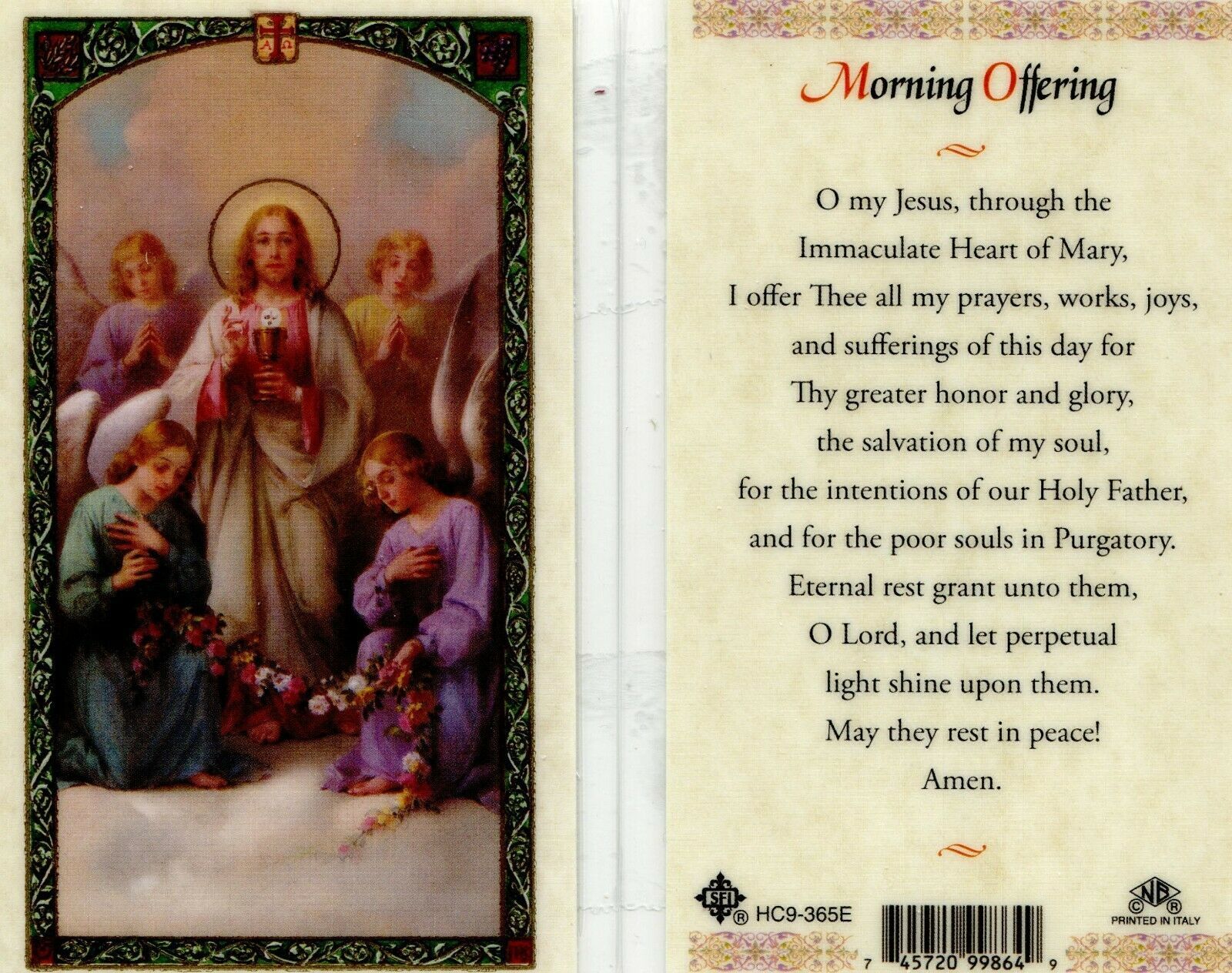
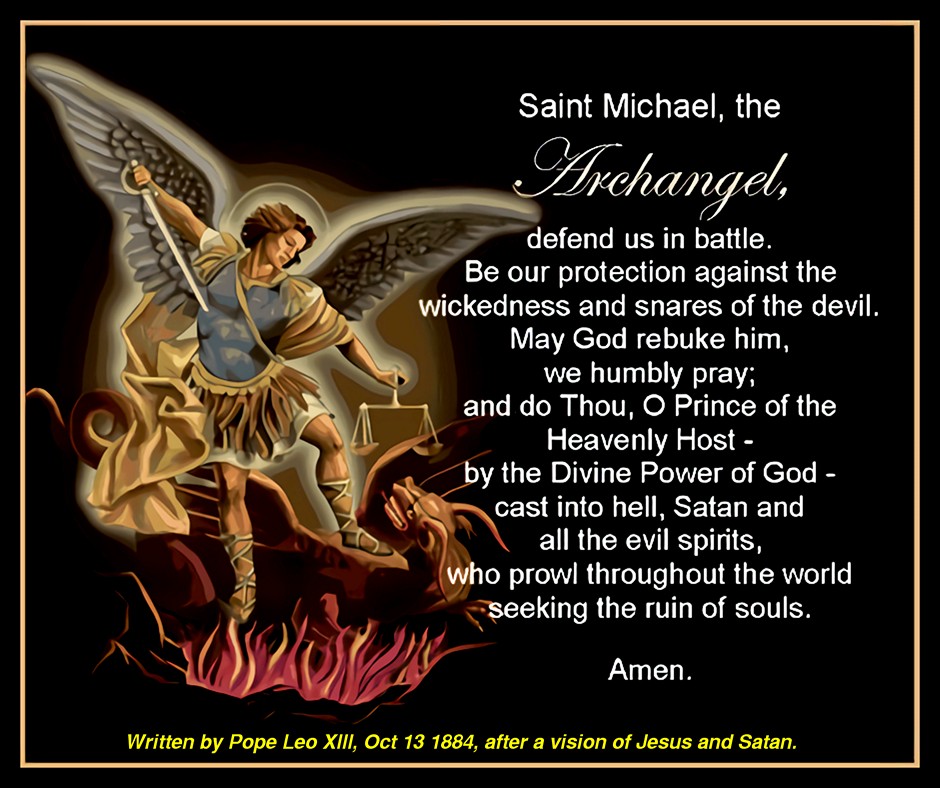
The Month of November is Dedicated to Praying for the Holy Souls in Purgatory

“He took up a collection, and sent it to Jerusalem to provide for a sin offering. In doing this he acted very well and honorably, taking account of the resurrection. For if he were not expecting that those who had fallen would rise again, it would have been superfluous and foolish to pray for the dead. But if he was looking to the splendid reward that is laid up for those who fall asleep in godliness, it was a holy and pious thought. Therefore he made atonement for the dead, that they might be delivered from their sin.” (2 Maccabees 12:43-45)

Pope Leo XIV’s prayer intentions for the month of November, 2025:
For the prevention of suicide
Let us pray that those who are struggling with suicidal thoughts might find the support, care, and love they need in their community, and be open to the beauty of life.

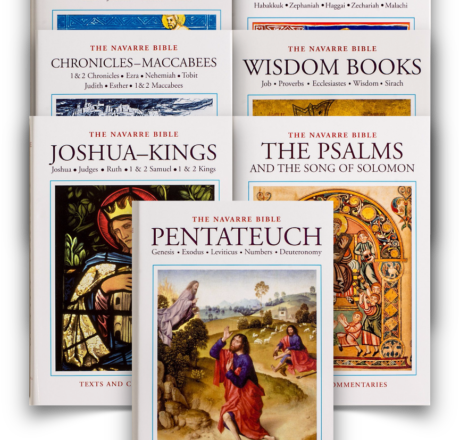
First Reading:
From: Daniel 7:2-14
Daniel's Vision
---------------
[2] Daniel said, "I saw in my vision by night, and behold, the four winds of heaven were stirring up the great sea. [3] And four great beasts came up out of the sea, different from one another. [4] The first was like a lion and had eagles' wings. Then as I looked its wings were plucked off, and it was lifted up from the ground and made to stand upon two feet like a man; and the mind of a man was given to it. [5] And behold, another beast, a second one, like a beat It was raised up on one side, it had three ribs in its mouth between its teeth, and it was told, 'Arise, devour much flesh.' [6] After this I looked, and lo, another, like a leopard with four wings of a bird on its back and the beast had four heads, and dominion was given to it. [7] After this I saw in the night visions, and behold, a fourth beast, terrible and dreadful and exceedingly strong, and it had great iron teeth, it devoured and broke in pieces and stamped the residue with its feet It was different from all the beasts that were before it, and it had ten horns. [8] I considered the horns, and behold, there came up among them another horn, a little one, before which three of the first horns were plucked up by the roots and behold, in this horn were eyes like the eyes of a man, and a mouth speaking great things. [9] As I looked, thrones were placed and one that was ancient of days took his seat; his raiment was white as snow, and the hair of his head like pure wool; his throne was fiery flames, its wheels were burning fire. [10] A stream of fire issued and came forth from before him; a thousand thousands served him, and ten thousand times ten thousand stood before him; the court sat in judgment, and the books were opened.
[11] I looked then because of the sound of the great words which the horn was speaking. And as I looked, the beast was slain, and its body destroyed and given over to be burned with fire. [12] As for the rest of the beasts, their dominion was taken away, but their lives were prolonged for a season and a time. [13] I saw in the night visions, and behold, with the clouds of heaven there came one like a son of man, and he came to the Ancient of Days and was presented before him. [14] And to him was given dominion and glory and kingdom, that all peoples, nations, and languages should serve him; his dominion is an everlasting dominion, which shall not pass away, and his kingdom one that shall not be destroyed.
***********************************************************************
Commentary:
7:1-12:13. Up to the end of chapter 6, Daniel has been the interpreter of kings' dreams; now his own dreams are interpreted for him by an angel or heavenly being: the interpreter explains dreams (chaps. 7-8), the meaning of Scripture (chap. 9), and a vision (chaps. 10-12); and Daniel himself notes it all down.
Daniel had announced to Nebuchadnezzar the end of time as part of the interpretation of his dream (cf. 2:28); now Daniel is told when it will happen (cf. 12:5-12); for him (cf. 2:28); he is given a more specific revelation in which the figure of the tyrannical Antiochus IV (described here symbolically) is depicted as the epitome of evil and his death will mark the end of the present age (cf. 11:45-12:1). Earlier, Daniel's wisdom was seen as a divine gift to be used for the benefit of foreign kings; now it is depicted as coming from a revelation in which God speaks to Daniel through heavenly messengers and tells him about the meaning of human history--a revelation that he must commit to writing, as a source of comfort and hope for the chosen people. "Revelation has set within history a point of reference which cannot be ignored if the mystery of human life is to be known. Yet this knowledge refers back constantly to the mystery of God which the human mind cannot exhaust but can only receive and embrace in faith. Between these two poles, reason has its own specific field in which it can enquire and understand, restricted only by its finiteness before the infinite mystery of God" (John Paul II, "Fides Et Ratio", 14).
7:1-28. This chapter marks the end of the part of the book written in Aramaic; in it we again find elements seen in chapter 2 (where the Aramaic part began); these include: the arrangement of history into four periods (symbolized there by metals, here by beasts) and the establishment of an everlasting kingdom at the end. Thus, the chapter closes the Aramaic section and acts as a kind of introduction to the chapters (in Hebrew) in which Daniel receives and writes down divine revelations. Chapter 8 is written in Hebrew and it explains chapter 7; and this pattern continues: chapter 9 is explained by chapter 10; and 11 by 12. Daniel first outlines his dream or vision, and it is then interpreted by an angelic being. In this chapter the content of the dream is given in vv. 1-14, and its interpretation in vv. 15-28. Vision and interpretation constitute a single event, an account of which Daniel writes down, as he mentions at start (cf. v. 1) and finish (cf. v. 28). Daniel's "signature" at beginning and end confirms the truth of his vision and the truthfulness of what he has written for the reader.
7:1-14. In chapter 5 the picture drawn of Belshazzar suggested that he stood figuratively for the sacrilegious King Antiochus IV. It is not surprising, then, that this dream of Daniel's is set in the first year of Belshazzar's reign, given that the climax of the prophecy (the little horn) concerns Antiochus IV. God is going to intervene definitively when irreligion is at its worst. There are two scenes in the vision--the beasts coming out of the sea (vv. 2-8) and the divine court and judgment (vv. 9-14).
7:2-8. The Great Sea (the Mediterranean: v. 2), out of which the beasts arise, stands for the world of gloom and chaos. Although earlier prophets did use animals as symbols for empires (a crocodile for Egypt, cf. Ezek 32; an eagle or a monster for Babylon, cf. Ezek 17:3; Jer 51:34), the winged beasts of Daniel's vision are reminiscent of Mesopotamian statues. The lion with eagle's wings stands for Nebuchadnezzar a proud man, he was brought low and later given back his reason (4:16, 34); the empire of the Medes is depicted as a bear ready to attack, and that of the Persians as a leopard, fleet of foot. The fourth beast resembles no animal, but its teeth of iron show it to be the Greek empire of Alexander the Great and his successors (cf. 2:40). Of those successors, (symbolized by the horns), attention is focused on Antiochus IV, the horn with eyes that speaks blasphemy (cf. vv. 8, 25). The gravity of those challenges to God's authority will be underlined in Revelation 13:5 in its description of the beast that is given power by the dragon. The worst sin of the powers of the world is their opposition to God and his laws. Interpreting the words of this passage as a prophecy in the strict sense, that is, as a prediction of something that will happen in the future, some Fathers read the last of the horns as being the Antichrist of whom the Revelation to John will have much to say (cf. Rev. 13:11-18; 17:16; 19: 19-21).
7:9-14. Divine judgment is passed on the kingdoms in this scene. God is depicted as being seated on a throne in heaven, his glory flashing out and angels all around. Judgment is about to take place, and it will be followed by execution of the sentence. The books (v. 10) contain all the actions of men (cf. Jer 17:1; Mal 3:16; Ps 56:8; Rev 20:12). The seer is shown history past (not laid out according to chronology: all the empires are included in one glance), and he notes that a more severe sentence is passed on the blasphemous horn than on the other beasts. They had their lives extended (v. 12), that is, their deprivation of power did not spell the end; but the little horn is destroyed forthwith. "Following in the steps of the prophets and John the Baptist, Jesus announced the judgment of the Last Day in his preaching (cf. Dan 7:10; Joel 3-4; Mal 3:19; Mt 3:7-42)" ("Catechism of the Catholic Church", 678).
The one "like a son of man" who comes with the clouds of heaven and who, after the judgment, is given everlasting dominion over all the earth, is the very antithesis of the beasts. He has not risen from a turbulent sea like them; there is nothing ferocious about him. Rather, he has been raised up by God (he comes with the clouds of heaven) and he shares the human condition. The dignity of all mankind is restored through this son of man's triumph over the beasts. This figure, as we will discover later, stands for 'the people of the saints of the Most High' (7:27), that is, faithful Israel. However, he is also an individual (just as the winged lion was an individual, and the little horn), and insofar as he is given a kingdom, he is a king. What we have here is an individual who represents the people. In Jewish circles around the time of Christ, this "son of man" was interpreted as being the Messiah, a real person (cf. "Book of the Parables of Enoch"); but it was a title that became linked to the sufferings of the Messiah and to his resurrection from the dead only when Jesus Christ applied it to himself in the Gospel. "Jesus accepted Peter's profession of faith, which acknowledged him to be the Messiah, by announcing the imminent Passion of the Son of Man (cf. Mt 16:23). He unveiled the authentic content of his messianic kingship both in the transcendent identity of the Son of Man 'who came down from heaven' (Jn 3:13; cf. Jn 6:62; Dan 7:13), and in his redemptive mission as the suffering Servant: 'The Son of Man came not to be served but to serve, and to give his life as a ransom for many' (Mt 20:28; cf. Is 53:10-12)" ("Catechism of the Catholic Church", 440).
When the Church proclaims in the Creed that Christ is seated at the right hand of the Father, she is saying that it was to Christ that dominion was given; "Being seated at the Father's right hand signifies the inauguration of the Messiah's kingdom, the fulfillment of the prophet Daniel's vision concerning the Son of man; 'To him was given domination and glory and kingdom, that all peoples, nations, and languages should serve him; his dominion is an everlasting dominion, which shall not pass away, and his kingdom one that shall not be destroyed' (Dan 7:14). After this event the apostles became witnesses of the 'kingdom [that] will have no end' (Nicene Creed)" ("Catechism of the Catholic Church", 664).
From: Luke 21:29-33
Discourse on the Destruction of Jerusalem
and the End of the World (Continuation)
-----------------------------------------
[29] And He (Jesus) told them a parable: "Look at the fig tree, and all the trees; [30] as soon as they come out in leaf, you see for yourselves and know that the summer is already near. [31] So also, when you see these things taking place, you know that the Kingdom of God is near. [32] Truly, I say to you, this generation will not pass away till all has taken place. [33] Heaven and earth will pass away, but My words will not pass away."
***********************************************************************
Commentary:
31. The Kingdom of God, announced by John the Baptist (cf. Matthew 3:2) and described by our Lord in so many parables (cf. Matthew 13; Luke 13:18-20), is already present among the Apostles (Luke 17:20-21), but it is not yet fully manifest. Jesus here describes what it will be like when the Kingdom comes in all its fullness, and He invites us to pray for this very event in the Our Father: "Thy Kingdom come." "The Kingdom of God, which had its beginnings here on earth in the Church of Christ, is not of this world, whose form is passing, and its authentic development cannot be measured by the progress of civilization, of science and of technology. The true growth of the Kingdom of God consists in an ever-deepening knowledge of the unfathomable riches of Christ, in an ever-stronger hope in eternal blessings, in an ever more fervent response to the love of God, and in an ever more generous acceptance of grace and holiness by men" ("Creed of the People of God", 27). At the end of the world everything will be subjected to Christ and God will reign for ever more (cf. 1 Corinthians 15:24, 28).
32. Everything referring to the destruction of Jerusalem was fulfilled some forty years after our Lord's death--which meant that Jesus' contemporaries would be able to verify the truth of this prophecy. But the destruction of Jerusalem is a symbol of the end of the world; therefore, it can be said that the generation to which our Lord refers did see the end of the world, in a symbolic way. This verse can also be taken to refer to the generation of believers, that is, not just the particular generation of those Jesus was addressing (cf. note on Matthew 24:32-35).
The note on Matthew 24:32-35 states: 32-35. Seeing in the destruction of Jerusalem a symbol of the end of the world, St. John Chrysostom applies to it this parable of the fig tree: "Here He also foretells a spiritual spring and a calm which, after the storm of the present life, the righteous will experience; whereas for sinners there will be a winter after the spring they have had [...]. But this was not the only reason why He put before them the parable of the fig tree, to tell them of the interval before His coming; He wanted to show them that His word would assuredly come true. As sure as the coming of spring is the coming of the Son of Man" ("Hom. on St. Matthew", 77).
"This generation": this verse is a clear example of what we say in the note on Matthew 24:1 about the destruction of Jerusalem being itself a symbol. "This generation" refers firstly to the people alive at the time of the destruction of Jerusalem. But, since that event is symbolic of the end of the world, we can say with St. John Chrysostom that "the Lord was speaking not only of the generation then living, but also of the generation of the believers; for He knows that a generation is distinguished not only by time but also by its mode of religious worship and practice: this is what the Psalmist means when he says that `such is the generation of those who seek Him' (Psalm 24:6)" ("Hom. On St. Matthew", 77).
Disclaimer: Opinions posted on Free Republic are those of the individual posters and do not necessarily represent the opinion of Free Republic or its management. All materials posted herein are protected by copyright law and the exemption for fair use of copyrighted works.

