
Posted on 11/27/2025 7:58:40 AM PST by fidelis
Thanksgiving Day [In the Dioceses of the United States]
“Ten were cleansed, were they not? Where are the other nine? Has none but this foreigner returned to give thanks to God?” Then he said to him, “Stand up and go; your faith has saved you.” Luke 17:17–19
He was saved by faith through the expression of gratitude! What a wonderful story to ponder today as we celebrate the national holiday of Thanksgiving!
Though Thanksgiving Day is not specifically a Church holy day, gratitude is certainly central to our Christian faith, as is illustrated by today’s Gospel in which ten lepers were healed by Jesus. And their communal reaction is something of which to take note. Nine of them were healed and went about their business, not returning to the source of their healing to thank Him. But one did. This one leper, who was suddenly no longer a leper, returned to Jesus, glorified Him, fell at His feet and thanked Him. This one leper was a foreigner, a Samaritan, but he manifested a faith that we must all strive to imitate. The faith of this Samaritan was evident by the fact that he knew he needed to not only be grateful for the grace of healing but that he also needed to express it.
As we celebrate Thanksgiving Day, we are reminded that of all the things for which we must be grateful, nothing is more important than our gratitude to God for the immeasurable graces He has given us... Only ten percent of the lepers responded with such an expression. Therefore, it is helpful today to examine the many reasons we should be thankful and should work to express that gratitude to God.
First, God created us out of love. This is no small gift. It is the first gift He has given us and one we often take for granted. God did not need to create us. He did not need to create you. But He did. And the gift of life, the gift of an immortal soul, is something that we must never overlook and always rejoice in.
Second, God entered our fallen state through the Incarnation within the womb of the Blessed Virgin Mary. Doing so elevated our fallen human nature to a height never known before. Humanity and divinity were united in the Person of the Incarnate Son of God and Son of Man, and we must be grateful for this unmerited and awe-inspiring gift.
Third, we know the rest of the story. God, in the Person of the Incarnate Son, suffered, died and rose again. In so doing, He made it possible for every sin of ours to be wiped away. As we die with Him, we are invited to rise with Him. And as we rise with Him, we are invited to share in His glory in Heaven.
Lastly, in each and every life, there are countless graces given to us every day. But as spoiled children, we often overlook these blessings and take them for granted. Examples here do not suffice... But the blessings are abundant, and the more we turn to our Lord in total surrender, the more the blessings flow.
Reflect, today, upon the attitude that you have toward the many blessings God has bestowed upon you. Begin by considering the central blessings of God’s creation and His saving acts of love. From there, try to ponder the many small ways that God has been with you, guided you, strengthened you, and blessed you abundantly. If you do not see these clearly, then use this day to consciously listen so that God can reveal them to you. As you see your blessings, respond as this one leper. Turn to Jesus, glorify Him, fall at His feet in prayer and thank Him. Doing so will fill you with the same saving faith granted to this one leper.
My most generous Lord, You have bestowed upon me blessings beyond my imagination. I realize that I will never fully understand how good You have been to me and will never be able to express my gratitude adequately enough. Please do fill me with a grateful heart. Help me to see Your action in my life and to respond to You as this one leper. Jesus, I trust in You.
Please keep in mind that this is a Catholic Caucus/Devotional thread for the purpose of prayerful reflection on the Sacred Scriptures and is closed to debate of any kind. Per FR policy on Religion Caucus threads, off-topic, argumentative, and abusive comments are not allowed and will be submitted to the Mods for deletion. Thanks, and God bless you.
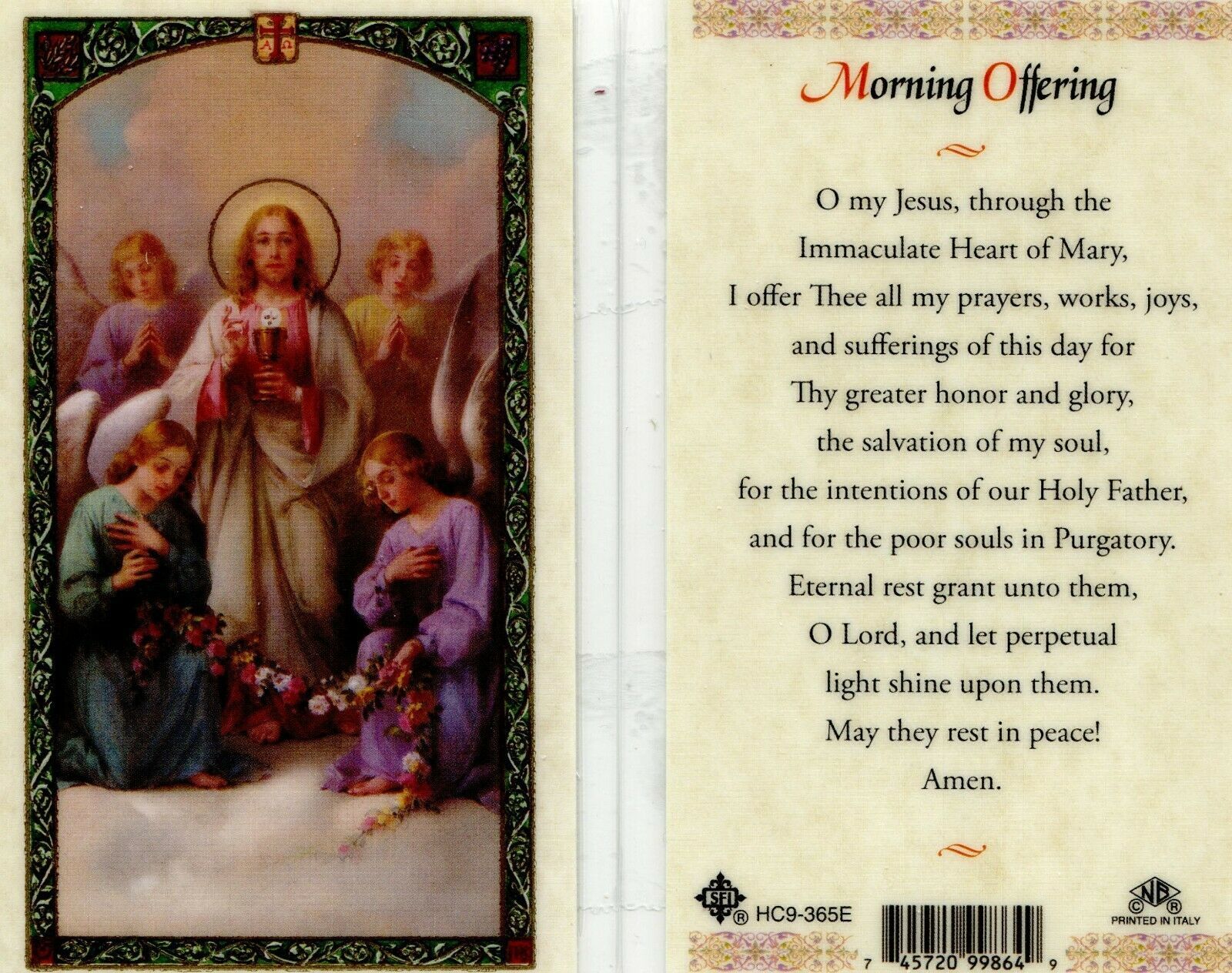
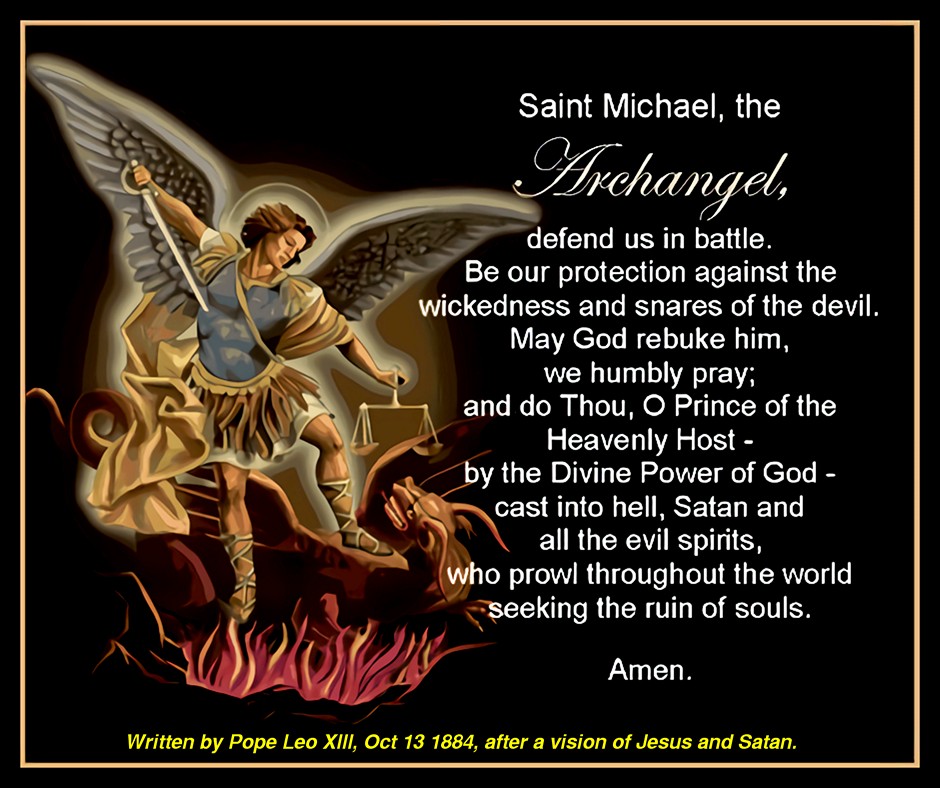
The Month of November is Dedicated to Praying for the Holy Souls in Purgatory

“He took up a collection, and sent it to Jerusalem to provide for a sin offering. In doing this he acted very well and honorably, taking account of the resurrection. For if he were not expecting that those who had fallen would rise again, it would have been superfluous and foolish to pray for the dead. But if he was looking to the splendid reward that is laid up for those who fall asleep in godliness, it was a holy and pious thought. Therefore he made atonement for the dead, that they might be delivered from their sin.” (2 Maccabees 12:43-45)

Pope Leo XIV’s prayer intentions for the month of November, 2025:
For the prevention of suicide
Let us pray that those who are struggling with suicidal thoughts might find the support, care, and love they need in their community, and be open to the beauty of life.

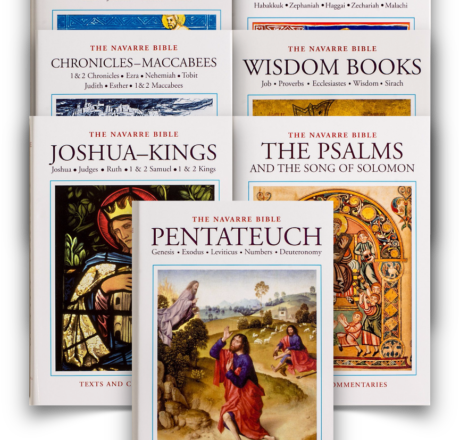
Readings for Thanksgiving Day
First Reading:
From: Sirach 50:22-24
Exhortaion
---------------
[22] And now bless the God of all,
who in every way does great things;
who exalts our days from birth,
and deals with us according to his mercy.
[23] May he give us gladness of heart,
and grant that peace may be in our days in Israel,
as in the days of old.
[24] May he entrust to us his mercy!
And let him deliver us in our days!
*************************************
Commentary:
22-29. The eulogy of Simon is followed by three short additional statements—an admonition to readers (vv. 22-24); a reproach to Israel’s two neighbors, the Philistines and the Samaritans (vv. 25-26), and whose tone is out of keeping with the context; and then the conclusion to the whole book (vv27-29). This conclusion is, in a way, a resume of the entire treatise (there have been similar passages elsewhere: cf. 1:1 and 18). It is a sort of signature, something not found elsewhere in the Old Testament; but we do find a similar note near the end of the Apocalypse of St John (Rev 22: 6-7). Given that vv. 27-29 are found both in the Greek and Latin manuscripts and in the Hebrew, although with minor variations, these verses are thought to be written by Ben Sirach himself and not by the Greek translator. But, because they are couched in the third person, they could be an annotation made by a Hebrew scribe before the book was translated into Greek. Anyway, they certainly manage to describe nicely what Ben Sirach has done in this book (v. 27; cf. 24:34) and what his purpose was in writing it—to help his reader become wise (vv. 28-29).
------------------------
Second Reading:
From: 1 Corinthians 1:3-9
Thanksgiving
------------
[3] Grace to you and peace from God our Father and the Lord Jesus Christ. [4] I give thanks to God always for you because of the grace of God which was given you in Christ Jesus, [5] that in every way you were enriched in him with all speech and all knowledge [6] even as the testimony to Christ was confirmed among you--[7] so that you are not lacking in any spiritual gift, as you wait for the revealing of our Lord Jesus Christ; [8] who will sustain you to the end, guiltless in the day of our Lord Jesus Christ. [9] God is faithful, by whom you were called into the fellowship of his Son, Jesus Christ our Lord.
***********************************************************************
Commentary:
1-9. With slight variations almost all St Paul's letters begin in the same kind of way: there is a greeting (vv. 1-3), which carries the name of the writer, information on the addressee(s), and the conventional phrase; and an act of thanksgiving to God (vv. 4-9), in which the Apostle refers to the main qualities and endowments of the Christians to whom he is writing. By comparing his letters with other letters that have come down to us from the same period, it is quite apparent that St Paul usually begins his letters in the style of the time. yet he does not entirely follow this rigid pattern: he changes the usual opening--"Greeting!" (cf. Acts 15:23; 23:26)—to this more personal one, which has a pronounced Christian stamp: "Grace to you and peace." Also, the way in which he introduces himself and describes those he is addressing tells much more than a simple "Paul to the Corinthians: greeting!" Even his words of thanksgiving convey tenderness and warmth--and their tone is not merely human, for he attributes to God the virtues he praises in the faithful.
The Fathers of the Church have drawn attention to this characteristic of Paul's letters--the way he manages to convey a deep doctrinal message in a familiar style, nicely suited to whomever he happens to be addressing: "A doctor", St John Chrysostom explains, "does not treat the patient in the same way at the start of his illness as when he is recovering; nor does a teacher use the same method with children as with those who need more advanced tuition. That is how the Apostle acts: he writes as suits the needs and the times" ("Hom. On Rom", Prologue).
3. Peace of soul, that "serenity of mind, tranquillity of soul, simplicity of heart, bond of love, union of charity" of which St Augustine spoke ("De Verb. Dom. Serm.", 58), originates in the friendship with God which grace brings with it; it is one of the fruits of the Holy Spirit (cf. Gal 5:22-23). This is the only true kind of peace: "There is no true peace, just as there is no true grace, other than the grace and peace which come from God," St John Chrysostom teaches, "Possess this divine peace and you will have nothing to fear, even if you be threatened by the direct danger, whether from men or even from the demons themselves; whereas see how everything is a cause of fear for the man who is at war with God through sin" ("Hom. on 1 Cor", 1, "ad loc".).
4-9. After the greeting, words of thanksgiving conclude the introduction to the letter, before St Paul begins the doctrinal part. He reminds the Corinthians that they owe their privileged position to God. They, like all Christians, received God's grace in Christ, and that grace has enriched them in every way, for it causes man to share in God's very nature (cf. 2 Pet 1:4), raising him to an entirely new level of existence. This transfiguration enables a person, even here, to know the perfections of God's inner life and to partake of that life--albeit in a limited, imperfect way--through the theological virtues of faith, hope and charity, which grace brings and which elevate the mind and will to know and love God, One and Three.
St Paul teaches the need to give thanks to God and he sets us an example in this regard. Obdurate sinners fail to acknowledge the benefits God gives them (cf. Rom 1:21), but Christians should always base their prayer on gratitude to God (cf. Phil 4:6). "Nothing charms God more than a heart that is grateful either on its own account or on account of others" (Chrysostom, "Hom. on 1 Cor", 2, "ad loc".).
5-6. The grace of God, mentioned in the previous verse, embraces gifts, including those to do with eloquence and knowledge. So richly does God endow the Christian that St Alphonsus exclaims: "Our wretchedness should not make us uneasy, for in Jesus crucified we shall find all richness and all grace (cf. 1 Cor 1:5, 7). The merits of Jesus Christ have enriched us with all the wealth of God and there is no grace we might desire that we cannot obtain by asking for it" ("The Love of God Reduced to Practice", chap. 3). The Fathers interpret these gifts as meaning that the Corinthians had such a good grasp of Christian teaching that they were able to express it clearly: "There are those who have the gift of knowledge but not that of speech; and there are others who have the gift of speech but not knowledge. The faithful in general, who are uneducated, know these truths, but they cannot clearly explain what they have in their soul. You on the other hand, St Paul says, are different; you know these truths and you can speak about them; you are rich in the gift of speech and in that of knowledge" (Chrysostom, "Hom. on 1 Cor", 2, "ad loc".).
8-9. "The day of our Lord': in St Paul's writings and in the New Testament generally, this refers to the day of the General Judgment when Christ will appear as Judge, clothed in glory (cf. 2 Cor 1:14; 1 Thess 5:2).
Christians actively hope that that Day will find them "blameless" (cf. Phil 1:10; 1 Thess 3:13; 5:23); the basis for this hope is God's faithfulness--an attitude frequently applied to him in the Old Testament (cf. Deut 7:9; Is 49:7) and in St Paul's letters (cf. 1 Cor 10:13; 2 Cor 1:18; 1 Thess 5:24; 2 Thess 3:3; Heb 10:23): the Covenant which God made with the chosen people was primarily a gift and a grace, but it also was a legal commitment. The Covenant was grounded on God's fidelity, which was not merely a matter of legal obligation: it involved faithful, constant love. The God's fidelity will finds its fullest expression in the Redemption brought about by Jesus Christ: "If, in fact, the reality of the Redemption," Pope John Paul II says, "in its human dimension, reveals the unheard-of greatness of man, "qui talem ac tantum meruit habere Redemptorem", at the same time "the divine dimension of the Redemption" enables us [...] to uncover the depth of that love which does not recoil before the extraordinary sacrifice of the Son, in order to satisfy the fidelity of the Creator and Father towards human beings, created in his image" ("Dives In Misericordia", 7).
---------------------------
Gospel Reading:
From: Luke 17:11-19
The Ten Lepers
--------------
[11] On the way to Jerusalem He (Jesus) was passing along between Samaria and Galilee. [12] And as He entered the village, He was met by ten lepers, who stood at a distance [13] and lifted up their voices and said, "Jesus, Master, have mercy on us." [14] When He saw them He said to them, "Go and show yourselves to the priests." And as they went they were cleansed. [15] Then one of them, when he saw that he was healed, turned back, praising God with a loud voice; [16] and he fell on his face at Jesus' feet, giving Him thanks. Now he was a Samaritan. [17] Then said Jesus, "Were not ten cleansed? Where are the nine? [18] Was no one found to return and give praise to God except this foreigner?" [19] And He said to him, "Rise and go your way; your faith has made you well."
***********************************************************************
Commentary:
11-19. The setting of this episode explains how a Samaritan could be in the company of Jews. There was no love lost between Jews and Samaritans (cf. John 4:9), but shared pain, in the case of these lepers, overcame racial antipathy.
The Law of Moses laid down, to prevent the spread of the disease, that lepers should live away from other people and should let it be known that they were suffering from this disease (cf. Leviticus 13:45-46). This explains why they did not come right up to Jesus and His group, but instead begged His help by shouting from a distance. Before curing them our Lord orders them to go to the priests to have their cure certified (cf. Leviticus 14:2ff), and to perform the rites laid down. The lepers' obedience is a sign of faith in Jesus' words. And, in fact, soon after setting out they are cleansed.
However, only one of them, the Samaritan, who returns praising God and showing his gratitude for the miracle, is given a much greater gift than the cure of leprosy. Jesus says as much: "Your faith has made you well" (verse 19) and praises the man's gratefulness. The Gospel records this event to teach us the value of gratefulness: "Get used to lifting your heart to God, in acts of thanksgiving, many times a day. Because He gives you this and that. Because you have been despised. Because you haven't what you need or because you have.
"Because He made His Mother so beautiful, His Mother who is also your Mother. Because He created the sun and the moon and this animal and that plant. Because He made that man eloquent and you He left tongue-tied....
"Thank Him for everything, because everything is good" (St J. Escriva, "The Way", 268).
Disclaimer: Opinions posted on Free Republic are those of the individual posters and do not necessarily represent the opinion of Free Republic or its management. All materials posted herein are protected by copyright law and the exemption for fair use of copyrighted works.
