Posted on 11/26/2025 4:44:16 AM PST by annalex
Wednesday of week 34 in Ordinary Time ![]() Cathedral of St. John Berchmans, Shreveport, LA Readings at MassLiturgical Colour: Green. Year: C(I).
The writing on the wallKing Belshazzar gave a great banquet for his noblemen; a thousand of them attended, and he drank wine in company with this thousand. As he sipped his wine, Belshazzar gave orders for the gold and silver vessels to be brought which his father Nebuchadnezzar had looted from the sanctuary in Jerusalem, so that the king, his noblemen, his wives and his singing women could drink out of them. The gold and silver vessels looted from the sanctuary of the Temple of God in Jerusalem were brought in, and the king, his noblemen, his wives and his singing women drank out of them. They drank their wine and praised their gods of gold and silver, of bronze and iron, of wood and stone. Suddenly the fingers of a human hand appeared, and began to write on the plaster of the palace wall, directly behind the lamp-stand; and the king could see the hand as it wrote. The king turned pale with alarm: his thigh-joints went slack and his knees began to knock. Daniel was brought into the king’s presence; the king said to Daniel, ‘Are you the Daniel who was one of the Judaean exiles brought by my father the king from Judah? I am told that the spirit of God Most Holy lives in you, and that you are known for your perception, intelligence and marvellous wisdom. As I am told that you are able to give interpretations and to unravel difficult problems, if you can read the writing and tell me what it means, you shall be dressed in purple, and have a chain of gold put round your neck, and be third in rank in the kingdom.’ Then Daniel spoke up in the presence of the king. ‘Keep your gifts for yourself,’ he said ‘and give your rewards to others. I will read the writing to the king without them, and tell him what it means. You have defied the Lord of heaven, you have had the vessels from his Temple brought to you, and you, your noblemen, your wives and your singing women have drunk your wine out of them. You have praised gods of gold and silver, of bronze and iron, of wood and stone, which cannot either see, hear or understand; but you have given no glory to the God who holds your breath and all your fortunes in his hands. That is why he has sent the hand which, by itself, has written these words. The writing reads: Mene, Mene, Tekel and Parsin. The meaning of the words is this: Mene: God has measured your sovereignty and put an end to it; Tekel: you have been weighed in the balance and found wanting; Parsin: your kingdom has been divided and given to the Medes and the Persians.’
Sun and moon! bless the Lord. Give glory and eternal praise to him! Stars of heaven! bless the Lord. Give glory and eternal praise to him! Showers and dews! all bless the Lord. Give glory and eternal praise to him! Winds! all bless the Lord. Give glory and eternal praise to him! Fire and heat! bless the Lord. Give glory and eternal praise to him! Cold and heat! bless the Lord. Give glory and eternal praise to him!
Alleluia, alleluia! Stay awake, praying at all times for the strength to stand with confidence before the Son of Man. Alleluia!
Alleluia, alleluia! Even if you have to die, says the Lord, keep faithful, and I will give you the crown of life. Alleluia!
Your endurance will win you your livesJesus said to his disciples: ‘Men will seize you and persecute you; they will hand you over to the synagogues and to imprisonment, and bring you before kings and governors because of my name – and that will be your opportunity to bear witness. Keep this carefully in mind: you are not to prepare your defence, because I myself shall give you an eloquence and a wisdom that none of your opponents will be able to resist or contradict. You will be betrayed even by parents and brothers, relations and friends; and some of you will be put to death. You will be hated by all men on account of my name, but not a hair of your head will be lost. Your endurance will win you your lives.’ You can also view this page with the New Testament in Greek and English. Universalis podcast: Resurrection is Now: part 8 of 8Preparation for Death (continued): Confession, The Sacrament of the Sick, Prayer. Christian Art![]() Each day, The Christian Art website gives a picture and reflection on the Gospel of the day. The readings on this page are from the Jerusalem Bible, which is used at Mass in most of the English-speaking world. The New American Bible readings, which are used at Mass in the United States, are available in the Universalis apps, programs and downloads. |
KEYWORDS: catholic; lk21; ordinarytime; prayer;

Please FReepmail me to get on/off the Alleluia Ping List.
| Luke | |||
| English: Douay-Rheims | Latin: Vulgata Clementina | Greek NT: Byzantine/Majority Text (2000) | |
| Luke 21 | |||
| 12. | But before all these things, they will lay their hands upon you, and persecute you, delivering you up to the synagogues and into prisons, dragging you before kings and governors, for my name's sake. | Sed ante hæc omnia injicient vobis manus suas, et persequentur tradentes in synagogas et custodias, trahentes ad reges et præsides propter nomen meum : | προ δε τουτων παντων επιβαλουσιν εφ υμας τας χειρας αυτων και διωξουσιν παραδιδοντες εις συναγωγας και φυλακας αγομενους επι βασιλεις και ηγεμονας ενεκεν του ονοματος μου |
| 13. | And it shall happen unto you for a testimony. | continget autem vobis in testimonium. | αποβησεται δε υμιν εις μαρτυριον |
| 14. | Lay it up therefore into your hearts, not to meditate before how you shall answer: | Ponite ergo in cordibus vestris non præmeditari quemadmodum respondeatis : | θεσθε ουν εις τας καρδιας υμων μη προμελεταν απολογηθηναι |
| 15. | For I will give you a mouth and wisdom, which all your adversaries shall not be able to resist and gainsay. | ego enim dabo vobis os et sapientiam, cui non poterunt resistere et contradicere omnes adversarii vestri. | εγω γαρ δωσω υμιν στομα και σοφιαν η ου δυνησονται αντειπειν ουδε αντιστηναι παντες οι αντικειμενοι υμιν |
| 16. | And you shall be betrayed by your parents and brethren, and kinsmen and friends; and some of you they will put to death. | Trademini autem a parentibus, et fratribus, et cognatis, et amicis, et morte afficient ex vobis : | παραδοθησεσθε δε και υπο γονεων και συγγενων και φιλων και αδελφων και θανατωσουσιν εξ υμων |
| 17. | And you shall be hated by all men for my name's sake. | et eritis odio omnibus propter nomen meum : | και εσεσθε μισουμενοι υπο παντων δια το ονομα μου |
| 18. | But a hair of your head shall not perish. | et capillus de capite vestro non peribit. | και θριξ εκ της κεφαλης υμων ου μη αποληται |
| 19. | In your patience you shall possess your souls. | In patientia vestra possidebitis animas vestras. | εν τη υπομονη υμων κτησασθε τας ψυχας υμων |

21:12–19
12. But before all these, they shall lay their hands on you, and persecute you, delivering you up to the synagogues, and into prisons, being brought before kings and rulers for my name’s sake.
13. And it shall turn to you for a testimony.
14. Settle it therefore in your hearts, not to meditate before what ye shall answer:
15. For I will give you a mouth and wisdom, which all your adversaries shall not be able to gainsay nor resist.
16. And ye shall be betrayed both by parents, and brethren, and kinsfolks, and friends; and some of you shall they cause to be put to death.
17. And ye shall be hated of all men for my name’s sake.
18. But there shall not an hair of your head perish.
19. In your patience possess ye your souls.
GREGORY. (Hom. 35. in Evang.) Because the things which have been prophesied of arise not from the injustice of the inflictor of them, but from the deserts of the world which suffers them, the deeds or wicked men are foretold; as it is said, But before all these things, they shall lay their hands upon you: as if He says, First the hearts of men, afterwards the elements, shall be disturbed, that when the order of things is thrown into confusion, it may be plain from what retribution it arises. For although the end of the world depends upon its own appointed course, yet finding some more corrupt than others who shall rightly be overwhelmed in its fall, our Lord makes them known.
CYRIL OF ALEXANDRIA. Or He says this, because before that Jerusalem should be taken by the Romans, the disciples, having suffered persecution from the Jews, were imprisoned and brought before rulers; Paul was sent to Rome to Cæsar, and stood before Festus and Agrippa.
It follows, And it shall turn to you for a testimony. In the Greek it is εἰς μαρτύριον, that is, for the glory of martyrdom.
GREGORY. (ut sup.) Or, for a testimony, that is, against those who by persecuting you bring death upon themselves, or living do not imitate you, or themselves becoming hardened perish without excuse, from whom the elect take example that they may live. But as hearing so many terrible things the hearts of men may be troubled, He therefore adds for their consolation, Settle it therefore in your hearts, &c.
THEOPHYLACT. For because they were foolish and inexperienced, the Lord tells them this, that they might not be confounded when about to give account to the wise. And He adds the cause, For I will give you a mouth and wisdom, which all your adversaries shall not be able to gainsay or resist. As if He said, Ye shall forthwith receive of me eloquence and wisdom, so that all your adversaries, were they gathered together in one, shall not be able to resist you, neither in wisdom, that is, the power of the understanding, nor in eloquence, that is, excellence of speech, for many men have often wisdom in their mind, but being easily provoked to their great disturbance, mar the whole when their time of speaking comes, But not such were the Apostles, for in both these gifts they were highly favoured.
GREGORY. (ut sup.) As if the Lord said to His disciples, “Be not afraid, go forward to the battle, it is I that fight; you utter the words, I am He that speaketh.”
AMBROSE. Now in one place Christ speaks in His disciples, as here; in another, the Father; (Mat. 16:17) in another the Spirit of the Father speaketh. (Mat. 10:20.) These do not differ but agree together, In that one speaketh, three speak, for the voice of the Trinity is one.
THEOPHYLACT. Having in what has gone before dispelled the fear of inexperience, He goes on to warn them of another very certain event, which might agitate their minds, lest falling suddenly upon them, it should dismay them; for it follows, And ye shall be betrayed both by parents, and brethren, and kinsfolk, and some of you shall they cause to be put to death.
GREGORY. (ut sup.) We are the more galled by the persecutions we suffer from those of whose dispositions we made sure, because together with the bodily pain, we are tormented by the bitter pangs of lost affection.
GREGORY OF NYSSA. But let us consider the state of things at that time. While all men were suspected, kinsfolk were divided against one another, each differing from the other in religion; the gentile son stood up the betrayer of his believing parents, and of his believing son the unbelieving father became the determined accuser; no age was spared in the persecution of the faith; women were unprotected even by the natural weakness of their sex.
THEOPHYLACT. To all this He adds the hatred which they shall meet with from all men.
GREGORY. (ut sup.) But because of the hard things foretold concerning the affliction of death, there immediately follows a consolation, concerning the joy of the resurrection, when it is said, But there shall not an hair of your head perish. As though He said to the martyrs, Why fear ye for the perishing of that which when cut, pains, when that can not perish in you, which when cut gives no pain?
BEDE. Or else, There shall not perish a hair of the head of our Lord’s Apostles, because not only the noble deeds and words of the Saints, but even the slightest thought shall meet with its deserving reward.
GREGORY. (Mor. 5. c. 16.) He who preserves patience in adversity, is thereby rendered proof against all affliction, and so by conquering himself, he gains the government of himself; as it follows, In your patience shall ye possess your souls. For what is it to possess your souls, but to live perfectly in all things, and sitting as it were upon the citadel of virtue to hold in subjection every motion of the mind?
GREGORY. (Hom. 35. in Ev.) By patience then we possess our souls, because when we are said to govern ourselves, we begin to possess that very thing which we are. But for this reason, the possession of the soul is laid in the virtue of patience, because patience is the root and guardian of all virtues. Now patience is to endure calmly the evils which are inflicted by others, and also to have no feeling of indignation against him who inflicts them.
Catena Aurea Luke 21


SAINTS & ART: The 17th-century Jesuit St. John Berchmans inspires us with his devotion and sacrifice, as captured in Boethius Bolswert’s evocative engraving.
, November 26, 2024 – National Catholic Register
St. John Berchmans was a 17th-century Jesuit scholastic from the Low Countries whose memorial is marked in Jesuit parishes on Nov. 26. He died at age 22.
(Scholastics are a stage in Jesuit formation somewhat equivalent to the philosophy and perhaps early theology studies phases of seminarians, but they are not strictly “seminarians” since there will be many more study periods. For the Jesuit formation process, see here.)
Born in 1599 in Diest in today’s Belgium, Berchmans was the son of a shoemaker. He discerned a vocation early, having been an altar server at 7. At age 9, his mother became seriously ill and he spent long hours at her bedside.
It seems that after her death he began studies for the priesthood but, after a while, his father pressed him to return home to work to augment the family’s financial situation. Religious houses in Diest and, later, Mechlin, provided him room, board, and tuition in exchange for his studies. In Mechlin, Berchmans decided he wanted to become a Jesuit, a decision initially opposed by his father (since, as a religious as opposed to a diocesan priest, he would have no income to share with the family) who eventually relented.
He entered the Jesuits in 1616 and then his mother died. When she did, Berchmans father entered the diocesan seminary. Berchmans began his philosophical studies in Antwerp and then was then sent to Rome to continue them. In Rome, he distinguished himself as a student but his fragile health gave in and he died Aug. 13, 1621, holding (at his request) a crucifix, a rosary and the Ignatian Rule. He was canonized in 1888.
The early Jesuits of the 16th and 17th centuries were noted for three young men whose cults soon took root: St. Aloysius Gonzaga, St. Stanisław Kostka and Berchmans. Berchmans was the last of them and had taken Aloysius Gonzaga for a patron and model. All three were honored for their dedication and zeal; their commitment to living holy religious lives inspired others. Their vows of chastity served as examples to their peers.
Early on and to this day, St. John Berchmans was regarded as the patron saint of altar servers and students. Perhaps — especially in our “gender-neutral” approach — we forget that being an altar boy is often the first stimulus of a priestly vocation.
Berchmans was also devoted to the English martyrs, those Catholics — including secular and Jesuit priests — martyred for trying to keep the Faith alive in Tudor England of the 1500s. Remember that what is today Belgium was the locus of the Catholic resistance and mission to England: the famous English Douay-Rheims Catholic Bible comes from nearby northern France at this time.
No doubt the time spent at his mother’s bedside as she declined over the years impressed Berchmans with a keen appreciation of human mortality. In November, as the Church remembers and prays for the Holy Souls, it is also a wholesome time to remember that death is the one appointment none of us will reschedule or cancel.
I would also argue for the value of Berchmans’ example: contemporary people, even adults, are unfamiliar with sickness and dying, things that used to be normal to previous generations. As a result, both are unreal and stoke a desire for their evasion. One sometimes hears parents debate whether a child should accompany them to a relative’s funeral, contending the event may be “traumatic.”
Well, death itself is traumatic — the separation of our souls and bodies is generally not experienced without some note of fear. It is also inevitable, and parents do children no favors by shielding them from life … and death, especially when it is an opportunity for them to share the Christian vision of the meaning of both with them at a stage in life they are receptive to parental guidance.
St. John is depicted in art by Boethius Bolswert’s small (about 15 x 10 inches) 17th-century engraving, currently held by the Philadelphia Museum of Art, made about the time of Berchmans’ death. Bolswert was an engraver and contemporary of Rubens from the northern Dutch region of Frisia but, as a Catholic, also worked in Antwerp and Brussels, then centers of the Counter-Reformation in the Low Countries, and particularly with the Jesuits, who led that campaign. (The engraving is not on view in Philadelphia.)
Berchmans is depicted holding the three items he asked for on his deathbed: a crucifix, a rosary and the Jesuit Rule. Attired in the Jesuit cassock, he looks toward heaven with a smile, an image of our Lady with the Child Jesus (to whom he was devoted) on the wall. He kneels beside an open grave, which one can see below the open slab, upon which rests a skull and bones, reminding the viewer of human mortality of which the saint, by the gesture of his pointing finger, is aware.
On the altar stands an hourglass, whose sands remind those who see it of the significance of the passage of time. That we contrast the open grave with the youth kneeling beside it reminds us of the medieval adage, “Time and tide wait for no man.” [For more on St. John Berchmans, see here, here and here. For more on Bolswert, see here.]

First Reading:
From: Daniel 5:1-6, 13-14, 16-17, 23-28
The Hand Writing on the Wall
----------------------------
[1] King Belshazzar made a great feast for a thousand of his lords, and drank wine in front of the thousand.
[2] Belshazzar, when he tasted the wine, commanded that the vessels of gold and of silver which Nebuchadnezzar his father had taken out of the temple in Jerusalem be brought, that the king and his lords, his wives, and his concubines might drink from them. [3] Then they brought in the golden and silver vessels which had been taken out of the temple, the house of God in Jerusalem; and the king and his lords, his wives, and his concubines drank from them. [4] They drank wine, and praised the gods of gold and silver, bronze, iron, wood, and stone.
[5] Immediately the fingers of a man’s hand appeared and wrote on the plaster of the wall of the king’s palace, opposite the lampstand; and the king saw the hand as it wrote. [6] Then the king’s color changed, and his thoughts alarmed him; his limbs gave way, and his knees knocked together.
[13] Then Daniel was brought in before the king. The king said to Daniel, "You are that Daniel one of the exiles of Judah, whom the king my father brought from Judah. [14] I have heard of you that the spirit of the holy gods is in you, and that light and understanding and excellent wisdom are found in you. [16] But I have heard that you can give interpretations and solve problems. Now if you can read the writing and make known to me its interpretation, you shall be clothed with purple, and have a chain of gold about your neck, and shall be the third ruler in the kingdom."
[17] Then Daniel answered before the king, “Let your gifts be for yourself, and give your rewards to another; nevertheless I will read the writing to the king and make known to him the interpretation. [23] But you have lifted up yourself against the Lord of heaven and the vessels of his house have been brought in before you, and you and your lords, your wives and your concubines have drunk wine from them; and you have praised the gods of silver and gold, of bronze, iron, wood, and stone, which do not see or hear or know, but the God in whose hand is your breath, and whose are all your ways, you have not honored.
[24] "Then from his presence the hand was sent and this writing was inscribed. [25] And this is the writing that was inscribed MENE, MENE, TEKEL, and PARSIN. [26] This is the interpretation of the matter: MENE, God has numbered the days of your kingdom and brought it to an end, [27] TEKEL, you have been weighed in the balances and found wanting [28] PERES, your kingdom is divided and given to the Medes and Persians."
***********************************************************************
Commentary:
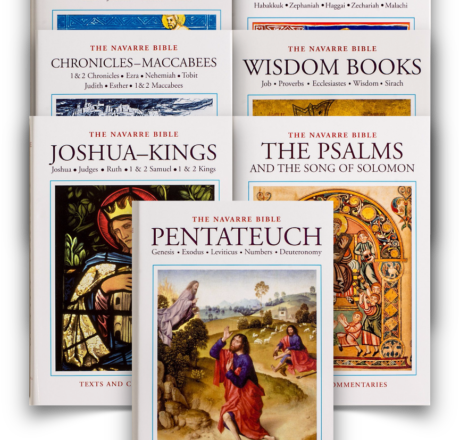
5:1-30. The structure here is similar to that of chapters 1 and 2, which focused on Daniel as an interpreter of dreams; here it is not a dream but a vision. First comes an account of the king’s vision (vv. 1-12), then Daniel’s interpretation (vv. 13-28), and finally the king’s reaction, and the events that prove Daniel right. The author uses considerable artistic license in his references to the historical context: Belshazzar was not Nebuchadnezzar’s son (v. 11), nor did Darius the Mede succeed Belshazzar (6:1); cf. “Introduction”, pp. 794f, above. But by depicting Belshazzar as Nebuchadnezzar’s son, the sacred writer creates a link with the previous chapter and is able to explain the disappearance, by divine decree, of the empire, that is, the statue’s golden head (cf. 2:38). The dependence of this on the previous chapter, to which it refers (cf.4:5 and 5:11-12, 18-21), suggests that it is designed to round off the earlier one by showing Daniel’s connection with the last king of Babylon (according to the book itself, that is--not in real life). The story illustrates, also, what was said in 1:17--that Daniel “had understanding in all visions and dreams”. It is a gift that he makes available to the sacrilegious king, in the hope of changing his heart. 5:1-12. The sacrilege committed by the king and his court, and their idolatry, too, make this Belshazzar a sort of symbol of Antiochus Epiphanes, the king who sacked the temple and looted its sacred vessels (cf. 1 Mac 1:20-24; 2 Mac 5:11-16). The hand that writes on the wall, a sign of the living God (vv. 4-5), is something quite different from the pagan idols, which are incapable of movement. It is surprising that the king did not consult Daniel earlier (vv. 7-8), given that he was the official chief astrologer (v. 11). However, the sacred writer tells the story as he does, in order to highlight, once again, the superiority of Daniel’s wisdom over that of all the wise men of Babylon and all their magic arts. Daniel’s gift is seen by this polytheistic people as a spirit of a god which makes Daniel like the gods.
5:13-28. The king is ready to believe in Daniel’s supernatural powers, and offers him great rewards to use them on his behalf (vv. 14-16); but Daniel makes it clear that he never acts for personal gain. He is ready to interpret the writing on the wall, but he wants the king to acknowledge the Most High God, as his father had to do when misfortune overtook him (vv. 18-21). Therefore, he plainly tells the king what his sin has been (vv. 22-23) and reveals to him the sentence that God has passed--in other words, the meaning of the writing on the wall (vv. 24-28).
Four words were written by the mysterious hand according to the Masoretic text (which repeats the first word). They are the names of Eastern measures and coins--the mina, the shekel and the half-mina or "paras". In his interpretation, Daniel links them to three verbs that sound like them--the verb "manah", meaning to measure; "saqal", to weigh; and "paras", to divide. The last of the words in the Masoretic text is the plural ("parsim"), so that it sounds like “Persians” in Aramaic. And so, by this play on words, the end of the Babylonian empire and the arrival of the Persians is announced.
This sentence is passed on Belshazzar not only because he failed to glorify the God who gave him life (v. 23) but because he showed him disrespect through the sacrilegious use of the sacred vessels. Theodoret of Cyrus, commenting on v. 23, points out that Daniel “teaches them that they should worship the Lord God, not the things that they can see. Therefore, he denounces the vanity of the king, and tells him that the invisible God holds the high heavens in his sway. ‘You,’ he says to the king, ‘you have not humbled your heart, nor seen the greatness of the heart of heaven, who is God and Lord of everything that is. If you had not been blinded by your pride, you would not have taken the vessels of the Lord from his temple'" "Interpretatio in Danielem", 5, 23).
From: Luke 21:12-19
Discourse on the Destruction of Jerusalem
and the End of the World (Continuation)
-----------------------------------------
(Jesus said to His disciples), [12] "But before all this they will lay their hands on you and persecute you, delivering you up to the synagogues and prisons, and you will be brought before kings and governors for My name's sake. [13] This will be a time for you to bear testimony. [14] Settle it therefore in your minds, not to meditate beforehand how to answer; [15] for I will give you a mouth and wisdom, which none of your adversaries will be able to withstand or contradict. [16] You will be delivered up even by parents and brothers and kinsmen and friends, and some of you they will put to death; [17] you will be hated by all for My name's sake. [18] But not a hair of your head will perish. [19] By your endurance you will gain your lives."
***********************************************************************
Commentary:
19. Jesus foretells all kinds of persecution. Persecution itself is something inevitable: "all who desire to live a godly life in Christ Jesus will be persecuted" (2 Timothy 3:12). His disciples will have need to remember the Lord's warning at the Last Supper: "A servant is not greater than his master. If they persecuted Me, they will persecute you" (John 15:20). However, these persecutions are part of God's providence: they happen because He lets them happen, which He does in order to draw greater good out of them. Persecution provides Christians with an opportunity to bear witness to Christ; without it the blood of martyrs would not adorn the Church. Moreover, our Lord promises to give special help to those who suffer persecution, and He tells them not to be afraid: He will give them of His own wisdom to enable them to defend themselves; He will not permit a hair of their heads to perish, that is, even apparent misfortune and loss will be for them a beginning of Heaven.
From Jesus' words we can also deduce the obligation of every Christian to be ready to lose life rather than offend God. Only those will attain salvation who persevere until the end in faithfulness to the Lord. The three Synoptic Gospels locate His exhortation to perseverance in this discourse (cf. Matthew 24:13; Mark 13:13) and St. Matthew gives it elsewhere (Matthew 10:22) as does St. Peter (1 Peter 5:9)—all of which underlines the importance for every Christian of this warning from our Lord.
Disclaimer: Opinions posted on Free Republic are those of the individual posters and do not necessarily represent the opinion of Free Republic or its management. All materials posted herein are protected by copyright law and the exemption for fair use of copyrighted works.