
Posted on 11/22/2025 5:27:07 AM PST by fidelis
Memorial of Saint Cecilia, Virgin and Martyr
“That the dead will rise even Moses made known in the passage about the bush, when he called ‘Lord’ the God of Abraham, the God of Isaac, and the God of Jacob; and he is not God of the dead, but of the living, for to him all are alive.” Luke 20:37–38
Jesus gives this response to some of the Sadducees who question Him about the resurrection of the dead. The Sadducees did not believe in the resurrection of the body, whereas the Pharisees did. Thus, the Sadducees asked Jesus about the resurrection of the body using an almost unheard of example. They refer to the levirate law found in Deuteronomy 25:5ff which states that if a married man dies before having children, the brother of that man must marry his wife and provide descendants for his brother. Thus, the Sadducees present the scenario where seven brothers die, each one subsequently taking the same wife. The question they posed was, “Now at the resurrection whose wife will that woman be? For all seven had been married to her.” Jesus answers by explaining that marriage is for this life, not the life to come at the resurrection. Therefore, none of the brothers will be married to her when they rise.
Some spouses have a hard time with this teaching, in that they love their spouse and desire to remain married in Heaven and at the time of the final resurrection. For those who feel this way, rest assured that the bonds of love we form on earth will remain and even be strengthened in Heaven. And when the end of the world comes and all of our bodies rise and are reunited with our souls, those bonds of love will remain stronger than ever. However, marriage, in the earthly sense, will be no more. It will be replaced by the pure love of the new life to come.
This teaching gives us reason to ponder further the beautiful teaching of our Lord about His return in glory and, as we say in the Creed, “the resurrection of the dead and the life of the world to come.” We profess this belief every Sunday at Mass. But for many, it can be hard to understand. So what do we actually believe?
Simply put, we believe that when we die, our body is “laid to rest,” but our soul enters a moment of particular judgment. Those who remain in mortal sin are eternally separated from God. But those who die in a state of grace will eternally live with God. Most people who die will most likely die with some lasting venial sins on their soul. Thus, Purgatory is the grace of final purification that the person’s soul encounters upon death. Purgatory is simply the purifying love of God which has the effect of eliminating every last sin and imperfection, and every attachment to sin, so that the purified soul can see God face-to-face in Heaven. But it doesn’t stop there... Those souls who are in mortal sin will also be reunited with their bodies, but their body and soul will live separated from God forever. Thankfully, those who are in a state of grace and have endured their final purification will be resurrected and share in the new Heavens and new Earth forever, body and soul as God intended.
Reflect, today, upon this glorious teaching of our Lord that you profess faith in every time you pray the Creed. Keeping your eyes on Heaven and, especially, on the final and glorious resurrected state in which you will live in the new Heaven and Earth must become your daily practice. The more we live with this holy expectation, the more we will live here and now as a time of preparation for this final existence. Build treasure now in anticipation of this glorious day and believe that it is the eternity to which you are called.
My resurrected Lord, You now reign in Heaven, body and soul, in anticipation of the final and glorious resurrection of all the dead. May I always keep my eyes on this final goal of human life and do all that I can to prepare for this eternity of glory and love. Jesus, I trust in You.
Please keep in mind that this is a Catholic Caucus/Devotional thread for the purpose of prayerful reflection on the Sacred Scriptures and is closed to debate of any kind. Per FR policy on Religion Caucus threads, off-topic, argumentative, and abusive comments are not allowed and will be submitted to the Mods for deletion. Thanks, and God bless you.
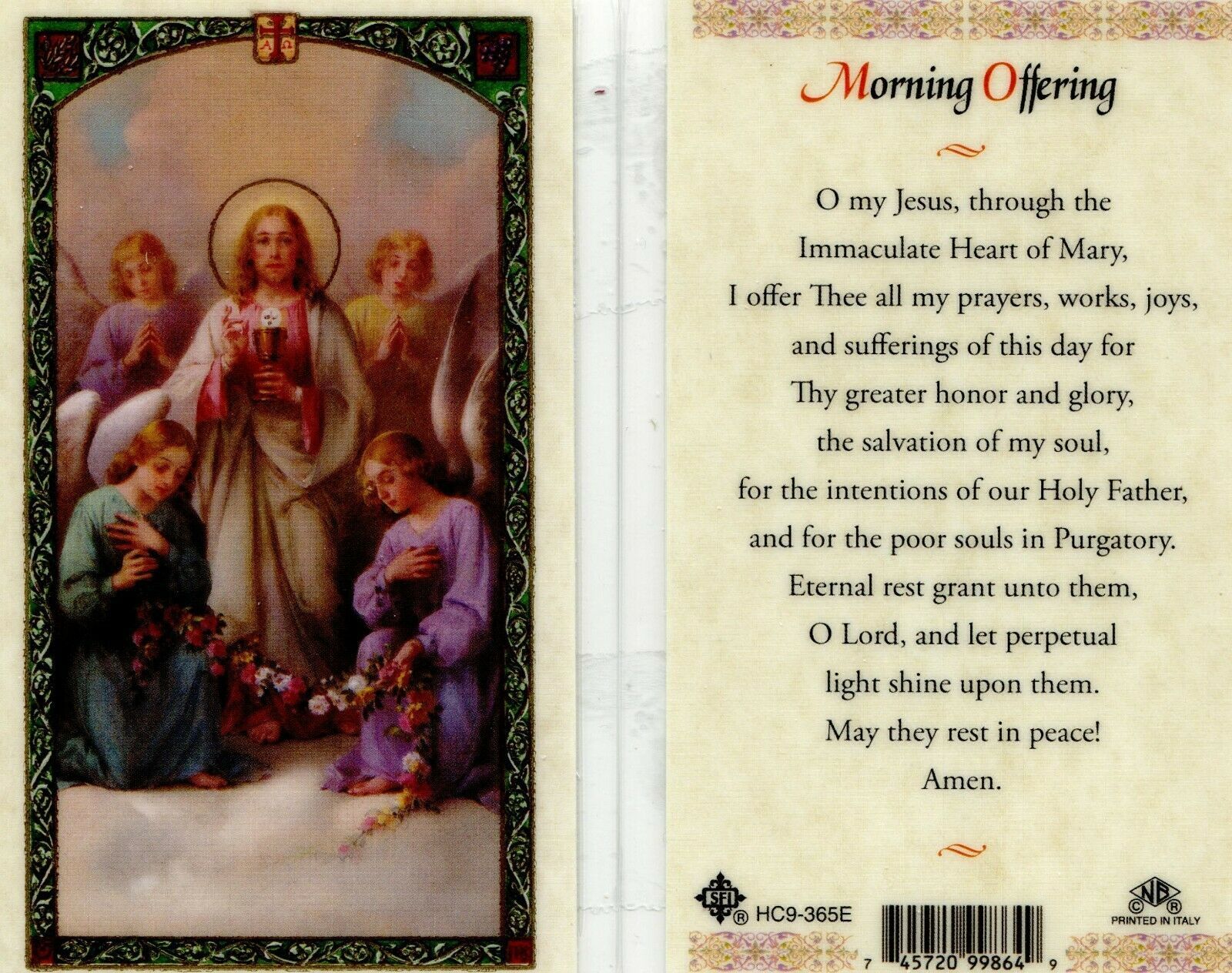
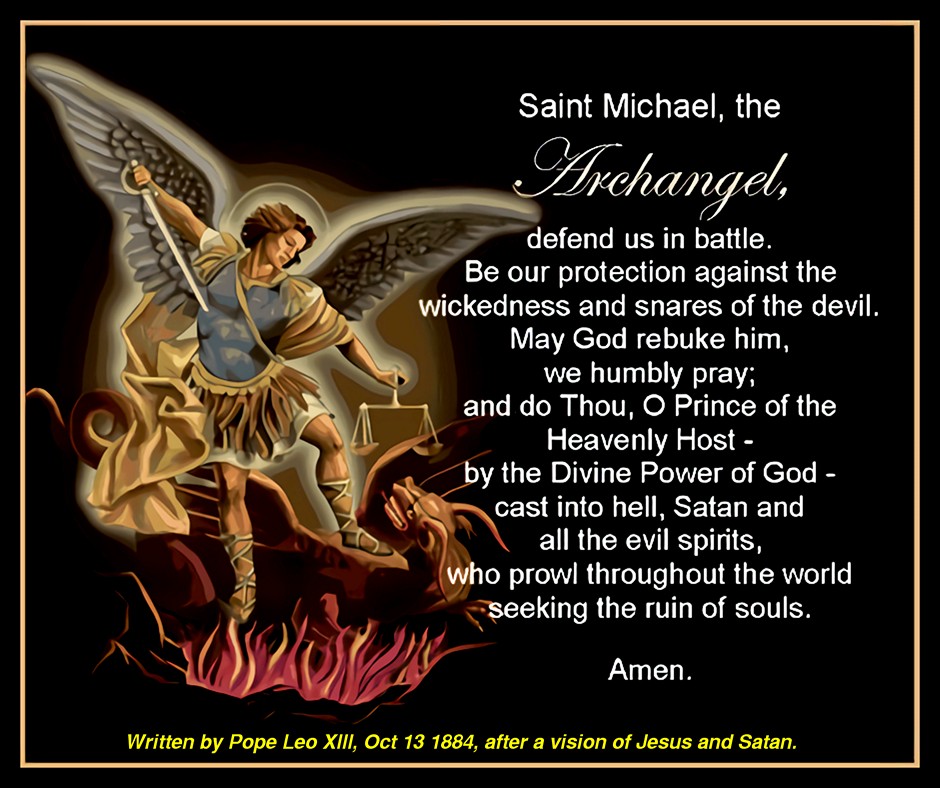
The Month of November is Dedicated to Praying for the Holy Souls in Purgatory

“He took up a collection, and sent it to Jerusalem to provide for a sin offering. In doing this he acted very well and honorably, taking account of the resurrection. For if he were not expecting that those who had fallen would rise again, it would have been superfluous and foolish to pray for the dead. But if he was looking to the splendid reward that is laid up for those who fall asleep in godliness, it was a holy and pious thought. Therefore he made atonement for the dead, that they might be delivered from their sin.” (2 Maccabees 12:43-45)

Pope Leo XIV’s prayer intentions for the month of November, 2025:
For the prevention of suicide
Let us pray that those who are struggling with suicidal thoughts might find the support, care, and love they need in their community, and be open to the beauty of life.

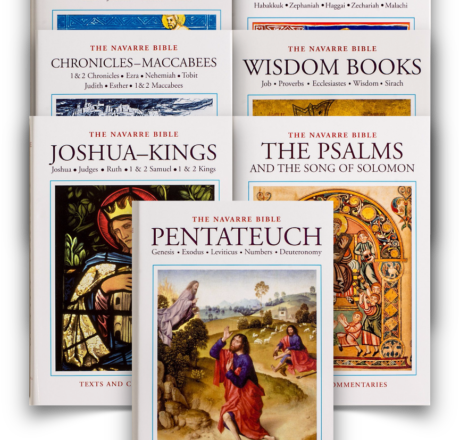
First Reading:
From: 1 Maccabees 6:1-13
Death of Antiochus IV Epiphanes
-----------------------------------------
[1] King Antiochus was going through the upper provinces when he heard that Blymais in Persia was a city famed for its wealth in silver and gold. [2] Its temple was very rich, containing golden shields, breastplates, and weapons left there by Alexander, the son of Philip, the Macedonian king who first reigned over the Greeks.
[3] So he came and tried to take the city and plunder it, but he could not, because his plan became known to the men of the city [4] and they withstood him in battle So he fled and in great grief departed from there to return to Babylon.
[5] Then some one came to him in Persia and reported that the armies which had gone into the land of Judah had been routed; [6] that Lysias had gone first with a strong force, but had turned and fled before the Jews; that the Jews had grown strong from the arms, supplies, and abundant spoils which they had taken from the armies they had cut down, [7] that they had torn down the abomination which he had erected upon the altar in Jerusalem; and that they had surrounded the sanctuary with high walls as before, and also Beth-zur, his city.
[8] When the king heard this news, he was astounded and badly shaken. He took to his bed and became sick from grief, because things had not turned out for him as he had planned. [9] He lay there for many days, because deep grief continually gripped him, and he concluded that he was dying. [10] So he called all his friends and said to them, “Sleep departs from my eyes and I am downhearted with worry. [11] I said to myself, ‘To what distress I have come! And into what a great flood I now am plunged! For I was kind and beloved in my power.’ [12] But now I remember the evils I did in Jerusalem. I seized all her vessels of silver and gold; and I sent to destroy the inhabitants of Judah without good reason. [13] I know that it is because of this that these evils have come upon me; and behold, I am perishing of deep grief in a strange land.”
***********************************************************************
Commentary:
6:1-17. According to 3:29-31, Antiochus embarked on his expedition to get funds to counter the drain on the empire caused by the war against the Jews. And now we are told that the king’s death was brought on by the reports on that war. The information given here about the death of Antiochus agrees with that in 2 Maccabees 9:1-29 only in a very general way. First Maccabees says that Elymais was a city, whereas it was a region in Persia (Elam) where the capital, Susa, was located. The king dies as a result of depression caused by reports of the Jewish victories, and he acknowledges that he has acted wrongly towards the Jews; but, he does not go so far as to invoke the God of Israel (as 2 Maccabees says he did). Second Maccabees, moreover, describes him as suffering a most awful death (not the case here).However, both books make it clear that Antiochus realized that in persecuting the Jews and profaning their temple he was taking on someone much more powerful than himself, and that that was why he was punished by God. In Christian tradition (St Hippolytus, "In Danielem", 4, 49; St Jerome, "Commentaria in Danielem", 11), Antiochus is depicted as the first instance of the Antichrist who for a period seeks to take God’s place but is eventually overpowered by him.
The death of Antiochus, resulting from his frustration at not being able to eradicate loyalty to and worship of the true God, symbolizes in some way the tragic condition of those who go so far as to try to uproot God from their own lives or that of society.
From: Luke 20:27-40
The Resurrection of the Dead
----------------------------
[27] There came to Him (Jesus) some Sadducees, those who say that there is no resurrection, [28] and they asked Him a question saying, "Teacher, Moses wrote for us that if a man's brother dies, having a wife but no children, the man must take the wife and raise up children for his brother. [29] Now there were seven brothers; the first took a wife, and died without children; [30] and the second [31] and the third took her, and likewise all seven left no children and died. [32] Afterward the woman also died. [33] In the resurrection, therefore, whose wife will the woman be? For the seven had her as wife."
[34] And Jesus said to them, "The sons of this age marry and are given in marriage; [35] but those who are accounted worthy to attain to that age and to the resurrection from the dead neither marry nor are given in marriage, [36] for they cannot die any more, because they are equal to angels and are sons of God, being sons of the resurrection. [37] But that the dead are raised, even Moses showed, in the passage about the bush, where he calls the Lord the God of Abraham and the God of Isaac and the God of Jacob. [38] Now He is not God of the dead, but of the living; for all live to Him." [39] And some of scribes answered, "Teacher, you have spoken well." [40] For they no longer dared to ask Him any question.
***********************************************************************
Commentary:
27-40. The Sadducees did not believe in the resurrection of the body or the immortality of the soul. They came along to ask Jesus a question which is apparently unanswerable. According to the Levirate law (cf. Deuteronomy 25:5ff), if a man died without issue, his brother was duty bound to marry his widow to provide his brother with descendants. The consequences of this law would seem to give rise to a ridiculous situation at the resurrection of the dead.
Our Lord replies by reaffirming that there will be a resurrection; and by explaining the properties of those who have risen again, the Sadducees' argument simply evaporates. In this world people marry in order to continue the species: that is the primary aim of marriage. After the resurrection there will be no more marriage because people will not die anymore.
Quoting Sacred Scripture (Exodus 3:2, 6) our Lord shows the grave mistake the Sadducees make, and He argues: God is not the God of the dead but of the living, that is to say, there exists a permanent relationship between God and Abraham, Isaac and Jacob, who have been dead for years. Therefore, although these just men have died as far as their bodies are concerned, they are alive, truly alive, in God—their souls are immortal--and they are awaiting the resurrection of their bodies.
See also the notes on Matthew 22:23-33 and Mark 12:18-27.
The note on Matthew 22:23-33 states: 23-33. The Sadducees argue against belief in the resurrection of the dead on the basis of the Levirate law, a Jewish law which laid down that when a married man died without issue, one of his brothers, according to a fixed order, should marry his widow and the first son of that union be given the dead man's name. By outlining an extreme cases the Sadducees make the law and belief in resurrection look ridiculous. In His reply, Jesus shows up the frivolity of their objections and asserts the truth of the resurrection of the dead.
The note on Mark 12:18-27 states: 18-27. Before answering the difficulty proposed by the Sadducees, Jesus wants to identify the source of the problem--man's tendency to confine the greatness of God inside a human framework through excessive reliance on reason, not giving due weight to divine Revelation and the power of God. A person can have difficulty with the truths of faith; this is not surprising, for these truths are above human reason. But it is ridiculous to try to find contradictions in the revealed word of God; this only leads away from any solution of difficulty and may make it impossible to find one's way back to God. We need to approach Sacred Scripture, and, in general, the things of God, with the humility which faith demands. In the passage about the burning bush, which Jesus quotes to the Sadducees, God says this to Moses: "Put off your shoes from your feet, for the place on which you stand is holy ground" (Exodus 3:5).
Disclaimer: Opinions posted on Free Republic are those of the individual posters and do not necessarily represent the opinion of Free Republic or its management. All materials posted herein are protected by copyright law and the exemption for fair use of copyrighted works.
