Posted on 11/19/2025 4:37:53 AM PST by annalex
Wednesday of week 33 in Ordinary Time ![]() Mechthild of Magdeburg commemorated near the Magdalene Chapel in Magdeburg Readings at MassLiturgical Colour: Green. Year: C(I).
The creator of the world will give you back both breath and lifeThere were seven brothers who were arrested with their mother. The king tried to force them to taste pig’s flesh, which the Law forbids, by torturing them with whips and scourges. But the mother was especially admirable and worthy of honourable remembrance, for she watched the death of seven sons in the course of a single day, and endured it resolutely because of her hopes in the Lord. Indeed she encouraged each of them in the language of their ancestors; filled with noble conviction, she reinforced her womanly argument with manly courage, saying to them, ‘I do not know how you appeared in my womb; it was not I who endowed you with breath and life, I had not the shaping of your every part. It is the creator of the world, ordaining the process of man’s birth and presiding over the origin of all things, who in his mercy will most surely give you back both breath and life, seeing that you now despise your own existence for the sake of his laws.’ Antiochus thought he was being ridiculed, suspecting insult in the tone of her voice; and as the youngest was still alive he appealed to him not with mere words but with promises on oath to make him both rich and happy if he would abandon the traditions of his ancestors; he would make him his Friend and entrust him with public office. The young man took no notice at all, and so the king then appealed to the mother, urging her to advise the youth to save his life. After a great deal of urging on his part she agreed to try persuasion on her son. Bending over him, she fooled the cruel tyrant with these words, uttered in the language of their ancestors, ‘My son, have pity on me; I carried you nine months in my womb and suckled you three years, fed you and reared you to the age you are now (and cherished you). I implore you, my child, observe heaven and earth, consider all that is in them, and acknowledge that God made them out of what did not exist, and that mankind comes into being in the same way. Do not fear this executioner, but prove yourself worthy of your brothers, and make death welcome, so that in the day of mercy I may receive you back in your brothers’ company.’ She had scarcely ended when the young man said, ‘What are you all waiting for? I will not comply with the king’s ordinance; I obey the ordinance of the Law given to our ancestors through Moses. As for you, sir, who have contrived every kind of evil against the Hebrews, you will certainly not escape the hands of God.’
I shall be filled, when I awake, with the sight of your glory, O Lord. Lord, hear a cause that is just, pay heed to my cry. Turn your ear to my prayer: no deceit is on my lips. I shall be filled, when I awake, with the sight of your glory, O Lord. I kept my feet firmly in your paths; there was no faltering in my steps. I am here and I call, you will hear me, O God. Turn your ear to me; hear my words. I shall be filled, when I awake, with the sight of your glory, O Lord. Guard me as the apple of your eye. Hide me in the shadow of your wings As for me, in my justice I shall see your face and be filled, when I awake, with the sight of your glory. I shall be filled, when I awake, with the sight of your glory, O Lord.
Alleluia, alleluia! Whenever anyone obeys what Christ has said, God’s love comes to perfection in him. Alleluia!
Alleluia, alleluia! I chose you from the world to go out and bear fruit, fruit that will last, says the Lord. Alleluia!
The parable of the talentsWhile the people were listening, Jesus went on to tell a parable, because he was near Jerusalem and they imagined that the kingdom of God was going to show itself then and there. Accordingly he said, ‘A man of noble birth went to a distant country to be appointed king and afterwards return. He summoned ten of his servants and gave them ten pounds. “Do business with these” he told them “until I get back.” But his compatriots detested him and sent a delegation to follow him with this message, “We do not want this man to be our king.” ‘Now on his return, having received his appointment as king, he sent for those servants to whom he had given the money, to find out what profit each had made. The first came in and said, “Sir, your one pound has brought in ten.” “Well done, my good servant!” he replied “Since you have proved yourself faithful in a very small thing, you shall have the government of ten cities.” Then came the second and said, “Sir, your one pound has made five.” To this one also he said, “And you shall be in charge of five cities.” Next came the other and said, “Sir, here is your pound. I put it away safely in a piece of linen because I was afraid of you; for you are an exacting man: you pick up what you have not put down and reap what you have not sown.” “You wicked servant!” he said “Out of your own mouth I condemn you. So you knew I was an exacting man, picking up what I have not put down and reaping what I have not sown? Then why did you not put my money in the bank? On my return I could have drawn it out with interest.” And he said to those standing by, “Take the pound from him and give it to the man who has ten pounds.” And they said to him, “But, sir, he has ten pounds…”. “I tell you, to everyone who has will be given more; but from the man who has not, even what he has will be taken away. ‘“But as for my enemies who did not want me for their king, bring them here and execute them in my presence.”’ When he had said this he went on ahead, going up to Jerusalem. You can also view this page with the New Testament in Greek and English. Universalis podcast: Resurrection is Now: part 6 of 8The Moment of Choice (continued): the Resurrection of the Body; Heaven. (15 minutes) Christian Art![]() Each day, The Christian Art website gives a picture and reflection on the Gospel of the day. The readings on this page are from the Jerusalem Bible, which is used at Mass in most of the English-speaking world. The New American Bible readings, which are used at Mass in the United States, are available in the Universalis apps, programs and downloads. |
KEYWORDS: catholic; lk19; ordinarytime; prayer;

Please FReepmail me to get on/off the Alleluia Ping List.
| Luke | |||
| English: Douay-Rheims | Latin: Vulgata Clementina | Greek NT: Byzantine/Majority Text (2000) | |
| Luke 19 | |||
| 11. | As they were hearing these things, he added and spoke a parable, because he was nigh to Jerusalem, and because they thought that the kingdom of God should immediately be manifested. | Hæc illis audientibus adjiciens, dixit parabolam, eo quod esset prope Jerusalem : et quia existimarent quod confestim regnum Dei manifestaretur. | ακουοντων δε αυτων ταυτα προσθεις ειπεν παραβολην δια το εγγυς αυτον ειναι ιερουσαλημ και δοκειν αυτους οτι παραχρημα μελλει η βασιλεια του θεου αναφαινεσθαι |
| 12. | He said therefore: A certain nobleman went into a far country, to receive for himself a kingdom, and to return. | Dixit ergo : Homo quidam nobilis abiit in regionem longinquam accipere sibi regnum, et reverti. | ειπεν ουν ανθρωπος τις ευγενης επορευθη εις χωραν μακραν λαβειν εαυτω βασιλειαν και υποστρεψαι |
| 13. | And calling his ten servants, he gave them ten pounds, and said to them: Trade till I come. | Vocatis autem decem servis suis, dedit eis decem mnas, et ait ad illos : Negotiamini dum venio. | καλεσας δε δεκα δουλους εαυτου εδωκεν αυτοις δεκα μνας και ειπεν προς αυτους πραγματευσασθε εως ερχομαι |
| 14. | But his citizens hated him: and they sent an embassage after him, saying: We will not have this man to reign over us. | Cives autem ejus oderant eum : et miserunt legationem post illum, dicentes : Nolumus hunc regnare super nos. | οι δε πολιται αυτου εμισουν αυτον και απεστειλαν πρεσβειαν οπισω αυτου λεγοντες ου θελομεν τουτον βασιλευσαι εφ ημας |
| 15. | And it came to pass, that he returned, having received the kingdom: and he commanded his servants to be called, to whom he had given the money, that he might know how much every man had gained by trading. | Et factum est ut rediret accepto regno : et jussit vocari servos, quibus dedit pecuniam, ut sciret quantum quisque negotiatus esset. | και εγενετο εν τω επανελθειν αυτον λαβοντα την βασιλειαν [και] ειπεν φωνηθηναι αυτω τους δουλους τουτους οις εδωκεν το αργυριον ινα γνω τις τι διεπραγματευσατο |
| 16. | And the first came, saying: Lord, thy pound hath gained ten pounds. | Venit autem primus dicens : Domine, mna tua decem mnas acquisivit. | παρεγενετο δε ο πρωτος λεγων κυριε η μνα σου προσειργασατο δεκα μνας |
| 17. | And he said to him: Well done, thou good servant, because thou hast been faithful in a little, thou shalt have power over ten cities. | Et ait illi : Euge bone serve, quia in modico fuisti fidelis, eris potestatem habens super decem civitates. | και ειπεν αυτω ευ αγαθε δουλε οτι εν ελαχιστω πιστος εγενου ισθι εξουσιαν εχων επανω δεκα πολεων |
| 18. | And the second came, saying: Lord, thy pound hath gained five pounds. | Et alter venit, dicens : Domine, mna tua fecit quinque mnas. | και ηλθεν ο δευτερος λεγων κυριε η μνα σου εποιησεν πεντε μνας |
| 19. | And he said to him: Be thou also over five cities. | Et huic ait : Et tu esto super quinque civitates. | ειπεν δε και τουτω και συ γινου επανω πεντε πολεων |
| 20. | And another came, saying: Lord, behold here is thy pound, which I have kept laid up in a napkin; | Et alter venit, dicens : Domine, ecce mna tua, quam habui repositam in sudario : | και ετερος ηλθεν λεγων κυριε ιδου η μνα σου ην ειχον αποκειμενην εν σουδαριω |
| 21. | For I feared thee, because thou art an austere man: thou takest up what thou didst not lay down, and thou reapest that which thou didst not sow. | timui enim te, quia homo austerus es : tollis quod non posuisti, et metis quod non seminasti. | εφοβουμην γαρ σε οτι ανθρωπος αυστηρος ει αιρεις ο ουκ εθηκας και θεριζεις ο ουκ εσπειρας |
| 22. | He saith to him: Out of thy own mouth I judge thee, thou wicked servant. Thou knewest that I was an austere man, taking up what I laid not down, and reaping that which I did not sow: | Dicit ei : De ore tuo te judico, serve nequam. Sciebas quod ego homo austerus sum, tollens quod non posui, et metens quod non seminavi : | λεγει δε αυτω εκ του στοματος σου κρινω σε πονηρε δουλε ηδεις οτι εγω ανθρωπος αυστηρος ειμι αιρων ο ουκ εθηκα και θεριζων ο ουκ εσπειρα |
| 23. | And why then didst thou not give my money into the bank, that at my coming, I might have exacted it with usury? | et quare non dedisti pecuniam meam ad mensam, ut ego veniens cum usuris utique exegissem illam ? | και δια τι ουκ εδωκας το αργυριον μου επι τραπεζαν και εγω ελθων συν τοκω αν επραξα αυτο |
| 24. | And he said to them that stood by: Take the pound away from him, and give it to him that hath ten pounds. | Et astantibus dixit : Auferte ab illo mnam, et date illi qui decem mnas habet. | και τοις παρεστωσιν ειπεν αρατε απ αυτου την μναν και δοτε τω τας δεκα μνας εχοντι |
| 25. | And they said to him: Lord, he hath ten pounds. | Et dixerunt ei : Domine, habet decem mnas. | και ειπον αυτω κυριε εχει δεκα μνας |
| 26. | But I say to you, that to every one that hath shall be given, and he shall abound: and from him that hath not, even that which he hath, shall be taken from him. | Dico autem vobis, quia omni habenti dabitur, et abundabit : ab eo autem qui non habet, et quod habet auferetur ab eo. | λεγω γαρ υμιν οτι παντι τω εχοντι δοθησεται απο δε του μη εχοντος και ο εχει αρθησεται απ αυτου |
| 27. | But as for those my enemies, who would not have me reign over them, bring them hither, and kill them before me. | Verumtamen inimicos meos illos, qui noluerunt me regnare super se, adducite huc : et interficite ante me. | πλην τους εχθρους μου εκεινους τους μη θελησαντας με βασιλευσαι επ αυτους αγαγετε ωδε και κατασφαξατε εμπροσθεν μου |
| 28. | And having said these things, he went before, going up to Jerusalem. | Et his dictis, præcedebat ascendens Jerosolymam. | και ειπων ταυτα επορευετο εμπροσθεν αναβαινων εις ιεροσολυμα |
(*) The laconic quality of Latin is notable in verse 15.

19:11–27
11. And as they heard these things, he added and spake a parable, because he was nigh to Jerusalem, and because they thought that the kingdom of God should immediately appear.
12. He said therefore, A certain nobleman went into a far country to receive for himself a kingdom, and to return.
13. And he called his ten servants, and delivered them ten pounds, and said unto them, Occupy till I come.
14. But his citizens hated him, and sent a message after him, saying, We will not have this man to reign over us.
15. And it came to pass, that when he was returned, having received the kingdom, then he commanded these servants to be called unto him, to whom he had given the money, that he might know how much every man had gained by trading.
16. Then came the first, saying, Lord, thy pound hath gained ten pounds.
17. And he said unto him, Well, thou good servant: because thou hast been faithful in a very little, have thou authority over ten cities.
18. And the second came, saying, Lord, thy pound hath gained five pounds.
19. And he said likewise to him, Be thou also over five cities.
20. And another came, saying, Lord, behold, here is thy pound, which I have kept laid up in a napkin:
21. For I feared thee, because thou art an austere man: thou takest up that thou layedst not down, and reapest that thou didst not sow.
22. And he saith unto him, Out of thine own mouth will I judge thee, thou wicked servant. Thou knewest that I was an austere man, taking up that I laid not down, and reaping that I did not sow:
23. Wherefore then gavest not thou my money into the bank, that at my coming I might have required mine own with usury?
24. And he said unto them that stood by, Take from him the pound, and give it to him that hath ten pounds.
25. (And they said unto him, Lord, he hath ten pounds.)
26. For I say unto you, That unto every one which hath shall be given; and from him that hath not, even that he hath shall be taken away from him.
27. But those mine enemies, which would not that I should reign over them, bring hither, and slay them before me.
EUSEBIUS. There were some who thought that our Saviour’s kingdom would commence at His first coming, and they were expecting it shortly to appear when He was preparing to go up to Jerusalem; so astonished were they by the divine miracles which He did. He therefore informs them, that He should not receive the kingdom from His Father until He had left mankind to go to His Father.
THEOPHYLACT. The Lord points out the vanity of their imaginations, for the senses cannot embrace the kingdom of God; He also plainly shews to them, that as God He knew their thoughts, putting to them the following parable, A certain nobleman, &c.
CYRIL OF ALEXANDRIA. This parable is intended to set before us the mysteries of Christ from the first to the last. For God was made man, who was the Word from the beginning; and though He became a servant, yet was He noble because of His unspeakable birth from the Father.
BASIL. (in Esai. c. 13. 13.) Noble, not only in respect of His Godhead, but of His manhood, being sprung from the seed of David according to the flesh. He went into a far country, separated not so much by distance of place as by actual condition. For God Himself is nigh to every one of us, when our good works bind us to Him. And He is afar off, as often as by cleaving to destruction, we remove ourselves away from Him. To this earthly country then He came at a distance from God, that He might receive the kingdom of the Gentiles, according to the Psalm, Ask of me, and I will give thee the heathen for thine inheritance. (Ps. 2:8.)
AUGUSTINE. (de Qu. Ev. lib. ii. qu. 40.) Or the far country is the Gentile Church, extending to the uttermost parts of the earth. For He went that the fulness of the Gentiles might come in; He will return that all Israel may be saved.
EUSEBIUS. Or by His setting out into a far country, He denotes His own ascension from earth to heaven. But when He adds, To receive for himself a kingdom, and to return; He points out His second appearance, when He shall come as a King and in great glory. He first of all calls Himself a man, because of His nativity in the flesh, then noble; not yet a King, because as yet at His first appearance He exercised no kingly power. It is also well said to obtain for Himself a kingdom, according to Daniel, Behold one like the Son of man came with the clouds of heaven, and a kingdom was given to him. (Dan. 7:13.)
CYRIL OF ALEXANDRIA. For ascending up to heaven, He sits on the right hand of the Majesty on high. (Heb. 1:3.) But being ascended, He hath dispensed to those that believe on Him different divine graces, as unto the servants were committed their Lord’s goods, that gaining something they might bring him token of their service. As it follows, And he called his ten servants, and delivered them ten pounds.
CHRYSOSTOM. Holy Scripture is accustomed to use the number ten as a sign of perfection, for if any one wishes to count beyond it, he has again to begin from unity, having in ten as it were arrived at a goal. And so in the giving of the talents, the one who reaches the goal of divine obedience is said to have received ten pounds.
AUGUSTINE. (ut sup.) Or by the ten pounds he signifies the law, because of the ten commandments, and by the ten servants, those to whom while under the law grace was preached. For so we must interpret the ten pounds given them for trading, seeing that they understood the law, when its veil was removed, to belong to the Gospel.
BEDE. A pound which the Greeks call μνᾶ is equal in weight to a hundred drachmas, and every word of Scripture, as suggesting to us the perfection of the heavenly life, shines as it were with the greatness of the hundredth number.
EUSEBIUS. By those then who receive the pounds, He means His disciples, giving a pound to each, since He entrusts to all an equal stewardship; He bade them put it out to use, as it follows, Occupy till I come. Now there was no other employment but to preach the doctrine of His kingdom to those who would hear it. But there is one and the same doctrine for all, one faith, one baptism. And therefore is one pound given to each.
CYRIL OF ALEXANDRIA. But greatly indeed do these differ from those who denied the kingdom of God, of whom it is added, But his citizens hated him. And this it is for which Christ upbraided the Jews, when He said, But now have they both seen and hated me and my Father. (John 15:24.) But they rejected His kingdom, saying to Pilate, We have no king but Cæsar. (John 19:15.)
EUSEBIUS. By citizens He signifies the Jews, who were sprung from the same lineage according to the flesh, and with whom He joined in the customs of the law.
AUGUSTINE. (de Quæst. Ev. ut sup.) And they sent a message after Him, because after His resurrection also, they persecuted His Apostles, and refused the preaching of the Gospel.
EUSEBIUS. After our Saviour had instructed them in the things belonging to His first coming, He proceeds to set forth His second coming with majesty and great glory, saying, And it came to pass, that when he was returned, having received the kingdom.
CHRYSOSTOM. (Hom. 39. in 1. ad Cor.) Holy Scripture notes two kingdoms of God, one indeed by creation, since by right of creation He is King over all men; the other by justification, since He reigns over the just, of their own will made subject to Him. And this is the kingdom which He is here said to have received.
AUGUSTINE. (de Quæst. Ev. ut sup.) He also returns after having received His kingdom, because in all glory will He come who appeared lowly to them to whom He said, My kingdom is not of this world. (John 18:36.)
CYRIL OF ALEXANDRIA. But when Christ returns, having taken unto Himself His kingdom, the ministers of the word will receive their deserved praises and delight in heavenly rewards, because they multiplied their talent by acquiring more talents, as it is added, Then came the first, saying, Lord, thy pound has gained ten pounds.
BEDE. The first servant is the order of teachers sent to the circumcision, who received one pound to put out to use, inasmuch as it was ordered to preach one faith. But this one pound gained ten pounds, because by its teaching it united to itself the people who were subject to the law. It follows, And he said unto him, Well done, thou good servant: because thou hast been faithful in a very little, &c. The servant is faithful in a very little who does not adulterate the word of God. For all the gifts we receive now are but small in comparison of what we shall have.
GREEK EXPOSITOR. (Evagrius.) Because he receives the reward of his own good works, he is said to be set over ten cities. And some conceiving unworthily of these promises imagine that they themselves are preferred to magistracies and chief places in the earthly Jerusalem, which is built with precious stones, because they have had their conversation honest in Christ; so little do they purge their soul of all hankering after power and authority among men.
AMBROSE. But the ten cities are the souls over whom he is rightly placed who has deposited in the minds of men his Lord’s money and the holy words, which are tried as silver is tried in the fire. For as Jerusalem is said to be built as a city, (Ps. 121:3.) so are peace-making souls. And as angels have rule, so have they who have acquired the life of angels.
It follows, And the second came, saying, Lord, thy pound has gained five pounds.
BEDE. That servant is the assembly of those who were sent to preach the Gospel to the uncircumcision, whose pound, that is the faith of the Gospel, gained five pounds, because it converted to the grace of Evangelical faith, the nations before enslaved to the five senses of the body. And he said likewise to him, Be thou also over five cities; that is, be exalted to shine through the faith and conversation of those souls which thou hast enlightened.
AMBROSE. Or perhaps differently; he who gained five pounds has all the moral virtues, for there are five senses of the body. He who gained ten has so much more, that is to say, the mysteries of the law as well as the moral virtues. The ten pounds may also here be taken to mean the ten words, that is, the teaching of the law; the five pounds, the ordering of discipline. But the scribe must be perfect in all things. And rightly, since He is speaking of the Jews, are there two only who bring their pounds multiplied, not indeed by a gainful interest of money, but a profitable stewardship of the Gospel. For there is one kind of usury in money lent on interest, another in heavenly teaching.
CHRYSOSTOM. For in earthly wealth it does not belong to one man to be made rich without another being made poor, but in spiritual riches, without his making another rich also. For in earthly matters participation lessens, in spiritual it increases wealth.
AUGUSTINE. (de Quæst. Evan. lib. ii. qu. 46.) Or else; That one of those who well employed their money gained ten pounds, another five, signifies that they acquired them for the flock of God, by whom the law was now understood through grace, either because of the ten commandments of the law, or because he, through whom the law was given, wrote five books; and to this belong the ten and five cities over which He appoints them to preside. For the manifold meanings or interpretations which spring up concerning some individual precept or book, when reduced and brought together in one, make as it were a city of living eternal reasons. Hence a city is not a multitude of living creatures, but of reasonable beings bound together by the fellowship of one law. The servants then who bring an account of that which they had received, and are praised for having gained more, represent those giving in their account who have well employed what they had received, to increase their Lord’s riches by those who believe on Him, while they who are unwilling to do this are signified by that servant who kept his pound laid up in a napkin; of whom it follows, And the third came, saying, Lord, behold, here is thy pound, which I have kept laid up in a napkin, &c. For there are some who flatter themselves with this delusion, saying, It is enough for each individual to answer concerning himself, what need then of others to preach and minister, in order that every one should be compelled also to give an account of himself, seeing that in the Lord’s sight even they are without excuse to whom the law was not given, and who were not asleep at the time of the preaching of the Gospel, for they might have known the Creator through the creature; and then it follows, For I feared thee, because thou art an austere man, &c. For this is, as it were, to reap when he did not sow, that is, to hold those guilty of ungodliness to whom this word of the law or the Gospel was not preached, and avoiding as it were this peril of judgment, with slothful toil they rest from the ministration of the word. And this it is to tie up in a napkin what they had received.
THEOPHYLACT. For with a napkin the face of the dead is covered; well then is this idler said to have wrapped up his pound in a napkin, because leaving it dead and unprofitable he neitheir touched nor increased it.
BEDE. Or to tie up money in a napkin is to hide the gifts we have received under the indolence of a sluggish body. But that which he thought to have used as an excuse is turned to his own blame, as it follows, He says unto him, Out of thy own mouth will I judge thee, thou wicked servant. He is called a wicked servant, as being slothful in business, and proud in questioning his Lord’s judgment. Thou knewest that I was an austere man, taking up that I laid not down, and reaping that I did not sow: wherefore then gavest thou not my money into the bank? As though he said, If thou knewest me to be a hard man, and a seeker of what is not mine own, why did not the thought of this strike thee with terror, that thou mightest be sure that I would require mine own with strictness?
But money or silver is the preaching of the Gospel and the word of God, for the words of the Lord are pure words as silver tried in the fire. (Ps. 12:6.) And this word of the Lord ought to be given to the bank, that is, put into hearts meet and ready to receive it.
AUGUSTINE. (de Quæst. Ev. ubi sup.) Or the bank into which the money was to be given, we take to be the very profession of religion which is publicly put forth as a means necessary to salvation.
CHRYSOSTOM. In the payment of earthly riches the debtors are obliged only to strictness. Whatever they receive, so much must they return, nothing more is required of them. But with regard to the words of God, we are not only bound diligently to keep, but we are commanded to increase; and hence it follows, that at my coming I might have required the same with usury.
BEDE. For they who by faith receive the riches of the word from a teacher, must by their works pay it back with usury, or be earnestly desirous to know something more than what they have as yet learnt from the mouth of their preachers.
CYRIL OF ALEXANDRIA. It is the work of teachers to engraft in their hearers’ minds wholesome and profitable words, but of divine power to win the hearers to obedience, and render their understanding fruitful. Now this servant, so far from being commended or thought worthy of honour, was condemned as slothful, as it follows, And he said unto them that stood by, Take from him the pound, and give to him that hath ten pounds.
AUGUSTINE. (de Quæst. Ev. l. ii. qu. 46.) Signifying thereby that both he will lose the gift of God, who having, hath not, that is, useth it not, and that he will have it increased, who having, hath, that is, rightly useth it.
BEDE. The mystical meaning I suppose is this, that at the coming in of the Gentiles all Israel shall be saved, (Rom. 11:26.) and that then the abundant grace of the Spirit will be poured out upon the teachers.
CHRYSOSTOM. (Hom. 43. in Act.) He says then to them that stood by, Take from him the pound, because it is not the part of a wise man to punish, but he needs some one else as the minister of the judge in executing punishment. For even God does not Himself inflict punishment, but through the ministry of His angels.
AMBROSE. Nothing is said of the other servants, who like wasteful debtors lost all that they had received. By those two servants who gained by trading, are signified that small number, who in two companies were sent as dressers of the vineyard; by the remainder all the Jews. It follows, And they said unto him, Lord, he has ten pounds. And lest this should seem unjust, it is added, For to every one that hath, it shall be given.
THEOPHYLACT. For seeing that he gained ten, by multiplying his pound tenfold, it is plain that by having more to multiply, he would be an occasion of greater gain to his Lord. But from the slothful and idle, who stirs not himself to increase what he has received, shall be taken away even that which he possesses, that there may be no gap in the Lord’s account when it is given to others and multiplied. But this is not to be applied only to the words of God and teaching, but also to the moral virtues; for in respect of these also, God sends us His gracious gifts, endowing one man with fasting, another with prayer, another with mildness or humility; but all these so long as we watch strictly over ourselves we shall multiply, but if we grow cold we shall extinguish. He adds of His adversaries, But those mine enemies who would not that I should reign over them, bring them hither, and slay them before me.
AUGUSTINE. (ubi sup.) Whereby He describes the ungodliness of the Jews who refused to be converted to Him.
THEOPHYLACT. Whom he will deliver to death, casting them into the outer fire. But even in this world they were most miserably slain by the Roman army.
CHRYSOSTOM. These things are of force against the Marcionists. For Christ also says, Bring hither my enemies, and slay them before me. (Mat. 21:41). Whereas they say Christ indeed is good, but the God of the Old Testament evil. Now it is plain that both the Father and the Son do the same things. For the Father sends His army to the vineyard, and the Son causes His enemies to be slain before Him.
CHRYSOSTOM. (Hom. 78. in Matt. Mat. 25.) This parable as it is related in Luke is different from that given in Matthew concerning the talents. For in the former indeed out of one and the same principal there were different sums produced, seeing that from the profits of one pound received, one servant brought five, another ten pounds. But with Matthew it is very different. For he who received two pounds, thereto added two more. He who received five, gained as much again. So the rewards given are unlike also.
Catena Aurea Luke 19

Benedictine; born in 1240 or 1241 at the ancestral castle of Helfta, near Eisleben, Saxony; died in the monastery of Helfta, 19 November, 1298. She belonged to one of the noblest and most powerful Thuringian families, while here sister was the saintly and illustrious Abbess Gertrude von Hackeborn. Some writers have considered that Mechtilde von Hackeborn and Mechtilde von Wippra were two distinct persons, but, as the Barons of Hackeborn were also Lords of Wippra, it was customary for members of that family to take their name indifferently from either, or both of these estates. So fragile was she at birth, that the attendants, fearing she might die unbaptized, hurried her off to the priest who was just then preparing to say Mass. He was a man of great sanctity, and after baptizing the child, uttered these prophetic words: "What do you fear? This child most certainly will not die, but she will become a saintly religious in whom God will work many wonders, and she will end her days in a good old age." When she was seven years old, having been taken by her mother on a visit to her elder sister Gertrude, then a nun in the monastery of Rodardsdorf, she became so enamoured of the cloister that her pious parents yielded to her entreaties and, acknowledging the workings of grace, allowed her to enter the alumnate. Here, being highly gifted in mind as well as in body, she made remarkable progress in virtue and learning.
Ten years later (1258) she followed her sister, who, now abbess, had transferred the monastery to an estate at Helfta given her by her brothers Louis and Albert. As a nun, Mechtilde was soon distinguished for her humility, her fervour, and that extreme amiability which had characterized her from childhood and which, like piety, seemed hereditary in her race. While still very young, she became a valuable helpmate to Abbess Gertrude, who entrusted to her direction the alumnate and the choir. Mechtilde was fully equipped for her task when, in 1261, God committed to her prudent care a child of five who was destined to shed lustre upon the monastery of Helfta. This was that Gertrude who in later generations became known as St. Gertrude the Great. Gifted with a beautiful voice, Mechtilde also possessed a special talent for rendering the solemn and sacred music over which she presided as domna cantrix. All her life she held this office and trained the choir with indefatigable zeal. Indeed, Divine praise was the keynote of her life as it is of her book; in this she never tired, despite her continual and severe physical sufferings, so that in Hisrevelations Christ was wont to call her His "nightingale". Richly endowed, naturally and supernaturally, ever gracious, beloved of all who came within the radius of her saintly and charming personality, there is little wonder that this cloistered virgin should strive to keep hidden her wondrous life. Souls thirsting for consolation or groping for light sought her advice; learned Dominicans consulted her on spiritual matters. At the beginning of her own mystic life it was from St. Mechtilde that St. Gertrude the Great learnt that the marvellous gifts lavished upon her were from God.
Only in her fiftieth year did St. Mechtilde learn that the two nuns in whom she had especially confided had noted down the favours granted her, and, moreover, that St. Gertrude had nearly finished a book on the subject. Much troubled at this, she, as usual, first had recourse to prayer. She had a vision of Christ holding in His hand the book of her revelations, and saying: "All this has been committed to writing by my will and inspiration; and, therefore you have no cause to be troubled about it." He also told her that, as He had been so generous towards her, she must make Him a like return, and that the diffusion of therevelations would cause many to increase in His love; moreover, He wished this book to be called "The Book of Special Grace", because it would prove such to many. When the saint understood that the book would tend to God's glory, she ceased to be troubled, and even corrected the manuscript herself. Immediately after her death it was made public, and copies were rapidly multiplied, owing chiefly to the widespread influence of the Friars Preachers. Boccaccio tells how, a few years after the death of Mechtilde, the book of her revelations was brought to Florence and popularized under the title of "La Laude di donna Matelda". It is related that the Florentines were accustomed to repeat daily before their sacred images the praises learned from St. Mechtilde's book. St. Gertrude, to whose devotedness we owe the "Liber Specialis Gratiae" exclaims: "Never has there arisen one like to her in our monastery; nor, alas! I fear, will there ever arise another such!" -- little dreaming that her own name would be inseparably linked with that of Mechtilde. With that of St. Gertrude, the body of St. Mechtilde most probably still reposes at Old Helfta thought the exact spot is unknown. Her feast is kept 26 or 27 February in different congregations and monasteries of her order, by special permission of the Holy See.
There is another honour, inferior certainly to that of sanctity, yet great in itself and worthy of mention here: the homage of a transcendent genius was to be laid at the feet of St. Mechtilde. Critics have long been perplexed as to one of the characters introduced by Dante in his "Purgatorio" under the name of Matelda. After ascending seven terraces of a mountain, on each of which the process of purification is carried on, Dante, in Canto xxvii, hears a voice singing: "Venite, benedicti patris mei"; then later, in Canto xxviii, there appears to him on the opposite bank of the mysterious stream a lady, solitary, beautiful, and gracious. To her Dante addresses himself; she it is who initiates him into secrets, which it is not given to Virgil to penetrate, and it is to her that Beatrice refers Dante in the words: "Entreat Matilda that she teach thee this." Most commentators have identified Matilda with the warrior-Countess of Tuscany, the spiritual daughter and dauntless champion of St. Gregory VII, but all agree that beyond the name the two have little or nothing in common. She is no Amazon who, at Dante's prayer that she may draw nearer to let him understand her song, turns towards him "not otherwise than a virgin that droppeth her modest eyes". In more places than one the revelations granted to the mystics of Helfta seem in turn to have become the inspirations of the Florentine poet. All writers on Dante recognize his indebtedness to St. Augustine, the Pseudo-Dionysius, St. Bernard, and Richard of St. Victor. These are precisely the writers whose doctrines had been most assimilated by the mystics of Helfta, and thus they would the more appeal to the sympathies of the poet. The city of Florence was among the first to welcome St. Mechtilde's book. Now Dante, like all true poets, was a child of his age, and could not have been a stranger to a book which was so popular among his fellow-citizens. The "Purgatorio" was finished between 1314 and 1318, or 1319 --just about the time when St. Mechtilde's book was popular. This interpretation is supported by the fact that St. Mechtilde in her "Book of Special Grace" (pt. I, c. xiii) describes the place of purification under the same figure of a seven-terraced mountain. The coincidence of the simile and of the name, Matelda, can scarcely be accidental. For another among many points of resemblance between the two writers compare "Purgatorio", Canto xxxi, where Dante is drawn by Matelda through the mysterious stream with pt. II, c. ii. of the "Liber Specialis Gratiae". The serene atmosphere which seems to cling about the gracious and beautiful songstress, her virgin modesty and simple dignity, all seem to point to the recluse of Helfta rather than to the stern heroine of Canossa, whose hand was thrice bestowed in marriage. Besides, in politics Dante, as an ardent Ghibelline, supported the imperial pretensions and he would have been little inclined to sing the praises of the Tuscan Countess. The conclusion may therefore be hazarded that this "Donna Matelda" of the "Purgatorio" personifies St. Mechtilde as representing mystic theology.
(Taken from Catholic Encyclopedia)


First Reading:
From: 2 Maccabees 7:1, 20-31
Martyrdom of the Seven Brothers and Their Mother
------------------------------------------------
[1] It happened also that seven brothers and their mother were arrested and were being compelled by the king, under torture with whips and cords, to partake of unlawful swine’s flesh.
[20] The mother was especially admirable and worthy of honorable memory. Though she saw her seven sons perish within a single day, she bore it with good courage because of her hope in the Lord. [21] She encouraged each of them in the language of their fathers. Filled with a noble spirit, she fired her woman’s reasoning with a man’s courage, and said to them, [22] "I do not know how you came into being in my womb. It was not I who gave you life and breath, nor I who set in order the elements within each of you. [23] Therefore the Creator of the world, who shaped the beginning man and devised the origin of all things, will in his mercy give Iife and breath back to you again, since you now forget yourselves for the sake of his laws.”
[24] Antiochus felt that he was being treated with contempt, and he was suspicious of her reproachful tone. The youngest brother being still alive, Antiochus not only appealed to him in words, but promised with oaths that he would make him rich and enviable if he would turn from the ways of his fathers, and that he would take him for his friend and entrust him with public affairs.
[25] Since the young man would not listen to him at all, the king called the mother to him and urged her to advise the youth to save himself. [26] After much urging on his part, she undertook to persuade her son. [27] But, leaning close to him, she spoke in their native tongue as follows, deriding the cruel tyrant: “My son, have pity on me. I carried you nine months in my womb, and nursed you for three years, and have reared you and brought you up to this point in your life, and have taken care of you.’ [28] I beseech you, my child, to look at the heaven and the earth and see everything that is in them, and recognize that God did not make them out of things that existed. Thus also mankind comes into being. [29] Do not fear this butcher, but prove worthy of your brothers. Accept death, so that in God’s mercy I may get you back again with your brothers.”
[30] While she was still speaking, the young man said, ‘What are you waiting for? I will not obey the king’s command, but I obey the command of the law that was given to our fathers through Moses. [31] But you, who have contrived all sorts of evil against the Hebrews, will certainly not escape the hands of God."
***********************************************************************
Commentary:
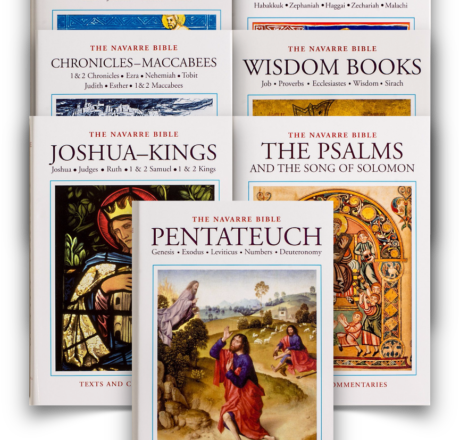
7:1-42. This is one of the most famous and popular passages in the history of the Maccabees--so much so that traditionally (but improperly) these brothers are usually referred to as “the Maccabees”. The sacred writer does not tell us the boys’ names, or where it all happened; and he brings in the presence of the king to heighten the dramatic effect. The bravery of these young men, it would seem, was inspired by the good example given by Eleazar (cf. 6:28). The mother’s intervention divides the scene into two parts--first the martyrdom of the six older brothers (vv. 2-19), and then that of the youngest and the mother herself (vv. 20-41).
In the first part the conviction that the just will rise and evildoers will be punished builds up as the story goes on. Each of the replies given by the six brothers contains some aspect of that truth. The first says that just men prefer to die rather than sin (v. 2) because God will reward them (v. 6); the second, that God will raise them to a new life (v. 9); the third, that they will rise with their bodies remade (v. 11); the fourth, that for evildoers there will be no “resurrection to life” (v. 14); the fifth, that there will be punishment for evildoers (v. 17); and the sixth, that when just people suffer it is because they are being punished for their own sins (v. 18).
In the second part, both the mother and the youngest brother affirm what the others have said: but the boy adds something new when he says that death accepted by the righteous works as atonement for the whole people (vv. 37-38).
The resurrection of the dead, which “God revealed to his people progressively” ("Catechism of the Catholic Church", 992), is a teaching that is grounded first on Moses’ words about God having compassion on his servants (v. 6; cf. Deut 32:36), and the idea that if they die prematurely they will receive consolation in the next life. This is the point being made by the first brother, and it implies that God “faithfully maintains his covenant with Abraham and his posterity” (ibid.). As the mother sees it (vv. 27—28), belief in the resurrection comes from “faith in God as creator of the whole man, body and soul” (ibid., 992). Our Lord Jesus Christ ratifies this teaching and links it to faith in himself (cf. in 5:24—25; 11:25); and he also purifies the Pharisees’ notion of the resurrection, which was an interpretation based only on material terms (cf. Mk12:18—27; 1 Cor 15:35—53).
In what the mother says (v. 28) we can also see belief in the creation of the world out of nothing “as a truth full of promise and hope” ("Catechism of the Catholic Church", 297). On the basis of this passage and some New Testament passages, such as John 1:3 and Hebrews 11:3, the Church has formulated its doctrine of creation: “We believe that God needs no pre-existent thing or any help in order to create (cf. Vatican I: DS 3022), nor is creation any sort of necessary emanation from the divine substance (cf. Vatican I: DS 3023-3024).God creates freely ‘out of nothing’ (DS 800; 3025). If God had drawn the world from pre-existent matter, what would be so extraordinary in that? A human artisan makes from a given material whatever he wants, while God shows his power by starting from nothing to make all he wants” ("Catechism of the Catholic Church", 296).
The assertion that the death of martyrs has expiatory value (vv. 37-38) prepares us to grasp the redemptive meaning of Christ’s death; but we should remember that Christ, by his death, not only deflected the punishment that all men deserve on account of sin, but also, through his grace, makes sinful men righteous in God’s sight (cf. Rom 3:21-26).
Many Fathers of the Church, notably St Gregory Nazianzen ("Orationes", 15, 22), St Ambrose ("De Jacob Et Vitae Beata", 2, 10, 44-57), St Augustine ("In Epistolain loannis", 8, 7), and St Cyprian ("Ad Fortunatus", 11) heaped praise on these seven brothers and their mother. St John Chrysostom invites us to imitate them whenever temptation strikes: “All the moderation that they show in the midst of dangers we, too, should imitate by the patience and temperance with which we deal with irrational concupiscence, anger, greed for possessions,bodily passions, vainglory and suchlike. For if we manage to control their flame, as (the Maccabees) did the flame of the fire, we will be able to be near them and have a share in their confidence and freedom of spirit” ("Homiliae in Maccabaeos", 1,3).
From: Luke 19:11-28
Parable of the Pounds
---------------------
[11] As they heard these things, He (Jesus) proceeded to tell a parable, because He was near to Jerusalem, and because they supposed that the Kingdom of God was to appear immediately. [12] He said therefore, "A nobleman went into a far country to receive kingly power and then return. [13] Calling ten of his servants, he gave them ten pounds, and said to them, `Trade with these till I come.' [14] But his citizens hated him and sent an embassy after him saying, `We do not want this man to reign over us.' [15] When he returned, having received the kingly power, he commanded these servants, to whom he had given the money, to be called to him, that he might know what they had gained by trading. [16] The first came before him, saying, `Lord, your pound has made ten pounds more.' [17] And he said to him, `Well done, good servant! Because you have been faithful in a very little, you shall have authority over ten cities.' [18] And the second came, saying, `Lord, your pound has made five pounds.' [19] And he said to him, `And you are to be over five cities.' [20] Then another came, saying, `Lord, here is your pound, which I kept laid away in a napkin; [21] for I was afraid of you, because you are a severe man; you take up what you did not lay down, and reap what you did not sow.' [22] He said to him, `I will condemn you out of your own mouth, you wicked servant! You knew that I was a severe man, taking up what I did not lay down and reaping what I did not sow? [23] Why then did you not put my money into the bank, and at my coming I should have collected it with interest?' [24] And he said to those who stood by, `Take the pound from him, and give it to him who has the ten pounds.' [25] (And they said to him, `Lord, he has ten pounds!') [26] `I tell you, that to every one who has will more be given; but from him who has not, even what he has will be taken away. [27] But as for these enemies of mine, who did not want me to reign over them, bring them here and slay them before me.'"
The Messiah Enters the Holy City
--------------------------------
[28] And when He had said this, He went on ahead, going up to Jerusalem.
***********************************************************************
Commentary:
11. The disciples had a wrong concept of the Kingdom of Heaven: they thought it was about to happen and they saw it in earthly terms: they envisaged Jesus conquering the Roman tyrant and immediately establishing the Kingdom in the holy city of Jerusalem, and that when that happened they would hold privileged positions in the Kingdom. There is always a danger of Christians failing to grasp the transcendent, supernatural character of the Kingdom of God in this world, that is, the Church, which "has but one sole purpose--that the Kingdom of God may come and the salvation of the human race may be accomplished." (Vatican II, "Gaudium Et Spes", 45).
Through this parable our Lord teaches us that, although His reign has begun, it will only be fully manifested later on. In the time left to us we should use all the resources and graces God gives us, in order to merit the reward.
13. The "mina", here translated as "pound", was worth about 35 grammes of gold. This parable is very like the parable of the talents reported in St. Matthew (cf. 25:14-30).
14. The last part of this verse, although it has a very specific context, reflects the attitude of many people who do not want to bear the sweet yoke of our Lord and who reject Him as king. "There are millions of people in the world who reject Jesus Christ in this way; or rather they reject His shadow, for they do not know Christ. They have not seen the beauty of His face; they do not realize how wonderful His teaching is. This sad state of affairs makes me want to atone to our Lord. When I hear that endless clamor--expressed more in ignoble actions than in words--I feel the need to cry out, `He must reign!' (1 Corinthians 15:25)" (St J. Escriva, "Christ Is Passing By", 179).
17. God counts on our fidelity in little things, and the greater our effort in this regard the greater the reward we will receive: "Because you have been `in pauca fidelis', faithful in small things, come and join in your Master's happiness. The words are Christ's. `In pauca fidelis!... Now will you neglect little things, if Heaven itself is promised to those who mind them?" (St J. Escriva, "The Way", 819).
24-26. God expects us to strive to put to good use the gifts we have received--and He lavishly rewards those who respond to His grace. The king in the parable is shown to be very generous towards his servants--and generous in rewarding those who managed to increase the money they were given. But he is very severe towards the lazy servant who was also the recipient of a gift from his Lord, who did not let it erode but guarded it carefully--and for this his king criticizes him: he failed to fulfill the just command the king gave him when he gave him the money: "Trade till I come." If we appreciate the treasures the Lord has given us--life, the gift of faith, grace--we will make a special effort to make them bear fruit--by fulfilling our duties, working hard and doing apostolate. "Don't let your life be barren. Be useful. Make yourself felt. Shine forth with the torch of your faith and your love. With your apostolic life, wipe out the trail of filth and slime left by the corrupt sowers of hatred. And set aflame all the ways of the earth with the fire of Christ that you bear in your heart" (St J. Escriva, "The Way", 1).
28. Normally in the Gospels when there is mention of going to the Holy City it is in terms of "going up" to Jerusalem (cf. Matthew 20:18; John 7:8), probably because geographically the city is located on Mount Zion. Besides, since the temple was the religious and political center, going up to Jerusalem had also a sacred meaning of ascending to the holy place, where sacrifices were offered to God.
Particularly in the Gospel of St. Luke, our Lord's whole life is seen in terms of a continuous ascent towards Jerusalem, where His self-surrender reaches its high point in the redemptive sacrifice of the Cross. Here Jesus is on the point of entering the city, conscious of the fact that His passion and death are imminent.
Disclaimer: Opinions posted on Free Republic are those of the individual posters and do not necessarily represent the opinion of Free Republic or its management. All materials posted herein are protected by copyright law and the exemption for fair use of copyrighted works.