Posted on 11/17/2025 5:03:12 AM PST by annalex
Saint Elizabeth of Hungary, Religious on Monday of week 33 in Ordinary Time ![]() St Elizabeth of Hungary Church, Cleveland Ohio Readings at MassLiturgical Colour: White. Year: C(I). These are the readings for the feria
The persecution of Antiochus EpiphanesThere grew a sinful offshoot, Antiochus Epiphanes, son of King Antiochus; once a hostage in Rome, he became king in the one hundred and thirty-seventh year of the kingdom of the Greeks. It was then that there emerged from Israel a set of renegades who led many people astray. ‘Come,’ they said ‘let us reach an understanding with the pagans surrounding us, for since we separated ourselves from them many misfortunes have overtaken us.’ This proposal proved acceptable, and a number of the people eagerly approached the king, who authorised them to practise the pagan observances. So they built a gymnasium in Jerusalem, such as the pagans have, disguised their circumcision, and abandoned the holy covenant, submitting to the heathen rule as willing slaves of impiety. Then the king issued a proclamation to his whole kingdom that all were to become a single people, each renouncing his particular customs. All the pagans conformed to the king’s decree, and many Israelites chose to accept his religion, sacrificing to idols and profaning the sabbath. The king erected the abomination of desolation above the altar; and altars were built in the surrounding towns of Judah and incense offered at the doors of houses and in the streets. Any books of the Law that came to light were torn up and burned. Whenever anyone was discovered possessing a copy of the covenant or practising the Law, the king’s decree sentenced him to death. Yet there were many in Israel who stood firm and found the courage to refuse unclean food. They chose death rather than contamination by such fare or profanation of the holy covenant, and they were executed. It was a dreadful wrath that visited Israel.
Give me life, O Lord, and I will do your will. I am seized with indignation at the wicked who forsake your law. Though the nets of the wicked ensnared me I remembered your law. Give me life, O Lord, and I will do your will. Redeem me from man’s oppression and I will keep your precepts. Those who harm me unjustly draw near; they are far from your law. Give me life, O Lord, and I will do your will. Salvation is far from the wicked who are heedless of your statutes. I look at the faithless with disgust; they ignore your promise. Give me life, O Lord, and I will do your will.
Alleluia, alleluia! I am the light of the world, says the Lord; anyone who follows me will have the light of life. Alleluia!
'Son of David, have pity on me'As Jesus drew near to Jericho there was a blind man sitting at the side of the road begging. When he heard the crowd going past he asked what it was all about, and they told him that Jesus the Nazarene was passing by. So he called out, ‘Jesus, Son of David, have pity on me.’ The people in front scolded him and told him to keep quiet, but he shouted all the louder, ‘Son of David, have pity on me.’ Jesus stopped and ordered them to bring the man to him, and when he came up, asked him, ‘What do you want me to do for you?’ ‘Sir,’ he replied ‘let me see again.’ Jesus said to him, ‘Receive your sight. Your faith has saved you.’ And instantly his sight returned and he followed him praising God, and all the people who saw it gave praise to God for what had happened. These are the readings for the memorial
We too ought to give up our lives for our brothersWe have passed out of death and into life, and of this we can be sure because we love our brothers. If you refuse to love, you must remain dead; to hate your brother is to be a murderer, and murderers, as you know, do not have eternal life in them. This has taught us love – that he gave up his life for us; and we, too, ought to give up our lives for our brothers. If a man who was rich enough in this world’s goods saw that one of his brothers was in need, but closed his heart to him, how could the love of God be living in him? My children, our love is not to be just words or mere talk, but something real and active.
I will bless the Lord at all times. or Taste and see that the Lord is good. I will bless the Lord at all times, his praise always on my lips; in the Lord my soul shall make its boast. The humble shall hear and be glad. I will bless the Lord at all times. or Taste and see that the Lord is good. Glorify the Lord with me. Together let us praise his name. I sought the Lord and he answered me; from all my terrors he set me free. I will bless the Lord at all times. or Taste and see that the Lord is good. Look towards him and be radiant; let your faces not be abashed. This poor man called, the Lord heard him and rescued him from all his distress. I will bless the Lord at all times. or Taste and see that the Lord is good. The angel of the Lord is encamped around those who revere him, to rescue them. Taste and see that the Lord is good. He is happy who seeks refuge in him. I will bless the Lord at all times. or Taste and see that the Lord is good. Revere the Lord, you his saints. They lack nothing, those who revere him. Strong lions suffer want and go hungry but those who seek the Lord lack no blessing. I will bless the Lord at all times. or Taste and see that the Lord is good.
Alleluia, alleluia! I give you a new commandment: love one another just as I have loved you, says the Lord. Alleluia!
Love your enemiesJesus said to his disciples: ‘I say this to you who are listening: Love your enemies, do good to those who hate you, bless those who curse you, pray for those who treat you badly. To the man who slaps you on one cheek, present the other cheek too; to the man who takes your cloak from you, do not refuse your tunic. Give to everyone who asks you, and do not ask for your property back from the man who robs you. Treat others as you would like them to treat you. If you love those who love you, what thanks can you expect? Even sinners love those who love them. And if you do good to those who do good to you, what thanks can you expect? For even sinners do that much. And if you lend to those from whom you hope to receive, what thanks can you expect? Even sinners lend to sinners to get back the same amount. Instead, love your enemies and do good, and lend without any hope of return. You will have a great reward, and you will be sons of the Most High, for he himself is kind to the ungrateful and the wicked. ‘Be compassionate as your Father is compassionate. Do not judge, and you will not be judged yourselves; do not condemn, and you will not be condemned yourselves; grant pardon, and you will be pardoned. Give, and there will be gifts for you: a full measure, pressed down, shaken together, and running over, will be poured into your lap; because the amount you measure out is the amount you will be given back.’
You can also view this page with the New Testament in Greek and English. Universalis podcast: Resurrection is Now: part 5 of 8The Moment of Choice: Judgement; Purgatory; Hell. (21 minutes) Christian Art![]() Each day, The Christian Art website gives a picture and reflection on the Gospel of the day. The readings on this page are from the Jerusalem Bible, which is used at Mass in most of the English-speaking world. The New American Bible readings, which are used at Mass in the United States, are available in the Universalis apps, programs and downloads. |
KEYWORDS: catholic; lk18; lk6; ordinarytime; prayer;

Please FReepmail me to get on/off the Alleluia Ping List.
| Luke | |||
| English: Douay-Rheims | Latin: Vulgata Clementina | Greek NT: Byzantine/Majority Text (2000) | |
| Luke 18 | |||
| 35. | Now it came to pass, when he drew nigh to Jericho, that a certain blind man sat by the way side, begging. | Factum est autem, cum appropinquaret Jericho, cæcus quidam sedebat secus viam, mendicans. | εγενετο δε εν τω εγγιζειν αυτον εις ιεριχω τυφλος τις εκαθητο παρα την οδον προσαιτων |
| 36. | And when he heard the multitude passing by, he asked what this meant. | Et cum audiret turbam prætereuntem, interrogabat quid hoc esset. | ακουσας δε οχλου διαπορευομενου επυνθανετο τι ειη τουτο |
| 37. | And they told him, that Jesus of Nazareth was passing by. | Dixerunt autem ei quod Jesus Nazarenus transiret. | απηγγειλαν δε αυτω οτι ιησους ο ναζωραιος παρερχεται |
| 38. | And he cried out, saying: Jesus, son of David, have mercy on me. | Et clamavit, dicens : Jesu, fili David, miserere mei. | και εβοησεν λεγων ιησου υιε δαυιδ ελεησον με |
| 39. | And they that went before, rebuked him, that he should hold his peace: but he cried out much more: Son of David, have mercy on me. | Et qui præibant, increpabant eum ut taceret. Ipse vero multo magis clamabat : Fili David, miserere mei. | και οι προαγοντες επετιμων αυτω ινα σιωπηση αυτος δε πολλω μαλλον εκραζεν υιε δαυιδ ελεησον με |
| 40. | And Jesus standing, commanded him to be brought unto him. And when he was come near, he asked him, | Stans autem Jesus jussit illum adduci ad se. Et cum appropinquasset, interrogavit illum, | σταθεις δε ο ιησους εκελευσεν αυτον αχθηναι προς αυτον εγγισαντος δε αυτου επηρωτησεν αυτον |
| 41. | Saying: What wilt thou that I do to thee? But he said: Lord, that I may see. | dicens : Quid tibi vis faciam ? At ille dixit : Domine, ut videam. | λεγων τι σοι θελεις ποιησω ο δε ειπεν κυριε ινα αναβλεψω |
| 42. | And Jesus said to him: Receive thy sight: thy faith hath made thee whole. | Et Jesus dixit illi : Respice, fides tua te salvum fecit. | και ο ιησους ειπεν αυτω αναβλεψον η πιστις σου σεσωκεν σε |
| 43. | And immediately he saw, and followed him, glorifying God. And all the people, when they saw it, gave praise to God. | Et confestim vidit, et sequebatur illum magnificans Deum. Et omnis plebs ut vidit, dedit laudem Deo. | και παραχρημα ανεβλεψεν και ηκολουθει αυτω δοξαζων τον θεον και πας ο λαος ιδων εδωκεν αινον τω θεω |

18:35–43
35. And it came to pass, that as he was come nigh unto Jericho, a certain blind man sat by the way side begging:
36. And hearing the multitude pass by, he asked what it meant.
37. And they told him, that Jesus of Nazareth passeth by.
38. And he cried, saying, Jesus, thou Son of David, have mercy on me.
39. And they which went before rebuked him, that he should hold his peace: but he cried so much the more, Thou Son of David, have mercy on me.
40. And Jesus stood, and commanded him to be brought unto him: and when he was come near, he asked him,
41. Saying, What wilt thou that I shall do unto thee? And he said, Lord, that I may receive my sight.
42. And Jesus said unto him, Receive thy sight: thy faith hath saved thee.
43. And immediately he received his sight, and followed him, glorifying God: and all the people, when they saw it, gave praise unto God.
GREGORY. (Hom. 2. in Ev.) Because the disciples being yet carnal were unable to receive the words of mystery, they are brought to a miracle. Before their eyes a blind man receives his sight, that by a divine work their faith might be strengthened.
THEOPHYLACT. And to shew that our Lord did not even walk without doing good, He performed a miracle on the way, giving His disciples this example, that we should be profitable in all things, and that nothing in us should be in vain.
AUGUSTINE. We might understand the expression of being nigh to Jericho, as if they had already gone out of it, but were still near. It might, though less common in this sense, be so taken here, since Matthew relates, that as they were going out of Jericho, two men received their sight who sat by the way side. There need be no question about the number, if we suppose that one of the Evangelists remembering only one was silent about the other. Mark also mentions only one, and he too says that he received his sight as they were going out of Jericho; he has given also the name of the man and of his father, to let us understand that this one was well known, but the other not so, so that it might come to pass that the one who was known would be naturally the only one mentioned. But seeing that what follows in St. Luke’s Gospel most plainly proves the truth of his account, that while they were yet coming to Jericho, the miracle took place, we cannot but suppose that there were two such miracles, the first upon one blind man when our Lord was coming to that city, the second on two, when He was departing out of it; Luke relating the one, Matthew the other.
PSEUDO-CHRYSOSTOM. (Hom. de cæco et Zacchæo) There was a great multitude gathered round Christ, and the blind man indeed knew Him not, but felt a drawing towards Him, and grasped with his heart what his sight embraced not. As it follows, And when he heard the multitude passing by, he asked what it was. And those that saw spoke indeed according to their own opinion. And they told him that Jesus of Nazareth passeth by. But the blind man cried out. He is told one thing, he proclaims another; for it follows, And he cried out, saying, Jesus, thou Son of David, have mercy on me. Who taught thee this, O man? Hast thou that art deprived of sight read books? Whence then knowest thou the Light of the world? Verily the Lord giveth sight to the blind. (Ps. 146:8.)
CYRIL OF ALEXANDRIA. Having been brought up a Jew, he was not ignorant that of the seed of David should God be born according to the flesh, and therefore he addresses Him as God, saying, Have mercy upon me. Would that those might imitate him who divide Christ into two. For he speaks of Christ as God, yet calls Him Son of David. But they marvel at the justice of his confession, and some even wished to prevent him from confessing his faith. But by checks of this kind his ardour was not damped. For faith is able to resist all, and to triumph over all. It is a good thing to lay aside shame in behalf of divine worship. For if for money’s sake some are bold, is it not fitting when the soul is at stake, to put on a righteous boldness? As it follows, But he cried out the more, Son of David, & c. The voice of one invoking in faith stops Christ, for He looks back upon them who call upon Him in faith. And accordingly He calls the blind man to Him, and bids him draw nigh, that he in truth who had first laid hold on Him in faith, might approach Him also in the body. The Lord asks this blind man as he drew near, What will thou that I shall do? He asks the question purposely, not as ignorant, but that those who stood by might know that he sought not money, but divine power from God. And thus it follows, But he said, Lord, that I may receive my sight.
PSEUDO-CHRYSOSTOM. (Chrys. ut sup.) Or because the Jews perverting the truth might say, as in the case of him who was born blind, This is not he, but one like unto to him, (John 9:8.) He wished the blind first to make manifest the infirmity of his nature, that then he might fully acknowledge the greatness of the grace bestowed upon him. And as soon as the blind man explained the nature of his request, with words of the highest authority He commanded him to see. As it follows, And Jesus said to him, Receive thy sight. This served only still more to increase the guilt of unbelief in the Jews. For what prophet ever spoke in this way? Observe moreover what the physician claims from him whom he has restored to health. Thy faith hath saved thee. For faith then mercies are sold. Where faith is willing to accept, there grace abounds. And as from the same fountain some in small vessels draw little water, while others in large draw much, the fountain knowing no difference in measure; and as according to the windows which are opened, the sun sheds more or less of its brightness within; so according to the measure of a man’s motives does he draw down supplies of grace. The voice of Christ is changed into the light of the afflicted. For He was the Word of true light. And thus it follows, And immediately he said. But the blind man as before his restoration he shewed an earnest faith, so afterwards did he give plain tokens of his gratitude; And he followed him, glorifying God.
CYRIL OF ALEXANDRIA. From which it is clear, that he was released from a double blindness, both bodily and intellectual. For he would not have glorified Him as God, had he not truly seen Him as He is. But he also gave occasion to others to glorify God; as it follows, And all the people, when they saw it, gave praise unto God.
BEDE. Not only for the gift of light obtained, but for the merit of the faith which obtained it.
PSEUDO-CHRYSOSTOM. (Chrys. ubi sup.) We may here well inquire, why Christ forbids the healed demoniac who wished to follow Him, but permits the blind man who had received his sight. There seems to be a good reason for both the one case and the other. He sends away the former as a kind of herald, to proclaim aloud by the evidence of his own state his benefactor, for it was indeed a notable miracle to see a raving madman brought to a sound mind. But the blind man He allows to follow Him, since He was going up to Jerusalem about to accomplish the high mystery of the Cross, that men having a recent report of a miracle might not suppose that He suffered so much from helplessness as from compassion.
AMBROSE. In the blind man we have a type of the Gentile people, who have received by the Sacrament of our Lord the brightness of the light which they had lost. And it matters not whether the cure is conveyed in the case of one or two blind men, inasmuch as deriving their origin from Ham and Japhet, the sons of Noah, in the two blind men they put forward two authors of their race.
GREGORY. (Hom. 2. in Ev.) Or, blindness is a symbol of the human race, which in our first parent knowing not the brightness of heavenly light, now suffers the darkness of his condemnation. Jericho is interpreted ‘the moon,’ whose monthly wanings represent the feebleness of our mortality. While then our Creator is drawing nigh to Jericho, the blind is restored to sight, because when God took upon Him the weakness of our flesh, the human race received back the light which it had lost. He then who is ignorant of this brightness of the everlasting light, is blind. But if he does no more than believe in the Redeemer who said, I am the way, the truth, and the life; (John 13:6.) he sits by the way side. If he both believes and prays that he may receive the everlasting light, he sits by the way side and begs. Those that went before Jesus, as He was coming, represent the multitude of carnal desires, and the busy crowd of vices which before that Jesus comes to our heart, scatter our thoughts, and disturb us even in our prayers. But the blind man cried out the more; for the more violently we are assailed by our restless thoughts, the more fervently ought we to give ourselves to prayer. As long as we still suffer our manifold fancies to trouble us in our prayers, we feel in some measure Jesus passing by. But when we are very stedfast in prayer, God is fixed in our heart, and the lost light is restored. Or to pass by is of man, to stand is of God. The Lord then passing by heard the blind man crying, standing still restored him to sight, for by His humanity in compassion to our blindness He has pity upon our cries, by the power of His divinity He pours upon us the light of His grace.
Now for this reason He asks what the blind man wished, that He might stir up his heart to prayer, for He wishes that to be sought in prayer, which He knows beforehand both that we seek and He grants.
AMBROSE. Or, He asked the blind man to the end that we might believe, that without confession no man can be saved.
GREGORY. (ubi sup.) The blind man seeks from the Lord not gold, but light. Let us then seek not for false riches, but for that light which together with the Angels alone we may see, the way whereunto is faith. Well then was it said to the blind, Receive thy sight; thy faith hath saved thee. He who sees, also follows, because the good which he understands he practises.
AUGUSTINE. (de Quæst. Ev. l. ii. qu. 48.) If we interpret Jericho to mean the moon, and therefore death, our Lord when approaching His death commanded the light of the Gospel to be preached to the Jews only, who are signified by that one blind man whom Luke speaks of, but rising again from the dead and ascending to heaven, to both Jews and Gentiles; and these two nations seem to be denoted by the two blind men whom Matthew mentions.
Catena Aurea Luke 18

| Luke | |||
| English: Douay-Rheims | Latin: Vulgata Clementina | Greek NT: Byzantine/Majority Text (2000) | |
| Luke 6 | |||
| 27. | But I say to you that hear: Love your enemies, do good to them that hate you. | Sed vobis dico, qui auditis : diligite inimicos vestros, benefacite his qui oderunt vos. | αλλ υμιν λεγω τοις ακουουσιν αγαπατε τους εχθρους υμων καλως ποιειτε τοις μισουσιν υμας |
| 28. | Bless them that curse you, and pray for them that calumniate you. | Benedicite maledicentibus vobis, et orate pro calumniantibus vos. | ευλογειτε τους καταρωμενους υμιν προσευχεσθε υπερ των επηρεαζοντων υμας |
| 29. | And to him that striketh thee on the one cheek, offer also the other. And him that taketh away from thee thy cloak, forbid not to take thy coat also. | Et qui te percutit in maxillam, præbe et alteram. Et ab eo qui aufert tibi vestimentum, etiam tunicam noli prohibere. | τω τυπτοντι σε επι την σιαγονα παρεχε και την αλλην και απο του αιροντος σου το ιματιον και τον χιτωνα μη κωλυσης |
| 30. | Give to every one that asketh thee, and of him that taketh away thy goods, ask them not again. | Omni autem petenti te, tribue : et qui aufert quæ tua sunt, ne repetas. | παντι δε τω αιτουντι σε διδου και απο του αιροντος τα σα μη απαιτει |
| 31. | And as you would that men should do to you, do you also to them in like manner. | Et prout vultis ut faciant vobis homines, et vos facite illis similiter. | και καθως θελετε ινα ποιωσιν υμιν οι ανθρωποι και υμεις ποιειτε αυτοις ομοιως |
| 32. | And if you love them that love you, what thanks are to you? for sinners also love those that love them. | Et si diligitis eos qui vos diligunt, quæ vobis est gratia ? nam et peccatores diligentes se diligunt. | και ει αγαπατε τους αγαπωντας υμας ποια υμιν χαρις εστιν και γαρ οι αμαρτωλοι τους αγαπωντας αυτους αγαπωσιν |
| 33. | And if you do good to them who do good to you, what thanks are to you? for sinners also do this. | Et si benefeceritis his qui vobis benefaciunt, quæ vobis est gratia ? siquidem et peccatores hoc faciunt. | και εαν αγαθοποιητε τους αγαθοποιουντας υμας ποια υμιν χαρις εστιν και γαρ οι αμαρτωλοι το αυτο ποιουσιν |
| 34. | And if you lend to them of whom you hope to receive, what thanks are to you? for sinners also lend to sinners, for to receive as much. | Et si mutuum dederitis his a quibus speratis recipere, quæ gratia est vobis ? nam et peccatores peccatoribus fœnerantur, ut recipiant æqualia. | και εαν δανειζητε παρ ων ελπιζετε απολαβειν ποια υμιν χαρις εστιν και γαρ αμαρτωλοι αμαρτωλοις δανειζουσιν ινα απολαβωσιν τα ισα |
| 35. | But love ye your enemies: do good, and lend, hoping for nothing thereby: and your reward shall be great, and you shall be the sons of the Highest; for he is kind to the unthankful, and to the evil. | Verumtamen diligite inimicos vestros : benefacite, et mutuum date, nihil inde sperantes : et erit merces vestra multa, et eritis filii Altissimi, quia ipse benignus est super ingratos et malos. | πλην αγαπατε τους εχθρους υμων και αγαθοποιειτε και δανειζετε μηδεν απελπιζοντες και εσται ο μισθος υμων πολυς και εσεσθε υιοι υψιστου οτι αυτος χρηστος εστιν επι τους αχαριστους και πονηρους |
| 36. | Be ye therefore merciful, as your Father also is merciful. | Estote ergo misericordes sicut et Pater vester misericors est. | γινεσθε ουν οικτιρμονες καθως και ο πατηρ υμων οικτιρμων εστιν |
| 37. | Judge not, and you shall not be judged. Condemn not, and you shall not be condemned. Forgive, and you shall be forgiven. | Nolite judicare, et non judicabimini : nolite condemnare, et non condemnabimini. Dimitte, et dimittemini. | και μη κρινετε και ου μη κριθητε μη καταδικαζετε και ου μη καταδικασθητε απολυετε και απολυθησεσθε |
| 38. | Give, and it shall be given to you: good measure and pressed down and shaken together and running over shall they give into your bosom. For with the same measure that you shall mete withal, it shall be measured to you again. | Date, et dabitur vobis : mensuram bonam, et confertam, et coagitatam, et supereffluentem dabunt in sinum vestrum. Eadem quippe mensura, qua mensi fueritis, remetietur vobis. | διδοτε και δοθησεται υμιν μετρον καλον πεπιεσμενον και σεσαλευμενον και υπερεκχυνομενον δωσουσιν εις τον κολπον υμων τω γαρ αυτω μετρω ω μετρειτε αντιμετρηθησεται υμιν |

27. But I say unto you which hear, Love your enemies, do good to them which hate you,
28. Bless them that curse you, and pray for them which despitefully use you.
29. And unto him that smiteth thee on the one cheek offer also the other; and him that taketh away thy cloke forbid not to take thy coat also.
30. Give to every man that asketh of thee; and of him that taketh away thy goods ask them not again.
31. And as ye would that men should do to you, do ye also to them likewise.
BEDE. Having spoken above of what they might suffer from their enemies, He now points out how they ought to conduct themselves towards their enemies, saying, But I say to you who hear.
AMBROSE. Having proceeded in the enumeration of many heavenly actions, He not unwisely comes to this place last, that He might teach the people confirmed by the divine miracles to march onward in the footsteps of virtue beyond the path of the law. Lastly, among the three greatest, (hope, faith, and charity,) the greatest is charity, which is commanded in these words, Love your enemies.
BASIL. (in reg. brev. 176.) It is indeed the part of an enemy to injure and be treacherous. Every one then who does harm in any way to any one is called his enemy.
CYRIL OF ALEXANDRIA. But this way of life was well adapted to the holy teachers who were about to preach throughout the earth the word of salvation, and if it had been their will to take vengeance upon their persecutors, had failed to call them to the knowledge of salvation.
CHRYSOSTOM. (Hom. 18. in Matt.) But He says not, Do not hate, but love; nor did He merely command to love, but also to do good, as it follows, Do good to them which hate you.
BASIL. (ubi sup.) But because man consists of body and soul, to the soul indeed we shall do this good, by reproving and admonishing such men, and leading them by the hand to conversion; but to the body, by profiting them in the necessaries of life.
It follows, Bless them that curse you.
CHRYSOSTOM. For they who pierce their own souls deserve tears and weeping, not curses. For nothing is more hateful than a cursing heart, or more foul than a tongue which utters curses. O man, spit not forth the poison of asps, nor be turned into a beast. Thy mouth was given thee not to bite with, but to heal the wounds of others. But he commands us to count our enemies in the rank of our friends, not only in a general way, but as our particular friends for whom we are accustomed to pray; as it follows, Pray for them which persecute you. But many on the contrary falling down, and striking their faces upon the ground, and stretching forth their hands, pray God not for their sins, but against their enemies, which is nothing else but piercing their own selves. When thou prayest to Him that He would hear thee cursing thy enemies, who has forbidden thee to pray against thy enemies, how is it possible for thee to be heard, since thou art calling Him to hear thee by striking an enemy in the king’s presence, not with the hand indeed, but with thy words. What art thou doing, O man? thou standest to obtain pardon of your sins, and thou fillest thy mouth with bitterness. It is a time of forgiveness, prayer, and mourning, not of rage.
BEDE. But the question is fairly raised, how it is that in the prophets are to be found many curses against their enemies. Upon which we must observe, that the prophets in the imprecations they uttered foretold the future, and that not with the feelings of one who wishes, but in the spirit of one who foresees.
CYRIL OF ALEXANDRIA. Now the old law commanded us not to injure one another; or if we are first injured, not to extend our wrath beyond the measure of the injurer, but the fulfilling of the law is in Christ and in His commands. Hence it follows, And unto him that smiteth thee on the one cheek, offer also the other.
CHRYSOSTOM. (Hom. 18. in Matt.) For physicians also, when they are attacked by madmen, have then most compassion on them, and exert themselves to restore them. Have thou also a like consideration towards thy persecutors; for it is they who are under the greatest infirmity. And let us not cease until they have exhausted all their bitterness, they will then overpower thee with thanks, and God Himself will give thee a crown, because thou hast delivered thy brother from the worst disease.
BASIL. (in Esai. 1, 23. in App.) But we almost all of us offend against this command, and especially the powerful and rulers, not only if they have suffered insult, but if respect is not paid them, accounting all those their enemies who treat them with less consideration than they think they deserve. But it is a great dishonour in a prince to be ready to take revenge. For how shall he teach another, to return to no man evil for evil (Rom. 12:17.), if he is eager to retaliate on him who injures him.
CYRIL OF ALEXANDRIA. But the Lord would moreover have us to be despisers of property. As it follows, And him that taketh away thy cloak, forbid not to take thy coat also. For this is the soul’s virtue, which is altogether alien from feeling the pleasure of wealth. For it becomes him who is merciful even to forget his misfortunes, that we may confer the same benefits upon our persecutors, whereby we assist our dear friends.
CHRYSOSTOM. (ubi sup.) Now He said not, Bear humbly the rule of thy persecutor, but, Go on wisely, and prepare thyself to suffer what he desires thee to do; overcoming his insolence by thy great prudence, that he may depart with shame at thy excellent endurance.
But some one will say, How can this be? When thou hast seen God made man, and suffering so many things for thee, dost thou still ask and doubt how it is possible to pardon the iniquities of thy fellow servants? Who has suffered what thy God has, when He was bound, scourged, enduring to be spat upon, suffering death? Here it follows, But to every one who seeks, give.
AUGUSTINE. (de Serm. Dom. lib. 1. c. 20.) He says not, To him that seeketh give all things, but give what you justly and honestly can, that is, what as far as man can know or believe, neither hurts you, nor another: and if thou hast justly refused any one, the justice must be declared to him, (so as not to send him away empty,) sometimes thou wilt confer even a greater boon when thou hast corrected him who seeks what he ought not.
CHRYSOSTOM. Herein however we do not lightly err, when not only we give not to those who seek, but also blame them? Why (you say) does he not work, why is the idle man fed? Tell me, dost thou then possess by labour? but still if thou workest, dost thou work for this, that thou shouldest blame another? For a single loaf and coat dost thou call a man covetous? Thou givest nothing, make then no reproaches. Why dost thou neither take pity thyself, and dissuadest those who would? If we spend upon all indifferently, we shall always have compassion: for because Abraham entertains all, he also entertains angels. For if a man is a homicide and a robber, does he not, thinkest thou, deserve to have bread? Let us not then be severe censors of others, lest we too be strictly judged.
It follows, And of him that taketh away thy goods, ask them not again.
CHRYSOSTOM. (Hom. 10. in 1 Cor.) Every thing we have we receive from God. But when we speak of “mine and thine,” they are only bare words. For if you assert a house to be yours, you have uttered an expression which wants the substance of reality. For both the air, the soil, and the moisture, are the Creator’s. Thou again art he who has built the house; but although the use is thine, it is doubtful, not only because of death, but also on account of the issues of things. Thy soul is not thy own possession, and will be reckoned to thee in like manner as all thy goods. God wishes those things to be thine which are entrusted to thee for thy brethren, and they will be thine if thou hast dispensed them for others. But if thou hast spent richly upon thyself what things are thine, they are now become another’s. But through a wicked desire of wealth men strive together in a state contrary to Christ’s words, And of him that taketh away thy goods, ask them not again.
AUGUSTINE. (de Ser. Dom. lib. 1. c. 19.) He says this of garments, houses, farms, beasts of burdens, and generally of all property. But a Christian ought not to possess a slave as he does a horse or money. If a slave is more honourably governed by thee than by him who desires to take him from thee, I know not whether any one would dare to say, that he ought to be despised, as a garment (ut vestimentum.)
CHRYSOSTOM. (Hom. 13. ad Pop. Ant.) Now we have a natural law implanted in us, by which we distinguish between what is virtue, and what is vice. Hence it follows, And as ye would that men should do unto you, do ye also to them. He does not say, Whatever ye would not that men should do unto you, do not ye. For since there are two ways which lead to virtue, namely, abstaining from evil, and doing good, he names one, signifying by it the other also. And if indeed He had said, That ye may be men, love the beasts, the command would be a difficult one. But if they are commanded to love men, which is a natural admonition, wherein lies the difficulty, since even the wolves and lions observe it, whom a natural relation compels to love one another. It is manifest then that Christ has ordained nothing surpassing our nature, but what He had long before implanted in our conscience, so that thy own will is the law to thee. And if thou wilt have good done unto thee, thou must do good to others; if thou wilt that another should shew mercy to thee, thou must shew mercy to thy neighbour.
6:32–36
32. For if ye love them which love you, what thank have ye? for sinners also love those that love them.
33. And if ye do good to them which do good to you, what thank have ye? for sinners also do even the same.
34. And if ye lend to them of whom ye hope to receive, what thank have ye? for sinners also lend to sinners, to receive as much again.
35. But love ye your enemies, and do good, and lend, hoping for nothing again; and your reward shall be great, and ye shall be the children of the Highest: for he is kind unto the unthankful and to the evil.
36. Be ye therefore merciful, as your Father also is merciful.
CHRYSOSTOM. (Hom. i. in Col.) The Lord had said that we must love our enemies, but that you might not think this an exaggerated expression, regarding it solely as spoken to alarm them, he adds the reason, saying, For if you love them which love you, what thank have ye? There are indeed several causes which produce love; but spiritual love exceeds them all. For nothing earthly engenders it, neither gain, nor kindness, nor nature, nor time, but it descends from heaven. But why wonder that it needs not kindness to excite it, when it is not even overcome of malice? A father indeed suffering wrong bursts the bands of love. A wife after a quarrel leaves her husband. A son, if he sees his father come to a great age, is troubled. But Paul went to those who stoned him to do them good. (Acts 14:17) Moses is stoned by the Jews, and prays for them. (Exod. 17:4) Let us then reverence spiritual love, for it is indissoluble. Reproving therefore those who were inclined to wax cold, he adds, For sinners even love those which love them. As if he said, Because I wish you to possess more than these, I do not advise you only to love your friends, but also your enemies. It is common to all to do good to those who do good to them. But he shews that he seeks something more than is the custom of sinners, who do good to their friends. Hence it follows, And if you do good to those who do good to you, what thank have ye?
BEDE. But he not only condemns as unprofitable the love and kindness of sinners, but also the lending. As it follows, And if ye lend to those from whom ye hope to receive, what thank have ye? for sinners also lend to sinners, to receive as much again.
AMBROSE. Now philosophy seems to divide justice into three parts; one towards God, which is called piety; another towards our parents, or the rest of mankind; a third to the dead, that the proper rites may be performed. But the Lord Jesus passing beyond the oracle of the law, and the heights of prophecy, extended the duties of piety to those also who have injured us, adding, But love your enemies.
CHRYSOSTOM. (Hom. 58. in Gen.) Whereby thou wilt confer more upon thyself than him. For he is beloved by a fellow servant, but thou art made like unto God. But it is a mark of the greatest virtue when we embrace with kindness those who wish to do us harm. Hence it follows, And do good. For as water, when cast upon a lighted furnace, extinguishes it, so also reason joined with gentleness. But what water is to fire, such is lowliness and meekness to wrath; and as fire is not extinguished by fire, so neither is anger soothed by anger.
GREGORY OF NYSSA. (Orat. cont. usurar.) But man ought to shun that baneful anxiety with which he seeks from the poor man increase of his money and gold, exacting a profit of barren metals. Hence he adds, And lend, hoping for nothing again, &c. If a man should call the harsh calculation of interest, theft, or homicide, he will not err. For what is the difference, whether a man by digging under a wall become possessed of property, or possess it unlawfully by the compulsory rate of interest?
BASIL. (Hom. in Ps. 14.) Now this mode of avarice is rightly called in the Greek τόκος, from producing, because of the fruitfulness of the evil. Animals in course of time grow up and produce, but interest as soon as it is born begins to bring forth. Animals which bring forth most rapidly cease soonest from breeding, but the money of the avaricious goes on increasing with time. Animals when they transfer their bringing forth to their own young, themselves cease to breed, but the money of the covetous both produces an increase, and renews the capital. Touch not then the destructive monster. For what advantage that the poverty of to-day is escaped, if it falls upon us repeatedly, and is increased? Reflect then how canst thou restore thyself? Whence shall thy money be so multiplied as that it will partly relieve thy want, partly refresh thy capital, and besides bring forth interest? But thou sayest, How shall I get my living? I answer, work, serve, last of all, beg; any thing is more tolerable than borrowing upon interest. But thou sayest, what is that lending to which the hope of repayment is not attached? Consider the excellence of the words, and thou wilt admire the mercifulness of the author. When thou art about to give to a poor man from regard to divine charity, it is both a lending and a gift; a gift indeed, because no return is hoped for; lending, because of the beneficence of God, who restores it in its turn. Hence it follows, And great shall be your reward. Dost thou not wish the Almighty to be bound to restore to thee? Or, should He make some rich citizen thy security, dost thou accept him, but reject God standing as security for the poor?
CHRYSOSTOM. (Hom. 3. in. Gen.) Observe the wonderful nature of lending, one receives and another binds himself for his debts, giving a hundred fold at the present time, and in the future eternal life.
AMBROSE. How great the reward of mercy which is received into the privilege of divine adoption! For it follows, And ye shall be the sons of the Highest (Ps. 82:6.). Follow then mercy, that ye may obtain grace. Widely spread is the mercy of God; He pours His rain upon the unthankful, the fruitful earth refuses not its increase to the evil. Hence it follows, For he is kind to the unthankful, and to the evil.
BEDE. Either by giving them temporal gifts, or by inspiring His heavenly gifts with a wonderful grace.
CYRIL OF ALEXANDRIA. Great then is the praise of mercy. For this virtue makes us like unto God, and imprints upon our souls certain signs as it were of a heavenly nature. Hence it follows, Be ye then merciful, as your heavenly Father also is merciful.
ATHANASIUS. (Orat. 3. cont. Arian.) That is to say, that we beholding His mercies, what good things we do should do them not with regard to men, but to Him, that we may obtain our rewards from God, not from men.
6:37–38
37. Judge not, and ye shall not be judged: condemn not, and ye shall not be condemned: forgive, and ye shall be forgiven:
38. Give, and it shall be given unto you: good measure, pressed down, and shaken together, and running over, shall men give into your bosom. For with the same measure that ye mete withal it shall be measured to you again.
AMBROSE. The Lord added, that we must not readily judge others, lest when conscious of guilt thyself, thou shouldest be compelled to pass sentence upon another.
CHRYSOSTOM. Judge not thy superior, that is, thou a disciple must not judge thy master, nor a sinner the innocent. Thou must not blame them, but advise and correct with love; neither must we pass judgment in doubtful and indifferent matters, which bear no resemblance to sin, or which are not serious or forbidden.
CYRIL OF ALEXANDRIA. He here expresses that worst inclination of our thoughts or hearts, which is the first beginning and origin of a proud disdain. For although it becomes men to look into themselves and walk after God, this they do not, but look into the things of others, and while they forget their own passions, behold the infirmities of some, and make them a subject of reproach.
CHRYSOSTOM. You will not easily find any one, whether a father of a family or an inhabitant of the cloister, free from this error. But these are the wiles of the tempter. For he who severely sifts the fault of others, will never obtain acquittal for his own. Hence it follows, And ye shall not be judged. For as the merciful and meek man dispels the rage of sinners, so the harsh and cruel adds to his own crimes.
GREGORY OF NYSSA. Be not then rash to judge harshly of your servants, lest ye suffer the like. For passing judgment calls down a heavier condemnation; as it follows, Condemn not, and ye shall not be condemned. For he does not forbid judgment with pardon.
BEDE. Now in a short sentence he concisely sums up all that he had enjoined with respect to our conduct towards our enemies, saying, Forgive, and ye shall be forgiven, wherein he bids us forgive injuries, and shew kindness, and our sins shall be forgiven us, and we shall receive eternal life.
CYRIL OF ALEXANDRIA. But that we shall receive more abundant recompense from God, who gives bountifully to those who love him, he explains as follows, Good measure, pressed down, and shaken together, and running over, shall they give into your bosom.
THEOPHYLACT. As if he says, As when you wish to measure meal without sparing, you press it down, shake it together, and let it pour over abundantly; so the Lord will give a large and overflowing measure into your bosom.
AUGUSTINE. (de Qu. Ev. l. ii. q. 8.) But he says, shall they give, (Mat. 10:42.) because through the merits of those to whom they have given even a cup of cold water in the name of a disciple, shall they be thought worthy to receive a heavenly reward. It follows, For with the same measure that ye mete withal it shall be measured to you again.
BASIL. (Hom. in Ps. 61.) For according to the same measure with which each one of you metes, that is, in doing good works or sinning, will he receive reward or punishment.
THEOPHYLACT. But some one will put the subtle question, “If the return is made overabundantly, how is it the same measure?” to which we answer, that He said not, “In just as great a measure shall it be measured to you again, but in the same measure.” For he who has shewn mercy, shall have mercy shewn unto him, and this is measuring again with the same measure; but our Lord spoke of the measure running over, because to such a one He will shew mercy a thousand times. So also in judging; for he that judges and afterwards is judged receives the same measure. But as far as he was judged the more severely that he judged one like unto himself, was the measure running over.
CYRIL OF ALEXANDRIA. But the Apostle explains this when he says, He who sows sparingly, (that is, scantily, and with a niggardly hand,) shall also reap sparingly, (2 Cor. 6:9.) (that is, not abundantly,) and he who sows blessings, shall reap also blessings, that is, bountifully. But if a man has not, and performs not, he is not guilty. For a man is accepted in that which he has, not in that which he has not.
Catena Aurea Luke 6

In her short life, Elizabeth of Hungary manifested such great love for the poor and suffering that she has become the patroness of Catholic charities and of the Secular Franciscan Order. The daughter of the King of Hungary, Elizabeth chose a life of penance and asceticism when a life of leisure and luxury could easily have been hers. This choice endeared her in the hearts of the common people throughout Europe.
At the age of 14, Elizabeth of Hungary was married to Louis of Thuringia, whom she deeply loved. She bore three children. Under the spiritual direction of a Franciscan friar, she led a life of prayer, sacrifice, and service to the poor and sick. Seeking to become one with the poor, she wore simple clothing. Daily she would take bread to hundreds of the poorest in the land who came to her gate.
After six years of marriage, her husband died in the Crusades, and Elizabeth was grief-stricken. Her husband’s family looked upon her as squandering the royal purse, and mistreated her, finally throwing her out of the palace. The return of her husband’s allies from the Crusades resulted in her being reinstated, since her son was legal heir to the throne.
In 1228, Elizabeth joined the Secular Franciscan Order, spending the remaining few years of her life caring for the poor in a hospital which she founded in honor of Saint Francis of Assisi. Elizabeth’s health declined, and she died before her 24th birthday in 1231. Her great popularity resulted in her canonization four years later.
Elizabeth understood well the lesson Jesus taught when he washed his disciples’ feet at the Last Supper: The Christian must be one who serves the humblest needs of others, even if one serves from an exalted position. Of royal blood, Elizabeth could have lorded it over her subjects. Yet she served them with such a loving heart that her brief life won for her a special place in the hearts of many. Elizabeth is also an example to us in her following the guidance of a spiritual director. Growth in the spiritual life is a difficult process. We can play games very easily if we don’t have someone to challenge us.
Bakers
Catholic Charities
Secular Franciscan Order

First Reading:
From: 1 Maccabees 1:10-15, 41-43, 54-57, 62-63
Alexander the Great and His Successors (Continuation)
-----------------------------------------------------
[10] From them (the descendants of Alexander the Great's officers) came forth a sinful root, Antiochus Epiphanes, son of Antiochus the king; he had been a hostage in Rome. He began to reign in the one hundred and thirty-seventh year of the kingdom of the Greeks.
Many Jews are Led Astray
------------------------
[11] In those days lawless men came forth from Israel, and misled many, saying, “Let us go and make a covenant with the Gentiles round about us, for since we separated from them many evils have come upon us.” [12] This proposal pleased them, [13] and some of the people eagerly went to the king. He authorized them to observe the ordinances of the Gentiles. [14] So they built a gymnasium in Jerusalem, according to Gentile custom, [15] and removed the marks of circumcision, and abandoned the holy covenant. They joined with the Gentiles and sold themselves to do evil.
Observance of the Law is Proscribed
-----------------------------------
[41] Then the king wrote to his whole kingdom that all should be one people, [42] and that each should give up his customs. [43] All the Gentiles accepted the command of the king. Many even from Israel gladly adopted his religion; they sacrificed to idols and profaned the sabbath.
The Temple Profaned, the Books of the Law Set on Fire. Religious Persecution
----------------------------------------------------------------------------
[54] Now on the fifteenth day of Chislev, in the one hundred and forty-fifth year, they erected a desolating sacrilege upon the altar of burnt offering. They also built altars in the surrounding cities of Judah, [55] and burned incense at the doors of the houses and in the streets. [56] The books of the law which they found they tore to pieces and burned with fire. [57] Where the book of the covenant was found in the possession of any one, or if any one adhered to the law, the decree of the king condemned him to death.
[62] But many in Israel stood firm and were resolved in their hearts not to eat unclean food. [63] They chose to die rather than to be defiled by food or to profane the holy covenant; and they did die.
***********************************************************************
Commentary:
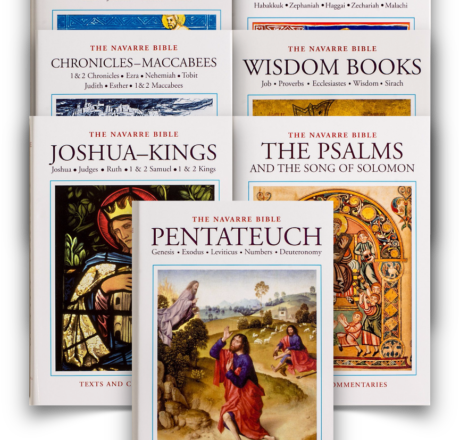
1:1-64 Greek domination was a terrible trial for the Jewish people. During the Greek period they stayed loyal to the Covenant that God made with the patriarchs, defending it against the Greek religion and culture which were imposed on the East as a result of Alexander the Great’s conquests. Pagan customs were introduced into Jerusalem and Judah, firstly, through the infidelity of many Jews who were attracted by the novelty and splendor of Hellenistic culture, and, secondly, because Antiochus Epiphanes tried to weld his territories together politically by imposing Greek civilization and religion. To do this in Judea he attacked the three pillars of the Jewish religion--the temple of Jerusalem; religious customs, particularly circumcision and the sabbath observance; and the books of the Law of Moses. It seemed inevitable that Judaism would disappear or else be merged with the Greek world, as happened in other Eastern nations influenced by Hellenism. But, in fact, Israel kept its religious identity thanks to a special providence of God; this enabled it to continue to be the chosen people from whom would be born the Messiah, Jesus Christ. That is the message of the books of the Maccabees, a message perceived by Church tradition when it acknowledged them as being part of Holy Scripture. When speaking about these books, St Augustine was well aware that the Jews did not regard them as being on the same level as the Law, the Prophets and the Psalms, “but they [these books] will not have been received by the Church in vain if they are read or listened to calmly, and especially those parts that deal with the Maccabees themselves who, for the sake of God’s Law, were true martyrs and suffered terrible and humiliating things” (St Augustine,"Contra Gaudentium", 1, 31, 38).
1:1-10. “The land of Kittim” (in Greek, "khettim"), originally referred to the island of Cyprus, but it also applied to Greece and Macedonia. Alexander the Great died in Babylonia in the year 323 BC. His successors, called the Diadochi, fought among themselves over the division of the empire. Ptolemy I gained control of Egypt, and founded the dynasty of the Lagids. Seleucus, the first of the Seleucid kings, took Babylon. To begin with, Palestine was part of the Ptolemy domains, but in the year 197 BC, after the battle of Baniyas in which Egypt was defeated, it came under the control of the Seleucids. Antiochus IV Epiphanes, son of Antiochus III and brother of Seleucus IV (cf. 2 Mac 4:7), had been sent to Rome by his father as a hostage (in accordance with the treaty of Apamea, 188 BC). The one hundred and thirty-seventh year, counting from 312 BC when the Seleucid dynasty was founded, was 175 BC.
1:11-15. Conforming to Greek ways was equivalent in that situation to turning one’s back on the Lord and on the Covenant. Gymnasia were presided over by Greek gods, and “becoming like the Gentiles” involved disguising the signs of circumcision when taking part undressed in gymnasium sports. Belonging to the people of God entailed a moral lifestyle different from that of the Gentiles, just as being a member of the Church, the new people of God, requires a person to avoid practices and attitudes contrary to the natural law and Christian ethics.
Apropos of this, St Paul taught the first Christians: “We beseech and exhort you in the Lord Jesus, that as you learned from us how you ought to live and to please God, just as you are doing, you do so more and more. For you know what instructions we gave you through the Lord Jesus. For this is the will of God, your sanctification: that you abstain from immorality; that each of you know how to control his own body in holiness and honor, not in the passion of lust like heathen who do not know God” (1 Thess 4:1-5). “Reject the deception of those who appease themselves with the pathetic cry of ‘Freedom! Freedom!’ Their cry often masks a tragic enslavement because choices that prefer error do not liberate. Christ alone sets us free, for he alone is the Way, the Truth and the Life" (St J. Escriva, "Friends of God", 26).
1:41-53. Up to this point the Jews have been governed by their own laws, which were both religious and civil. In order to unify his empire politically, Antiochus wants to impose a single form of religious practice. Those Jews who had a liking for things Greek had no difficulty in accepting the king’s laws: they were already conforming to them, and now they became formal apostates of Judaism. Other Jews, maybe majority, conformed out of fear. But there were others still, whom the sacred writer sees as the true Israel (v. 53), who were forced to go underground to stay loyal to their religion.
1:54-64. The author recalls with great sadness the exact day when an altar, or perhaps a statue, dedicated to Zeus Olympus was erected in the temple of Jerusalem--8 December 167 BC. The revulsion God-fearing Jews felt towards that object can be seen from the name used to describe it—"a desolating sacrifice” (“abominatio desolationis”, the abomination of desolation: cf. Dan 9:27; 11:31; 12:11). ln Hebrew the words used sound like the name of the “Baal of the heavens”, the Canaanite idol which Israelites in ancient times found so attractive and against which the prophets strove (cf. 1 Kings 18:20-40). But the phrase also, literally, means something abominable which leads to total perdition. It is, in the last analysis, a symbol of idolatrous worship which seeks to impose itself by force on worship of the true God. Our Lord Jesus Christ will use the very same expression, “desolating sacrifice”, “abomination of desolation”, to announce the tribulation which will overwhelm Jerusalem (as it indeed did when the Romans destroyed it in 70 AD) and which will be a sign of the tribulations that will happen at the end of time (cf. Mt 24:15-25 and par.).
The events narrated briefly here and the violence done to the Jews, as also exemplary acts of fideIity, are reported in more detail in 2 Maccabees 6:1-11, 18, 31; 7:1-42. It was a very testing time for Israel, a time of purging and purification. When God allows persecution to happen, he does so to elicit fidelity: this is true for Israel and later for the Church.
From: Luke 18:35-43
The Cure of the Blind Man of Jericho
------------------------------------
[35] As He (Jesus) drew near to Jericho, a blind man was sitting by the roadside begging; [36] and hearing a multitude going by, he inquired what this meant. [37] They told him, "Jesus of Nazareth is passing by." [38] And he cried, "Jesus, Son of David, have mercy on me!" [39] And those who were in front rebuked him, telling him to be silent; but he cried out all the more, "Son of David, have mercy on me!" [40] And Jesus stopped, and commanded him to be brought to Him; and when he came near, He asked him, [41] "What do you want Me to do for you?" He said, "Lord, let me receive my sight." [42] And Jesus said to him, "Receive your sight; your faith has made you well." [43] And immediately he received his sight and followed Him, glorifying God; and all the people, when they saw it, gave praise to God.
***********************************************************************
Commentary:
35-43. The blind man of Jericho is quick to use the opportunity presented by Christ's presence. We should not neglect the Lord's graces, for we do not know whether He will offer us them again. St. Augustine described very succinctly the urgency with which we should respond to God's gift, to His passing us on the road: "`Timeo Jesum praetereuntem et non redeuntem': I fear Jesus may pass by and not come back." For, at least on some occasion, in some way, Jesus passes close to everyone.
The blind man of Jericho acclaims Jesus as the Messiah--he gives Him the messianic title of Son of David--and asks Him to meet his need, to make him see. His is an active faith; he shouts out, he persists, despite the people getting in his way. And he manages to get Jesus to hear him and call him. God wanted this episode to be recorded in the Gospel, to teach us how we should believe and how we should pray—with conviction, with urgency, with constancy, in spite of the obstacles, with simplicity, until we manage to get Jesus to listen to us.
"Lord, let me receive my sight": this simple ejaculatory prayer should be often on our lips, flowing from the depths of our heart. It is a very good prayer to use in moments of doubt and vacillation, when we cannot understand the reason behind God's plans, when the horizon of our commitment becomes clouded. It is even a good prayer for people who are sincerely trying to find God but who do not yet have the great gift of faith.
Disclaimer: Opinions posted on Free Republic are those of the individual posters and do not necessarily represent the opinion of Free Republic or its management. All materials posted herein are protected by copyright law and the exemption for fair use of copyrighted works.