Free Republic
Browse · Search
Religion
Topics · Post Article

Skip to comments.

Catholic Caucus: Daily Mass Readings 13-November-2025
Universalis/Jerusalem Bible ^

Posted on 11/13/2025 4:53:05 AM PST by annalex

13 November 2025

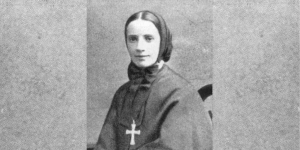
Saint Frances Xavier Cabrini
on Thursday of week 32 in Ordinary Time


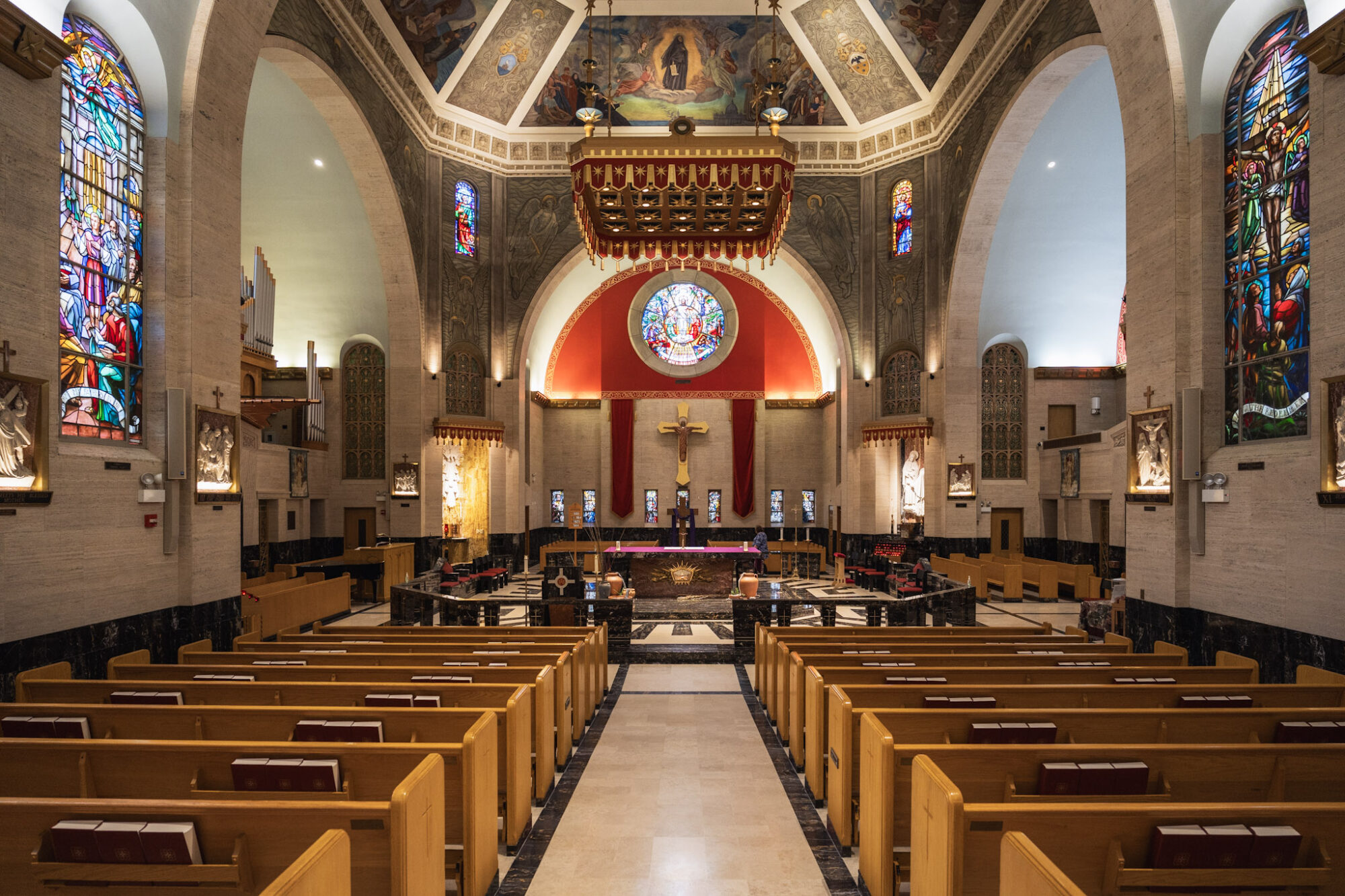
Saint Francesca Xavier Cabrini Shrine in Chicago

Readings at Mass

Liturgical Colour: White. Year: C(I).

Readings for the feria

Readings for the memorial

These are the readings for the feria


First readingWisdom 7:22-8:1

Wisdom is a breath of the power of God

Within Wisdom is a spirit intelligent, holy,
unique, manifold, subtle,
active, incisive, unsullied,
lucid, invulnerable, benevolent, sharp,
irresistible, beneficent, loving to man,
steadfast, dependable, unperturbed,
almighty, all-surveying,
penetrating all intelligent, pure
and most subtle spirits;
for Wisdom is quicker to move than any motion;
she is so pure, she pervades and permeates all things.
She is a breath of the power of God,
pure emanation of the glory of the Almighty;
hence nothing impure can find a way into her.
She is a reflection of the eternal light,
untarnished mirror of God’s active power,
image of his goodness.
Although alone, she can do all;
herself unchanging, she makes all things new.
In each generation she passes into holy souls,
she makes them friends of God and prophets;
for God loves only the man who lives with Wisdom.
She is indeed more splendid than the sun,
she outshines all the constellations;
compared with light, she takes first place,
for light must yield to night,
but over Wisdom evil can never triumph.
She deploys her strength from one end of the earth to the other,
ordering all things for good.


Responsorial Psalm
Psalm 118(119):89-91,130,135,175
Your word, O Lord, stands for ever.
Your word, O Lord, for ever
  stands firm in the heavens:
your truth lasts from age to age,
  like the earth you created.
Your word, O Lord, stands for ever.
By your decree it endures to this day;
  for all things serve you.
The unfolding of your word gives light
  and teaches the simple.
Your word, O Lord, stands for ever.
Let your face shine on your servant
  and teach me your decrees.
Give life to my soul that I may praise you.
  Let your decrees give me help.
Your word, O Lord, stands for ever.

Gospel Acclamation1P1:25
Alleluia, alleluia!
The word of the Lord remains for ever:
What is this word?
It is the Good News that has been brought to you.
Alleluia!
Or:Jn15:5
Alleluia, alleluia!
I am the vine,
you are the branches.
Whoever remains in me, with me in him,
bears fruit in plenty,
says the Lord.
Alleluia!

GospelLuke 17:20-25

The kingdom of God is among you

Asked by the Pharisees when the kingdom of God was to come, Jesus gave them this answer, ‘The coming of the kingdom of God does not admit of observation and there will be no one to say, “Look here! Look there!” For, you must know, the kingdom of God is among you.’
  He said to the disciples, ‘A time will come when you will long to see one of the days of the Son of Man and will not see it. They will say to you, “Look there!” or, “Look here!” Make no move; do not set off in pursuit; for as the lightning flashing from one part of heaven lights up the other, so will be the Son of Man when his day comes. But first he must suffer grievously and be rejected by this generation.’

Continue

These are the readings for the memorial


First reading
Deuteronomy 10:8-9

The Lord set apart the tribe of Levi to do him service

Moses said to the people: ‘The Lord set apart the tribe of Levi to carry the ark of the Lord’s covenant, to stand in the presence of the Lord, to do him service and in his name to pronounce blessing as they still do today. Levi therefore has no share or inheritance with his brothers: the Lord is his inheritance, as the Lord your God told him.’


Responsorial PsalmPsalm 1:1-4,6
His delight is the law of the Lord.
or
Happy the man who has placed his trust in the Lord.
or
The just will flourish like the palm-tree in the courts of our God.
Happy indeed is the man
  who follows not the counsel of the wicked;
nor lingers in the way of sinners
  nor sits in the company of scorners,
but whose delight is the law of the Lord
  and who ponders his law day and night.
His delight is the law of the Lord.
or
Happy the man who has placed his trust in the Lord.
or
The just will flourish like the palm-tree in the courts of our God.
He is like a tree that is planted
  beside the flowing waters,
that yields its fruit in due season
  and whose leaves shall never fade;
  and all that he does shall prosper.
His delight is the law of the Lord.
or
Happy the man who has placed his trust in the Lord.
or
The just will flourish like the palm-tree in the courts of our God.
Not so are the wicked, not so!
For they like winnowed chaff
  shall be driven away by the wind:
for the Lord guards the way of the just
  but the way of the wicked leads to doom.
His delight is the law of the Lord.
or
Happy the man who has placed his trust in the Lord.
or
The just will flourish like the palm-tree in the courts of our God.

Gospel AcclamationMt5:3
Alleluia, alleluia!
How happy are the poor in spirit:
theirs is the kingdom of heaven.
Alleluia!
Or:Mt5:6
Alleluia, alleluia!
Happy those who hunger and thirst for what is right:
they shall be satisfied.
Alleluia!
Or:Mt5:8
Alleluia, alleluia!
Happy the pure in heart:
they shall see God.
Alleluia!
Or:Mt11:25
Alleluia, alleluia!
Blessed are you, Father,
Lord of heaven and earth,
for revealing the mysteries of the kingdom
to mere children.
Alleluia!
Or:Mt23:11,12
Alleluia, alleluia!
The greatest among you must be your servant, says the Lord:
the man who humbles himself will be exalted.
Alleluia!
Or:Mt11:28
Alleluia, alleluia!
Come to me, all you who labour and are overburdened
and I will give you rest, says the Lord.
Alleluia!
Or:Lk21:36
Alleluia, alleluia!
Stay awake, praying at all times
for the strength to stand with confidence
before the Son of Man.
Alleluia!
Or:Jn8:12
Alleluia, alleluia!
I am the light of the world, says the Lord;
anyone who follows me will have the light of life.
Alleluia!
Or:Jn8:31-32
Alleluia, alleluia!
If you make my word your home
you will indeed be my disciples,
and you will learn the truth, says the Lord.
Alleluia!
Or:Jn13:34
Alleluia, alleluia!
I give you a new commandment:
love one another just as I have loved you,
says the Lord.
Alleluia!
Or:Jn14:23
Alleluia, alleluia!
If anyone loves me he will keep my word,
and my Father will love him,
and we shall come to him.
Alleluia!
Or:Jn15:4,5
Alleluia, alleluia!
Make your home in me, as I make mine in you,
says the Lord;
whoever remains in me bears fruit in plenty.
Alleluia!
Or:Jn15:9,5
Alleluia, alleluia!
Remain in my love, says the Lord;
whoever remains in me, with me in him,
bears fruit in plenty.
Alleluia!

GospelMatthew 19:3-12

Husband and wife are no longer two, but one body

Some Pharisees approached Jesus, and to test him they said, ‘Is it against the Law for a man to divorce his wife on any pretext whatever?’ He answered, ‘Have you not read that the creator from the beginning made them male and female and that he said: This is why a man must leave father and mother, and cling to his wife, and the two become one body? They are no longer two, therefore, but one body. So then, what God has united, man must not divide.’
  They said to him, ‘Then why did Moses command that a writ of dismissal should be given in cases of divorce?’ ‘It was because you were so unteachable’ he said ‘that Moses allowed you to divorce your wives, but it was not like this from the beginning. Now I say this to you: the man who divorces his wife – I am not speaking of fornication – and marries another, is guilty of adultery.’
  The disciples said to him, ‘If that is how things are between husband and wife, it is not advisable to marry.’ But he replied, ‘It is not everyone who can accept what I have said, but only those to whom it is granted. There are eunuchs born that way from their mother’s womb, there are eunuchs made so by men and there are eunuchs who have made themselves that way for the sake of the kingdom of heaven. Let anyone accept this who can.’

Continue


You can also view this page with the New Testament in Greek and English.

Universalis podcast: Resurrection is Now: part 4 of 8

“By a man came death.”
“By a man came resurrection from the dead.” (20 minutes)
Episode notes.Play

Christian Art

Illustration

Each day, The Christian Art website gives a picture and reflection on the Gospel of the day.

The readings on this page are from the Jerusalem Bible, which is used at Mass in most of the English-speaking world. The New American Bible readings, which are used at Mass in the United States, are available in the Universalis apps, programs and downloads.

You can also view this page with the Gospel in Greek and English.


TOPICS: Catholic; General Discusssion; Prayer; Worship
KEYWORDS: catholic; lk17; mt19; ordinarytime; prayer
For your reading, reflection, faith-sharing, comments, questions, discussion.

1 posted on 11/13/2025 4:53:05 AM PST by annalex
[ Post Reply | Private Reply | View Replies]

To: All

KEYWORDS: catholic; lk17; mt19; ordinarytime; prayer;


2 posted on 11/13/2025 4:54:02 AM PST by annalex (fear them not)
[ Post Reply | Private Reply | To 1 | View Replies]

To: nickcarraway; NYer; ELS; Pyro7480; livius; ArrogantBustard; Catholicguy; RobbyS; marshmallow; ...


Alleluia Ping

Please FReepmail me to get on/off the Alleluia Ping List.


3 posted on 11/13/2025 4:55:05 AM PST by annalex (fear them not)
[ Post Reply | Private Reply | To 2 | View Replies]

To: annalex
Chris Robinson: My Dad [our Jim Robinson] Passed Away Peacefully Monday Night (October 27th) In Our Home.
Jim still needs our prayers. Thread 2
Prayer thread for Salvation's recovery
Pray for Ukraine
Prayer thread for Fidelis' recovery
Update on Jim Robinson's health issues
4 posted on 11/13/2025 4:55:34 AM PST by annalex (fear them not)
[ Post Reply | Private Reply | To 3 | View Replies]

To: annalex
Luke
 English: Douay-RheimsLatin: Vulgata ClementinaGreek NT: Byzantine/Majority Text (2000)
 Luke 17
20And being asked by the Pharisees, when the kingdom of God should come? he answered them, and said: The kingdom of God cometh not with observation: Interrogatus autem a pharisæis : Quando venit regnum Dei ? respondens eis, dixit : Non venit regnum Dei cum observatione :επερωτηθεις δε υπο των φαρισαιων ποτε ερχεται η βασιλεια του θεου απεκριθη αυτοις και ειπεν ουκ ερχεται η βασιλεια του θεου μετα παρατηρησεως
21Neither shall they say: Behold here, or behold there. For lo, the kingdom of God is within you. neque dicent : Ecce hic, aut ecce illic. Ecce enim regnum Dei intra vos est.ουδε ερουσιν ιδου ωδε η ιδου εκει ιδου γαρ η βασιλεια του θεου εντος υμων εστιν
22And he said to his disciples: The days will come, when you shall desire to see one day of the Son of man; and you shall not see it. Et ait ad discipulos suos : Venient dies quando desideretis videre unum diem Filii hominis, et non videbitis.ειπεν δε προς τους μαθητας ελευσονται ημεραι οτε επιθυμησετε μιαν των ημερων του υιου του ανθρωπου ιδειν και ουκ οψεσθε
23And they will say to you: See here, and see there. Go ye not after, nor follow them: Et dicent vobis : Ecce hic, et ecce illic. Nolite ire, neque sectemini :και ερουσιν υμιν ιδου ωδε η ιδου εκει μη απελθητε μηδε διωξητε
24For as the lightening that lighteneth from under heaven, shineth unto the parts that are under heaven, so shall the Son of man be in his day. nam, sicut fulgur coruscans de sub cælo in ea quæ sub cælo sunt, fulget : ita erit Filius hominis in die sua.ωσπερ γαρ η αστραπη η αστραπτουσα εκ της υπ ουρανον εις την υπ ουρανον λαμπει ουτως εσται ο υιος του ανθρωπου εν τη ημερα αυτου
25But first he must suffer many things, and be rejected by this generation. Primum autem oportet illum multa pati, et reprobari a generatione hac.πρωτον δε δει αυτον πολλα παθειν και αποδοκιμασθηναι απο της γενεας ταυτης

5 posted on 11/13/2025 4:59:13 AM PST by annalex (fear them not)
[ Post Reply | Private Reply | To 4 | View Replies]

To: annalex

Catena Aurea by St. Thomas Aguinas

17:20–21

20. And when he was demanded of the Pharisees, when the kingdom of God should come, he answered them and said, The kingdom of God cometh not with observation:

21. Neither shall they say, Lo here! or, lo there! for, behold, the kingdom of God is within you.

CYRIL OF ALEXANDRIA. Because our Saviour, in His discourses which He addressed to others, spake often of the kingdom of God, the Pharisees derided Him; hence it is said, And when he was asked by the Pharisees when the kingdom of God should come. As though they said tauntingly, “Before the kingdom of God come, which Thou speakest of, the death of the cross will be Thy lot.” But our Lord testifying His patience, when reviled reviles not again, but the rather because they were evil, returns not a scornful answer; for it follows, He answered and said, The kingdom cometh not with observation; as if he says, “Seek not to know the time when the kingdom of heaven shall again be at hand. For that time can be observed neither by men nor angels, not as the time of the Incarnation which was proclaimed by the foretelling of Prophets and the heraldings of Angels.” Wherefore He adds, Neither shall they say, Lo here! or, Lo there! Or else, They ask about the kingdom of God, because, as is said below, they thought that on our Lord’s coming into Jerusalem, the kingdom of God would be immediately manifested. Therefore our Lord answers, that the kingdom of God will not come with observation.

CYRIL OF ALEXANDRIA. Now it is only for the benefit of each individual that He says that which follows, For behold the kingdom of God is within you; that is, it rests with you and your own hearts to receive it. For every man who is justified by faith and the grace of God, and adorned with virtues, may obtain the kingdom of heaven.

GREGORY OF NYSSA. (lib. de prop. sec. Deum.) Or, perhaps, the kingdom of God being within us, means that joy that is implanted in our hearts by the Holy Spirit. For that is, as it were, the image and pledge of the everlasting joy with which in the world to come the souls of the Saints rejoice.

BEDE. Or the kingdom of God means that He Himself is placed in the midst of them, that is, reigning in their hearts by faith.

17:22–25

22. And he said unto the disciples, The days will come, when ye shall desire to see one of the days of the Son of man, and ye shall not see it.

23. And they shall say to you, See here; or, see there: go not after them, nor follow them.

24. For as the lightning, that lighteneth out of the one part under heaven, shineth unto the other part under heaven; so shall also the Son of man be in his day.

25. But first must he suffer many things, and be rejected of this generation.

CYRIL OF ALEXANDRIA. When our Lord said, The kingdom of God is within you, He would fain prepare His disciples for suffering, that being made strong they might be able to enter the kingdom of God; He therefore foretells to them, that before His coming from heaven at the end of the world, persecution will break out upon them. Hence it follows, And he said unto the disciples, The days will come, &c. meaning that so terrible will be the persecution, that they would desire to see one of His days, that is, of that time when they yet walked with Christ. Truly the Jews ofttimes beset Christ with reproaches and insults, and sought to stone Him, and ofttimes would have hurled Him down from the mountain; but even these seem to be looked upon as slight in comparison of greater evils that are to come.

THEOPHYLACT. For their life was then without trouble, for Christ took care of them and protected them. But the time was coming when Christ should be taken away, and they should be exposed to perils, being brought before kings and princes, and then they should long for the first time and its tranquillity.

BEDE. Or, by the day of Christ He signifies His kingdom, which we hope will come, and He rightly says, one day, because there shall no darkness disturb the glory of that blessed time. It is right then to long for the day of Christ, yet from the earnestness of our longing, let us not vision to ourselves as though the day were at hand. Hence it follows, And they shall say to you, Lo here! and, Lo there!

EUSEBIUS. As if he said, If at the coming of Antichrist, his fame shall be spread abroad, as though Christ had appeared, go not out, nor follow him. For it cannot be that He who was once seen on earth, shall any more dwell in the corners of the earth. It will therefore be he of whom we speak, not the true Christ. For this is the clear sign of the second coming of our Saviour, that suddenly the lustre of His coming shall fill the whole world; and so it follows, For as the lightning that lighteneth, &c. For He will not appear walking upon the earth, as any common man, but will illuminate our whole universe, manifesting to all men the radiance of His divinity.

BEDE. And he well says, that lighteneth out of the one part under heaven, because the judgment will be given under the heaven, that is, in the midst of the air, as the Apostle says, We shall be caught up together with them in the clouds. (1 Thess. 4:17.) But if the Lord shall appear at the Judgment like lightning, then shall no one remain hidden in the deep of his heart, for the very brightness of the Judge pierces through him; we may also take this answer of our Lord to refer to His coming, whereby He comes daily into His Church. For ofttimes have heretics so vexed the Church, by saying that the faith of Christ stands in their own dogma, that the faithful in those times longed that the Lord would if it were possible even for one day return to the earth, and Himself make known what was the true faith. And you shall not see it, because it need not that the Lord should again testify by a bodily presence that which has been spiritually declared by the light of the Gospel, once scattered and diffused throughout the whole world.

CYRIL OF ALEXANDRIA. Now His disciples supposed that He would go to Jerusalem, and would at once make a manifestation of the kingdom of God. To rid them therefore of this belief, He informs them that it became Him first to suffer the Life-giving Passion, then to ascend to the Father and shine forth from above, that He might judge the world in righteousness. Hence He adds, But first must he suffer many things, and be rejected of this generation.

BEDE. He means the generation not only of the Jews, but also of all wicked men, by whom even now in His own body, that is, His Church, the Son of man suffers many things, and is rejected. But while He spake many things of His coming in glory, He inserts something also concerning His Passion, that when men saw Him dying, whom they had heard would be glorified, they might both soothe their sorrow for His sufferings by the hope of the promised glory, and at the same time prepare themselves, if they love the glories of His kingdom, to look without alarm upon the horrors of death.


Catena Aurea Luke 17


6 posted on 11/13/2025 5:01:04 AM PST by annalex (fear them not)
[ Post Reply | Private Reply | To 5 | View Replies]

To: annalex


Christ and His Disciples on Their Way to Emmaus

Pieter Coecke van Aelst (1502-1550)

Oil on panel, 68 x 87 cm
Private collection

7 posted on 11/13/2025 5:01:22 AM PST by annalex (fear them not)
[ Post Reply | Private Reply | To 6 | View Replies]

To: annalex
Matthew
 English: Douay-RheimsLatin: Vulgata ClementinaGreek NT: Byzantine/Majority Text (2000)
 Matthew 19
3And there came to him the Pharisees tempting him, and saying: Is it lawful for a man to put away his wife for every cause? Et accesserunt ad eum pharisæi tentantes eum, et dicentes : Si licet homini dimittere uxorem suam, quacumque ex causa ?και προσηλθον αυτω οι φαρισαιοι πειραζοντες αυτον και λεγοντες αυτω ει εξεστιν ανθρωπω απολυσαι την γυναικα αυτου κατα πασαν αιτιαν
4Who answering, said to them: Have ye not read, that he who made man from the beginning, Made them male and female? And he said: Qui respondens, ait eis : Non legistis, quia qui fecit hominem ab initio, masculum et feminam fecit eos ? Et dixit :ο δε αποκριθεις ειπεν αυτοις ουκ ανεγνωτε οτι ο ποιησας απ αρχης αρσεν και θηλυ εποιησεν αυτους
5For this cause shall a man leave father and mother, and shall cleave to his wife, and they two shall be in one flesh. Propter hoc dimittet homo patrem, et matrem, et adhærebit uxori suæ, et erunt duo in carne una.και ειπεν ενεκεν τουτου καταλειψει ανθρωπος τον πατερα [αυτου] και την μητερα και προσκολληθησεται τη γυναικι αυτου και εσονται οι δυο εις σαρκα μιαν
6Therefore now they are not two, but one flesh. What therefore God hath joined together, let no man put asunder. Itaque jam non sunt duo, sed una caro. Quod ergo Deus conjunxit, homo non separet.ωστε ουκετι εισιν δυο αλλα σαρξ μια ο ουν ο θεος συνεζευξεν ανθρωπος μη χωριζετω
7They say to him: Why then did Moses command to give a bill of divorce, and to put away? Dicunt illi : Quid ergo Moyses mandavit dare libellum repudii, et dimittere ?λεγουσιν αυτω τι ουν μωσης ενετειλατο δουναι βιβλιον αποστασιου και απολυσαι αυτην
8He saith to them: Because Moses by reason of the hardness of your heart permitted you to put away your wives: but from the beginning it was not so. Ait illis : Quoniam Moyses ad duritiam cordis vestri permisit vobis dimittere uxores vestras : ab initio autem non fuit sic.λεγει αυτοις οτι μωσης προς την σκληροκαρδιαν υμων επετρεψεν υμιν απολυσαι τας γυναικας υμων απ αρχης δε ου γεγονεν ουτως
9And I say to you, that whosoever shall put away his wife, except it be for fornication, and shall marry another, committeth adultery: and he that shall marry her that is put away, committeth adultery. Dico autem vobis, quia quicumque dimiserit uxorem suam, nisi ob fornicationem, et aliam duxerit, mœchatur : et qui dimissam duxerit, mœchatur.λεγω δε υμιν οτι ος αν απολυση την γυναικα αυτου μη επι πορνεια και γαμηση αλλην μοιχαται και ο απολελυμενην γαμησας μοιχαται
10His disciples say unto him: If the case of a man with his wife be so, it is not expedient to marry. Dicunt ei discipuli ejus : Si ita est causa hominis cum uxore, non expedit nubere.λεγουσιν αυτω οι μαθηται αυτου ει ουτως εστιν η αιτια του ανθρωπου μετα της γυναικος ου συμφερει γαμησαι
11Who said to them: All men take not this word, but they to whom it is given. Qui dixit illis : Non omnes capiunt verbum istud, sed quibus datum est.ο δε ειπεν αυτοις ου παντες χωρουσιν τον λογον τουτον αλλ οις δεδοται
12For there are eunuchs, who were born so from their mother's womb: and there are eunuchs, who were made so by men: and there are eunuchs, who have made themselves eunuchs for the kingdom of heaven. He that can take, let him take it. Sunt enim eunuchi, qui de matris utero sic nati sunt : et sunt eunuchi, qui facti sunt ab hominibus : et sunt eunuchi, qui seipsos castraverunt propter regnum cælorum. Qui potest capere capiat.εισιν γαρ ευνουχοι οιτινες εκ κοιλιας μητρος εγεννηθησαν ουτως και εισιν ευνουχοι οιτινες ευνουχισθησαν υπο των ανθρωπων και εισιν ευνουχοι οιτινες ευνουχισαν εαυτους δια την βασιλειαν των ουρανων ο δυναμενος χωρειν χωρειτω

8 posted on 11/13/2025 5:03:53 AM PST by annalex (fear them not)
[ Post Reply | Private Reply | To 7 | View Replies]

To: annalex

Catena Aurea by St. Thomas Aguinas

19:1–8

1. And it came to pass, that when Jesus had finished these sayings, he departed from Galilee, and came into the coasts of Judæa beyond Jordan;

2. And great multitudes followed him; and he healed them there.

3. The Pharisees also came unto him, tempting him, and saying unto him, Is it lawful for a man to put away his wife for every cause?

4. And he answered and said unto them, Have ye not read, that he which made them at the beginning made them male and female,

5. And said, For this cause shall a man leave father and mother, and shall cleave to his wife: and they twain shall be one flesh?

6. Wherefore they are no more twain, but one flesh. What therefore God hath joined together, let not man put asunder.

7. They say unto him, Why did Moses then command to give a writing of divorcement, and to put her away?

8. He said unto them, Moses because of the hardness of your hearts suffered you to put away your wives: but from the beginning it was not so.

CHRYSOSTOM. (Hom. lxii.) The Lord had before left Judæa because of their jealousy, but now He keeps Himself more to it, because His passion was near at hand. Yet does He not go up to Judæa itself, but into the borders of Judæa; whence it is said, And it came to pass when Jesus had ended all these sayings, he departed from Galilee.

RABANUS. Here then He begins to relate what He did, taught, or suffered in Judæa. At first beyond Jordan eastward, afterwards on this side Jordan when He came to Jericho, Bethphage, and Jerusalem; whence it follows, And He came into the coasts of Judæa beyond Jordan.

PSEUDO-CHRYSOSTOM.e. As the righteous Lord of all, who loves these servants so as not to despise those.

RABANUS. It should be known, that the whole territory of the Israelites was called Judæa, to distinguish it from other nations. But its southern portion, inhabited by the tribes of Judah and Benjamin, was called Judæa proper, to distinguish it from other districts in the same province as Samaria, Galilee, Decapolis, and the rest. It follows, And great multitudes followed him.

PSEUDO-CHRYSOSTOM. They were conducting Him forth, as the young children of a father going on a far journey. And He setting forth as a father, left them as pledges of His love the healing of their diseases, as it is said, And he healed them.

CHRYSOSTOM. It should be also observed, that the Lord is not either ever delivering doctrine, or ever working miracles, but one while does this, and again turns to that; that by His miracles faith might be given to what He said, and by His teaching might be shewed the profit of those things which He wrought.

ORIGEN. The Lord healed the multitudes beyond Jordan, where baptism was given. For all are truly healed from spiritual sickness in baptism; and many follow Christ as did these multitudes, but not rising up as Matthew, who arose and followed the Lord,

HILARY. Also He cures the Galileans on the borders of Judæa, that He might admit the sins of the Gentiles to that pardon which was prepared for the Jews.

CHRYSOSTOM. For indeed Christ so healed men, as to do good both to themselves, and through them to many other. For these men’s healing was to others the occasion of their knowledge of God; but not to the Pharisees, who were only hardened by the miracles; whence it follows; And the Pharisees came to him, tempting him,, and saying, Is it lawful for a man to put away his wife for every cause?

JEROME. That they might have Him as it were between the horns of a syllogism, so that, whatever answer He should make, it would lie open to cavil. Should He allow a wife to be put away for any cause, and the marriage of another, he would seem to contradict Himself as a preacher of chastity. Should He answer that she may not be put away for any cause whatsoever, He will be judged to have spoken impiously, and to make against the teaching of Moses and of God.

CHRYSOSTOM. Observe their wickedness even in the way of putting their question. The Lord had above disputed concerning thus law, but they now ask Him as though He had spoken nothing thereof, supposing He had forgot what He had before delivered in this matter.

PSEUDO-CHRYSOSTOM. But, as when you see one much pursuing the acquaintance of physicians, you know that he is sick, so, when you see either man or woman enquiring concerning divorce, know that that man is lustful and that woman unchaste. For chastity has pleasure in wedlock, but desire is tormented as though under a slavish bondage therein. And knowing that they had no sufficient cause to allege for their putting away their wives, save their own lewdness, they feigned many divers causes. They feared to ask Him for what cause, lest they should be tied down within the limits of fixed and certain causes; and therefore they asked if it were lawful for every cause; for they knew that appetite knows no limits, and cannot hold itself within the bounds of one marriage, but the more it is indulged the more it is kindled.

ORIGEN. Seeing the Lord thus tempted, let none of His disciples who is set to teach think it hard if he also be by some tempted. Howbeit, He replies to His tempters with the doctrines of piety.

JEROME. But He so frames His answer as to evade their snare. He brings in the testimony of Holy Writ, and the law of nature, and opposing God’s first sentence to this second, He answered and said unto them, Have ye not read, that he which made them at the beginning made them male and female? This is written in the beginning of Genesis. This teaches that second marriages are to be avoided, for He said not male and females, which was what was sought by the putting away of the first, but, male and female, implying only one tie of wedlock.

RABANUS. For by the wholesome design of God it was ordained that a man should have in the woman a part of his own body, and should not look upon as separate from himself that which he knew was formed out of himself.

PSEUDO-CHRYSOSTOM. If then God created the male and female out of one, to this end that they should be one, why then henceforth were not they born man and wife at one birth, as it is with certain insects? Because God created male and female for the continuance of the species, yet is He ever a lover of chastity, and promoter of continence. Therefore did He not follow this pattern in all kinds, to the end that, if any man choose to marry, he may know what is, according to the first disposition of the creation, the condition of man and wife; but if he choose not to marry, he shall not be under necessity to marry by the circumstances of his birth, lest he should by his continence be the destruction of the other who was not willing to be continent; for which same cause God forbids that after being joined in wedlock one should separate if the other be unwilling.

CHRYSOSTOM. But not by the law of creation only, but also by the practice of the law, He shews that they ought to be joined one and one, and never put asunder, And he said, For this cause shall a man leave his father and his mother, and shall cleave to his wife.

JEROME. In like manner He says his wife, and not wives, and adds expressly, and they twain shall be one flesh. For it is the reward of marriage that one flesh, namely in the offspring, is made of two.

GLOSS. (interlin.) Or, one flesh, that is in carnal connexion.

PSEUDO-CHRYSOSTOM. If then because the wife is made of the man, and both one of one flesh, a man shall leave his father and his mother, then there should be yet greater affection between brothers and sisters, for these come of the same parents, but man and wife of different. But this is saying too much, because the ordinance of God is of more force than the law of nature. For God’s precepts are not subject to the law of nature, but nature bends to the precepts of God. Also brethren are born of one, that they should seek out different roads; but the man and the wife are born of different persons, that they should coalesce in one. The order of nature also follows the appointment of God. For as is the sap in trees, so is affection in man. The sap ascends from the roots into the leaves, and passes forth into the seed. Therefore parents love their children, but are not so loved of them, for the desire of a man is not towards his parents, but towards the sons whom he has begot; and this is what is said, Therefore shall a man leave his father and his mother, and shall cleave unto his wife.

CHRYSOSTOM. See the wisdom of the Teacher. Being asked, Is it lawful, He said not straight, It is not lawful, lest they should be troubled, but establishes it through a proof. For God made them from the beginning male and female, and not merely joined them together, but bade them quit father and mother; and not bade the husband merely approach his wife, but be joined to her, shewing by this manner of speaking the inseparable bond. He even added a still closer union, saying, And they twain shall be one flesh.

AUGUSTINE. (Gen. ad lit. ix. 19.) Whereas Scripture witnesses that these words were said by the first man, and the Lord here declares that God spake them, hence we should understand that by reason of the ecstasy which had passed upon Adam, he was enabled to speak this as a prophecy.

REMIGIUS. The Apostle says that this is a mystery in Christ and the Church (Eph. 5:32.); for the Lord Jesus Christ left His Father when He came down from heaven to earth; and He left His mother, that is, the synagogue, because of its unbelief, and clave unto His wife, that is, the Holy Church, and they two are one flesh, that is, Christ and the Church are one body.

CHRYSOSTOM. When He had brought forward the words and facts of the old law, He then interprets it with authority, and lays down a law, saying, Therefore they are no more twain, but one flesh. For as those who love one another spiritually are said to be one soul, And all they that believed had one heart and one soul, (Acts 4:32.) so husband and wife who love each other after the flesh, are said to be one flesh. And as it is a wretched thing to cut the flesh, so is it an unjust thing to put away a wife.

AUGUSTINE. (Civ. Dei, xiv. 22.) For they are called one, either from their union, or from the derivation of the woman, who was taken out of the side of the man.

CHRYSOSTOM. He brings in God yet again, saying, What God has joined, let no man put asunder, shewing that it is against both nature and God’s law to put away a wife; against nature, because one flesh is therein divided; against law, because God has joined and forbidden to sunder them.

JEROME. God has joined by making man and woman one flesh; this then man may not put asunder, but God only. Man puts asunder, when from desire of a second wife the first is put away; God puts asunder, who also had joined, when by consent for the service of God we so have our wives as though we had them not. (1 Cor. 7:29.)

AUGUSTINE. (Cont. Faust. xix. 29.) Behold now out of the books of Moses it is proved to the Jews that a wife may not be put away. For they thought that they were doing according to the purport of Moses’ law when they did put them away. This also we learn hence by the testimony of Christ Himself, that it was God who made it thus, and joined them male and female; which when the Manichæans deny, they are condemned, resisting the Gospel of Christ.

PSEUDO-CHRYSOSTOM. This sentence of chastity seemed hard to these adulterers; but they could not make answer to the argument. Howbeit, they will not submit to the truth, but betake themselves for shelter to Moses, as men having a bad cause fly to some powerful personage, that where justice is not, his countenance may prevail; They say unto him, Why did Moses then command to give a writing of divorcement, and to put her away?

JEROME. Here they reveal the cavil which they had prepared; albeit the Lord had not given sentence of Himself, but had recalled to their minds ancient history, and the commands of God.

CHRYSOSTOM. Had the Lord been opposed to the Old Testament, He would not thus have contended in Moses’ behalf, nor have gone about to shew that what was his was in agreement with the things of old. But the unspeakable wisdom of Christ made answer and excuse for these in this manner, He saith unto them, Moses for the hardness of your hearts suffered you to put away your wives. By this He clears Moses from their charge, and retorts it all upon their own head.

AUGUSTINE. (ubi sup.) For how great was that hardness! When not even the intervention of a bill of divorce, which gave room for just and prudent men to endeavour to dissuade, could move them to renew the conjugal affection. And with what wit do the Manichæans blame Moses, as severing wedlock by a bill of divorce, and commend Christ as, on the contrary, confirming its force? Whereas according to their impious science they should have praised Moses for putting asunder what the devil had joined, and found fault with Christ who riveted the bonds of the devil.

CHRYSOSTOM. At last, because what He had said was severe, He goes back to the old law, saying, From the beginning it was not so.

JEROME. What He says is to this purpose. Is it possible that God should so contradict Himself, as to command one thing at first, and after defeat His own ordinance by a new statute? Think not so; but, whereas Moses saw that through desire of second wives who should be richer, younger, or fairer, that the first were put to death, or treated ill, he chose rather to suffer separation, than the continuance of hatred and assassination. Observe moreover that He said not God suffered you, but, Moses; shewing that it was, as the Apostle speaks, a counsel of man, not a command of God. (1 Cor. 7:12.)

PSEUDO-CHRYSOSTOM. Therefore said He well, Moses suffered, not commanded. For what we command, that we ever wish; but when we suffer, we yield against our will, because we have not the power to put full restraint upon the evil wills of men. He therefore suffered you to do evil that you might not do worse; thus in suffering this he was not enforcing the righteousness of God, but taking away its sinfulness from a sin; that while you did it according to His law, your sin should not appear sin.

19:9

9. And I say unto you, Whosoever shall put away his wife, except it be for fornication, and shall marry another, committeth adultery: and whoso marrieth her which is put away doth commit adultery.

CHRYSOSTOM. Having stopped their mouths, He now set forth the Law with authority, saying, But I say unto you, that whosoever shall put away his wife, except for fornication, and marrieth another, committeth adultery.

ORIGEN. Perhaps some one will say, that Jesus in thus speaking, suffered wives to be put away for the same cause that Moses suffered them, which He says was for the hardness of the hearts of the Jews. But to this it is to be answered, that if by the Law an adulteress is stoned, that sin is not to be understood as the shameful thing for which Moses suffers a writing of divorcement; (Deut. 24:1.) for in a cause of adultery it was not lawful to give a writing of divorcement. But Moses perhaps calls every sin in a woman a shameful thing, which if it be found in her, a bill of divorcement is written against her. But we should enquire, If it is lawful to put away a wife for the cause of fornication only, what is it if a woman be not an adulteress, but have done any other heinous crime; have been found a poisoner, or to have murdered her children? The Lord has explained this matter in another place, saying, Whoso putteth her away, except for the cause of fornication, maketh her to commit adultery, (Mat. 5:32.) giving her an opportunity of a second marriage.

JEROME. It is fornication alone which destroys the relationship of the wife; for when she has divided one flesh into two, and has separated herself by fornication from her husband, she is not to be retained, lest she should bring her husband also under the curse, which Scripture has spoken, He that keepeth an adulteress is a fool and wicked. (Prov. 18:23.)

PSEUDO-CHRYSOSTOM. For as he is cruel and unjust that puts away a chaste wife, so is he a fool and unjust that retains an unchaste; for in that he hides the guilt of his wife, he is an encourager of foulness.

AUGUSTINE. (De Conjug. Adult. ii. 9.) For a reunion of the wedlock, even after actual commission of adultery, is neither shameful nor difficult, where there is an undoubted remission of sin through the keys of the kingdom of heaven; not that after being divorced from her husband an adulteress should be called back again, but that after her union with Christ she should no longer be called an adulteress.

PSEUDO-CHRYSOSTOM. For every thing by whatsoever causes it is created, by the same is it destroyed. It is not matrimony but the will that makes the union; and therefore it is not a separation of bodies but a separation of wills that dissolves it. He then who puts away his wife and does not take another is still her husband; for though their bodies be not united, their wills are united. But when he takes another, then he manifestly puts his wife away; wherefore the Lord says not, Whoso putteth away his wife, but, Whoso marrieth another, committeth adultery.

RABANUS. There is then but one carnal cause why a wife should be put away, that is, fornication, and but one spiritual, that is, the fear of God. But there is no cause why while she who has been put away is alive, another should be married.

JEROME. For it might be that a man might falsely charge an innocent wife, and for the sake of another woman might fasten an accusation upon her. Therefore it is commanded so to put away the first, that a second be not married while the first is yet alive. Also because it might happen that by the same law a wife would divorce her husband, it is also provided that she take not another husband; and because one who had become an adulteress would have no further fear of disgrace, it is commanded that she many not another husband. But if she do marry another, she is in the guilt of adultery; wherefore it follows, And whoso marrieth her that is put away, committeth adultery.

GLOSS. (ord.) He says this to the terror of him that would take her to wife, for the adulteress would have no fear of disgrace.

19:10–12

10. His disciples say unto him, If the case of the man be so with his wife, it is not good to marry.

11. But he said unto them, All men cannot receive this saying, save they to whom it is given.

12. For there are some eunuchs, which were so born from their mother’s womb: and there are some eunuchs, which were made eunuchs of men: and there be eunuchs, which have made themselves eunuchs for the kingdom of heaven’s sake. He that is able to receive it, let him receive it.

JEROME. A wife is a grievous burden, if it is not permitted to put her away except for the cause of fornication. For what if she be a drunkard, an evil temper, or of evil habits, is she to be kept? The Apostles, perceiving this burden someness, express what they feel; His disciples say unto him, If the case of the man be so with his wife, it is not good to marry.

CHRYSOSTOM. For it is a lighter thing to contend with himself, and his own lust, than with an evil woman.

PSEUDO-CHRYSOSTOM. And the Lord said not, It is good, but rather assented that it is not good. However, He considered the weakness of the flesh; But he said unto them, All cannot receive this saying; that is, All are not able to do this.

JEROME. But let none think, that wherein He adds, save they to whom it is given, that either fate or fortune is implied, as though they were virgins only whom chance has led to such a fortune. For that is given to those who have sought it of God, who have longed for it, who have striven that they might obtain it.

PSEUDO-CHRYSOSTOM. But all cannot obtain it, because all do not desire to obtain it. The prize is before them; he who desires the honour will not consider the toil. None would ever vanquish, if all shunned the struggle. Because then some have fallen from their purpose of continence, we ought not therefore to faint from that virtue; for they that fall in the battle do not slay the rest. That He says therefore, Save they to whom it is given, shews that unless we receive the aid of grace, we have not strength. But this aid of grace is not denied to such as seek it, for the Lord says above, Ask, and ye shall receive.

CHRYSOSTOM. Then to shew that this is possible, He says, For there are some eunuchs, which were made eunuchs of men; as much as to say, Consider, had you been so made of others, you would have lost the pleasure without gaining the reward.

PSEUDO-CHRYSOSTOM. For as the deed without the will does not constitute a sin; so a righteous act is not in the deed unless the will go with it. That therefore is honourable continence, not which mutilation of body of necessity enforces, but which the will of holy purpose embraces.

JEROME. He speaks of three kinds of eunuchs, of whom two are carnal, and one spiritual. One, those who are so born of their mother’s womb; another, those whom enemies or courtly luxury has made so; a third, those who have made themselves so for the kingdom of heaven, and who might have been men, but become eunuchs for Christ. To them the reward is promised, for to the others whose continence was involuntary, nothing is due.

HILARY. The cause in one item he assigns nature; in the next violence, and in the last his own choice, in him, namely, that determined to be so from hope of the kingdom of heaven.

PSEUDO-CHRYSOSTOM. For they are born such, just as others are born having six or four fingers. For if God according as He formed our bodies in the beginning, had continued the same order unchangeably, the working of God would have been brought into oblivion among men. The order of nature is therefore changed at times from its nature, that God the framer of nature may be had in remembrance.

JEROME. (cf. Orig. in loc.) Or we may say otherwise. The eunuchs from their mothers’ wombs are they whose nature is colder, and not prone to lust. And they that are made so of men are they whom physicians made so, or they whom worship of idols has made effeminate, or who from the influence of heretical teaching pretend to chastity, that they may thereupon claim truth for their tenets. But none of them obtain the kingdom of heaven, save he only who has become a eunuch for Christ’s sake. Whence it follows, He that is able to receive it, let him receive it; let each calculate his own strength, whether he is able to fulfil the rules of virginity and abstinence. For in itself continence is sweet and alluring, but each man must consider his strength, that he only that is able may receive it. This is the voice of the Lord exhorting and encouraging on His soldiers to the reward of chastity, that he who can fight might fight and conquer and triumph.

CHRYSOSTOM. When he says, Who have made themselves eunuchs, He does not mean cutting off of members, but a putting away of evil thoughts. For he that cuts off a limb is under a curse, for such an one undertakes the deeds of murderers, and opens a door to Manicheans who depreciate the creature, and cut off the same members as do the Gentiles. For to cut off members is of the temptation of dæmons. But by the means of which we have spoken desire is not diminished but made more urgent; for it has its source elsewhere, and chiefly in a weak purpose and an unguarded heart, For if the heart be well governed, there is no danger from the natural motions; nor does the amputation of a member bring such peacefulness and immunity from temptation as does a bridle upon the thoughts.

Catena Aurea Matthew 19

9 posted on 11/13/2025 5:05:21 AM PST by annalex (fear them not)
[ Post Reply | Private Reply | To 8 | View Replies]

To: annalex


A Woman and a Kneeling Monk

Fra Carnevale

1440s
Pen, with brown and white wash, on reddish-coloured paper, 163 x 139 mm
Galleria degli Uffizi, Florence

10 posted on 11/13/2025 5:07:24 AM PST by annalex (fear them not)
[ Post Reply | Private Reply | To 9 | View Replies]

To: annalex

5 Things You Should Know About St. Frances Xavier Cabrini

November 12, 2025

“Today love must not be hidden… it must be living, active and true.” – Frances Xavier Cabrini

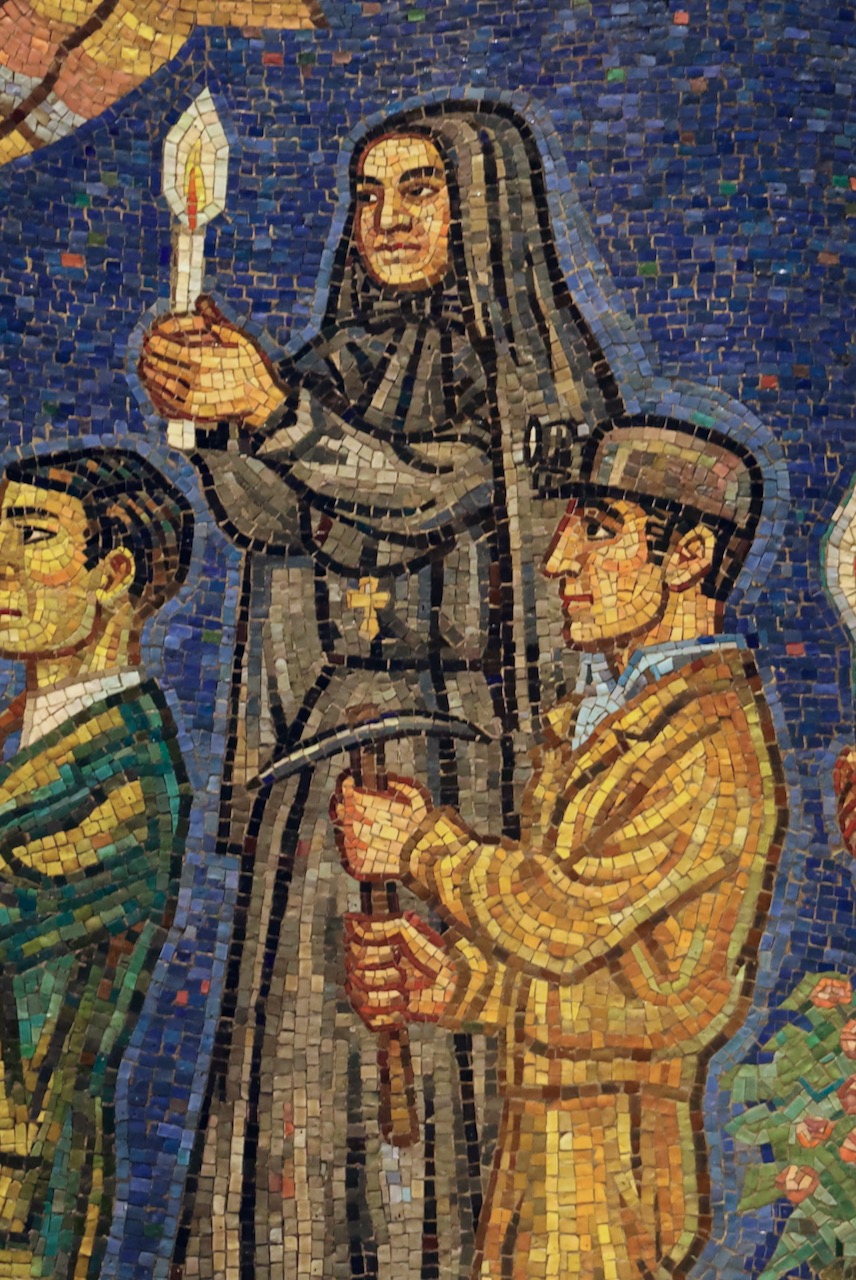
Francis Xavier CabriniFrances Xavier Cabrini portrayed in the Our Lady of Guadalupe Chapel

Frances Xavier Cabrini grew up in Italy during a time when women missionaries were unheard of – but she didn’t let that stop her from following God’s call to minister to the vulnerable in New York. From founding schools and hospitals to rescuing orphans off the streets, Frances Xavier Cabrini worked tirelessly to care for those society viewed as “the least of these” (Matthew 25:40).

As we celebrate her Memorial on November 13, we invite you to learn five facts about her life and discover where she is portrayed in America’s Catholic Church.

1. During her youth, Frances would dress her dolls as nuns.

Born on July 15, 1850, in Lombardy, Italy, Frances Xavier Cabrini felt called to be a missionary from an early age. As a young girl, she would dress her dolls as nuns and send them down the river in boats as “missionaries.” What made this dream even more extraordinary is that during this period, the Church had no female missionaries.

2. She founded the first institute for female missionaries.

When Frances grew up, she never lost her heart for missions, and at 27, she approached a local bishop about the matter. At his suggestion, she founded the first institute for female missionaries: the Missionary Sisters of the Sacred Heart, and within a decade, it was recognized by Rome.

3. In her lifetime, Frances traversed the ocean 39 times, founding over 60 missions across Europe and the Americas.

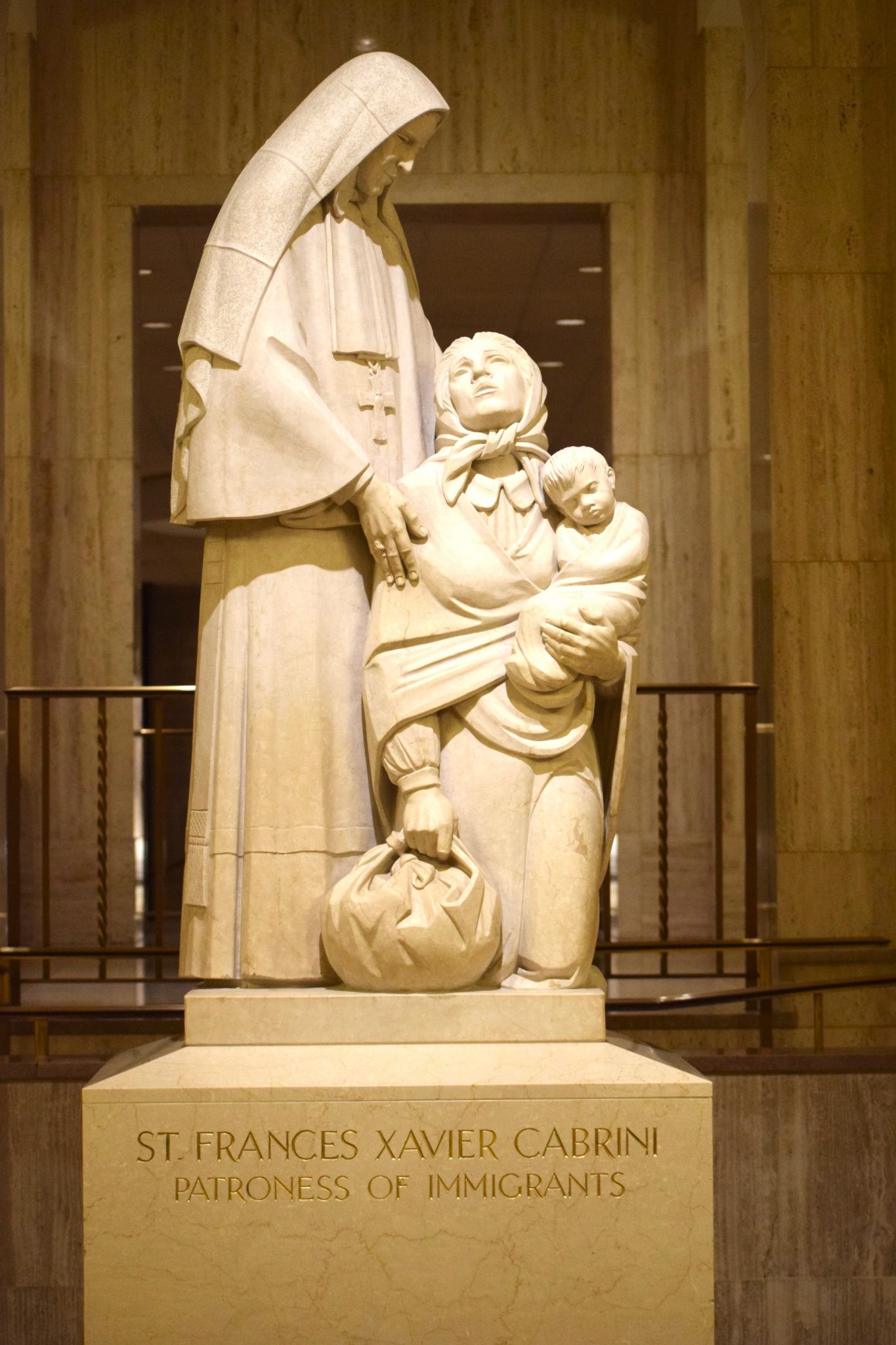
Francis Xavier Cabrini portrayed in the Hall of American Saints.
While Frances initially envisioned working in China, a conversation with the Pope made her realize that God was calling her “not to the East, but to the West.” When she was 30, Frances immigrated to New York City with six of her missionary sisters, intending to found orphanages in Little Italy. The plan was initially met with resistance from New York’s archbishop – primarily due to lack of funds. Regardless, Frances managed to secure $5,000 for the endeavor and was soon caring for over 400 orphans from the city streets. The Missionary Sisters of the Sacred Heart went on to found a variety of Catholic institutions throughout Europe and the Americas.

4. She is the patroness of immigrants.

After years of faithfully serving Italian immigrants in the United States, Frances passed away on December 22, 1917, in a migrant hospital that she helped found in Chicago. Today, she is recognized as the patroness of immigrants, hospital administrators, missionaries, and impossible causes.

5. She was the first American citizen to be canonized.

On July 7, 1946, Frances Xavier Cabrini was canonized by Pope Pius XII. Today, the Missionary Sisters of the Sacred Heart is now an international organization that ministers in 16 countries across six continents.

At America’s Catholic Church, you can find St. Francis Xavier Cabrini portrayed in the west portico, the Our Lady of Guadalupe Chapel, the Trinity Dome mosaic, and in a sculpture in the Hall of American Saints.

Sources:

“Address to the Missionary Sisters of the Sacred Heart of Jesus,” The Vatican.

“St. Frances Xavier Cabrini,” Britannica.

“St. Francesca Saverio Cabrini,” Vatican News.

The Way of Saints, Tom Cowan.


nationalshrine.org

11 posted on 11/13/2025 5:12:31 AM PST by annalex (fear them not)
[ Post Reply | Private Reply | To 10 | View Replies]

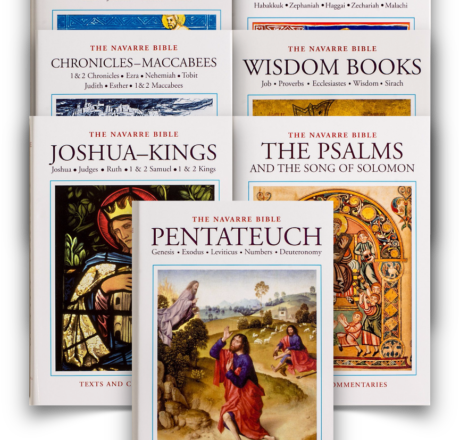
NAVARRE BIBLE COMMENTARY(RSV)

Ad Majorem Dei Gloriam (To the Greater Glory of God)

First Reading:

From: Wisdom 7:22b-8:1

Wisdom, a Reflection of Eternal Light
-------------------------------------
[22b] For in her there is a spirit that is intelligent, holy, unique, manifold, subtle, mobile, clear, unpolluted, distinct, invulnerable, loving the good, keen, irresistible, [23] beneficent, humane, steadfast, sure, free from anxiety, all-powerful, overseeing all, and penetrating through all spirits that are intelligent and pure and most subtle. [24] For wisdom is more mobile than any motion; because of her pureness she pervades and penetrates all things. [25] For she is a breath of the power of God, and a pure emanation of the glory of the Almighty; therefore nothing defiled gains entrance into her. [26] For she is a reflection of eternal light, a spotless mirror of the working of God, and an image of his goodness. [27] Though she is but one, she can do all things, and while remaining in herself, she renews all things; in every generation she passes into holy souls and makes them friends of God, and prophets;

***********************************************************************
Commentary:

7:22—8:1. Somehow, mysteriously, Wisdom is the same thing as the Spirit of God who gives life to and enlightens all other beings and who transcends them. In vv. 22-24 there are so many terms from the language of Greek philosophy (especially Plato and the Stoics) that the author must mean them to be recognized as such. However, even though he borrows this terminology, he clearly maintains his independence; nothing he says undermines his belief in there being only one God. He does attribute to divine Wisdom properties that Greek philosophy conferred on the “soul of the cosmos”, the nous and the logos, but he clearly does not mean to associate himself with that sort of thinking; he is simply using these terms to emphasize the excellence of divine Wisdom.

The sacred writers of the New Testament (St John and St Paul, particularly) have things to say somewhat along the lines of these verses when dealing with the mysteries of the Holy Spirit and Jesus Christ (cf. Jn 1:5, 9; 15:26; Col 1:5—6; Heb 1:3; etc.). Sacred texts like these were among the first to be used when, later on, Christian theology about the incarnate Word and the Holy Spirit began to take shape: we can see this from the writings of the Fathers. For example, v. 26 is used in a work attributed to St Augustine dealing with the unity of Father and Son: “A 'reflection', because the pure light of the Father is in the Son; 'a clear mirror', for the Father can be seen in the Son” ("Solutiones diversarum quaestionum", 18).

12 posted on 11/13/2025 6:25:06 AM PST by fidelis (Ecce Crucem Domini! Fugite partes adversae! Vicit Leo de tribu Juda, Radix David! Alleluia!)
[ Post Reply | Private Reply | To 11 | View Replies]

Gospel Reading:

From: Luke 17:20-25

The Coming of the Kingdom of God
--------------------------------
[20] Being asked by the Pharisees when the Kingdom of God was coming, He (Jesus) answered them, "The Kingdom of God is not coming with signs to be observed; [21] nor will they say, `Lo, here it is!' or `There!' for behold, the Kingdom of God is in the midst of you."

The Day of the Son of Man
-------------------------
[22] And He said to His disciples, "The days are coming when you will desire to see one of the days of the Son of Man, and you will not see it. [23] And they will say to you, `Lo, there!' or `Lo, here!' Do not go, do not follow them. [24] For as the lightning flashes and lights up the sky from one side to the other, so will the Son of Man be in His day. [25] But first He must suffer many things and be rejected by this generation."

***********************************************************************
Commentary:

20-21. Like many Jews of their time, the Pharisees imagined the establishment of the Kingdom of God in terms of external, political authority; whereas Jesus teaches that it is something eminently spiritual, supernatural, which has been happening since Jesus' coming, although its climax will be after His Second Coming or Parousia at the end of the world; its effect is to be seen, above all, in men's hearts, although it is also something visible and external, just as the Church has a visible dimension.

The presence of the Kingdom of God in each soul is something one perceives through the affections and inspirations communicated by the Holy Spirit. St. Therese of Lisieux says this about her own experience: "The Doctor of doctors teaches us without the sound of words. I have never heard Him speak, and yet I know He is within my soul. Every moment He is guiding and inspiring me, and, just at the moment I need them, `lights' till then unseen are granted me. Most often it is not at prayer that they come but while I go about my daily duties" ("The Story of a Soul", Chapter 8).

22. After the Apostles receive the Holy Spirit on the day of Pentecost they will devote their whole lives to preaching boldly the message of Jesus Christ, and winning all people over to the Lord. This will lead them to experience many severe contradictions; they will suffer so much that they will yearn to see even "one of the days of the Son of Man", that is, one of the days of the victory of Jesus Christ. But this day will not arrive until the Lord's Second Coming.

23-36. These words of our Lord are a prophecy about the last coming of the Son of Man. We should remember that prophecy often involves events on different levels, many symbols, a terminology of its own; the "chiaroscuro" which they create gives us insight into future events, but the concrete details only become clear when the events actually occur. Our Lord's last coming will be something sudden and unexpected; it will catch many people unprepared. Jesus illustrates this by giving examples from sacred history: as in the time of Noah (cf. Genesis 6:9-19:7) and that of Lot (cf. Genesis 18:16-19:27) divine judgment will be visited on men without warning.

However, it is useful to recall here that everyone will find himself before the divine Judge immediately when he dies, at the Particular Judgment. Thus Jesus' teaching has also a present urgency about it: here and now a disciple should scrutinize his own conduct, for the Lord can call him when he least expects.

13 posted on 11/13/2025 6:25:37 AM PST by fidelis (Ecce Crucem Domini! Fugite partes adversae! Vicit Leo de tribu Juda, Radix David! Alleluia!)
[ Post Reply | Private Reply | To 12 | View Replies]

Click here to go to the My Catholic Life! Devotional thread for a meditation on today’s Gospel Reading.

14 posted on 11/13/2025 6:29:59 AM PST by fidelis (Ecce Crucem Domini! Fugite partes adversae! Vicit Leo de tribu Juda, Radix David! Alleluia!)
[ Post Reply | Private Reply | To 13 | View Replies]

To: annalex

Mother Cabrini, pray for us!

Poor Mother Cabrini, her body was carved up and is all over :(

Most of her body is in NYC, it is partially incorrupt, she also is covered with wax on her face and hands. I don’t know how her face is covered with wax when her head is in Rome, it doesn’t make sense.

Her head is in Rome

Her arm is in Chicago

Her heart is in Codogno, Italy


15 posted on 11/14/2025 3:27:54 PM PST by Coleus (250K attend the March for Life, no violence, break-ins, stealing of podiums/laptops, etc., peaceful)
[ Post Reply | Private Reply | To 1 | View Replies]

Disclaimer: Opinions posted on Free Republic are those of the individual posters and do not necessarily represent the opinion of Free Republic or its management. All materials posted herein are protected by copyright law and the exemption for fair use of copyrighted works.

Free Republic
Browse · Search
Religion
Topics · Post Article

FreeRepublic, LLC, PO BOX 9771, FRESNO, CA 93794
FreeRepublic.com is powered by software copyright 2000-2008 John Robinson