Skip to comments.
Catholic Caucus: Daily Mass Readings 4-November-2025
Universalis/Jerusalem Bible ^
Posted on 11/04/2025 4:56:02 AM PST by annalex
4 November 2025
Saint Charles Borromeo, Bishop
on Tuesday of week 31 in Ordinary Time

Sacred Heart Cathedral, Calabar, Nigeria Readings at MassLiturgical Colour: White. Year: C(I). Readings for the feria Readings for the memorial These are the readings for the feria
| First reading | Romans 12:5-16 |
|---|
Use the gifts you have been givenAll of us, in union with Christ, form one body, and as parts of it we belong to each other. Our gifts differ according to the grace given us. If your gift is prophecy, then use it as your faith suggests; if administration, then use it for administration; if teaching, then use it for teaching. Let the preachers deliver sermons, the almsgivers give freely, the officials be diligent, and those who do works of mercy do them cheerfully. Do not let your love be a pretence, but sincerely prefer good to evil. Love each other as much as brothers should, and have a profound respect for each other. Work for the Lord with untiring effort and with great earnestness of spirit. If you have hope, this will make you cheerful. Do not give up if trials come; and keep on praying. If any of the saints are in need you must share with them; and you should make hospitality your special care. Bless those who persecute you: never curse them, bless them. Rejoice with those who rejoice and be sad with those in sorrow. Treat everyone with equal kindness; never be condescending but make real friends with the poor. Do not allow yourself to become self-satisfied.
| Responsorial Psalm | Psalm 130(131) |
|---|
Keep my soul in peace before you, O Lord. O Lord, my heart is not proud nor haughty my eyes. I have not gone after things too great nor marvels beyond me. Keep my soul in peace before you, O Lord. Truly I have set my soul in silence and peace. A weaned child on its mother’s breast, even so is my soul. Keep my soul in peace before you, O Lord. O Israel, hope in the Lord both now and forever. Keep my soul in peace before you, O Lord.
| Gospel Acclamation | cf.Ep1:17,18 |
|---|
Alleluia, alleluia! May the Father of our Lord Jesus Christ enlighten the eyes of our mind, so that we can see what hope his call holds for us. Alleluia! Alleluia, alleluia! Come to me, all you who labour and are overburdened, and I will give you rest, says the Lord. Alleluia!
'Not one of those who were invited shall have a taste of my banquet'One of those gathered round the table said to Jesus, ‘Happy the man who will be at the feast in the kingdom of God!’ But he said to him, ‘There was a man who gave a great banquet, and he invited a large number of people. When the time for the banquet came, he sent his servant to say to those who had been invited, “Come along: everything is ready now.” But all alike started to make excuses. The first said, “I have bought a piece of land and must go and see it. Please accept my apologies.” Another said, “I have bought five yoke of oxen and am on my way to try them out. Please accept my apologies.” Yet another said, “I have just got married and so am unable to come.” ‘The servant returned and reported this to his master. Then the householder, in a rage, said to his servant, “Go out quickly into the streets and alleys of the town and bring in here the poor, the crippled, the blind and the lame.” “Sir” said the servant “your orders have been carried out and there is still room.” Then the master said to his servant, “Go to the open roads and the hedgerows and force people to come in to make sure my house is full; because, I tell you, not one of those who were invited shall have a taste of my banquet.”’ Continue These are the readings for the memorial
| First reading | Romans 12:3-13 |
|---|
Use the gifts you have been givenIn the light of the grace I have received I want to urge each one among you not to exaggerate his real importance. Each of you must judge himself soberly by the standard of the faith God has given him. Just as each of our bodies has several parts and each part has a separate function, so all of us, in union with Christ, form one body, and as parts of it we belong to each other. Our gifts differ according to the grace given us. If your gift is prophecy, then use it as your faith suggests; if administration, then use it for administration; if teaching, then use it for teaching. Let the preachers deliver sermons, the almsgivers give freely, the officials be diligent, and those who do works of mercy do them cheerfully. Do not let your love be a pretence, but sincerely prefer good to evil. Love each other as much as brothers should, and have a profound respect for each other. Work for the Lord with untiring effort and with great earnestness of spirit. If you have hope, this will make you cheerful. Do not give up if trials come; and keep on praying. If any of the saints are in need you must share with them; and you should make hospitality your special care.
| Responsorial Psalm |
|---|
| Psalm 88(89):2-5,21-22,25,27 |
|---|
I will sing for ever of your love, O Lord. I will sing for ever of your love, O Lord; through all ages my mouth will proclaim your truth. Of this I am sure, that your love lasts for ever, that your truth is firmly established as the heavens. I will sing for ever of your love, O Lord. ‘I have made a covenant with my chosen one; I have sworn to David my servant: I will establish your dynasty for ever and set up your throne through all ages. I will sing for ever of your love, O Lord. ‘I have found David my servant and with my holy oil anointed him. My hand shall always be with him and my arm shall make him strong. I will sing for ever of your love, O Lord. ‘My truth and my love shall be with him; by my name his might shall be exalted. He will say to me: “You are my father, my God, the rock who saves me.”’ I will sing for ever of your love, O Lord.
| Gospel Acclamation | Jn10:14 |
|---|
Alleluia, alleluia! I am the good shepherd, says the Lord; I know my own sheep and my own know me. Alleluia!
The good shepherd is one who lays down his life for his sheepJesus said: ‘I am the good shepherd: the good shepherd is one who lays down his life for his sheep. The hired man, since he is not the shepherd and the sheep do not belong to him, abandons the sheep and runs away as soon as he sees a wolf coming, and then the wolf attacks and scatters the sheep; this is because he is only a hired man and has no concern for the sheep. ‘I am the good shepherd; I know my own and my own know me, just as the Father knows me and I know the Father; and I lay down my life for my sheep. And there are other sheep I have that are not of this fold, and these I have to lead as well. They too will listen to my voice, and there will be only one flock, and one shepherd.’ Continue You can also view this page with the New Testament in Greek and English. Universalis podcast: Resurrection is Now: part 1 of 8Foreword; Prologue; Death as the End: The Death of Experience, The Death of Love.
Dom Aelred Watkin (1918-1997) was a wise and respected Head Master of Downside from 1962 to 1975.
"Resurrection is Now" is a rare opportunity to benefit from his understanding. This book covers death in all its aspects, both as an end and as a beginning, and looks at life from the perspective of a preparation for death. It combines intellectual rigour with a poetic delight in the wonder of being in all its aspects.
You can listen to the book here, or you can read it as a Daily Book in Universalis: the Episode Notes have instructions.. (22 minutes)
Episode notes.Play Christian Art Each day, The Christian Art website gives a picture and reflection on the Gospel of the day. The readings on this page are from the Jerusalem Bible, which is used at Mass in most of the English-speaking world. The New American Bible readings, which are used at Mass in the United States, are available in the Universalis apps, programs and downloads.
You can also view this page with the Gospel in Greek and English. |
TOPICS: Catholic; General Discusssion; Prayer; Worship
KEYWORDS: catholic; lk14; ordinarytime; prayer
For your reading, reflection, faith-sharing, comments, questions, discussion.
1
posted on
11/04/2025 4:56:02 AM PST
by
annalex
To: All
KEYWORDS: catholic; lk14; ordinarytime; prayer;
2
posted on
11/04/2025 4:56:31 AM PST
by
annalex
(fear them not)
To: nickcarraway; NYer; ELS; Pyro7480; livius; ArrogantBustard; Catholicguy; RobbyS; marshmallow; ...

Alleluia Ping Please FReepmail me to get on/off the Alleluia Ping List.
3
posted on
11/04/2025 4:57:27 AM PST
by
annalex
(fear them not)
To: annalex
4
posted on
11/04/2025 4:57:55 AM PST
by
annalex
(fear them not)
To: annalex
| Luke |
| | English: Douay-Rheims | Latin: Vulgata Clementina | Greek NT: Byzantine/Majority Text (2000) |
| | Luke 14
|
| 15. | When one of them that sat at table with him, had heard these things, he said to him: Blessed is he that shall eat bread in the kingdom of God. | Hæc cum audisset quidam de simul discumbentibus, dixit illi : Beatus qui manducabit panem in regno Dei. | ακουσας δε τις των συνανακειμενων ταυτα ειπεν αυτω μακαριος ος φαγεται αριστον εν τη βασιλεια του θεου |
| 16. | But he said to him: A certain man made a great supper, and invited many. | At ipse dixit ei : Homo quidam fecit cœnam magnam, et vocavit multos. | ο δε ειπεν αυτω ανθρωπος τις εποιησεν δειπνον μεγα και εκαλεσεν πολλους |
| 17. | And he sent his servant at the hour of supper to say to them that were invited, that they should come, for now all things are ready. | Et misit servum suum hora cœnæ dicere invitatis ut venirent, quia jam parata sunt omnia. | και απεστειλεν τον δουλον αυτου τη ωρα του δειπνου ειπειν τοις κεκλημενοις ερχεσθε οτι ηδη ετοιμα εστιν παντα |
| 18. | And they began all at once to make excuse. The first said to him: I have bought a farm, and I must needs go out and see it: I pray thee, hold me excused. | Et cœperunt simul omnes excusare. Primus dixit ei : Villam emi, et necesse habeo exire, et videre illam : rogo te, habe me excusatum. | και ηρξαντο απο μιας παραιτεισθαι παντες ο πρωτος ειπεν αυτω αγρον ηγορασα και εχω αναγκην εξελθειν και ιδειν αυτον ερωτω σε εχε με παρητημενον |
| 19. | And another said: I have bought five yoke of oxen, and I go to try them: I pray thee, hold me excused. | Et alter dixit : Juga boum emi quinque, et eo probare illa : rogo te, habe me excusatum. | και ετερος ειπεν ζευγη βοων ηγορασα πεντε και πορευομαι δοκιμασαι αυτα ερωτω σε εχε με παρητημενον |
| 20. | And another said: I have married a wife, and therefore I cannot come. | Et alius dixit : Uxorem duxi, et ideo non possum venire. | και ετερος ειπεν γυναικα εγημα και δια τουτο ου δυναμαι ελθειν |
| 21. | And the servant returning, told these things to his lord. Then the master of the house, being angry, said to his servant: Go out quickly into the streets and lanes of the city, and bring in hither the poor, and the feeble, and the blind, and the lame. | Et reversus servus nuntiavit hæc domino suo. Tunc iratus paterfamilias, dixit servo suo : Exi cito in plateas et vicos civitatis : et pauperes, ac debiles, et cæcos, et claudos introduc huc. | και παραγενομενος ο δουλος εκεινος απηγγειλεν τω κυριω αυτου ταυτα τοτε οργισθεις ο οικοδεσποτης ειπεν τω δουλω αυτου εξελθε ταχεως εις τας πλατειας και ρυμας της πολεως και τους πτωχους και αναπηρους και χωλους και τυφλους εισαγαγε ωδε |
| 22. | And the servant said: Lord, it is done as thou hast commanded, and yet there is room. | Et ait servus : Domine, factum est ut imperasti, et adhuc locus est. | και ειπεν ο δουλος κυριε γεγονεν ως επεταξας και ετι τοπος εστιν |
| 23. | And the Lord said to the servant: Go out into the highways and hedges, and compel them to come in, that my house may be filled. | Et ait dominus servo : Exi in vias, et sæpes : et compelle intrare, ut impleatur domus mea. | και ειπεν ο κυριος προς τον δουλον εξελθε εις τας οδους και φραγμους και αναγκασον εισελθειν ινα γεμισθη ο οικος μου |
| 24. | But I say unto you, that none of those men that were invited, shall taste of my supper. | Dico autem vobis quod nemo virorum illorum qui vocati sunt, gustabit cœnam meam. | λεγω γαρ υμιν οτι ουδεις των ανδρων εκεινων των κεκλημενων γευσεται μου του δειπνου [πολλοι γαρ εισιν κλητοι ολιγοι δε εκλεκτοι] |
|
(*) [πολλοι γαρ εισιν κλητοι ολιγοι δε εκλεκτοι] (many are called, few, however, are elected), as indicated by square brackets, is not in the translations.
5
posted on
11/04/2025 5:00:45 AM PST
by
annalex
(fear them not)
To: annalex
14:15–24
15. And when one of them that sat at meat with him heard these things, he said unto him, Blessed is he that shall eat bread in the kingdom of God.
16. Then said he unto him, A certain man made a great supper, and bade many:
17. And sent his servant at supper time to say to them that were bidden, Come; for all things are now ready.
18. And they all with one consent began to make excuse. The first said unto him, I have bought a piece of ground, and I must needs go and see it: I pray thee have me excused.
19. And another said, I have bought five yoke of oxen, and I go to prove them: I pray thee have me excused.
20. And another said, I have married a wife, and therefore I cannot come.
21. So that servant came, and shewed his lord these things. Then the master of the house being angry said to his servant, Go out quickly into the streets and lanes of the city, and bring in hither the poor, and the maimed, and the halt, and the blind.
22. And the servant said, Lord, it is done as thou hast commanded, and yet there is room.
23. And the lord said unto the servant, Go out into the highways and hedges, and compel them to come in, that my house may be filled.
24. For I say unto you, That none of those men which were bidden shall taste of my supper.
EUSEBIUS. Our Lord had just before taught us to prepare our feasts for those who cannot repay, seeing that we shall have our reward at the resurrection of the just. Some one then, supposing the resurrection of the just to be one and the same with the kingdom of God, commends the above-mentioned recompense; for it follows, When one of them that sat at meat with him heard these things, he said unto him, Blessed is he that shall eat bread in the kingdom of God.
CYRIL OF ALEXANDRIA. That man was carnal, and a careless hearer of the things which Christ delivered, for he thought the reward of the saints was to be bodily.
AUGUSTINE. (Serm. 112.) Or because he sighed for something afar off, and that bread which he desired lay before him. For who is that Bread of the kingdom of God but He who says, I am the living bread which came down from heaven? (John 6:51.) Open not thy mouth, but thy heart.
BEDE. But because some receive this bread by faith merely, as if by smelling, but its sweetness they loathe to really touch with their mouths, our Lord by the following parable condemns the dulness of those men to be unworthy of the heavenly banquet. For it follows, But he said unto him, A certain man made a great supper, and bade many.
CYRIL OF ALEXANDRIA. This man represents God the Father just as images are formed to give the resemblance of power. For as often as God wishes to declare His avenging power, He is called by the names of bear, leopard, lion, and others of the same kind; but when He wishes to express mercy, by the name of man. The Maker of all things, therefore, and Father of Glory, or the Lord, prepared the great supper which was finished in Christ.
For in these latter times, and as it were the setting of our world, the Son of God has shone upon us, and enduring death for our sakes, has given us His own body to eat. Hence also the lamb was sacrificed in the evening according to the Mosaic law. Rightly then was the banquet which was prepared in Christ called a supper.
GREGORY. (Hom. 36. in Evan.) Or he made a great supper, as having prepared for us the full enjoyment of eternal sweetness. He bade many, but few came, because sometimes they who themselves are subject to him by faith, by their lives oppose his eternal banquet. And this is generally the difference between the delights of the body and the soul, that fleshly delights when not possessed provoke a longing desire for them, but when possessed and devoured, the eater soon turns from satiety to loathing; spiritual delights, on the other hand, when not possessed are loathed, when possessed the more desired. But heavenly mercy recalls those despised delights to the eyes of our memory, and in order that we should drive away our disgust, bids us to the feast. Hence it follows, And he sent his servant, &c.
CYRIL OF ALEXANDRIA. That servant who was sent is Christ Himself, who being by nature God and the true Son of God, emptied Himself, and took upon Him the form of a servant. But He was sent at supper time. For not in the beginning did the Word take upon Him our nature, but in the last time; and he adds, For all things are ready. For the Father prepared in Christ the good things bestowed upon the world through Him, the removal of sins, the participation of the Holy Spirit, the glory of adoption. To these Christ bade men by the teaching of the Gospel.
AUGUSTINE. (ubi sup.) Or else, the Man is the Mediator between God and man, Christ Jesus; He sent that they who were bidden might come, i. e. those who were called by the prophets whom He had sent; who in the former times invited to the supper of Christ, were often sent to the people of Israel, often bade them to come at supper time. They received the inviters, refused the supper. They received the prophets and killed Christ, and thus ignorantly prepared for us the supper. The supper being now ready, i. e. Christ being sacrificed, the Apostles were sent to those, to whom prophets had been sent before.
GREGORY. By this servant then who is sent by the master of the family to bid to supper, the order of preachers is signified. But it is often the case that a powerful person has a despised servant, and when his Lord orders any thing through him, the servant speaking is not despised, because respect for the master who sends him is still kept up in the heart. Our Lord then offers what he ought to be asked for, not ask others to receive. He wishes to give what could scarcely be hoped for; yet all begin at once to make excuse, for it follows, And they all began with one consent to make excuse. Behold a rich man invites, and the poor hasten to come. We are invited to the banquet of God, and we make excuse.
AUGUSTINE. (ubi sup.) Now there were three excuses, of which it is added, The first said unto him, I have bought a piece of ground, and I must needs go and see it. The bought piece of ground denotes government. Therefore pride is the first vice reproved. For the first man wished to rule, not willing to have a master.
GREGORY. (ubi sup.) Or by the piece of ground is meant worldly substance. Therefore he goes out to see it who thinks only of outward things for the sake of his living.
AMBROSE. Thus it is that the worn out soldier is appointed to serve degraded offices, as he who intent upon things below buys for himself earthly possessions, can not enter into the kingdom of heaven. Our Lord says, Sell all that thou hast, and follow me.
It follows, And another said, I have bought five yoke of oxen, and I go to prove them.
AUGUSTINE. (Serm. 112.) The five yoke of oxen are taken to be the five senses of the flesh; in the eyes sight, in the ears hearing, in the nostrils smelling, in the mouth taste, in all the members touch. But the yoke is more easily apparent in the three first senses; two eyes, two ears, two nostrils. Here are three yoke. And in the mouth is the sense of taste which is found to be a kind of double, in that nothing is sensible to the taste, which is not touched both by the tongue and palate. The pleasure of the flesh which belongs to the touch is secretly doubled. It is both outward and inward. But they are called yoke of oxen, because through those senses of the flesh earthly things are pursued. For the oxen till the ground, but men at a distance from faith, given up to earthly things, refuse to believe in any thing, but what they arrive at by means of the five-fold sense of the body. “I believe nothing but what I see.” If such were our thoughts, we should be hindered from the supper by those five yoke of oxen. But that you may understand that it is not the delight of the five senses which charms and conveys pleasure, but that a certain curiosity is denoted, he says not, I have bought five yoke of oxen, and go to feed them, but go to prove them.
GREGORY. (in Hom. 36. in Ev.) By the bodily senses also because they cannot comprehend things within, but take cognizance only of what is without, curiosity is rightly represented, which while it seeks to shake off a life which is strange to it, not knowing its own secret life, desires to dwell upon things without. But we must observe, that the one who for his farm, and the other who to prove his five yoke of oxen, excuse themselves from the supper of their Inviter, mix up with their excuse the words of humility. For when they say, I pray thee, and then disdain to come, the word sounds of humility, but the action is pride. It follows, And this said, I have married a wife, and therefore I cannot come.
AUGUSTINE. (ubi sup.) That is, the delight of the flesh which hinders many, I wish it were outward and not inward. For he who said, I have married a wife, taking pleasure in the delights of the flesh, excuses himself from the supper; let such a one take heed lest he die from inward hunger.
BASIL. But he says, I cannot come, because that the human mind when it is degenerating to worldly pleasures, is feeble in attending to the things of God.
GREGORY. (Hom. 36.) But although marriage is good, and appointed by Divine Providence for the propagation of children, some seek therein not fruitfulness of offspring, but the lust of pleasure. And so by means of a righteous thing may not unfitly an unrighteous thing be represented.
AMBROSE. Or marriage is not blamed; but purity is held up to greater honour, since the unmarried woman careth for the things of the Lord, that she may be holy in body and spirit, but she that is married careth for the things of the world. (1 Cor. 7:34.)
AUGUSTINE. (ubi sup.) Now John when he said, all that is in the world is the lust of the flesh, and the lust of the eyes, and the pride of life, (1 John 2:16.) began from the point where the Gospel ended. The lust of the flesh, I have married a wife; the lust of the eyes, I have bought fire yoke of oxen; the pride of life, I have bought a farm. But proceeding from a part to the whole, the five senses have been spoken of under the eyes alone, which hold the chief place among the five senses. Because though properly the sight belongs to the eyes, we are in the habit of ascribing the act of seeing to all the five senses.
CYRIL OF ALEXANDRIA. But whom can we suppose these to be who refused to come for the reason just mentioned, but the rulers of the Jews, whom throughout the sacred history we find to have been often reproved for these things?
ORIGEN. Or else, they who have bought a piece of ground and reject or refuse the supper, are they who have taken other doctrines of divinity, but have despised the word which they possessed. But he who has bought five yoke of oxen is he who neglects his intellectual nature, and follows the things of sense, therefore he cannot comprehend a spiritual nature. But he who has married a wife is he who is joined to the flesh, a lover of pleasure rather than of God. (1 Tim. 3:4.)
AMBROSE. Or let us suppose that three classes of men are excluded from partaking of that supper, Gentiles, Jews, Heretics. The Jews by their fleshly service impose upon themselves the yoke of the law, for the five yoke are the yoke of the Ten Commandments, of which it is said, And he declared unto you his covenant, which he commanded you to perform, even ten commandments; and he wrote them upon two tables of stone. (Deut. 4:13.) That is, the commands of the Decalogue. Or the five yoke are the five books of the old law. But heresy indeed, like Eve with a woman’s obstinacy, tries the affection of faith. And the Apostle says that we must flee from covetousness, lest entangled in the customs of the Gentiles we be unable to come to the kingdom of Christ. (Eph. 5:3, Col. 3:5, Heb. 13:5, 1 Tim. 6:11.) Therefore both he who has bought a farm is a stranger to the kingdom, and he who has chosen the yoke of the law rather than the gift of grace, and he also who excuses himself because he has married a wife.
It follows, And the servant returned, and told these things to his Lord.
AUGUSTINE. (in Gen. ad lit. c. 19.) Not for the sake of knowing inferior beings does God require messengers, as though He gained aught from them, for He knows all things stedfastly and unchangeably. But he has messengers for oursakes and their own, because to be present with God, and stand before Him so as to consult Him about His subjects, and obey His heavenly commandments, is good for them in the order of their own nature.
CYRIL OF ALEXANDRIA. But with the rulers of the Jews who refused their call, as they themselves confessed, Have any of the rulers believed on him? (John 7:48.) the Master of the household was wroth, as with them that deserved His indignation and anger; whence it follows, Then the master of the house being angry, &c.
PSEUDO-BASIL. (app. Hom. in Ps. 37.) Not that the passion of anger belongs to the Divine substance, but an operation such as in us is caused by anger, is called the anger and indignation of God.
CYRIL OF ALEXANDRIA. Thus it was that the master of the house is said to have been enraged with the chiefs of the Jews, and in their stead were called men taken from out of the Jewish multitude, and of weak and impotent minds. For at Peter’s preaching, first indeed three thousand, then five thousand believed, and afterwards much people; whence it follows, He said unto his servant, Go out straightway into the streets and lanes of the city, and bring in hither the poor, and the maimed, and the halt, and the blind. (Acts 2:41, 44.
AMBROSE. He invites the poor, the weak, and the blind, to shew that weakness of body shuts out no one from the kingdom of heaven, and that he is guilty of fewer sins who lacks the incitement to sin; or that the infirmities of sin are forgiven through the mercy of God. Therefore he sends to the streets, that from the broader ways they may come to the narrow way.
Because then the proud refuse to come, the poor (Greg. Hom. 36.) are chosen, since they are called weak and poor who are weak in their own judgment of themselves, for there are poor, and yet as it were strong, who though lying in poverty are proud; the blind are they who have no brightness of understanding; the lame are they who have walked not uprightly in their works. But since the faults of these are expressed in the weakness of their members, as those were sinners who when bidden refused to come, so also are these who are invited and come; but the proud sinners are rejected, the humble are chosen. God then chooses those whom the world despises, because for the most part the very act of contempt recals a man to himself. And men so much the sooner hear the voice of God, as they have nothing in this world to take pleasure in. When then the Lord calls certain from the streets and lanes to supper, He denotes that people who had learnt to observe in the city the constant practice of the law. But the multitude who believed of the people of Israel did not fill the places of the upper feast room. Hence it follows, And the servant said, Lord, it is done as thou hast commanded, and yet there is room. For already had great numbers of the Jews entered, but yet there was room in the kingdom for the abundance of the Gentiles to be received. Therefore it is added, And the Lord said unto the servant, Go out into the highways and hedges, and compel them to come in, that my house may be filled. When He commanded His guests to be collected from the wayside and the hedges, He sought for a rural people, that is, the Gentiles.
AMBROSE. Or, He sends to the highways and about the hedges, because they are fit for the kingdom of God, who, not absorbed in the desire for present goods, are hastening on to the future, set in a certain fixed path of good will. And who like a hedge which separates the cultivated ground from the uncultivated, and keeps off the incursion of the cattle, know how to distinguish good and evil, and to hold up the shield of faith against the temptations of spiritual wickedness.
AUGUSTINE. (Serm. 112.) The Gentiles came from the streets and lanes, the heretics come from the hedges. For they who make a hedge seek for a division; let them be drawn away from the hedges, plucked asunder from the thorns. But they are unwilling to be compelled. By our own will, say they, will we enter. Compel them to enter, He says. Let necessity be used from without, thence arises a will.
GREGORY. (in Hom. 36.) They then who, broken down by the calamities of this world, return to the love of God, are compelled to enter. But very terrible is the sentence which comes next. For I say unto you, That none of those men which were bidden shall taste of my supper. Let no one then despise the call, lest if when bidden he make excuse, when he wishes to enter he shall not be able.
Catena Aurea Luke 14
6
posted on
11/04/2025 5:02:01 AM PST
by
annalex
(fear them not)
To: annalex

The Parable of the Guests at the Wedding of the King's Son
Francisco Jose de Goya y Lucientes
1796-97
Museo Historico Municipal, Cadiz, Spain
7
posted on
11/04/2025 5:02:17 AM PST
by
annalex
(fear them not)
To: annalex
| John |
| | English: Douay-Rheims | Latin: Vulgata Clementina | Greek NT: Byzantine/Majority Text (2000) |
| | John 10
|
| 11. | I am the good shepherd. The good shepherd giveth his life for his sheep. | Ego sum pastor bonus. Bonus pastor animam suam dat pro ovibus suis. | εγω ειμι ο ποιμην ο καλος ο ποιμην ο καλος την ψυχην αυτου τιθησιν υπερ των προβατων |
| 12. | But the hireling, and he that is not the shepherd, whose own the sheep are not, seeth the wolf coming, and leaveth the sheep, and flieth: and the wolf catcheth, and scattereth the sheep: | Mercenarius autem, et qui non est pastor, cujus non sunt oves propriæ, videt lupum venientem, et dimittit oves, et fugit : et lupus rapit, et dispergit oves ; | ο μισθωτος δε και ουκ ων ποιμην ου ουκ εισιν τα προβατα ιδια θεωρει τον λυκον ερχομενον και αφιησιν τα προβατα και φευγει και ο λυκος αρπαζει αυτα και σκορπιζει τα προβατα |
| 13. | And the hireling flieth, because he is a hireling: and he hath no care for the sheep. | mercenarius autem fugit, quia mercenarius est, et non pertinet ad eum de ovibus. | ο δε μισθωτος φευγει οτι μισθωτος εστιν και ου μελει αυτω περι των προβατων |
| 14. | I am the good shepherd; and I know mine, and mine know me. | Ego sum pastor bonus : et cognosco meas, et cognoscunt me meæ. | εγω ειμι ο ποιμην ο καλος και γινωσκω τα εμα και γινωσκομαι υπο των εμων |
| 15. | As the Father knoweth me, and I know the Father: and I lay down my life for my sheep. | Sicut novit me Pater, et ego agnosco Patrem : et animam meam pono pro ovibus meis. | καθως γινωσκει με ο πατηρ καγω γινωσκω τον πατερα και την ψυχην μου τιθημι υπερ των προβατων |
| 16. | And other sheep I have, that are not of this fold: them also I must bring, and they shall hear my voice, and there shall be one fold and one shepherd. | Et alias oves habeo, quæ non sunt ex hoc ovili : et illas oportet me adducere, et vocem meam audient, et fiet unum ovile et unus pastor. | και αλλα προβατα εχω α ουκ εστιν εκ της αυλης ταυτης κακεινα με δει αγαγειν και της φωνης μου ακουσουσιν και γενησεται μια ποιμνη εις ποιμην |
8
posted on
11/04/2025 5:04:09 AM PST
by
annalex
(fear them not)
To: annalex

Catena Aurea by St. Thomas Aguinas
10:11–13
11. I am the good shepherd: the good shepherd giveth his life for the sheep.
12. But he that is an hireling, and not the shepherd, whose own the sheep are not, seeth the wolf coming, and leaveth the sheep, and fleeth: and the wolf catcheth them, and scattereth the sheep.
13. The hireling fleeth, because he is an hireling, and careth not for the sheep.
AUGUSTINE. (Tr. xlvi. 1) Our Lord has acquainted us with two things which were obscure before; first, that He is the Door; and now again, that He is the Shepherd: I am the good Shepherd. (c. xlvii. 1, 3). Above He said that the shepherd entered by the door. If He is the Door, how doth He enter by Himself? Just as He knows the Father by Himself, and we by Him; so He enters into the fold by Himself, and we by Him. We enter by the door, because we preach Christ; Christ preaches Himself. A light shews both other things, and itself too. (Tr. xlvi. 5). There is but one Shepherd. For though the rulers of the Church, those who are her sons, and not hirelings, are shepherds, they are all members of that one Shepherd. (Tr. xlvii. 3). His office of Shepherd He hath permitted His members to bear. Peter is a shepherd, and all the other Apostles: all good Bishops are shepherds. But none of us calleth himself the door. He could not have added good, if there were not bad shepherds as well. They are thieves and robbers; or at least mercenaries.
GREGORY. (Hom. xiv. in Evang.) And He adds what that goodness (forma bonitatis) is, for our imitation: The good Shepherd giveth His life for the sheep. He did what He bade, He set the example of what He commanded: He laid down His life for the sheep, that He might convert His body and blood in our Sacrament, and feed with His flesh the sheep He had redeemed. A path is shewn us wherein to walk, despising death; a stamp is applied to us, and we must submit to the impression. Our first duty is to spend our outward possessions upon the sheep; our last, if it be necessary, is to sacrifice our life for the same sheep. Whoso doth not give his substance to the sheep, how can he lay down his life for them?
AUGUSTINE. (Tr. xlvii) Christ was not the only one who did this. And yet if they who did it are members of Him, one and the same Christ did it always. He was able to do it without them; they were not without Him.
AUGUSTINE. (de Verb. Dom. Serm. 1) All these however were good shepherds, not because they shed their blood, but because they did it for the sheep. For they shed it not in pride, but in love. Should any among the heretics suffer trouble in consequence of their errors and iniquities, they forthwith boast of their martyrdom; that they may be the better able to steal under so fair a cloak: for they are in reality wolves. But not all who give their bodies to be burned, are to be thought to shed their blood for the sheep; rather against the sheep; for the Apostle saith, Though I give my body to be burned, and have not charity, it profiteth me nothing. (1 Cor. 13:3) And how hath he even the smallest charity, who does not love connexion (convictus) with Christians? to command which, our Lord did not mention many shepherds, but one, I am the good Shepherd.
CHRYSOSTOM. (Hom. lx. 5) Our Lord shews here that He did not undergo His passion unwillingly; but for the salvation of the world. He then gives the difference between the shepherd and the hireling: But he that is an hireling, and not the shepherd, whose own the sheep are not, seeth the wolf coming, and leaveth the sheep, and fleeth.
GREGORY. (Hom. in Evang. xiv.) Some there are who love earthly possessions more than the sheep, and do not deserve the name of a shepherd. He who feeds the Lord’s flock for the sake of temporal hire, and not for love, is an hireling, not a shepherd. An hireling is he who holds the place of shepherd, but seeketh not the gain of souls, who panteth after the good things of earth, and rejoices in the pride of station.
AUGUSTINE. (de Verb. Dom. Serm. xlix) He seeketh therefore in the Church, not God, but something else. If he sought God he would be chaste; for the soul hath but one lawful husband, God. Whoever seeketh from God any thing beside God, seeketh unchastely.
GREGORY. (Hom. in Evang. xiv.) But whether a man be a shepherd or an hireling, cannot be told for certain, except in a time of trial. In tranquil times, the hireling generally stands watch like the shepherd. But when the wolf comes, then every one shews with what spirit he stood watch over the flock.
AUGUSTINE. (de Verb. Dom. Serm. xlix.) The wolf is the devil, and they that follow him; according to’ Matthew, Which come to you in sheeps’ clothing, but inwardly they are ravening wolves. (Matt. 7:15)
AUGUSTINE. (Tr. xlvi. 8) Lo, the wolf hath seized a sheep by the throat, the devil hath enticed a man into adultery. The sinner must be excommunicated. But if he is excommunicated, he will be an enemy, he will plot, he will do as much harm as he can. Wherefore thou art silent, thou dost not censure, thou hast seen the wolf coming, and fled. Thy body has stood, thy mind has fled. For as joy is relaxation, sorrow contraction, desire a reaching forward of the mind; so fear is the flight of the mind.
GREGORY. (Hom. in Evang. xiv.) The wolf too cometh upon the sheep, whenever any spoiler and unjust person oppresses the humble believers. And he who seems to be shepherd, but leaves the sheep and flees, is he who dares not to resist his violence, from fear of danger to himself. He flees not by changing place, but by withholding consolation from his flock. The hireling is inflamed with no zeal against this injustice. He only looks to outward comforts, and overlooks the internal suffering of his flock. The hireling fleeth, because he is an hireling, and careth not for the sheep. The only reason that the hireling fleeth, is because he is an hireling; as if to say, He cannot stand at the approach of danger, who doth not love the sheep that he is set over, but seeketh earthly gain. Such an one dares not face danger, for fear he should lose what he so much loves.
AUGUSTINE. (Tr. xlvi. 7) But if the Apostles were shepherds, not hirelings, why did they flee in persecution? And why did our Lord say, When they persecute you in this city, flee ye into another? (Mat. 10:23) Let us knock, then will come one, who will explain.
AUGUSTINE. (ad Honor. Ep. clxxx.) A servant of Christ, and minister of His Word and Sacraments, may flee from city to city, when he is specially aimed at by the persecutors, apart from his brethren; so that his flight does not leave the Church destitute. But when all, i. e. Bishops, Clerics, and Laics, are in danger in common, let not those who need assistance be deserted by those who should give it. Let all flee together if they can, to some place of security; but, if any are obliged to stay, let them not be forsaken by those who are bound to minister to their spiritual wants. Then, under pressing persecution, may Christ’s ministers flee from the place where they are, when none of Christ’s people remain to be ministered to, or when that ministry may be fulfilled by others who have not the same cause for flight. But when the people stay, and the ministers flee, and the ministry ceases, what is this but a damnable flight of hirelings, who care not for the sheep?
AUGUSTINE. (Tr. xlvi. 1) On the good side are the door, the porter, the shepherd, and the sheep; on the bad, the thieves, the robbers, the hirelings, the wolf.
AUGUSTINE. (de Verb. Dom. s. xlix) We must love the shepherd, beware of the wolf, tolerate the hireling. For the hireling is useful so long as he sees not the wolf, the thief, and the robber. When he sees them, he flees.
AUGUSTINE. (Tr. xlvi. 5) Indeed he would not be an hireling, did he not receive wages from the hirer. (c. 6). Sons wait patiently for the eternal inheritance of their father; the hireling looks eagerly for the temporal wages from his hirer; and yet the tongues of both speak abroad the glory of Christ. The hireling hurteth, in that he doeth wrong, not in that he speaketh right: the grape bunch hangeth amid thorns; pluck the grape, avoid the thorn. Many that seek temporal advantages in the Church, preach Christ, and through them Christ’s voice is heard; and the sheep follow not the hireling, but the voice of the Shepherd heard through the hireling.
10:14–21
14. I am the good shepherd, and know my sheep, and am known of mine.
15. As the Father knoweth me, even so know I the Father: and I lay down my life for the sheep.
16. And other sheep I have, which are not of this fold: them also I must bring, and they shall hear my voice; and there shall be one fold, and one shepherd.
17. Therefore doth my Father love me, because I lay down my life, that I might take it again.
18. No man taketh it from me, but I lay it down of myself. I have power to lay it down, and I have power to take it again. This commandment have I received of my Father.
CHRYSOSTOM. (Hom. lx. 1) Two evil persons have been mentioned, one that kills, and robs the sheep, another that doth not hinder: the one standing for those movers of seditions; the other for the rulers of the Jews, who did not take care of the sheep committed to them. Christ distinguishes Himself from both; from the one who came to do hurt by saying, I am come that they might have life; from those who overlook the rapine of the wolves, by saying that He giveth His life for the sheep. Wherefore He saith again, as He said before, I am the good Shepherd. And as He had said above that the sheep heard the voice of the Shepherd and followed Him, that no one might have occasion to ask, What sayest Thou then of those that believe not? He adds, And I know My sheep, and am known of Mine. (Rom. 11:12) As Paul too saith, God hath not cast away His people, whom He foreknew.
GREGORY. (Hom. in Evang. xiv.) As if He said, I love My sheep, and they love and follow Me. For he who loves not the truth, is as yet very far from knowing it.
THEOPHYLACT. Hence the difference of the hireling and the Shepherd. The hireling does not know his sheep, because he sees them so little. The Shepherd knows His sheep, because He is so attractive to them.
CHRYSOSTOM. (Hom. lx. 1) Then that thou mayest not attribute to the Shepherd and the sheep the same measure of knowledge, He adds, As the Father knoweth Me, even so know I the Father: i. e. I know Him as certainly as He knoweth Me. This then is a case of like knowledge, the other is not; as He saith, No man knoweth who the Son is, but the Father. (Luke 10:23)
GREGORY. (Hom. in Evang. xiv.) And I lay down My life for My sheep. As if to say, This is why I know My Father, and am known by the Father, because I lay down My life for My sheep; i. e. by My love for My sheep, I shew how much I love My Father.
CHRYSOSTOM. (Hom. lx. 1) He gives it too as a proof of His authority. In the same way the Apostle maintains his own commission in opposition to the false Apostles, by enumerating his dangers and sufferings.
THEOPHYLACT. For the deceivers did not expose their lives for the sheep, but, like hirelings, deserted their followers. Our Lord, on the other hand, protected His disciples: Let these go their way. (infr. 18:8)
GREGORY. (Hom. xiv.) But as He came to redeem not only the Jews, but the Gentiles, He adds, And other sheep I have, which are not of this fold.
AUGUSTINE. (de Verb. Dom. s. 1) The sheep hitherto spoken of are those of the stock of Israel according to the flesh. But there were others of the stock of Israel, according to faith, Gentiles, who were as yet out of the fold; predestinated, but not yet gathered together. They are not of this fold, because they are not of the race of Israel, but they will be of this fold: Them also I must bring.
CHRYSOSTOM. (Hom. lx. 2) What wonder that these should hear My voice, and follow Me, when others are waiting to do the same. Both these flocks are dispersed, and without shepherds; for it follows, And they shall hear My voice. And then He foretells their future union: And there shall be one fold and one Shepherd.
GREGORY. (Hom. Evang. xiv.) Of two flocks He maketh one fold, uniting the Jews and Gentiles in His faith.
THEOPHYLACT. For there is one sign of baptism for all, and one Shepherd, even the Word of God. Let the Manichean mark; there is but one fold and one Shepherd set forth both in the Old and New Testaments.
AUGUSTINE. (Tr. xlvii. 4) What does He mean then when He says, I am not sent but unto the lost sheep of the house of Israel? Only, that whereas He manifested Himself personally to the Jews, He did not go Himself to the Gentiles, but sent others.
CHRYSOSTOM. (Hom. lx) The word must here (I must bring) does not signify necessity, but only that the thing would take place. Therefore doth My Father love Me, because I lay down My life, that I might take it again. They had called Him an alien from His Father.
AUGUSTINE. (Tr. xlvii. 7) i. e. Because I die, to rise again. There is great force in, I lay down. Let not the Jews, He says, boast; rage they may, but if I should not choose to lay down My life, what will they do by raging?
THEOPHYLACT. The Father does not bestow His love on the Son as a reward for the death He suffered in our behalf; but He loves Him, as beholding in the Begotten His own essence, whence proceeded such love for mankind.
CHRYSOSTOM. (Hom. lx. 2) Or He says, in condescension to our weakness, Though there were nothing else which made Me love you, this would, that ye are so loved by My Father, that, by dying for you, I shall win His love. Not that He was not loved by the Father before, or that we are the cause of such love. For the same purpose He shews that He does not come to His Passion unwillingly: No man taketh it from Me, but I lay it down of Myself.
AUGUSTINE. (iv. de Trin. c. xiii.) Wherein He shewed that His natural death was not the consequence of sin in Him, but of His own simple will, which was the why, the when, and the how: I have power to lay it down.
CHRYSOSTOM. (Hom. lx. 2) As they had often plotted to kill Him, He tells them their efforts will be useless, unless He is willing. I have such power over My own life, that no one can take it from Me, against My will. This is not true of men. We have not the power of laying down our own lives, except we put ourselves to death. Our Lord alone has this power. And this being true, it is true also that He can take it again when He pleases: And I have power to take it again: which words declare beyond a doubt a resurrection. That they might not think His death a sign that God had forsaken Him, He adds, This commandment have I received from My Father; i. e. to lay down My life, and take it again. By which we must not understand that He first waited to hear this commandment, and had to learn His work; He only shows that that work which He voluntarily undertook, was not against the Father’s will.
THEOPHYLACT. He only means His perfect agreement with His Father.
ALCUIN. For the Word doth not receive a command by word, but containeth in Himself all the Father’s commandments. When the Son is said to receive what He possesseth of Himself, His power is not lessened, but only His generation declared. The Father gave the Son every thing in begetting Him. He begat Him perfect.
THEOPHYLACT. After declaring Himself the Master of His own life and death, which was a lofty assumption, He makes a more humble confession; thus wonderfully uniting both characters; shewing that He was neither inferior to or a slave of the Father on the one hand, nor an antagonist on the other; but of the same power and will.
AUGUSTINE. (Tr. xlvii) How doth our Lord lay down His own life? Christ is the Word, and man, i. e. in soul and body. Doth the Word lay down His life, and take it again; or doth the human soul, or doth the flesh? If it was the Word of God that laid down His soul1 and took it again, that soul was at one time separated from the Word. But, though death separated the soul and body, death could not separate the Word and the soul. It is still more absurd to say that the soul laid down itself; if it could not be separated from the Word, how could it be from itself? The flesh therefore layeth down its life and taketh it again, not by its own power, but by the power of the Word which dwelleth in it. This refutes the Apollinarians, who say that Christ had not a human, rational soul.
Catena Aurea John 10
9
posted on
11/04/2025 5:05:52 AM PST
by
annalex
(fear them not)
To: annalex
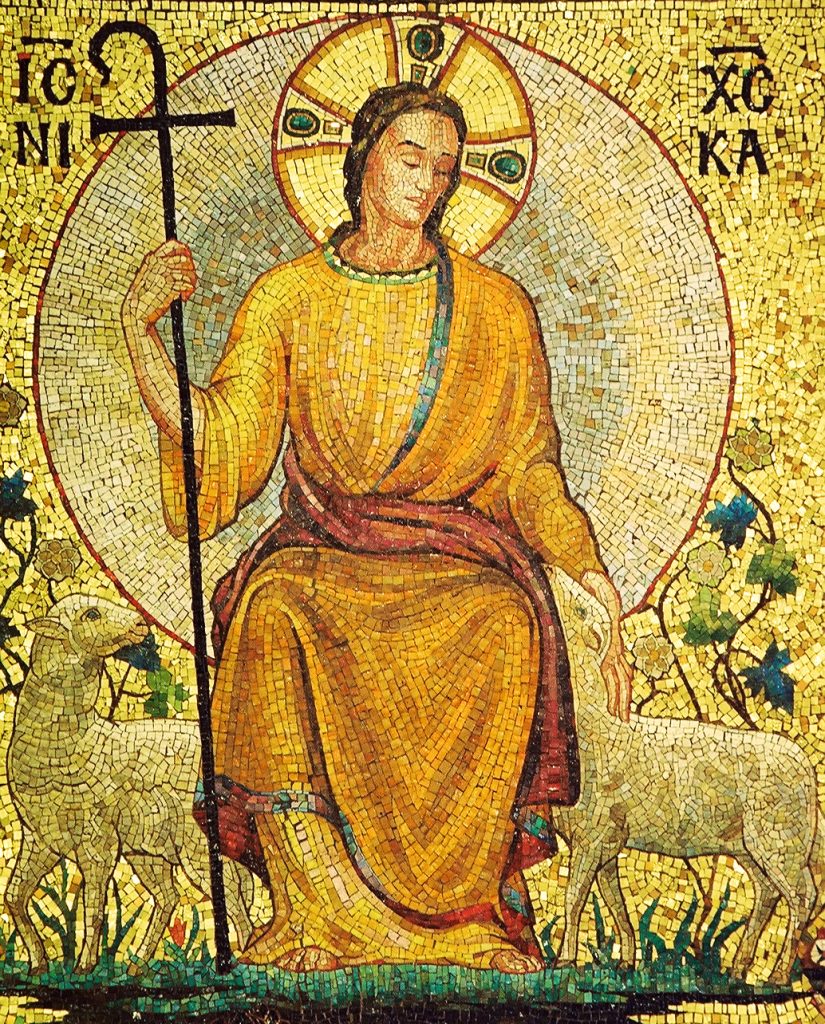
Jesus Christ Victor
10
posted on
11/04/2025 5:06:12 AM PST
by
annalex
(fear them not)
To: annalex
St. Charles Borromeo: Patron saint of stomach ailments, dieting — and obesity?
Jonah McKeown
via EWTN
04.11.25
St. Charles Borromeo, whose feast day the Catholic Church celebrates Nov. 4, was a cardinal and a prominent teacher of the Catholic faith. He generously donated much of his considerable wealth to charity and sacrificed his own health to help plague victims at a time when many other authorities fled.
And, despite what you might have heard, he probably wasn’t obese.
Why does that matter? Well, because Charles is popularly invoked as a patron saint of stomach ailments and also of obesity and dieting. These patronages — and whether or not he was himself obese — are not mentioned in hagiographies of St. Charles, so it’s unclear how this particular association began. Charles was known for helping the poor in times of famine and for practicing self-mortification, and he was certainly not known to indulge in food to excess.
Whether or not his invocation by dieters is appropriate, what is clear is that St. Charles Borromeo had a massive influence on the Church.
Charles was born in 1538 near Milan. He was born wealthy — in fact, he was part of the famously rich and influential Medici family — but sought to use his wealth to benefit the Church rather than himself.
Owing in part to his well-connected family, Charles soon assumed staggering responsibilities, serving as a papal diplomat and supervisor of major religious orders.
Charles was a central figure in the Council of Trent (1545–1563), which among other things served as the Church’s official answer to the Protestant Reformation. Its twofold mission was to clarify Catholic doctrine against Protestant objections and reform the Church internally against many long-standing problems. As a papal representative, Charles participated in the council’s conclusion in 1563, when he was only 25, and was ordained a priest during the council. He also played a leading role in assembling its comprehensive summary, the Catechism of the Council of Trent.
Charles’ uncle, Pope Pius IV, appointed him archbishop of Milan in 1563, and soon after he became a cardinal. He found his diocese in a state of disintegration, after two generations of virtually no local administration or leadership. Charles got straight to work establishing schools, seminaries, and centers for religious life. He constantly directed the work of restoration of ecclesiastical discipline and the education of the young, even down to minute details. He tried as much as possible to live a simple life and give to the poor whenever possible, and he practiced self-mortification.
The clergy during this time were in many cases lax and careless, living scandalous lives, such that the people had grown to be equally negligent and sinful. While bishop of Milan, St. Charles oversaw many dramatic and effective reforms of the clergy, the liturgy, and of religious education. He encountered much opposition to those reforms, so much so that a group of disgruntled monks attempted to kill him, but he was miraculously unharmed when an assassin fired a gun straight at him while kneeling in prayer at an altar.
He was very active in preaching and ministry and was famous for bringing back many lapsed Catholics to the Church. As a result, today he is honored as the patron saint of catechists and catechumens, people who teach and learn the faith. In fact, he was the founder of the Confraternity of Christian Doctrine, which systematically instructed children in the faith — the forerunner of the modern “Sunday school.”
In 1571, the region where Charles was working suffered a severe famine, during which he worked tirelessly to help the starving, supporting at his own expense as many as 3,000 people daily for three months. At the same time, Charles himself suffered various ailments, including a low fever.
A few years later, a plague struck Milan. Charles was convinced that the plague was sent as a chastisement for sin and sought to give himself all the more to prayer and to service to his people. He paid personal visits to plague-stricken houses to comfort those suffering, and as a spiritual penance, he walked in procession, barefoot, with a rope around his neck and a relic in his hand.
At the end of 1584 Charles suffered a skin infection in one of his legs but still continued to travel to take care of his diocese. He died young at the age of 46 on Nov. 3, 1584, and was canonized 26 years later, in 1610.
This story was first published on Nov. 4, 2022, and has been updated by CNA.
ewtnvatican.com
11
posted on
11/04/2025 5:12:19 AM PST
by
annalex
(fear them not)
To: annalex

Portrait of Charles Borromeo
Giovanni Ambrogio Figino (–1608)
12
posted on
11/04/2025 5:14:26 AM PST
by
annalex
(fear them not)
To: annalex
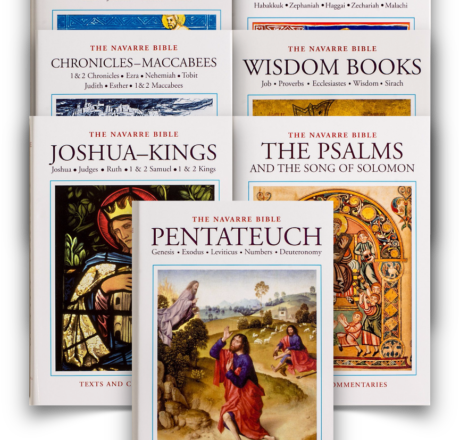
NAVARRE BIBLE COMMENTARY(RSV)
Ad Majorem Dei Gloriam (To the Greater Glory of God)
First Reading:
From: Romans 12:5-16
Solidarity in the Mystical Body (Continuation)
-------------------------------------------------------
[5] So we, though many, are one body in Christ, and individually members one of another. [6] Having gifts that differ according to the grace given to us, let us use them: if prophecy, in proportion to our faith; [7] if service, in our serving; he who teaches, in his teaching; [8] he who exhorts, in his exhortation; he who contributes, in his liberality; he who gives aid, with zeal; he who does acts of mercy, with cheerfulness.
Charity Towards All
-------------------
[9] Let love be genuine; hate what is evil, hold fast to what is good; [10] love one another with brotherly affection; outdo one another in showing honor. [11] Never flag in zeal, be aglow with the Spirit, serve the Lord. [12] Rejoice in your hope, be patient in tribulation, be constant in prayer. [13] Contribute to the needs of the saints, practise hospitality. [14] Bless those who persecute you; bless and do not curse them. [15] Rejoice with those who rejoice, weep with those who weep. [16] Live in harmony with one another; do not be haughty, but associate with the lowly; never be conceited.
***********************************************************************
Commentary:
4-5. The variety which is to be found in every well-organized social structure is also, by God's will, a feature of the Church. This variety reflects the differing needs of the Christian community, which is not an amorphous grouping of people, each working separately for personal salvation, but an organized body. In that body each member has a defined role and functions for the benefit of all, while at the same time seeking personal spiritual advancement. This variety is, moreover, consistent with and conducive to the carrying out of God's desire to sanctify and save men, not one by one, as if they were unconnected to each other, but rather constituting a people which is established and governed on the basis of this wonderful variety. This distinction was established by God in order to build up the Church. Therefore, for example, pastors and people are of mutual supernatural help to one another (cf. Vatican II, "Lumen Gentium", 9 and 32).
Each of us should feel called on to invigorate--through personal effort, virtue—the entire Mystical Body of Christ (cf. "Introduction to the 'Theology' of St Paul", pp. 44-6 above). It is inaccurate, therefore, to make a distinction between "personal virtues" and "social virtues". "No virtue worthy of its name can foster selfishness. Every virtue necessarily works to the good both of our own soul and to the good of those around us [...]. Ties of solidarity should bind us all and, besides, in the order of grace we are united by the supernatural links of the Communion of Saints" (St J. Escriva, "Friends of God", 76).
6-8. "Gifts": also called charisms, these are special, transitory, divine graces, granted not so much for the personal benefit of the recipient as for the general good of the Church. This term (charism), we might note, was introduced into the New Testament by St Paul.
9-21. "After speaking about those gifts which are not common to all, the Apostle now teaches that charity is common to all" (St Thomas, "Commentary on Rom, ad loc".). True charity takes different forms depending on the needs and capacity of each person; it always involves seeking good and avoiding evil (v. 9); it has to be exercised with those who are already Christians (vv. 10-16) and those who are not (vv. 17-21); indeed, the charity shown to the latter is instrumental in bringing them closer to the faith. However, it is not always possible to do to others all the good we would wish: we have limited resources, more pressing duties; there are problems of physical distance, etc. Only God, who is infinitely perfect and almighty, can do good to everyone all the time; this does not mean that he always gives everyone the same gifts: to some he gives more, to others less, according to the designs of his Wisdom.
Even bearing in mind our own limitations, our love for others should affect everything we do, everything we think and say. Obviously, one of the first consequences of charity is never to judge anyone, or speak badly about anyone, or scandalize them by what we say or do. Moreover, we should perform positive acts of this virtue; it would be impossible to give a complete list of the ways of being charitable but they certainly include, Fray Luis de Granada says, "among other things, these six--loving, counselling, assisting, suffering, forgiving and edifying. These are so closely connected to charity that the more one does them the more charity one has, and the less, less [...]. For, according to this order a person can check to see what he has and what he does not have as far as the perfection of that virtue is concerned. For we can say that he who loves is on the first step; he who loves and counsels, on the second; he who assists, on the third; he who suffers on the fourth; he who forgives and suffers, on the fifth; and he who builds on all this with his words and his good life, as is the task of perfect and apostolic men, on the highest step of all" ("Guide to Sinners", I, II, chap. 16).
12. The love of God makes us joyful, strong and persevering. Therefore "one accepts tribulation with joy and hope, because one knows that what is promised in exchange is something much better" (Pseudo-Ambrose, "Comm. in Epist. ad Rom, ad loc".)
This setting gives us every opportunity to derive supernatural benefit from suffering, which is quite a normal part of the Christian life: "A whole program for a good course in the 'subject' of suffering is given to us by the Apostle: "spe gaudentes"--rejoicing in hope, "in tribulatione patientes"--patient in troubles, "orationi instantes"-- persevering in prayer" (St J. Escriva, "The Way", 209).
Joy in the midst of difficulties is in fact one of the clearest signs that love of God is influencing everything we do, for, as St Augustine comments, "where one loves, either one does not feel the difficulty or else one loves the very difficulty [...]. The tasks of those who love are never laborious" ("De Bono Viduitatis", 21, 26).
13. "For he who does not love his brother whom he has seen, cannot love God whom he has not seen" (1 Jn 4:20). Similarly, it can be said that Christians, that is "servants of the Lord", unless they serve their brethren whom they see before them, cannot serve God either. Serving God, in other words, ultimately means alleviating "the needs of the saints " and offering hospitality to strangers, after the example of the patriarchs Abraham and Lot (Gen 18:2-5; 19:2-3; cf. Heb 13:2).
13
posted on
11/04/2025 7:35:42 AM PST
by
fidelis
(Ecce Crucem Domini! Fugite partes adversae! Vicit Leo de tribu Juda, Radix David! Alleluia!)
Gospel Reading: From: Luke 14:15-24
Parable of the Invited Guests
-----------------------------------
[15] When one of those who sat at table with Him (Jesus) heard this, he said to Him, "Blessed is he who shall eat bread in the Kingdom of God!" [16] But He said to him, "A man once gave a great banquet, and invited many; [17] and at the time for the banquet he sent his servant to say to those who had been invited, 'Come; for all is now ready.' [18] But they all alike began to make excuses. The first said to him, 'I have bought a field, and I must go out and see it; I pray you, have me excused.' [19] And another said, 'I have bought five yoke of oxen, and I go to examine them; I pray you, have me excused.' [20] And another said, 'I have married a wife, and therefore I cannot come.' [21] So the servant came and reported this to his master. Then the householder in anger said to his servant, 'Go out quickly to the streets and lanes of the city, and bring in the poor and maimed and blind and lame.' [22] And the servant said, 'Sir, what you commanded has been done, and still there is room.' [23] And the master said to the servant, 'Go out to the highways and hedges, and compel people to come in, that my house may be filled. [24] For I tell you, none of those who were invited shall taste my banquet.'"
**************************************************************************************
Commentary:
15. In biblical language the expression "to eat bread in the Kingdom of God" means sharing in eternal beatitude, of which this great banquet is a symbol (cf. Isaiah 25:6; Matthew 22:1-4).
16-24. If God invites someone to know Him in faith, he should sacrifice any human interest which gets in the way of replying to God's call, no matter how lawful and noble it be. The objections we tend to put forward, the duties we appeal to, are really just excuses. This is why the ungrateful invitees are blameworthy.
"Compel people to come in": it is not a matter of forcing anyone's freedom --God does not want us to love Him under duress--but of helping a person to make right decisions, to shrug off any human respect, to avoid occasions of sin, to do what he can to discover the truth .... A person is "compelled to come in" through prayer, the example of a Christian life, friendship--in a word, apostolate. "If in order to save an earthly life it is praiseworthy to use force to stop a man from committing suicide, are we not to be allowed use of the same force -- holy coercion -- to save the Life (with a capital) of many who are stupidly bent on killing their souls?" (St. J. Escriva, "The Way", 399).
14
posted on
11/04/2025 7:35:57 AM PST
by
fidelis
(Ecce Crucem Domini! Fugite partes adversae! Vicit Leo de tribu Juda, Radix David! Alleluia!)
15
posted on
11/04/2025 7:36:47 AM PST
by
fidelis
(Ecce Crucem Domini! Fugite partes adversae! Vicit Leo de tribu Juda, Radix David! Alleluia!)
Disclaimer:
Opinions posted on Free Republic are those of the individual
posters and do not necessarily represent the opinion of Free Republic or its
management. All materials posted herein are protected by copyright law and the
exemption for fair use of copyrighted works.
FreeRepublic.com is powered by software copyright 2000-2008 John Robinson
