
Posted on 11/01/2025 6:03:27 AM PDT by fidelis
Solemnity of All Saints
When Jesus saw the crowds, he went up the mountain, and after he had sat down, his disciples came to him. He began to teach them, saying: “Blessed are the poor in spirit, for theirs is the Kingdom of heaven.” Matthew 5: 1–3
Today we celebrate one of the most glorious solemnities within our Church! Every saint, canonized or not, is honored today. Our Gospel passage lays out the path by which these saints entered Heaven. While on earth, these great men and women lived lives that were poor in spirit, filled with a holy mourning, meekness, a hunger and thirst for righteousness, mercy, peace, purity of heart and even persecution. Each one of these Beatitudes concludes by stating the reward that those who lived these qualities obtains: Heaven, comfort, satisfaction, mercy, seeing God, being children of God and rewards beyond what we can imagine in God’s Kingdom.
The Beatitudes invite us to the heights of holiness. They are not for the faint of heart or for those living a lukewarm spiritual life. These Beatitudes present us with the pinnacle of holy living and challenge us to the core. But every effort put into living these Beatitudes are worth it here on earth and ultimately in Heaven. Let’s look briefly at two of these Beatitudes.
The second Beatitude states that those “who mourn...will be comforted.” This is an interesting Beatitude. Why is it holy to mourn? Simply put, this form of holy mourning means that you not only have a holy sorrow for your own sins but that you have this holy sorrow as you see the many evils within our world. This is crucial today. First, it should be quite obvious that we must have holy sorrow for our own sins. Doing so means your conscience is working. And when your conscience is working, you will be compelled, by this holy sorrow, to acknowledge your offenses against God and work diligently to change. But we must also have a holy sorrow as we see the many evils within our world. Too often today there is a tendency to undermine this Beatitude by presenting universal acceptance of all things as a good. We are told we must not judge, and though that is true when it comes to judging another’s heart, a worldly presentation of this secular “virtue” attempts to lead us to downplay the objective nature of sin. Our secular world tempts us to ignore many objective moral truths by which God guides us into all truth. But as Christians, our first approach must be to despise all that our Lord taught was objectively morally evil. And when we do come face-to-face with immoral lifestyles, the appropriate response must be holy sorrow, not acceptance of grave sin. To mourn over another’s poor choices is a true act of charity toward them.
The fourth Beatitude calls us to “hunger and thirst for righteousness.” This means that we not only have a holy sorrow over our sins and the objective evils of our world, but that we also allow ourselves to be filled with a hunger and thirst for truth and holy living...
Reflect, today, upon the beautiful truth that you are called to become a saint. And the surest path to sainthood is the Beatitudes. Read them carefully. Meditate upon them and know that they reveal to you how God is calling you to live. If one of these Beatitudes stands out to you, then spend time focusing upon it. Work to internalize these graces, and God will work wonders in your life, one day making this solemnity within our Church a true celebration of your life well lived.
My most holy Lord, You reign now in Heaven and desire that Your glorious Kingdom be firmly established upon earth. Give me the grace I need to seek holiness with all my heart and to especially use Your revelation of the Beatitudes as the path by which I travel. I pray that I will become a true saint in this world and that You will use me to further Your Kingdom now and for eternity. Jesus, I trust in You.
Please keep in mind that this is a Catholic Caucus/Devotional thread for the purpose of prayerful reflection on the Sacred Scriptures and is closed to debate of any kind. Per FR policy on Religion Caucus threads, off-topic, argumentative, and abusive comments are not allowed and will be submitted to the Mods for deletion. Thanks, and God bless you.
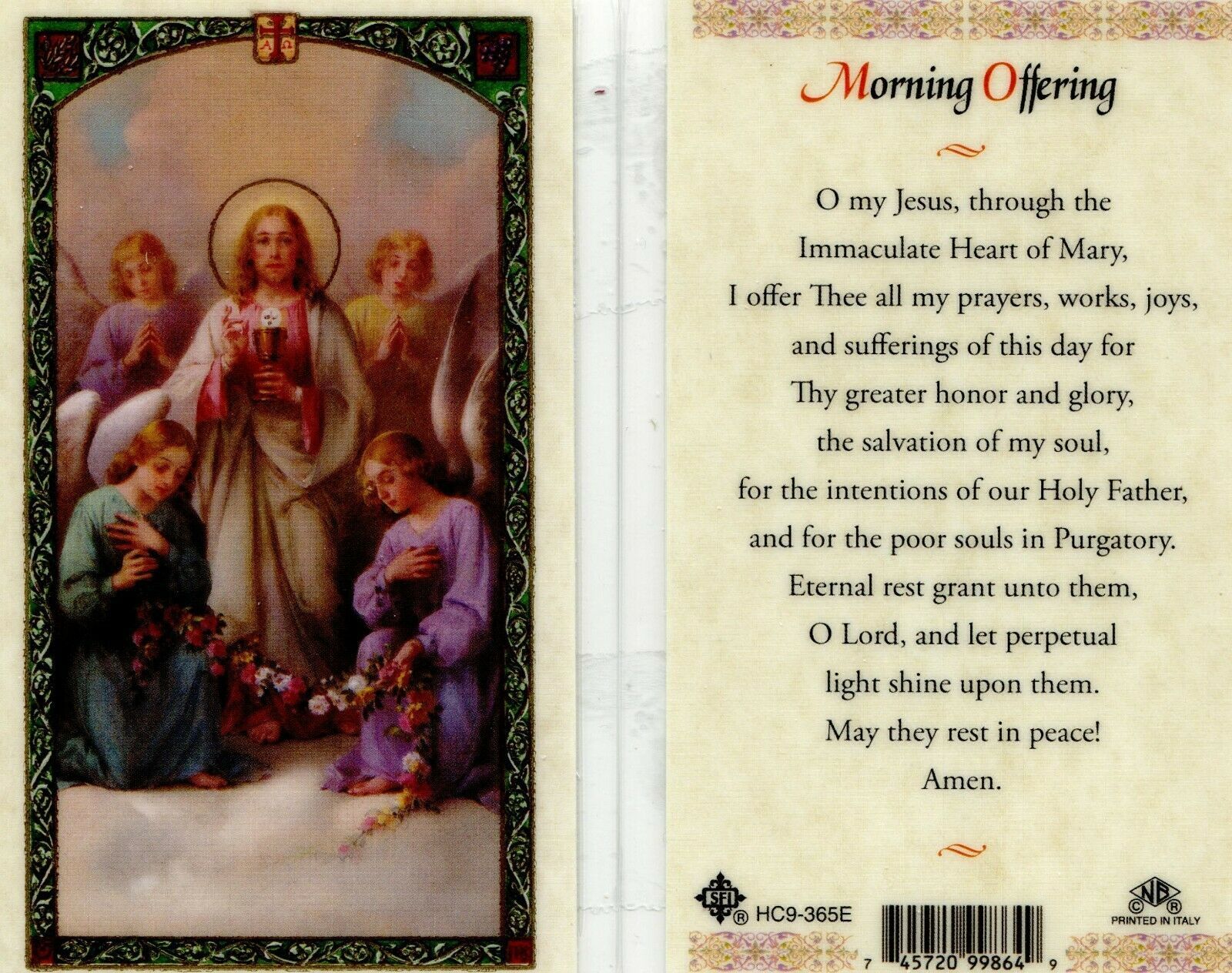
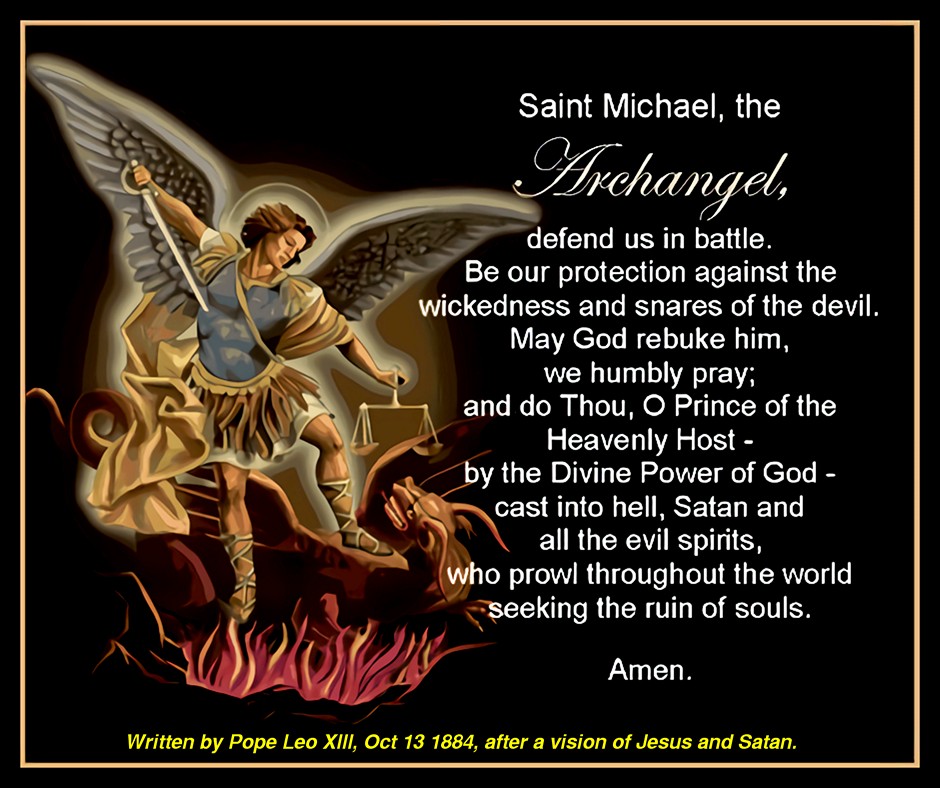
The Month of November is Dedicated to Praying for the Holy Souls in Purgatory

“He took up a collection, and sent it to Jerusalem to provide for a sin offering. In doing this he acted very well and honorably, taking account of the resurrection. For if he were not expecting that those who had fallen would rise again, it would have been superfluous and foolish to pray for the dead. But if he was looking to the splendid reward that is laid up for those who fall asleep in godliness, it was a holy and pious thought. Therefore he made atonement for the dead, that they might be delivered from their sin.” (2 Maccabees 12:43-45)

Pope Leo XIV’s prayer intentions for the month of November, 2025:
For the prevention of suicide
Let us pray that those who are struggling with suicidal thoughts might find the support, care, and love they need in their community, and be open to the beauty of life.

First Reading:
From: Revelation 7:2-4, 9-14
The Great Multitude of the Saved
--------------------------------
[2] Then I (John) saw another angel ascend from the rising of the sun, with the seal of the living God, and he called with a loud voice to the four angels who had been given power to harm earth and sea, [3] saying, "Do not harm the earth or the sea or the trees, till we have sealed the servants of our God upon their foreheads." [4] And I heard the number of the sealed, a hundred and forty-four thousand sealed, out of every tribe of the sons of Israel.
[9] After this I looked, and behold, a great multitude which no man could number, from every nation, from all tribes and peoples and tongues, standing before the throne and before the Lamb, clothed in white robes, with palm branches in their hands, [10] and crying out with a loud voice, "Salvation belongs to our God who sits upon the throne, and to the Lamb!" [11] And all the angels stood round the throne and round the elders and the four living creatures, and they fell on their faces before the throne and worshipped God, [12] saying, "Amen! Blessing and glory and wisdom and thanksgiving and honor and power and might be to our God for ever and ever! Amen."
[13] Then one of the elders addressed me, saying, "Who are these, clothed in white robes, and whence have they come?" [14] I said to him, "Sir, you know." And he said to me, "These are they who have come out of the great tribulation; they have washed their robes and made them white in the blood of the Lamb."
***********************************************************************
Commentary:
1-17. This chapter consists of two visions designed to illustrate God's protection of Christians and the happy circumstances of the martyrs. The victory of the Church is depicted--of the entire Church, made up of people from the four points of the compass (vv. 9-12). What is not so clear, however, is who the one hundred and fort four thousand are, drawn from the twelve tribes of Israel, whom an angel has marked with the seal of the living God (vv. 1-8). Some commentators interpret them as all being Christians of Jewish background (Judaeo-Christians). Others say that they are those who make up the new Israel which St Paul speaks about in Galatians 6:17; that is, all the baptized viewed first as still engaged in their battle (vv. 1-8) and then after they have won victory (vv. 9-17). The most plausible interpretation is that the one hundred and forty-four thousand stand for the Jews converted to Christianity (as distinct from those not converted)--the 'remnant of Israel' (cf. Is 4:2-4; Ezek 9; etc.). St Paul says that they prove the irrevocable nature of God's election (cf. Rom 1l:1-5) and are the first-fruits of the restoration which will come about at the End (cf. Rom 11:25-32).
The hundred and forty-four thousand are included in the second vision; they would be part of the great multitude "from all tribes and people and tongues". Thus, the vision in vv. 9-17 takes in the entire Church without any distinctions, whereas the vision in vv. 1-8 can refer only to a part of the Church--those Jews who, by becoming Christians, made up the original nucleus of the Church. The Church admits these on the same basis as all those who become Christians later without having had to pass through any stage of Jewish observance.
1-8. In Jewish tradition angels were divided into two groups--angels of the Presence and sanctification, and those charged with controlling the forces of nature. Both kinds appear in this passage.
According to the custom of the time, when something bore the mark of a seal or brand that meant that it belonged to the seal's owner. This passage is saying that the one hundred and forty-four thousand belong to God and therefore will be protected by him as his property. This fulfills what Ezekiel prophesied about the inhabitants of Jerusalem (cf. Ezek 9:1-7): some would be sealed on the forehead with a tax (the last letter of the Hebrew alphabet) and would therefore escape the punishment to be inflicted on all the rest: this shows the special way God makes provision for those who are his not only because he created them but also by a new title.
The Fathers of the Church saw this mark as symbolizing the character Baptism impresses on the souls of the faithful to show that they are destined for eternal life. Thus, the persons preserved from harm are the Jews who were converts to Christianity: their Baptism marked them out from those Jews who rejected Christ and were not baptized.
The list of tribes is somewhat different from the usual list which keeps the order of Genesis 29. The name of Judah is put first because the Messiah came from that tribe, as St John recently mentioned (cf. 5:5); and there is no mention of the tribe of Dan, presumably because it fell into idolatry (cf. Judg 17-18) and eventually disappeared. To make up the tally of twelve the tribe of Joseph is mentioned twice—as that of Joseph and as that of Manasseh, his first-born.
The number of those sealed (12 x 12 x 1000) symbolizes completeness, totality--in this instance, a huge multitude, depicted as the new Israel. Included in this number are the descendants of Jacob who receive Baptism, irrespective of when they do. Obviously this number is not meant to be taken literally, as if only one hundred and forty-four thousand people will attain salvation. In this scene all those of Gentile background who become Christians over the course of history are explicitly not included. They will appear in the vision which follows.
9-17. Pope John Paul II has commented on this passage as follows: "The people dressed in white robes whom John sees with his prophetic eye are the redeemed, and they form a 'great multitude', which no one could count and which is made up of people of the most varied backgrounds. The blood of the Lamb, who has been offered in sacrifice for all, has exercised its universal and most effective redemptive power in every corner of the earth, extending grace and salvation to that 'great multitude'. After undergoing the trials and being purified in the blood of Christ, they--the redeemed--are now safe in the Kingdom of God, whom they praise and bless for ever and ever" ("Homily", 1 November 1981). This great crowd includes all the saved and not just the martyrs, for it says that they washed their robes in the blood of the Lamb, not in their own blood.
Everyone has to become associated with Christ's passion through suffering, as St Augustine explains, not without a certain humor: "Many are martyrs in their beds. The Christian is lying on his couch, tormented by pain. He prays and his prayers are not heard, or perhaps they are heard but he is being put to the test...so that he may be received as a son. He becomes a martyr through illness and is crowned by him who hung upon the Cross" ("Sermon" 286, 8).
"It is consoling and encouraging to know that those who attain heaven constitute a huge multitude. The passages of Matthew 7:14 and Luke 13:24 which seem to imply that very few will be saved should be interpreted in the light of this vision, which shows that the infinite value of Christ's blood makes God's will be done: "(God) desires all men to be saved and to come to the knowledge of the truth" (1 Tim 2:4).
------------------------
Second Reading:
From: 1 John 3:1-3
We are Children of God
-----------------------------
[1] See what love the Father has given us, that we should be called children of God; and so we are. The reason why the world does not know us is that it did not know him. [2] Beloved, we are God's children now; it does not yet appear what we shall be, but we know that when he appears we shall be like him, for we shall see him as he is.
A Child of God Does Not Sin
-----------------------------------
[3] And every one who thus hopes in him purifies himself as he is pure.
***********************************************************************
Commentary:
1-24. This entire chapter shows how moved the Apostle is when he contemplates the marvelous gift of divine filiation. The Holy Spirit, who is the author of all Sacred Scripture, has desired John to pass on to us this unique revelation: we are children of God (v. 1).
It is not easy to divide the chapter into sections, because the style is very cyclic and colloquial and includes many repetitions and further thoughts which make for great vividness and freshness. However, we can distinguish an opening proclamation of the central message (vv. 1-2) and emphasis on two requirements of divine filiation--rejection of sin in any shape or form (vv. 3-10), and brotherly love lived to the full (vv. 11-24).
1. "We should be called children of God": the original Hebrew expression, which reads "we are called...", is also used by our Lord in the Beatitudes (cf. Mt 5:9): "to be called" means the same as "to be called by God"; and in the language of the Bible, when God gives someone a name he is not simply conferring a title but is causing the thing that the name indicates (cf., e.g., Gen 17:5), for the word of God is efficacious, it does what it says it will do. Hence St John's adding: "and so we are".
Therefore, it is not just a matter of a metaphorical title, or a legal fiction, or adoption human-style: divine filiation is an essential feature of a Christian's life, a marvelous fact whereby God gratuitously gives men a strictly supernatural dignity, an intimacy with God whereby they are "domestici Dei", "members of the household of God" (Eph 2:19). This explains the tone of amazement and joy with which St John passes on this revelation.
This sense of divine filiation is one of the central points in the spirituality of Opus Dei. Its founder wrote: "We do not exist in order to pursue just any happiness. We have been called to penetrate the intimacy of God's own life, to know and love God the Father, God the Son, and God the Holy Spirit, and to love also--in that same love of the one God in three divine Persons--the angels and all men.
"This is the great boldness of the Christian faith--to proclaim the value and dignity of human nature and to affirm that we have been created to obtain the dignity of children of God, through the grace that raises us up to a supernatural level. An incredible boldness it would be, were it not founded on the promise of salvation given us by God the Father, confirmed by the blood of Christ, and reaffirmed and made possible by the constant action of the Holy Spirit" ("Christ Is Passing By", 133).
"The world does not know us, (because) it did not know him": these words are reminiscent of our Lord's at the Last Supper: "the hour is coming when whoever kills you will think he is offering service to God. And they will do this because they have not known the Father, nor me" (Jn 16:2-3). Divine filiation brings with it communion and a mysterious identification between Christ and the Christian.
2. The indescribable gift of divine filiation, which the world does not know (v. 1), is not fully experienced by Christians, because the seeds of divine life which it contains will only reach their full growth in eternal life, when we see him "as he is", "face to face" (1 Cor 13:12); "this is eternal life, that they know thee the only true God, and Jesus Christ whom thou hast sent" (Jn 17:3). In that direct sight of God as he is, and of all things in God, the life of grace and divine filiation achieve their full growth. Man is not naturally able to see God face to face; he needs to be enlightened by a special light, which is given the technical theological name of "lumen gloriae", light of glory. This does not allow him to "take in" all God (no created thing could do that), but it does allow him to look at God directly.
Commenting on this verse, the "St Pius V Catechism" explains that "beatitude consists of two things--that we shall behold God such as he is in his own nature and substance; and that we ourselves shall become, as it were, gods. For those who enjoy God while they retain their own nature, assume a certain admirable and almost divine form, so as to seem gods rather than men" (I, 13, 7).
"When he appears": two interpretations are possible, given that in Greek the verb has no subject: "when (what we shall be) is revealed we shall be as he is"; or, as the New Vulgate translates it, "when he (Christ) is revealed we will be like him (Christ)". The second interpretation is the more likely.
3. "Purifies himself': Christian hope, which is grounded on Christ, is something active and it moves the Christian to "purify himself". This verb is evocative of the ritual purifications required of priests in the Old Testament prior to engaging in divine service (cf. Ex 19:10; Num 8:21; Acts 21:24); here, and in other places in the New Testament, it means interior purification from sins, that is, righteousness, holiness (1 Pet 1:22; Jas 4:8). Our model is Jesus Christ, "as he is pure"; he is the One who has never had sin, the Righteous One (1 Jn 2: 29; 3:7); a Christian has no other model of holiness, as Jesus himself said: "Learn from me" (Mt 11:29; cf. Jn 14:6). "We have to learn from him, from Jesus, who is our only model. If you want to go forward without stumbling or wandering off the path, then all you have to do is walk the road he walked, placing your feet in his footprints and entering into his humble and patient Heart, there to drink from the wellsprings of his commandments and of his love. In a word, you must identify yourself with Jesus Christ and try to become really and truly another Christ among your fellow men" (St J. Escriva, "Friends of God", 128).
---------------------------
Gospel Reading:
From: Matthew 5:1-12
The Beatitudes
--------------
[1] Seeing the crowds, He (Jesus) went up on the mountain, and when He sat down His disciples came to Him. [2] And He opened His mouth and taught them, saying: [3] "Blessed are the poor in spirit, for theirs is the Kingdom of Heaven. [4] Blessed are those who mourn, for they shall be comforted. [5] Blessed are the meek, for they shall inherit the earth. [6] Blessed are those who hunger and thirst for righteousness, for they shall be satisfied. [7] Blessed are the merciful, for they shall obtain mercy. [8] Blessed are the pure of heart, for they shall see God. [9] Blessed are the peacemakers, for they shall be called children of God. [10] Blessed are those who are persecuted for righteousness' sake, for theirs is the Kingdom of Heaven. [11] Blessed are you when men revile you and persecute you and utter all kinds of evil against you falsely on My account. [12] Rejoice and be glad, for your reward is great in Heaven, for so men persecute the prophets who were before you."
***********************************************************************
Commentary:
1. The Discourse, or Sermon, on the Mount takes up three full chapters of St. Matthew's Gospel--Chapters 5-7. It is the first of the five great discourses of Jesus which appear in this Gospel and it contains a considerable amount of our Lord's teaching. It is difficult to reduce this discourse to one single theme, but the various teachings it contains could be said to deal with these five points: 1) the attitude a person must have for entering the Kingdom of Heaven (the Beatitudes, the salt of the earth, the light of the world, Jesus and His teaching, the fullness of the Law); 2) uprightness of intention in religious practice (here the "Our Father" would be included); 3) trust in God's fatherly providence; 4) how God's children should behave towards one another (not judging one's neighbor, respect for holy things, the effectiveness of prayer, and the golden rule of charity); 5) the conditions for entering the Kingdom (the narrow gate, false prophets and building on rock).
"He taught them": this refers both to the disciples and to the multitude, as can be seen at the end of the Sermon (Matthew 7:28).
2. The Beatitudes (5:3-12) form, as it were, the gateway to the Sermon on the Mount. In order to understand the Beatitudes properly, we should bear in mind that they do not promise salvation only to the particular kinds of people listed here: they cover everyone whose religious dispositions and moral conduct meet the demands which Jesus lays down. In other words, the poor in spirit, the meek, those who mourn, those who hunger and thirst after righteousness, the merciful, the pure in heart, the peacemakers and those who suffer persecution in their search for holiness--these are not different people or kinds of people but different demands made on everyone who wants to be a disciple of Christ.
Similarly, salvation is not being promised to different groups in society but to everyone, no matter what his or her position in life, who strives to follow the spirit and to meet the demands contained in the Beatitudes.
All the Beatitudes have an eschatological meaning, that is, they promise us definitive salvation not in this world, but in the next. But the spirit of the Beatitudes does give us, in this life, peace in the midst of tribulation. The Beatitudes imply a completely new approach, quite at odds with the usual way man evaluates things: they rule out any kind of pharisaical religiosity, which regards earthly happiness as a blessing from God and a reward for good behavior, and unhappiness and misfortune as a form of punishment. In all ages the Beatitudes put spiritual goods on a much higher plane than material possessions. The healthy and the sick, the powerful and the weak, the rich and the poor--all are called, independently of their circumstances, to the deep happiness that is experienced by those who live up to the Beatitudes which Jesus teaches.
The Beatitudes do not, of course, contain the entire teaching of the Gospel, but they do contain, in embryo, the whole program of Christian perfection.
3. This text outlines the connection between poverty and the soul. This religious concept of poverty was deeply rooted in the Old Testament (cf., e.g., Zephaniah 2:3ff). It was more to do with a religious attitude of neediness and of humility towards God than with material poverty: that person is poor who has recourse to God without relying on his own merits and who trusts in God's mercy to be saved. This religious attitude of poverty is closely related to what is called "spiritual childhood". A Christian sees himself as a little child in the presence of God, a child who owns nothing: everything he has comes from God and belongs to God. Certainly, spiritual poverty, that is, Christian poverty, means one must be detached from material things and practice austerity in using them. God asks certain people--religious--to be legally detached from ownership and thereby bear witness to others of the transitoriness of earthly things.
4. "Those who mourn": here our Lord is saying that those are blessed who suffer from any kind of affliction--particularly those who are genuinely sorry for they sins, or are pained by the offenses which others offer God, and who bear their suffering with love and in a spirit of atonement.
"You are crying? Don't be ashamed of it. Yes, cry: men also cry like you, when they are alone and before God. Each night, says King David, I soak my bed with tears. With those tears, those burning manly tears, you can purify your past and supernaturalize your present life" (St J. Escriva, "The Way", 216).
The Spirit of God will console with peace and joy, even in this life, those who weep for their sins, and later will give them a share in the fullness of happiness and glory in Heaven: these are the blessed.
5. "The meek": those who patiently suffer unjust persecution; those who remain serene, humble and steadfast in adversity, and do not give way to resentment or discouragement. The virtue of meekness is very necessary in the Christian life. Usually irritableness, which is very common, stems from a lack of humility and interior peace.
"The earth": this is usually understood as meaning our Heavenly Fatherland.
6. The notion of righteousness (or justice) in Holy Scripture is an essentially religious one (cf. notes on Matthew 1:19 and 3:15; Romans 1:17; 1:18-32; 3:21-22 and 24). A righteous person is one who sincerely strives to do the Will of God, which is discovered in the commandments, in one's duties of state in life (social, professional and family responsibilities) and through one's life of prayer. Thus, righteousness, in the language of the Bible, is the same as what nowadays is usually called "holiness" (1 John 2:29; 3:7-10; Revelation 22:11; Genesis 15:6; Deuteronomy 9:4).
As St. Jerome comments ("Comm. on Matthew", 5, 6), in the fourth Beatitude our Lord is asking us not simply to have a vague desire for righteousness: we should hunger and thirst for it, that is, we should love and strive earnestly to seek what makes a man righteous in God's eyes. A person who genuinely wants to attain Christian holiness should love the means which the Church, the universal vehicle of salvation, offers all men and teaches them to use--frequent use of the Sacraments, an intimate relationship with God in prayer, a valiant effort to meet one's social, professional and family responsibilities.
7. Mercy is not a just a matter of giving alms to the poor but also of being understanding towards other people's defects, overlooking them, helping them cope with them and loving them despite whatever defects they may have. Being merciful also means rejoicing and suffering with other people.
8. Christ teaches us that the source of the quality of human acts lies in the heart, that is, in a man's soul, in the depths of his spirit. "When we speak of a person's heart, we refer not just to his sentiments, but to the whole person in his loving dealings with others. In order to help us understand divine things, Scripture uses the expression `heart' in its full human meaning, as the summary and source, expression and ultimate basis, of one's thoughts, words and actions. A man is worth what his heart is worth" (St J. Escriva, "Christ Is Passing By", 164).
Cleanness of heart is a gift of God, which expresses itself in a capacity to love, in having an upright and pure attitude to everything noble. As St. Paul says, "whatever is true, whatever is honorable, whatever is just, whatever is pure, whatever is lovely, whatever is gracious, if there is any excellence, if there is anything worthy of praise, think about these things" (Philippians 4:8). Helped by God's grace, a Christian should constantly strive to cleanse his heart and acquire this purity, whose reward is the vision of God.
9. The translation "peacemakers" well convey the active meaning of the original text--those who foster peace, in themselves and in others and, as a basis for that, try to be reconciled and to reconcile others with God. Being at peace with God is the cause and effect of every kind of peace. Any peace on earth not based on this divine peace would be vain and misleading.
"They shall be called sons of God": this is an Hebraicism often found in Sacred Scripture; it is the same as saying "they will be sons of God". St. John's first letter (3:1) provides a correct exegesis of this Beatitude: "See what love the Father has given us, that we should be called children of God; and so we are".
10. What this Beatitude means, then, is: blessed are those who are persecuted because they are holy, or because they are striving to be holy, for theirs is the Kingdom of Heaven.
Thus, blessed is he who suffers persecution for being true to Jesus Christ and who does so not only patiently but joyfully. Circumstances arise in a Christian's life that call for heroism--where no compromise is admissible: either one stays true to Jesus Christ whatever the cost in terms of reputation, life or possessions, or one denies Him. St. Bernard ("Sermon on the Feast of All Saints") says that the eighth Beatitude is as it were the prerogative of Christian martyrs. Every Christian who is faithful to Jesus' teaching is in fact a "martyr" (a witness) who reflects or acts according with this Beatitude, even if he does not undergo physical death.
11-12. The Beatitudes are the conditions Jesus lays down for entering the Kingdom of Heaven. This verse, in a way summing up the preceding ones, is an invitation to everyone to put this teaching into practice. The Christian life, then, is no easy matter, but it is worthwhile, given the reward that Jesus promises.
Disclaimer: Opinions posted on Free Republic are those of the individual posters and do not necessarily represent the opinion of Free Republic or its management. All materials posted herein are protected by copyright law and the exemption for fair use of copyrighted works.

