Posted on 10/16/2025 9:02:21 AM PDT by ebb tide
Crisis editor Eric Sammons has made written and spoken pleas for laity calm in the aftermath of Pope Leo XIV’s odd ice-block blessing and refusal to condemn Cardinal Blase Cupich’s decision to award a pro-abortion politician with a lifetime achievement honor. Even on gasket-blowing days like yesterday, when the Chicago-native pontiff promoted his fellow Chicagoan Cupich to the Pontifical Commission for the Vatican City State, Sammons’ call for calm is as wise as it is necessary.
But why?
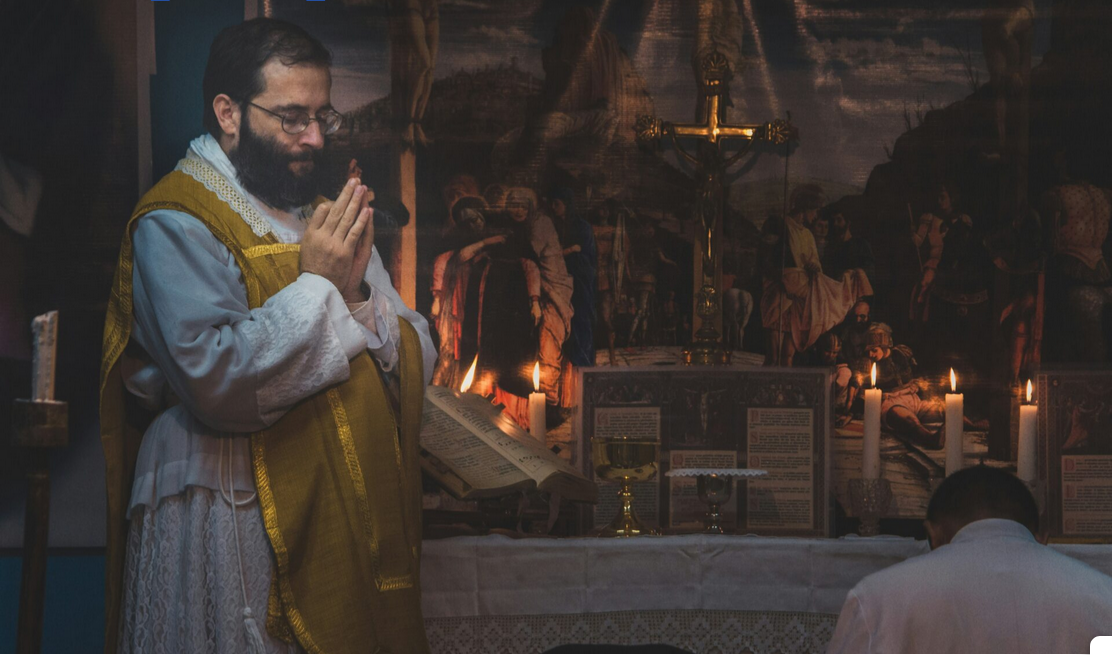
The Roman Catholic Church is facing a spiritual epidemic unlike any it has ever known; it is as large—and mostly unrecognized —as any crisis in today’s American Catholic Church: Beneath the weight of what might best be described as a priestly anti-fatherhood episcopate—bishops who relate to their priests not as spiritual fathers, but as absent or even abusive ones—countless priests in America are left to live their vocations in silent despair.
Burdened by anger, isolation, depression, and the tormenting fear of episcopal reprisal, countless priests’ joy has been stolen away, leaving behind only shadows of the men they once prayed and hoped to become.
The spiritual orphaning of dutiful and once-vibrant priests can’t be measured, but its consequences are unmistakable: It has crippled the Church from within by accelerating the exodus of Catholics over the past fifteen years, including countless millions of the Church’s youth, who have fled the Faith and now dwell in a secularized and changing world where God seems to be vanishing.
The Catholic laity who remain are often left to receive the sacraments and transmission of the Faith from enfeebled and spiritually-drained spiritual fathers. This weakening of priests has not gone unnoticed. The diminished witness of parish priests has sown confusion among the faithful, many of whom have grown weary of the pattern and drift toward more vibrant Christian communities, adding another log to the fire of the Catholic Church’s increasingly uncertain future.
Though the depth, scale, and consistency of this reality have inflicted incalculable harm on the Church, its mechanisms—apart from the intervention of God—are immovable, dyed indelibly into the fabric of ecclesial structure and governance. Although bishops are appointed by the pope, the process that precedes the appointments all but ensures that only “company men” are elevated; men who will not disturb the status quo or rock the boat. In effect, bishops replicate themselves.
To be sure, there are good and fatherly bishops in America (and many priests quietly decline episcopal appointments) but those who rise to the rank of bishop almost always lack the courage to speak prophetically about the sin and sordidness infiltrating both culture and Church. Those rare bishops who stray from the script are swiftly sidelined or punished.
Despite the startling indictment of their leadership in 2022, when more than three-quarters of American priests reported they did not trust their bishop (Catholic Project, The Catholic University of America) episcopal paternal abuse has deepened. It now extends beyond rectories and stretches into various diocesan departments, universities, and the like, where bishops have rebuked, dismissed, or mandated sweeping overhauls of faithful lay apostolates and initiatives, often with little explanation.
Just last month, the former principal of a thriving Catholic liberal arts school contacted me to share the cruelty she had endured at the hands of diocesan leadership. She recounted multiple instances of mistreatment—and on three separate occasions during our conversation, she was unexpectedly brought to tears. Each time, she apologized, clearly embarrassed, assuring me such emotion was out of character. It wasn’t until later that I recognized the thread behind her grief: she wept only when describing her awe behind the vindictiveness she had endured.
It is priests, however, who suffer most under the weight of the pervasive paternal abuse. It is perhaps the largest and least-known crisis in the Church today. Diocese by diocese, countless priests wake each morning knowing they do not have the backing of their spiritual father.
Instead, many have come to view their bishop as distant and indifferent to their priestly work—a father whom they’ve come to regard as absentee and consumed with diocesan governance, whose only contact will likely be punitive, where, for example, a priest might be summoned to the chancery in response to a parishioner’s complaint about a homily clarifying Church teaching on contraception, homosexuality, or gender. Countless priests have left these meetings forever changed.
“I know priests who have vomited in bathrooms after meetings,” a priest said. “Other priests live out vocations haunted by their bishop’s threats. Most bishops seem to be attracted to their authority and power rather than the authority of Christ. They forget that they, too, were once priests.
“Priests today believe there is no institutional support, where when an issue arises, their bishop will almost always side with the laity. The irony, of course, is that bishops so often speak of ‘accompaniment.’ Catholics are urged over and over to accompany the immigrant, LGBT community, the poor, and those on the margins, but priests feel that their bishop has not only not accompanied them, but has mostly orphaned them.”
Before McCarrick’s handling of the aftermath of my uncle Msgr. Thomas Wells’ rectory murder in 2000—when, as the newly appointed Archbishop of Washington, he issued a letter urging priests not to attend the murder trial—I had no concept of the widespread ascendency of spiritual abandonment priests were beginning to endure at the hands of their bishops.
Now, 25 years later, as a journalist and Catholic author who has spoken with hundreds of priests, I know far more than I ever wished to about this pattern of episcopal desertion—what amounts to an almost encyclopedic knowledge of wounds passed from father to son. Much of it has come unsolicited, shared off the record by priests, theologians, lay faithful, a handful of truly fatherly bishops, and even exorcists. I have written and spoken about it over the years, believing that exposing darkness to the light might help expel it. But as time has passed, I have only witnessed this paternal abuse grow more entrenched.
I know priests who daily choke back seething anger. I know of others who, shaped by the neglect of their bishops, have admitted to having to fight to refrain from becoming emotionally abusive themselves. Others have not been able to prevent their hardening, so whether it’s the moment of the epiclesis or their presence beside the Easter Vigil pyre, their faces have become unreadable to their parishioners.
Because so many bishops have failed to father well, entire constellations of American priests have drifted into worldliness—filling their lives with distractions, social indulgences, and nonreligious entertainment. Increasingly, they live what might be called bachelor priesthoods, unmoored from their sacrificial identity to become like Christ, the Slaughtered Lamb. As a result, many parishioners perceive them as being as wedded to the world as they are to the Bride of Christ.
Deprived of fraternal correction and true paternal guidance, these priests are left to navigate their vocations alone, where they begin to live out softened lives. Their addiction to the narcotic of comfort has dulled their prophetic voice and weakened their willingness to pour themselves out as victims for the souls entrusted to them. One striking example: I’ve been told of priests who scroll through their phones while penitents confess their sins.
A universe of priests play video games, scour social media streams, and watch cable and Netflix late into the night, comforted by the knowledge that their weekday Mass doesn’t begin until 9:30 a.m., allowing them to sleep in. These priests, though, perhaps forget, or deliberately ignore, their early-rising, workaday flock who are denied access to the Eucharist after rising at dawn. Among these are countless young Catholic professionals, many of whom long for the Eucharist as spiritual medicine to help them in workplaces and a culture that increasingly resembles an expanding Babylon.
Bishops’ anti-fatherhood has given rebirth to priests’ deep and long-buried father wounds, those who grew up unloved by their earthly fathers. These priests will often diagnose their spiritual father’s absence of affirmation, fraternal charity, and periodic check-ins as pointing to doubts about their worth, where feelings of paternal rejection reemerge.
Fatherlessness has even caused same-sex attracted priests—who nobly had strived to offer their desire as a chaste sacrifice to lay at Jesus’ feet on the day of their judgment—to give in to temptation, no longer believing they are held in love by any father, divine or earthly.
While fatherly bishops do still exist, it is increasingly rare for one to routinely check in on his priests—to ask about their prayer life, their spiritual reading, or to offer a word of affirmation for a parish-galvanizing initiative, a new ministry, or a surge in OCIA numbers. Even a priest’s hard-won victories and long slogs are often met with silence.
For example, a pastor who labors to gather a few hundred devoted parishioners to fulfill a long-held hope of opening a perpetual adoration chapel will be unlikely to hear from his bishop, even if his effort is known at the chancery. Even pastors who have significantly grown their parish, increased weekly collections, and earned a reputation as a magnanimous shepherd anchored to long days in prayer, pastoral work, and sacrificial service are unlikely to be acknowledged.
Rarely will a priest be treated to a coffee or meal by his bishop, where together they could have shot the breeze about their families, upbringing, and childhood memories or could have discussed their spiritual lives and favorite saints—where a bishop could have passed along to his spiritual son hard-earned pastoral wisdom, spiritual and theological insights, and leadership or homiletic pointers.
Each year, hundreds of young men enter seminary in America, driven by a desire to become holy priests—spiritual fathers, truth-tellers, and dutiful shepherds for the souls they hope to one day pastor. It is not difficult to imagine that each one carries a quiet hope that his bishop will resemble an icon of the Good Shepherd—someone who will guide, support, and inspire him to become a faithful, dependable, and perhaps even holy priest.
But too often, those hopes crash against the rocky shorelines of chanceries consumed by socially driven initiatives, synodal consultations, and the bleak machinery of bankruptcies, lawsuits, parish closures, and rushed clustering models. These once-bright-eyed young men are rushed into parishes and dioceses—already stretched thin and spiritually hollowed—where they quickly find themselves left largely to fend for themselves with little pastoral guidance and mentorship. Over time, some begin to feel like chattel.
St. John Vianney—the patron saint of parish priests—labored 18 to 20 hours a day, striving to rebuild his guillotine-haunted nation in the wake of the French Revolution. Yet today, he is largely locked away behind chancery doors, dismissed by many bishops, and now many priests, as too ascetical, eccentric, pious, and even neurotic. In 2025, the Church marks the centenary of the Curé of Ars’ canonization. But I bet you didn’t know that.
Though several popes have called him the model of all priests, St. John Vianney has fallen out of fashion. His radical simplicity, tireless zeal, and willingness to suffer for souls seem out of step with the culture of monitored pastoral work and caution of burnout that now marks so much of the institutional Church. His white martyrdom seems to have little place in today’s clerical imagination. And yet, this obscure, humble French priest led tens of thousands of fallen-away Catholics back to the Faith.
Existential questions about the Church’s leadership must be asked. For instance, although Pope Francis’ most-quoted line has been his call for shepherds to “smell like the sheep,” why does it seem that many of our shepherds choose to smell only like the immigrant, the LGBTQ+-accompanied, or the climate- and ecologically-conscious? What happens to the out-of-luck spiritually hungry sheep, the morally burdened, and all those lost young lambs who’ve been pulled beneath the waves of the world’s undertow—do they register in episcopal concern?
True shepherds have never been risk-averse. They’ve endured rigor, toil, and even death to seek and save the lost. So why do so many of America’s bishops reside in mansion-like rectories, attended by chefs, housekeepers, and chauffeurs—choosing as their headdress a custom-tailored mitre rather than a crown of thorns? And what becomes of their sheep, stuck outdoors in the moral pus of the world? Do these sheep stick around? No. Catholics flee from the Church today like the Israelites from Pharaoh.
Given the precipitous decline of Catholic laity, church closures, and spiritual malaise in many dioceses, it seems the appropriate time to ask whether the role of bishop itself needs to be restructured? And since it’s unlikely that the USCCB will seriously consider such a proposal at next month’s plenary assembly, why shouldn’t the organization be dismantled altogether—torn down and rebuilt on a foundation that clings to the true vine of Christ? Why couldn’t such a body be smaller, more intimate, and modeled less on bureaucracy and more on the spirit of an oratory, animated and governed by men with the wisdom, charity, and intrepidness born from their devotion to prayer, penance, and fraternity—men like the martyr-bishops from earlier days who lived for God alone?
On a deeper spiritual level, one might ask: Have many bishops rejected true spiritual fatherhood because they no longer desire their priests to be true fathers? Is the slow erasure of the Confiteor from Masses at an increasing number of parishes in the West a sign that some Church leaders no longer believe in the weight and consequence of sin? Has the assembly-line production of homilies—those that endlessly proclaim God’s grace, mercy, love, and accompaniment—become a subtle way of detaching the laity from the reality of God’s justice, judgment, and the possibility of damnation?
As bishops become increasingly aligned with the world—spearheading gun buyback programs and frequently emphasizing issues like climate change, DEI, the just implementations of ICE and border walls, and the like—are we witnessing something much deeper than simply a turn to more worldly pastoral concerns? Are we seeing the deliberate reengineering and demythologization of the Catholic Church, her doctrine, and her supernatural origins led by men who have traded the supernatural for the sociological?
It is interesting to note Pope Benedict XVI’s fascination with an obscure fourth-century theologian and desert father named Tyconius. As early as 1956, Joseph Ratzinger began to study and write about the North African’s cryptic outlook on the book of the Apocalypse and the future Church. He returned more than 50 years later, as pope, to the same eschatological drama that Tyconius prophesied about a war that would be waged within the Church between the false and true shepherds.
The prophet believed that the future “falling away” of believers at the end times would not be caused by the faithful leaving the Bride of Christ but rather by the Bride of Christ itself pulling away from the Church. He spoke of the spiritual leaders of those end times: “The bishops do, under the guise of a gift of the church, what advances the will of the devil.”
Venerable Fulton Sheen also described the coming anti-church in 1948:
[The Antichrist] will have one great secret which he will tell to no one: he will not believe in God. Because his religion will be brotherhood without the fatherhood of God, he will deceive even the elect. He will set up a counterchurch which will be the ape of the Church, because he, the Devil, is the ape of God. It will have all the notes and characteristics of the Church, but in reverse and emptied of its divine content. It will be a mystical body of the Antichrist that will in all externals resemble the mystical body of Christ.
As Sammons urged, this is no time for anger. Nor is it yet the time to be consumed by prophecies. But it is time to open our eyes and see plainly the fruits of what happens when paternal shepherding vanishes.
The Catholic Church in the West is in a state of precipitous decline. Parishes are being shuttered. The faithful are departing in droves. And those who remain are often poorly catechized, left to worship in many parishes where the Holy Sacrifice of the Mass has been stripped of mystery, reverence, and the prophetic voice.
Thankfully, there is still much the laity can do—starting with supporting the faithful priests who have been wounded or spiritually diminished by their bishops. While some priests may rebuff or politely decline such support—having grown dependent on, or even comforted by, the Church’s monarchical structure—it remains essential that we stand by those striving to remain true to their vocation.
If we hope to have holy priests to help guide our families through America’s long moral winter of disorder, chaos, and growing godlessness, then our prayers, penances, and sacrifices for the clergy must intensify. Chief among these should be fasts and the daily Rosary—calling upon Our Lady to wrap her mantle around her spiritual sons, to strengthen and maternally protect them, and to help raise up a new generation of priests who are courageous, faithful, and aflame with love for Christ and His Church. Such efforts will, without doubt, bear supernatural fruit.
We should also be attentive to those priests who may be suffering more deeply—and, where possible, invite them into the warmth of our homes. These small acts of hospitality can become lifelines of joy and fraternity. If you are a man who knows a wounded priest, there is no excuse for not offering him a kind of remedial fatherhood—a patchwork of friendship, advice, sacrifice, and encouragement. You won’t undo every wound, but your abiding support can help soften the scabs of cynicism and begin to mend his loneliness. You may even help him fight to regain his fullest identity and recall what led him to give his life to Christ when he entered seminary.
Perhaps this remedial fatherhood begins when you tell him what his priesthood means to you:
“Father, do you understand that no one in the world has a more necessary role than you. I treasure what you’ve become, and I pray daily for you. My family begs for strong priests like you to help get us through this life. Father, all faithful laity does. We know you’ve been touched by God, and we value your life more than you know. Only you can bring Jesus onto the altar to save and nourish us.
“Father, you have helped me in so many ways. The providence of your words a few weeks ago reached into the darkness you didn’t know was hurting my marriage and family. You didn’t know that I came to Mass that Sunday depleted and bitter because of a work issue. But Father, you spoke directly into my pride, almost like you saw how my selfishness was ruining the peace of my home. And when I asked for confession after Mass, you ran to the rectory for your stole between Masses and heard my confession. Father, in the span of 90 minutes, you changed me. Father, you have no idea what your priesthood did to save my family from my disorderedness that day. Father, do you realize that you raise souls from the dead?
“And Father, I want you to know that it’s not a secret anymore. I know you sometimes feel detached and unappreciated by your bishop. The faithful all know it’s happening—but you should also know that we want to help and support you in whatever way you think we can when you need it. Please don’t reject my offer. As you’ve redirected my pride, I’ll ask you to refrain from it.
“Father, if you welcome my help, I’ll work to always remind you of your Heavenly Father, who has not abandoned you but instead cherishes you for giving Him your life. For this reason, I do not lament your loneliness; nor should you. Father, there’s no more time for pity parties. It does not matter that you lack the witness of fatherhood. What you have is not of this world and can be taken away by no one.
“Because what I’ll offer is true friendship, there might be occasions when I’ll fraternally correct you and remind you to be one heart and mind with God. I will not exonerate you from worldliness, over-indulgences, and pursuits of self-fulfillment. I’ll just urge you to vomit these things out; for they do not conform with the burden of your identity as the Slaughtered Lamb. Father, we starve today for holy, humble, and undaunted priests, untainted by the world—so I will do whatever I can to surround you with people who’ve rejected worldliness, people who will be steady handholds for you as we lean on you to help us down the narrow road to Heaven.
“Because God is disappearing in the world, you must grow now. If necessary, you must die. In the meantime, I will give what I can of myself as a friend and patchwork father and deepen my prayer for you. I will never stop pushing you for more, Father. You are my corridor to God, so you must widen now.”
...
Before McCarrick’s handling of the aftermath of my uncle Msgr. Thomas Wells’ rectory murder in 2000—when, as the newly appointed Archbishop of Washington, he issued a letter urging priests not to attend the murder trial—I had no concept of the widespread ascendency of spiritual abandonment priests were beginning to endure at the hands of their bishops.
Ping
Basically priesthood is hallowed out by a policy where semblance of infraction is treated harshly. Plenty of priests wind up homeless because their salary is very meager next to administration of million dollar businesses and communities.
When a priest is removed from ministry its often because burnout led them down the path into mental and spiritual instability.
You’d think a shrinking parish would rally in support of priests and their ministry but oftentimes this is not the case. Whe. People experience in their own families alienation from the faith the tendency is to blameshift onto a parish priest, or even Bishop, the causes for the problem. When parish resources begin to reduce parishioners instead demand more out of the organization because its got to “dig” itself out of the problem.
However, even simple demographics kill businesses all the time. Cultural resistances to necessary changes, sometimes its the pastors fault. Sometimes, its a community not addressing that they are experiencing deep changes which need almost a complete reset to its practices and ministry focus.
All of those problems also have to responded to by the parish priest while he has to similarly manage Human resources, Sacramental ministry, and education and instructions for parishes.
He also has to be a comedian as a public speaker and weekly (if not daily) have material for the right sermon. Hes also never allowed to have a temper.
I am praying for those good priests who struggle to be true to the Gospel.
Disclaimer: Opinions posted on Free Republic are those of the individual posters and do not necessarily represent the opinion of Free Republic or its management. All materials posted herein are protected by copyright law and the exemption for fair use of copyrighted works.