Skip to comments.
Catholic Caucus: Daily Mass Readings 13-October-2025
Universalis/Jerusalem Bible ^
Posted on 10/13/2025 10:38:09 AM PDT by annalex
13 October 2025
Monday of week 28 in Ordinary Time
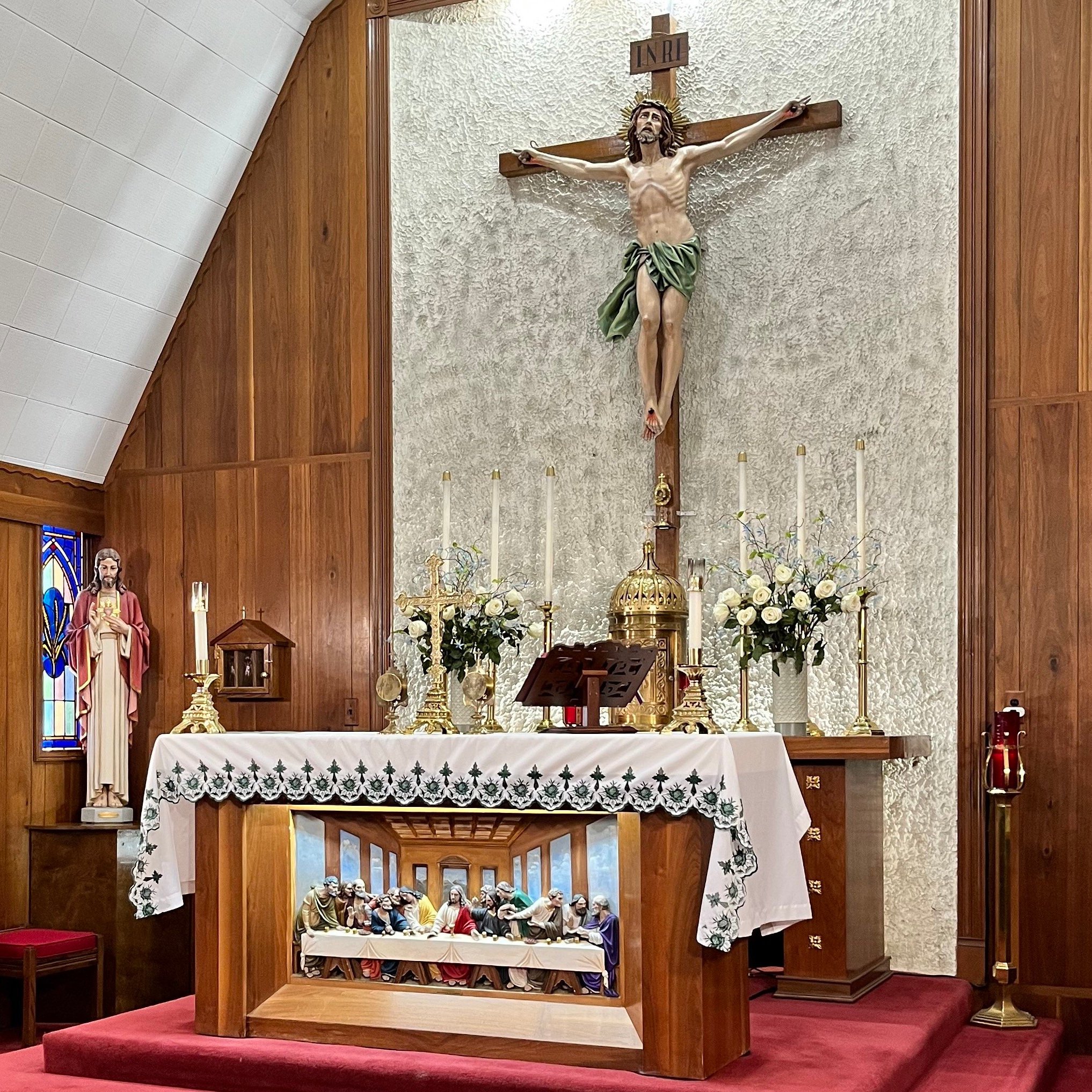
St. Edward the Confessor Catholic Church, Tallulah, LouisianaReadings at MassLiturgical Colour: Green. Year: C(I).
| First reading | Romans 1:1-7 |
|---|
Our apostolic mission is to preach the obedience of faith to all pagan nationsFrom Paul, a servant of Christ Jesus who has been called to be an apostle, and specially chosen to preach the Good News that God promised long ago through his prophets in the scriptures. This news is about the Son of God who, according to the human nature he took was a descendant of David: it is about Jesus Christ our Lord who, in the order of the spirit, the spirit of holiness that was in him, was proclaimed Son of God in all his power through his resurrection from the dead. Through him we received grace and our apostolic mission to preach the obedience of faith to all pagan nations in honour of his name. You are one of these nations, and by his call belong to Jesus Christ. To you all, then, who are God’s beloved in Rome, called to be saints, may God our Father and the Lord Jesus Christ send grace and peace.
| Responsorial Psalm |
|---|
| Psalm 97(98):1-4 |
|---|
The Lord has made known his salvation. Sing a new song to the Lord for he has worked wonders. His right hand and his holy arm have brought salvation. The Lord has made known his salvation. The Lord has made known his salvation; has shown his justice to the nations. He has remembered his truth and love for the house of Israel. The Lord has made known his salvation. All the ends of the earth have seen the salvation of our God. Shout to the Lord, all the earth, ring out your joy. The Lord has made known his salvation.
| Gospel Acclamation | Ps118:88 |
|---|
Alleluia, alleluia! Because of your love give me life, and I will do your will. Alleluia! Alleluia, alleluia! Harden not your hearts today, but listen to the voice of the Lord. Alleluia!
As Jonah became a sign to the Ninevites, so will the Son of Man be a signThe crowds got even bigger, and Jesus addressed them: ‘This is a wicked generation; it is asking for a sign. The only sign it will be given is the sign of Jonah. For just as Jonah became a sign to the Ninevites, so will the Son of Man be to this generation. On Judgement day the Queen of the South will rise up with the men of this generation and condemn them, because she came from the ends of the earth to hear the wisdom of Solomon; and there is something greater than Solomon here. On Judgement day the men of Nineveh will stand up with this generation and condemn it, because when Jonah preached they repented; and there is something greater than Jonah here.’ You can also view this page with the New Testament in Greek and English. Christian Art Each day, The Christian Art website gives a picture and reflection on the Gospel of the day. The readings on this page are from the Jerusalem Bible, which is used at Mass in most of the English-speaking world. The New American Bible readings, which are used at Mass in the United States, are available in the Universalis apps, programs and downloads.
You can also view this page with the Gospel in Greek and English. |
TOPICS: Catholic; General Discusssion; Prayer; Worship
KEYWORDS: catholic; lk11; ordinarytime; prayer
For your reading, reflection, faith-sharing, comments, questions, discussion.
1
posted on
10/13/2025 10:38:09 AM PDT
by
annalex
To: All
KEYWORDS: catholic; lk11; ordinarytime; prayer;
2
posted on
10/13/2025 10:38:37 AM PDT
by
annalex
(fear them not)
To: nickcarraway; NYer; ELS; Pyro7480; livius; ArrogantBustard; Catholicguy; RobbyS; marshmallow; ...

Alleluia Ping Please FReepmail me to get on/off the Alleluia Ping List.
3
posted on
10/13/2025 10:39:29 AM PDT
by
annalex
(fear them not)
To: annalex
4
posted on
10/13/2025 10:39:59 AM PDT
by
annalex
(fear them not)
To: annalex
| Luke |
| | English: Douay-Rheims | Latin: Vulgata Clementina | Greek NT: Byzantine/Majority Text (2000) |
| | Luke 11
|
| 29. | And the multitudes running together, he began to say: This generation is a wicked generation: it asketh a sign, and a sign shall not be given it, but the sign of Jonas the prophet. | Turbis autem concurrentibus cœpit dicere : Generatio hæc, generatio nequam est : signum quærit, et signum non dabitur ei, nisi signum Jonæ prophetæ. | των δε οχλων επαθροιζομενων ηρξατο λεγειν η γενεα αυτη πονηρα εστιν σημειον επιζητει και σημειον ου δοθησεται αυτη ει μη το σημειον ιωνα του προφητου |
| 30. | For as Jonas was a sign to the Ninivites; so shall the Son of man also be to this generation. | Nam sicut fuit Jonas signum Ninivitis, ita erit et Filius hominis generationi isti. | καθως γαρ εγενετο ιωνας σημειον τοις νινευιταις ουτως εσται και ο υιος του ανθρωπου τη γενεα ταυτη |
| 31. | The queen of the south shall rise in the judgment with the men of this generation, and shall condemn them: because she came from the ends of the earth to hear the wisdom of Solomon; and behold more than Solomon here. | Regina austri surget in judicio cum viris generationis hujus, et condemnabit illos : quia venit a finibus terræ audire sapientiam Salomonis : et ecce plus quam Salomon hic. | βασιλισσα νοτου εγερθησεται εν τη κρισει μετα των ανδρων της γενεας ταυτης και κατακρινει αυτους οτι ηλθεν εκ των περατων της γης ακουσαι την σοφιαν σολομωνος και ιδου πλειον σολομωνος ωδε |
| 32. | The men of Ninive shall rise in the judgment with this generation, and shall condemn it; because they did penance at the preaching of Jonas; and behold more than Jonas here. | Viri Ninivitæ surgent in judicio cum generatione hac, et condemnabunt illam : quia pœnitentiam egerunt ad prædicationem Jonæ, et ecce plus quam Jonas hic. | ανδρες νινευι αναστησονται εν τη κρισει μετα της γενεας ταυτης και κατακρινουσιν αυτην οτι μετενοησαν εις το κηρυγμα ιωνα και ιδου πλειον ιωνα ωδε |
5
posted on
10/13/2025 10:42:30 AM PDT
by
annalex
(fear them not)
To: annalex

Catena Aurea by St. Thomas Aguinas
11:2932
29. And when the people were gathered thick together, he began to say, This is an evil generation: they seek a sign; and there shall no sign be given it, but the sign of Jonas the prophet.
30. For as Jonas was a sign unto the Ninevites, so shall also the Son of man be to this generation.
31. The queen of the south shall rise up in the judgment with the men of this generation, and condemn them; for she came from the utmost parts of the earth to hear the wisdom of Solomon; and, behold, a greater than Solomon is here.
32. The men of Nineve shall rise up in the judgment with this generation, and shall condemn it: for they repented at the preaching of Jonas; and, behold, a greater than Jonas is here.
BEDE. Our Lord had been assailed with two kinds of questions, for some accused Him of casting out devils through Beelzebub, to whom up to this point His answer was addressed; and others tempting Him, sought from Him a sign from heaven, and these He now proceeds to answer. As it follows, And when the people were gathered thick together, he began to say, This is an evil generation, &c.
AMBROSE. That you may know that the people of the Synagogue are treated with dishonour, while the blessedness of the Church is increased. But as Jonas was a sign to the Ninevites, so also will the Son of man be to the Jews. Hence it is added, They seek a sign; and there shall no sign be given them but the sign of Jonas the prophet.
BASIL. (in Esai. 7.) A sign is a thing brought openly to view, containing in itself the manifestation of something hidden, as the sign of Jonas represents the descent to hell, the ascension of Christ, and His resurrection from the dead. Hence it is added, For as Jonas was a sign to the Ninevites, so shall also the Son of man be to this generation. He gives them a sign, not from heaven, because they were unworthy to see it, but from the lowest depths of hell; a sign, namely, of His incarnation, not of His divinity; of His passion, not of His glorification.
AMBROSE. Now as the sign of Jonas is a type of our Lords passion, so also is it a testimony of the grievous sins which the Jews have committed. We may remark at once both the mighty voice of warning, and the declaration of mercy. For by the example of the Ninevites both a punishment is denounced, and a remedy promised. Hence even the Jews ought not to despair of pardon, if they will but practise repentance.
THEOPHYLACT. Now Jonas after he came forth from the whales belly converts the men of Nineveh by his preaching, but when Christ rose again, the Jewish nation believed not. So there was a sentence already passed upon them, of which there follows a second example, as it is said, The queen of the south shall rise up in the judgment with the men of this generation, and condemn them.
BEDE. Not certainly by any authority to judge, but by the contrast of a better deed. As it follows, For she came from the utmost parts of the earth to hear the wisdom of Solomon; and, behold, a greater than Solomon is here. Hie in this place is not the pronoun, but the adverb of place, that is, there is one present among you who is incomparably superior to Solomon. He said not, I am greater than Solomon, that he might teach us to be humble, though fruitful in spiritual graces. As if he said, The barbarian woman hastened to hear Solomon, taking so long a journey to be instructed in the knowledge of visible living creatures, and the virtues of herbs. But ye when ye stand by and hear Wisdom herself teaching you invisible and heavenly things, and confirming her words with signs and wonders, are strangers to the word, and senselessly disregard the miracles.
BEDE. But if the queen of the South, who doubtless is of the elect, shall rise up in judgment together with the wicked, we have a proof of the one resurrection of all men, good as well as bad, and that not according to Jewish fables to happen a thousand years before the judgment, but at the judgment itself.
AMBROSE. Herein also while condemning the Jewish people, He strongly expresses the mystery of the Church, which in the queen of the South, through the desire of obtaining wisdom, is gathered together from the uttermost parts of the whole earth, to hear the words of the Peacemaking Solomon; a queen plainly whose kingdom is undivided, rising up from different and distant nations into one body.
GREGORY OF NYSSA. (Hom. 7. Cant.) Now as she was queen of the Ethiopians, and in a far distant country, so in the beginning the Church of the Gentiles was in darkness, and far off from the knowledge of God. But when Christ the Prince of peace shone forth, the Jews being still in darkness, thither came the Gentiles, and offered to Christ the frankincense of piety, the gold of divine knowledge, and precious stones, that is, obedience to His commands.
THEOPHYLACT. Or because the South is praised in Scripture as warm and life-giving, therefore the soul reigning in the south, that is, in all spiritual conversation, comes to hear the wisdom of Solomon, the Prince of peace, the Lord our God, (i. e. is raised up to contemplate Him,) to whom no one shall come except he reign in a good life. But He brings next an example from the Ninevites, saying, The men of Nineveh shall rise up in judgment with this generation, and shall condemn it.
CHRYSOSTOM. (non occ.) The judgment of condemnation comes from men like or unlike to those who are condemned. From like, for instance, as in the parable of the ten virgins, but from unlike, when the Ninevites condemn those who lived at the time of Christ, that so their condemnation might be the more remarkable. (Hom. 43. in Matt.). For the Ninevites indeed were barbarians, but these Jews. The one enjoying the prophetic teaching, the other having never received the divine word. To the former came a servant, to the latter the Master, of whom the one foretold destruction, the other preached the kingdom of heaven. To all men then was it known that the Jews ought rather to have believed, but the contrary happened; therefore he adds, For they repented at the preaching of Jonas, and, behold, a greater than Jonas is here.
AMBROSE. Now in a mystery, the Church consists of two things, either ignorance of sin, which has reference mainly to the queen of the South, or ceasing to sin, which relates indeed to the repentant Ninevites. For repentance blots out the offence, wisdom guards against it.
AUGUSTINE. (de Cons. Ev. lib. ii. c. 39.) Luke indeed relates this in the same place as Matthew, but in a somewhat different order. But who does not see that it is an idle question, in what order our Lord said those things, seeing that we ought to learn by the most precious authority of the Evangelist, that there is no falsehood. But not every man will repeat anothers words in the same order in which they proceeded from his mouth, seeing that the order itself makes no difference with respect to the fact, whether it be so or not.
Catena Aurea Luke 11
6
posted on
10/13/2025 10:43:56 AM PDT
by
annalex
(fear them not)
To: annalex

Entombment
Giotto di Bondone
1320-25
Tempera on wood, 44,5 x 43 cm
Berenson Collection, Settignano
7
posted on
10/13/2025 10:44:18 AM PDT
by
annalex
(fear them not)
To: annalex
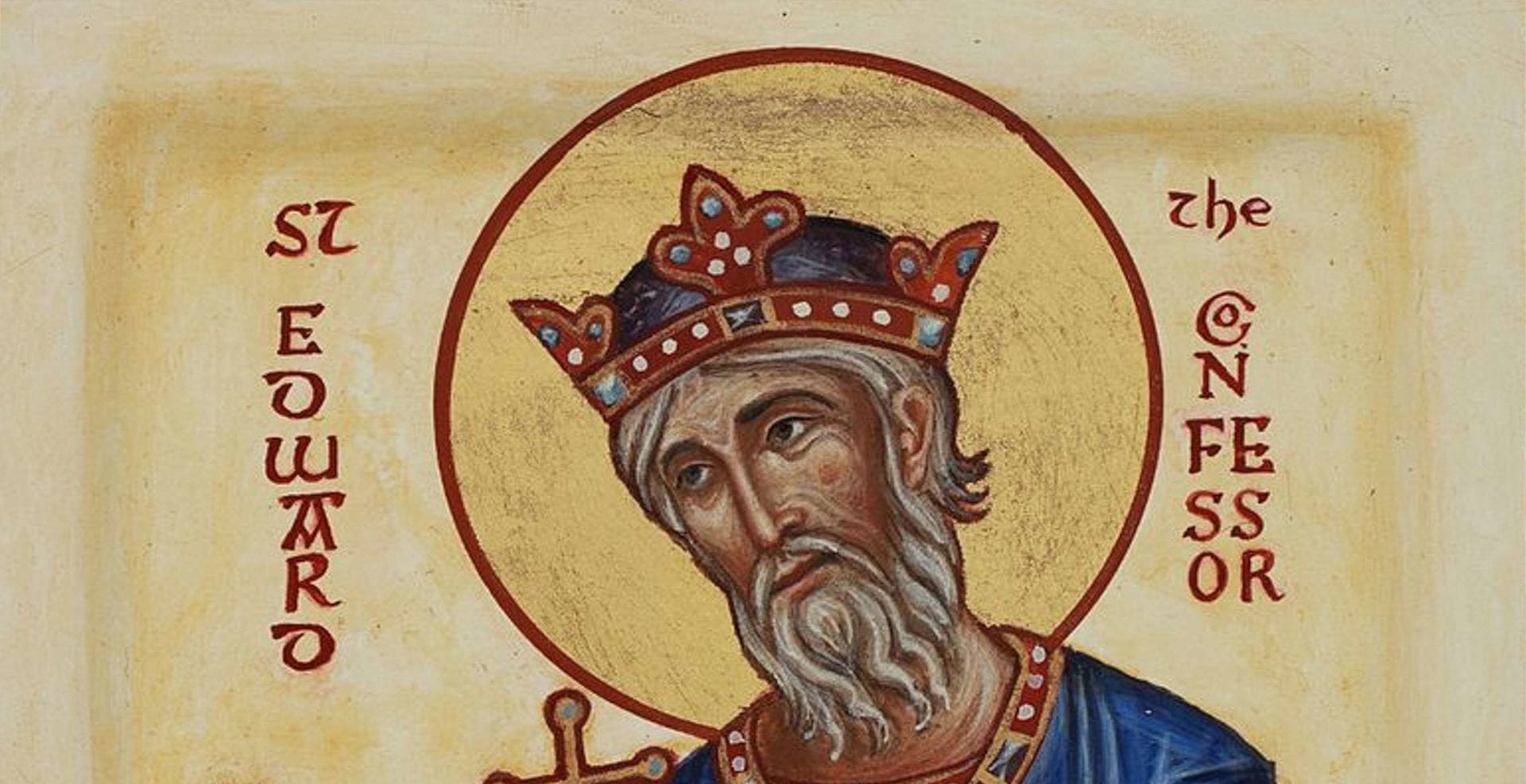
October 13: Saint Edward, King
The Patron of the English Monarchy
Saint Edward the Confessor, venerated as the Patron Saint of the English monarchy, was born around the year 1002 in Islip, near Oxford. The son of the Anglo-Saxon King Æthelred II and the Norman Emma, sister of Duke Richard II of Normandy, he spent much of his youth in exile at the Norman court, where he had taken refuge following the Danish invasion of 1013. He remained in Normandy for about twenty-five years, during which he developed a deep spirituality and a profound attachment to the Christian faith.
He was recalled to England in 1041, at a time when the country was under Danish rule. After the death of his half-brother Harthacnut, the son of Emma and the Danish king Cnut the Great, Edward was chosen by the people and the nobility to ascend the throne. His coronation took place on Easter Day in 1043 at Winchester Cathedral, the ancient heart of Saxon power. As sovereign, he was distinguished by his peaceful, just and moderate rule, which won him the affection of his people although he faced opposition from certain powerful nobles.
In 1045, he married Edith, daughter of Earl Godwin, his political rival. According to tradition, theirs was a chaste marriage. Edward is also remembered for having vowed to make a pilgrimage to Rome—a vow he was unable to fulfill. Instead, he founded a grand Benedictine abbey dedicated to Saint Peter at Westminster, which became the heart of the English monarchy and has remained the site of royal coronations to this day.
During his reign, Edward promoted the spread of Christianity in England and embodied a deep religiosity combined with an evangelical spirit of mercy and prudence. For this reason, he was called “the Confessor”—not because he suffered martyrdom, but because he bore witness to Christ through his virtuous life.
Many popular legends attribute miraculous powers to him. In one, he is said to have carried a sick man on his shoulders, following a vision granted to a pilgrim by Saint Peter. In another, he gives a ring to a beggar, who later reveals himself to be Saint John the Evangelist in disguise.
Edward died on January 5, 1066, shortly after devoutly receiving the sacraments. His body, first buried at Westminster, was found incorrupt in 1102—an event that further strengthened his cult. He was canonized by Pope Alexander III in 1161, at the urging of King Henry II of England, who promoted his veneration as a symbol of unity between the Anglo-Saxon and Norman royal houses. Two years later, Archbishop Thomas Becket presided over the solemn translation of his relics to the new chapel of Westminster Abbey, where fourteen reliefs depict scenes from his life.
A second translation took place in 1269, and his shrine survived even the iconoclastic fury of the English Reformation. To this day, the tomb of Saint Edward the Confessor remains within the abbey he founded—a guardian of a thousand-year-old tradition.
vaticanstate.va
8
posted on
10/13/2025 10:47:59 AM PDT
by
annalex
(fear them not)
To: annalex
9
posted on
10/13/2025 10:49:22 AM PDT
by
annalex
(fear them not)
To: annalex
NAVARRE BIBLE COMMENTARY(RSV)
Ad Majorem Dei Gloriam (To the Greater Glory of God)
First Reading:
From: Romans 1:1-7
Greeting
--------
[1] Paul, a servant of Jesus Christ, called to be an apostle, set apart for the gospel of God [2] which he promised beforehand through his prophets in the holy scriptures, [3] the gospel concerning his Son, who was descended from David according to the flesh [4] and designated Son of God in power according to the Spirit of holiness by his resurrection from the dead, Jesus Christ our Lord, [5] through whom we have received grace and apostleship to bring about the obedience of faith for the sake of his name among all the nations, [6] including yourselves who are called to belong to Jesus Christ: [7] To all God's beloved in Rome, who are called to be saints: Grace to you and peace from God our Father and the Lord Jesus Christ.
***********************************************************************
Commentary:
1-15. These opening verses of the letter are a combination of greeting, introduction of the writer and the prologue to the entire text. The passage deals with themes in no particular order--in line with the style of some other Pauline letters, especially Romans itself.
Three matters are being covered here--Paul's introduction of himself, and his plans to visit Rome (vv. 1, 5, 9-15); who the immediate recipients are and their particular situation (vv. 6-8, 11, 15); and, finally, Paul's purpose in writing to the faithful at Rome (outlined in his greeting--vv. 2-4, 15 and, to a lesser degree, v. 9).
1-2. The word "gospel", which St Paul uses very often, here refers to the purpose of his vocation: he has been designated to preach the Gospel of God. This is obviously not a reference to the written Gospels; he is speaking of something complex and profound, already articulated by Christ in his preaching. Jesus said of himself that he had come to bring Good News (cf. Mt 11:15; Mk 1:14-15; Lk 4:18; etc.), as the prophets had foretold (especially is 61:1, which Jesus quoted). "As an evangelizer, Christ first of all proclaims a kingdom, the Kingdom of God; and this is so important that, by comparison, everything else becomes 'the rest', which is 'given in addition' (cf. Mt 6:33).
"As the kernel and center of this Good News, Christ proclaims salvation, this great gift of God which is liberation from everything that oppresses man but which is above all liberation from sin and the Evil One" (Paul VI, "Evangelii Nuntiandi", 8 and 9).
When he was about to ascend into heaven, Jesus charged his Apostles to proclaim the Good News (Mk 16:15; cf. Mt 28:19-20) which was to be "the source of all saving truth and moral discipline" (Vatican II, "Dei Verbum", 7). For the Apostles this Good News was nothing more or less than Jesus Christ and his work of salvation. That is why the Gospel (which the Church is given to hand on to all generations) is centered on the life and teachings of Jesus Christ, as passed on to us by the Apostles. "The promises of the New Alliance in Jesus Christ, the teaching of the Lord and the Apostles, the Word of life, the sources of grace and of God's loving kindness, the path of salvation--all these things have been entrusted to her. It is the content of the Gospel, and therefore of evangelization" ("Evangelii Nuntiandi", 15). Thus we can say with St Thomas Aquinas (cf. "Summa Theologiae", I-II, q. 108, a.1; "Commentary on Rom." 1, 1) that the core of the Gospel has to do with uniting men and God, a union which takes a perfect form in Christ but an imperfect one in us. The superiority of the Gospel over the Old Law consists in the grace of the Holy Spirit, which Christ confers on us. Therefore, the Gospel, to which the Apostles dedicated themselves, is, at one and the same time, a series of truths revealed by our Lord, the saving power of grace and the Church-in-action.
1. In addressing the Christians at Rome the Apostle uses, of his two names--Saul and Paul--the one he has used since his first missionary journey (cf. Acts 13:9), a Roman name indicating his Roman citizenship (cf. Acts 16:37; 22:25-28). It was in fact quite common for Jews to use two names--a national name, Hebrew or Aramaic, and another name, Greek or Latin, for dealings with people from other countries in the Empire. We find a number of examples of this in the New Testament--John-Mark, Symeon-Niger (Acts 13:1), Tabitha-Dorcas (Acts 9:36), etc.
Paul, who had been born a Roman citizen, was deeply conscious of his Jewish roots. He was of the tribe of Benjamin (Rom 11:1; Phil 3:5) and bore the name of one of the most famous members of that tribe—King Saul, son of Kish (Acts 13:21). He was well able to show his pride in his Jewish descent (cf. 2 Cor 11:22; Gal 1:13-14) yet was ready to become all things to all men in order to save even some (cf. 1 Cor 9:22).
St Paul wants to speak about Christ and his saving Gospel, but he cannot avoid making reference to himself and the mission entrusted to him; this he does by using three words which are full of meaning: he is a "servant" of Jesus Christ, called by God to be his "apostle" (envoy), "set apart" or designated by God to preach the Gospel. These three words tell the whole story of his vocation, and each of them encapsulates something of the mystery which Paul will expound in his epistle--the mercy of God, who saves men, justifies them, sanctifies them and sends them out.
"Servant": this title, also used by St James (Jas 1:1), St Peter (2 Pet 1:1) and St Jude (Jud 1), comes from the Old Testament. There the great prophets and guides of the chosen people described themselves as "servants" of Yahweh (cf., for example, Samuel: 1 Sam 3:9f; Abraham: Ps 104:6; David: 2 Sam 24:10; Moses, Aaron, Solomon, etc.), and the entire people of Israel is called the "servant" of God (Is 49:3); but most prominently there is the Messiah, the "Servant" of God to the extent of actually giving his life (Is 41:9; 42:1; 49:6; 53:11). In the world of the Hebrew religion "servant of God" is the equivalent of "worshipper of God", one who offers religious worship: this notion of servant did not carry the overtones of inhuman debasement that it had in Greco-Roman culture. When St Paul says that he is a "servant" (or "slave") of Jesus Christ he is implicitly saying that he renders him religious adoration.
"Apostle": this word designates preachers of the Gospel, particularly the twelve chosen disciples of Jesus (cf. Mt 10:24 and Mk 3:16-19) it was quite logically applied to Matthias when he became one of the Twelve (Acts 1:25). Christ himself designated Paul an apostle when he appeared to him on the road to Damascus (Acts 26:16-18; Gal 1:15-16), called him to the faith and charged him with his mission to preach. By describing himself as "called to be an apostle", St Paul is saying that he is on an equal footing with the Twelve--for example, Peter, James and John, whom he calls "pillars" of the Church (Gal 2:9)--since he received his calling from Christ himself, as had been the case with the other Apostles (cf. Acts 9:3-18), and not from the leaders of the community of Antioch (Acts 13:2-3).
"Set apart": this refers to the mission entrusted to St Paul of preaching the Gospel to the Gentiles. Possibly it also refers to Paul's place in God's eternal plan; in this sense he can say that he was "set apart" ever since he was in his mother's womb (Gal 1:15; cf. Jer 1:5; Is 49:1).
St John Chrysostom comments on this verse as follows: "If Paul constantly recalls his vocation it is in order to show his gratitude. This gift, which he did not solicit, took him by surprise; he simply obeyed and followed the divine inspiration. As regards the faithful, they too, as he himself says, have been called to holiness" ("Hom. On Rom", 1).
3-4. Scholars are now confident that in Rom 1:3-4 St Paul is quoting from a Christological formula or hymn (like that in I Tim 3:16 or Phil 2:6-11)—probably used in the very earliest Christian liturgy. In these two verses St Paul offers, as it were, a summary of Christology: Jesus Christ, true God and true Man, is the Son sent by his Father God (v. 3). From all eternity he is God, equal to the Father, and in the fullness of time he has taken up a human nature which was initially capable of experiencing pain (v. 3) and was later glorified (v. 4).
The Incarnation did not involve any change, as far as the Word was concerned, either in his divine nature (which he did not shed and which did not alter) or in his being a Person distinct from the Father and the Holy Spirit. However, by the Incarnation he assumed a human nature, being born of a Virgin (cf. Lk 1:27, 35): and so the Son of God became the Son of David, of the lineage of David. The phrase "according to the flesh" actually emphasizes the lowliness which the Incarnation implied--fragility, suffering, self-emptying, humiliation (cf. Jn 1:14 and note; Phil 2:7).
During Christ's life on earth prior to his Resurrection, although it was united to the Word, his human nature, especially his body, was not fully glorified. Moreover, although it is true that during that period of his life he showed his divinity by his miracles (cf. In 2:11) and by words confirmed by those miracles (cf. Jn 10:37ff), it is also true that his human nature was to the forefront most of the time. After the Resurrection, his human body and soul were fully glorified and therefore from then on his divine nature was the more apparent. This real change which took place in Christ's human nature when he rose from the dead, and the fact that his divinity became more manifest and he was more easily recognized to be God, are captured in what St Paul says here in v. 4.
The words "according to the Spirit of holiness" can refer both to Christ's divine nature (in the same way as "according to the flesh" refers to his human nature) and to the action of the Holy Spirit, whose effects were more easily seen after the Resurrection, especially from Pentecost onwards (cf. Jn 7:39 and note on same).
5. Here St Paul refers to the mission given him by God the Father through Jesus Christ at the time of his conversion (cf. Acts 9:15) and which he mentions explicitly in his letter to the Galatians (cf. Gal 2:7). Within the world-wide mission implied in being an apostle called by Christ himself, St Paul was given a special mission of his own—to be the Apostle of the Gentiles; he mentions this mission at the beginning of this letter to show why he should be addressing the Christians at Rome, a church which he had not founded.
The purpose and effect of the apostolic ministry is to bring about the "obedience of faith": when a person believes, he submits his mind and will to God's authority, freely accepting the truths which God proposes. Apropos of this obedience proper to faith the Second Vatican Council says: "'The obedience of faith' (Rom 16:26; cf. Rom 1:5; 2 Cor 10:5-6) must be given to God as he reveals himself. By faith man freely commits his entire self to God, making 'the full submission of his intellect and will to God who reveals' (Vatican I, "Dei Filius", chap. 3) and willingly assenting to the Revelation given by him. Before this faith can be exercised, man must have the grace of God to move and assist him; he must have the interior help of the Holy Spirit, who moves the heart and converts it to God, who opens the eyes of the mind and 'makes it easy for all to accept and believe the truth' (Second Council of Orange III, "De Gratia", can. 7; "Dei Filius, ibid.")" (Vatican II, "Dei Verbum", 5).
7. "Called to be saints": literally "called saints". This is not just a way of speaking: St Paul really is saying that Christians are "called" in the same kind of way as the Israelites were so open called through Moses (Num 10:14). In the Christians' case, the calling is to form the new people of God, one of whose characteristic features is holiness. Basing itself on this and other Pauline texts, the Second Vatican Council has this to say: "As Israel according to the flesh which wandered in the desert was already called the Church of God (cf. 2 Ezra 13:1; cf. Num 20:4; Deut 23:1 ff), so too, the new Israel, which advances in this present era in search of a future and permanent city (cf. Heb 13:14), is called also the Church of Christ (cf. Mt. 16:18) [...]. The followers of Christ, called by God not in virtue of their works but by his design and grace, and justified in the Lord Jesus, have been made sons of God in the baptism of faith and partakers of the divine nature, and so are truly sanctified" ("Lumen Gentium", 9 and 40).
This is in fact the basis of the "universal call to holiness". All Christians, by virtue of their Baptism, should live in line with what that means: they are called to be saints and their whole life should be a pursuit of holiness: "In baptism, our Father God has taken possession of our lives, has made us share in the life of Christ, and has given us the Holy Spirit" (J. Escriva, "Christ Is Passing By, 128). "We are deeply moved, and our hearts profoundly shaken, when we listen attentively to that cry of St Paul: 'This is the will of God, your sanctification' (1 Thess 4:3). Today, once again, I set myself this goal and I also remind you and all mankind: this is God's Will for us, that we be saints" (St. J. Escriva, "Friends of God", 294).
The formula "grace and peace" seems to be St Paul's own: it is a combination of the usual Greek greeting at the start of letters and the Hebrew shalom (peace). The Apostle uses this double greeting very often (cf., for example, 1 Cor 1:3 2 Cor 1:2; Gal 1:3; Eph 1:2; etc). It is a Christian greeting, referring to the gifts the Holy Spirit brings us. Jewish and pagan greetings wished people material prosperity or good fortune; the Apostle's are wishes for something higher—divine benevolence, which comes in the form of the gift of sanctifying grace and the virtues and gifts of the Holy Spirit, and interior peace, which derives from reconciliation with God brought about by Christ. These gifts, according to the Apostle, come to us from God our Father, and from Jesus Christ, the Lord, who is equal to the Father. Thus we see Christian life as being inserted in the intimate life of the Blessed Trinity, for "grace and peace" came from the goodness and mercy of God, by way of the Incarnation of the Word and the Redemption wrought by him.
10
posted on
10/13/2025 10:49:49 AM PDT
by
fidelis
(Ecce Crucem Domini! Fugite partes adversae! Vicit Leo de tribu Juda, Radix David! Alleluia!)
Gospel Reading: From: Luke 11:29-32
The Sign of Jonah
-----------------
[29] When the crowds were increasing, He (Jesus) began to say, "This generation is an evil generation; it seeks a sign, but no sign shall be given to it except the sign of Jonah. [30] For as Jonah became a sign to the men of Nineveh, so will the Son of Man be to this generation. [31] The queen of the South will arise at the judgment with the men of this generation and condemn them; for she came from the ends of the earth to hear the wisdom of Solomon, and behold, something greater than Solomon is here. [32] The men of Nineveh will arise at the judgment with this generation and condemn it; for they repented at the preaching of Jonah, and behold, something greater than Jonah is here."
***********************************************************************
Commentary:
29-32. Jonah was the prophet who led the Ninevites to do penance: his actions and preaching they saw as signifying that God had sent him (cf. note on Matthew 12:41-42).
[Note on Matthew 12:41-42 states: 41-42. Nineveh was a city in Mesopotamia (modern Iraq) to which the prophet Jonah was sent. The Ninevites did penance (John 3:6-9) because they recognized the prophet and accepted his message; whereas Jerusalem does not wish to recognize Jesus, of whom Jonah was merely a figure. The queen of the South was the queen of Sheba in southwestern Arabia, who visited Solomon (1 Kings 10:1-10) and was in awe of the wisdom with which God had endowed the King of Israel. Jesus is also prefigured in Solomon, whom Jewish tradition saw as the epitome of the wise man. Jesus' reproach is accentuated by the example of pagan converts, and gives us a glimpse of the universal scope of Christianity, which will take root among the Gentiles.
There is a certain irony in what Jesus says about "something greater" than Jonah or Solomon having come: really, He is infinitely greater, but Jesus prefers to tone down the difference between Himself and any figure, no matter how important, in the Old Testament.]
11
posted on
10/13/2025 10:50:10 AM PDT
by
fidelis
(Ecce Crucem Domini! Fugite partes adversae! Vicit Leo de tribu Juda, Radix David! Alleluia!)
12
posted on
10/13/2025 10:51:07 AM PDT
by
fidelis
(Ecce Crucem Domini! Fugite partes adversae! Vicit Leo de tribu Juda, Radix David! Alleluia!)
Disclaimer:
Opinions posted on Free Republic are those of the individual
posters and do not necessarily represent the opinion of Free Republic or its
management. All materials posted herein are protected by copyright law and the
exemption for fair use of copyrighted works.
FreeRepublic.com is powered by software copyright 2000-2008 John Robinson