Posted on 10/04/2025 10:58:44 AM PDT by annalex
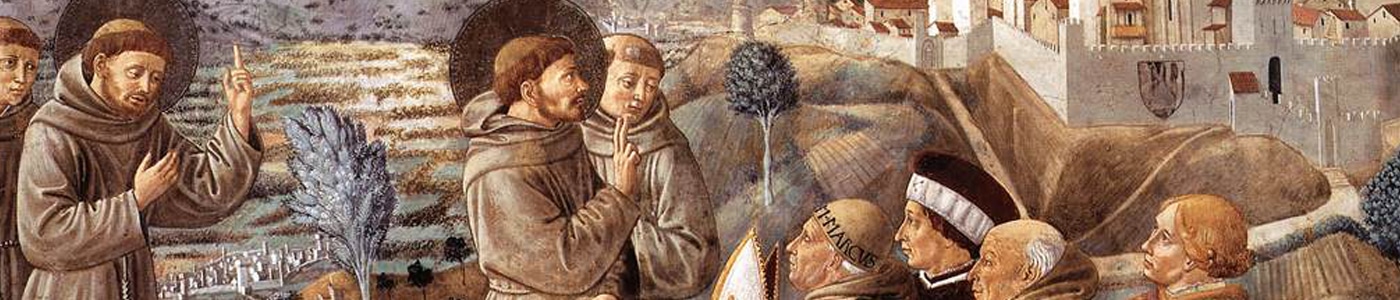
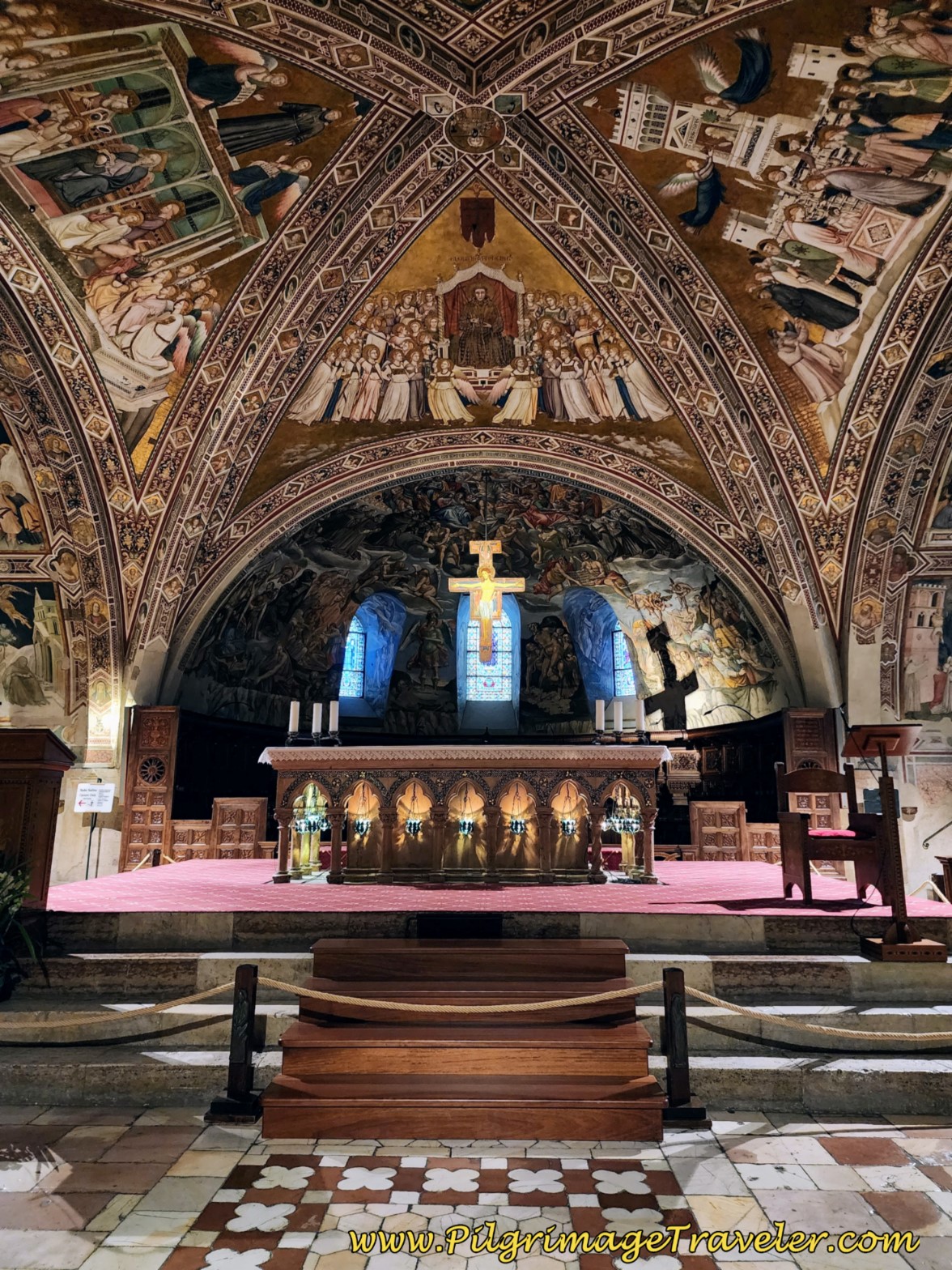
Saint Francis of Assisi on Saturday of week 26 in Ordinary Time ![]() Basilica di San Francesco, Assisi, Italy Readings at MassLiturgical Colour: White. Year: C(I). These are the readings for the feria
Take courage, my children, call on GodTake courage, my people, constant reminder of Israel. You were sold to the nations, but not for extermination. You provoked God; and so were delivered to your enemies, since you had angered your creator by offering sacrifices to demons, not to God. You had forgotten the eternal God who reared you. You had also grieved Jerusalem who nursed you, for when she saw the anger fall on you from God, she said: Listen, you neighbours of Zion: God has sent me great sorrow. I have seen my sons and daughters taken into captivity, to which they have been sentenced by the Eternal. I had reared them joyfully; in tears, in sorrow, I watched them go away. Do not, any of you, exult over me, a widow, deserted by so many; I suffer loneliness because of the sins of my own children, who turned away from the Law of God. Take courage, my children, call on God: he who brought disaster on you will remember you. As by your will you first strayed away from God, so now turn back and search for him ten times as hard; for as he brought down those disasters on you, so will he rescue you and give you eternal joy.
The Lord listens to the needy. The poor when they see it will be glad and God-seeking hearts will revive; for the Lord listens to the needy and does not spurn his servants in their chains. Let the heavens and the earth give him praise, the sea and all its living creatures. The Lord listens to the needy. For God will bring help to Zion and rebuild the cities of Judah and men shall dwell there in possession. The sons of his servants shall inherit it; those who love his name shall dwell there. The Lord listens to the needy.
Alleluia, alleluia! Blessed are you, Father, Lord of heaven and earth, for revealing the mysteries of the kingdom to mere children. Alleluia!
Rejoice that your names are written in heavenThe seventy-two came back rejoicing. ‘Lord,’ they said ‘even the devils submit to us when we use your name.’ He said to them, ‘I watched Satan fall like lightning from heaven. Yes, I have given you power to tread underfoot serpents and scorpions and the whole strength of the enemy; nothing shall ever hurt you. Yet do not rejoice that the spirits submit to you; rejoice rather that your names are written in heaven.’ It was then that, filled with joy by the Holy Spirit, he said: ‘I bless you, Father, Lord of heaven and of earth, for hiding these things from the learned and the clever and revealing them to mere children. Yes, Father, for that is what it pleased you to do. Everything has been entrusted to me by my Father; and no one knows who the Son is except the Father, and who the Father is except the Son and those to whom the Son chooses to reveal him.’ Then turning to his disciples he spoke to them in private, ‘Happy the eyes that see what you see, for I tell you that many prophets and kings wanted to see what you see, and never saw it; to hear what you hear, and never heard it.’ These are the readings for the memorial
The marks on my body are those of JesusThe only thing I can boast about is the cross of our Lord Jesus Christ, through whom the world is crucified to me, and I to the world. It does not matter if a person is circumcised or not; what matters is for him to become an altogether new creature. Peace and mercy to all who follow this rule, who form the Israel of God. I want no more trouble from anybody after this; the marks on my body are those of Jesus. The grace of our Lord Jesus Christ be with your spirit, my brothers. Amen.
You are my inheritance, O Lord. Preserve me, God, I take refuge in you. I say to the Lord: ‘You are my God.’ O Lord, it is you who are my portion and cup; it is you yourself who are my prize. You are my inheritance, O Lord. I will bless the Lord who gives me counsel, who even at night directs my heart. I keep the Lord ever in my sight: since he is at my right hand, I shall stand firm. You are my inheritance, O Lord. You will show me the path of life, the fullness of joy in your presence, at your right hand happiness for ever. You are my inheritance, O Lord.
Alleluia, alleluia! Blessed are you, Father, Lord of heaven and earth, for revealing the mysteries of the kingdom to mere children. Alleluia!
My yoke is easy and my burden lightJesus said, ‘Come to me, all you who labour and are overburdened, and I will give you rest. Shoulder my yoke and learn from me, for I am gentle and humble in heart, and you will find rest for your souls. Yes, my yoke is easy and my burden light.’
You can also view this page with the New Testament in Greek and English. Universalis podcast: The week ahead – from 5 to 11 OctoberThe prophet Jonah. Saint Abraham. Saint John Henry Newman. (21 minutes) Christian Art![]() Each day, The Christian Art website gives a picture and reflection on the Gospel of the day. The readings on this page are from the Jerusalem Bible, which is used at Mass in most of the English-speaking world. The New American Bible readings, which are used at Mass in the United States, are available in the Universalis apps, programs and downloads. |

Please FReepmail me to get on/off the Alleluia Ping List.
| Luke | |||
| English: Douay-Rheims | Latin: Vulgata Clementina | Greek NT: Byzantine/Majority Text (2000) | |
| Luke 10 | |||
| 17. | And the seventy-two returned with joy, saying: Lord, the devils also are subject to us in thy name. | Reversi sunt autem septuaginta duo cum gaudio, dicentes : Domine, etiam dæmonia subjiciuntur nobis in nomine tuo. | υπεστρεψαν δε οι εβδομηκοντα μετα χαρας λεγοντες κυριε και τα δαιμονια υποτασσεται ημιν εν τω ονοματι σου |
| 18. | And he said to them: I saw Satan like lightening falling from heaven. | Et ait illis : Videbam Satanam sicut fulgor de cælo cadentem. | ειπεν δε αυτοις εθεωρουν τον σαταναν ως αστραπην εκ του ουρανου πεσοντα |
| 19. | Behold, I have given you power to tread upon serpents and scorpions, and upon all the power of the enemy: and nothing shall hurt you. | Ecce dedi vobis potestatem calcandi supra serpentes, et scorpiones, et super omnem virtutem inimici : et nihil vobis nocebit. | ιδου διδωμι υμιν την εξουσιαν του πατειν επανω οφεων και σκορπιων και επι πασαν την δυναμιν του εχθρου και ουδεν υμας ου μη αδικηση |
| 20. | But yet rejoice not in this, that spirits are subject unto you; but rejoice in this, that your names are written in heaven. | Verumtamen in hoc nolite gaudere quia spiritus vobis subjiciuntur : gaudete autem, quod nomina vestra scripta sunt in cælis. | πλην εν τουτω μη χαιρετε οτι τα πνευματα υμιν υποτασσεται χαιρετε δε οτι τα ονοματα υμων εγραφη εν τοις ουρανοις |
| 21. | In that same hour, he rejoiced in the Holy Ghost, and said: I confess to thee, O Father, Lord of heaven and earth, because thou hast hidden these things from the wise and prudent, and hast revealed them to little ones. Yea, Father, for so it hath seemed good in thy sight. | In ipsa hora exsultavit Spiritu Sancto, et dixit : Confiteor tibi Pater, Domine cæli et terræ, quod abscondisti hæc a sapientibus et prudentibus, et revelasti ea parvulis. Etiam Pater : quoniam sic placuit ante te. | εν αυτη τη ωρα ηγαλλιασατο τω πνευματι ο ιησους και ειπεν εξομολογουμαι σοι πατερ κυριε του ουρανου και της γης οτι απεκρυψας ταυτα απο σοφων και συνετων και απεκαλυψας αυτα νηπιοις ναι ο πατηρ οτι ουτως εγενετο ευδοκια εμπροσθεν σου |
| 22. | All things are delivered to me by my Father; and no one knoweth who the Son is, but the Father; and who the Father is, but the Son, and to whom the Son will reveal him. | Omnia mihi tradita sunt a Patre meo. Et nemo scit quis sit Filius, nisi Pater : et quis sit Pater, nisi Filius, et cui voluerit Filius revelare. | και στραφεις προς τους μαθητας ειπεν παντα μοι παρεδοθη υπο του πατρος μου και ουδεις γινωσκει τις εστιν ο υιος ει μη ο πατηρ και τις εστιν ο πατηρ ει μη ο υιος και ω εαν βουληται ο υιος αποκαλυψαι |
| 23. | And turning to his disciples, he said: Blessed are the eyes that see the things which you see. | Et conversus ad discipulos suos, dixit : Beati oculi qui vident quæ vos videtis. | και στραφεις προς τους μαθητας κατ ιδιαν ειπεν μακαριοι οι οφθαλμοι οι βλεποντες α βλεπετε |
| 24. | For I say to you, that many prophets and kings have desired to see the things that you see, and have not seen them; and to hear the things that you hear, and have not heard them. | Dico enim vobis quod multi prophetæ et reges voluerunt videre quæ vos videtis, et non viderunt : et audire quæ auditis, et non audierunt. | λεγω γαρ υμιν οτι πολλοι προφηται και βασιλεις ηθελησαν ιδειν α υμεις βλεπετε και ουκ ειδον και ακουσαι α ακουετε και ουκ ηκουσαν |

10:17–20
17. And the seventy returned again with joy, saying, Lord, even the devils are subject unto us through thy name.
18. And he said unto them, I beheld Satan as lightning fall from heaven.
19. Behold, I give unto you power to tread on serpents and scorpions, and over all the power of the enemy: and nothing shall by any means hurt you.
20. Notwithstanding in this rejoice not, that the spirits are subject unto you; but rather rejoice, because your names are written in heaven.
CYRIL OF ALEXANDRIA. It was said above that our Lord sent forth His disciples sealed with the grace of the Holy Spirit, and that being made ministers of preaching, they received power over the unclean spirits. But now when they returned, they confess the power of Him who honoured them, as it is said, And the seventy returned again with joy, saying, Lord, even the devils are subject unto us, &c. They seemed indeed to rejoice rather that they were made workers of miracles, than that they had become ministers of preaching. But they had better have rejoiced in those whom they had taken, as St. Paul says to them that were called by him, My joy and my crown. (Phil. 4:1.)
GREGORY. (23. Mor. c. 4.) Now our Lord, in a remarkable manner, in order to put down high thoughts in the hearts of His disciples, Himself related the account of the fall which the teacher of pride suffered; that they might learn by the example of the author of pride, what they would have to dread from the sin of pride. Hence it follows, I beheld Satan as lightning fall from heaven.
BASIL. (Hom. Quod Deus non est auctor mali.) He is called Satan, because he is an enemy to God, (for this the Hebrew word signifies,) but he is called the Devil, because he assists us in doing evil, and is an accuser. His nature is incorporeal, his abode in the air.
BEDE. He says not, ‘I see now,’ but referring to past time, I saw, when he fell. But by the words as lightning, He signifies either a fall headlong from the high places to the lowest, or that now cast down, he transforms himself into an angel of light. (2 Cor. 11:14.)
TITUS BOSTRENSIS. Now He says that He saw it, as being Judge, for He knew the sufferings of the spirits. Or He says, as lightning, because by nature Satan shone as lightning, but became darkness through his affections, since what God made good he changed in himself to evil.
BASIL. (adv. Eunom. l. 3.) For the heavenly Powers are not naturally holy, but according to the analogy of divine love they receive their measure of sanctification. And as iron placed in the fire does not cease to be iron, though by the violent application of the flame, both in effect and appearance, it passes into fire; so also the Powers on high, from their participation in that which is naturally holy, have a holiness implanted in them. For Satan had not fallen, if by nature he had been unsusceptible of evil.
CYRIL OF ALEXANDRIA. Or else, I saw Satan as lightning fall from heaven, that is, from the highest power to the lowest impotence. For before the coming of our Saviour, he had subdued the world to him, and was worshipped by all men. But when the only-begotten Word of God came down from heaven, he fell as lightning, seeing that he is trodden under foot by those who worship Christ. As it follows, And, behold, I give unto you power to tread upon serpents, &c.
TITUS BOSTRENSIS. Serpents indeed at one time under a figure were made to bite the Jews, and kill them because of their unbelief. But there came One who should destroy those serpents; even the Brazen Serpent, (Numb. 21:8.) the Crucified, so that if any one should look on Him believing, he might be healed from his wounds and saved.
CHRYSOSTOM. Then lest we should suppose this was spoken of beasts, He added, And over all the power of the enemy.
BEDE. That is, I give you the power of casting out every kind of unclean spirit, from the bodies possessed. And as far as regards themselves, He adds, And nothing shall hurt you. Although it might also be taken literally. For Paul when attacked by a viper suffered no injury. (Acts 28:5.) John having drunk poison is not harmed by ita. But I think there is this difference between serpents who bite with the teeth, and scorpions who sting with the tail, that the serpents signify men or spirits raging openly, scorpions signify them plotting in secret. Or serpents are those which east the poison of evil persuasion upon virtues just beginning, scorpions which go about to corrupt at last virtues which have been brought to perfection.
THEOPHYLACT. Or serpents are those which visibly hurt, as the evil spirit of adultery and murder. But those are called scorpions which invisibly injure, as in the sins of the spirit.
GREGORY OF NYSSA. (Hom. in Cant.) For pleasure is called in Scripture a serpent, which by nature is such that if its head has reached a wall so as to press upon it, it drags its whole body after it. So nature has given man the habitation which was necessary for him. But by means of this necessity, pleasure assaults the heart, and perverts it to the indulgence of immoderate ornament; in addition to this it brings in its train covetousness, which is followed by lust, that is, the last member or tail of the beast. But as it is not possible to draw back the serpent by its tail, so to remove pleasure we must not begin with the last, unless one has closed the first entrance to evil.
ATHANASIUS. (Orat. in Pass. et cruce Domini.) But now through the power of Christ boys make a mock at pleasure, which formerly led away the aged, and virgins stedfastly trample upon the desires of serpentine pleasure. Some also tread upon the very sting of the scorpion, that is, of the devil, namely death, and fearing not destruction, become witnesses of the word. But many giving up earthly things walk with a free step in heaven, dreading not the prince of the air.
TITUS BOSTRENSIS. But because the joy with which He saw them rejoice savoured of vain-glory, for they rejoiced that they were as it were exalted, and were a terror to men and evil spirits, our Lord therefore adds, Notwithstanding in this rejoice not, that the spirits are subject unto you, &c.
BEDE. They are forbidden to rejoice in the subjection of the spirits to God, since they were flesh; for to cast out spirits and to exercise other powers is sometimes not on account of his merit who works, but is wrought through the invocation of Christ’s name to the condemnation of those who mock it, or to the advantage of those who see and hear.
CYRIL OF ALEXANDRIA. Why, O Lord, dost not Thou permit men to rejoice in the honours which are conferred by Thee, since it is written, In thy name shall they rejoice all the day? (Ps. 89:16.) But the Lord raises them up by greater joys. Hence He adds, But rejoice that your names are written in heaven.
BEDE. As if he said, It becomes you to rejoice not in the putting down of the evil spirits, but in your own exaltation. But it would be well for us to understand, that whether a man has done heavenly or earthly works, he is thereby, as if marked down by letter, for ever fixed in the memory of God.
THEOPHYLACT. For the names of the saints are written in the book of life not in ink, but in the memory and grace of God. And the devil indeed fell from above; but men being below have their names inscribed above in heaven.
BASIL. (in Esai. 4.) There are some who are written indeed not in life, but according to Jeremiah in the earth, (Jer. 17:13.) that in this way there might be a kind of double enrolment, of the one indeed to life, but of the other to destruction. But since it is said, Let them be blotted out of the book of the living, (Ps. 69:28.) this is spoken of those who were thought worthy to be written in the book of God. And in this way a name is said to be put down in writing or blotted out, when we turn aside from virtue to sin, or the contrary.
10:21–22
21. In that hour Jesus rejoiced in spirit, and said, I thank thee, O Father, Lord of heaven and earth, that thou hast hid these things from the wise and prudent, and hast revealed them unto babes: even so, Father; for so it seemed good in thy sight.
22. All things are delivered to me of my Father: and no man knoweth who the Son is, but the Father; and who the Father is, but the Son, and he to whom the Son will reveal him.
THEOPHYLACT. As a loving father rejoices to see his sons do right, so Christ also rejoices that His Apostles were made worthy of such good things. Hence it follows, In that hour, &c.
CYRIL OF ALEXANDRIA. He saw in truth that through the operation of the Holy Spirit, which He gave to the holy Apostles, the acquisition of many would be made, (or that many would be brought to the faith.) He is said therefore to have rejoiced in the Holy Spirit, that is, in the results which came forth through the Holy Spirit. For as one who loved mankind He considered the conversion of sinners to be a subject for rejoicing, for which He gives thanks. As it follows, I give thanks unto thee, O Father.
BEDE. Confessing (confiteor) does not always signify penitence, but also thanksgiving, as is frequently found in the Psalms. (Ps. 18:49; 30:12; 52:9.)
CYRIL OF ALEXANDRIA. Now here, say they whose hearts are perverted, the Son gives thanks to the Father as being inferior. But what should prevent the Son of the same substance with the Father from praising His own Father, who saves the world by Him? But if you think that because of His giving thanks He shews Himself to be inferior, observe, that He calls Him His Father, and the Lord of heaven and earth.
TITUS BOSTRENSIS. (non occ.) For all other things have been produced by Christ from nothing, but He alone was incomprehensibly begotten of His Father; Who therefore of the Only-begotten alone, as a true Son, is by nature the Father. Hence He alone says to His Father, I give thanks to thee, O Father, Lord, &c. that is, I glorify thee. Marvel not that the Son glorifies the Father. For the whole substance of the Only-begotten is the glory of the Father. For both those things which were created, and the Angels, are the glory of the Creator. But since these are placed too low in respect of His dignity, the Son alone, since He is perfect God like His Father, perfectly glorifies His Father.
ATHANASIUS. (con. Greg. Sabell. 3. con. gentes 6.) We know also that the Saviour often speaks as man. For His divine nature has human nature joined to it, yet you would not, because of His clothing Himself with a body, be ignorant that He was God. But what do they answer to this, who wish to make out a substance of evil, but form to themselves another God, other than the true Father of Christ? And they say that he is unbegotten, the creator of evil and prince of iniquity, as well as the maker of the world’s fabric. (Gen. 1:1.) Now our Lord, affirming the word of Moses, says, I give thanks unto thee, Father, Lord of heaven and earth.
EPIPHANIUS. (adv. Hær. 42.) But a Gospel composed by Marcion has, “I give thanks to Thee, O Lord,” being silent as to the words of heaven and earth, and the word Father, lest it should be supposed that He calls the Father the Creator of the heaven and the earth.
AMBROSE. Lastly, he unveils the heavenly mystery by which it pleased God to reveal His grace, rather to the little ones than the wise of the world. Hence it follows, That thou hast hid these things from the wise and prudent.
THEOPHYLACT. The distinction may be, that it is said, the wise, meaning, the Pharisees and Scribes who interpret the law, and the prudent, meaning those who were taught by the Scribes, for the wise man is he who teaches, but the prudent man he who is taught; but the Lord calls His disciples babes, whom He chose not from the teachers of the law, but out of the multitude, and by calling, fishermen; babes, that is, as devoid of malice.
AMBROSE. Or by a babe we should here understand one who knew nothing of exalting himself, and of boasting in proud words of the excellence of his wisdom, as the Pharisees often do.
BEDE. He therefore gives thanks that He had revealed to the Apostles as unto babes the sacraments of His coming, of which the Scribes and Pharisees were ignorant, who think themselves wise, and are prudent in their own sight.
THEOPHYLACT. The mysteries then were hid from those who think themselves wise, and are not; for if they had been, these would have been revealed to them.
BEDE. To the wise and prudent then He opposed not the dull and foolish, but babes; that is, the humble, to shew that He condemned pride, not quickness of mind.
ORIGEN. For a feeling of deficiency is the preparation for coming perfection. For whoever by the presence of the apparent good perceives not that he is destitute of the true good, is deprived of the true good.
CHRYSOSTOM. (Hom. 38. in Matt.) Now He does not rejoice and give thanks because the mysteries of God were hid from the Scribes and Pharisees, (for this were not a subject of rejoicing, but of lament,) but for this cause gives He thanks, that what the wise knew not, babes knew. But moreover He gives thanks to the Father, together with whom He Himself does this, to shew the great love wherewith He loves us. He explains in the next place, that the cause of this thing was first His own will and the Father’s, who of His own will did this. As it follows, Even so, Father; for so it seemed good in thy sight.
GREGORY. (25. Moral. c. 14.) We receive these words as an example of humility, that we should not rashly presume to scan the heavenly counsel, concerning the calling of some, and the rejection of others; for that cannot be unjust which seemed good to the Just One. In all things therefore, externally disposed, the cause of the visible system is the justice of the hidden will.
CHRYSOSTOM. (Hom. 38. in Matt.) But after He had said, I thank thee that thou hast revealed them to babes, lest you should suppose that Christ was destitute of the power to do this, He adds, All things are delivered to me of my Father.
ATHANASIUS. (Tract. in Matt. 11:22.) The followers of Arius, not rightly understanding this, rave against our Lord, saying, If all things were given to him, that is, the dominion of the creatures, there was a time when He had them not, and so was not of the substance of the Father. For if He had been, there would be no need for Him to receive. But hereby is their madness the rather detected. For if before He had received them, the creature was independent of the Word, how will that verse stand, In him all things consist? (Col. 4:17.) But if as soon as the creatures were made, they were all given to Him, where was the need to give, for by him were all things made? (John 13.) The dominion of the creation is not then, as they think, here meant, but the words signify the dispensation made in the flesh. For after that man sinned, all things were confounded; the Word then was made flesh, that He might restore all things. All things therefore were given Him, not because He was wanting in power, but that as Saviour He should repair all things; that as by the Word all things at the beginning were brought into being, so when the Word was made flesh, He should restore all things in Himself.
BEDE. Or by the words, All things are delivered to me, He means not the elements of the world, but those babes to whom by the Spirit the Father made known the Sacraments of His Son; and in whose salvation when He here spoke He was rejoicing.
AMBROSE. Or, when you read all things, you acknowledge the Almighty, not the Son lower than the Father; when you read delivered, you confess the Son, to whom by the nature of one substance all things rightly belong, not conferred as a gift by grace.
CYRIL OF ALEXANDRIA. Now having said that all things were given Him by His Father, He rises to His own glory and excellence, shewing that in nothing He is surpassed by His Father. Hence He adds, And no one knoweth who the Son is but the Father, &c. For the mind of the creatures is not able to comprehend the manner of the Divine substance, which passes all understanding, and His glory transcends our highest contemplations. By Itself only is known what the Divine nature is. Therefore the Father, by that which He is, knoweth the Son; the Son, by that which He is, knoweth the Father, no difference intervening as regards the Divine nature. And in another place. For that God is, we believe, but what He is by nature, is incomprehensible. But if the Son was created, how could He alone know the Father, or how could He be known only by the Father. For to know the Divine nature is impossible to any creature, but to know each created thing what it is, does not surpass every understanding, though it is far beyond our senses.
ATHANASIUS. (Orat. 1. cont. Arian.) But though our Lord says this, it is plain that the Arians object to Him, saying, that the Father is not seen by the Son. But their folly is manifest, as if the Word did not know Itself which reveals to all men the knowledge of the Father and Itself; for it follows, And to whomsoever the Son will reveal him.
TITUS BOSTRENSIS. Now a revelation is the communication of knowledge in proportion to each man’s nature and capacity; and when indeed the nature is congenial, there is knowledge without teaching; but here the instruction is by revelation.
ORIGEN. (non occ.) He wishes to reveal as the Word, not without the exercise of reason; and as Justice, who knoweth rightly both the times for revealing, and the measures of revelation; but He reveals by removing the opposing veil from the heart, (2 Cor. 3:15) and the darkness which He has made His secret place. (Ps. 18:11.) But since upon this men who are of another opinion think to build up their impious doctrine, that in truth the Father of Jesus was sent down to the ancient saints, we must tell them that the words, To whomsoever the Son will reveal him, not only refer to the future time, after our Saviour uttered this, but also to the past time. But if they will not take this word reveal for what is past, they must be told, that it is not the same thing to know and to believe. To one is given by the Spirit the word of knowledge; to another faith by the same Spirit. (1 Cor. 12:8, 9.) There were then those who believed, but did not know.
AMBROSE. But that you may know that as the Son revealed the Father to whom He will, the Father also reveals the Son to whom He will, hear our Lord’s words, Blessed art thou, Simon Barjona, for flesh and blood have not revealed it to thee, but my Father which is in heaven.
10:23–24
23. And he turned him unto his disciples, and said privately, Blessed are the eyes which see the things that ye see:
24. For I tell you, that many prophets and kings have desired to see those things which ye see, and have not seen them; and to hear those things which ye hear, and have not heard them.
THEOPHYLACT. Having said above, No one knoweth who the Father is but the Son, and to whomsoever the Son will reveal him; He pronounces a blessing upon His disciples, to whom the Father was revealed through Him. Hence it is said, And he turned him unto his disciples, and said, Blessed are the eyes, &c.
CYRIL OF ALEXANDRIA. He turns to them indeed, since He rejected the Jews, who were deaf, with their understandings blinded, and not wishing to see, and gives Himself wholly to those who love Him; and He pronounces those eyes blessed which see the things no others had seen before. We must however know this, that seeing does not signify the action of the eyes, but the pleasure which the mind receives from benefits conferred. For instance, if any one should say, He hath seen good times, that is, he has rejoiced in good times, according to the Psalm, Thou shall see the good of Jerusalem. (Ps. 128:5.) For many Jews have seen Christ performing divine works, that is to say, with their bodily sight, yet all were not fitted to receive the blessing, for they believed not; but these saw not His glory with their mental sight. Blessed then are our eyes, since we see by faith the Word who is made man for us, shedding upon us the glory of His Godhead, that He may make us like unto Him by sanctification and righteousness.
THEOPHYLACT. Now He blesses them, and all truly who look with faith, because the ancient prophets and kings desired to see and hear God in the flesh, as it follows; For I say unto you, that many prophets and kings have desired, &c. (Matt. 13:17.)
BEDE. Matthew more clearly calls them prophets, and righteous men. For those are great kings, who have known how, not by yielding to escape from the assaults of temptations, but by mastering to gain the rule over them.
CHRYSOSTOM. (in Joan. Hom. 8.) Now from this saying many imagine that the prophets were without the knowledge of Christ. But if they desired to see what the Apostles saw, they knew that He would come to men, and dispense those things which He did. For no one desires what he has no conception of; they therefore knew the Son of God. Hence He does not merely say, They desired to see me, but those things which ye see, nor to hear me, but those things which ye hear. For they saw Him, but not yet Incarnate, nor thus conversing with men, nor speaking with such authority to them.
BEDE. For those looking afar off saw Him in a glass and darkly, but the Apostles having our Lord present with them, whatever things they wished to learn had no need to he taught by angels or any other kind of vision.
ORIGEN. (in Cant. 1:2.) But why does he say that many prophets desired, and not all? Because it is said of Abraham, That he saw the day of Christ and was glad, (John 8:56.) which sight not many, but few attained to; but there were other prophets and just men not so great as to reach to Abraham’s vision, and the experience of the Apostles, who, He says, saw not, but desired to see.
Catena Aurea Luke 10
| Matthew | |||
| English: Douay-Rheims | Latin: Vulgata Clementina | Greek NT: Byzantine/Majority Text (2000) | |
| Matthew 11 | |||
| 28. | Come to me, all you that labour, and are burdened, and I will refresh you. | Venite ad me omnes qui laboratis, et onerati estis, et ego reficiam vos. | δευτε προς με παντες οι κοπιωντες και πεφορτισμενοι καγω αναπαυσω υμας |
| 29. | Take up my yoke upon you, and learn of me, because I am meek, and humble of heart: and you shall find rest to your souls. | Tollite jugum meum super vos, et discite a me, quia mitis sum, et humilis corde : et invenietis requiem animabus vestris. | αρατε τον ζυγον μου εφ υμας και μαθετε απ εμου οτι πραος ειμι και ταπεινος τη καρδια και ευρησετε αναπαυσιν ταις ψυχαις υμων |
| 30. | For my yoke is sweet and my burden light. | Jugum enim meum suave est, et onus meum leve. | ο γαρ ζυγος μου χρηστος και το φορτιον μου ελαφρον εστιν |

11:28–30
28. Come unto me, all ye that labour and are heavy laden, and I will give you rest.
29. Take my yoke upon you, and learn of me; for I am meek and lowly in heart: and ye shall find rest unto your souls.
30. For my yoke is easy, and my burden is light.
CHRYSOSTOM. By what He had said, He brought His disciples to have a desire towards Him, shewing them His unspeakable excellence; and now He invites them to Him, saying, Come unto me, all ye that labour and are heavy laden.
AUGUSTINE. (Serm. 69. 1.) Whence do we all thus labour, but that we are mortal men, bearing vessels of clay which cause us much difficulty. But if the vessels of flesh are straitened, the regions of love will be enlarged. To what end then does He say, Come unto me, all ye that labour, but that ye should not labour?
HILARY. He calls to Him those that were labouring under the hardships of the Law, and those who are burdened with the sins of this world.
JEROME. That the burden of sin is heavy the Prophet Zachariah bears witness, saying, that wickedness sitteth upon a talent of lead. (Zech. 5:7.) And the Psalmist fills it up, Thy iniquities are grown heavy upon me. (Ps. 38:4)
GREGORY. (Mor. xxx. 15.) For a cruel yoke and hard weight of servitude it is to be subject to the things of time, to be ambitious of the things of earth, to cling to falling things, to seek to stand in things that stand not, to desire things that pass away, but to be unwilling to pass away with them. For while all things fly away against our wish, those things which had first harassed the mind in desire of gaining them, now oppress it with fear of losing them.
CHRYSOSTOM. He said not, Come ye, this man and that man, but All whosoever are in trouble, in sorrow, or in sin, not that I may exact punishment of you, but that I may remit your sins. Come ye, not that I have need of your glory, but that I seek your salvation. And I will refresh you; not, I will save you, only; but that is much greater, I will refresh you, that is, I will set you in all quietness.
RABANUS. (non occ.) I will not only take from you your burden, but will satisfy you with inward refreshment.
REMIGIUS. Come, He says, not with the feet, but with the life, not in the body, but in faith. For that is a spiritual approach by which any man approaches God; and therefore it follows, Take my yoke upon you.
RABANUS. The yoke of Christ is Christ’s Gospel, which joins and yokes together Jews and Gentiles in the unity of the faith. This we are commanded to take upon us, that is, to have in honour; lest perchance setting it beneath us, that is wrongly despising it, we should trample upon it with the miry feet of unholiness; wherefore He adds, Learn of me.
AUGUSTINE. (Serm. 69. 1.) Not to create a world, or to do miracles in that world; but that I am meek and lowly in heart. Wouldest thou be great? Begin with the least. Wouldest thou build up a mighty fabric of greatness? First think of the foundation of humility; for the mightier building any seeks to raise, the deeper let him dig for his foundation. Whither is the summit of our building to rise? To the sight of God.
RABANUS. We must learn then from our Saviour to be meek in temper, and lowly in mind; let us hurt none, let us despise none, and the virtues which we have shewn in deed let us retain in our heart.
CHRYSOSTOM. And therefore in beginning the Divine Law He begins with humility, and sets before us a great reward, saying, And ye shall find rest for your souls. This is the highest reward, you shall not only be made useful to others, but shall make yourself to have peace; and He gives you the promise of it before it comes, but when it is come, you shall rejoice in perpetual rest. And that they might not be afraid because He had spoken of a burden, therefore He adds, For my yoke is pleasant, and my burden light.
HILARY. He holds forth the inducements of a pleasant yoke, and a light burden, that to them that believe He may afford the knowledge of that good which He alone knoweth in the Father.
GREGORY. (Mor. iv. 33.) What burden is it to put upon the neck of our mind that He bids us shun all desire that disturbs, and turn from the toilsome paths of this world?
HILARY. And what is more pleasant than that yoke, what lighter than that burden? To be made better, to abstain from wickedness, to choose the good, and refuse the evil, to love all men, to hate none, to gain eternal things, not to be taken with things present, to be unwilling to do that to another which yourself would be pained to suffer.
RABANUS. But how is Christ’s yoke pleasant, seeing it was said above, Narrow is the way which leadeth unto life? (Mat. 7:14.) That which is entered upon by a narrow entrance is in process of time made broad by the unspeakable sweetness of love.
AUGUSTINE. (Serm. 70. 1.) So then they who with unfearing neck have submitted to the yoke of the Lord endure such hardships and dangers, that they seem to be called not from labour to rest, but from rest to labour. But the Holy Spirit was there who, as the outward man decayed, renewed the inward man day by day, and giving a foretaste of spiritual rest in the rich pleasures of God in the hope of blessedness to come, smoothed all that seemed rough, lightened all that was heavy. Men suffer amputations and burnings, that at the price of sharper pain they may be delivered from torments less but more lasting, as boils or swellings. What storms and dangers will not merchants undergo that they may acquire perishing riches? Even those who love not riches endure the same hardships; but those that love them endure the same, but to them they are not hardships. For love makes right easy, and almost nought all things however dreadful and monstrous. How much more easily then does love do that for true happiness, which avarice does for misery as far as it can?
JEROME. And how is the Gospel lighter than the Law, seeing in the Law murder and adultery, but under the Gospel anger and concupiscence also, are punished? Because by the Law many things are commanded which the Apostle fully teaches us cannot be fulfilled; by the Law works are required, by the Gospel the will is sought for, which even if it goes not into act, yet does not lose its reward. The Gospel commands what we can do, as that we lust not; this is in our own power; the Law punishes not the will but the act, as adultery. Suppose a virgin to have been violated in time of persecution; as here was not the will she is held as a virgin under the Gospel; under the Law she is cast out as defiled.

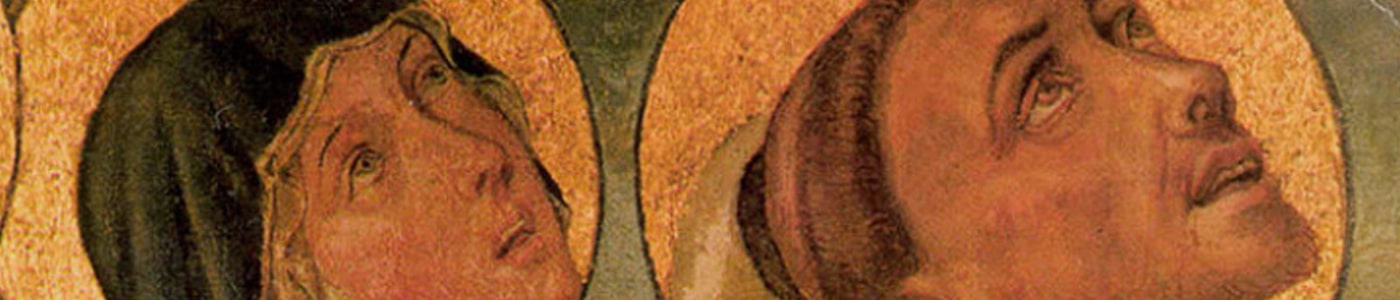
He used to praise God the Artist in every one of God’s works. Everything cried out to him, “He who made us is infinitely good!”
He called animals “brother” or “sister,” and he exhorted them to praise God. He would go through the streets and byways, inviting everyone to sing with him. And one time when he came upon an almond tree, he said, “Brother Almond, speak to me of God.” And the almond tree blossomed.
That is what St. Francis of Assisi did, and that is what he does for us once we are caught up in his life and teachings. He makes us blossom, wherever and whoever we are. We blossom because we see in Francis what could happen to us if we were to embrace the overflowing goodness of God revealed in everything that exists, and let that embrace change us.
This page is our humble attempt to understand this humble man of God.

First Reading:
From: Baruch 4:5-12, 27-29
Song of exhortation and consolation for the exiles
------------------------------------------------------------
[5] Take courage, my people,
O memorial of Israel!
[6] It was not for destruction
that you were sold to the nations,
but you were handed over to your enemies
because you angered God.
[7] For you provoked him who made you,
by sacrificing to demons and not to God.
[8] You forgot the everlasting God, who brought you up,
and you grieved Jerusalem, who reared you.
Jerusalem makes lamentation to the cities round about
--------------------------------------------------------------------
[9] For she saw the wrath that came upon you from God,
and she said:
“Hearken, you neighbours of Zion,
God has brought great sorrow upon me;
[10] for I have seen the captivity of my sons and daughters,
which the Everlasting brought upon them.
[11] With joy I nurtured them,
but I sent them away with weeping and sorrow.
[12] Let no one rejoice over me, a widow
and bereaved of many;
I was left desolate because of the sins of my children,
because they turned away from the law of God.
Jerusalem calls on her children to be converted and to have hope
---------------------------------------------------------------------------------
[27] “Take courage, my children, and cry to God,
for you will be remembered by him who brought this upon you.
[28] For just as you purposed to go astray from God,
return with tenfold zeal to seek him.
[29] For he who brought these calamities upon you
will bring you everlasting joy with your salvation.”
*************************************************
Commentary:
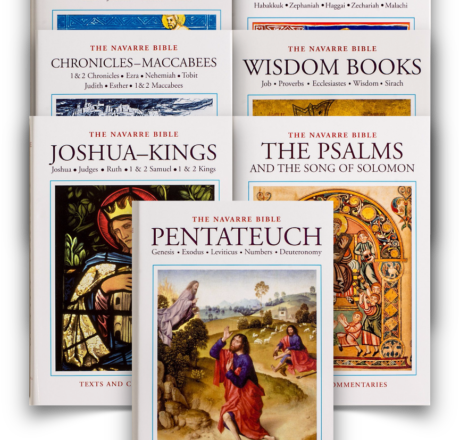
4:5-5:9. This brings us to the fourth section of the book. Themes of lamentation, hope, conversion and consolation alternate here. The narrative concerns Jerusalem, who shares her sorrow with her children scattered among the nations, acknowledges her inability to help them, and confesses that her only hope is the Lord God of Israel. It begins (4:5-8) with words of consolation and encouragement. Then Jerusalem makes a lamentation to the cities of Judah (4:9-16) and to her own children, exhorting them to conversion (4:17-29). This is followed by a song of rejoicing (4:30-37) and an optimistic summing up of the whole book (5:1-9).
4:5-8. The chosen people will be punished for their unfaithfulness, but still there are grounds for hope: a remnant, a “memorial” (v. 5), will remain loyal and will return from exile. This goes to show that the punishment meted out by God does not imply the destruction of the people; it is meant as a corrective, and marks the start of a new people. The theme of the “remnant of Israel” appears often in the prophets (cf. Amos 5:15; Mic 4:7; Is 4:2-6; 10:20-21; Jer 3:14; 5:18; Ezek 14:22; etc.) and is a reminder that everything that happens is guided by the hand of God.
4:9-16. Now it is Jerusalem who speaks. She is depicted as a widow and mother who sees that her children have been led off into captivity: “Jerusalem is called a widow because she has been deprived of the divine care that was once given to her” (Theodoret of Cyprus, “Interpretation in Baruch”, 4, 12). It is a lament for those who have gone, leaving her alone – an echo of the poetry of the book of Lamentations.
4:17-29. But the punishment imposed by God will not last forever; there is good reason to hope, based on the compassion and goodness of the Everlasting One; he will deliver them (v. 22). The return of the exiles is announced, and the joy of the holy city – in tones reminiscent of the last part of the book of Isaiah (cf. Is 60:1-4; 63:7-9; 66:10-11) and some of Jeremiah’s oracles (cf. Jer 30:18-22). The passage is both a song of consolation and an exhortation to turn to the Lord.
From: Luke 10:17-24
The Seventy Return from their Mission
-------------------------------------
[17] The seventy returned with joy, saying, "Lord, even the demons are subject to us in your name!" [18] And He said to them, "I saw Satan fall like lightning from Heaven. [19] Behold, I have given you authority to tread upon serpents and scorpions, and over all the power of the enemy; and nothing shall hurt you." [20] Nevertheless do not rejoice in this, that the spirits are subject to you; but rejoice that your names are written in Heaven." [21] In that same hour He rejoiced in the Holy Spirit and said, "I thank Thee, Father, Lord of Heaven and earth, that thou hast hidden these things from the wise and understanding and revealed them to babes; yea, Father, for such was Thy gracious will. [22] All things have been delivered to Me by My Father; and no one knows who the Son is except the Father, or who the Father is except the Son and any one to whom the Son chooses to reveal Him."
[23] Then turning to the disciples He said privately, "Blessed are the eyes which see what you see! [24] For I tell you that many prophets and kings desired to see what you see, and did not see it, and to hear what you hear, and did not hear it."
***********************************************************************
Commentary:
20. Our Lord corrects His disciples, making them see that the right reason for rejoicing lies in hope of reaching Heaven, not in the power to do miracles which He gave them for their mission. As He said on another occasion, "On that day many will say to Me, `Lord, Lord, did we not prophesy in Your name, and cast our demons in Your name, and do many mighty works in Your name?' And then will I declare to them, `I never knew you; depart from Me, you evildoers'" (Matthew 7:22-23). In other words, in the eyes of God doing His holy will at all times is more important than working miracles.
21. This passage of the Gospel is usually called our Lord's "hymn of joy" and is also found in St. Matthew (11:25-27). It is one of those moments when Jesus rejoices to see humble people understanding and accepting the word of God.
Our Lord also reveals one of the effects of humility--spiritual childhood. For example, in another passage He says: "Truly, I say to you, unless you turn and become like children, you will never enter the Kingdom of Heaven" (Matthew 18:3). But spiritual childhood does not involve weakness, softness or ignorance: "I have often meditated on this life of spiritual childhood, which is not incompatible with fortitude, because it demands a strong will, proven maturity, an open and firm character [...]. To become children we must renounce our pride and self-sufficiency, recognizing that we can do nothing by ourselves. We must realize that we need grace, and the help of God our Father to find our way and keep it. To be little, you have to abandon yourself as children do, believe as children, beg as children beg" (St J. Escriva, "Christ Is Passing By", 10 and 143).
22. "This statement is a wonderful help to our faith," St. Ambrose comments, "because when you read `all' you realize that Christ is all-powerful, that He is not inferior to the Father, or less perfect than He; when you read `have been delivered to me', you confess that Christ is the Son, to whom everything belongs by right of being one in substance [with the Father] and not by grace of gift" ("Expositio Evangelii Sec. Lucam, in loc.").
Here we see Christ as almighty Lord and God, consubstantial with the Father, and the only one capable of revealing who the Father is. At the same time, we can recognize the divine nature of Jesus only if the Father gives us the grace of faith--as He did to St. Peter (cf. Matthew 16:17).
23-24. Obviously, seeing Jesus with one's own eyes was a wonderful thing for people who believed in him. However, our Lord will say to Thomas, "Blessed are those who have not seen and yet believe" (John 20:29). St. Peter, for his part, tells us: "Without having seen Him you love Him; though you do not see Him you believe in Him and rejoice with unutterable and exalted joy. As the outcome of your faith you obtain the salvation of your souls" (1 Peter 1:8-9).

Disclaimer: Opinions posted on Free Republic are those of the individual posters and do not necessarily represent the opinion of Free Republic or its management. All materials posted herein are protected by copyright law and the exemption for fair use of copyrighted works.