Free Republic
Browse · Search
Religion
Topics · Post Article

Skip to comments.

Catholic Caucus: Daily Mass Readings 2-October-2025
Universalis/Jerusalem Bible ^

Posted on 10/02/2025 4:48:49 AM PDT by annalex

2 October 2025

The Holy Guardian Angels
on Thursday of week 26 in Ordinary Time


The Church of St. Leodegar, Lucerne. The Altar of the Deposition of Jesus from the Cross

Readings at Mass

Liturgical Colour: White. Year: C(I).

Readings for the feria

Readings for the memorial

These are the readings for the feria


First readingNehemiah 8:1-12

All the people listened attentively to the Book of the Law

When the seventh month came, all the people gathered as one man on the square before the Water Gate. They asked Ezra the scribe to bring the Book of the Law of Moses which the Lord had prescribed for Israel. Accordingly Ezra the priest brought the Law before the assembly, consisting of men, women, and children old enough to understand. This was the first day of the seventh month. On the square before the Water Gate, in the presence of the men and women, and children old enough to understand, he read from the book from early morning till noon; all the people listened attentively to the Book of the Law.
  Ezra the scribe stood on a wooden dais erected for the purpose. In full view of all the people – since he stood higher than all the people – Ezra opened the book; and when he opened it all the people stood up. Then Ezra blessed the Lord, the great God, and all the people raised their hands and answered, ‘Amen! Amen!’ Then they bowed down and, face to the ground, prostrated themselves before the Lord. And Ezra read from the Law of God, translating and giving the sense, so that the people understood what was read.
  Then Nehemiah – His Excellency – and Ezra, priest and scribe, and the Levites who were instructing the people, said to all the people, ‘This day is sacred to the Lord your God. Do not be mournful, do not weep.’ For the people were all in tears as they listened to the words of the Law.
  He then said, ‘Go, eat the fat, drink the sweet wine, and send a portion to the man who has nothing prepared ready. For this day is sacred to our Lord. Do not be sad: the joy of the Lord is your stronghold.’ And the Levites calmed all the people, saying, ‘Be at ease; this is a sacred day. Do not be sad.’ And all the people went off to eat and drink and give shares away and begin to enjoy themselves since they had understood the meaning of what had been proclaimed to them.


Responsorial Psalm
Psalm 18(19):8-11
The precepts of the Lord gladden the heart.
The law of the Lord is perfect,
  it revives the soul.
The rule of the Lord is to be trusted,
  it gives wisdom to the simple.
The precepts of the Lord gladden the heart.
The precepts of the Lord are right,
  they gladden the heart.
The command of the Lord is clear,
  it gives light to the eyes.
The precepts of the Lord gladden the heart.
The fear of the Lord is holy,
  abiding for ever.
The decrees of the Lord are truth
  and all of them just.
The precepts of the Lord gladden the heart.
They are more to be desired than gold,
  than the purest of gold
and sweeter are they than honey,
  than honey from the comb.
The precepts of the Lord gladden the heart.

Gospel AcclamationPs102:21
Alleluia, alleluia!
Give thanks to the Lord, all his hosts,
his servants who do his will.
Alleluia!

The following reading is proper to the memorial, and must be used even if you have otherwise chosen to use the ferial readings.

Gospel
Matthew 18:1-5,10

Anyone who welcomes a little child in my name welcomes me

The disciples came to Jesus and said, ‘Who is the greatest in the kingdom of heaven?’ So he called a little child to him and set the child in front of them. Then he said, ‘I tell you solemnly, unless you change and become like little children you will never enter the kingdom of heaven. And so, the one who makes himself as little as this little child is the greatest in the kingdom of heaven.
  ‘Anyone who welcomes a little child like this in my name welcomes me. See that you never despise any of these little ones, for I tell you that their angels in heaven are continually in the presence of my Father in heaven.’

Continue

These are the readings for the memorial


First readingExodus 23:20-23

I myself will send an angel before you

The Lord says this: ‘I myself will send an angel before you to guard you as you go and to bring you to the place that I have prepared. Give him reverence and listen to all that he says. Offer him no defiance; he would not pardon such a fault, for my name is in him. If you listen carefully to his voice and do all that I say, I shall be enemy to your enemies, foe to your foes. My angel will go before you.’


Responsorial Psalm
Psalm 90(91):1-6,10-11
The Lord has commanded his angels to keep you in all your ways.
He who dwells in the shelter of the Most High
  and abides in the shade of the Almighty
says to the Lord: ‘My refuge,
  my stronghold, my God in whom I trust!’
The Lord has commanded his angels to keep you in all your ways.
It is he who will free you from the snare
  of the fowler who seeks to destroy you;
he will conceal you with his pinions
  and under his wings you will find refuge.
The Lord has commanded his angels to keep you in all your ways.
You will not fear the terror of the night
  nor the arrow that flies by day,
nor the plague that prowls in the darkness
  nor the scourge that lays waste at noon.
The Lord has commanded his angels to keep you in all your ways.
Upon you no evil shall fall,
  no plague approach where you dwell.
For you has he commanded his angels,
  to keep you in all your ways.
The Lord has commanded his angels to keep you in all your ways.

Gospel AcclamationPs102:21
Alleluia, alleluia!
Give thanks to the Lord, all his hosts,
his servants who do his will.
Alleluia!

Gospel
Matthew 18:1-5,10

Anyone who welcomes a little child in my name welcomes me

The disciples came to Jesus and said, ‘Who is the greatest in the kingdom of heaven?’ So he called a little child to him and set the child in front of them. Then he said, ‘I tell you solemnly, unless you change and become like little children you will never enter the kingdom of heaven. And so, the one who makes himself as little as this little child is the greatest in the kingdom of heaven.
  ‘Anyone who welcomes a little child like this in my name welcomes me. See that you never despise any of these little ones, for I tell you that their angels in heaven are continually in the presence of my Father in heaven.’

Continue


You can also view this page with the New Testament in Greek and English.

Christian Art

Illustration

Each day, The Christian Art website gives a picture and reflection on the Gospel of the day.

The readings on this page are from the Jerusalem Bible, which is used at Mass in most of the English-speaking world. The New American Bible readings, which are used at Mass in the United States, are available in the Universalis apps, programs and downloads.

You can also view this page with the Gospel in Greek and English.


TOPICS: Catholic; General Discusssion; Prayer; Worship
KEYWORDS: catholic; mt18; ordinarytime; prayer
For your reading, reflection, faith-sharing, comments, questions, discussion.

1 posted on 10/02/2025 4:48:49 AM PDT by annalex
[ Post Reply | Private Reply | View Replies]

To: All

KEYWORDS: catholic; mt18; ordinarytime; prayer;


2 posted on 10/02/2025 4:49:13 AM PDT by annalex (fear them not)
[ Post Reply | Private Reply | To 1 | View Replies]

To: nickcarraway; NYer; ELS; Pyro7480; livius; ArrogantBustard; Catholicguy; RobbyS; marshmallow; ...


Alleluia Ping

Please FReepmail me to get on/off the Alleluia Ping List.


3 posted on 10/02/2025 4:50:24 AM PDT by annalex (fear them not)
[ Post Reply | Private Reply | To 2 | View Replies]

To: annalex
My dad is back in the hospital. [JimRob update at 242]
Jim still needs our prayers. Thread 2
Prayer thread for Salvation's recovery
Pray for Ukraine
Prayer thread for Fidelis' recovery
Update on Jim Robinson's health issues
4 posted on 10/02/2025 4:50:52 AM PDT by annalex (fear them not)
[ Post Reply | Private Reply | To 3 | View Replies]

To: annalex
Matthew
 English: Douay-RheimsLatin: Vulgata ClementinaGreek NT: Byzantine/Majority Text (2000)
 Matthew 18
1AT that hour the disciples came to Jesus, saying: Who thinkest thou is the greater in the kingdom of heaven? In illa hora accesserunt discipuli ad Jesum, dicentes : Quis, putas, major est in regno cælorum ?εν εκεινη τη ωρα προσηλθον οι μαθηται τω ιησου λεγοντες τις αρα μειζων εστιν εν τη βασιλεια των ουρανων
2And Jesus calling unto him a little child, set him in the midst of them, Et advocans Jesus parvulum, statuit eum in medio eorum,και προσκαλεσαμενος ο ιησους παιδιον εστησεν αυτο εν μεσω αυτων
3And said: Amen I say to you, unless you be converted, and become as little children, you shall not enter into the kingdom of heaven. et dixit : Amen dico vobis, nisi conversi fueritis, et efficiamini sicut parvuli, non intrabitis in regnum cælorum.και ειπεν αμην λεγω υμιν εαν μη στραφητε και γενησθε ως τα παιδια ου μη εισελθητε εις την βασιλειαν των ουρανων
4Whosoever therefore shall humble himself as this little child, he is the greater in the kingdom of heaven. Quicumque ergo humiliaverit se sicut parvulus iste, hic est major in regno cælorum.οστις ουν ταπεινωσει εαυτον ως το παιδιον τουτο ουτος εστιν ο μειζων εν τη βασιλεια των ουρανων
5And he that shall receive one such little child in my name, receiveth me. Et qui susceperit unum parvulum talem in nomine meo, me suscipit :και ος εαν δεξηται παιδιον τοιουτον εν επι τω ονοματι μου εμε δεχεται
[...]
10See that you despise not one of these little ones: for I say to you, that their angels in heaven always see the face of my Father who is in heaven. Videte ne contemnatis unum ex his pusillis : dico enim vobis, quia angeli eorum in cælis semper vident faciem Patris mei, qui in cælis est.ορατε μη καταφρονησητε ενος των μικρων τουτων λεγω γαρ υμιν οτι οι αγγελοι αυτων εν ουρανοις δια παντος βλεπουσιν το προσωπον του πατρος μου του εν ουρανοις

5 posted on 10/02/2025 4:53:52 AM PDT by annalex (fear them not)
[ Post Reply | Private Reply | To 4 | View Replies]

To: annalex

Catena Aurea by St. Thomas Aguinas

18:1–6

1. At the same time came the disciples unto Jesus, saying, Who is the greatest in the kingdom of heaven?

2. And Jesus called a little child unto him, and set him in the midst of them,

3. And said, Verily I say unto you, Except ye be converted, and become as little children, ye shall not enter into the kingdom of heaven.

4. Whosoever therefore shall humble himself as this little child, the same is greatest in the kingdom of heaven.

5. And whoso shall receive one such little child in my name receiveth me.

6. But whoso shall offend one of these little ones which believe in me, it were better for him that a millstone were hanged about his neck, and that he were drowned in the depth of the sea.

JEROME. The disciples seeing one piece of money paid both for Peter and the Lord, conceived from this equality of ransom that Peter was preferred before all the rest of the Apostles.

CHRYSOSTOM. Thus they suffered a human passion, which the Evangelist denotes by saying, At the same time come the disciples to Jesus, saying, Who, we pray thee, is the greatest in the kingdom of heaven? Ashamed to shew the feeling which was working within, they do not say openly, Why have you honoured Peter above us? but they ask in general, Who is the greatest? When in the transfiguration they saw three distinguished, namely, Peter, James, and John, they had no such feeling, but now that one is singled out for especial honour, then they are grieved. But do you remember, first, that it was nothing in this world that they sought; and, secondly, that they afterwards laid aside this feeling? Even their failings are above us, whose enquiry is not, Who is the greatest in the kingdom of heaven? but, Who is greatest in the kingdom of the world?

ORIGEN. Herein we ought to be imitators of the disciples, that when any question of doubt arises among us, and we find not how to settle it, We should with one consent go to Jesus, Who is able to enlighten the hearts of men to the explication of every perplexity. We shall also consult some of the doctors, who are thought most eminent in the Churches. But in that they asked this question, the disciples knew that there was not an equality among the saints in the kingdom of heaven; what they yet sought to learn was, how they were so, and lived as greater and less. Or, from what the Lord had said above, they knew Who was the best and who was great; but out of many great, who was the greatest, this Was not clear to them.

JEROME. Jesus seeing their thoughts would heal their ambitious strivings, by arousing an emulation in lowliness; whence it follows, And Jesus calling a little child, set him in the midst of them.

CHRYSOSTOM. He chose, I suppose, quite an infant, devoid of any of the passions.

JEROME. One whose tender age should express to them the innocence which they should have. But truly He set Himself in the midst of them, a little one who had come not to be ministered unto, but to minister; (Mat. 20:28.) that He might be a pattern of holiness. Others interpret the little one of the Holy Spirit, whom He set in the hearts of His disciples, to change their pride into humility. (Vid. Origen. in loc.) And he said. Verily I say unto you, Except ye be converted, and become as little children, ye shall not enter into the kingdom of heaven. He does not enjoin on the Apostles the age, but the innocence of infants, which they have by virtue of their years, but to which these might attain by striving; that they should be children in malice, not in understanding. As though He had said, As this child, whom I set before you as a pattern, is not obstinate in anger, when injured does not bear it in mind, has no emotion at the sight of a fair woman, does not think one thing while he speaks another; so ye, unless ye have the like innocence and purity of mind, shall not be able to enter into the kingdom of heaven.

HILARY. He calls infants all who believe through the hearing of faith; for such follow their father, love their mother, know not to will that which is evil, do not bear hate, or speak lies, trust what is told them, and believe what they hear to be true. But the letter is thus interpreted.

GLOSS. (interlin.) Except ye be converted from this ambition and jealousy in which you are at present, and become all of you as innocent and humble in disposition as you are weak, in your years, ye shall not enter into the kingdom of heaven; and since there is none other road to enter in, whoso shall humble himself as this little child, the same is greatest in the kingdom of heaven; for by how much a man is humble now, by so much shall he be exalted in the kingdom of heaven.

REMIGIUS. In the understanding of grace, or in ecclesiastical dignity, or at least in everlasting blessedness.

JEROME. Or otherwise; Whoso shall humble himself as this little child, that is, whoso shall humble himself after My example, he shall enter into the kingdom of heaven. It follows, And whoso receiveth one such little one in my name, receiveth me.

CHRYSOSTOM. Not only if ye become such yourselves, but also if for My sake you shall pay honour to other such, ye receive reward; and as the return for the honour you pay them, I entail upon you the kingdom. He puts indeed what is far greater, Receiveth me.

JEROME. For whoever is such that he imitates Christ’s humility and innocence, Christ is received by him; and by way of caution, that the Apostles should not think, when such are come to them, that it is to themselves that the honour is paid, He adds, that they are to be received not for their own desert, but in honour of their Master.

CHRYSOSTOM. And to make this word the rather received. He subjoins a penalty in what follows, Whoso offendeth one of these little ones, & c. as though he had said, As those who for My sake honour one of these, have their reward, so they who dishonour shall undergo the extreme punishment. And marvel not that He calls an evil word an offence, for many of feeble spirit are offended by only being despised,

JEROME. Observe that he who is offended is a little one, for the greater hearts do not take offences. And though it may be a general declaration against all who scandalize any, yet from the connection of the discourse it may be said specially to the Apostles; for in asking who should be greatest in the kingdom of heaven, they seemed to be contending for preeminence among themselves; and if they had persisted in this fault, they might have scandalized those whom they called to the faith, seeing the Apostles contending among themselves for the preference.

ORIGEN. But how can he who has been converted, and become as a little child, be yet liable to be scandalized? This may be thus explained. Every one who believes on the Son of God, and walks after evangelic acts, is converted and walks as a little child; but he who is not converted that he may become as a child, it is impossible that he should enter into the kingdom of heaven. But in every congregation of believers, there are some only newly converted that they may become as little children, but not yet made such; these are the little ones in Christ, and these are they that receive offence.

JEROME. When it is said, It is better for him that a mill-stone be hanged about his neck, He speaks according to the custom of the province; for among the Jews this was the punishment of the greater criminals, to drown them by a stone tied to them. It is better for him, because it is far better to receive a brief punishment for a fault, than to be reserved for eternal torments.

CHRYSOSTOM. To correspond with the foregoing, He should have said here, Receiveth not Me, which were bitterer than any punishment; but because they were dull, and the before-named punishment did not move them, by a familiar instance He shews that punishment awaited them; for He therefore says, it were better for him, because another more grievous punishment awaits him.

HILARY. Mystically; The work of the mill is a toil of blindness, for the beasts having their eyes closed are driven round in a circle, and under the type of an ass we often find the Gentiles figured, who are held in the ignorance of blind labour; while the Jews have the path of knowledge set before them in the Law, who if they offend Christ’s Apostles it were better for them, that having their necks made fast to a mill-stone, they should be drowned in the sea, that is, kept under labour and in the depths of ignorance, as the Gentiles; for it were better for them that they should have never known Christ, than not to have received the Lord of the Prophets.

GREGORY. (Mor. vi. 37.) Otherwise; What is denoted by the sea, but the world, and what by the mill-stone, but earthly action? which, when it binds the neck in the yoke of vain desires, sends it to a dull round of toil. There arc some who leave earthly action, and bond themselves to aims of contemplation beyond the reach of intellect, laying aside humility, and so not only throw themselves into error, but also cast many weak ones out of the bosom of truth. Whoso then offends one of the least of mine, it were better for him that a mill-stone be tied about his neck, and he be cast into the sea; that is, it were better for a perverted heart to be entirely occupied with worldly business, than to be at leisure for contemplative studies to the hurt of many.

AUGUSTINE. (Quæst. Ev. i. 24) Otherwise; Whoso offendeth one of these little ones, that is so humble as He would have his disciples to be, by not obeying, or by opposing, (as the Apostle says of Alexander,) it were better for him, that a millstone should be hanged about his neck, and he be drowned in the depths of the sea, (2 Tim. 4:15.) that is, it were better for him that desire of the things of the world, to which the blind and foolish are tied down, should sink him by its load to destruction. ...

18:10–14

10. Take heed that ye despise not one of these little ones; for I say unto you, That in heaven their angels do always behold the face of my Father which is in heaven.

11. For the Son of man is come to save that which was lost.

12. How think ye? if a man have an hundred sheep, and one of them be gone astray, doth he not leave the ninety and nine, and goeth into the mountains, and seeketh that which is gone astray?

13. And if so be that he find it, verily I say unto you, he rejoiceth more of that sheep, than of the ninety and nine which went not astray.

14. Even so it is not the will of your Father which is in heaven, that one of these little ones should perish.

JEROME. The Lord had said, under the type of hand, foot, and eye, that all kin and connection which could afford scandal must be cut off. The harshness of this declaration He accordingly tempers with the following precept, saying, Take heed that ye despise not one of these little ones; i. e. As far as you may avoid despising them, but next to your own salvation seek also to heal them. But if ye see that they hold to their sins, it is better that ye be saved, than that ye perish in much company.

CHRYSOSTOM. Or otherwise; As to shun the evil, so to honour the good, has great recompense. Above then He had bid them to cut off the friendships of those that gave offence, here He teaches them to shew honour and service to the saints.

GLOSS. (ap. Anselm.) Or otherwise; Because so great evils come of brethren being scandalized, Take heed that ye despise not one of these little ones.

ORIGEN. The little ones are those that are but lately born in Christ, or those who abide without advance, as though lately born. But Christ judged it needless to give command concerning not despising the more perfect believers, but concerning the little ones, as He had said above, If any man shall offend one of these little ones. A man may perhaps say that a little one here means a perfect Christian, according to that He says elsewhere, Whoso is least among you, he shall be great. (Luke 9:48.)

CHRYSOSTOM. Or because the perfect are esteemed of many as little ones, as poor, namely, and despicable.

ORIGEN. But this exposition does not seem to agree with that which was said, If any one scandalizes one of these little ones; for the perfect man is not scandalized, nor does he perish. But he who thinks this the true exposition, says, that the mind of a righteous man is variable, and is sometimes offended, but not easily.

GLOSS. (ap. Anselm.) Therefore are they not to be despised for that they are so dear to God, that Angels are deputed to be their guardians; For I say unto you, that in heaven their Angels do always behold the face of my Father which is in heaven.

ORIGEN. Some will have it that an Angel is given as an attendant minister from the time when in the laver of regeneration the infant is born in Christ; for, say they, it is incredible that a holy Angel watches over those who are unbelieving and in error, but in his time of unbelief and sin man is under the Angels of Satan. Others will have it, that those who are foreknown of God, have straightway from their very birth a guardian Angel.

JEROME. High dignity of souls, that each from its birth has an Angel set in charge over it!

CHRYSOSTOM. Here He is speaking not of any Angels, but of the higher sort; for when He says, Behold the face of my Father, He shews that their presence before God is free and open, and their honour great.

GREGORY. (Hom. in Ev. 34. 12) But Dionysius says, that it is from the ranks of the lesser Angels that these are sent to perform this ministry, either visibly or invisibly, for that those higher ranks have not the employment of an outward ministry.

GREGORY. (Mor. ii. 3.) And therefore the Angels always behold the face of the Father, and yet they come to us, for by a spiritual presence they come forth to us, and yet by internal contemplation keep themselves there whence they come forth; for they come not so forth from the divine vision, as to hinder the joys of inward contemplation.

HILARY. The Angels offer daily to God the prayers of those that are to be saved by Christ; it is therefore perilous to despise him whose desires and requests are conveyed to the eternal and invisible God, by the service and ministry of Angels.

AUGUSTINE. (de Civ. Dei, xxii. 29.) Or; They are called our Angels who are indeed the Angels of God. they are Gods because they have not forsaken Him; they are ours because they have begun to have us for their fellow-citizens. As they now behold God, so shall we also behold Him face to face, of which vision John speaks, We shall see him as he is. (1 John 3:2.) For by the face of God is to be understood the manifestation of Himself, not a member or feature of the body, such as we call by that name.

CHRYSOSTOM. He gives yet another reason weightier than the foregoing, why the little ones are not to be despised, For the Son of Man is come to save that which was lost.

REMIGIUS. As much as to say, Despise not little ones, for I also for men condescended to become man. By that which was lost, understand the human race; for all the elements have kept their place, but man was lost, because he has broken his ordained place.

CHRYSOSTOM. And to this reasoning He adds a parable, in which He sets forth the Father as seeking the salvation of men, and saying, What think you, If a man have a hundred sheep.

GREGORY. (Hom. in Ev. xxxiv. 3.) This refers to the Creator of man Himself; for a hundred is a perfect number, and He had a hundred sheep when He created the substance of Angels and men.

HILARY. But by the one sheep is to be understood one man, and under this one man is comprehended the whole human race. He that seeks man is Christ, and the ninety and nine are the host of the heavenly glory which He left.

GREGORY. (ubi sup.) The Evangelist says they were left on the mountains, to signify that the sheep which were not lost abode on high.

BEDE. (ap. Anselm.) The Lord found the sheep when He restored man, and over that sheep that is found there is more joy in heaven than over the ninety and nine, because there is a greater matter for thanksgiving to God in the restoration of man than in the creation of the Angels. Wonderfully are the Angels made, but more wonderfully man restored.

RABANUS. Note, that nine wants only one to make it ten, and ninety and nine the same to be a hundred. Thus members which want one only to be perfect, may be larger or smaller, but yet the unit remaining invariable, when it is added makes the rest perfect. And that the number of sheep might be made up perfect in heaven, lost man was sought on earth.

JEROME. Others think that by the ninety and nine sheep are understood the number of the righteous, and by the one sheep the sinners, according to that said in another place, I am not come to call the righteous but sinners to repentance. (Matt. 9:13.)

GREGORY. (ubi sup.) We must consider whence it is that the Lord declares that He has joy rather over the converted sinners, than over the righteous that stand. Because these last are often slothful and slack to practise the greater good works, as being very secure within themselves, for that they have committed none of the heavier sins. While on the other hand those who have their wicked deeds to remember, do often through the compunction of sorrow glow with the more heat in their love of God, and when they think how they have strayed from Him, they replace their former losses by gains following. So the general in a battle loves best that soldier who turns in his flight and courageously presses the enemy, than him who never turned his back, yet never did any valorous deed. Yet there be some righteous over whom is joy so great, that no penitent can be preferred before them, those, who though not conscious to themselves of sins, yet reject things lawful, and humble themselves in all things. How great is the joy when the righteous mourns, and humbles himself, if there be joy when the unrighteous condemns himself wherein he has done amiss?

BEDE. (ap. Anselm.)f; Or, By the ninety-nine sheep, which He left on the mountains, are signified the proud to whom a unit is still wanting for perfection. When then He has found the sinner, He rejoices over him, that is, He makes his own to rejoice over him, rather than over the false righteous.

JEROME. What follows, Even so it is not the will, &c. is to be referred to what was said above, Take heed that ye despise not one of these little ones; and so He shews that this parable was set forth to enforce that same saying. Also in saying, It is not the will of my Father which is in heaven that one of these little ones should perish, He shews that so oft as one of these little ones does perish, it is not by the Father’s will that it perishes.

Catena Aurea Matthew 18


6 posted on 10/02/2025 4:56:46 AM PDT by annalex (fear them not)
[ Post Reply | Private Reply | To 5 | View Replies]

To: annalex


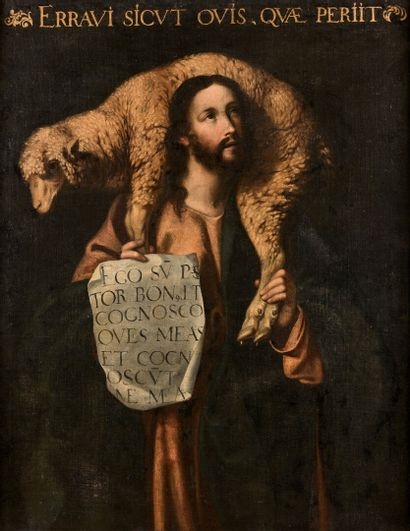
Christ the Good Shepherd

Valencian School, 17th Century, Workshop of Cristobal Garcia Salmeron

7 posted on 10/02/2025 4:57:21 AM PDT by annalex (fear them not)
[ Post Reply | Private Reply | To 6 | View Replies]

To: annalex

St. Leodegar

(LEGER)

Bishop of Autun, b. about 615; d. a martyr in 678, at Sarcing, Somme. His mother was called Sigrada, and his father Bobilo. His parents being of high rank, his early childhood was passed at the court of Clotaire II. He went later to Poitiers, to study under the guidance of his uncle, the bishop of that town. Having given proof of his learning and virtue, and feeling a liking for the priestly life, his uncle ordained him deacon, and associated him with himself in the government of the diocese. Shortly afterwards he became a priest and with the bishop's approval withdrew to the monastery of St. Maxentius in 650. He was soon elected abbot and signalized himself by reforming the community and introducing the Rule of St. Benedict. In 656 he was called to the court by the widowed Queen Bathildis to assist in the government of the kingdom and in the education of her children. In reward for his services he was named to the Bishopric of Autun in 610. He again undertook the work of reform and held a council at Autun in 661. It dealt a crushing blow to Manichæism and was the first to adopt the Creed of St. Athanasius. He made reforms among the secular clergy and the religious communities, and he impressed on all pastors the importance of preaching and of administering the sacraments, especially baptism. For this purpose the bishop had three baptisteries erected in the town. The church of Saint-Nazaire was enlarged and embellished, and a refuge established for the indigent. Leodegar also caused the public buildings to be repaired and the old Roman walls to be restored. The latter still exist and are among the finest specimens preserved.

Serious trouble soon arose in the state. The Austrasians demanded a king and young Childeric II was sent to them through the influence of Ebroin, the mayor of the palace in Neustria. The latter was practically a ruler and desired to get rid of all who thwarted his plans. The queen withdrew from the court to an abbey she had founded at Chelles, near Paris. On the death of Clotaire III, in 670, Ebroin raised Thierry to the throne, but Leodegar and the other bishops supported the claims of his elder brother Childeric, who, by the help of the Austrasians and Burgundians, was eventually made king. Ebroin was exiled to Luxeuil and Thierry sent to St. Denis. Leodegar remained at court, guiding the young king. When the bishop protested against the marriage of Childeric and his first cousin, he also was sent to Luxeuil, his enemies representing him to the king as a conspirator. Childeric II was murdered at Bondi in 673, by a Frank whom he had maltreated. Thierry III now ascended the throne in Neustria, making Leudesius his mayor. Leodegar and Ebroin hastened from Luxeuil to the court. In a short time Ebroin caused Leudesius to be murdered and became mayor. He vowed vengeance on the bishop, whom he looked on as the cause of his imprisonment. About 675 the Duke of Champagne and the Bishops of Châlons and Valence stirred up by Ebroin, attacked Autun. To save the town, Leodegar surrendered to them. He was brutally treated and his eyes put out, the sockets being seared with red-hot irons. Ebroin's bloodthirsty instincts were not yet satiated; he caused the holy bishop's lips to be cut off and his tongue to be torn out. Some years later he persuaded the king that Childeric had been assassinated at the instigation of Leodegar. The bishop was seized again, and, after a mock trial, was degraded and condemned. He was led out into a forest by Ebroin's order and murdered. His testament drawn up at the time of the council as well as the Acts of the council, are preserved. A letter which he caused to be sent to his unit her after his mutilation is likewise extant. His relics, which had been at Sarcing in Artois, were translated to the Abbey of St. Maxentius at Poitiers in 782. Later they were removed to Rennes and thence to Ebreuil, which place took the name of Saint-Léger. Some of them are still kept in the cathedral of Autun and the Grand Séminaire of Soissons. In 1458 Cardinal Rolin caused his feast day to be observed as a holiday of obligation.

Sources

PITRA, Histoire de Léger (Paris, 1846); BENNETT in Dict. Christ. Biog., s.v. Leodegarius; FAURIEL, Histoire de la Gaule méridionale, II (Paris 1836), 461-473; GUIZOT,Collection des mémoires relatifs â l'histoire de France, II (Paris 1823), 325; GUÉRIN, Vie des saints, XI (Paris, 1880), 619-47; MABILLON, Acta SS. O.S.B., II (Paris. 1669), 680-705; P.L., XCVI, 377-84; CXIII, 373; CXXIV, 529; Analecta Bollandiana, XI (Brussels, 1892), 104-10; KAULEN in Kirchenlex., s.v.

About this page

APA citation. MacErlean, A. (1910). St. Leodegar. In The Catholic Encyclopedia. New York: Robert Appleton Company. http://www.newadvent.org/cathen/09174a.htm

MLA citation. MacErlean, Andrew. "St. Leodegar." The Catholic Encyclopedia. Vol. 9. New York: Robert Appleton Company, 1910. .

Transcription. This article was transcribed for New Advent by Mario Anello.

Ecclesiastical approbation. Nihil Obstat. October 1, 1910. Remy Lafort, Censor. Imprimatur. +John M. Farley, Archbishop of New York.

Contact information. The editor of New Advent is Kevin Knight. My email address is webmaster at newadvent.org. Regrettably, I can't reply to every letter, but I greatly appreciate your feedback — especially notifications about typographical errors and inappropriate ads.


newadvent.org
8 posted on 10/02/2025 5:02:58 AM PDT by annalex (fear them not)
[ Post Reply | Private Reply | To 7 | View Replies]

To: annalex

9 posted on 10/02/2025 5:04:45 AM PDT by annalex (fear them not)
[ Post Reply | Private Reply | To 8 | View Replies]

To: annalex

NAVARRE BIBLE COMMENTARY(RSV)

Ad Majorem Dei Gloriam (To the Greater Glory of God)

First Reading:

From: Nehemiah 8:1-4a, 5-6, 7b-12

The Law is read out. The feast of Tabernacles
------------------------------------------------------------------
[1] And all the people gathered as one man into the square before the Water Gate; and they told Ezra the scribe to bring the book of the law of Moses which the Lord had given to bring the book of the law of Moses which the Lord had given to Israel. [2] And Ezra the priest brought the law before the assembly, both men and women and all who could hear with understanding, on the first day of the seventh month. [3] And he read from it facing the square before the Water Gate from early morning until midday, in the presence of the man and the women and those who could understand; and the ears of all the people were attentive to the book of the law. [4] And Ezra the scribe stood on a wooden pulpit which they had made for the purpose; [5] And Ezra opened the book in the sight of all the people, for he was above all the people; and when he opened it all the people stood. [6] And Ezra blessed the Lord, the great God; and all the people answered, |Amen, Amen,” lifting up their hands; and they bowed their heads and worshipped the Lord with their faces to the ground. [7] The Levites helped the people to understand the law, while the people remained in their places. [8] And they read from the book, from the law of God, clearly, and they gave the sense, so that the people understood the reading.

[9] And Nehemiah, who was the governor, and Ezra the priest and scribe, and the Levites who taught the people said to all the people, “This day is holy to the Lord your God; do not mourn or weep.” For all the people wept when they heard the words of the law. [10] Then he said to them, “Go your way, eat the fat and drink sweet wine and send portions to him for whom nothing is prepared; for this day is holy to our Lord; and do not be grieved, for the joy of the Lord is your strength.” [11] So the Levites stilled all the people, saying, “Be quiet, for this day is holy, do not be grieved.” [12] And all the people went their way to eat and drink and to send portions and to make great rejoicing, because they had understood the words that were declared to the.

*********************************************************
Commentary:

8:1-18 The text of this chapter forms part of the “memoirs of Ezra” which the sacred writer has moved and positioned here in the account of the rebuilding of the city. By doing so, he highlights the importance of the Law in the new stage of the history of the chosen people (as the writer sees it, this stage begins with the reconstruction of their national and religious life spearheaded by Ezra the priest and Nehemiah the layman). We do not know the exact year when the events dealt with here occurred, nor the exact content of the Law proclaimed on this occasion. It is possible that a substantial part of the present Pentateuch was read out.

The reading and explanation of the Law did not take place inside the temple; the people gathered around the stage specially set up in front of that building. From the time of Solomon up to the fall of Jerusalem, religious activity centered on the temple liturgy. From the exile onwards it was built around the Law by means of the institution of the synagogue. Because they could not go up to the House of the Lord, exiles used to meet in private houses or in the open air to listen to the reading of legal and prophetical texts. The formal meeting described here, held in a square beside the city wall, shows that in this new stage, with Ezra to the fore, the Law of the Lord was coming to occupy pride of place in the religious life of the people, and that it was already more important than the offering of victims for the purpose of sacrifice.

When they hear the commandments of the Law read out, the people weep because they have not been keeping some of them and they are afraid that God will punish them on that account. But Ezra and the Levites make them see that what they have to do is to start again, on that day, for it is a “holy” day. It was the festival day of the new civil year (cf. Lev 23:24-25; Num 29:1-6).

The proclamation of the Law seems to be linked to the celebration of the feast of Booths (or Tents, or Tabernacles). That celebration was already (briefly) mentioned in Ezra 3:4-6, but there is a new element here (which must be due to Ezra’s interpretation) – the fact that the booths are made with branches cut in the hills (cf. Lev 23:39-43). No mention is made of the day of Atonement which was celebrated on the tenth day of the same month (cf. Lev 23:26-32). During the seven days of the feast of booths Ezra keeps reading out the Law as Deuteronomy 31:9-13 lays down must be done when the year is a sabbatical one. In these actions of Ezra and the Levites, the teachers of the Laws, we can see the origin of what will become the “Great Assembly”, the official body which will, in the centuries to come, interpret the Law and identify which books form part of the canon. The reading of the books of the Law will from now on become the most important way of meeting God and listening to his word.

10 posted on 10/02/2025 9:06:33 AM PDT by fidelis (Ecce Crucem Domini! Fugite partes adversae! Vicit Leo de tribu Juda, Radix David! Alleluia!)
[ Post Reply | Private Reply | To 9 | View Replies]

Gospel Reading:

From: Matthew 18:1-5, 10

The "Little Ones" and the Kingdom.
--------------------------------------------------
[1] At that time, the disciples came to Jesus, saying, "Who is the greatest in the Kingdom of Heaven?" [2] And calling to Him a child, He put him in the midst of them, [3] and said, "Truly, I say to you, unless you turn and become like children, you will never enter the Kingdom of Heaven. [4] Whoever humbles himself like this child, he is the greatest in the Kingdom of Heaven. [5] "Whoever receives one such child in My name receives Me.

[10] "See that you do not despise one of these little ones; for I tell you that in Heaven their angels always behold the face of My Father who is in Heaven.

***********************************************************************
Commentary:

1-6. Clearly the disciples still suffer from human ambition: they want to occupy key positions when Jesus comes to establish the Kingdom on earth (cf. Acts 1:6). To correct their pride, our Lord shows them a child and tells them that if they want to enter the Kingdom of Heaven, they must decide to be like children: children are incapable of hating anyone and are totally innocent of vice, particularly of pride, the worst vice of all. They are simple and full of trust.

Humility is one of the main pillars of the Christian life. "If you ask me", St. Augustine says, "what is the essential thing in the religion and discipline of Jesus Christ, I shall reply: first humility, second humility and third humility" ("Letter 118").

3-4. Applying these words to our Lord's virtues, Fray Luis de Granada makes the point that humility is superior to virginity: "If you cannot imitate the virginity of the humble, then imitate the humility of the virgin. Virginity is praiseworthy, but humility is more necessary. The former is recommended to us, the latter is an obligation for us; to the former we are invited, to the latter we are obliged [...]. And so we see that the former is celebrated as voluntary sacrifice, the latter required as an obligatory sacrifice. Lastly, you can be saved without virginity, but not without humility" ("Summa De La Vida Cristiana", Book 3, Part 2, Chapter 10).

5. Receiving a child in Jesus' name is the same as receiving Jesus Himself. Because children reflect the innocence, purity, simplicity and tenderness of our Lord, "In children and in the sick a soul in love sees Him" (St J. Escriva, "The Way", 419).

10. Jesus warns that giving scandal to little children is a very serious matter, for they have angels who guard them, who will plead a case before God against those who led them to commit sin.

In this context He speaks of children having guardian angels. However, everyone, adult or child, has a guardian angel. "By God's providence angels have been entrusted with the office of guarding the human race and of accompanying every human being so as to preserve him from any serious dangers [...]. Our Heavenly Father has placed over each of us an angel under whose protection and vigilance we are" ("St. Pius V Catechism", IV, 9, 4).

This means that we should have a trusting relationship with our guardian angel. "Have confidence in your guardian Angel. Treat him as a lifelong friend--that is what he is--and he will render you a thousand services in the ordinary affairs of each day" (St J. Escriva, "The Way", 562).

11 posted on 10/02/2025 9:06:51 AM PDT by fidelis (Ecce Crucem Domini! Fugite partes adversae! Vicit Leo de tribu Juda, Radix David! Alleluia!)
[ Post Reply | Private Reply | To 10 | View Replies]

Click here to go to the My Catholic Life! Devotional thread for a meditation on today’s Gospel Reading.

12 posted on 10/02/2025 9:08:45 AM PDT by fidelis (Ecce Crucem Domini! Fugite partes adversae! Vicit Leo de tribu Juda, Radix David! Alleluia!)
[ Post Reply | Private Reply | To 11 | View Replies]

Disclaimer: Opinions posted on Free Republic are those of the individual posters and do not necessarily represent the opinion of Free Republic or its management. All materials posted herein are protected by copyright law and the exemption for fair use of copyrighted works.

Free Republic
Browse · Search
Religion
Topics · Post Article

FreeRepublic, LLC, PO BOX 9771, FRESNO, CA 93794
FreeRepublic.com is powered by software copyright 2000-2008 John Robinson