Skip to comments.
Catholic Caucus: Daily Mass Readings 30-September-2025
Universalis/Jerusalem Bible ^
Posted on 09/30/2025 4:47:19 AM PDT by annalex
30 September 2025
Saint Jerome, Priest, Doctor
on Tuesday of week 26 in Ordinary Time

St. Jerome Roman Catholic Church, ChicagoReadings at MassLiturgical Colour: White. Year: C(I). Readings for the feria Readings for the memorial These are the readings for the feria
| First reading |
|---|
| Zechariah 8:20-23 |
|---|
Many peoples and great nations will come to seek the Lord of HostsThe Lord of Hosts says this: ‘There will be other peoples yet, and citizens of great cities. And the inhabitants of one city will go to the next and say, “Come, let us go and entreat the favour of the Lord, and seek the Lord of Hosts; I am going myself.” And many peoples and great nations will come to seek the Lord of Hosts in Jerusalem and to entreat the favour of the Lord.’ The Lord of Hosts says this: ‘In those days, ten men of nations of every language will take a Jew by the sleeve and say, “We want to go with you, since we have learnt that God is with you.”’
| Responsorial Psalm | Psalm 86(87) |
|---|
God is with us. On the holy mountain is his city cherished by the Lord. The Lord prefers the gates of Zion to all Jacob’s dwellings. Of you are told glorious things, O city of God! God is with us. ‘Babylon and Egypt I will count among those who know me; Philistia, Tyre, Ethiopia, these will be her children and Zion shall be called “Mother” for all shall be her children.’ God is with us. It is he, the Lord Most High, who gives each his place. In his register of peoples he writes: ‘These are her children,’ and while they dance they will sing: ‘In you all find their home.’ God is with us.
| Gospel Acclamation | Ps118:36,29 |
|---|
Alleluia, alleluia! Bend my heart to your will, O Lord, and teach me your law. Alleluia! Alleluia, alleluia! The Son of Man came to serve and to give his life as a ransom for many. Alleluia!
Jesus sets out for JerusalemAs the time drew near for him to be taken up to heaven, Jesus resolutely took the road for Jerusalem and sent messengers ahead of him. These set out, and they went into a Samaritan village to make preparations for him, but the people would not receive him because he was making for Jerusalem. Seeing this, the disciples James and John said, ‘Lord, do you want us to call down fire from heaven to burn them up?’ But he turned and rebuked them, and they went off to another village. Continue These are the readings for the memorial
| First reading |
|---|
| 2 Timothy 3:14-17 |
|---|
All scripture is inspired by God and can profitably be used for teachingYou must keep to what you have been taught and know to be true; remember who your teachers were, and how, ever since you were a child, you have known the holy scriptures – from these you can learn the wisdom that leads to salvation through faith in Christ Jesus. All scripture is inspired by God and can profitably be used for teaching, for refuting error, for guiding people’s lives and teaching them to be holy. This is how the man who is dedicated to God becomes fully equipped and ready for any good work.
| Responsorial Psalm |
|---|
| Psalm 118(119):9-14 |
|---|
Lord, teach me your statutes. How shall the young remain sinless? By obeying your word. I have sought you with all my heart; let me not stray from your commands. Lord, teach me your statutes. I treasure your promise in my heart lest I sin against you. Blessed are you, O Lord; teach me your statutes. Lord, teach me your statutes. With my tongue I have recounted the decrees of your lips. I rejoiced to do your will as though all riches were mine. Lord, teach me your statutes.
| Gospel Acclamation | cf.Ac16:14 |
|---|
Alleluia, alleluia! Open our heart, O Lord, to accept the words of your Son. Alleluia!
The fishermen collect the good fish and throw away those that are no useJesus said to the crowds: ‘The kingdom of heaven is like a dragnet cast into the sea that brings in a haul of all kinds. When it is full, the fishermen haul it ashore; then, sitting down, they collect the good ones in a basket and throw away those that are no use. This is how it will be at the end of time: the angels will appear and separate the wicked from the just to throw them into the blazing furnace where there will be weeping and grinding of teeth. ‘Have you understood all this?’ They said, ‘Yes.’ And he said to them, ‘Well then, every scribe who becomes a disciple of the kingdom of heaven is like a householder who brings out from his storeroom things both new and old.’ Continue You can also view this page with the New Testament in Greek and English. Christian Art Each day, The Christian Art website gives a picture and reflection on the Gospel of the day. The readings on this page are from the Jerusalem Bible, which is used at Mass in most of the English-speaking world. The New American Bible readings, which are used at Mass in the United States, are available in the Universalis apps, programs and downloads.
You can also view this page with the Gospel in Greek and English. |
TOPICS: Catholic; General Discusssion; Prayer; Worship
KEYWORDS: catholic; lk9; mt13; ordinarytime; prayer
For your reading, reflection, faith-sharing, comments, questions, discussion.
1
posted on
09/30/2025 4:47:19 AM PDT
by
annalex
To: All
KEYWORDS: catholic; lk9; ordinarytime; prayer
2
posted on
09/30/2025 4:47:51 AM PDT
by
annalex
(fear them not)
To: nickcarraway; NYer; ELS; Pyro7480; livius; ArrogantBustard; Catholicguy; RobbyS; marshmallow; ...

Alleluia Ping Please FReepmail me to get on/off the Alleluia Ping List.
3
posted on
09/30/2025 4:49:16 AM PDT
by
annalex
(fear them not)
To: annalex
4
posted on
09/30/2025 4:49:52 AM PDT
by
annalex
(fear them not)
To: annalex
| Luke |
| | English: Douay-Rheims | Latin: Vulgata Clementina | Greek NT: Byzantine/Majority Text (2000) |
| | Luke 9
|
| 51. | And it came to pass, when the days of his assumption were accomplishing, that he steadfastly set his face to go to Jerusalem. | Factum est autem dum complerentur dies assumptionis ejus, et ipse faciem suam firmavit ut iret in Jerusalem. | εγενετο δε εν τω συμπληρουσθαι τας ημερας της αναληψεως αυτου και αυτος το προσωπον αυτου εστηριξεν του πορευεσθαι εις ιερουσαλημ |
| 52. | And he sent messengers before his face; and going, they entered into a city of the Samaritans, to prepare for him. | Et misit nuntios ante conspectum suum : et euntes intraverunt in civitatem Samaritanorum ut parerent illi. | και απεστειλεν αγγελους προ προσωπου αυτου και πορευθεντες εισηλθον εις κωμην σαμαρειτων ωστε ετοιμασαι αυτω |
| 53. | And they received him not, because his face was of one going to Jerusalem. | Et non receperunt eum, quia facies ejus erat euntis in Jerusalem. | και ουκ εδεξαντο αυτον οτι το προσωπον αυτου ην πορευομενον εις ιερουσαλημ |
| 54. | And when his disciples James and John had seen this, they said: Lord, wilt thou that we command fire to come down from heaven, and consume them? | Cum vidissent autem discipuli ejus Jacobus et Joannes, dixerunt : Domine, vis dicimus ut ignis descendat de cælo, et consumat illos ? | ιδοντες δε οι μαθηται αυτου ιακωβος και ιωαννης ειπον κυριε θελεις ειπωμεν πυρ καταβηναι απο του ουρανου και αναλωσαι αυτους ως και ηλιας εποιησεν |
| 55. | And turning, he rebuked them, saying: You know not of what spirit you are. | Et conversus increpavit illos, dicens : Nescitis cujus spiritus estis. | στραφεις δε επετιμησεν αυτοις [και ειπεν ουκ οιδατε οιου πνευματος εστε υμεις] |
| 56. | The Son of man came not to destroy souls, but to save. And they went into another town. | Filius hominis non venit animas perdere, sed salvare. Et abierunt in aliud castellum. | [ο γαρ υιος του ανθρωπου ουκ ηλθεν ψυχας ανθρωπων απολεσαι αλλα σωσαι] και επορευθησαν εις ετεραν κωμην |
5
posted on
09/30/2025 4:53:48 AM PDT
by
annalex
(fear them not)
To: annalex

Catena Aurea by St. Thomas Aguinas
Luke CHAP. 9
9:51–56
51. And it came to pass, when the time was come that he should be received up, he stedfastly set his face to go to Jerusalem,
52. And sent messengers before his face: and they went, and entered into a village of the Samaritans, to make ready for him.
53. And they did not receive him, because his face was as though he would go to Jerusalem.
54. And when his disciples James and John saw this, they said, Lord, wilt thou that we command fire to come down from heaven, and consume them, even as Elias did?
55. But he turned, and rebuked them, and said, Ye know not what manner of spirit ye are of.
56. For the Son of man is not come to destroy men’s lives, but to save them. And they went to another village.
CYRIL OF ALEXANDRIA. When the time was near at hand in which it behoved our Lord to accomplish His life-giving Passion, and ascend up to heaven, He determines to go up to Jerusalem, as it is said, And it came to pass, &c.
TITUS BOSTRENSIS. Because it was necessary that the true Lamb should there be offered, where the typical lamb was sacrificed; but it is said, he stedfastly set his face, that is, He went not here and there traversing the villages and towns, but kept on His way straight towards Jerusalem.
BEDE. Let then the Heathen cease to mock the Crucified, as if He were a man, who it is plain, as God, both foresaw the time of His crucifixion, and going voluntarily to be crucified, sought with stedfast face, that is, with resolute and undaunted mind, the spot where He was to be crucified.
CYRIL OF ALEXANDRIA. And He sends messengers to make a place for Him and His companions, who when they came to the country of the Samaritans were not admitted, as it follows, And sent messengers before his face: and they went, and altered into a village of the Samaritans, to make ready for him. And they did not receive him.
AMBROSE. Mark that He was unwilling to be received by those who He knew had not turned to Him with a simple heart. For if He had wished, He might have made them devout, who were undevout. But God calls those whom He thinks worthy, and whom He wills He makes religious. But why they did not receive Him the Evangelist mentions, saying, Because his face was as if he would go to Jerusalem.
THEOPHYLACT. But if one understands that they did not receive Him for this reason, because He had determined to go to Jerusalem, an excuse is found for them, who did not receive Him. But we must say, that in the words of the Evangelist, And they did not receive him, is implied that He did not go into Samaria, but afterwards as if some one had asked St. Luke, he explained in these words, why they did not receive Him. And He went not to them, i. e. not that He was unable, but that He did not wish to go there, but rather to Jerusalem.
BEDE. Or the Samaritans see that our Lord is going to Jerusalem, and do not receive Him. For the Jews have no dealings with the Samaritans, (John 4:9.) as John shews.
CYRIL OF ALEXANDRIA. But our Lord, Who knew all things before they came to pass, knowing that His messengers would not be received by the Samaritans, nevertheless commanded them to go before Him, because it was His practice to make all things conduce to the good of His disciples. Now He went up to Jerusalem as the time of His suffering drew near. In order then that they might not be offended, when they saw Him suffer, bearing in mind that they must also endure patiently when men persecute them, He ordained beforehand as a kind of prelude this refusal of the Samaritans. It was good for them also in another way. For they were to be the teachers of the world, going through towns and villages, to preach the doctrine of the Gospel, meeting sometimes with men who would not receive the sacred doctrine, allowing not that Jesus sojourned on earth with them. He therefore taught them, that in announcing the divine doctrine, they ought to be filled with patience and meekness, without bitterness, and wrath, and fierce enmity against those who had done any wrong to them. But as yet they were not so, nay, being stirred up with fervid zeal, they wished to bring down fire from heaven upon them. It follows, And when his disciples James and John saw this, they said, Lord, will thou that we command fire to come down from heaven, &c.
AMBROSE. For they knew both that when Phineas had slain the idolaters it was counted to him for righteousness; (Numb. 25:8, Ps. 107:31) and that at the prayer of Elijah fire came down from heaven, that the injuries of the prophet might be avenged. (2 Kings 1:10, 12.)
BEDE. For holy men who well knew that that death which detaches the soul from the body was not to be feared, still because of their feelings who feared it, punished some sins with death, that both the living might be struck with a wholesome dread, and those who were punished with death might receive harm not from death itself but from sin, which would be increased were they to live.
AMBROSE. But let him be avenged who fears. He who fears not, seeks not vengeance. At the same time the merits of the Prophets are likewise shewn to have been in the Apostles, seeing that they claim to themselves the right of obtaining the same power of which the Prophet was thought worthy; and fitly do they claim that at their command fire should come down from heaven, for they were the sons of thunder.
TITUS BOSTRENSIS. (v. Theophyl. in loc.) They thought it much juster that the Samaritans should perish for not admitting our Lord, than the fifty soldiers who tried to thrust down Elijah.
AMBROSE. But the Lord is not moved against them, that He might shew that perfect virtue has no feeling of revenge, nor is there any anger where there is fulness of love. For weakness must not be thrust out, but assisted. Let indignation be far from the religious, let the high-souled have no desire of vengeance. Hence it follows, But he turned and rebuked them, and said, Ye know not what manner of spirit ye are of.
BEDE. The Lord blames them, not for following the example of the holy Prophet, but for their ignorance in taking vengeance while they were yet inexperienced, perceiving that they did not desire correction from love, but vengeance from hatred. After that He had taught them what it was to love their neighbour as themselves, and the Holy Ghost also had been infused into them, there were not lacking these punishments, though far less frequent than in the Old Testament, because the Son of man came not to destroy men’s lives, but to save them. As if He said, And do you therefore who are sealed with His Spirit, imitate also His actions, now determining charitably, hereafter judging justly.
AMBROSE. For we must not always punish the offender, since mercy sometimes does more good, leading thee to patience, the sinner to repentance. Lastly, those Samaritans believed the sooner, who were in this place saved from fire.
Catena Aurea Luke 9
6
posted on
09/30/2025 4:54:20 AM PDT
by
annalex
(fear them not)
To: annalex

Jeremiah Lamenting the Destruction of Jerusalem
Rembrandt van Rijn
1630
Oil on panel, 58,3 x 46,6 cm
Rijksmuseum, Amsterdam
7
posted on
09/30/2025 4:55:05 AM PDT
by
annalex
(fear them not)
To: annalex
| Matthew |
| | English: Douay-Rheims | Latin: Vulgata Clementina | Greek NT: Byzantine/Majority Text (2000) |
| | Matthew 13
|
| 47. | Again the kingdom of heaven is like to a net cast into the sea, and gathering together of all kind of fishes. | Iterum simile est regnum cælorum sagenæ missæ in mare, et ex omni genere piscium congreganti. | παλιν ομοια εστιν η βασιλεια των ουρανων σαγηνη βληθειση εις την θαλασσαν και εκ παντος γενους συναγαγουση |
| 48. | Which, when it was filled, they drew out, and sitting by the shore, they chose out the good into vessels, but the bad they cast forth. | Quam, cum impleta esset, educentes, et secus littus sedentes, elegerunt bonis in vasa, malos autem foras miserunt. | ην οτε επληρωθη αναβιβασαντες επι τον αιγιαλον και καθισαντες συνελεξαν τα καλα εις αγγεια τα δε σαπρα εξω εβαλον |
| 49. | So shall it be at the end of the world. The angels shall go out, and shall separate the wicked from among the just. | Sic erit in consummatione sæculi : exibunt angeli, et separabunt malos de medio justorum, | ουτως εσται εν τη συντελεια του αιωνος εξελευσονται οι αγγελοι και αφοριουσιν τους πονηρους εκ μεσου των δικαιων |
| 50. | And shall cast them into the furnace of fire: there shall be weeping and gnashing of teeth. | et mittent eos in caminum ignis : ibi erit fletus, et stridor dentium. | και βαλουσιν αυτους εις την καμινον του πυρος εκει εσται ο κλαυθμος και ο βρυγμος των οδοντων |
| 51. | Have ye understood all these things? They say to him: Yes. | Intellexistis hæc omnia ? Dicunt ei : Etiam. | λεγει αυτοις ο ιησους συνηκατε ταυτα παντα λεγουσιν αυτω ναι κυριε |
| 52. | He said unto them: Therefore every scribe instructed in the kingdom of heaven, is like to a man that is a householder, who bringeth forth out of his treasure new things and old. | Ait illis : Ideo omnis scriba doctus in regno cælorum, similis est homini patrifamilias, qui profert de thesauro suo nova et vetera. | ο δε ειπεν αυτοις δια τουτο πας γραμματευς μαθητευθεις εις την βασιλειαν των ουρανων ομοιος εστιν ανθρωπω οικοδεσποτη οστις εκβαλλει εκ του θησαυρου αυτου καινα και παλαια |
| 53. | And it came to pass: when Jesus had finished these parables, he passed from thence. | Et factum est, cum consummasset Jesus parabolas istas, transiit inde. | και εγενετο οτε ετελεσεν ο ιησους τας παραβολας ταυτας μετηρεν εκειθεν |
8
posted on
09/30/2025 4:58:55 AM PDT
by
annalex
(fear them not)
To: annalex
Catena Aurea by St. Thomas Aguinas
13:47–50
47. Again, the kingdom of heaven is like unto a net, that was cast into the sea, and gathered of every kind:
48. Which, when it was full, they drew to shore, and sat down, and gathered the good into vessels, but cast the bad away.
49. So shall it be at the end of the world: the angels shall come forth, and sever the wicked from the just,
50. And shall cast them into the furnace of fire: there shall be wailing and gnashing of teeth.
CHRYSOSTOM. In the foregoing parables He has commended the Gospel preaching; now, that we may not trust in preaching only, nor think that faith alone is sufficient for our salvation, He adds another fearful parable, saying, Again, the kingdom of heaven is like unto a net cast into the sea.
JEROME. In fulfilment of that prophecy of Hieremias, who said, I will send unto you many fishers, (Jer. 6:16.) when Peter and Andrew, James and John, heard the words, Follow me, I will make you fishers of men, they put together a net for themselves formed of the Old and New Testaments, and cast it into the sea of this world, and that remains spread until this day, taking up out of the salt and bitter and whirlpools whatever falls into it, that is good men and bad; and this is that He adds, And gathered of every kind.
GREGORY. (Hom. in Ev. xi. 4.) Or otherwise; The Holy Church is likened to a net, because it is given into the hands of fishers, and by it each man is drawn into the heavenly kingdom out of the waves of this present world, that he should not be drowned in the depth of eternal death. This net gathers of every kind of fishes, because the wise and the foolish, the free and the slave, the rich and the poor, the strong and the weak, are called to forgiveness of sin; it is then fully filled when in the end of all things the sum of the human race is completed; as it follows, Which, when it was filled, they drew out, and sitting down on the shore gathered the good into vessels, but the bad they cast away. For as the sea signifies the world, so the sea shore signifies the end of the world; and as the good are gathered into vessels, but the bad cast away, so each man is received into eternal abodes, while the reprobate having lost the light of the inward kingdom are cast forth into outer darkness. But now the net of faith holds good and bad mingled together in one; but the shore shall discover what the net of the Church has brought to land.
JEROME. For when the net shall be drawn to the shore, then shall be shewn the true test for separating the fishes.
CHRYSOSTOM. Wherein does this parable differ from the parable of the tares? There, as here, some perish and some are saved; but there, because of their heresy of evil dogmas; in the first parable of the sower, because of their not attending to what was spoken; here, because of their evil life, because of which, though drawn by the net, that is, enjoying the knowledge of God, they cannot be saved. And when you hear that the wicked are cast away, that you may not suppose that this punishment may be risked, He adds an exposition shewing its severity, saying, Thus shall it be in the end of the world; the angels shall come forth and sever the wicked from among the just, and shall cast them into the furnace of fire, there shall be wailing and gnashing of teeth. Though He elsewhere declares, that He shall separate them as a shepherd separates the sheep from the goats; He here declares, that the Angels shall do it, as also in the parable of the tares.
GREGORY. (ubi sup.) To fear becomes us here, rather than to expound for the torments of sinners are pronounced in plain terms, that none might plead his ignorance, should eternal punishment be threatened in obscure sayings.
JEROME. For when the end of the world shall be come, then shall be shewn the true test of separating the fishes, and as in a sheltered harbour the good shall be sent into the vessels of heavenly abodes, but the flame of hell shall seize the wicked to be dried up and withered.
13:51–52
51. Jesus saith unto them, Have ye understood all these things? They say unto him, Yea, Lord.
52. Then said he unto them, Therefore every Scribe which is instructed unto the kingdom of heaven is like unto a man that is an householder, which bringeth forth out of his treasure things new and old.
GLOSS. (non occ.) When the multitude had departed, the Lord spoke to His disciples in parables, by which they were instructed only so far as they understood them; wherefore He asks them, Have ye understood all these things? They say unto him, Yea, Lord.
JEROME. For this is spoken especially to the Apostles, whom He would have not to hear only as the multitude, but to understand as having to teach others.
CHRYSOSTOM. Then He praises them because they had understood; He saith unto them; Therefore every Scribe instructed in the kingdom of heaven is like unto an householder who bringeth out of his treasure things new and old.
AUGUSTINE. (De Civ. Dei, xx. 4.) He said not ‘old and new,’ as He surely would have said had He not preferred to preserve the order of value rather than of time. But the Manichæans while they think they should keep only the new promises of God, remain in the old man of the flesh, and put on newness of error.
AUGUSTINE. (Quæst. in Matt. q. 16.) By this conclusion, whether did He desire to shew whom He intended by the treasure hid in the field—in which case we might understand the Holy Scriptures to be here meant, the two Testaments by the things new and old—or did He intend that he should be held learned in the Church who understood that the Old Scriptures were expounded in parables, taking rules from these new Scriptures, seeing that in them also the Lord proclaimed many things in parables. If He then, in whom all those old Scriptures have their fulfilment and manifestation, yet speaks in parables until His passion shall rend the vail, when there is nothing hid that shall not be revealed; much more those things which were written of Him so long time before we see to have been clothed in parables; which the Jews took literally, being unwilling to be learned in the kingdom of heaven.
GREGORY. (ubi sup.) But if by things new and old in this passage we understand the two Testaments, we deny Abraham to have been learned, who although he knew indeed some deeds of the Old Testament, yet had not read the words. Neither Moses may we compare to a learned householder, for although he composed the Old Testament, yet had he not the words of the New. But what is here said may be understood as meant not of those who had been, but of such as might hereafter be in the Church, who then bring forth things new and old when they speak the preachings of both Testaments, in their words and in their lives.
HILARY. Speaking to His disciples, He calls them Scribes on account of their knowledge, because they understood the things that He brought forward, both new and old, that is from the Law and from the Gospels; both being of the same householder, and both treasures of the same owner. He compares them to Himself under the figure of a householder, because they had received doctrine of things both new and old out of His treasury of the Holy Spirit.
JEROME. Or the Apostles are called Scribes instructed, as being the Saviour’s notaries who wrote His words and precepts on fleshly tables of the heart with the sacraments of the heavenly kingdom, and abounded in the wealth of a householder, bringing forth out of the stores of their doctrine things new and old; whatsoever they preached in the Gospels, that they proved by the words of the Law and the Prophets. Whence the Bride speaks in the Song of Songs; I have kept for thee my beloved the new with the old. (c. 7:13.)
GREGORY. (ubi sup.) Otherwise; The things old are, that the human race for its sin should suffer in eternal punishment; the things new, that they should be converted and live in the kingdom. First, He brought forward a comparison of the kingdom to a treasure found and a pearl of price; and after that, narrated the punishment of hell in the burning of the wicked, and then concluded with Therefore every Scribe, &c. as if He had said, He is a learned preacher in the Church who knows to bring forth things new concerning the sweetness of the kingdom, and to speak things old concerning the terror of punishment; that at least punishment may deter those whom rewards do not excite.
13:53–58
53. And it came to pass, that when Jesus had finished these parables, he departed thence.
54. And when he was come into his own country, he taught them in their synagogue, insomuch that they were astonished, and said, Whence hath this man this wisdom, and these mighty works?
55. Is not this the carpenter’s son? is not his mother called Mary? and his brethren, James, and Joses, and Simon, and Judas?
56. And his sisters, are they not all with us? Whence then hath this man all these things?
57. And they were offended in him. But Jesus said unto them, A prophet is not without honour, save in his own country, and in his own house.
58. And he did not many mighty works there because of their unbelief.
JEROME. After the parables which the Lord spake to the people, and which the Apostles only understand, He goes over into His own country that He may teach there also.
AUGUSTINE. (De Cons. Ev. ii. 42.) From the foregoing discourse consisting of these parables, He passes to what follows without any very evident connexion between them. Besides which, Mark passes from these parables to a different event from what Matthew here gives; and Luke agrees with him, so continuing the thread of the story as to make it much more probable that that which they relate followed here, namely, about the ship in which Jesus slept, and the miracle of the demons cast out; which Matthew has introduced above.
Catena Aurea Matthew 13
9
posted on
09/30/2025 5:01:16 AM PDT
by
annalex
(fear them not)
To: annalex

Orvieto, Duomo, facade; Last Judgment
14th century
10
posted on
09/30/2025 5:01:39 AM PDT
by
annalex
(fear them not)
To: annalex
Jerome
One
Today is the Feast of St. Jerome
St. Jerome lived from 347 to 420 AD. He did not start out as a saint. None of them ever do. He was baptized and became a Christian at the age of 19. As a young man, he had a hunger and thirst for knowledge, so he dedicated himself to learning languages, Latin, Greek, and then Hebrew. Most of all, he loved reading the Roman and Greek Philosophers. Cicero was his favorite, and he devoted all his leisure time to reading them.
While on his way to Jerusalem to study Hebrew, Jerome became gravely ill and fell into a coma. In this state, God gave him a vision of his particular judgment at the moment of his death. Suddenly, his soul came back to his body. When he arose, he shared with those around him the vision. Later, he wrote about it. “Suddenly, I was caught up in the spirit and dragged before the judgment seat of the Judge; and here the light was so bright, and those who stood around were so radiant, that I cast myself upon the ground and did not dare to look up. Asked who and what I was, I replied, “I am a Christian.” But He who presided said, “You lie, you are a follower of Cicero and not of Christ. For ‘where your treasure is, there will thy heart be also.’” Letter XXII. 30
From that day forward, he read the books of God with an even greater zeal than he ever read the books of men.
Two
Pilgrimage to the Holy Land
In 385, Jerome went on pilgrimage to the Holy Land. In 386, he came to Bethlehem to the birthplace of Jesus, a cave beneath the Church of the Nativity built by Queen Helena. And there he decided to make his home, living in a cave adjoining the place where Jesus was born.
In the place where the Word of God was born, Jerome translated the Bible from its original languages of Hebrew and Greek into the common language of the West, Latin, so that all people could read or hear the Word of God and by it nourish their souls.
“Jerome’s translation of the Bible became known as the Vulgate, the official text of the Church, which, after its recent revision, remains the authoritative Latin version used by the Church to this day.”
What can we learn from St. Jerome? Above all, this: to love the Word of God in Sacred Scripture. St. Jerome said, “Ignorance of the Scriptures is ignorance of Christ.”
Three
The Bible is the most direct way God speaks to us
So often people say, “God never speaks to me.” I ask them, “Well, how much time do you spend listening to God by reading Scripture and then thinking about it and talking it all over with the Lord in a personal conversation?” Usually – almost never. Instead, we wake up and read email and the news, and listen to lots of human voices. And then we set the tone of our day with the feelings of anger or anxiety, or being overwhelmed.
Imagine how much better our lives would be if the first thing we did was open up the Bible, knowing that God, my Father, wants to speak directly to me today.
The Catechism (104) reminds us that, “In Sacred Scripture, the Church constantly finds her nourishment and her strength, for she welcomes it not as a human word, but as what it really is - the word of God. In the sacred books, the Father who is in heaven comes lovingly to meet His children and talks with them.”
Four
Scripture really is the words of God
Because God is the primary author who inspired the human authors to write whatever He wanted and nothing more, Scripture is the words of God.
That is why the CCC teaches that the inspired books teach the truth. Since, therefore, all the inspired authors or sacred writers affirm should be regarded as affirmed by the Holy Spirit, we must acknowledge that the books of Sacred Scripture firmly, faithfully, and without error teach that truth which God, for the sake of our salvation, wished to see confided to the Sacred Scriptures.
Because God is its author, Scripture teaches without error those truths which are necessary for our salvation. But to know those truths, we have to read them, think about them, live them. Our Lady said, "Dear children! Today I invite you to read the Bible every day in your homes. And let it be in a visible place so it will always encourage you to read it and to pray. Thank you for having responded to my call." (October 18, 1984)
Five
Who do you follow?
Having died and finding himself before the judgment seat, God said to Jerome, “You are a follower of Cicero and not of Christ.”
Think how much time, energy, and attention we give to reading and watching news, social media, political, and sports analysts…and how little time in comparison to reading and thinking about the Word of God in the Bible. When we stand at our particular judgment, and we will, who will Christ declare we follow based on how we use our leisure time?
Let’s make the firm resolution to read the Bible every day. A good place to begin is with the daily readings of the Mass, or even just the Gospel of the day. But don’t just read them. Think about them. Apply them to your life. Ask yourself, “Do I understand this? Am I living this? What concrete changes do I need to make to live it better?” Let it challenge you, convict you, and then make a simpl,e concrete resolution to put into practice what God is inspiring within you.
That is how we become a follower of Christ.
schooloffaith.com
11
posted on
09/30/2025 5:06:54 AM PDT
by
annalex
(fear them not)
To: annalex

Saint Jerome in His Study
Domenico Ghirlandaio (1448–1494)
12
posted on
09/30/2025 5:09:38 AM PDT
by
annalex
(fear them not)
To: annalex
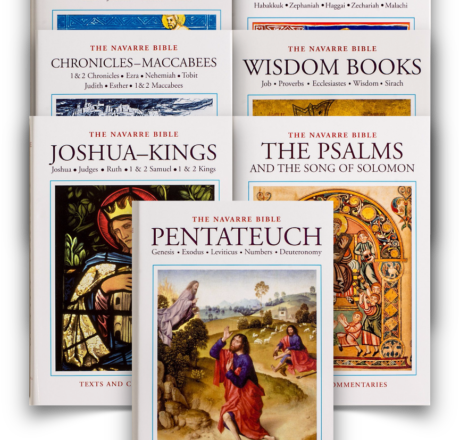
NAVARRE BIBLE COMMENTARY(RSV)
Ad Majorem Dei Gloriam (To the Greater Glory of God)
First Reading:
From: Zechariah 8:20-23
Ten promises of messianic salvation (Conclusion)
--------------------------------------------------------------
[20] “Thus says the Lord of hosts: Peoples shall yet come, even the inhabitants of many cities; [21] the inhabitants of one city shall go to another saying, ‘Let us go at once to entreat the favour of the Lord, and to seek the Lord of hosts; I am going.’ [22] Many peoples and strong nations shall come to seek the Lord of hosts in Jerusalem, and to entreat the favour of the Lord. [23] Thus says the Lord of hosts: In those days ten men from the nations of every tongue shall take hold of the robe of a Jew, saying, ‘Let us go with you, for we have heard that God is with you.’”
******************************************************
Commentary:
8:20-22. The new situation described by the prophet will be marked by efforts on the part of the nations to seek the God of Israel, the one, true God. All will find divine favour in Jerusalem. This will mean the fulfillment of God’s promise to Abraham that all the nations of the earth would be blessed in him (cf. Gen 12:3). The picture painted by the prophet is a figure of what will happen with the coming of Christ and the establishment of his Church.
8:23. Here the prophet graphically describes the power of intercession with God that the Jews will have, enabling all mankind to find favour with him. The number ten symbolizes completeness, and the name “Jew” here means an inhabitant of Judea after the return from exile (cf. Jer 32:12). “By saying that men of every tongue shall take hold of the robe, it is made abundantly clear that on that day the call to holiness will be heard not only by the Israelites, but by all men and women everywhere throughout the world” (St Cyril of Alexandria, Commentarius in Zacchariam, 8, 23).
13
posted on
09/30/2025 9:31:00 AM PDT
by
fidelis
(Ecce Crucem Domini! Fugite partes adversae! Vicit Leo de tribu Juda, Radix David! Alleluia!)
Gospel Reading: From: Luke 9:51-62
Some Samaritans Refuse to Receive Jesus
---------------------------------------
[51] When the days drew near for Him (Jesus) to be received up, He set His face to go to Jerusalem. [52] And He sent messengers ahead of Him, who went and entered a village of the Samaritans, to make ready for Him; [53] but the people would not receive Him, because His face was set toward Jerusalem. [54] And when His disciples James and John saw it, they said, "Lord, do You want us to bid fire come down from Heaven and consume them?" [55] But He turned and rebuked them. [56] And they went on to another village.
The Calling of Three Disciples
------------------------------
[57] As they were going along the way, a man said to Him (Jesus), "I will follow you wherever You go." [58] And Jesus said to him, "Foxes have holes, and birds of the air have nests; but the Son of Man has nowhere to lay His head." [59] To another He said, "Follow Me." But he said, "Lord, let me first go and bury my father." [60] But He said to him, "Leave the dead to bury their own dead; but as for you, go and proclaim the Kingdom of God." [61] Another said, "I will follow You, Lord; but let me first say farewell to those at my home." [62] Jesus said to him, "No one who puts his hand to the plough and looks back is fit for the Kingdom of God."
***********************************************************************
Commentary:
51. "When the days drew near for Him to be received up": these words refer to the moment when Jesus will leave this world and ascend into Heaven. Our Lord will say this more explicitly during the Last Supper: "I come from the Father and have come into the world; again, I am leaving the world and going to the Father" (John 16:28). By making His way resolutely to Jerusalem, towards His Cross, Jesus freely complies with His Father's plan for His passion and death to be the route to His resurrection and ascension.
52-53. The Samaritans were hostile towards the Jews. This enmity derived from the fact that the Samaritans were descendants of marriages of Jews with Gentiles who repopulated the region of Samaria at the time of the Assyrian captivity (in the eighth century before Christ). There were also religious differences: the Samaritans had mixed the religion of Moses with various superstitious practices, and did not accept the temple of Jerusalem as the only place where sacrifices could properly be offered. They built their own temple on Mount Gerizim, in opposition to Jerusalem (cf. John 4:20); this was why, when they realized Jesus was headed for the Holy City, they refused Him hospitality.
54-56. Jesus corrects His disciples' desire for revenge, because it is out of keeping with the mission of the Messiah, who has come to save men, not destroy them (cf. Luke 19:10; John 12:47). The Apostles are gradually learning that zeal for the things of God should not be bitter or violent.
"The Lord does everything in an admirable way [...]. He acts in this way to teach us that perfect virtue retains no desire for vengeance, and that where there is true charity there is no room for anger—in other words, that weakness should not be treated with harshness but should be helped. Indignation should be very far from holy souls, and desire for vengeance very far from great souls" (St. Ambrose, "Expositio Evangelii Sec. Lucam, in loc.").
An RSV footnote after the word "rebuked" in verse 55 points out that other ancient authorities add "and He said `You do not know what manner of Spirit you are of; for the Son of Man came not to destroy men's lives but to save them'". These words appear in a considerable number of early Greek MSS and other versions and were included in the Clementine Vulgate; but they do not appear in the best and oldest Greek codexes and have not been included in the New Vulgate.
57-62. Our Lord spells out very clearly what is involved in following Him. Being a Christian is not an easy or comfortable affair: it calls for self-denial and for putting God before everything else. See the notes on Matthew 8:18-22 and Matthew 8:22.
[The notes on Matthew 8:18-22 states: 18-22. From the very outset of His messianic preaching, Jesus rarely stays in the same place; He is always on the move. He "has nowhere to lay His head" (Matthew 8:20). Anyone who desires to be with him has to "follow Him". This phrase "following Jesus" has a very precise meaning: it means being His disciple (cf. Matthew 19:28). Sometimes the crowds "follow Him"; but Jesus' true disciples are those who "follow Him" in a permanent way, that is, who keep on following Him: being a "disciple of Jesus" and "following Him" amount to the same thing. After our Lord's ascension, "following Him" means being a Christian (cf. Acts 8:26). By the simple and sublime fact of Baptism, every Christian is called, by a divine vocation, to be a full disciple of our Lord, with all that that involves.
The evangelist here gives two specific cases of following Jesus. In the case of the scribe our Lord explains what faith requires of a person who realizes that he has been called; in the second case—that of the man who has already said "yes" to Jesus--He reminds him of what His commandment entails. The soldier who does not leave his position on the battlefront to bury his father, but instead leaves that to those in the rearguard, is doing his duty. If service to one's country makes demands like that on a person, all the more reason for it to happen in the service of Jesus Christ and His Church.
Following Christ, then, means we should make ourselves totally available to Him; whatever sacrifice He asks of us we should make: the call to follow Christ means staying up with Him, not falling behind; we either follow Him or lose Him. In the Sermon on the Mount (Matthew 5-7) Jesus explained what following Him involves--a teaching which we find summarized in even the most basic catechism of Christian doctrine: a Christian is a man who believes in Jesus Christ--a faith he receives at Baptism--and is duty bound to serve Him. Through prayer and friendship with the Lord every Christian should try to discover the demands which this service involves as far as he personally is concerned.]
[The notes on Matthew 8:22 states: 22. "Leave the dead to bury their own dead": although this sounds very harsh, it is a style of speaking which Jesus did sometimes use: here the "dead" clearly refers to those whose interest is limited to perishable things and who have no aspirations towards the things that last forever.
"If Jesus forbade him," St. John Chrysostom comments, "it was not to have us neglect the honor due to our parents, but to make us realize that nothing is more important than the things of Heaven and that we ought to cleave to these and not to put them off even for a little while, though our engagements be ever so indispensable and pressing" ("Hom. on St. Matthew", 27). ]
We see here the case of the man who wanted to follow Christ, but on one condition--that he be allowed to say goodbye to his family. Our Lord, seeing that he is rather undecided, gives him an answer which applies to all of us, for we have all received a calling to follow Him and we have to try not to receive this grace in vain. "We receive the grace of God in vain, when we receive it at the gate of our heart, and do not let it enter our heart. We receive it without receiving it, that is, we receive it without fruit, since there is no advantage in feeling the inspiration if we do not accept it [...]. It sometimes happens that being inspired to do much we consent not to the whole inspiration but only to some part of it, as did those good people in the Gospel, who upon the inspiration which our Lord gave them to follow Him wished to make reservations, the one to go first and bury his father, the other to go to take leave of his people" (St. Francis de Sales, "Treatise on the Love of God", Book 2, Chapter 11).
Our loyalty and fidelity to the mission God has given us should equip us to deal with every obstacle we meet: "There is never reason to look back (cf. Luke 9:62). The Lord is at our side. We have to be faithful and loyal; we have to face up to our obligations and we will find in Jesus the love and the stimulus we need to understand other people's faults and overcome our own" (St J. Escriva, "Christ Is Passing By", 160).
14
posted on
09/30/2025 9:31:26 AM PDT
by
fidelis
(Ecce Crucem Domini! Fugite partes adversae! Vicit Leo de tribu Juda, Radix David! Alleluia!)
15
posted on
09/30/2025 9:32:16 AM PDT
by
fidelis
(Ecce Crucem Domini! Fugite partes adversae! Vicit Leo de tribu Juda, Radix David! Alleluia!)
Disclaimer:
Opinions posted on Free Republic are those of the individual
posters and do not necessarily represent the opinion of Free Republic or its
management. All materials posted herein are protected by copyright law and the
exemption for fair use of copyrighted works.
FreeRepublic.com is powered by software copyright 2000-2008 John Robinson
