
Posted on 09/18/2025 9:29:34 AM PDT by fidelis
He said to her, “Your sins are forgiven.” The others at table said to themselves, “Who is this who even forgives sins?” But he said to the woman, “Your faith has saved you; go in peace.” Luke 7:48–50
These loving words from Jesus were spoken to a sinful woman who showed up unannounced at a dinner Jesus was having at the house of a Pharisee. The Pharisee looked down upon her in judgment, but she didn’t care. In sorrow for her sins, she anointed Jesus’ feet and humbled herself before Him, bathing His feet with her tears and drying them with her hair. The conversation ends with Jesus looking at her and telling her “Your sins are forgiven.” Note the reaction of those who were at the table. We are given an insight into their interior thoughts. They said to themselves, “Who is this who even forgives sins?”
Those who have been born and raised within the faith have always understood that God forgives. We were taught this from an early age, learned much about it in preparation for the Sacrament of Reconciliation, and have heard this message throughout our lives in one form or another. But imagine never hearing about or experiencing the forgiveness of God throughout your life, and then suddenly one day you do. Imagine what these people must have been experiencing as they encountered the forgiveness of sins for the first time in the Person of Jesus as He forgave this sinful woman. They may have been a bit confused by this, but, perhaps more than anything else, they would have experienced a holy awe and amazement at what God had done. They saw this sinful woman come in, they sensed the judgment and demeaning attitude of the Pharisees, they saw her express sorrow and humiliation, and then they saw Jesus forgive her.
Are you amazed at the gift of the forgiveness of your sins and the sins of others? Or do you take forgiveness for granted? The wonder and awe that the people manifested at the forgiveness of the sins of this woman should help us to examine our own attitude toward God’s mercy and forgiveness. We need to continually foster within ourselves the same amazement at God’s mercy that these people had. We must work to never take forgiveness for granted or to see it as just one more normal part of life. Rather, we must see it as extraordinary, ever new, ever glorious and forever awe inspiring.
Reflect, today, upon the awe-inspired words of these first followers of Jesus: “Who is this who even forgives sins?” As you do, let God fill you with the deepest gratitude for the forgiveness He has offered you. Renew your appreciation for this unmerited gift from God and allow that gratitude to become the source of your ongoing amazement at the mercy of God.
My forgiving Lord, Your mercy and compassion for the sinner is truly awe-inspiring. Thank You for loving me and all Your followers with a love so deep. Please fill my heart with a holy awe at Your incredible mercy. May I always be amazed at Your forgiveness and always be filled with the deepest gratitude as I experience it in my life. Jesus, I trust in You.
Please keep in mind that this is a Catholic Caucus/Devotional thread for the purpose of prayerful reflection on the Sacred Scriptures and is closed to debate of any kind. Per FR policy on Religion Caucus threads, off-topic, argumentative, and abusive comments are not allowed and will be submitted to the Mods for deletion. Thanks, and God bless you.
The Month of September is Dedicated to Devotion to Our Lady of Sorrows

“And Simeon blessed them and said to Mary his mother, “Behold, this child is set for the fall and rising of many in Israel, and for a sign that is spoken against (and a sword will pierce through your own soul also), that thoughts out of many hearts may be revealed.”
(Luke 2:34-35)

O Holy Virgin Mary, Mother of the Lord of Heaven and of Earth, Our Lady of Guadalupe, guide and protect the Roman Pontiff, Pope Leo XIV. Through your intercession, may he receive in abundance the grace of the Successor of Saint Peter: the perpetual and visible source and foundation of the unity of our Bishops and of all our brothers and sisters in the Mystical Body of your Divine Son. Unite Pope Leo’s heart to your Immaculate Heart, leading him to rest his heart ever more securely in the glorious-pierced Heart of Jesus, so that he may confirm us in the Catholic faith, in the worship of God in spirit and truth, and in a good and holy Christian life. In the tumult of the present time, keep Pope Leo securely within the hollow of your mantle, in the crossing of your arms, protecting him from Satan, the Father of Lies, and from every evil spirit. Implore Our Lord to grant him, in particular, the wisdom and courage to be a true Shepherd of the Church throughout the world. With you, I place all my trust in Christ, the Good Shepherd, Who alone is our help and salvation. Amen.
Heart of Jesus, formed by the Holy Spirit in the womb of the Virgin Mother, have mercy upon us!
Our Lady of Guadalupe, Queen of the Apostles, pray for us!
Saints Peter and Paul, pray for us!
Pope Saint Leo the Great, pray for us!
Raymond Leo Cardinal BURKE
May 18, 2025.
Pope Leo XIV’s prayer intentions for the month of September, 2025:
For our relationship with all of creation
Let us pray that, inspired by Saint Francis, we might experience our interdependence with all creatures who are loved by God and worthy of love and respect.

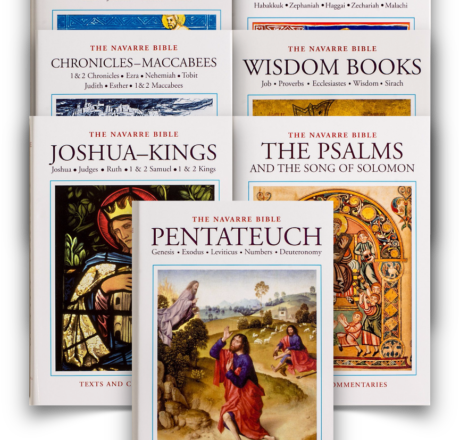
First Reading:
From: 1 Timothy 4:12-16
Pastoral Advice to Timothy
-----------------------------------
[12] Let no one despise your youth, but set the believers an example in speech and conduct, in love, in faith, in purity. [13] Till I come, attend to the public reading of scripture, to preaching, to teaching. [14] Do not neglect the gift you have, which was given you by prophetic utterance when the elders laid their hands upon you. [15] Practise these duties, devote yourself to them, so that all may see your progress. [16] Take heed to yourself and to your teaching; hold to that, for by so doing you will save both yourself and your hearers.
***********************************************************************
Commentary:
12-13. A good minister should be a model of virtue. Timothy was obviously very young for the office he held; the Apostle therefore keeps telling him that he must give good example because virtues give a person more experience than age does.
"Reading, preaching, teaching": all three were done at the liturgical assemblies of the early Christians (and continue to be done during the Liturgy of the Word at Mass): some texts of Sacred Scripture were read and then the minister gave a homily which would have included some words of encouragement and some doctrinal instruction.
14. The gift referred to here is that of the sacrament of Order: it is a permanent gift ("the gift you have") from God, bestowed by an external rite consisting of liturgical prayer and the laying on of hands. This interpretation is derived from the context: the "gift" (charism) is indelible (Timothy may neglect it but he can never lose it); therefore, it does not refer to sanctifying grace but to the priestly "character" or mark which the sacrament imprints along with the grace of the sacrament itself.
The "prophetic utterances", which in the New Testament means "public teachings (cf. note on 1 Tim 1 18-19) or words spoken in God's name, here refers to the prayers used in the ordination rite.
The "laying on of hands" is another technical expression. Jesus used this gesture many times (cf. Mt 9:18-19, 19:15; Mk 6:5; 7:32; 8:23-25; 16:8; Lk 4:40; 13:13); the Apostles used it as a rite for bringing down the Holy Spirit (Acts 8:17; 19:6). Here, as elsewhere in these letters, the laying on of hands is the rite of priestly ordination (cf. 1 Tim 5:22; 2 Tim 1:6), whereby the mission and powers of the person performing the rite are passed on, thereby ensuring continuity of priesthood. In 2 Timothy 1:6, a parallel text, it says "through the laying on of my hands"; whereas here it says "when the elders laid their hands on you". The participles "through" and "when" imply that the action of imposition of hands is an essential part of the sacrament.
The Church has preserved intact the essential elements of the sacrament of Order--the laying on of hands and the consecrating words of the bishop (cf. Paul VI, Apost. Const. "Pontificalis Romani Recognitio", 18 July 1968).
15-16. As well as being mindful of his grace of ordination, the Christian minister must remain true to his obligations: "Take heed to yourself". Although the calling to Church office does not demand exceptional qualities in the candidate, he still needs to be exemplary and to put special effort into developing virtues or else his ministry will not be nearly as productive as it might be. "Apostolic soul: first of all, yourself. Our Lord has said, through St Matthew: 'When the day of Judgment comes, many will say to me, Lord, Lord, did we not prophesy in your name, work many miracles in your name? Then I shall tell them to their faces: I have never known you; away from me, you evil men.' God forbid--says St Paul--that I, who have preached to others should myself be rejected" (St. J. Escriva, "The Way", 930).
"Hold to that", literally "hold to these things": probably a reference to the various points made in this chapter and perhaps also to things the Apostle had at different times told Timothy to keep an eye on. Perseverance is necessary for the minister himself and for the good of the people to whom he ministers.
------------------------
Gospel Reading:
From: Luke 7:36-50
The Woman Who was a Sinner
----------------------------------------
[36] 0ne of the Pharisees asked him to eat with him, and he went into the Pharisee's house, and sat at table. [37] And behold, a woman of the city, who was a sinner, when she learned that he was sitting at table in the Pharisee's house, brought an alabaster flask of ointment, [38] and standing behind him at his feet, weeping, she began to wet his feet with her tears; and wiped them with the hair of her head, and kissed his feet, and anointed them with the ointment. [39] Now when the Pharisee who had invited him saw it, he said to himself, "If this man were a prophet, he would have known who and what sort of woman this is who is touching him, for she is a sinner." [40] And Jesus answering said to him, "Simon, I have something to say to you." And he answered, "What is it, Teacher?" [41] "A certain creditor had two debtors; one owed five hundred denarii and the other fifty. [42] When they could not pay, he forgave them both. Now which of them will love him more?" [43] Simon answered, "The one, I suppose, to whom he forgave more." And he said to him, "You have judged rightly." [44] Then turning toward the woman he said to Simon, "Do you see this woman? I entered your house, you gave me no water for my feet, but she has wet my feet with her tears and wiped them with her hair. [45] You gave me no kiss, but from the time I came in she has not ceased to kiss my feet. [46] You did not anoint my head with oil, but she has anointed my feet with ointment. [47] Therefore I tell you, her sins, which are many, are forgiven little, for she loved much; but he who is forgiven, loves little." [48] And he said to her, "Your sins are forgiven." [49] Then those who were at table with him began to say among themselves, "Who is this, who even forgives sins?" [50] And he said to the woman, "Your faith has saved you; go in peace."
***********************************************************************
Commentary:
36-40. This woman, moved no doubt by grace, was attracted by Christ's preaching and by what people were saying about him.
When dining, people reclined on low divans leaning on their left arm with their legs tucked under them, away from the table. A host was expected to give his guest a kiss of greeting and offer him water for his feet, and perfumes.
41-50. In this short parable of the two debtors Christ teaches us three things--his own divinity and his power to forgive sins; the merit the woman's love deserves; and the discourtesy implied in Simeon's neglecting to receive Jesus in the conventional way. Our Lord was not interested in these social niceties as such but in the affection which they expressed; that was why he felt hurt at Simeon's neglect.
"Jesus notices the omission of the expression of human courtesy and refinement which the Pharisee failed to show him. Christ is 'perfectus Deus, perfectus homo' ("Athanasian Creed"). He is perfect God, the second person of the Blessed Trinity, and perfect man. He comes to save, not to destroy nature. It is from him that we learn that it is unchristian to treat our fellow men badly, for they are creatures of God, made in his image and likeness (Gen 1:26)" (St J. Escriva, "Friends of God", 73).
Moreover, the Pharisee was wrong to think badly of this sinner and of Jesus: reckoning that Christ did not know anything about her, he complained inwardly. Our Lord, who could read the secret thoughts of men (which showed his divinity), intervened to point out to him his mistake. True righteousness, says St Gregory the Great (cf. "In Evangelia Homiliae", 33), is compassionate; whereas false righteousness is indignant. There are many people like this Pharisee: forgetting that they themselves were or are poor sinners, when they see other people's sin they immediately become indignant, instead of taking pity on them, or else they rush to judge them or sneer at them. They forget what St Paul says: "Let any one who thinks that he stands take heed lest he fall" (1 Cor 10:12); "Brethren, if any man is overtaken in any trespass, you who are spiritual should restore him in a spirit of gentleness [...]. Bear one another's burdens, and so fulfill the law of Christ" (Gal 6:1- 2).
We should strive to have charity govern all our judgments. Otherwise, we will easily be unjust towards others. "Let us be slow to judge. Each one sees things from his own point of view, as his mind, with all its limitations, tells him, and through eyes that are often dimmed and clouded by passion.... Of what little worth are the judgments of men! Don't judge without sifting your judgment in prayer" (St J. Escriva, "The Way", 451).
Charity and humility will allow us to see in the sins of others our own weak and helpless position, and will help our hearts go out to the sorrow of every sinner who repents, for we too would fall into sins as serious or more serious if God in his mercy did not stay by our side.
"It was not the ointment that the Lord loved", St Ambrose comments, "but the affection; it was the woman's faith that pleased him, her humility. And you also, if you desire grace, increase your love; pour over the body of Jesus Christ your faith in the Resurrection, the perfume of the holy Church and the ointment of charity towards others" ("Expositio Evangelii sec. Lucam, in loc.").
47. Man cannot merit forgiveness for his sins because, since God is the offended party, they are of infinite gravity. We need the sacrament of Penance, in which God forgives us by virtue of the infinite merits of Jesus Christ; there is only one indispensable condition for winning God's forgiveness--our love, our repentance. We are pardoned to the extent that we love; when our heart is full of love there is no longer any room in it for sin because we have made room for Jesus, and he says to us as he said to this woman, "Your sins are forgiven." Repentance is a sign that we love God. But it was God who first loved us (cf.1 Jn 4:10). When God forgives us he is expressing his love for us. Our love for God is, then, always a response to his initiative. By forgiving us God helps us to be more grateful and more loving towards him. "He loves little", St Augustine comments, "who has little forgiven. You say that you have not committed many sins: but why is that the case? [...] The reason is that God was guiding you [...]. There is no sin that one man commits, which another may not commit also unless God, man's maker, guides him" ("Sermon", 99, 6). Therefore, we ought to fall ever more deeply in love with our Lord, not only because he forgives us our sins but also because he helps us by means of his grace not to commit them.
50. Jesus declares that it was faith that moved this woman to throw herself at his feet and show her repentance; her repentance wins his forgiveness. Similarly, when we approach the sacrament of Penance we should stir up our faith in the fact that it is "not a human but a divine dialogue. It is a tribunal of divine justice and especially of mercy, with a loving judge who 'has no pleasure in the death of the wicked; I desire that the wicked turn back from his way and live' (Ezek 33:11)" (St J. Escriva, "Christ Is Passing By", 78).
Disclaimer: Opinions posted on Free Republic are those of the individual posters and do not necessarily represent the opinion of Free Republic or its management. All materials posted herein are protected by copyright law and the exemption for fair use of copyrighted works.
