Skip to comments.
Catholic Caucus: Daily Mass Readings 17-September-2025
Universalis/Jerusalem Bible ^
Posted on 09/17/2025 5:02:15 AM PDT by annalex
17 September 2025
Wednesday of week 24 in Ordinary Time

St. Bingen parish, Eibingen, Germany Readings at MassLiturgical Colour: Green. Year: C(I).
| First reading |
|---|
| 1 Timothy 3:14-16 |
|---|
The mystery of our religion is very deepAt the moment of writing to you, I am hoping that I may be with you soon; but in case I should be delayed, I wanted you to know how people ought to behave in God’s family – that is, in the Church of the living God, which upholds the truth and keeps it safe. Without any doubt, the mystery of our religion is very deep indeed: He was made visible in the flesh, attested by the Spirit, seen by angels, proclaimed to the pagans, believed in by the world, taken up in glory.
| Responsorial Psalm |
|---|
| Psalm 110(111):1-6 |
|---|
Great are the works of the Lord. or Alleluia! I will thank the Lord with all my heart in the meeting of the just and their assembly. Great are the works of the Lord, to be pondered by all who love them. Great are the works of the Lord. or Alleluia! Majestic and glorious his work, his justice stands firm for ever. He makes us remember his wonders. The Lord is compassion and love. Great are the works of the Lord. or Alleluia! He gives food to those who fear him; keeps his covenant ever in mind. He has shown his might to his people by giving them the lands of the nations. Great are the works of the Lord. or Alleluia!
| Gospel Acclamation | cf.1Th2:13 |
|---|
Alleluia, alleluia! Accept God’s message for what it really is: God’s message, and not some human thinking. Alleluia! Alleluia, alleluia! Your words are spirit, Lord, and they are life; you have the message of eternal life. Alleluia!
'We played the pipes, and you wouldn't dance'Jesus said to the people: ‘What description can I find for the men of this generation? What are they like? They are like children shouting to one another while they sit in the market-place: ‘“We played the pipes for you, and you wouldn’t dance; we sang dirges, and you wouldn’t cry.” ‘For John the Baptist comes, not eating bread, not drinking wine, and you say, “He is possessed.” The Son of Man comes, eating and drinking, and you say, “Look, a glutton and a drunkard, a friend of tax collectors and sinners.” Yet Wisdom has been proved right by all her children.’ You can also view this page with the New Testament in Greek and English. Christian Art Each day, The Christian Art website gives a picture and reflection on the Gospel of the day. The readings on this page are from the Jerusalem Bible, which is used at Mass in most of the English-speaking world. The New American Bible readings, which are used at Mass in the United States, are available in the Universalis apps, programs and downloads.
You can also view this page with the Gospel in Greek and English. |
TOPICS: Catholic; General Discusssion; Prayer; Worship
KEYWORDS: catholic; lk7; ordinarytime; prayer
For your reading, reflection, faith-sharing, comments, questions, discussion.
1
posted on
09/17/2025 5:02:15 AM PDT
by
annalex
To: All
KEYWORDS: catholic; lk7; ordinarytime; prayer;
2
posted on
09/17/2025 5:02:41 AM PDT
by
annalex
(fear them not)
To: nickcarraway; NYer; ELS; Pyro7480; livius; ArrogantBustard; Catholicguy; RobbyS; marshmallow; ...

Alleluia Ping Please FReepmail me to get on/off the Alleluia Ping List.
3
posted on
09/17/2025 5:03:26 AM PDT
by
annalex
(fear them not)
To: annalex
4
posted on
09/17/2025 5:03:46 AM PDT
by
annalex
(fear them not)
To: annalex
| Luke |
| | English: Douay-Rheims | Latin: Vulgata Clementina | Greek NT: Byzantine/Majority Text (2000) |
| | Luke 7
|
| 31. | And the Lord said: Whereunto then shall I liken the men of this generation? and to what are they like? | Ait autem Dominus : Cui ergo similes dicam homines generationis hujus ? et cui similes sunt ? | τινι ουν ομοιωσω τους ανθρωπους της γενεας ταυτης και τινι εισιν ομοιοι |
| 32. | They are like to children sitting in the marketplace, and speaking one to another, and saying: We have piped to you, and you have not danced: we have mourned, and you have not wept. | Similes sunt pueris sedentibus in foro, et loquentibus ad invicem, et dicentibus : Cantavimus vobis tibiis, et non saltastis : lamentavimus, et non plorastis. | ομοιοι εισιν παιδιοις τοις εν αγορα καθημενοις και προσφωνουσιν αλληλοις και λεγουσιν ηυλησαμεν υμιν και ουκ ωρχησασθε εθρηνησαμεν υμιν και ουκ εκλαυσατε |
| 33. | For John the Baptist came neither eating bread nor drinking wine; and you say: He hath a devil. | Venit enim Joannes Baptista, neque manducans panem, neque bibens vinum, et dicitis : Dæmonium habet. | εληλυθεν γαρ ιωαννης ο βαπτιστης μητε αρτον εσθιων μητε οινον πινων και λεγετε δαιμονιον εχει |
| 34. | The Son of man is come eating and drinking: and you say: Behold a man that is a glutton and a drinker of wine, a friend of publicans and sinners. | Venit Filius hominis manducans, et bibens, et dicitis : Ecce homo devorator, et bibens vinum, amicus publicanorum et peccatorum. | εληλυθεν ο υιος του ανθρωπου εσθιων και πινων και λεγετε ιδου ανθρωπος φαγος και οινοποτης φιλος τελωνων και αμαρτωλων |
| 35. | And wisdom is justified by all her children. | Et justificata est sapientia ab omnibus filiis suis. | και εδικαιωθη η σοφια απο των τεκνων αυτης παντων |
5
posted on
09/17/2025 5:04:44 AM PDT
by
annalex
(fear them not)
To: annalex

Catena Aurea by St. Thomas Aguinas
7:29–35
29. And all the people that heard him, and the Publicans, justified God, being baptized with the baptism of John.
30. But the Pharisees and Lawyers rejected the counsel of God against themselves, being not baptized of him.
31. And the Lord said, Whereunto then shall I liken the men of this generation? and to what are they like?
32. They are like unto children sitting in the marketplace, and calling one to another, and saying, We have piped unto you, and ye have not danced; we have mourned to you, and ye have not wept.
33. For John the Baptist came neither eating bread nor drinking wine; and ye say, He hath a devil.
34. The Son of man is come eating and drinking; and ye say, Behold a gluttonous man, and a winebibber, a friend of Publicans and sinners!
35. But wisdom is justified of all her children.
CHRYSOSTOM. (Hom. 37. in Matt.) Having declared the praises of John, he next exposes the great fault of the Pharisees and lawyers, who would not after the publicans receive the baptism of John. Hence it is said, And all the people that heard him, and the Publicans, justified God.
AMBROSE. God is justified by baptism, wherein men justify themselves confessing their sins. For he that sins and confesses his sin unto God, justifies God, submitting himself to Him who overcometh, and hoping for grace from Him; God therefore is justified by baptism, in which there is confession and pardon of sin.
EUSEBIUS. Because also they believed, they justified God, for He appeared just to them in all that He did. But the disobedient conduct of the Pharisees in not receiving John, accorded not with the words of the prophet, That thou mightest be justified when thou speakest. (Ps. 51:4.) Hence it follows, But the Pharisees and lawyers rejected the counsel of God, &c.
BEDE. These words were spoken either in the person of the Evangelist, or, as some think, of the Saviour; but when he says, against themselves, he means that he who rejects the grace of God, does it against himself. Or, they are blamed as foolish and ungrateful for being unwilling to receive the counsel of God, sent to themselves. The counsel then is of God, because He ordained salvation by the passion and death of Christ, which the Pharisees and lawyers despised.
AMBROSE. Let us not then despise (as the Pharisees did) the counsel of God, which is in the baptism of John, that is, the counsel which the Angel of great counsel searches out. (Is. 9:6. LXX.) No one despises the counsel of man. Who then shall reject the counsel of God?
CYRIL OF ALEXANDRIA. There was a certain play among the Jewish children of this kind. A company of boys were collected together, who, mocking the sudden changes in the affairs of this life, some of them sang, some mourned, but the mourners did not rejoice with those that rejoiced, nor did those who rejoiced fall in with those that wept. They then rebuked each other in turn with the charge of want of sympathy. That such were the feelings of the Jewish people and their rulers, Christ implied in the following words, spoken in the person of Christ; Whereunto then shall I liken the men of this generation, and to what are they like? They are like to children sitting in the market-place.
BEDE. The Jewish generation is compared to children, because formerly they had prophets for their teachers, of whom it is said, Out of the mouths of babes and sucklings hast thou perfected praise.
AMBROSE. But the prophets sung, repeating in spiritual strains their oracles of the common salvation; they wept, soothing with mournful dirges the hard hearts of the Jews. The songs were not sung in the market-place, nor in the streets, but in Jerusalem. For that is the Lord’s forum, in which the laws of His heavenly precepts are framed.
GREGORY OF NYSSA. (Hom. 6. in Eccl.) But singing and lamentation are nothing else but the breaking forth, the one indeed of joy, the other of sorrow. Now at the sound of a tune played upon a musical instrument, man by the concordant beating of his feet, and motion of his body, pourtrays his inward feelings. Hence he says, We have sung, and ye have not danced; we have mourned to you, and ye have not wept.
AUGUSTINE. (de Quæst. Ev. l. ii. q. 11.) Now these words have reference to John and Christ. For when he says, We have mourned, and ye have not wept, it is in allusion to John, whose abstinence from meat and drink signified penitential sorrow; and hence he adds in explanation, For John came neither eating bread, nor drinking wine, and ye say he hath a devil.
CYRIL OF ALEXANDRIA. They take upon themselves to slander a man worthy of all admiration. They say that he who mortifies the law of sin which is in his members hath a devil.
AUGUSTINE. (ubi sup.) But his words, We have piped unto you, and ye have not danced, refer to the Lord Himself, who by using meats and drinks as others did, represented the joy of His kingdom. Hence it follows, The Son of man came eating and drinking, &c.
TITUS BOSTRENSIS. For Christ would not abstain from this food, lest He should give a handle to heretics, who say that the creatures of God are bad, and blame flesh and wine.
CYRIL OF ALEXANDRIA. But where could they point out the Lord as gluttonous? For Christ is found every where repressing excess, and leading men to temperance. But He associated with publicans and sinners. Hence they said against Him, He is a friend of Publicans and sinners, though He could in no wise fall into sin, but on the contrary was to them the cause of salvation. For the sun is not polluted though sending its rays over all the earth, and frequently falling upon unclean bodies. Neither will the Sun of righteousness be hurt by associating with the bad. But let no one attempt to place his own condition on a level with Christ’s greatness, but let each considering his own infirmity avoid having dealing with such men, for “evil communications corrupt good manners.” It follows, And wisdom is justified of all her children.
AMBROSE. The Son of God is wisdom, by nature, not by growth, which is justified by baptism, when it is not rejected through obstinacy, but through righteousness is acknowledged the gift of God. Herein then is the justification of God, if he seems to transfer His gifts not to the unworthy and guilty, but to those who are through baptism holy and just.
CHRYSOSTOM. (Hom. in Ps. 108.) But by the children of wisdom, He means the wise. For Scripture is accustomed to indicate the bad rather by their sin than their name, but to call the good the children of the virtue which characterizes them.
AMBROSE. He well says, of all, for justice is reserved for all, that the faithful may be taken up, the unbelievers cast out.
AUGUSTINE. (ubi sup.) Or, when he says, wisdom is justified of all her children, he shews that the children of wisdom understand that righteousness consists neither in abstaining from nor eating food, but in patiently enduring want. For not the use of such things, but the coveting after them, must be blamed; only let a man adapt himself to the kind of food of those with whom he lives.
Catena Aurea Luke 7
6
posted on
09/17/2025 5:05:17 AM PDT
by
annalex
(fear them not)
To: annalex

The sermon of Saint John the Baptist
Pieter Bruegel the Elder.
1566
7
posted on
09/17/2025 5:05:39 AM PDT
by
annalex
(fear them not)
To: annalex
Saint of the Day for December 17
(September 16, 1098 – September 17, 1179)
Saint Hildegard of Bingen’s Story
Abbess, artist, author, composer, mystic, pharmacist, poet, preacher, theologian—where to begin in describing this remarkable woman?
Born into a noble family, Hildegard of Bingen was instructed for ten years by the holy woman Blessed Jutta. When Hildegard was 18, she became a Benedictine nun at the Monastery of Saint Disibodenberg. Ordered by her confessor to write down the visions that she had received since the age of three, Hildegard took ten years to write her Scivias (Know the Ways).
Pope Eugene III read it, and in 1147, encouraged her to continue writing. Her Book of the Merits of Life and Book of Divine Works followed. She wrote over 300 letters to people who sought her advice; she also composed short works on medicine and physiology, and sought advice from contemporaries such as Saint Bernard of Clairvaux.
Hildegard of Bingen’s visions caused her to see humans as “living sparks” of God’s love, coming from God as daylight comes from the sun. Sin destroyed the original harmony of creation; Christ’s redeeming death and resurrection opened up new possibilities. Virtuous living reduces the estrangement from God and others that sin causes.
Like all mystics, Hildegard saw the harmony of God’s creation and the place of women and men in that. This unity was not apparent to many of her contemporaries.
Hildegard was no stranger to controversy. The monks near her original foundation protested vigorously when she moved her monastery to Bingen, overlooking the Rhine River. She confronted Emperor Frederick Barbarossa for supporting at least three antipopes. Hildegard challenged the Cathars, who rejected the Catholic Church claiming to follow a more pure Christianity.
Between 1152 and 1162, Hildegard often preached in the Rhineland. Her monastery was placed under interdict because she had permitted the burial of a young man who had been excommunicated. She insisted that he had been reconciled with the Church and had received its sacraments before dying. Hildegard protested bitterly when the local bishop forbade the celebration of or reception of the Eucharist at the Bingen monastery, a sanction that was lifted only a few months before her death.
In 2012, Hildegard was canonized and named a Doctor of the Church by Pope Benedict XVI. Her liturgical feast is celebrated on September 17.
Reflection
Pope Benedict spoke about Hildegard of Bingen during two of his general audiences in September 2010. He praised the humility with which she received God’s gifts, and the obedience she gave Church authorities. He praised too the “rich theological content” of her mystical visions that sum up the history of salvation from creation to the end of time.
During his papacy, Pope Benedict XVI said, “Let us always invoke the Holy Spirit, so that he may inspire in the Church holy and courageous women like Saint Hildegard of Bingen who, developing the gifts they have received from God, make their own special and valuable contribution to the spiritual development of our communities and of the Church in our time.”
franciscanmedia.org
8
posted on
09/17/2025 5:07:38 AM PDT
by
annalex
(fear them not)
To: annalex
9
posted on
09/17/2025 5:08:49 AM PDT
by
annalex
(fear them not)
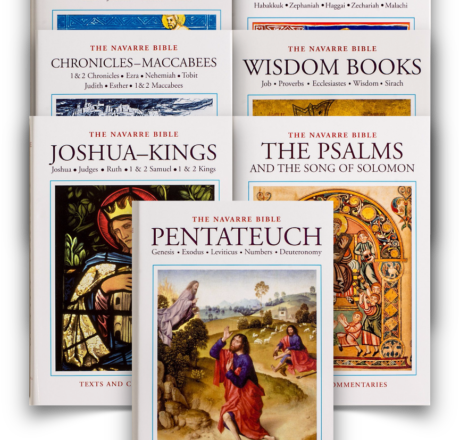
NAVARRE BIBLE COMMENTARY(RSV)
Ad Majorem Dei Gloriam (To the Greater Glory of God)
First Reading:
From: 1 Timothy 3:14-16
The Church is God's Household
-----------------------------------------
[14] I hope to come to you soon, but I am writing these instructions to you so that, [15] if I am delayed, you may know how one ought to behave in the household of God, which is the church of the living God, the pillar and bulwark of the truth.
The Mystery of our Religion
------------------------------------
[16] Great indeed, we confess, is the mystery of our religion: He was manifested in the flesh, vindicated in the Spirit, seen by angels, preached among the nations, believed on in the world, taken up in glory.
****************************************************************************
Commentary:
15. This verse contains three very evocative expressions which sum up the letter's ecclesiology or theology of the Church.
"The Church of the living God": St Paul usually uses "church of God" and (once) "church of Christ" (Rom 16:16), thereby implying continuity with the "assemblies of Yahweh" in the Old Testament. The Church, in other words, is the true people of God, founded on the New Covenant, heir to the ancient promises and trustee of the means of salvation (cf. "Lumen Gentium", 9). It is "the church of the living God", that is, it receives from him supernatural life (grace) and distributes it to all. "It pleased God to call men to share in his life and not merely singly, without any bond between them, but he formed them into a people, in which his children who had been scattered were gathered together" Vatican II, "Ad Gentes", 2).
"The household of God": in the original Greek the definite article does not appear, thereby emphasizing the family character of the Church. St Paul frequently described the Church as God's family: "you are fellow citizens with the saints and members of the household of God" (Eph 2:19). The expression "household of God" conveys the idea of family and also the idea of the cohesion of Christians as parts of a holy building: the children of God, convoked by the will of God, form the Church, a home and a temple, where God dwells in a fuller way than he did in the ancient temple of Jerusalem (cf. 1 Kings 8:12-64).
This house or household of God is made up of all the believers; they are living stones, as it were (1 Pet 2:5); its foundations are the Apostles (1 Cor 3:11), and Christ himself is its cornerstone (Mt 21:42); those who hold office in it are not domineering overlords but conscientious stewards, who should rule with the same dedication as a father does in his own household (1 Tim 3:4-5, 12).
"Pillar and bulwark of the truth": those aspects of the building would have been very meaningful to Christians familiar with the great pillars of the temple of Jerusalem (cf. 1 Kings 7:15-52) or the columns of the huge temple at Ephesus dedicated to the goddess Artemis. They very graphically convey the idea of the Church's solidity and permanence in the role of safeguarding and transmitting the truth, for "the deposit of revelation [...] must be religiously guarded and courageously expounded" ("Lumen Gentium", 25).
"The truth" which the Apostle mentions here is the Revelation God has communicated to men. It is interesting to note that there are three closely connected expressions in this chapter: deacons are exhorted to hold "the mystery of faith" (v. 9); the Church is "the pillar and bulwark of the truth" (v. 15); and then "the mystery of our religion" is extolled (v. 16). These are three ways of looking at the Church's reason-of-being--Jesus Christ. For our Lord, who is the fullness of Revelation (cf. Heb 1:2), is the center of our faith: he alone is the supreme Truth (cf. In 14:6); and because he is the fullest expression of God's love for men (making them children of God), he is "the mystery of our religion" (cf. "Reconciliatio Et Paenitentia", 19).
16. The "pietatis mysterium", the mystery of (our) religion, as opposed to the "mystery of lawlessness" (2:Thess 2:7) which includes the devil and his activity, refers first and foremost to Christ and his work of redemption and reconciliation. By describing it as the mystery of "piety", the virtue which characterizes parent/children relations, it includes the idea of God's paternal love for men, for it is through Christ that men become children of God.
"It is profoundly significant", John Paul II comments, "that when Paul presents this "mysterium pietatis" he simply transcribes, without making a grammatical link with what he has just written, three lines of a Christological hymn which--in the opinion of authoritative scholars--was used in the Greek-speaking Christian communities" ("Reconciliatio Et Paenitentia", 20). The introduction itself ("we confess": by the confession of all), the rhythmic style, the fact that no articles are used in the original Greek, and even the vocabulary -- all point to these verses having been taken from an early liturgical hymn (cf. 1 Cor 14:26; Eph 5:19). It may even have been a kind of counter to the idolatrous chants of pagan Ephesians: they used to shout "Great is Artemis of the Ephesians!" (Acts 19:34); St Paul exclaims, "Great is the mystery of our religion."
The order of ideas in this confession of faith is typical of the christological hymns in the New Testament (cf. Phil 2:6-11; Col 1:15-20; Heb 1:3), and probably reflects the oral preaching of the Apostles which took in the existence of the Word from all eternity, his incarnation and life on earth; his message of salvation for the whole world; his passion, death, resurrection and ascension into heaven. Each of the three parts of this short creed stresses the paradox of the mystery by using phrases involving contrasts (Semites were very fond of this device). The first sentence, professing belief in the Incarnation, uses a very early form of words--"manifested in the flesh" (cf. 1 Jn 4:2; 2 In 7). Pope John Paul II comments as follows: "he was made manifest in the reality of human flesh and was constituted by the Holy Spirit as the Just One who offers himself for the unjust" ("Reconciliatio Et Paenitentia", 20).
The second phrase describes how Christ is manifested: the angels have direct sight of him, men came to know him through preaching. Christ is manifested to all, for just as he is seen by the angels (that part of creation nearest to God), so is he revealed to the Gentiles (whom the Jews regarded as most distanced from God): "he appeared to the angels, having been made greater than them, and he was preached to the nations, as the bearer of salvation" ("ibid.").
The last words profess faith in the glorification of Christ at the extremes of creation--earth and heaven. On earth he is glorified because faith in him implies recognizing him as God; and he is glorified in heaven because the Ascension (which in Pauline teaching marks the definitive victory of Christ--cf. Phil 2:19-2 and note) is the definitive glorious revelation of his Person: "he was believed in, in the world, as the one sent by the Father, and by the same Father he was assumed into heaven as Lord" ("ibid.").
And so the "mysterium pietatis" involves the reconciliation--union of man with God in Christ: he takes our flesh without ceasing to be God; the nations of the earth will recognize him, as will the angels in heaven, he dwells in the hearts of men through faith, but his mansion is in heaven at the Father's side.
10
posted on
09/17/2025 7:29:24 AM PDT
by
fidelis
(Ecce Crucem Domini! Fugite partes adversae! Vicit Leo de tribu Juda, Radix David! Alleluia!)
Gospel Reading: From: Luke 7:31-35
Jesus Reproaches His Contemporaries
----------------------------------------------
[31] (Jesus spoke to the crowds), “Then to what shall I compare the people of this generation? What are they like? [32] They are like children who sit in the marketplace and call to one another,
‘We played the flute for you, but you did not dance.
We sang a dirge, but you did not weep.’
[33] For John the Baptist has come eating no bread and drinking no wine; and you say, `He has a demon.' [34] The Son of Man has come eating and drinking; and you say, Behold, a glutton and a drunkard, a friend of tax collectors and sinners!' [35] Yet wisdom is justified by all her children."
***********************************************************************
Commentary:
31-34. See the note on Matthew 11:16-19.
[The note on Matthew 11:16-19 states: 16-19. Making reference to a popular song or a child's game of His time, Jesus reproaches those who offer groundless excuses for not recognizing Him. From the beginning of human history the Lord has striven to attract all men to Himself: "What more was there to do for My vineyard, that I have not done in it?" (Isaiah 5:4), and often He has been rejected: "When I looked for it to yield grapes, why did it yield wild grapes?" (Isaiah 5:4).
Our Lord also condemns calumny: some people do try to justify their own behavior by seeing sin where there is only virtue. "When they find something which is quite obviously good," St. Gregory the Great says, "they pry into it to see if there is not also some badness hidden in it" ("Moralia", 6, 22). The Baptist's fasting they interpret as the work of the devil; whereas they accuse Jesus of being a glutton. The evangelist has to report these calumnies and accusations spoken against our Lord; otherwise, we would have no notion of the extent of the malice of those who show such furious opposition to Him who went about doing good (Acts 10:38). On other occasions Jesus warned His disciples that they would be treated the same as He was (cf. John 15:20).
The works of Jesus and John the Baptist, each in their own way, lead to the accomplishment of God's plan for man's salvation: the fact that some people do not recognize Him does not prevent God's plan being carried into effect. ]
35. The wisdom referred to here is divine Wisdom, especially Christ Himself (cf. Wisdom 7:26; Proverbs 8:22). "Children of Wisdom" is a Hebrew way of saying "wise men"; he is truly wise who comes to know God and love Him and be saved by Him--in other words, a saint.
Divine wisdom is revealed in the creation and government of the universe, and, particularly, in the salvation of mankind. Wise men "justifying" wisdom seems to mean the wise, the saints, bear witness to Christ by living holy lives: "Let your light so shine before men, that they may see your good works and give glory to your Father who is in Heaven" (Matthew 5:16).
11
posted on
09/17/2025 7:29:43 AM PDT
by
fidelis
(Ecce Crucem Domini! Fugite partes adversae! Vicit Leo de tribu Juda, Radix David! Alleluia!)
12
posted on
09/17/2025 7:30:32 AM PDT
by
fidelis
(Ecce Crucem Domini! Fugite partes adversae! Vicit Leo de tribu Juda, Radix David! Alleluia!)
Disclaimer:
Opinions posted on Free Republic are those of the individual
posters and do not necessarily represent the opinion of Free Republic or its
management. All materials posted herein are protected by copyright law and the
exemption for fair use of copyrighted works.
FreeRepublic.com is powered by software copyright 2000-2008 John Robinson

