Skip to comments.
Catholic Caucus: Daily Mass Readings 15-September-2025
Universalis/Jerusalem Bible ^
Posted on 09/15/2025 4:37:15 AM PDT by annalex
15 September 2025
Our Lady of Sorrows
on Monday of week 24 in Ordinary Time

Catacombs and mausoleum om Via Nomentana in RomeReadings at MassLiturgical Colour: White. Year: C(I). Readings for the feria Readings for the memorial These are the readings for the feria
| First reading | 1 Timothy 2:1-8 |
|---|
Pray for everyone to God, who wants everyone to be savedMy advice is that, first of all, there should be prayers offered for everyone – petitions, intercessions and thanksgiving – and especially for kings and others in authority, so that we may be able to live religious and reverent lives in peace and quiet. To do this is right, and will please God our saviour: he wants everyone to be saved and reach full knowledge of the truth. For there is only one God, and there is only one mediator between God and mankind, himself a man, Christ Jesus, who sacrificed himself as a ransom for them all. He is the evidence of this, sent at the appointed time, and I have been named a herald and apostle of it and – I am telling the truth and no lie – a teacher of the faith and the truth to the pagans. In every place, then, I want the men to lift their hands up reverently in prayer, with no anger or argument.
| Responsorial Psalm |
|---|
| Psalm 27(28):2,7-9 |
|---|
Blessed be the Lord, for he has heard my cry. Hear the voice of my pleading as I call for help, as I lift up my hands in prayer to your holy place. Blessed be the Lord, for he has heard my cry. The Lord is my strength and my shield; in him my heart trusts. I was helped, my heart rejoices and I praise him with my song. Blessed be the Lord, for he has heard my cry. The Lord is the strength of his people, a fortress where his anointed find salvation. Save your people; bless Israel your heritage. Be their shepherd and carry them for ever. Blessed be the Lord, for he has heard my cry.
Alleluia, alleluia! Happy is the Virgin Mary, who, without dying, won the palm of martyrdom beneath the cross of the Lord. Alleluia!
The following reading is proper to the memorial, and must be used even if you have otherwise chosen to use the ferial readings. 'Woman, this is your son'Near the cross of Jesus stood his mother and his mother’s sister, Mary the wife of Clopas, and Mary of Magdala. Seeing his mother and the disciple he loved standing near her, Jesus said to his mother, ‘Woman, this is your son.’ Then to the disciple he said, ‘This is your mother.’ And from that moment the disciple made a place for her in his home. Continue These are the readings for the memorial
| First reading | Hebrews 5:7-9 |
|---|
He learned to obey and he became the source of eternal salvationDuring his life on earth, Christ offered up prayer and entreaty, aloud and in silent tears, to the one who had the power to save him out of death, and he submitted so humbly that his prayer was heard. Although he was Son, he learnt to obey through suffering; but having been made perfect, he became for all who obey him the source of eternal salvation.
| Responsorial Psalm |
|---|
| Psalm 30(31):2-6,15-16,20 |
|---|
Save me, O Lord, in your love. In you, O Lord, I take refuge. Let me never be put to shame. In your justice, set me free, hear me and speedily rescue me. Save me, O Lord, in your love. Be a rock of refuge for me, a mighty stronghold to save me, for you are my rock, my stronghold. For your name’s sake, lead me and guide me. Save me, O Lord, in your love. Release me from the snares they have hidden for you are my refuge, Lord. Into your hands I commend my spirit. It is you who will redeem me, Lord. Save me, O Lord, in your love. But as for me, I trust in you, Lord; I say: ‘You are my God. My life is in your hands, deliver me from the hands of those who hate me.’ Save me, O Lord, in your love. How great is the goodness, Lord, that you keep for those who fear you, that you show to those who trust you in the sight of men. Save me, O Lord, in your love. Stabat MaterAt the cross her station keeping stood the mournful Mother weeping, close to Jesus to the last; through her heart, his sorrow sharing, all his bitter anguish bearing, now at length the sword had passed. Oh, how sad and sore distressed was that Mother highly blessed of the sole begotten One! Christ above in torment hangs; she beneath beholds the pangs of her dying glorious Son. Is there one who would not weep, whelmed in miseries so deep, Christ’s dear Mother to behold? Can the human heart refrain from partaking in her pain, in that Mother’s pain untold? Bruised, derided, cursed, defiled, she beheld her tender child all with bloody scourges rent; for the sins of his own nation saw him hang in desolation, till his spirit forth he sent. O you Mother, fount of love! Touch my spirit from above, make my heart with yours accord: make me feel as you have felt; make my soul to glow and melt with the love of Christ our Lord. Holy Mother, pierce me through; in my heart each wound renew of my Saviour crucified. Let me share with you his pain who for all our sins was slain, who for me in torments died. Let me mingle tears with you, mourning him who mourned for me all the days that I may live: by the cross with you to stay, there with you to weep and pray, is all I ask of you to give. Virgin of all virgins best, listen to my fond request: let me share your grief divine; let me to my latest breath, in my body bear the death of that dying Son of yours. Wounded with his every wound, steep my soul till it has swooned in his very blood away; be to me, O Virgin, nigh, lest in flames I burn and die in his awful judgement day. Christ, when you shall call me hence, be your Mother my defence, be your cross my victory. While my body here decays, may my soul your goodness praise, safe in paradise with you.
Alleluia, alleluia! Happy is the Virgin Mary, who, without dying, won the palm of martyrdom beneath the cross of the Lord. Alleluia!
'Woman, this is your son'Near the cross of Jesus stood his mother and his mother’s sister, Mary the wife of Clopas, and Mary of Magdala. Seeing his mother and the disciple he loved standing near her, Jesus said to his mother, ‘Woman, this is your son.’ Then to the disciple he said, ‘This is your mother.’ And from that moment the disciple made a place for her in his home. Continue You can also view this page with the New Testament in Greek and English. Christian Art Each day, The Christian Art website gives a picture and reflection on the Gospel of the day. The readings on this page are from the Jerusalem Bible, which is used at Mass in most of the English-speaking world. The New American Bible readings, which are used at Mass in the United States, are available in the Universalis apps, programs and downloads.
You can also view this page with the Gospel in Greek and English. |
TOPICS: Catholic; General Discusssion; Prayer; Worship
KEYWORDS: catholic; jn19; ordinarytime; prayer
For your reading, reflection, faith-sharing, comments, questions, discussion.
1
posted on
09/15/2025 4:37:15 AM PDT
by
annalex
To: All
KEYWORDS: catholic; jn19; ordinarytime; prayer;
2
posted on
09/15/2025 4:37:39 AM PDT
by
annalex
(fear them not)
To: nickcarraway; NYer; ELS; Pyro7480; livius; ArrogantBustard; Catholicguy; RobbyS; marshmallow; ...

Alleluia Ping Please FReepmail me to get on/off the Alleluia Ping List.
3
posted on
09/15/2025 4:38:38 AM PDT
by
annalex
(fear them not)
To: annalex
4
posted on
09/15/2025 4:39:23 AM PDT
by
annalex
(fear them not)
To: annalex
| John |
| | English: Douay-Rheims | Latin: Vulgata Clementina | Greek NT: Byzantine/Majority Text (2000) |
| | John 19
|
| 25. | Now there stood by the cross of Jesus, his mother, and his mother's sister, Mary of Cleophas, and Mary Magdalen. | Stabant autem juxta crucem Jesu mater ejus, et soror matris ejus, Maria Cleophæ, et Maria Magdalene. | ειστηκεισαν δε παρα τω σταυρω του ιησου η μητηρ αυτου και η αδελφη της μητρος αυτου μαρια η του κλωπα και μαρια η μαγδαληνη |
| 26. | When Jesus therefore had seen his mother and the disciple standing whom he loved, he saith to his mother: Woman, behold thy son. | Cum vidisset ergo Jesus matrem, et discipulum stantem, quem diligebat, dicit matri suæ : Mulier, ecce filius tuus. | ιησους ουν ιδων την μητερα και τον μαθητην παρεστωτα ον ηγαπα λεγει τη μητρι αυτου γυναι ιδου ο υιος σου |
| 27. | After that, he saith to the disciple: Behold thy mother. And from that hour, the disciple took her to his own. | Deinde dicit discipulo : Ecce mater tua. Et ex illa hora accepit eam discipulus in sua. | ειτα λεγει τω μαθητη ιδου η μητηρ σου και απ εκεινης της ωρας ελαβεν ο μαθητης αυτην εις τα ιδια |
5
posted on
09/15/2025 4:41:45 AM PDT
by
annalex
(fear them not)
To: annalex
Catena Aurea by St. Thomas Aguinas
19:24–27
24. These things therefore the soldiers did.
25. Now there stood by the cross of Jesus his mother, and his mother’s sister, Mary the wife of Cleophas, and Mary Magdalene.
26. When Jesus therefore saw his mother, and the disciple standing by, whom he loved, he saith unto his mother, Woman, behold thy son!
27. Then saith he to the disciple, Behold thy mother! And from that hour that disciple took her to his own home.
THEOPHYLACT. While the soldiers were doing their cruel work, He was thinking anxiously of His mother: These things therefore the soldiers did. Now there stood by the cross of Jesus His mother, and His mother’s sister, Mary the wife of Cleophas, and Mary Magdalene.
AMBROSE. Mary the mother of our Lord stood before the cross of her Son. None of the Evangelists hath told me this except John. The others have related how that at our Lord’s Passion the earth quaked, the heaven was overspread with darkness, the sun fled, the thief was taken into paradise after confession. John hath told us, what the others have not, how that from the cross whereon He hung, He called to His mother. He thought it a greater thing to shew Him victorious over punishment, fulfilling the offices of piety to His mother, than giving the kingdom of heaven and eternal life to the thief. For if it was religious to give life to the thief, a much richer work of piety it is for a son to honour his mother with such affection. Behold, He saith, thy son; behold thy mother. Christ made His Testament from the cross, and divided the offices of piety between the Mother and the disciples. Our Lord made not only a public, but also a domestic Testamnet. And this His Testament John sealed, a witness worthy of such a Testator. A good testament it was, not of money, but of eternal life, which was not written with ink, but with the spirit of the living God: My tongue is the pen of a ready writer. (Ps. 45:1) Mary, as became the mother of our Lord, stood before the cross, when the Apostles fled, and with pitiful eyes beheld the wounds of her Son. For she looked not on the death of the Hostage, but on the salvation of the world; and perhaps knowing that her Son’s death would bring this salvation, she who had been the habitation of the King, thought that by her death she might add to that universal gift.
But Jesus did not need any help for saving the world, as we read in the Psalm, I have been even as a man with no help, free among the dead. (Ps. 87) He received indeed the affection of a parent, but He did not seek another’s help. Imitate her, ye holy matrons, who, as towards her only most beloved Son, hath set you an example of such virtue: for ye have not sweeter sons, nor did the Virgin seek consolation in again becoming a mother.
JEROME. The Mary which in Mark and Matthew is called the mother of James and Joses, was the wife of Alpheus, and sister of Mary the mother of our Lord: which Mary John here designates of Cleophas, either from her father, or family, or for some other reason. She need not be thought a different person, because she is called in one place Mary the mother of James the less, and here Mary of Cleophas, for it is customary in Scripture to give different names to the same person.
CHRYSOSTOM. (Hom. lxxxv) Observe how the weaker sex is the stronger; standing by the cross when the disciples fly.
AUGUSTINE. (de Con. Ev. iii. 21) If Matthew and Mark had not mentioned by name Mary Magdalen, we should have thought that there were two parties, one of which stood far off, and the other near. But how must we account for the same Mary Magdalen and the other women standing afar off, as Matthew and Mark say, and being near the cross, as John says? By supposing that they were within such a distance as to be within sight of our Lord, and yet sufficiently far off to be out of the way of the crowd and Centurion, and soldiers who were immediately about Him. Or, we may suppose that after our Lord had commended His mother to the disciple, they retired to be out of the way of the crowd, and saw what took place afterwards at a distance: so that those Evangelists who do not mention them till after our Lord’s death, describe them as standing afar off. (Matthew and Mark.) That some women are mentioned by all alike, others not, makes no matter.
CHRYSOSTOM. (Hom. lxxxv. 2) Though there were other women by, He makes no mention of any of them, but only of His mother, to shew us that we should specially honour our mothers. Our parents indeed, if they actually oppose the truth, are not even to be known: but otherwise we should pay them all attention, and honour them above all the world beside: When Jesus therefore saw His mother, and the disciple standing by, whom he loved, He saith unto His mother, Woman, behold thy son!
BEDE. By the disciple whom Jesus loved, the Evangelist means himself; not that the others were not loved, but he was loved more intimately on account of his estate of chastity; for a Virgin our Lord called him, and a Virgin he ever remained.
CHRYSOSTOM. (Hom. lxxxv. 2.) Heavens! (Papæ) what honour does He pay to the disciple; who however conceals his name from modesty. For had he wished to boast, he would have added the reason why he was loved, for there must have been something great and wonderful to have caused that love. This is all He says to John; He does not console his grief, for this was a time for giving consolation. Yet was it no small one to be honoured with such a charge, to have the mother of our Lord, in her affliction, committed to his care by Himself on His departure: Then saith He to the disciple, Behold thy mother!
AUGUSTINE. (Tr. cxix. 1) This truly is that hour of the which Jesus, when about to change the water into wine, said, Mother, what have I to do with thee? Mine hour is not yet come. Then, about to act divinely, He repelled the mother of His humanity, of His infirmity, as if He knew her not: now, suffering humanly, He commends with human affection her of whom He was made man. Here is a moral lesson. The good Teacher shews us by His example how that pious sons should take care of their parents. The cross of the sufferer, is the chair of the Master.
CHRYSOSTOM. (Hom. lxxxv. 2) The shameless doctrine of Marcion is refuted here. For if our Lord were not born according to the flesh, and had not a mother, why did He make such provision for her? Observe how imperturbable He is during His crucifixion, talking to the disciple of His mother, fulfilling prophecies, giving good hope to the thief; whereas before His crucifixion, He seemed in fear. The weakness of His nature was shewn there, the exceeding greatness of His power here. He teaches us too herein, not to turn back, because we may feel disturbed at the difficulties before us; for when we are once actually under the trial, all will be light and easy for us.
AUGUSTINE. (Tr. cxix. 2) He does this to provide as it were another son for His mother in his place; And from that hour that disciple took her unto his own. Unto his own what? Was not John one of those who said, Lo, we have left all, and followed Thee? (Mat. 19:27) He took her then to his own, i. e. not to his farm, for he had none, but to his care, for of this he was master.
BEDE. Another reading is, Accepit eam discipulus in suam, his own mother some understand, but to his own care seems better.
Catena Aurea John 19
6
posted on
09/15/2025 4:42:33 AM PDT
by
annalex
(fear them not)
To: annalex

Crucifixion with the Virgin and St John
Hendrick ter Brugghen
1625
154.9 cm × 102.2 cm (61.0 in × 40.2 in)
The Metropolitan Museum of Art, New York City
7
posted on
09/15/2025 4:43:14 AM PDT
by
annalex
(fear them not)
To: annalex
Saint Nicomedes of Rome
Feast Day: September 15
Biography
Saint Nicomedes of Rome, also known as Saint Nicomedes, was a priest in Rome, Italy during the early years of Christianity. He is remembered for his unwavering faith and dedication to his Christian brethren, particularly those who were being persecuted for their beliefs. Born in Rome during the first century, Saint Nicomedes devoted his life to serving God and the Church. He became known for his deep compassion and love for others, especially those who were suffering for their faith. As a faithful priest, he tirelessly ministered to the needs of the Christian community in Rome, providing them with spiritual guidance, support, and sacraments. During this time, Christians in Rome were facing severe persecution under the Roman Emperor Domitian. Many believers were arrested, tortured, and put to death simply for professing their faith in Christ. Saint Nicomedes felt compelled to offer assistance and comfort to his fellow Christians who were facing these hardships. He personally attended to the needs of the martyrs, bringing them solace and encouragement in their final moments. In addition to offering spiritual guidance, Saint Nicomedes went further by ensuring that these martyrs received proper Christian burials. Despite the risks involved, he courageously buried their bodies and performed funeral rites according to Christian traditions. This act of defiance against the pagan rituals of the time brought even greater attention to his actions. Saint Nicomedes' fearless acts of providing aid to the persecuted Christians eventually caught the attention of the Roman authorities. He was arrested for his involvement in burying the Christian martyrs and sentenced to death. According to historical accounts, Saint Nicomedes was beaten to death with clubs in Rome around the year 71. His final resting place is located in the catacomb on the Via Nomentana in Rome, under the grounds of the Villa Patrizio. Some of his relics were later transferred to Milan and Parma in Italy, further spreading his veneration and influence. Although Saint Nicomedes' representation is not well-documented, his faithfulness and selflessness continue to inspire Christians around the world. He was canonized as a saint by the Pre-Congregation, recognizing his exemplary devotion to God and his sacrificial actions in support of the Christian community. While there is no specific patronage attributed to Saint Nicomedes, he is remembered as an emblem of courage, compassion, and unwavering faithfulness in the face of persecution. Catholics honor his memory and celebrate his feast day on September 15th each year, commemorating the remarkable life and martyrdom of Saint Nicomedes of Rome.
saintforaminute.com
8
posted on
09/15/2025 4:46:27 AM PDT
by
annalex
(fear them not)
To: annalex

Martyrdom of St. Nicomede
9
posted on
09/15/2025 4:49:16 AM PDT
by
annalex
(fear them not)
To: annalex
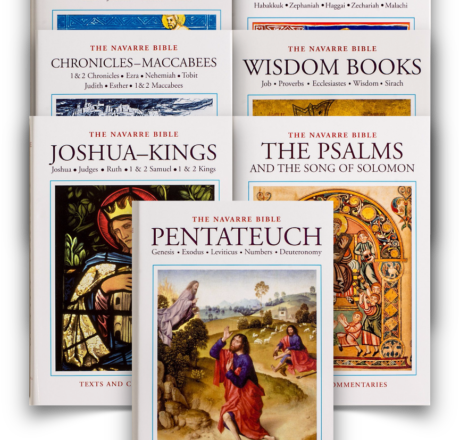
NAVARRE BIBLE COMMENTARY(RSV)
Ad Majorem Dei Gloriam (To the Greater Glory of God)
First Reading:
From: 1 Timothy 2:1-8
God Desires the Salvation of All
-----------------------------------------
[1] First of all, then, I urge that supplications, prayers, intercessions, and thanksgivings be made for all men, [2] for kings and all who are in high positions, that we may lead a quiet and peaceable life, godly and respectful in every way. [3] This is good, and it is acceptable in the sight of God our Savior, [4] who desires all men to be saved and to come to the knowledge of the truth. [5] For there is one God, and there is one mediator between God and men, the man Christ Jesus, [6] who gave himself as a ransom for all, the testimony to which was borne at the proper time. [7] For this I was appointed a preacher and apostle (I am telling the truth, I am not lying), a teacher of the Gentiles in faith and truth.
Men at Prayer, Women at Prayer
-------------------------------------------
[8] I desire then that in every place the men should pray, lifting holy hand without anger or quarreling.
***********************************************************************
Commentary:
1. St Paul here establishes regulations for the public prayer of all the faithful; it is up to Timothy, as head of the church of Ephesus, to specify these in detail, and to preside over them. He refers to four types of prayer; however, since the first three are almost synonymous, he is probably just stressing the key importance of prayer in the Christian life. St Augustine uses this text to explain the various parts of the Mass: "We take as 'supplications' those prayers which are said in celebrating the Mysteries before beginning to bless (the bread and wine) that lie on the table of the Lord. We understand 'prayers' as meaning those prayers that are said when (the offering) is blessed, consecrated and broken for distribution, and almost the whole Church closes this prayer with the Lord's prayer [...]. 'Intercessions' are made when the blessing is being laid on the people [...]. When this rite is completed and all have received this great Sacrament, the whole ceremony is brought to an end by 'thanksgiving'--which is also the word which concludes this passage of the Apostle's" ("Letter 149", 2, 16).
St Paul orders that prayers be said for all, not just for friends and benefactors and not just for Christians. The Church helps people keep this command by the Prayers of the Faithful or at Mass when "the people exercise their priestly function by praying for all mankind" and "pray for Holy Church, for those in authority, for those oppressed by various needs, for all mankind, and for the salvation of the entire world" ("General Instruction on the Roman Missal", 45).
2. This desire to lead "a quiet and peaceful life" does not in any way imply a relaxation of the demands St Paul makes in other letters. He specifically says that prayers have to be said "for kings and all who are in high positions" because they are responsible for ensuring that civil law is in line with the natural law, and when it is citizens are able to practise religious and civil virtues (to be "godly and respectful"). Rulers have a heavy responsibility and therefore deserve to be prayed for regularly.
St Paul's instruction to pray for kings and others is particularly interesting if one bears in mind that when he was writing this letter, Nero was on the throne--the emperor who instigated a bloody persecution of Christians. St Clement of Rome, one of the first successors of St Peter at the see of Rome, has left us touching evidence of intercession for civil authority: "Make us to be obedient to your own almighty and glorious name and to all who have rule and governance over us on earth [...]. Grant unto them, O Lord, health and peace, harmony and security, that they may exercise without offense the dominion you have accorded them [...]. Vouchsafe so to direct their counsels as may be good and pleasing in your sight, that in peace and mildness they might put to godly use the authority you have given them, and so find mercy with you" ("Letter to the Corinthians", 1, 60-61).
If one bears in mind the injustices and brutality of the world in which Christians lived when St Paul wrote this letter, the tone of his teaching shows that Christianity has nothing to do with fomenting political or social unrest. The message of Jesus seeks, rather, to change men's consciences so that they for their part can change society from within by working in an upright and noble way. The Church, through its ordinary magisterium, teaches that "the political and economic running of society is not a direct part of (the Church's) mission (cf. "Gaudium Et Spes", 42). But the Lord Jesus has entrusted to her the word of truth which is capable of enlightening consciences. Divine love, which is her life, impels her to a true solidarity with everyone who suffers. If her members remain faithful to this mission, the Holy Spirit, the source of freedom, will dwell in them, and they will bring forth fruits of justice and peace in their families and in the places where they work and live" (SCDF, "Libertatis Conscientia", 61).
3-4. God's desire that all should be saved is a subject which appears frequently in the Pastoral Epistles (cf. 1 Tim 4:10; Tit 3:4), and so he is often given the title of "Savior" (cf. note on 1 Tim 1:1-2). Here it is given special emphasis: pray for all men (v. 1), particularly those in high positions (v. 2), that all may be saved (v. 6).
Since God wants all men to be saved, no one is predestined to be damned (cf. Council of Trent, "De Iustificatione"). "He came on earth because "omnes homines vult salvos fieri", he wants to redeem the whole world. While you are at your work, shoulder to shoulder with so many others, never forget that there is no soul that does not matter to Christ!" (St J. Escriva, "The Forge", 865).
God desires man to be free as intensely as he desires his salvation; by making man free he has made it possible for man to cooperate in attaining his last end. "God, who created you without you," St Augustine reminds us, "will not save you without you" ("Sermon", 169, 13).
In order to attain salvation, the Apostle lists as a requirement that one must "come to the knowledge of the truth". "The truth" is firstly Jesus (cf. Jn 14:6; 1 Jn 5:20); knowledge of the truth is the same as knowing the Christian message, the Gospel (cf. Gal 2:5, 14). The human mind needs to come into play if one is to be saved; for, although affections, emotions and good will are also involved, it would be wrong to give them so much importance that the content of the truths of faith is played down. As the original Greek word suggests, this "knowledge" is not just an intellectual grasp of truth: it is something which should have an impact on one's everyday life; knowledge of the faith involves practice of the faith.
"The Church's essential mission, following that of Christ, is a mission of evangelization and salvation. She draws her zeal from the divine love. Evangelization is the proclamation of salvation, which is a gift of God. Through the word of God and the Sacraments, man is freed in the first place from the power of sin and the power of the Evil One which oppress him; and he is brought into a communion of love with God. Following her Lord who 'came into the world to save sinners' (1 Tim 1:15), the Church desires the salvation of everyone. In this mission, the Church teaches the way which man must follow in this world in order to enter the Kingdom of God" (SCDF, "Libertatis Conscientia", 63).
5. Verses 5 and 6 compress a series of statements into the rhythmic format of a liturgical hymn, a kind of summarized confession of faith containing the truths one needs to believe in order to be saved (cf. v. 4).
"One mediator between God and men, the man Christ Jesus": the Apostle lays stress on Christ's humanity, not to deny his divinity (which he explicitly asserts elsewhere: cf. Tit 2: 13) but because it is as man particularly that Christ is mediator; for if the function of a mediator is to join or put two sides in touch, in this particular case it is only as man that he is as it were "distant both from God by nature and from man by dignity of both grace and glory [...], and that he can unite men to God, communicating his precepts and gifts to them, and offering satisfaction and prayers to God for them" ("Summa Theologiae", III, q. 26, a. 2). Christ is the perfect and only mediator between God and men, because being true God and true man he has offered a sacrifice of infinite value (his life) to reconcile men to God.
The fact that Jesus is the only mediator does not prevent those who have reached heaven from obtaining graces and helping to build up the Church's holiness (cf. "Lumen Gentium", 49). Angels and saints, particularly the Blessed Virgin, can be described as mediators by virtue of their union with Christ: "Mary's function as mother of men in no way obscures or diminishes this unique mediation of Christ, but rather shows its power. But the Blessed Virgin's salutary influence on men originates not in any inner necessity but in the disposition of God. It flows forth from the superabundance of the merits of Christ" ("Lumen Gentium", 60).
6. "Ransom": in the Old Testament God is said to ransom or redeem his people particularly when he sets them free from slavery in Egypt and makes them his own property (cf. Ex 6:6-7; 19:5-6; etc.). The liberation which God will bring about in the messianic times is also described as redemption (cf. Is 35:9) and implies, above all, liberation from sin: "he will redeem Israel from all his iniquities" (Ps. 130:8). The same idea occurs in this verse: Jesus "gave himself" in sacrifice to make expiation for our sins, to set us free from sin and restore to us our lost dignity. "Unceasingly contemplating the whole of Christ's mystery, the Church knows with all the certainty of faith that the Redemption that took place through the Cross has definitively restored his dignity to man and given back meaning to his life in the world, a meaning that was lost to a considerable extent because of sin" (John Paul II, "Redemptor Hominis", 10).
"At the proper time": God's plan for man's salvation is eternal, it did not start at a particular time; however, it unfolds gradually in God's good time (see the note on Eph 1:10).
8. The raising of the hands at prayer is a custom found among both Jews (cf. Ex 9:29; Is 1:15; etc.) and pagans; it was also adopted by the early Christians, as can be seen from murals in the Roman catacombs.
External stances adopted during prayer should reflect one's inner attitude: "we extend our arms", Tertullian explains, "in imitation of the Lord on the Cross; and praying we confess Christ" ("De Oratione", 14). St Thomas Aquinas, referring to liturgical rites, comments that "what we do externally when we pray helps to move us internally. Genuflections and other gestures of that type are not pleasing to God in themselves; they please him because they are signs of respect whereby man humbles himself interiorly; similarly, the raising of the hands signifies the lifting of the heart" ("Commentary on 1 Tim, ad loc.").
Everyone should pray regularly (vv. 1-2) and be sure to have the right dispositions; men need to make sure that they do not approach prayer with their thoughts full of earthly ambition; and women need to be sure vanity does not creep in. "Holy hands" refers to the need to pray with a calm conscience, free from anger and spite. We already have our Lord's teaching that "if you are offering your gift at the altar, and there remember that your brother has something against you, leave your gift there before the altar and go; first be reconciled to your brother, and then come and offer your gift" (Mt 5:23-24).
10
posted on
09/15/2025 8:59:30 AM PDT
by
fidelis
(Ecce Crucem Domini! Fugite partes adversae! Vicit Leo de tribu Juda, Radix David! Alleluia!)
Gospel Reading: From: John 19:25-27
The Crucifixion and Death of Jesus (Continuation)
-------------------------------------------------
[25] So the soldiers did this. But standing by the cross of Jesus were His mother, and His mother's sister, Mary the wife of Clopas, and Mary Magdalene. [26] When Jesus saw His mother, and the disciple whom He loved standing near, He said to His mother, "Woman, behold your son!" [27] Then He said to the disciple, "Behold, your mother!" And from that hour the disciple took her to his own home.
***********************************************************************
Commentary:
25. Whereas the Apostles, with the exception of St. John, abandon Jesus in the hour of His humiliation, these pious women, who had followed Him during His public life (cf. Lk 8:2-3) now stay with their Master as He dies on the cross (cf. note on Mt 27:55-56).
Pope St John Paul II explains that our Lady's faithfulness was shown in four ways: first, in her generous desire to do all that God wanted of her (cf. Lk 1:34); second, in her total acceptance of God's will (cf. Lk 1:38); third, in the consistency between her life and the commitment of faith which she made; and, finally, in her withstanding this test. "And only a consistency that lasts throughout the whole of life can be called faithfulness. Mary's 'fiat' in the Annunciation finds its fullness in the silent 'fiat' that she repeats at the foot of the Cross" ("Homily in Mexico Cathedral", 26 January 1979).
The Church has always recognized the dignity of women and their important role in salvation history. It is enough to recall the veneration which from the earliest times the Christian people have had for the Mother of Christ, the Woman "par excellence" and the most sublime and most privileged creature ever to come from the hands of God. Addressing a special message to women, the Second Vatican Council said, among other things: "Women in trial, who stand upright at the foot of the cross like Mary, you who so often in history have given to men the strength to battle unto the very end and to give witness to the point of martyrdom, aid them now still once more to retain courage in their great undertakings, while at the same time maintaining patience and an esteem for humble beginnings" (Vatican II, "Message To Women", 8 December 1965).
26-27. "The spotless purity of John's whole life makes him strong before the Cross. The other apostles fly from Golgotha: he, with the Mother of Christ, remains. Don't forget that purity strengthens and invigorates the character" (St J. Escriva, "The Way", 144).
Our Lord's gesture in entrusting His Blessed Mother to the disciple's care, has a dual meaning (see p. 19 above and pp. 35ff). For one thing it expresses His filial love for the Virgin Mary. St Augustine sees it as a lesson Jesus gives us on how to keep the fourth commandment: "Here is a lesson in morals. He is doing what He tells us to do and, like a good Teacher, He instructs His own by example, that it is the duty of good children to take care of their parents; as though the wood on which His dying members were fixed were also the chair of the teaching Master" (St Augustine, "In Ioann. Evang.", 119, 2).
Our Lord's words also declare that Mary is our Mother: "The Blessed Virgin also advanced in her pilgrimage of faith, and faithfully persevered in her union with her Son unto the cross, where she stood, in keeping with the divine plan, enduring with her only begotten Son the intensity of His suffering, associating herself with His sacrifice in her mother's heart, and lovingly consenting to the immolation of this victim who was born of her. Finally, she was given by the same Christ Jesus dying on the cross as a mother to His disciple" (Vatican II, "Lumen Gentium", 58).
All Christians, who are represented in the person of John, are children of Mary. By giving us His Mother to be our Mother, Christ demonstrates His love for His own to the end (cf. Jn 13:1). Our Lady's acceptance of John as her son show her motherly care for us: "the Son of God, and your Son, from the Cross indicated a man to you, Mary, and said: 'Behold, your son' (Jn 19:26). And in that man He entrusted to you every person, He entrusted everyone to you. And you, who at the moment of the Annunciation, concentrated the whole program of your life in those simple words: 'Behold, I am the handmaid of the Lord; let it be to me according to your word' (Lk 1:38): embrace everyone, draw close to everyone, seek everyone out with motherly care. Thus is accomplished what the last Council said about your presence in the mystery of Christ and the Church. In a wonderful way you are always found in the mystery of Christ, your only Son, because you are present wherever men and women, His brothers and sisters, are present, wherever the Church is present" (John Paul II, "Homily in the Basilica of Guadalupe", 27 January 1979).
"John, the disciple whom Jesus loved, brought Mary into his home, into his life. Spiritual writers have seen these words of the Gospel as an invitation to all Christians to bring Mary into their lives. Mary certainly wants us to invoke her, to approach her confidently, to appeal to her as our mother, asking her to 'show that you are our mother'" (St J. Escriva, "Christ Is Passing By", 140).
John Paul II constantly treats our Lady as his Mother. In bidding farewell to the Virgin of Czestochowa he prayed in this way: "Our Lady of the Bright Mountain, Mother of the Church! Once more I consecrate myself to you 'in your maternal slavery of love'. 'Totus tuus!' I am yours! I consecrate to you the whole Church--everyone to the ends of the earth! I consecrate to you humanity; I consecrate to you all men and women, my brothers and sisters. All peoples and all nations. I consecrate to you Europe and all the continents. I consecrate to you Rome and Poland, united, through your servant, by a fresh bond of love. Mother, accept us! Mother, do not abandon us! Mother, be our guide!" ("Farewell Address" at Jasna Gora Shrine, 6 June 1979).
Or:
Gospel Reading:
From: Luke 2:33-35
Simeon's Prophecy
------------------------
[33] And His father and His mother marvelled at what was said about Him; [34] and Simeon blessed them and said to Mary, His mother, "Behold this child is set for the fall and the rising of many in Israel, and for a sign that is spoken against [35] (and a sword will pierce through your own soul also), that thoughts out of many hearts may be revealed."
***********************************************************************
Commentary:
25-32. Simeon, who is described as a righteous and devout man, obedient to God's will, addresses himself to our Lord as a vassal or loyal servant who, having kept watch all his life in expectation of the coming of his Lord, sees that this moment has "now" come, the moment that explains his whole life. When he takes the Child in his arms, he learns, not through any reasoning process but through a special grace from God, that this Child is the promised Messiah, the Consolation of Israel, the Light of the nations.
Simeon's canticle (verses 29-32) is also a prophecy. It consists of two stanzas: the first (verses 29-30) is an act of thanksgiving to God, filled with profound joy for having seen the Messiah. The second (verses 31-32) is more obviously prophetic and extols the divine blessings which the Messiah is bringing to Israel and to all men. The canticle highlights the fact that Christ brings redemption to all men without exception--something foretold in many Old Testament prophecies (cf. Genesis 22:18; Isaiah 2:6; 42:6; 60:3; Psalm 28:2).
It is easy to realize how extremely happy Simeon was--given that many patriarchs, prophets and kings of Israel had yearned to see the Messiah, yet did not see Him, whereas he now held Him in his arms (cf. Luke 10:24; 1 Peter 1:10).
33. The Blessed Virgin and St. Joseph marvelled not because they did not know who Christ was; they were in awe at the way God was revealing Him. Once again they teach us to contemplate the mysteries involved in the birth of Christ.
34-35. After Simeon blesses them, the Holy Spirit moves him to further prophecy about the Child's future and His Mother's. His words become clearer in the light of our Lord's life and death.
Jesus came to bring salvation to all men, yet He will be a sign of contradiction because some people will obstinately reject Him--and for this reason He will be their ruin. But for those who accept Him with faith Jesus will be their salvation, freeing them from sin in this life and raising them up to eternal life.
The words Simeon addresses to Mary announce that she will be intimately linked with her Son's redemptive work. The sword indicates that Mary will have a share in her Son's sufferings; hers will be an unspeakable pain which pierces her soul. Our Lord suffered on the cross for our sins, and it is those sins which forge the sword of Mary's pain. Therefore, we have a duty to atone not only to God but also to His Mother, who is our Mother too.
The last words of the prophecy, "that out of many hearts thoughts may be revealed", link up with verse 34: uprightness or perversity will be demonstrated by whether one accepts or rejects Christ.
11
posted on
09/15/2025 8:59:54 AM PDT
by
fidelis
(Ecce Crucem Domini! Fugite partes adversae! Vicit Leo de tribu Juda, Radix David! Alleluia!)
12
posted on
09/15/2025 9:00:47 AM PDT
by
fidelis
(Ecce Crucem Domini! Fugite partes adversae! Vicit Leo de tribu Juda, Radix David! Alleluia!)
Disclaimer:
Opinions posted on Free Republic are those of the individual
posters and do not necessarily represent the opinion of Free Republic or its
management. All materials posted herein are protected by copyright law and the
exemption for fair use of copyrighted works.
FreeRepublic.com is powered by software copyright 2000-2008 John Robinson
