
Posted on 09/12/2025 8:18:01 AM PDT by fidelis
“Why do you notice the splinter in your brother’s eye, but do not perceive the wooden beam in your own?” Luke 6:41
Saint Teresa of Ávila, one of the greatest spiritual writers and doctors of the Church, explains in her spiritual masterpiece “Interior Castles,” that one of the first steps on the path to holiness is self-knowledge. Self-knowledge produces humility, because humility is simply having a true opinion about yourself. When a person fails to know themself from the true perspective of the mind of God, then they open themselves up to many errors of judgment. One such error is that they can easily become fixated upon their perceived sins of others.
The Gospel passage quoted above depicts a person who gravely lacks self-knowledge. Why? Because they “do not perceive the wooden beam” in their own eye, meaning, they do not see their own sin. As a result, Jesus explains that this person also becomes fixated upon the “splinter” in their brother’s eye.
When you consider your own thoughts, what do you dwell upon the most all day long? Do you honestly look inward, seeking to know yourself as God knows you? Or do you spend excessive time thinking about others, analyzing and judging their actions? This is an important question to ask yourself and to answer with honesty.
The best way to know yourself is to gaze upon Jesus. When He becomes the focus of your attention throughout the day, you will not only come to know Him, but you will also come to know yourself more honestly. Gazing at the beauty and perfection of our Lord will have the double effect of knowing Him and knowing yourself through His eyes. It will also help you to know others as He sees them.
How does Jesus look at those around you? He looks at them with perpetual mercy. True, at the end of every life, when we pass from this world to the next, we will encounter our particular judgment from our Lord. But while here on earth, God continually gazes upon us with mercy. For that reason, mercy must become our daily mission, and we must build a habit of gazing upon everyone in our life with the eyes of mercy.
Reflect, today, upon our Lord. Look at Him, gaze upon Him, seek to know Him and make Him the focus of your attention. As you do, try to dismiss from your thinking process your own perceived judgments of others. Allow your gaze upon our Lord to help you to not only see Him but to also see others through His eyes. Build this habit and you will be on the fast track to the path to holiness.
My merciful Jesus, may I build a humble and true habit of gazing upon You in Your splendor and beauty. As I see You, day in and day out, please also help me to see myself through Your eyes of mercy so that I will also grow in humility. Please remove all judgment from my heart so that I will be free to know and love all people as You know and love them. Jesus, I trust in You.
Please keep in mind that this is a Catholic Caucus/Devotional thread for the purpose of prayerful reflection on the Sacred Scriptures and is closed to debate of any kind. Per FR policy on Religion Caucus threads, off-topic, argumentative, and abusive comments are not allowed and will be submitted to the Mods for deletion. Thanks, and God bless you.
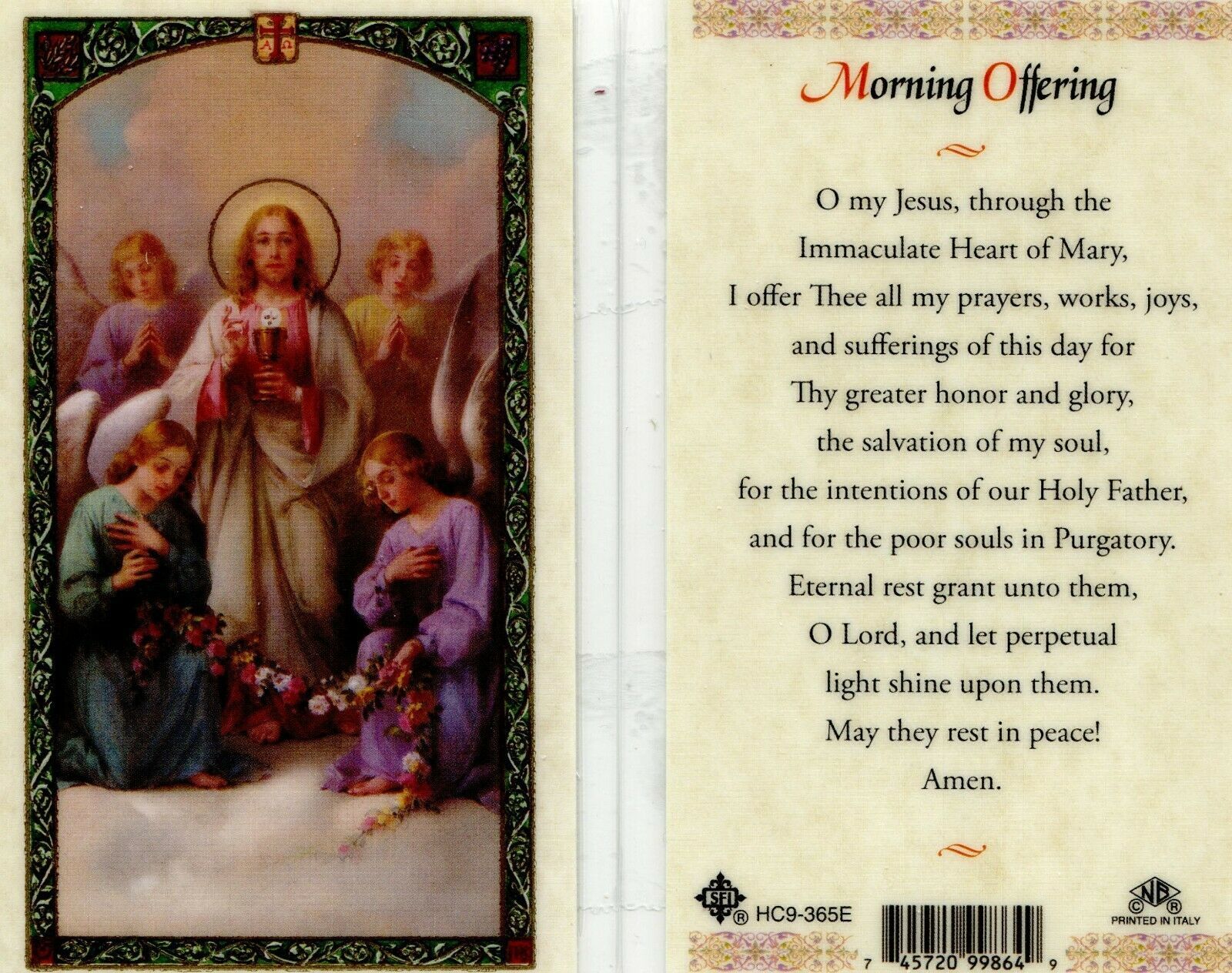
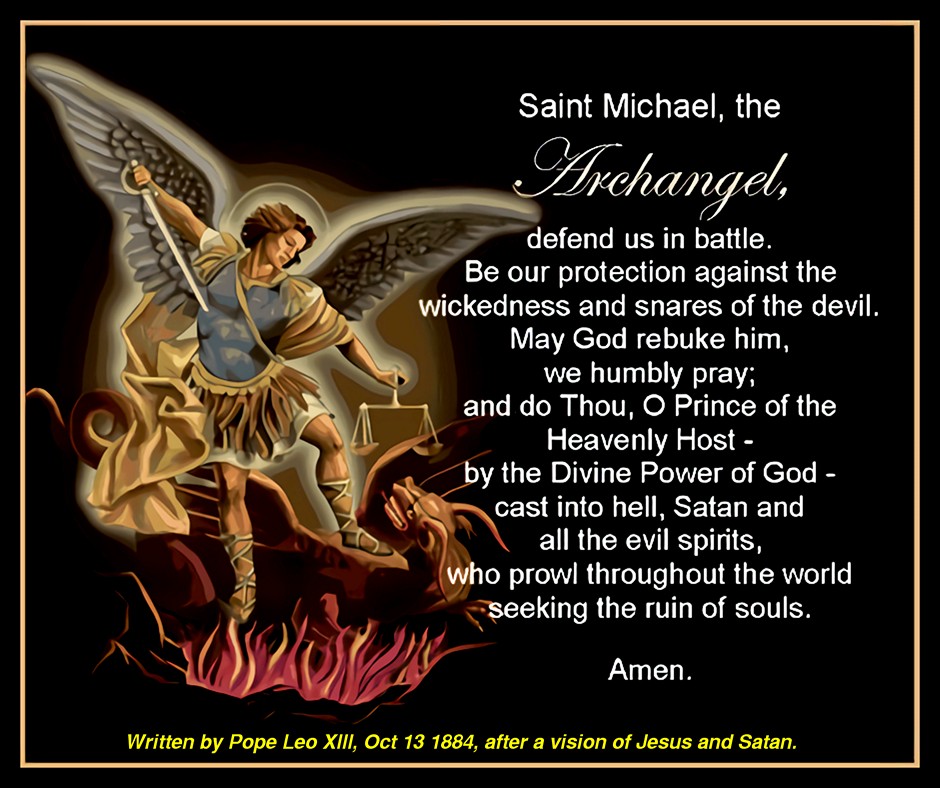
The Month of September is Dedicated to Devotion to Our Lady of Sorrows

“And Simeon blessed them and said to Mary his mother, “Behold, this child is set for the fall and rising of many in Israel, and for a sign that is spoken against (and a sword will pierce through your own soul also), that thoughts out of many hearts may be revealed.”
(Luke 2:34-35)

O Holy Virgin Mary, Mother of the Lord of Heaven and of Earth, Our Lady of Guadalupe, guide and protect the Roman Pontiff, Pope Leo XIV. Through your intercession, may he receive in abundance the grace of the Successor of Saint Peter: the perpetual and visible source and foundation of the unity of our Bishops and of all our brothers and sisters in the Mystical Body of your Divine Son. Unite Pope Leo’s heart to your Immaculate Heart, leading him to rest his heart ever more securely in the glorious-pierced Heart of Jesus, so that he may confirm us in the Catholic faith, in the worship of God in spirit and truth, and in a good and holy Christian life. In the tumult of the present time, keep Pope Leo securely within the hollow of your mantle, in the crossing of your arms, protecting him from Satan, the Father of Lies, and from every evil spirit. Implore Our Lord to grant him, in particular, the wisdom and courage to be a true Shepherd of the Church throughout the world. With you, I place all my trust in Christ, the Good Shepherd, Who alone is our help and salvation. Amen.
Heart of Jesus, formed by the Holy Spirit in the womb of the Virgin Mother, have mercy upon us!
Our Lady of Guadalupe, Queen of the Apostles, pray for us!
Saints Peter and Paul, pray for us!
Pope Saint Leo the Great, pray for us!
Raymond Leo Cardinal BURKE
May 18, 2025.
Pope Leo XIV’s prayer intentions for the month of September, 2025:
For our relationship with all of creation
Let us pray that, inspired by Saint Francis, we might experience our interdependence with all creatures who are loved by God and worthy of love and respect.

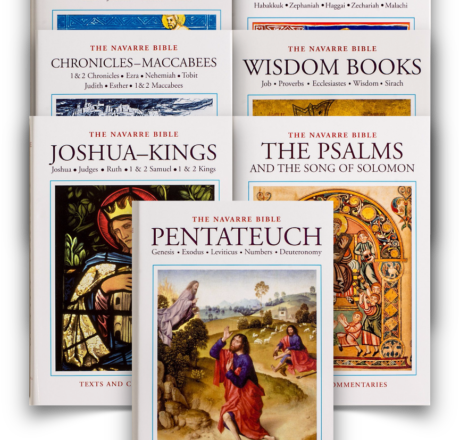
First Reading:
From: 1 Timothy 1:1-2, 12-17
Greeting
-----------
[1] Paul, an apostle of Christ Jesus by command of God our Savior and of Christ Jesus our hope,
[2] To Timothy, my true child in the faith: Grace, mercy, and peace from God the Father and Christ Jesus our Lord.
Paul Recalls His Own Conversion
--------------------------------------------
[12] I thank him who has given me strength for this, Christ Jesus our Lord, because he judged me faithful by appointing me to his service, [13] though I formerly blasphemed and persecuted and insulted him; but I received mercy because I had acted ignorantly in unbelief, [14] and the grace of our Lord overflowed for me with the faith and love that are in Christ Jesus. [15] The saying is sure and worthy of full acceptance, that Christ Jesus came into the world to save. And I am the foremost of sinners; [16] but I received mercy for this reason, that in me, as the foremost, Jesus Christ might display his perfect patience for an example to those who were to believe in him for eternal life. [17] To the king of ages, immortal, invisible, the only God, be honor and glory for ever and ever. Amen.
***********************************************************************
Commentary:
1-2. The heading is the standard heading used in correspondence at the time--the names of the sender and addressee, and some words of greeting (cf. note on 1 Cor 1).
"Apostle of Christ Jesus by command of God": the word can be translated as "command", "order", "disposition"; whichever is used, the expression is stronger than that used in other letters--"by the will of God" (1 Cor 1:1; 2 Cor 1:1; Eph 1:1; etc.)--and it shows that St Paul holds authority from God (he wants to underline this because he has things to say in the letter about how the church at Ephesus should be organized).
"God our Savior": in other letters the Apostle seldom uses this title, "Savior", and when he does he applies it to Jesus (Eph 5:23; Phil 3:20). In the Pastoral Epistles it occurs often and is used of Jesus (cf. 2 Tim 1:10; Tit 3:6) and especially of God the Father (cf. 1 Tim 2:3; 4:10; Tit 2:10; 3:4). In the Greco-Roman world it was quite common to describe people as saviors; for example, we find the word (applied to emperors and pagan gods) in stone inscriptions. St Paul, however, uses it in a restrictive sense; reviving a very typical Old Testament teaching (cf. Deut 32:15; 1 Sam 10:19; etc.), he teaches that God is our only Savior. Reflecting on this, St John Chrysostom comments: "We suffer many evils, but we harbor great hopes; we are exposed to dangers and snares, but we have a Savior, who is not just man, but God. Strength will never fail our Savior, for he is God; no matter how great the dangers, we will overcome them" ("Hom. on I Tim, ad loc.").
"Timothy, my true son in the faith": when St Paul wrote to the Philippians he praised Timothy's proven worth: "you know how as a son with a father he has served with me in the gospel" (Phil 2:22). Now, in this letter to his co-worker, he highlights Timothy's fidelity to Christian truth, in contrast to the behavior of self-appointed teachers who refuse to obey authority (cf. Heb 12:8).
"Grace, mercy and peace": a wish for "mercy" is added to the by now traditional wish for "grace and peace" (cf. note on Rom 1:7); perhaps this is meant to be an allusion to "the salvation accomplished by the Lord and his mercy" (John Paul II, "Dives in Misericordiae", 4), for in the language of the Bible asking for mercy is the same as asking for salvation: "Show us thy steadfast love [= mercy], O Lord, and grant us thy salvation" (Ps 85:7).
12-13. This clearly autobiographical passage, which shows the Apostle's humility (cf., e.g., 1 Cor 15:9-10), is evidence of the letter's Pauline authorship: it is difficult to believe that a later disciple would have dared to call St Paul a "blasphemer", "persecutor" or "insulter" or made him describe himself as "the foremost of sinners".
St Paul's conversion is an example of a miracle of grace; only by the mercy of God could he have been changed and become the Apostle of the Gentiles and such a faithful minister of the Gospel. This change which grace worked in Paul can also help all who approach the Church to have great confidence in God's mercy and forgiveness; like a good father, God is always ready to receive the repentant sinner.
The sacred text shows quite clearly that the initiative lies with God when it comes to calling people to Church office. The call to the priesthood is a grace from God; it is God who makes the choice and then he gives the person he has chosen the strength to fulfill his office worthily. In this connection Bishop Alvaro del Portillo has written: "Christian priesthood is not, then, in the line of ethical relationships among men nor on the level of a merely human attempt to approach God: it is a gift from God and it is irreversibly located on the vertical line of the search for man by his Creator and Sanctifier and on the sacramental line of the gratuitous opening up to man of God's intimate life. In other words, Christian priesthood is essentially (this is the only possible way it can be understood) an eminently sacred mission, both in its origin (Christ) and in its content (the divine mystery) and by the very manner in which it is conferred--a sacrament" ("On Priesthood", pp. 59f).
14. "In Christ Jesus": this expression is being used with a special technical meaning: it refers to the position of the new man who, after the "washing of regeneration and renewal in the Holy Spirit" (Tit 3:5) which takes place at Baptism, is now united to Christ, made a Christian. At Baptism the mercy of God not only justifies the sinner but causes him to share profoundly in God's own life by means of grace, faith and love. These three gifts are a sign that the Christian has truly been built into the body of Christ (cf. 2 Tim 1:13).
15. "The saying is sure and worthy of full acceptance": or, more literally, "Word of honor, which you can totally rely on". This form of words is used a number of times in the Pastoral Epistles to focus attention on some important doctrinal point (cf. 1 Tim 3:1; 4:9; 2 Tim 2:11; Tit 3-8).
The point being emphasized here is that "Christ Jesus came into the world to save sinners". The Apostle has condensed into very few words God's plan for the redemption of mankind, which he will go on to say more about later (cf. 1 Tim 2:3-7; Tit 2:11-14; 3:3-7). "The mercy of God is infinite," says St Francis of Assisi, "and, according to the Gospel, even if our sins were infinite, his mercy is yet greater than our sins. And the Apostle St Paul has said that Christ the blessed came into the world to save sinners" ("The Little Flowers of St Francis", chap. 26).
This is in fact one of the basic truths of faith and appears in the Creed: "For us men and for our salvation he came down from heaven". He came to save us from the only evil, that which can separate us from God--sin.
By his victory over sin Christ gave men and women the honor of being sons and daughters of God; this new character and status equips them to light up the world around them with the brightness of their Christian lives (cf. Phil 2:15). They can have this effect on others if they really commit themselves to have the same mind as "was in Christ Jesus" (Phil 2:5), for "it is impossible to live according to the heart of Jesus Christ and not to know that we are sent, as he was, 'to save all sinners' (1 Tim 1:15), with the clear realization that we ourselves need to trust in the mercy of God more and more every day. As a result, we will foster in ourselves a vehement desire to be co-redeemers with Christ, to save all souls with him" (St J. Escriva, "Christ Is Passing By", 121).
17. This section (vv. 12-17) closes with a solemn doxology. Similar exclamatory passages in praise of God appear elsewhere in the Apostle's writings (Rom 2:36; 16:27; Phil 4:20; etc.). This was probably an early formula used in the liturgy of Ephesus and other Asia Minor churches. The fact that it ends with an "Amen" seems to confirm this. In contrast to the energetic attempts of the civil authorities at the time to foster emperor-worship, Christians proclaimed that God is lord of the universe and will reign forever.
It is true, of course, that because God's glory is infinite, it cannot be enhanced by man extolling God's attributes. However, once one knows the greatness of God, creator and ruler of the universe, and knows that all things are dependent on him, one has a duty to show God due honor both internally and externally. Actions of that kind are expressions of the virtue of religion, whose "actions are directly and immediately ordered to the honor of God" ("Summa Theologiae" II-II, q. 81, a. 61). "Of all the duties which man has to fulfill that, without doubt, is the chiefest and holiest which commands him to worship God with devotion and piety. This follows of necessity from the truth that we are ever in the power of God, are ever guided by his will and providence, and, having come forth from him, must return to him" (Leo XIII, "Libertas Praestantissimum", 25).
---------------------------
Gospel Reading:
From: Luke 6:39-42
Integrity
------------
[39] He (Jesus) told them a parable: "Can a blind man lead a blind man? Will they not both fall into a pit? [40] A disciple is not above his teacher, but every one when he is fully taught will be like his teacher. [41] Why do you see the speck that is in your brother's eye, but do not notice the log that is in your eye? [42] Or how can you say to your brother, `Brother, let me take out the speck that is in your eye,' when you yourself do not see the log that is in your eye? You hypocrite, first take the log out of your own eye, and then you will see clearly to take out the speck that is in your brother's eye."
***********************************************************************
Commentary:
[None for Luke 6:39-42. Below is a commentary on a similar theme from Matthew 7:1-5:]
1. Jesus is condemning any rash judgments we make maliciously or carelessly about our brothers' behavior or feelings or motives. "Think badly and you will not be far wrong" is completely at odds with Jesus' teaching.
In speaking of Christian charity St. Paul lists its main features: "Love is patient and kind [...]. Love bears all things, believes all things, hopes all things, endures all things" (1 Corinthians 13:4, 5, 7). Therefore, "Never think badly of anyone, not even if the words or conduct of the person in question give you good grounds for doing so" (St. J. Escriva, "The Way", 442).
"Let us be slow to judge.--Each one sees things from his own point of view, as his mind, with all its limitations, tells him, and through eyes that are often dimmed and clouded by passion" ("ibid"., 451).
1-2. As elsewhere, the verbs in the passive voice ("you will be judged", "the measure you will be given") have God as their subject, even though He is not explicitly mentioned: "Do not judge OTHERS, that you be not judged BY GOD". Clearly the judgment referred to here is always a condemnatory judgment; therefore, if we do not want to be condemned by God, we should never condemn our neighbor. "God measures out according as we measure out and forgives as we forgive, and comes to our rescue with the same tenderness as He sees us having towards others" (Fray Luis de Leon, "Exposicion Del Libro De Job", chapter 29).
3-5. A person whose sight is distorted sees things as deformed, even though in fact they are not deformed. St. Augustine gives this advice: "Try to acquire those virtues which you think your brothers lack, and you will no longer see their defects, because you will not have them yourselves" ("Enarrationes In Psalmos", 30, 2, 7). In this connection, the saying, "A thief thinks that everyone else is a thief" is in line with this teaching of Jesus.
Besides: "To criticize, to destroy, is not difficult; any unskilled laborer knows how to drive his pick into the noble and finely-hewn stone of a cathedral. To construct: that is what requires the skill of a master" (St. J. Escriva, "The Way", 456).
Disclaimer: Opinions posted on Free Republic are those of the individual posters and do not necessarily represent the opinion of Free Republic or its management. All materials posted herein are protected by copyright law and the exemption for fair use of copyrighted works.

