Skip to comments.
Catholic Caucus: Daily Mass Readings 29-August-2025
Universalis/Jerusalem Bible ^
Posted on 08/29/2025 4:04:45 PM PDT by annalex
29 August 2025
The Beheading of Saint John the Baptist
on Friday of week 21 in Ordinary Time

St. John the Baptist Catholic Church, Ammansville, TXReadings at MassLiturgical Colour: Red. Year: C(I). Readings for the feria Readings for the memorial These are the readings for the feria
| First reading |
|---|
| 1 Thessalonians 4:1-8 |
|---|
What God wants is for you all to be holyBrothers, we urge you and appeal to you in the Lord Jesus to make more and more progress in the kind of life that you are meant to live: the life that God wants, as you learnt from us, and as you are already living it. You have not forgotten the instructions we gave you on the authority of the Lord Jesus. What God wants is for you all to be holy. He wants you to keep away from fornication, and each one of you to know how to use the body that belongs to him in a way that is holy and honourable, not giving way to selfish lust like the pagans who do not know God. He wants nobody at all ever to sin by taking advantage of a brother in these matters; the Lord always punishes sins of that sort, as we told you before and assured you. We have been called by God to be holy, not to be immoral; in other words, anyone who objects is not objecting to a human authority, but to God, who gives you his Holy Spirit.
| Responsorial Psalm |
|---|
| Psalm 96(97):1-2,5-6,10-12 |
|---|
Rejoice, you just, in the Lord. The Lord is king, let earth rejoice, let all the coastlands be glad. Cloud and darkness are his raiment; his throne, justice and right. Rejoice, you just, in the Lord. The mountains melt like wax before the Lord of all the earth. The skies proclaim his justice; all peoples see his glory. Rejoice, you just, in the Lord. The Lord loves those who hate evil; he guards the souls of his saints; he sets them free from the wicked. Rejoice, you just, in the Lord. Light shines forth for the just and joy for the upright of heart. Rejoice, you just, in the Lord; give glory to his holy name. Rejoice, you just, in the Lord.
Alleluia, alleluia! Happy those who are persecuted in the cause of right, for theirs is the kingdom of heaven. Alleluia!
The following reading is proper to the memorial, and must be used even if you have otherwise chosen to use the ferial readings. The beheading of John the BaptistHerod sent to have John arrested, and had him chained up in prison because of Herodias, his brother Philip’s wife whom he had married. For John had told Herod, ‘It is against the law for you to have your brother’s wife.’ As for Herodias, she was furious with him and wanted to kill him; but she was not able to, because Herod was afraid of John, knowing him to be a good and holy man, and gave him his protection. When he had heard him speak he was greatly perplexed, and yet he liked to listen to him. An opportunity came on Herod’s birthday when he gave a banquet for the nobles of his court, for his army officers and for the leading figures in Galilee. When the daughter of this same Herodias came in and danced, she delighted Herod and his guests; so the king said to the girl, ‘Ask me anything you like and I will give it you.’ And he swore her an oath, ‘I will give you anything you ask, even half my kingdom.’ She went out and said to her mother, ‘What shall I ask for?’ She replied, ‘The head of John the Baptist.’ The girl hurried straight back to the king and made her request, ‘I want you to give me John the Baptist’s head, here and now, on a dish.’ The king was deeply distressed but, thinking of the oaths he had sworn and of his guests, he was reluctant to break his word to her. So the king at once sent one of the bodyguard with orders to bring John’s head. The man went off and beheaded him in prison; then he brought the head on a dish and gave it to the girl, and the girl gave it to her mother. When John’s disciples heard about this, they came and took his body and laid it in a tomb. Continue These are the readings for the memorial
| First reading |
|---|
| Jeremiah 1:17-19 |
|---|
Stand up and tell them all I command you; do not be dismayed at their presenceThe word of the Lord was addressed to me, saying: ‘Brace yourself for action. Stand up and tell them all I command you. Do not be dismayed at their presence, or in their presence I will make you dismayed. ‘I, for my part, today will make you into a fortified city, a pillar of iron, and a wall of bronze to confront all this land: the kings of Judah, its princes, its priests and the country people. They will fight against you but shall not overcome you, for I am with you to deliver you – it is the Lord who speaks.’
| Responsorial Psalm |
|---|
| Psalm 70(71):1-6,15,17 |
|---|
My lips will tell of your help. In you, O Lord, I take refuge; let me never be put to shame. In your justice rescue me, free me: pay heed to me and save me. My lips will tell of your help. Be a rock where I can take refuge, a mighty stronghold to save me; for you are my rock, my stronghold. Free me from the hand of the wicked. My lips will tell of your help. It is you, O Lord, who are my hope, my trust, O Lord, since my youth. On you I have leaned from my birth, from my mother’s womb you have been my help. My lips will tell of your help. My lips will tell of your justice and day by day of your help. O God, you have taught me from my youth and I proclaim your wonders still. My lips will tell of your help.
Alleluia, alleluia! Happy those who are persecuted in the cause of right, for theirs is the kingdom of heaven. Alleluia!
The beheading of John the BaptistHerod sent to have John arrested, and had him chained up in prison because of Herodias, his brother Philip’s wife whom he had married. For John had told Herod, ‘It is against the law for you to have your brother’s wife.’ As for Herodias, she was furious with him and wanted to kill him; but she was not able to, because Herod was afraid of John, knowing him to be a good and holy man, and gave him his protection. When he had heard him speak he was greatly perplexed, and yet he liked to listen to him. An opportunity came on Herod’s birthday when he gave a banquet for the nobles of his court, for his army officers and for the leading figures in Galilee. When the daughter of this same Herodias came in and danced, she delighted Herod and his guests; so the king said to the girl, ‘Ask me anything you like and I will give it you.’ And he swore her an oath, ‘I will give you anything you ask, even half my kingdom.’ She went out and said to her mother, ‘What shall I ask for?’ She replied, ‘The head of John the Baptist.’ The girl hurried straight back to the king and made her request, ‘I want you to give me John the Baptist’s head, here and now, on a dish.’ The king was deeply distressed but, thinking of the oaths he had sworn and of his guests, he was reluctant to break his word to her. So the king at once sent one of the bodyguard with orders to bring John’s head. The man went off and beheaded him in prison; then he brought the head on a dish and gave it to the girl, and the girl gave it to her mother. When John’s disciples heard about this, they came and took his body and laid it in a tomb. Continue You can also view this page with the New Testament in Greek and English. Christian Art Each day, The Christian Art website gives a picture and reflection on the Gospel of the day. The readings on this page are from the Jerusalem Bible, which is used at Mass in most of the English-speaking world. The New American Bible readings, which are used at Mass in the United States, are available in the Universalis apps, programs and downloads.
You can also view this page with the Gospel in Greek and English. |
TOPICS: Catholic; General Discusssion; Prayer; Worship
KEYWORDS: catholic; mk6; ordinarytime; prayer
For your reading, reflection, faith-sharing, comments, questions, discussion.
1
posted on
08/29/2025 4:04:45 PM PDT
by
annalex
To: All
KEYWORDS: catholic; mk6; ordinarytime; prayer
2
posted on
08/29/2025 4:05:12 PM PDT
by
annalex
(fear them not)
To: nickcarraway; NYer; ELS; Pyro7480; livius; ArrogantBustard; Catholicguy; RobbyS; marshmallow; ...

Alleluia Ping Please FReepmail me to get on/off the Alleluia Ping List.
3
posted on
08/29/2025 4:06:02 PM PDT
by
annalex
(fear them not)
To: annalex
4
posted on
08/29/2025 4:06:29 PM PDT
by
annalex
(fear them not)
To: annalex
| Mark |
| | English: Douay-Rheims | Latin: Vulgata Clementina | Greek NT: Byzantine/Majority Text (2000) |
| | Mark 6
|
| 17. | For Herod himself had sent and apprehended John, and bound him in prison for the sake of Herodias the wife of Philip his brother, because he had married her. | Ipse enim Herodes misit, ac tenuit Joannem, et vinxit eum in carcere propter Herodiadem uxorem Philippi fratris sui, quia duxerat eam. | αυτος γαρ ο ηρωδης αποστειλας εκρατησεν τον ιωαννην και εδησεν αυτον εν φυλακη δια ηρωδιαδα την γυναικα φιλιππου του αδελφου αυτου οτι αυτην εγαμησεν |
| 18. | For John said to Herod: It is not lawful for thee to have thy brother's wife. | Dicebat enim Joannes Herodi : Non licet tibi habere uxorem fratris tui. | ελεγεν γαρ ο ιωαννης τω ηρωδη οτι ουκ εξεστιν σοι εχειν την γυναικα του αδελφου σου |
| 19. | Now Herodias laid snares for him: and was desirous to put him to death, and could not. | Herodias autem insidiabatur illi : et volebat occidere eum, nec poterat. | η δε ηρωδιας ενειχεν αυτω και ηθελεν αυτον αποκτειναι και ουκ ηδυνατο |
| 20. | For Herod feared John, knowing him to be a just and holy man: and kept him, and when he heard him, did many things: and he heard him willingly. | Herodes enim metuebat Joannem, sciens eum virum justum et sanctum : et custodiebat eum, et audito eo multa faciebat, et libenter eum audiebat. | ο γαρ ηρωδης εφοβειτο τον ιωαννην ειδως αυτον ανδρα δικαιον και αγιον και συνετηρει αυτον και ακουσας αυτου πολλα εποιει και ηδεως αυτου ηκουεν |
| 21. | And when a convenient day was come, Herod made a supper for his birthday, for the princes, and tribunes, and chief men of Galilee. | Et cum dies opportunus accidisset, Herodes natalis sui cœnam fecit principibus, et tribunis, et primis Galilææ : | και γενομενης ημερας ευκαιρου οτε ηρωδης τοις γενεσιοις αυτου δειπνον εποιει τοις μεγιστασιν αυτου και τοις χιλιαρχοις και τοις πρωτοις της γαλιλαιας |
| 22. | And when the daughter of the same Herodias had come in, and had danced, and pleased Herod, and them that were at table with him, the king said to the damsel: Ask of me what thou wilt, and I will give it thee. | cumque introisset filia ipsius Herodiadis, et saltasset, et placuisset Herodi, simulque recumbentibus, rex ait puellæ : Pete a me quod vis, et dabo tibi : | και εισελθουσης της θυγατρος αυτης της ηρωδιαδος και ορχησαμενης και αρεσασης τω ηρωδη και τοις συνανακειμενοις ειπεν ο βασιλευς τω κορασιω αιτησον με ο εαν θελης και δωσω σοι |
| 23. | And he swore to her: Whatsoever thou shalt ask I will give thee, though it be the half of my kingdom. | et juravit illi : Quia quidquid petieris dabo tibi, licet dimidium regni mei. | και ωμοσεν αυτη οτι ο εαν με αιτησης δωσω σοι εως ημισους της βασιλειας μου |
| 24. | Who when she was gone out, said to her mother, What shall I ask? But she said: The head of John the Baptist. | Quæ cum exisset, dixit matri suæ : Quid petam ? At illa dixit : Caput Joannis Baptistæ. | η δε εξελθουσα ειπεν τη μητρι αυτης τι αιτησομαι η δε ειπεν την κεφαλην ιωαννου του βαπτιστου |
| 25. | And when she was come in immediately with haste to the king, she asked, saying: I will that forthwith thou give me in a dish, the head of John the Baptist. | Cumque introisset statim cum festinatione ad regem, petivit dicens : Volo ut protinus des mihi in disco caput Joannis Baptistæ. | και εισελθουσα ευθεως μετα σπουδης προς τον βασιλεα ητησατο λεγουσα θελω ινα μοι δως εξαυτης επι πινακι την κεφαλην ιωαννου του βαπτιστου |
| 26. | And the king was struck sad. Yet because of his oath, and because of them that were with him at table, he would not displease her: | Et contristatus est rex : propter jusjurandum, et propter simul discumbentes, noluit eam contristare : | και περιλυπος γενομενος ο βασιλευς δια τους ορκους και τους συνανακειμενους ουκ ηθελησεν αυτην αθετησαι |
| 27. | But sending an executioner, he commanded that his head should be brought in a dish. | sed misso speculatore præcepit afferri caput ejus in disco. Et decollavit eum in carcere, | και ευθεως αποστειλας ο βασιλευς σπεκουλατορα επεταξεν ενεχθηναι την κεφαλην αυτου |
| 28. | And he beheaded him in the prison, and brought his head in a dish: and gave it to the damsel, and the damsel gave it to her mother. | et attulit caput ejus in disco : et dedit illud puellæ, et puella dedit matri suæ. | ο δε απελθων απεκεφαλισεν αυτον εν τη φυλακη και ηνεγκεν την κεφαλην αυτου επι πινακι και εδωκεν αυτην τω κορασιω και το κορασιον εδωκεν αυτην τη μητρι αυτης |
| 29. | Which his disciples hearing came, and took his body, and laid it in a tomb. | Quo audito, discipuli ejus venerunt, et tulerunt corpus ejus : et posuerunt illud in monumento. | και ακουσαντες οι μαθηται αυτου ηλθον και ηραν το πτωμα αυτου και εθηκαν αυτο εν μνημειω |
5
posted on
08/29/2025 4:08:37 PM PDT
by
annalex
(fear them not)
To: annalex

Catena Aurea by St. Thomas Aguinas
6:17–29
17. For Herod himself had sent forth and laid hold upon John, and bound him in prison for Herodias’ sake, his brother Philip’s wife: for he had married her.
18. For John had said unto Herod, It is not lawful for thee to have thy brother’s wife.
19. Therefore Herodias had a quarrel against him, and would have killed him; but she could not;
20. For Herod feared John, knowing that he was a just man and an holy, and observed him; and when he heard him, he did many things, and heard him gladly.
21. And when a convenient day was come, that Herod on his birthday made a supper to his lords, high captains, and chief estates of Galilee;
22. And when the daughter of the said Herodias came in, and danced, and pleased Herod and them that sat with him, the king said unto the damsel, Ask of me whatsoever thou wilt, and I will give it thee.
23. And he sware unto her, Whatsoever thou shalt ask of me, I will give it thee, unto the half of my kingdom.
24. And she went forth, and said unto her mother, What shall I ask? And she said, The head of John the Baptist.
25. And she came in straightway with haste unto the king, and asked, saying, I will that thou give me by and by in a charger the head of John the Baptist.
26. And the king was exceeding sorry; yet for his oath’s sake, and for their sakes which sat with him, he would not reject her.
27. And immediately the king sent an executioner, and commanded his head to be brought: and he went and beheaded him in the prison,
28. And brought his head in a charger, and gave it to the damsel: and the damsel gave it to her mother.
29. And when his disciples heard of it, they came and took up his corpse, and laid it in a tomb.
THEOPHYLACT. The Evangelist Mark, taking occasion from what went before, here relates the death of the Forerunner, saying, For Herod himself had sent forth and laid hold upon John, and bound him in prison for Herodias’ sake, his brother Philip’s wife: for he had married her.
BEDE. (ubi sup.) Ancient history relates, that Philip, the son of Herod the great, under whom the Lord fled into Egypt, the brother of this Herod, under whom Christ suffered, married Herodias, the daughter of king Aretas; but afterwards, that his father-in-law, after certain disagreements had arisen with his son-in-law, had taken his daughter away, and, to the grief of her former husband, had given her in marriage to his enemy; therefore John the Baptist rebukes Herod and Herodias for contracting an unlawful union, and because it was not allowed for a man to marry his brother’s wife during his lifetime.
THEOPHYLACT. The law also commanded a brother to marry his brother’s wife, if he died without children; but in this case there was a daughter, which made the marriage criminal: there follows, Therefore Herodias had a quarrel against him, and would have killed him; but she could not.
BEDE. (ubi sup.) For Herodias was afraid, lest Herod should repent at some time, or be reconciled to his brother Philip, and so the unlawful marriage be divorced. It goes on, For Herod feared John, knowing that he was a just man, and an holy.
GLOSS. (non occ.) He feared him, I say, because he revered him, for he knew him to be just in his dealings with men, and holy towards God, and he took care that Herodias should not slay him. And when he heard him, he did many things, for he thought that he spake by the Spirit of God, and heard him gladly, because he considered that what he said was profitable.
THEOPHYLACT. But see how great is the fury of lust, for though Herod had such an awe and fear of John, he forgets it all, that he may minister to his fornication.
REMIGIUS. For his lustful will drove him to lay hands on a man, whom he knew to be just and holy. And by this, we may see how a less fault became the cause to him of a greater; as it is said, (Rev. 22:11) He which is filthy, let him be filthy still. It goes on, And when a convenient day was come, that Herod on his birthday made a supper to his lords, high captains, and chief estates of Galilee.
BEDE. (ubi sup.) The only men whom we read of, as celebrating their birthdays with festive joys are Herod and Pharaoh, but each, with an evil presage, stained his birthday with blood; Herod, however, with so much the greater wickedness, as he slew the holy and guiltless teacher of truth, and that, by the wish, and at the instance of a female dancer. For there follows. And when the daughter of the said Herodias came in, and danced, and pleased Herod and them that sat with him, the king said unto the damsel, Ask of me whatsoever thou wilt, and I will give it thee.
THEOPHYLACT. For during the banquet, Satan danced in the person of the damsel, and the wicked oath is completed. For it goes on, And he sware unto her, Whatsoever thou shalt ask of me, I will give it thee, unto the half of my kingdom.
BEDE. (ubi sup.) His oath does not excuse his murder, for perchance his reason for swearing was, that he might find an opportunity for slaying, and if she had demanded the death of his father and mother, he surely would not have granted it. It goes on, And she went forth, and said unto her mother, What shall I ask? And she said, The head of John the Baptist. Worthy is blood to be asked as the reward of such a deed as dancing. It goes on, And she came in straightway with haste, &c.
THEOPHYLACT. The malignant woman begs that the head of John be given to her immediately, that is, at once, in that very hour, for she feared lest Herod should repent. There follows, And the king was exceeding sorry.
BEDE. (ubi sup.) It is usual with Scripture, that the historian should relate events as they were then believed by all, thus Joseph is called the father of Jesus by Mary herself. So now also Herod is said to be exceeding sorry, for so the guests thought, since the hypocrite bore sadness on his face, when he had joy in his heart; and he excuses his wickedness by his oath, that he might be impious under pretence of piety. Wherefore there follows, For his oath’s sake, and for their sakes who sat with him, he would not reject her.
THEOPHYLACT. Herod not being his own master, but full of lust, fulfilled his oath, and slew the just man; it would have been better however to break his oath, than to commit so great a sin.
BEDE. (ubi sup.) In that again which is added, And for their sakes who sat with him, he wishes to make all partakers in his guilt, that a bloody feast might be set before luxurious and impure guests. Wherefore it goes on, But sending an executioner, he commanded his head to be brought in a charger.
THEOPHYLACT. ‘Spiculator’ is the name for the public servant commissioned to put men to death.
BEDE. Now Herod was not ashamed to bring before his guests the head of a murdered man; but we do not read of such an act of madness in Pharaoh. From both examples, however, it is proved to be more useful, often to call to mind the coming day of our death, by fear and by living chastely, than to celebrate the day of our birth with luxury. For man is born in the world to toil, but the elect pass by death out of the world to repose. It goes on, And he beheaded him in prison, &c.
GREGORY. (Mor. 3, 7) I cannot, without the greatest wonder, reflect that he, who was filled even in his mother’s womb with the spirit of prophecy, and who was the greatest that had arisen amongst those born of women, is sent into prison by wicked men, is beheaded for the dancing of a girl, and though a man of so great austerity, meets death through such a foul instrument. Are we to suppose that there was something evil in his life, to be wiped away by so ignominious a death? When, however, could he commit a sin even in his eating, whose food was only locusts and wild honey? How could he offend in his conversation, who never quitted the wilderness? How is it that Almighty God so despises in this life those whom He has so sublimely chosen before all ages, if it be not for the reason, which is plain to the piety of the faithful, that He thus sinks them into the lowest place, because He sees how He is rewarding them in the highest, and outwardly He throws them down amongst things despised, because inwardly He draws them up even to incomprehensible things. Let each then infer from this what they shall suffer, whom He rejects, if He so grieves those whom he loves.
BEDE. (ubi sup.) There follows, And when his disciples heard of it, they came and took up his corpse, and laid it in a tomb. Josephus relates, that John was brought bound into the castle of Macheron, and there slain; and ecclesiastical history (Theodoret. Hist. Eccles. 3:3) says that he was buried in Sebaste, a city of Palestine, once called Samaria. But the beheading of John the Baptist signifies the lessening of that fame, by which he was thought to be Christ by the people, as the raising of our Saviour on the cross typifies the advance of the faith, in that He Himself, who was first looked upon as a prophet by the multitude, was recognised as the Son of God by all the faithful; wherefore John, who was destined to decrease, was born when the daylight begins to wax short; but the Lord at that season of the year in which the day begins to lengthen.
THEOPHYLACT. In a mystical way, however, Herod, whose name means, ‘of skin,’ is the people of the Jews, and the wife to whom he was wedded means vain glory, whose daughter even now encircles the Jews with her dance, namely, a false understanding of the Scriptures; they indeed beheaded John, that is, the word of prophecy, and hold to him without Christ, his head.
PSEUDO-JEROME. Or else, The head of the law, which is Christ, is cut off from his own body, that is, the Jewish people, and is given to a Gentile damsel, that is, the Roman Church, and the damsel gives it to her adulterous mother, that is, to the synagogue, who in the end will believe. The body of John is buried, his head is put in a dish; thus the human Letter is covered over, the Spirit is honoured, and received on the altar.
Catena Aurea Mark 6
6
posted on
08/29/2025 4:09:49 PM PDT
by
annalex
(fear them not)
To: annalex

Feast of Herod
Spinello Aretino
1385
Tempera on panel, 35 x 34,3 cm
Szépmûvészeti Múzeum, Budapest
7
posted on
08/29/2025 4:10:10 PM PDT
by
annalex
(fear them not)
To: annalex
Who Was St. John the Baptist? 11 Things to Know and Share
John the Baptist is a mysterious figure in the New Testament.
SIGN UP FOR OUR NEWSLETTER HERE
He was famous in his own day, even before he became the herald of Christ.
We even know about him from outside the New Testament.
The Solemnity of the Nativity of St. John the Baptist is June 24, and the Memorial of the Passion of St. John the Baptist is Aug. 29, so it’s an excellent time to catch up on him.
Here are 11 things to know and share ...
1) How was John the Baptist related to Jesus?
John was related to Jesus through their mothers. In Luke 1:36, Elizabeth is described as Mary’s “kinswoman,” meaning that they were related in some way through marriage or blood.
Most likely, it was a blood relationship, but neither a particularly close or distant one.
Elizabeth, being elderly, may have been an aunt, great-aunt, or one of the many types of “cousin.” The precise relationship cannot be determined.
This means that Jesus and John were cousins in one or another senses of the term.
2) When did John the Baptist’s ministry begin?
Luke gives us an extraordinarily precise date for the beginning of John’s ministry. He writes:
In the fifteenth year of the reign of Tiberius Caesar . . . the word of God came to John the son of Zechariah in the wilderness; and he went into all the region about the Jordan, preaching a baptism of repentance for the forgiveness of sins [Luke 3:1-3].
“The fifteenth year of Tiberius Caesar” is most naturally understood as a reference to A.D. 29.
This is important also because Luke suggests that Jesus’ ministry began shortly after John’s did, which places the likely date of Jesus’ baptism in A.D. 29 or early A.D. 30.
3) Why did John come baptizing?
Scripture presents us with several reasons.
He served as the forerunner or herald of the Messiah and was to prepare for him by fulfilling an Elijah-like role by calling the nation to repentance.
In keeping with that, he baptized people as a sign of their repentance.
He also came to identify and announce the Messiah. According to John the Baptist: “I myself did not know him; but for this I came baptizing with water, that he might be revealed to Israel” (John 1:31).
This identification was made when he baptized Jesus: “I saw the Spirit descend as a dove from heaven, and it remained on him. I myself did not know him; but he who sent me to baptize with water said to me, ‘He on whom you see the Spirit descend and remain, this is he who baptizes with the Holy Spirit.’ And I have seen and have borne witness that this is the Son of God” (1:32-34).
4) How did John’s arrest affect Jesus?
The gospels indicate that the early ministries of John the Baptist and Jesus both took place in Judea, in the southern portion of Israel, near Jerusalem.
But John was arrested by Herod Antipas, the ruler of Galilee and Perea, which included part of the wilderness near Jerusalem.
This led Jesus to begin his ministry in Galilee:
Now when he heard that John had been arrested, he withdrew into Galilee [Matthew 4:12].
5) What does John have to teach us about on-the-job morals?
Quite a bit! He was quizzed by both tax-collectors and soldiers about what they needed to do to be right with God.
Both of these positions required cooperation with the Roman Empire, and they were wondering if they had to quit their jobs.
John tells them no, but to do their jobs in a righteous manner. This is important for us today as so many are required to cooperate with employers, states, and corporations that are — in part — engaged in immoral actions.
We read:
Tax collectors also came to be baptized, and said to him, “Teacher, what shall we do?”
And he said to them, “Collect no more than is appointed you.”
Soldiers also asked him, “And we, what shall we do?”
And he said to them, “Rob no one by violence or by false accusation, and be content with your wages” [Luke 3:12-14].
6) Was John the Baptist Elijah reincarnated?
No. In Jesus’ day, the scribes predicted that Elijah would return before the coming of the Messiah.
At one point Jesus was discussing John the Baptist and said, “if you are willing to accept it, he is Elijah who is to come” (Matthew 11:14).
This has led some New Agers to assert that John the Baptist was the reincarnation of Elijah.
There are several problems with this. Not the least of them is that Elijah never died.
If you read 2 Kings 2:11, you’ll see that — instead of dying — Elijah was assumed into heaven by a whirlwind (biblical text here).
Since Elijah never died, he could not be reincarnated.
By identifying John the Baptist as the “Elijah” who was to come, Jesus indicated that the fulfillment of the Elijah prophecy was not meant to be taken in the literalistic way that the scribes of his day took it.
Elijah himself was not to return and go about Judaea, ministering to people. Instead, someone like Elijah was to appear and do this, and that person was John the Baptist.
7) How famous was John the Baptist in his own day?
It’s easy for us to think of John the Baptist as simply the forerunner and herald of Christ, but he was quite famous in his own right.
Two points make this very clear:
- The movement he began ended up having followers in distant lands.
- We have information about him from outside the New Testament.
8) How did he get followers outside of Israel?
Apparently through the preaching of individuals who spread his message elsewhere.
One of these seems to have been Apollos, who later became a Christian evangelist.
According to Acts:
Now a Jew named Apollos, a native of Alexandria, came to Ephesus. He was an eloquent man, well versed in the scriptures.
He had been instructed in the way of the Lord; and being fervent in spirit, he spoke and taught accurately the things concerning Jesus, though he knew only the baptism of John [Acts 18:24-25].
Apparently, Apollos had some knowledge of the connection between John the Baptist and the Messiah, but only limited knowledge. He did not know about Christian baptism and the difference between it and John’s baptism.
Aquila and Priscilla gave him supplementary knowledge to complete his understanding of the Christian message (Acts 18:26-28), but word apparently did not get to all of his followers at first.
When St. Paul returned to Ephesus, he found about a dozen of his apparent disciples in Ephesus, who had heard of John’s baptism but not Christian baptism and the Holy Spirit (Acts 19:1-7). These were apparently converts made by Apollos based on his knowledge of John the Baptist’s movement, before he learned the full message of Christ.
9) Who killed John the Baptist?
That would be Herod Antipas, one of the sons of Herod the Great, who inherited the regions of Galilee and Perea as his territories.
The gospels portray him as a complex man. For a start, he has an unlawful marriage. At some point, he apparently stole Herodias, the wife of his brother Herod Philip.
That put him in opposition to John the Baptist, who opposed the union (Mark 6:18), leading Herod to arrest John (Matthew 14:3).
Although he had John in custody, and although his wife hated John and wanted him dead, Herod Antipas served as John’s protector and had an unusual fascination with the fiery preacher: “Herod feared John, knowing that he was a righteous and holy man, and kept him safe. When he heard him, he was much perplexed; and yet he heard him gladly” (Mark 6:20).
Even John’s death did not end Antipas’s fascination with him. When he began to hear reports about Jesus, he thought Jesus might be John raised from the dead (Mark 6:14), and he sought to see Jesus for himself (Luke 9:9).
10) Why was John killed?
Herod Antipas’s wife, Herodias, hated John with a passion. (Presumably for publicly criticizing her betrayal of her former husband — Herod Philip — and her marrying his brother.)
Eventually, after her daughter Salome delighted Antipas with a special dance at his birthday party, Herodias was able to manipulate him into giving the order for John’s death by beheading (Mark 6:21-28).
11) Where do we learn of John the Baptist outside the New Testament?
In the Jewish historian Josephus. He records that one of Herod’s armies was destroyed the A.D. 36 and states:
Now, some of the Jews thought that the destruction of Herod’s army came from God, and that very justly, as a punishment of what he did against John, that was called the Baptist; for Herod slew him, who was a good man, and commanded the Jews to exercise virtue, both as to righteousness towards one another, and piety towards God, and so to come to baptism; for that the washing [with water] would be acceptable to him, if they made use of it, not in order to the putting away [or the remission] of some sins [only], but for the purification of the body; supposing still that the soul was thoroughly purified beforehand by righteousness.
Now, when [many] others came in crowds about him, for they were greatly moved [or pleased] by hearing his words, Herod, who feared lest the great influence John had over the people might put it into his power and inclination to raise a rebellion (for they seemed ready to do anything he should advise), thought it best, by putting him to death, to prevent any mischief he might cause, and not bring himself into difficulties, by sparing a man who might make him repent of it when it should be too late.
Accordingly he was sent a prisoner, out of Herod’s suspicious temper, to Macherus, the castle I before mentioned, and was there put to death.
Now the Jews had an opinion that the destruction of this army was sent as a punishment upon Herod, and a mark of God’s displeasure against him [Antiquities 18:5:2].
The details of Josephus’ account differ from the gospels’. He apparently was not aware of the role of Herodias and her daughter in the matter, or Herod’s complex relationship with John, and attributes to him the standard suspicion of a prophetic leader that any ruler of the time might have.
The Christian community’s awareness of more of the details likely came through a woman named Joanna, who was the wife of a man named Chuza, who was a steward of Herod Antipas and thus a court insider.
Joanna was one of the followers of Jesus (Luke 8:1-3), and it may well have been through her that the more detailed information comes through her.
FIND THE POPE'S BIOGRAPHY HERE
This article originally appeared Aug. 28, 2013, at the Register.
ewtnvatican.com
8
posted on
08/29/2025 4:16:34 PM PDT
by
annalex
(fear them not)
To: annalex

St. John the Baptist
Titian
c.1542
9
posted on
08/29/2025 4:19:30 PM PDT
by
annalex
(fear them not)
To: annalex
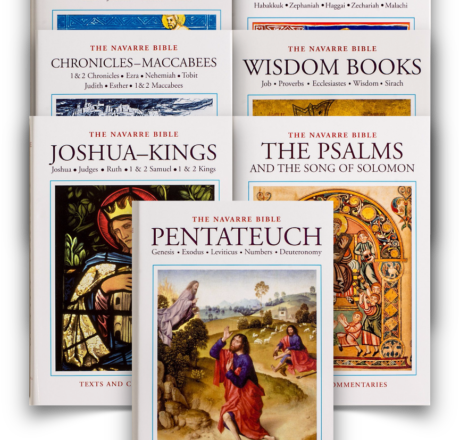
NAVARRE BIBLE COMMENTARY(RSV)
Ad Majorem Dei Gloriam (To the Greater Glory of God)
First Reading:
From: 1 Thessalonians 4:1-8
Paul Calls for Holiness and Purity
----------------------------------------
[1] Finally, brethren, we beseech and exhort you in the Lord Jesus, that as you learned from us how you ought to live and to please God, just as you are doing, you do so more and more. [2] For you know what instructions we gave you through the Lord Jesus. [3] For this is the will of God, your sanctification: that you abstain from immorality; [4] that each one of you know how to control his own body in holiness and honor, [5] not in the passion of lust like heathen who do not know God; [6] that no man transgress, and wrong his brother in this matters because the Lord is an avenger in all these things, as we solemnly forewarned you. [7] For God has not called us for uncleanness, but in holiness. [8] Therefore whoever disregards this, disregards not man but God, who gives his Holy Spirit to you.
***********************************************************************
Commentary:
1. St Paul encourages the Thessalonians "in the Lord Jesus" to follow his advice: he does not make this plea in his own name or using his personal influence but in the name of the Lord Jesus. Those who have positions of authority in the Church should be obeyed, above all, for supernatural reasons (that is what God desires) and not for any personal qualities they happen to have or simply because they are "superiors". It is this outlook which causes St Ignatius Loyola to say that "laying aside all private judgment, we ought to keep our minds prepared and ready to obey in all things the true Spouse of Christ our Lord, which is our Holy Mother, the hierarchical Church" ("Spiritual Exercises", 353).
The Thessalonians already knew the commandments, but knowing them is not enough; they must be put into practice. St John Chrysostom comments: "Good land does something more than give back the grain put into it; and therefore the soul should not limit itself to doing what is laid down, but should go further [...]. Two things make for virtue--avoiding evil and doing good. Fleeing from evil is not the be-all of virtue; it is the beginning of the path that leads to virtue. One needs, in addition, to have an ardent desire to be good and to do good" ("Hom. on 1 Thess, ad loc.").
3. What the Apostle says here reflects our Lord's teaching in the Sermon on the Mount: "You, therefore, must be perfect, as your heavenly Father is perfect" (Mt 5:48). The call to holiness is a universal one: it is not addressed only to a few, but to everyone: "Christ, the Son of God, who with the Father and the Spirit is hailed as 'alone holy', loved the Church as his Bride, giving himself up for her so as to sanctify her (cf. Eph 5:25-26); he joined her to himself as his body and endowed her with the gift of the Holy Spirit for the glory of God. Therefore all in the Church, whether they belong to the hierarchy or are cared for by it, are called to holiness, according to the Apostle's saying: 'For this is the will of God, your sanctification' (1 Thess 4:3; cf. Eph 1:4)" (Vatican II, "Lumen Gentium", 39).
In the Old Testament holiness is the highest attribute of God. He is holy, and he asks men to be holy, pointing out that the model and cause of man's holiness is the holiness of God: "You shall be holy; for I the Lord your God am holy" (Lev 19:3).
The universal call to holiness was the core of the teaching of the founder of Opus Dei; it was a message he preached constantly from l928 up to his death in 1975: "We are deeply moved, and our hearts profoundly shaken, when we listen attentively to that cry of St Paul: 'This is the will of God, your sanctification' [...]. He calls each and every one to holiness; he asks each and every one to love him—young and old, single and married, healthy and sick, learned and unlearned, no matter where they work, or where they are" ("Friends of God", 294).
"Christ's invitation to holiness, which he addresses to all men without exception, puts each one of us under an obligation to cultivate our interior life and to struggle daily to practise the Christian virtues; and not just in any old way, nor in a way which is above average or even excellent. No; we must strive to the point of heroism in the strictest and most exacting sense of the word" ("ibid.", 3).
4-8. Man "is obliged to regard his body as good and to hold it in honor since God has created it and will raise it up on the last day [...]. His very dignity therefore requires that he should glorify God in his body (cf. 1 Cor 6:13-20) and not allow it to serve the evil inclinations of his heart" (Vatican II, ("Gaudium Et Spes", 14).
"Immorality" (v. 3): the word used would be translated as "fornication", were the style classical Greek; however, by St Paul's time the word had come to refer to any kind of sexual practice outside marriage or not in accordance with the aims of marriage. The word translated as "body" literally means "vessel" and it can refer either to one's body or to one's own wife. If "wife" is meant, then the passage should be taken as an exhortation to married fidelity and to proper use of marriage. Whichever meaning is correct, the sacred text is saying that God calls us to exercise self-control in holiness and honor; that means that one's body and its functions should be used in the way God means them to be used. The Lord of life has entrusted to men and women the mission to preserve life and to transmit it in a manner in keeping with human dignity. "Man's sexuality and the faculty of reproduction wondrously surpass the endowments of lower forms of life; therefore the acts proper to married life are to be ordered according to authentic human dignity and must be honored with the greatest reverence" ("Gaudium Et Spes", 51).
"Therefore," Monsignor Escriva comments, "when I remind you now that Christians must keep perfect chastity, I am referring to everyone—to the unmarried, who must practise complete continence; and to those who are married who practise chastity by fulfilling the duties of their state in life. If one has the spirit of God, chastity is not a troublesome and humiliating burden, but a joyful affirmation. Will-power, dominion, self-mastery do not come from the flesh or from instinct. They come from the will, especially if it is united to the Will of God. In order to be chaste (and not merely continent or decent) we must subject our passions to reason, but for a noble motive, namely, the promptings of Love" ("Friends of God", 177).
In addition to giving reasons for practising the virtue of chastity, the Apostle warns that God will punish those who commit sins against this virtue. "These crimes we are commenting on", says St John Chrysostom, "will in no way be overlooked. The enjoyment they give us is quite outweighed by the pain and suffering their punishment earns" ("Hom. on 1 Thess, ad loc.").
10
posted on
08/29/2025 6:05:41 PM PDT
by
fidelis
(Ecce Crucem Domini! Fugite partes adversae! Vicit Leo de tribu Juda, Radix David! Alleluia!)
Gospel Reading: From: Mark 6:14-29
John the Baptist Beheaded
-------------------------
[17] For Herod had sent and seized John, and bound him in prison for the sake of Herodias, his brother Philip's wife; because he had married her. [18] For John said to Herod, "It is not lawful for you to have your brother's wife." [19] And Herodias had a grudge against him, and wanted to kill him. But she could not, [20] for Herod feared John, knowing that he was a righteous and holy man, and kept him safe. When he heard him, he was much perplexed; and yet he heard him gladly. [21] But an opportunity came when Herod on his birthday gave a banquet for his courtiers and officers and the leading men of Galilee. [22] For when Herodias' daughter came in and danced, she pleased Herod and his guests; and the king said to the girl, "Ask me for whatever you wish, and I will grant it." [23] And he said to her, "Whatever you ask me, I will give you, even half of my kingdom." [24] And she went out, and said to her mother, "What shall I ask?" And she said, "The head of John the Baptizer." [25] And she came in immediately with haste to the king, and asked, saying, "I want you to give me at once the head of John the Baptizer on a platter." [26] And the king was exceedingly sorry; but because of his oath and his guests he did not want to break his word to her. [27] And immediately the king sent a soldier of the guard and gave him orders to bring his head. He went and beheaded him in prison, [28] and brought his head on a platter, and gave it to the girl; and the girl gave it to her mother. [29] When his disciples heard of it, they came and took his body, and laid it in a tomb.
***********************************************************************
Commentary:
16-29. It is interesting that the extensive account of the death of John the Baptist is inserted here in the Gospel narrative. The reason is St. John the Baptist's special relevance in the history of salvation: he is the Precursor, entrusted with the task of preparing the way for the Messiah. Besides, John the Baptist had a great reputation among the people: they believed him to be a prophet (Mark 11:32); some even thought he was the Messiah (Luke 3:15; John 1:20); and they flocked to him from many places (Mark 1:5). Jesus Himself said: "Among those born of women there has risen no one greater than John the Baptist" (Matthew 11:11). Later, the Apostle St. John will speak of him in the Gospel: "There was a man sent from God, whose name was John" (John 1:6); but the sacred text points out that, despite this, he was not the light, but rather the witness to the light (John 5:35). We are told here that he was a righteous man and preached to everyone what had to be preached: he had a word for people at large, for publicans, for soldiers (Luke 3:10-14); for Pharisees and Sadducees (Matthew 3:7-12); for King Herod himself (Mark 6: 18-20). This humble, upright and austere man paid with his life for the witness he bore to Jesus the Messiah (John 1:29 and 36-37).
26. Oaths and promises immoral in content should never be made, and, if made, should never be kept. This is the teaching of the Church, which is summed up in the "St. Pius X Catechism", 383, in the following way: "Are we obliged to keep oaths we have sworn to do unjust and unlawful things? Not only are we not obliged: we sin by making such oaths, for they are prohibited by the Law of God or of the Church.
11
posted on
08/29/2025 6:06:01 PM PDT
by
fidelis
(Ecce Crucem Domini! Fugite partes adversae! Vicit Leo de tribu Juda, Radix David! Alleluia!)
12
posted on
08/29/2025 6:06:51 PM PDT
by
fidelis
(Ecce Crucem Domini! Fugite partes adversae! Vicit Leo de tribu Juda, Radix David! Alleluia!)
Disclaimer:
Opinions posted on Free Republic are those of the individual
posters and do not necessarily represent the opinion of Free Republic or its
management. All materials posted herein are protected by copyright law and the
exemption for fair use of copyrighted works.
FreeRepublic.com is powered by software copyright 2000-2008 John Robinson
