Catena Aurea by St. Thomas Aguinas
23:23–24
23. Woe unto you, Scribes and Pharisees, hypocrites! for ye pay tithe of mint and anise and cummin, and have omitted the weighter matters of the law, judgment, mercy, and faith: these ought ye to have done, and not to leave the other undone.
24. Ye blind guides, which strain at a gnat, and swallow a camel.
CHRYSOSTOM. The Lord had said above that they bound heavy burdens upon others, which they themselves would not touch; He now again shews how they aimed at being correct in little things, but neglected weighty matters.
JEROME. The Lord had commanded, that for the maintenance of the Priests and Levites, whose portion was the Lord, tithes of every thing should be offered in the temple. Accordingly, the Pharisees (to dismiss mystical expositions) concerned themselves about this alone, that these trifling things should be paid in, but lightly esteemed other things which were weighty. He charges them then with covetousness in exacting carefully the tithes of worthless herbs, while they neglected justice in their transactions of business, mercy to the poor, and faith toward God, which are weighty things.
PSEUDO-CHRYSOSTOM. Or, because these covetous Priests, when any one did not bring his tithes of the smallest thing, made it a matter of grave reprehension; but when one injured his neighbour or sinned against God, they were at no pains to reprove him, careful only of their own profit, neglecting the glory of God, and the salvation of men. For to observe righteousness, to do mercy, and to have faith, these things God commanded for His own glory; but the payment of tithes He established for the support of the Priests, so that the Priests should minister to the people in spiritual things, and the people supply the Priests with carnal things. Thus is it at this time, when all are careful of their own honour, none of God’s honour; they jealously protect their own rights, but will not bestow any pains in the service of the Church. If the people pay not their tithes duly, they murmur; but if they see the people in sin, they utter not a word against them. But because some of the Scribes and Pharisees, to whom He is now speaking, were of the people, it is not unsuitable to make a different interpretation; and ‘to tithe’ may be used as well of him who pays, as of him who receives, tithes. The Scribes then and Pharisees offered tithes of the very best things for the purpose of displaying their righteousness; but in their judgments they were unjust, without mercy for their brethren, without faith for the truth.
ORIGEN. But because it was possible that some, hearing the Lord speak thus, might thereupon neglect paying tithes of small things, He prudently adds, These things ought ye to have done, (i. e. justice, mercy, and faith,) and not to leave the others undone, i. e. the tithing of mint, anise, and cummin.
REMIGIUS. In these words the Lord shews that all the commandments of the Law, greatest and least, are to be fulfilled. They also are refuted who give alms of the fruits of the earth, supposing that thus they cannot sin, whereas their alms profit them nothing unless they are careful to keep themselves from sin.
HILARY. And because it was much less guilt to omit the tithing of herbs than a duty of benevolence, the Lord derides them, Ye blind guides, which strain out a gnat, and swallow a camel.
JEROME. The camel I suppose to mean the weighty precepts, judgment, mercy, and faith; the gnat, the tithing of mint, anise, and cummin, and other valueless herbs. The greater of God’s commands we swallow and overlook, but shew our carelessness by a religious scrupulousness in little things which bring profit with them.
ORIGEN. Or, straining out a gnat, that is, putting from them small sins; swallowing a camel, that is, committing great sins, which He calls camels, from the size and distorted shape of that animal. Morally, The Scribes are those who think nothing else contained in Scripture than the bare letter exhibits; the Pharisees are all those who esteem themselves righteous, and separate themselves from others, saying, ‘Come not nigh me, for I am clean.’ Mint, anise, and cummin, are the seasoning, not the substantial part of food; as in our life and conversation there are some things necessary to justification, as judgment, mercy, and faith; and others which are like the seasoning of our actions, giving them a flavour and sweetness, as abstinence from laughter, fasting, bending the knee, and such like. How shall they not be judged blind who see not that it is of little avail to be a careful dispenser in the least things, if things of chief moment are neglected? These His present discourse overthrows; not forbidding to observe the little things, but bidding to keep more carefully the chief things.
GREGORY. (Mor. i. 15.) Or otherwise; The gnat stings while it hums; the camel bows its back to receive its load. The Jews then strained off the gnat, when they prayed to have the seditious robber released to them; and they swallowed the camel, when they sought with shouts the death of Him who had voluntarily taken on Him the burden of our mortality.
23:25–26
25. Woe unto you, Scribes and Pharisees, hypocrites! for ye make clean the outside of the cup and of the platter, but within they are full of extortion and excess.
26. Thou blind Pharisee, cleanse first that which is within the cup and platter, that the outside of them may be clean also.
JEROME. In different words, but to the same purport as before, He reproves the hypocrisy and dissimulation of the Pharisees, that they shewed one face to men abroad, but wore another at home. He means not here, that their scrupulousness respecting the cup and the platter was of any importance, but that they affected it to pass off their sanctity upon men; which is clear from His adding, but inwardly ye are full of ravening and uncleanness.
PSEUDO-CHRYSOSTOM. Or, He means that the Jews whenever they were to enter the temple or to offer sacrifice, or on any festivals, used to wash themselves, their clothes, and their vessels, but none cleansed himself from his sins; but God neither commends bodily cleanliness, nor condemns the contrary. But suppose foulness of person or of vessels were offensive to God, which must become foul by being used, how much more does He not abhor foulness of conscience, which we may, if we will, keep ever pure?
HILARY. He therefore is reproving those who, pursuing an ostentation of useless scrupulosity, neglected the discharge of useful morality. For it is the inside of the cup that is used; if that be foul, what profit is it to cleanse the outside? And therefore what is needed is purity of the inner conscience, that those things which are of the body may be clean without.
PSEUDO-CHRYSOSTOM. This He speaks not of the cup and platter of sense, but of that of the understanding, which may be pure before God, though it have never touched water; but if it have sinned, then though the water of the whole ocean and of all rivers have washed it, it is foul and guilty before God.
CHRYSOSTOM. Note, that speaking of tithes He said, These things ought ye to have done, and not to leave the other undone: for tithes are a kind of alms, and what wrong is it to give alms? Yet said He it not to enforce a legal superstition. But here, discoursing of things clean and unclean, He does not add this, but distinguishes and shews that external purity of necessity follows internal; the outside of the cup and platter signifying the body, the inside the soul.
ORIGEN. This discourse instructs us that we should hasten to become righteous, not to seem so. For whoso seeks to be thought so, cleanses the outside, and has care of the things that are seen, but neglects the heart and conscience. But he who seeks to cleanse that which is within, that is, the thoughts, makes by that means the things without clean also. All professors of false doctrine are cups cleansed on the outside, because of that show of religion which they affect, but within they are full of extortion and guile, hurrying men into error. The cup is a vessel for liquids, the platter for meat. Every discourse then of which we spiritually drink, and all speech by which we are fed, are vessels for meat and drink. They who study to set forth well wrought discourse rather than such as is full of healthful meaning, are cups cleansed without; but within full of the defilement of vanity. Also the letter of the Law and the Prophets is a cup of spiritual drink, and a platter of necessary food. The Scribes and Pharisees seek to make plain the outward sense; Christ’s disciples labour to exhibit the spiritual sense.
Catena Aurea Matthew 23
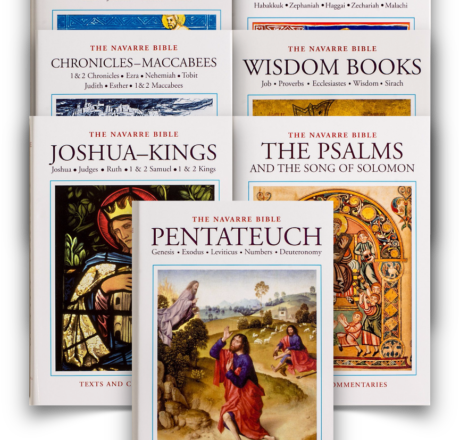
NAVARRE BIBLE COMMENTARY(RSV)
Ad Majorem Dei Gloriam (To the Greater Glory of God)
First Reading:
From: 1 Thessalonians 2:1-8
First Gospel Preaching in Thessalonica
-------------------------------------------------
[1] For you yourselves know, brethren, that our visit to you was not in vain; [2] but though we had already suffered and been shamefully treated at Philippi, as you know, we had courage in our God to declare to you the gospel of God in the face of great opposition. [3] For our appeal does not spring from error or uncleanness, nor is it made with guile; [4] but just as we have been approved by God to be entrusted with the gospel, so we speak, not to please men, but to please God who tests our hearts. [5] For we never used either words of flattery, as you know, or a cloak for greed as God is witness; [6] nor did we seek glory from men, whether from you or from others, though we might have made demands as apostles of Christ. [7] But we were gentle among you, like a nurse taking care of her children. [8] So, being affectionately desirous of you, we were ready to share with you not only the gospel of God but also our own selves, because you had become very dear to us.
***********************************************************************
Commentary:
1-2. As we know from the Acts of the Apostles, St Paul and his companions arrived in Thessalonica after the persecution unleashed in Philippi (cf. Acts 16:19-40). Soon after that, jealousy led Jews in Thessalonica to provoke unrest and they had to leave that city too (cf. Acts 17:5-10). Opposition should never prevent a person from doing his duty to spread the word of God. "Whenever God opens a door for the word in order to declare the mystery of Christ, then the living God, and he whom he has sent for the salvation of all, Jesus Christ, are confidently and perseveringly proclaimed to all men. And this is in order that non-Christians, whose heart is being opened by the Holy Spirit, might, by believing, freely turn to the Lord" (Vatican II, "Ad Gentes", 13).
Laziness or cowardice can provide all kinds of excuses. Therefore, it "would be useful if every Christian and every evangelizer were to pray about the following thought: men can gain salvation also in other ways, by God's mercy, even though we do not preach the Gospel to them; but as for us, can we gain salvation if through negligence or fear or shame--what St Paul called 'being ashamed of the gospel' (Rom 1:16)--or as a result of false ideas we fail to preach it? For that would be to betray the call of God, who wishes the seed to bear fruit through the voice of the ministers of the Gospel; and it will depend on us whether this grows into trees and produces its full fruit. Let us therefore preserve our fervor of spirit. Let us preserve the delightful and comforting joy of evangelizing, even when it is in tears that we must sow" (Paul Vl, "Evangelii Nuntiandi", 80).
Love of God and faithfulness to our calling should lead us "not to be afraid of the word of God in the midst of tribulation [...]; if someone has firm hope of attaining what he is promised, he will not yield, so as thereby to gain his reward" (St Thomas, "Commentary on 1 Thess, ad loc.").
3-6. Those who teach the Gospel should always do so with the right intention, for God "tests our hearts". "Let us remember how near he is to us and that not a single one of our thoughts or plans can ever be hidden from him" (St Clement of Rome, "Letter to the Corinthians", 1, 21).
Instruction of others in the faith "is sincere when it is given in keeping with the tenor and purpose that Christ had when he taught" ("Commentary on I Thess, ad loc."). St Paul castigates as "uncleanness" any betrayal of Christ's teaching: this is rather like the Old Testament's view of infidelity to Yahweh as adultery (cf. Is 1:21-26; Hos 1-3). When the Apostle says his preaching does not spring from uncleanness, he means that he does not do violence to or alter the content of the Christian message. As Paul Vl puts it, "the preacher of the Gospel will be a person who even at the price of personal renunciation and suffering always seeks the truth that he must transmit to others. He never betrays or hides truth out of a desire to please men, in order to astonish or to shock, nor for the sake of originality or a desire to make an impression. He does not refuse truth. He does not obscure revealed truth by being too idle to search for it, or for the sake of his own comfort, or out of fear. He does not neglect to study it. He serves it generously, without making it serve him" ("Evangelii Nuntiandi", 78).
The Apostle makes the point that at no time did he try to deceive anyone or act for personal gain--unlike the spreaders of false doctrine then to be found all over the Roman empire (cf. Acts 17:18-21). The Second Vatican Council evokes this when it says that "from the very beginnings of the Church the disciples of Christ strove to convert men to confess Christ as Lord, not however by applying coercion or with the use of techniques unworthy of the Gospel but, above all, by the power of the word of God" ("Dignitatis Humanae", 11).
7-9. St Paul could have "made demands" in a double sense--by using the full force of his apostolic authority, and by exercising his right to financial support from the community (cf. 1 Cor 9:14); but he did neither one thing (vv. 7-8) nor the other (v. 9).
On the contrary, he passed on the Gospel message and worked with the disinterested love and dedication of a nursing mother. St John Chrysostom, putting himself in St Paul's place, comments as follows: "It is true that I preached the Gospel to you in obedience to a commandment from God; but I love you with so great a love that I would have been ready to die for you. That is the perfect model of sincere, genuine love. A Christian who loves his neighbor should be inspired by these sentiments. He should not wait to be asked to give up his life for his brother; rather, he should offer it himself" ("Hom. on 1 Thess, ad loc.").
"The work of evangelization presupposes in the evangelizer an ever-increasing love for those whom he is evangelizing [...]. What is this love? It is much more than that of a teacher; it is the love of a father; and again, it is the love of a mother. It is this love that the Lord expects from every preacher of the Gospel, from every builder of the Church. A sign of love will be the concern to give the truth and to bring people into unity [...]. Yet another sign of love will be the effort to transmit to Christians not doubts and uncertainties born of an erudition poorly assimilated but certainties that are solid because they are anchored in the Word of God. The faithful need these certainties for their Christian life; they have a right to them, as children of God" (Paul VI, "Evangelii Nuntiandi", 79).
The Apostle's hardworking life strengthened his moral authority when he had to warn people against the temptation of idleness (cf. 1 Thess 4:11; it also was a very good example for the early generations of Christians.
Gospel Reading: From: Matthew 23:23-26
Jesus Indicts the Scribes and Pharisees
--------------------------------------------------
(Jesus said to the scribes and Pharisees,) [23] "Woe to you, scribes and Pharisees, hypocrites! for you tithe mint and dill and cummin, and have neglected the weightier matters of the law, justice and mercy and faith; these you ought to have done, without neglecting the others. [24] You blind guides, straining out a gnat and swallowing a camel!
[25] "Woe to you, scribes and Pharisees, hypocrites! for you cleanse the outside of the cup and of the plate, but inside they are full of extortion and rapacity. [26] You blind Pharisee! first cleanse the inside of the cup and of the plate, that the outside also may be clean."
******************************************
Commentary:
23. Mint, dill (aniseed) and cummin were herbs the Jews used in cooking or to perfume rooms. They were such insignificant items that they were not covered by the Mosaic precept on paying tithes (Leviticus 27:30-33; Deuteronomy 14:22ff); the precept did not apply to domestic animals and the more common agricultural products such as wheat, wine and olive oil. However, the Pharisees, being so intent on showing their scrupulous observance of the Law, paid tithes even of these herbs. Our Lord does not despise or reject the Law; He is simply telling people to get their priorities right: there is no point in attending to secondary details if one is neglecting what is really basic and important-- justice, mercy and faith.
24. The Pharisees were so scrupulous about not swallowing any insect which the Law declared to be unclean that they went as far as to filter drinks through a linen cloth. Our Lord criticizes them for being so inconsistent--straining mosquitos, being so scrupulous about little things, yet quite happily "swallowing a camel", committing serious sins.
25-26. After reproaching the Pharisees for their hypocrisy in religious practice, our Lord now goes on to indict their twofacedness in matters of morality. The Jews used to perform elaborate washings of plates, cups and other tableware, in line with the regulations on legal cleansing (cf. Mark 7:1-4).
The example He chooses suggests a deeper level of meaning--concern for that moral purity which should characterize man's interior life. What is of prime importance is cleanliness of heart, an upright intention, consistency between what one says and what one does, etc.