
Posted on 08/03/2025 6:31:56 AM PDT by fidelis
Someone in the crowd said to Jesus, “Teacher, tell my brother to share the inheritance with me.” He replied to him, “Friend, who appointed me as your judge and arbitrator?” Luke 12:13–14
Many things in life are not fair. Children are keenly aware of this any time they sense they have been cheated by a sibling. They complain to their parents, just as the person in the crowd quoted above complained to Jesus about his brother. We want justice and can become quite upset when we feel that we have been dealt an injustice.
The passage above is interesting because Jesus gently but clearly refuses to be the arbiter of justice for this man. It may indeed be the case that he was cheated out of his inheritance by his brother. But it’s interesting that Jesus not only refuses to resolve the dispute, He then goes on to teach about greed, suggesting that the cheated man was acting out of greed.
If you were cheated out of your inheritance by a sibling, how would you react? If a sibling were to do this, it would clearly be a sin and an injustice. But the question at hand is your reaction to being cheated. Being cheated by another might result in one of two responses. The most common response is to immediately seek justice, to fight back. But this is not always what God will inspire us to do. Instead, when we experience injustice, we are given an opportunity to love on a very deep level. And this must be our response. This is why Jesus said we must love our enemies and pray for those who persecute us. In the big picture of eternity, earthly injustices are always an opportunity for grace. This is evident by simply looking at the gravest injustice of the suffering and death of the Son of God. Jesus did not complain about being so cruelly treated. He did not call on the angels of Heaven to destroy the Pharisees and Romans who attacked Him. Instead, Jesus used the injustice inflicted upon Him as a foundation for His gift of salvation.
As we journey through this life, we need to decide whether we are going to live for this life or for eternity. We cannot have both. However, by choosing to live for eternity, we also enhance our lives here on earth in ways that nothing in this world can match. For example, say you experienced the unfortunate situation of extreme poverty. Say you were cheated out of your home and possessions and were left with nothing. Would this make you miserable? It might, but it doesn’t have to. Instead, such an unfortunate circumstance has the potential for you to live day-by-day, trusting in God’s providential care and to offer mercy in the face of injustice. And that is good. It is good for your eternal soul. It is good because it will motivate you to trust God on a very deep level and to become a beacon of God’s mercy.
Reflect, today, upon the spiritual and eternal blessings that come from relying solely upon God and not upon material wealth. This is a hard lesson for most people to learn. If this is your struggle, then try to take on the eternal perspective. Try to look beyond the temporary stability and pleasures that come from accumulating earthly wealth, so that you will see the eternal riches that come from seeking God alone. Everything in this world will one day pass away. In the light of that fact, recommit yourself to the embrace of God’s riches by loving others through every injustice you encounter in life...
Most merciful Lord, You endured the greatest injustice ever known. But in the face of that injustice, You offered mercy and the gift of salvation, transforming that injustice into the greatest act of love ever offered. Help me to imitate Your merciful heart and to see injustice, poverty, and every difficulty I encounter as an opportunity to turn more fully to You. Jesus, I trust in You.
Please keep in mind that this is a Catholic Caucus/Devotional thread for the purpose of prayerful reflection on the Sacred Scriptures and is closed to debate of any kind. Per FR policy on Religion Caucus threads, off-topic, argumentative, and abusive comments are not allowed and will be submitted to the Mods for deletion. Thanks, and God bless you.
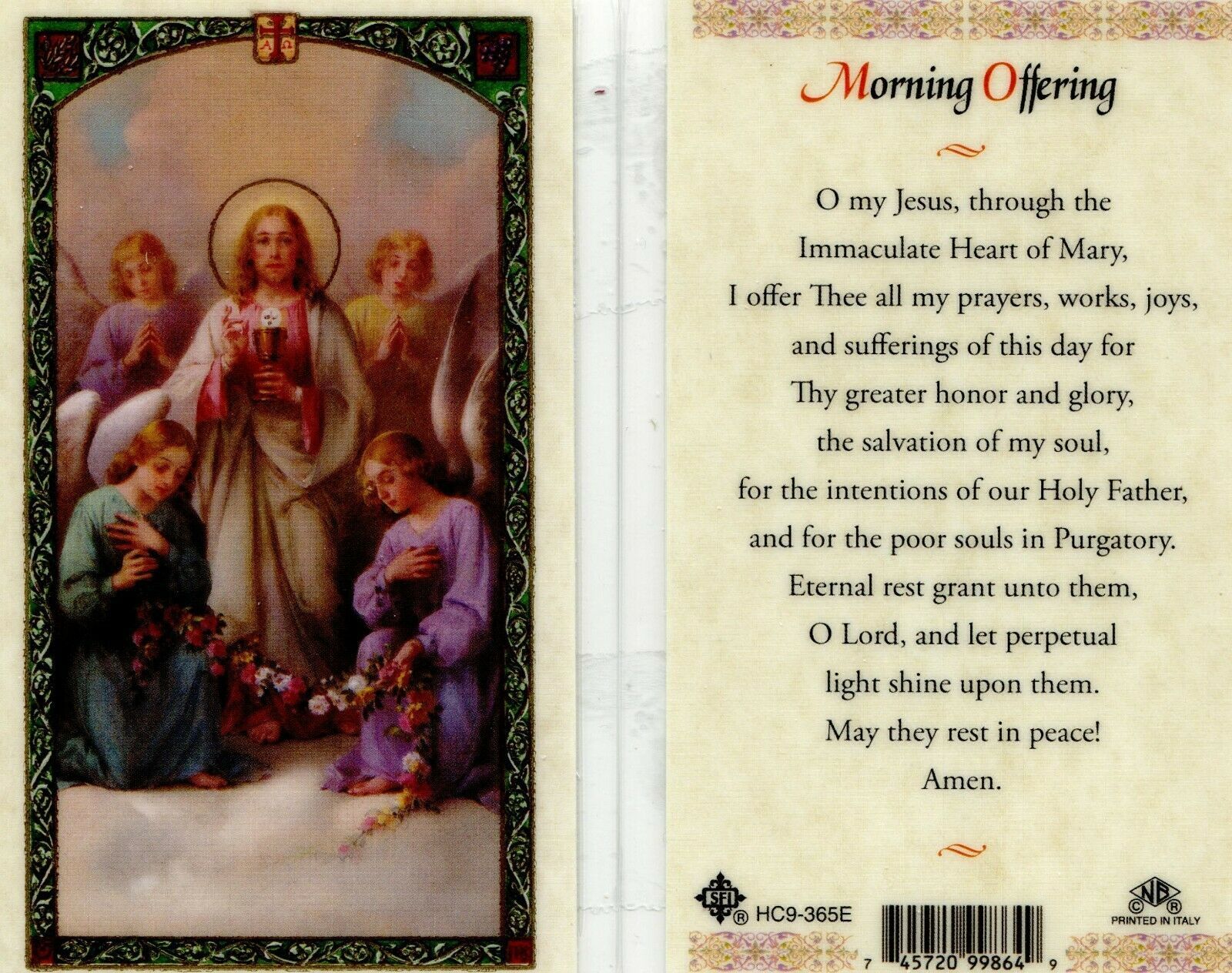
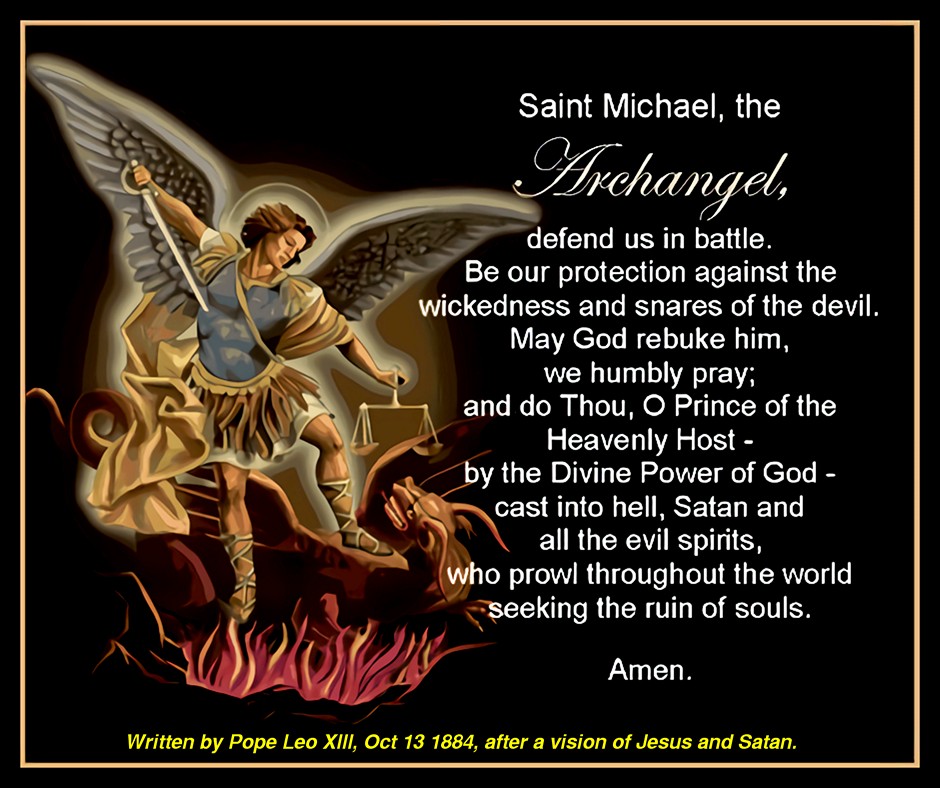
The Month of August is Dedicated to Devotion to the Immaculate Heart of Mary

“And Jesus went down with his parents and came to Nazareth, and was obedient to them; and his mother kept all these things in her heart.”
(Luke 2:51)

O Holy Virgin Mary, Mother of the Lord of Heaven and of Earth, Our Lady of Guadalupe, guide and protect the Roman Pontiff, Pope Leo XIV. Through your intercession, may he receive in abundance the grace of the Successor of Saint Peter: the perpetual and visible source and foundation of the unity of our Bishops and of all our brothers and sisters in the Mystical Body of your Divine Son. Unite Pope Leo’s heart to your Immaculate Heart, leading him to rest his heart ever more securely in the glorious-pierced Heart of Jesus, so that he may confirm us in the Catholic faith, in the worship of God in spirit and truth, and in a good and holy Christian life. In the tumult of the present time, keep Pope Leo securely within the hollow of your mantle, in the crossing of your arms, protecting him from Satan, the Father of Lies, and from every evil spirit. Implore Our Lord to grant him, in particular, the wisdom and courage to be a true Shepherd of the Church throughout the world. With you, I place all my trust in Christ, the Good Shepherd, Who alone is our help and salvation. Amen.
Heart of Jesus, formed by the Holy Spirit in the womb of the Virgin Mother, have mercy upon us!
Our Lady of Guadalupe, Queen of the Apostles, pray for us!
Saints Peter and Paul, pray for us!
Pope Saint Leo the Great, pray for us!
Raymond Leo Cardinal BURKE
May 18, 2025.
Pope Leo XIV’s prayer intentions for the month of August, 2025:
For mutual coexistence
Let us pray that societies where coexistence seems more difficult might not succumb to the temptation of confrontation for ethnic, political, religious, or ideological reasons.

The correct title for this meditation should be “Being Cheated”. “Overcoming Regret” was the title for yesterday’s meditation. Sorry for the editing error.
First Reading:
From: Ecclesiastes 1:2; 2:21-23
All is Vanity
------------------
[2] Vanity of vanities, says the Preacher, vanity of vanities! All is vanity.
[21] [B]ecause sometimes a man must leave all to be enjoyed by a man who did not toil for it. This also is vanity and a great evil. [22] What has a man from all the toil and strain with which he toils beneath the sun? [23] For all his days are full of pain, and his work is a vexation; even in the night his mind does not rest. This also is vanity.
***************************************************************************
Commentary:
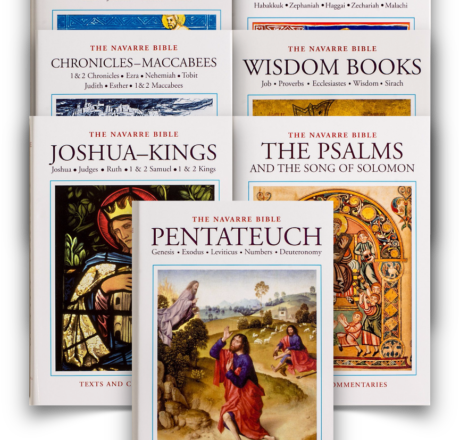
1:1-2. The book begins and ends with the same words: “Vanity of vanities…” (v. 2; cf. 12:8). The phrase sums up wonderfully well the central idea of the book and is the sacred author’s assessment of the things of the world and the fruits of human endeavour, included among the latter being the acquisition of a superficial type of knowledge or wisdom that is clearly at odds with what we know from experience. The Hebrew root of the word translated as “vanity” means something like the “vapour”, “air”, and conveys the idea of something with no consistency to it, illusion, unreality. Some scholars link it to another root that means “fleeting”, “evanescent”, in the sense of something that man cannot grasp, and that is certainly an aspect of what the author is saying throughout the book. “Vanity of vanities” is the Hebrew form of the superlative, as in “Song of Songs”, On the Preacher, Qoheleth, see the “Introduction” [in the “Navarre Bible, Wisdom Books,” p. 257, above.
When reading this book it is useful to bear in mind that the author is a Jewish teacher, very familiar with the Law and the wisdom tradition of Israel, which, in reaction to the arrival in Judea of various currents of Greek thought, was asking itself very seriously about the validity of its own answers about the value of human actions and the rewards or punishments that applied to them; could it be that the hedonistic ideas (which took no account of God) being put forward by Greek philosophers in the squares and streets – could these have some validity? The Preacher takes issue with both traditional wisdom and the Greeks. With a great deal of common sense, he questions all these teachings (which were widely accepted) and concludes that they are approaching the subject in the wrong way. It is not that he is skeptical about the human mind’s ability to know reality; what he objects to is the failure of seekers after wisdom to go to the root of the problem: “The book of Ecclesiastes explains that exactly things are made of, and shows and makes clear to us the vanity of many of the things of the world, so that we might come to understand that the passing things of this life are not worth hungering for, and that we should not devote our attention to useless things or fix our desires on any creating thing” (St. Basil, “In principium Proverbiorum”, 1).
1:3-6:12. The first part of the book is devoted to showing that the type of wisdom man is bent on acquiring is of no use at all. To do this, it points out that if one looks around, one gets the impression that everything in the world forms part of one continuous cyclical movement in which one can never expect anything new to happen: things that seem new are not new at all (1:3-11). It goes on to argue, from experience, that the search for wisdom serves no purpose, for the wise man’s lot remains unchanged, no matter what he learns (1:12-2:26). To compound his argument, the Preacher goes on to report what he has seen – fraud and loneliness . . . And from his observation of things around him, he draws a similar conclusion: this, too, is vanity and a waste of effort (3:1-4:16). That being so, in a series of counsels (5:1-12) he expounds the key lesson of the book: “Do you fear God” (5:7). In other words, if one does not take God into account, even riches bring only evils (5:13-6:7). That being the case, what advantages does wisdom offer (6:8-12)? In this way the teacher of Israel, using a rhetoric similar to that of his Hellenist adversaries, composes a diatribe to show that the reasonable thing to do is to put one’s trust in God, for all the wisdom of this world is in vain.
Both of these notions – true wisdom and the fear of God – will be perfected in the New Testament message. True wisdom is in “Christ, in whom are had all the treasures of wisdom and knowledge” (Col 2:2-3). And the fear of God should be understood as love, not servile fear, because God is our Father. That conviction should govern what we do: “There is no fear in love, but perfect love casts out fear. For fear has to do with punishment and he who fears is not perfected in love (1 Jn 4:18).
2:12-23. Continuing with his argument, the Preacher lists some examples of how impossible it is to attain happiness by following the paths of mere human experience. Now he takes up another matter, also to do with traditional wisdom: the idea that the prospect of descendants makes a man happy, because they will appreciate all the work he has done and will benefit from it (cf. Prov 10:7; Sir 44:9). Seemingly the wise man thinks that that gives meaning to what he does and he derives satisfaction from it (vv. 14a-b). But as the sacred writer sees it, this also is vanity: wise man and fool, “the one fate comes to all of them” (v. 14c). Therefore the thought of posterity is sheer vanity, for both wise man and fool will be forgotten (vv. 15-16). So, life seems, in fact, hateful and depressing (v. 20). Indeed, all striving after these things leads nowhere (vv. 22-23).
------------------------
Second Reading:
From: Colossians 3:1-5, 9-11
Seek the Things That Are Above
------------------------------
[1] If then you have been raised with Christ, seek the things that are above, where Christ is, seated at the right hand of God.
Avoid Sin
---------
[2] Set your minds on things that are above, not on things that are on earth. [3] For you have died, and your life is hid with Christ in God. [4] When Christ who is our life appears, then you also will appear with Him in glory. [5] Put to death therefore what is earthly in you: immorality, impurity, passion, evil desire, and covetousness, which is idolatry.
[9] Do not lie to one another, seeing that you have put off the old nature with its practices [10] and have put on the new nature, which is being renewed in knowledge after the image of its creator. [11] Here there cannot be Greek and Jew, circumcised and uncircumcised, barbarian, Scythian, slave, free man, but Christ is all, and in all.
***********************************************************************
Commentary:
1-4. The more ethical and exhortatory part of the letter begins at this point. It is a practical application of the teaching given in the earlier chapters, designed to suit the circumstances that have arisen in the Colossian church.
By His death and resurrection, the Son of God frees us from the power of Satan and of death. "By Baptism men are grafted into the paschal mystery of Christ; they die with him, are buried with Him, and rise with Him" (Vatican II, "Sacrosanctum Concilium", 6). In other words, Christians have been raised to a new kind of life, a supernatural life, whereby they share, even while on earth, in the glorious life of the risen Jesus. This life is at present spiritual and hidden, but when our Lord comes again in glory, it will become manifest and glorious.
Two practical consequences flow from this teaching--the need to seek the "things that are above", that is, the things of God; and the need to pass unnoticed in one's everyday work and ordinary life, yet to do everything with a supernatural purpose in mind.
As regards the first of these the Second Vatican Council has said: "In their pilgrimage to the Heavenly city Christians are to seek and relish the things that are above (cf. Colossians 3:1-2): this involves not a lesser, but a greater commitment to working with all men to build a world that is more human" ("Gaudium Et Spes", 57). Work, family relationships, social involvements--every aspect of human affairs-- should be approached in a spirit of faith and done perfectly, out of love: "The true Christian, who acts according to this faith", St J. Escriva comments, "always has his sights set on God. His outlook is supernatural. He works in this world of ours, which he loves passionately; he is involved in all its challenges, but all the while his eyes are fixed on Heaven" ("Friends of God", 206).
Ordinary life, everyday interests, the desire to be better and to serve others without seeking public recognition of one's merits--all this makes for holiness if done for love of God. A simple life "hid with Christ in God" (verse 3) is so important that Jesus Himself chose to spend the greater part of His life on earth living like an ordinary person: He was the son of a tradesman. "As we meditate on these truths, we come to understand better the logic of God. We come to realize that the supernatural value of our life does not depend on accomplishing great undertakings suggested to us by our over-active imagination. Rather it is to be found in the faithful acceptance of God's will, in welcoming generously the opportunities for small, daily sacrifice" (St. J. Escriva, "Christ Is Passing By", 172).
This means that those who try to seek holiness by imitating Jesus in His hidden life will be people full of hope; they will be optimistic and happy people; and after their death they will share in the glory of the Lord: they will hear Jesus' praise, "Well done, good and faithful servant; you have been faithful over a little; I will set you over much; enter into the joy of your Master" (Matthew 25:21).
On the value of the hidden life, see the note on Luke 2:51.
Note on Luke 2:51: 51. The Gospel sums up Jesus' life in Nazareth in just three words: "erat subditus illis", he was obedient to them. "Jesus obeys, and he obeys Joseph and Mary. God has come to the world to obey, and to obey creatures. Admittedly they were very perfect creatures--Holy Mary, our mother, greater than whom God alone; and that most chaste man Joseph. But they are only creatures, and yet Jesus, who is God, obeyed them. We have to love God so as to love his will and desire to respond to his calls. They come to us through the duties of our ordinary life—duties of state, profession, work, family, social life, our own and other people's difficulties, friendship, eagerness to do what is right and just" (St J. Escriva, "Christ Is Passing By", 17).
Jesus lived like any other inhabitant of Nazareth, working at the same trade as St Joseph and earning his living by the sweat of his brow. "His hidden years are not without significance, nor were they simply a preparation for the years which were to come after--those of his public life. Since 1928 I have understood clearly that God wants our Lord's whole life to be an example for Christians. I saw this with special reference to his hidden life, the years he spent working side by side with ordinary men. Our Lord wants many people to ratify their vocation during years of quiet, unspectacular living. Obeying God's will always means leaving our selfishness behind, but there is no reason why it should entail cutting ourselves off from the normal life of ordinary people who share the same status, work and social position with us.
"I dream--and the dream has come true--of multitudes of God's children, sanctifying themselves as ordinary citizens, sharing the ambitions and endeavors of their colleagues and friends. I want to shout to them about this divine truth: If you are there in the middle of ordinary life, it doesn't mean Christ has forgotten about you or hasn't called you. He has invited you to stay among the activities and concerns of the world. He wants you to know that your human vocation, your profession, your talents, are not omitted from his divine plans. He has sanctified them and made them a most acceptable offering to his Father" (St J. Escriva, "Christ Is Passing By", 20).]
5-17. The Christian, who in Baptism has risen with Christ, should not live for himself but for God. This means that every day he needs to put off his old nature and put on the new.
The "old nature", the "old man": one who lets himself be led by disorderly passions (cf. Rom 7:8), who lets his body do evil in the service of sin (v. 5; cf. Rom 6:12f). With the help of grace the old nature is being more and more broken down, while the new nature is constantly being renewed (cf. 2 Cor 6:16). Impurity and the other vices need to be uprooted so as to make room for goodness and its train of Christian virtues (vv. 12-13), especially charity (v. 14), which are features of the new nature.
Christ's disciple, who has been made a new person and who lives for the Lord, has a new and more perfect knowledge of God and of the world (v. 10). Thanks to this he see things from a more elevated viewpoint; he has a "supernatural insight". This enables him to love and understand everyone without distinction of race, nation or social status (v. 11), and to imitate Christ, who has given himself up for all. "The Only-begotten of the Eternal Father vouchsafed to become a son of man, that we might be made conformable to the image of the Son of God and be renewed according to the likeness of him who created us. Therefore let all those who glory in the name of Christians not only look upon our divine Savior as the most sublime and most perfect model of all virtues, but also, by the careful avoidance of sin and the unremitting practice of holiness, so reproduce in their conduct his teaching and life, that when the Lord appears they may be like to him in glory, seeing him as he is (cf. 1 Jn 3:2)" (Pius XII, "Mystici Corporis", 20).
------------------------
Gospel Reading:
From: Luke 12:13-21
Parable of the Rich Fool
------------------------
[13] One of the multitude said to Him (Jesus), "Teacher, bid my brother divide the inheritance with me." [14] But He said to him, "Man, who made Me a judge or divider over you?" [15] And He said to them, "Take heed, and beware of all covetousness; for man's life does not consist in the abundance of his possessions." [16] And He told them a parable, saying, "The land of a rich man brought forth plentifully; [17] and he thought to himself, `What shall I do, for I have nowhere to store my crops?' [18] And he said, `I will do this: I will store all my grain and my goods. [19] And I will say to my soul, Soul, you have ample goods laid up for many years; take your ease, eat, drink, be merry.' [20] But God said to him, `Fool! This night your soul is required of you; and the things you have prepared, whose will they be?' [21] So is he who lays up treasure for himself and is not rich toward God."
***********************************************************************
Commentary:
13. This man is only interested in his own problems; he sees in Jesus only a teacher with authority and prestige who can help sort out his case (cf. Deuteronomy 21:17). He is a good example of those who approach religious authorities not to seek advice on the way they should go in their spiritual life, but rather to get them to solve their material problems. Jesus vigorously rejects the man's request--not because He is insensitive to the injustice which may have been committed in this family, but because it is not part of His redemptive mission to intervene in matters of this kind. By His word and example the Master shows us that His work of salvation is not aimed at solving the many social and family problems that arise in human society; He has come to give us principles and moral standards which should inspire our actions in temporal affairs, but not to give us precise, technical solutions to problems which arise; to that end He has endowed us with intelligence and freedom.
15-21. After His statement in verse 15, Jesus tells the parable of the foolish rich man: what folly it is to put our trust in amassing material goods to ensure we have a comfortable life on earth, forgetting the goods of the spirit, which are what really ensure us--through God's mercy--of eternal life.
This is how St. Athanasius explained these words of our Lord: "A person who lives as if he were to die every day--given that our life is uncertain by definition--will not sin, for good fear extinguishes most of the disorder of our appetites; whereas he who thinks he has a long life ahead of him will easily let himself be dominated by pleasures" ("Adversus Antigonum").
19. This man's stupidity consisted in making material possession his only aim in life and his only insurance policy. It is lawful for a person to want to own what he needs for living, but if possession of material resources becomes an absolute, it spells the ultimate destruction of the individual and of society. "Increased possession is not the ultimate goal of nations nor of individuals. All growth is ambivalent. It is essential if man is to develop as a man, but in a way it imprisons man if he considers it the supreme good, and it restricts his vision. Then we see hearts harden and minds close, and men no longer gather together in friendship but out of self-interest, which soon leads to strife and disunity. The exclusive pursuit of possessions thus becomes an obstacle to individual fulfillment and to man's true greatness. Both for nations and for individual, avarice is the most evident form of underdevelopment" (St. Pope Paul VI, "Populorum Progressio", 19).
Disclaimer: Opinions posted on Free Republic are those of the individual posters and do not necessarily represent the opinion of Free Republic or its management. All materials posted herein are protected by copyright law and the exemption for fair use of copyrighted works.


