
Catena Aurea by St. Thomas Aguinas
11:25–26
25. At that time Jesus answered and said, I thank thee, O Father, Lord of heaven and earth, because thou hast hid these things from the wise and prudent, and hast revealed them unto babes.
26. Even so, Father: for so it seemed good in thy sight.
GLOSS. (non occ.) Because the Lord knew that many would doubt respecting the foregoing matter, namely, that the Jews would not receive Christ whom the Gentile world has so willingly received, He here makes answer to their thoughts; And Jesus answered and said, I confess unto thee, Father, Lord of heaven and earth.
GLOSS. (ord.) That is, Who makest of heaven, or leavest in earthliness, whom Thou wilt. Or literally,
AUGUSTINE. (Serm. 67. 1.) If Christ, from whom all sin is far, said, I confess, confession is not proper for the sinner only, but sometimes also for him that gives thanks. We may confess either by praising God, or by accusing ourselves. When He said, I confess unto thee, it is, I praise Thee, not I accuse Myself.
JEROME. Let those hear who falsely argue, that the Saviour was not born but created, how He calls His Father Lord of heaven and earth. For if He be a creature, and the creature can call its Maker Father, it was surely foolish here to address Him as Lord of heaven and earth, and not of Him (Christ) likewise. He gives thanks that His coming has opened to the Apostles sacraments, which the Scribes and Pharisees knew not, who seemed to themselves wise, and understanding in their own eyes; That thou hast hid these things from the wise and understanding, and hast revealed them unto babes.
AUGUSTINE. (Serm. 67. 5.) That the wise and understanding are to be taken as the proud, Himself opens to us when He says, and hast revealed them unto babes; for who are babes but the humble?
GREGORY. (Mor. xxvii. 13.) He says not’ to the foolish,’ but to babes, shewing that He condemns pride, not understanding.
CHRYSOSTOM. (Horn. xxxviii.) Or when He says, The wise, He does not speak of true wisdom, but of that which the Scribes and Pharisees seemed to have by their speech. Wherefore He said not, ‘And hast revealed them to the foolish,’ but, to babes, that is, uneducated, or simple; teaching us in all things to keep ourselves from pride, and to seek humility.
HILARY. The hidden things of heavenly words and their power are hid from the wise, and revealed to the babes; babes, that is, in malice, not in understanding; hid from the wise because of their presumption of their own wisdom, not because of their wisdom.
CHRYSOSTOM. That it is revealed to the one is matter of joy, that it is hid from the other not of joy, but of sorrow; He does not therefore joy on this account, but He joys that these have known what the wise have not known.
HILARY. The justice of this the Lord confirms by the sentence of the Father’s will, that they who disdain to be made babes in God, should become fools in their own wisdom; and therefore He adds, Even so, Father; for so it seemed good before thee.
GREGORY. (Mor. xxv. 14.) In which words we have a lesson of humility, that we should not rashly presume to discuss the counsels of heaven concerning the calling of some, and the rejection of others shewing that that cannot be unrighteous which is willed by Him that is righteous.
JEROME. In these words moreover He speaks to the Father with the desire of one petitioning, that His mercy begun in the Apostles might be completed in them.
CHRYSOSTOM. These things which the Lord spoke to His disciples, made them more zealous. As afterwards they thought great things of themselves, because they cast out dæmons, therefore He here reproves them; for what they had, was by revelation, not by their own efforts. The Scribes who esteemed themselves wise and understanding were excluded because of them-pride, and therefore He says, Since on this account the mysteries of God were hid from them, fear ye, and abide as babes, for this it is that has made you partakers in the revelation. But as when Paul says, God gave them, over to a reprobate mind, (Rom. 1:28), he does not mean that God did this, but they who gave Him cause, so here, Thou hast hid these things from the wise and understanding. And wherefore were they hid from them? Hear Paul speaking, Seeking to set up their own righteousness, they were not subject to the righteousness of God (Rom. 10:3.)
11:27
27. All things are delivered unto me of my Father: and no man knoweth the Son, but the Father; neither knoweth any man the Father, save the Son, and he to whomsoever the Son will reveal him.
CHRYSOSTOM. Because He had said, I confess unto thee, Father, because thou hast hid these things from the wise, that you should not suppose that He thus thanks the Father as though He Himself was excluded from this power, He adds, All things are committed to me by my Father. Hearing the words are committed, do not admit suspicion of any thing human, for He uses this word that you may not think there be two gods unbegotten. For at the time that He was begotten He was Lord of all.
JEROME. For if we conceive of this thing according to our weakness, when he who receives begins to have, he who gives begins to be without. Or when He says, All things are committed to him, He may mean, not the heaven and earth and the elements, and the rest of the things which He created and made, but those who through the Son have access to the Father.
HILARY. Or that we may not think that there is any thing less in Him than in God, therefore He says this.
AUGUSTINE. (cont. Maximin. ii. 12.) For if He has aught less in His power than the Father has, then all that the Father has, are not His; for by begetting Him the Father gave power to the Son, as by begetting Him He gave all things which He has in His substance to Him whom He begot of His substance.
HILARY. And also in the mutual knowledge between the Father and the Son, He teaches us that there is nothing in the Son beyond what was in the Father, for it follows, And none knoweth the Son but the Father, nor does any man know the Father but the Son.
CHRYSOSTOM. By this that He only knows the Father, He shews covertly that He is of one substance with the Father. As though He had said, What wonder if I be Lord of all, when I have somewhat yet greater, namely to know the Father and to be of the same substance with Him?
HILARY. For this mutual knowledge proclaims that they are of one substance, since He that should know the Son, should know the Father also in the Son, since all things were delivered to Him by the Father.
CHRYSOSTOM. When He says, Neither does any know the Father but the Son, He does not mean that all men are altogether ignorant of Him; but that none knows Him with that knowledge wherewith He knows Him; which may also be said of the Son. For it is not said of some unknown God (i. e. who was not the Creator.) as Marcion declares.
AUGUSTINE. (De Trin. i. 8.) And because their substance is inseparable, it is enough sometimes to name the Father, sometimes the Son, nor is it possible to separate from either His Spirit, who is especially called the Spirit of truth.
JEROME. Let the heretic Eunomius therefore blush hereat who claims to himself such a knowledge of the Father and the Son, as they have one of anothera. But if he argues from what follows, and props up his madness by that, And he to whom the Son will reveal him, it is one thing to know what you know by equality with God, another to know it by His vouchsafing to reveal it.
AUGUSTINE. (De Trin. vii. 3.) The Father is revealed by the Son, that is, by His Word. For if the temporal and transitory word which we utter both shews itself, and what we wish to convey, how much more the Word of God by which all things were made, which so shews the Father as He is Father, because itself is the same and in the same manner as the Father.
AUGUSTINE. (Quæst. Ev. i. 1.) When He said, None knoweth the Son but the Father, He did not add, And he to whom the Father will reveal the Son. But when He said, None knoweth the Father but the Son, He added, And he to whom the Son will reveal him. But this must not be so understood as though the Son could be known by none but by the Father only; while the Father may be known not only by the Son, but also by those to whom the Son shall reveal Him. But it is rather expressed thus, that we may understand that both the Father and the Son Himself are revealed by the Son, inasmuch as He is the light of our mind; and what is afterwards added, And he to whom the Son will reveal, is to be understood as spoken of the Son as well as the Father, and to refer to the whole of what had been said. For the Father declares Himself by His Word, but the Word declares not only that which is intended to be declared by it, but in declaring this declares itself.
CHRYSOSTOM. If then He reveals the Father, He reveals Himself also. But the one he omits as a thing manifest, but mentions the other because there might be a doubt concerning it. Herein also He instructs us that He is so one with the Father, that it is not possible for any to come to the Father, but through the Son. For this had above all things given offence, that He seemed to be against God, and therefore He strove by all means to overthrow this notion.
Catena Aurea Matthew 11
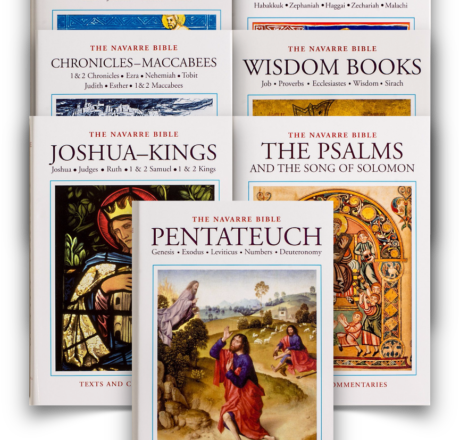
NAVARRE BIBLE COMMENTARY(RSV)
Ad Majorem Dei Gloriam (To the Greater Glory of God)
From: Exodus 3:1-6, 9-12
God Appears to Moses in the Burning Bush
----------------------------------------
[1] Now Moses was keeping the flock of his father-in-law, Jethro, the priest of Midian; and he led his flock to the west side of the wilderness, and came to Horeb, the mountain of God. [2] And the angel of the Lord appeared to him in a flame of fire out of the midst of a bush; and he looked, and lo, the hush was burning, yet it was not consumed. [3] And Moses said, "I will turn aside and see this great sight, why the bush is not burnt." [4] When the Lord saw that he turned aside to see, God called to him out of the bush, "Moses, Moses!" And he said, "Here am I." [5] Then he said, "Do not come near; put off your shoes from your feet, for the place on which you are standing is holy ground." [6] And he said, "I am the God of your father, the God of Abraham, the God of Isaac, and the God of Jacob." And Moses hid his face, for he was afraid to look at God.
[9] And now, behold, the cry of the people of Israel has come to me, and I have seen the oppression with which the Egyptians oppress them. [10] Come, I will send you to Pharaoh that you may bring forth my people, the sons of Israel, out of Egypt."
The Divine Name is Revealed
---------------------------
[11] But Moses said to God, "Who am I that I should go to Pharaoh, and bring the sons of Israel out of Egypt?" [12] He said, "But I will be with you; and this shall be the sign for you, that I have sent you: when you have brought forth the people out of Egypt, you shall serve God upon this mountain."
***********************************************************************
Commentary:
3:1-4:17. This account of the calling of Moses is charged with theological content; it gives the features of two protagonists (Moses and God) and the bases of the liberation of the people by means of wondrous divine intervention.
In the dialogue between God and Moses after the theophany of the burning bush (vv. 1-10), the Lord endows Moses with all the gifts he needs to carry out his mission: he promises him help and protection (vv. 11-12), he makes his name known to him (vv. 13-22), he gives him the power to work wonders (4:1-9), and he designates his brother Aaron as his aide, who will be his spokesman (4:10-17).
This section shows how God brings about salvation by relying on the docility of a mediator whom he calls and trains for the purpose. But the initiative always stays with God. Thus, God himself designs the smallest details of the most important undertaking the Israelites will embark on—their establishment as a people and their passing from bondage to freedom and the possession of the promised land.
3:1-3. The mountain of God, Horeb, called in other traditions Sinai, probably lies in the south-east part of the Sinai peninsula. Even today shepherds in that region will leave the valleys scorched by the sun in search of better pasture in the mountains. Although we do not yet know exactly where Mount Horeb is, it still had primordial importance in salvation history. On this same mountain the Law will later be promulgated (chap. 19), in the context of another dramatic theophany. Elijah will come back here to meet God (I Kings 19:8-19). It is the mountain of God "par excellence".
The "angel of the Lord" is probably an expression meaning "God". In the most ancient accounts (cf., e.g., Gen 16:7; 22:11, 14; 31:11, 13), immediately after the angel comes on the scene it is God himself who speaks: since God is invisible, he is discovered to be present and to be acting in "the angel of the Lord", who usually does not appear in human form. Later, in the period of the monarchy, the existence of heavenly messengers distinct from God will begin to be recognized (cf 2 Sam 19:28; 24:16; 1 Kings 19:5,7; etc.).
Fire is often a feature of theophanies (cf., e.g., Ex 19:18; 24:17; Lev 9:23-24; Ezek 1:17), perhaps because it is the best symbol to convey the presence of things spiritual and divine transcendence. The bush mentioned here would he one of the many thorny shrubs that grow in desert uplands in that region. Some Christian writers have seen in the burning bush an image of the Church which endures despite the persecutions and trials it undergoes. It is also seen as a figure of the Blessed Virgin, in whom the divinity always burned (cf. St Bede, "Commentaria In Pentateuchum", 2, 3).
All the details given in the passage help to bring out the simplicity and at the same time the drama of God's action; the scene is quite ordinary (grazing, a mountain, a bush...), but extraordinary things happen (the angel of the Lord, a flame which does not burn, a voice). 3:4-10. The calling of Moses is described in this powerful dialogue in four stages: God calls him by his name (v. 4); he introduces himself as the God of Moses' ancestors (v. 9); he makes his plan of deliverance known in a most moving way (vv. 7-9); and, finally, he imperiously gives Moses his mission (v. 10).
The repetition of his name ("Moses, Moses!'') stresses how important this event is (cf. Gen 22:11; Lk 22:31). Taking one's shoes off is a way of showing veneration in a holy place. In some Byzantine communities there was a custom for a long time of celebrating the liturgy barefoot or wearing different footwear from normal. Christian writers have seen this gesture as being an act of humility and detachment in the face of the presence of God: "no one can gain access to God or see him unless first he has shed every earthly attachment" ("Glossa Ordinaria In Exodum", 3, 4).
The sacred writer makes it clear that the God of Sinai is the same as the God of Moses' ancestors; Moses, then, is not a founder of a new religion; he carries on the religious tradition of the patriarchs, confirming the election of Israel as people of God. Four very expressive verbs are used to describe this election, this choice of Israel by God: I have seen..., I have heard..., I know..., I have come down to deliver (v. 8). This sequence of action includes no human action: the people are oppressed, they cry, theirs is a sorry plight. But God has a clear aim in sight--"to deliver them and to bring them up [...] to a good and broad land" (v. 8). These two terms will become keynotes of God's saving action. To bring up to the promised land will come to mean, not only a geographical ascent but also a journey towards plenitude. St Luke's Gospel will take up the same idea. (cf. "The Navarre Bible: The Gospel of Saint Luke", pp 22). God's imperative command is clear in the original text (v. 10): "...bring forth my people, the sons of Israel, out of Egypt". This is another way of referring to the salvific event which gives its name to this book; according to Greek and Latin traditions "exodus" means "going out".
3:11-12. In reply to Moses' first objection about his sheer inability to do what God is asking of him, God assures him that he will be at his side and will protect him--as he will help all who have a difficult mission of salvation (cf. Gen 28:15; Josh 1:5; Jer 1:8). The Blessed Virgin will hear the same words at the Annunciation: "The Lord is with you" (Lk 1:27).
The sign which God gives Moses is linked to his faith, because it involves both a promise and a command: when they come out of Egypt, Moses and the people will worship God on this very mountain. When this actually happens, Moses will acknowledge the supernatural nature of his mission but, meanwhile, he has to obey faithfully the charge given him by God.
Moses' conversation with the Lord is a beautiful prayer and one worth imitating. By following his example, a Christian can dialogue personally and intimately with the Lord: "We ought to be seriously committed to dealing with God. We cannot take refuge in the anonymous crowd. If interior life doesn't involve personal encounter with God, it doesn't exist--it's as simple as that. There are few things more at odds with Christianity than superficiality. To settle down to routine in our Christian life is to dismiss the possibility of becoming a contemplative soul. God seeks us out, one by one. And we ought to answer him, one by one: 'Here I am, Lord, because you have called me' (1 Kings 3:5)" (St J. Escrivá, "Christ Is Passing By", 174; cf. "Catechism of the Catholic Church", 2574-5).


