
Catena Aurea by St. Thomas Aguinas
9:18–22
18. While he spake these things unto them, behold, there came a certain ruler, and worshipped him, saying, My daughter is even now dead: but come and lay thy hand upon her, and she shall live.
19. And Jesus arose, and followed him, and so did his disciples.
20. And, behold, a woman, which was diseased with an issue of blood twelve years, came behind him, and touched the hem of his garment:
21. For she said within herself, If I may but touch his garment, I shall be whole.
22. But Jesus turned him about, and when he saw her, he said, Daughter, be of good comfort; thy faith hath made thee whole. And the woman was made whole from that hour.
CHRYSOSTOM. (Hom. xxxi.) After His instructions He adds a miracle, which should mightily discomfit the Pharisees, because he who came to beg this miracle, was a ruler of the synagogue, and the mourning was great, for she was his only child, and of the age of twelve years, that is, when the flower of youth begins; While he spake these things unto them, behold, there came one of their chief men unto him.
AUGUSTINE. (De Cons. Ev. ii. 28.) This narrative is given both by Mark and Luke, but in a quite different order; namely, when after the casting out of the dæmons and their entrance into the swine, he had returned across the lake from the country of the Gerasenes. Now Mark does indeed tell us that this happened after He had recrossed the lake, but how long after he does not determine. Unless there had been some interval of time, that could not have taken place that Matthew relates concerning the feast in his house. After this, immediately follows that concerning the ruler of the synagogue’s daughter. If the ruler came to Him while He was yet speaking that of the new patch, and the new wine, then no other act of speech of his intervened. And in Mark’s account, the place where these things might come in, is evident. In like manner, Luke does not contradict Matthew; for what he adds, And behold a man, whose name was Jairus, (Luke 8:41.) is not to be taken as though it followed instantly what had been related before, but after that feast with the Publicans, as Matthew relates. While he spake these things unto them, behold, one of their chief men, namely, Jairus, the ruler of the synagogue, came to him, and worshipped him, saying, Lord, my daughter is even now dead. It should be observed, lest there should seem to be some discrepancy, that the other two Evangelists represent her as at the point of death, but yet not dead, but so as afterwards to say that there came afterwards some saying, She is dead, trouble not the Master, for Matthew for the sake of shortness represents the Lord as having been asked at first to do that which it is manifest He did do, namely, raise the dead. He looks not at the words of the father respecting his daughter, but rather his mind. For he had so far despaired of her life, that he made his request rather for her to be called to life again, thinking it impossible that she, whom he had left dying, should be found yet alive. The other two then have given Jairus’ words; Matthew has put what he wished and thought. Indeed had either of them related that it was the father himself that said that Jesus should not be troubled for she was now dead, in that case the words that Matthew has given would not have corresponded with the thoughts of the ruler. But we do not read that he agreed with the messengers. Hence we learn a thing of the highest necessity, that we should look at nothing in any man’s words, but his meaning to which his words ought to be subservient; and no man gives a false account when he repeats a man’s meaning in words other than those actually used.
CHRYSOSTOM. Or; The ruler says, she is dead, exaggerating his calamity. As it is the manner of those that prefer a petition to magnify their distresses, and to represent them as something more than they really are, in order to gain the compassion of those to whom they make supplication; whence he adds, But come and lay thy hand upon her, and she shall live. See his dullness. He begs two things of Christ, to come, and to lay His hand upon her. This was what Naaman the Syrian required of the Prophet. For they who are constituted thus hard of heart have need of sight and things sensible.
REMIGIUS. We ought to admire and at the same time to imitate the humility and mercifulness of the Lord; as soon as ever He was asked, He rose to follow him that asked; And Jesus rose, and followed him. Here is instruction both for such as are in command, and such as are in subjection. To these He has left an example of obedience; to those who are set over others He shews how earnest and watchful they should be in teaching; whenever they hear of any being dead in spirit, they should hasten to Him; And his disciples went with him.
CHRYSOSTOM. Mark and Luke say that He took with Him three disciples only, namely, Peter, James, and John; He took not Matthew, to quicken his desires, and because he was yet not perfectly minded1; and for this reason He honours these three, that others may become like-minded. It was enough meanwhile for Matthew to see the things that were done respecting her that had the issue of blood, concerning whom it follows; And, behold, a woman who had suffered an issue of blood twelve years, came behind and touched the hem of his garment.
JEROME. This woman that had the flux came to the Lord not in the house, nor in the town, for she was excluded from them by the Law, but by the way as He walked; thus as He goes to heal one woman, another is cured.
CHRYSOSTOM. She came not to Christ with an open address through shame concerning this her disease, believing herself unclean; for in the Law this disease was esteemed highly unclean. For this reason she hides herself.
REMIGIUS. In which her humility must be praised, that she came not before His face, but behind, and judged herself unworthy to touch the Lord’s feet, yea, she touched not His whole garment, but the hem only; for the Lord wore a hem according to the command of the Law. So the Pharisees also wore hems which they made large, and in some they inserted thorns. But the Lord’s hem was not made to wound, but to heal, and therefore it follows, For she said within herself, If I can but touch his garment, I shall be made whole. How wonderful her faith, that though she despaired of health from the physicians, on whom notwithstanding she had exhausted her living, she perceived that a heavenly Physician was at hand, and therefore bent her whole soul on Him; whence she deserved to be healed; But Jesus turning and seeing her, said, Be of good cheer, daughter, thy faith hath made thee whole.
RABANUS. What is this that He bids her, Be of good cheer, seeing if she had not had faith, she would not have sought healing of Him? He requires of her strength and perseverance, that she may come to a sure and certain salvation.
CHRYSOSTOM. Or because the woman was fearful, therefore He said, Be of good cheer. He calls her daughter, for her faith had made her such.
JEROME. He said not, Thy faith shall make thee whole, but, hath made thee whole; for in that thou hast believed, thou art already made whole.
CHRYSOSTOM. She had not yet a perfect mind respecting Christ, or she would not have supposed that she could be hid from Him; but Christ would not suffer her to go away unobserved, not that He sought fame, but for many reasons. First, He relieves the woman’s fear, that she should not be pricked in her conscience as though she had stolen this boon; secondly, He corrects her error in supposing she could be hid from Him; thirdly, He displays her faith to all for their imitation; and fourthly, He did a miracle, in that He shewed He knew all things, no less than in drying the fountain of her blood. It follows, And the woman was made whole from that hour.
GLOSS. (ap. Anselm.) This must be understood as the time in which she touched the hem of His garment, not in which Jesus turned to her; for she was already healed, as the other Evangelists testify, and as may be inferred from the Lord’s words.
HILARY. Herein is to be observed the marvellous virtue of the Lord, that the power that dwelt in His body should give healing to things perishable, and the heavenly energy extended even through the hems of His garments; for God is not comprehensible that He should be shut in by a body. For His taking a body unto Him did not confine His power, but His power took upon it a frail body for our redemption. Figuratively, this ruler is to be understood as the Law, which prays the Lord that He would restore life to the dead multitude which it had brought up for Christ, preaching that His coming was to be looked for.
RABANUS. (part. e Beda.) Or; The ruler of the synagogue signifies Moses; he is named Jairus, ‘illuminating,’ or, ‘that shall illuminate,’ because he received the words of life to give to us, and by them enlightens all, being himself enlightened by the Holy Spirit. The daughter of the ruler, that is, the synagogue itself, being as it were in the twelfth year of its age, that is, in the season of puberty, when it should have borne spiritual progeny to God, fell into the sickness of error. While then the Word of God is hastening to this ruler’s daughter to make whole the sons of Israel, a holy Church is gathered from among the Gentiles, which while it was perishing by inward corruption, received by faith that healing that was prepared for others. It should be noted, that the ruler’s daughter was twelve years old, and this woman had been twelve years afflicted; thus she had begun to be diseased at the very time the other was born; so in one and the same age the synagogue had its birth among the Patriarchs, and the nations without began to be polluted with the pest of idolatry. For the issue of blood may be taken in two ways, either for the pollution of idolatry, or for obedience to the pleasures of flesh and blood. Thus as long as the synagogue flourished, the Church languished; the falling away of the first was made the salvation of the Gentiles. Also the Church draws nigh and touches the Lord, when it approaches Him in faith. She believed, spake her belief, and touched, for by these three things, faith, word, and deed, all salvation is gained. She came behind Him, as He spake, If any one serve me, let him follow me; (John 12:26.) or because, not having seen the Lord present in the flesh, when the sacraments of His incarnation were fulfilled, she came at length to the grace of the knowledge of Him. Thus also she touched the hem of His garment, because the Gentiles, though they had not seen Christ in the flesh, received the tidings of His incarnation. The garment of Christ is put for the mystery of His incarnation, wherewith His Deity is clothed; the hem of His garment are the words that hang upon His incarnation. She touches not the garment, but the hem thereof; because she saw not the Lord in the flesh, but received the word of the incarnation through the Apostles. Blessed is he that touches but the uttermost part of the word by faith. She is healed while the Lord is not in the city, but while He is yet on the way; as the Apostles cried, Because ye judge yourselves unworthy of eternal life, lo, we turn to the Gentiles. (Acts 13:46.) And from the time of the Lord’s coming the Gentiles began to be healed.
9:23–26
23. And when Jesus came into the ruler’s house, and saw the minstrels and the people making a noise,
24. He said unto them, Give place: for the maid is not dead, but sleepeth. And they laughed him to scorn.
25. But when the people were put forth, he went in, and took her by the hand, and the maid arose.
26. And the fame hereof went abroad into all that land.
GLOSS. (non occ.) After the healing of the woman with the issue of blood, follows the raising of the dead; And when Jesus was come into the ruler’s house.
CHRYSOSTOM. We may suppose that He proceeded slowly, and spake longer to the woman whom He had healed, that He might suffer the maid to die, and thus an evident miracle of restoring to life might be wrought. In the case of Lazarus also He waited till the third day. And when he saw the minstrels and the people making a noise; this was a proof of her death.
AMBROSE. (in Luc. 8. 52.) For by the ancient custom minstrels were engaged to make lamentation for the dead.
CHRYSOSTOM. But Christ put forth all the pipers, but took in the parents, that it might not be said that He had healed her by any other means; and before the restoring to life He excites their expectations by His words, And he said, Give place: for the maid is not dead, but sleepeth.
BEDE. (in Luc.) As though He had said, To you she is dead, but to God who has power to give life, she sleeps only both in soul and body.
CHRYSOSTOM. By this saying, He soothes the minds of those that were present, and shews that it is easy to Him to raise the dead; the like He did in the case of Lazarus, Our friend Lazarus sleepeth. (John 11:11.) This was also a lesson to them not to be afraid of death; forasmuch as He Himself also should die, He made His disciples learn in the persons of others confidence and patient endurance of death. For when He was near, death was but as sleep. When He had said this, They mocked him. And He did not rebuke their mocking; that this mocking, and the pipes and all other things, might be a proof of her death. For ofttimes at His miracles when men would not believe, He convicted them by their own answers; as in the case of Lazarus, when He said, Where have ye laid him? so that they that answered, Come and see, and, He stinketh, for he hath now been dead four days, could no longer disbelieve that He had raised a dead man.
JEROME. They that had mocked the Reviver were not worthy to behold the mystery of the revival; and therefore it follows, And when the multitude was put forth, he entered, and took her by the hand, and the maid arose.
CHRYSOSTOM. He restored her to life not by bringing in another soul, but by recalling that which had departed, and as it were raising it from sleep, and through this sight preparing the way for belief of the resurrection. And He not only restores her to life, but commands food to be given her, as the other Evangelists relate, that that which was done might be seen to be no delusion. And the fame of him went abroad into all that country.
GLOSS. (non occ.) The fame, namely, of the greatness and novelty of the miracle, and its established truth; so that it could not be supposed to be a forgery.
HILARY. Mystically; The Lord enters the ruler’s house, that is, the synagogue, throughout which there resounded in the songs of the Law a strain of wailing.
JEROME. To this day the damsel lays dead in the ruler’s house; and they that seem to be teachers are but minstrels singing funeral dirges. The Jews also are not the crowd of believers, but of people making a noise. But when the fulness of the Gentiles shall come in, then all Israel shall be saved.
HILARY. But that the number of the elect might be known to be but few out of the whole body of believers, the multitude is put forth; the Lord indeed would that they should be saved, but they mocked at His sayings and actions, and so were not worthy to be made partakers of His resurrection.
JEROME. He took her by the hand, and the maid arose; because if the hands of the Jews which are defiled with blood be not first cleansed, their synagogue which is dead shall not revive.
HILARY. His fame went about into all that country; that is, the salvation of the elect, the gift and works of Christ are preached.
RABANUS. Morally; The damsel dead in the house is the soul dead in thought. He says that she is asleep, because they that are now asleep in sin may yet be roused by penitence. The minstrels are flatterers who cherish the dead.
GREGORY. (Mor. xviii. 43.) The multitude are put forth that the damsel may be raised; for unless the multitude of worldly cares is first banished from the secrets of the heart, the soul which is laid dead within, cannot rise again.
RABANUS. The maiden is raised in the house with few to witness, the young man without the gate, and Lazarus in the presence of many; for a public scandal requires a public expiation; a less notorious, a lesser remedy; and secret sins may be done away by penitence.
Catena Aurea Matthew 9
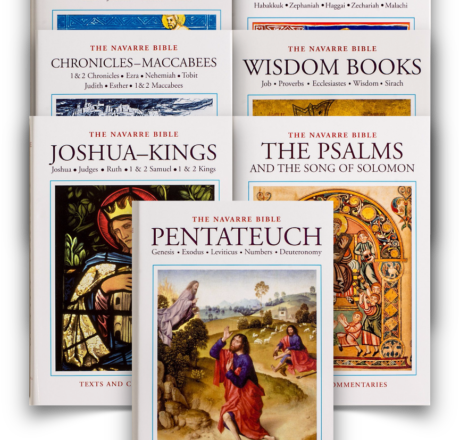
NAVARRE BIBLE COMMENTARY(RSV)
Ad Majorem Dei Gloriam (To the Greater Glory of God)
First Reading:
From: Genesis 28:10-19
Jacob's Dream
-------------------
[10] Jacob left Beer-sheba, and went toward Haran. [11] And he came to a certain place, and stayed there that night, because the sun had set. Taking one of the stones of the place, he put it under his head and lay down in that place to sleep. [12] And he dreamed that there was a ladder set up on the earth, and the top of it reached to heaven; and behold, the angels of God were ascending and descending on it! [13] And behold, the Lord stood above it and said, "I am the Lord, the God of Abraham your father and the God of Isaac; the land on which you lie I will give to you and to your descendants; [14] and your descendants shall be like the dust of the earth, and you shall spread abroad to the west and to the east and to the north and to the south; and by you and your descendants shall all the families of the earth bless themselves. [15] Behold, I am with you and will keep you wherever you go, and will bring you back to this land; for I will not leave you until I have done that of which I have spoken to you." [16] Then Jacob awoke from his sleep and said, "Surely the Lord is in this place; and I did not know it." [17] And he was afraid, and said, "How awesome is this place! This is none other than the house of God, and this is the gate of heaven."
[18] So Jacob rose early in the morning, and he took the stone which he had put under his head and set it up for a pillar and poured oil on the top of it. [19] He called the name of that place Bethel; but the name of the city was Luz at the first.
***********************************************************************
Commentary:
28:10-22 The narrative continues with this scene which deals with the first appearance of God to Jacob, when he confirms to him the promise he made to Abraham; it also recalls the foundation of the shrine at Bethel.
It is significant that these events occur in Canaan, the land of the promise and the land to which Jacob and his sons will later have reason to return. After the exodus from Egypt and the conquest of the land, the Israelites consulted Yahweh at Bethel (cf. Judg 20:18, 26-28); and after the division of the country into two kingdoms, on the death of Solomon, Bethel became one of the main religious shrines of the Northern kingdom (cf. 1 Kings 12:26-33).
In the context in which it appears here, the account of Jacob's dream shows how the patriarch, strengthened by God who has revealed to him his plan, is now able to face the long years which he will have to spend away from the promised land. The Lord will not appear to him again until he returns (cf. 32:22-32). The Lord does the same thing with us, sometimes allowing quite a time to go by when we do not feel his presence. "You told me that God sometimes fills you with light for a while and sometimes does not. I reminded you, firmly, that the Lord is always infinitely good. That is why those moments of light are enough to help you carry on; but the times when you see no light are good for you too, and make you more faithful" (St J. Escriva. Furrow. 341).
28:12. As described in the biblical text, the ladder which Jacob sees in his dream (which might have been like the staircases in Mesopotamian or Egyptian temples, copied in turn in the shrines of Canaan) is filled with deep symbolism: it is the link between heaven and earth. Some Fathers of the Church interpret this ladder as being divine providence, which reaches earth through the ministry of angels; others see it as a sign of the Incarnation of Christ (who is of the line of Jacob), for the Incarnation is truly the time when divine and human join, since Christ is true God and true man.
In St John's Gospel we see Jacob's dream fulfilled in the glorification of Jesus through his death on the cross: "Truly, truly, I say to you, you will see heaven opened, and the angels or God ascending and descending upon the Son of man" (Jn 1:5 1). And so other prominent interpreters see Jacob's ladder as representing the cross, whereby Christ and Christians attain the glory of heaven. St Bernard applied the symbolism of the ladder to the Blessed Virgin: "She is the ladder of Jacob, which has twelve rungs, counting the two sides. The right-hand side is disdain for oneself out of love for God; the left-hand side is disdain for the world, for love for the Kingdom. The ascent up its twelve rungs represents the degrees of humility. [...] By these rungs angels ascend and men are raised up..." ("Sermo ad Beatam Virginem", 4).
28:14. Once more, divine revelation makes it clear that the reason for choosing the people of Israel (a choice now confirmed to Jacob) is to have the blessing of God reach all nations (cf. 12:3), and to let all men, created as they are in God's image and likeness (cf. 1:26), benefit from that choice. The fact that God chose one people does not mean that he has put a limit on his goodness; it is simply the way that he, the Creator of all, chose to make his fatherly call reach the ears of all. "Connected with the mystery of creation is the "mystery of the election", which in a special way shaped the history of the people whose spiritual father is Abraham by virtue of his faith. Nevertheless, through this people which journeys forward through the history both of the Old Covenant and of the New, that mystery of election refers to every man and woman, to the whole great human family. 'I have loved you with an everlasting love, therefore I have continued my faithfulness to you' (Jer 31:3)" ("Dives in Misericordiae", 4).