Posted on 07/06/2025 6:26:34 AM PDT by annalex
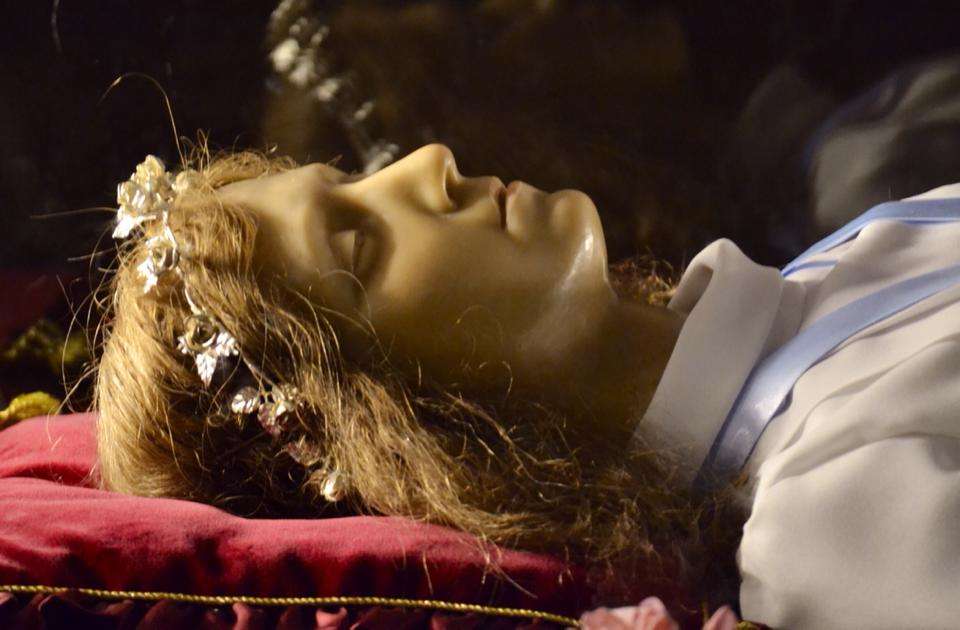
14th Sunday in Ordinary Time ![]() Saint Maria Goretti Shrine - Lebanon Readings at MassLiturgical Colour: Green. Year: C(I).
Towards Jerusalem I send flowing peace, like a riverRejoice, Jerusalem, be glad for her, all you who love her! Rejoice, rejoice for her, all you who mourned her! That you may be suckled, filled, from her consoling breast, that you may savour with delight her glorious breasts. For thus says the Lord: Now towards her I send flowing peace, like a river, and like a stream in spate the glory of the nations. At her breast will her nurslings be carried and fondled in her lap. Like a son comforted by his mother will I comfort you. And by Jerusalem you will be comforted. At the sight your heart will rejoice, and your bones flourish like the grass. To his servants the Lord will reveal his hand.
Cry out with joy to God, all the earth. Cry out with joy to God all the earth, O sing to the glory of his name. O render him glorious praise. Say to God: ‘How tremendous your deeds! Cry out with joy to God, all the earth. ‘Before you all the earth shall bow; shall sing to you, sing to your name!’ Come and see the works of God, tremendous his deeds among men. Cry out with joy to God, all the earth. He turned the sea into dry land, they passed through the river dry-shod. Let our joy then be in him; he rules for ever by his might. Cry out with joy to God, all the earth. Come and hear, all who fear God. I will tell what he did for my soul: Blessed be God who did not reject my prayer nor withhold his love from me. Cry out with joy to God, all the earth.
The marks on my body are those of JesusThe only thing I can boast about is the cross of our Lord Jesus Christ, through whom the world is crucified to me, and I to the world. It does not matter if a person is circumcised or not; what matters is for him to become an altogether new creature. Peace and mercy to all who follow this rule, who form the Israel of God. I want no more trouble from anybody after this; the marks on my body are those of Jesus. The grace of our Lord Jesus Christ be with your spirit, my brothers. Amen.
Alleluia, alleluia! I call you friends, says the Lord, because I have made known to you everything I have learnt from my Father. Alleluia!
Alleluia, alleluia! May the peace of Christ reign in your hearts; let the message of Christ find a home with you. Alleluia!
Your peace will rest on that manThe Lord appointed seventy-two others and sent them out ahead of him, in pairs, to all the towns and places he himself was to visit. He said to them, ‘The harvest is rich but the labourers are few, so ask the Lord of the harvest to send labourers to his harvest. Start off now, but remember, I am sending you out like lambs among wolves. Carry no purse, no haversack, no sandals. Salute no one on the road. ‘Whatever house you go into, let your first words be, “Peace to this house!” And if a man of peace lives there, your peace will go and rest on him; if not, it will come back to you. Stay in the same house, taking what food and drink they have to offer, for the labourer deserves his wages; do not move from house to house. ‘Whenever you go into a town where they make you welcome, eat what is set before you. Cure those in it who are sick, and say, “The kingdom of God is very near to you.” But whenever you enter a town and they do not make you welcome, go out into its streets and say, “We wipe off the very dust of your town that clings to our feet, and leave it with you. Yet be sure of this: the kingdom of God is very near.” I tell you, on that day it will not go as hard with Sodom as with that town.’ The seventy-two came back rejoicing. ‘Lord,’ they said ‘even the devils submit to us when we use your name.’ He said to them, ‘I watched Satan fall like lightning from heaven. Yes, I have given you power to tread underfoot serpents and scorpions and the whole strength of the enemy; nothing shall ever hurt you. Yet do not rejoice that the spirits submit to you; rejoice rather that your names are written in heaven.’ Christian Art![]() Each day, The Christian Art website gives a picture and reflection on the Gospel of the day. The readings on this page are from the Jerusalem Bible, which is used at Mass in most of the English-speaking world. The New American Bible readings, which are used at Mass in the United States, are available in the Universalis apps, programs and downloads. |
KEYWORDS: catholic; lk10; ordinarytime; prayer;

Please FReepmail me to get on/off the Alleluia Ping List.
| Luke | |||
| English: Douay-Rheims | Latin: Vulgata Clementina | Greek NT: Byzantine/Majority Text (2000) | |
| Luke 10 | |||
| 1. | AND after these things the Lord appointed also other seventy-two: and he sent them two and two before his face into every city and place whither he himself was to come. | Post hæc autem designavit Dominus et alios septuaginta duos : et misit illos binos ante faciem suam in omnem civitatem et locum, quo erat ipse venturus. | μετα δε ταυτα ανεδειξεν ο κυριος και ετερους εβδομηκοντα και απεστειλεν αυτους ανα δυο προ προσωπου αυτου εις πασαν πολιν και τοπον ου εμελλεν αυτος ερχεσθαι |
| 2. | And he said to them: The harvest indeed is great, but the labourers are few. Pray ye therefore the Lord of the harvest, that he send labourers into his harvest. | Et dicebat illis : Messis quidem multa, operarii autem pauci. Rogate ergo dominum messis ut mittat operarios in messem suam. | ελεγεν ουν προς αυτους ο μεν θερισμος πολυς οι δε εργαται ολιγοι δεηθητε ουν του κυριου του θερισμου οπως εκβαλη εργατας εις τον θερισμον αυτου |
| 3. | Go: Behold I send you as lambs among wolves. | Ite : ecce ego mitto vos sicut agnos inter lupos. | υπαγετε ιδου εγω αποστελλω υμας ως αρνας εν μεσω λυκων |
| 4. | Carry neither purse, nor scrip, nor shoes; and salute no man by the way. | Nolite portare sacculum, neque peram, neque calceamenta, et neminem per viam salutaveritis. | μη βασταζετε βαλαντιον μη πηραν μηδε υποδηματα και μηδενα κατα την οδον ασπασησθε |
| 5. | Into whatsoever house you enter, first say: Peace be to this house. | In quamcumque domum intraveritis, primum dicite : Pax huic domui : | εις ην δ αν οικιαν εισερχησθε πρωτον λεγετε ειρηνη τω οικω τουτω |
| 6. | And if the son of peace be there, your peace shall rest upon him; but if not, it shall return to you. | et si ibi fuerit filius pacis, requiescet super illum pax vestra : sin autem, ad vos revertetur. | και εαν η εκει υιος ειρηνης επαναπαυσεται επ αυτον η ειρηνη υμων ει δε μηγε εφ υμας ανακαμψει |
| 7. | And in the same house, remain, eating and drinking such things as they have: for the labourer is worthy of his hire. Remove not from house to house. | In eadem autem domo manete, edentes et bibentes quæ apud illos sunt : dignus est enim operarius mercede sua. Nolite transire de domo in domum. | εν αυτη δε τη οικια μενετε εσθιοντες και πινοντες τα παρ αυτων αξιος γαρ ο εργατης του μισθου αυτου εστιν μη μεταβαινετε εξ οικιας εις οικιαν |
| 8. | And into what city soever you enter, and they receive you, eat such things as are set before you. | Et in quamcumque civitatem intraveritis, et susceperint vos, manducate quæ apponuntur vobis : | και εις ην αν πολιν εισερχησθε και δεχωνται υμας εσθιετε τα παρατιθεμενα υμιν |
| 9. | And heal the sick that are therein, and say to them: The kingdom of God is come nigh unto you. | et curate infirmos, qui in illa sunt, et dicite illis : Appropinquavit in vos regnum Dei. | και θεραπευετε τους εν αυτη ασθενεις και λεγετε αυτοις ηγγικεν εφ υμας η βασιλεια του θεου |
| 10. | But into whatsoever city you enter, and they receive you not, going forth into the streets thereof, say: | In quamcumque autem civitatem intraveritis, et non susceperint vos, exeuntes in plateas ejus, dicite : | εις ην δ αν πολιν εισερχησθε και μη δεχωνται υμας εξελθοντες εις τας πλατειας αυτης ειπατε |
| 11. | Even the very dust of your city that cleaveth to us, we wipe off against you. Yet know this, that the kingdom of God is at hand. | Etiam pulverem, qui adhæsit nobis de civitate vestra, extergimus in vos : tamen hoc scitote, quia appropinquavit regnum Dei. | και τον κονιορτον τον κολληθεντα ημιν εκ της πολεως υμων απομασσομεθα υμιν πλην τουτο γινωσκετε οτι ηγγικεν εφ υμας η βασιλεια του θεου |
| 12. | I say to you, it shall be more tolerable at that day for Sodom, than for that city. | Dico vobis, quia Sodomis in die illa remissius erit, quam illi civitati. | λεγω υμιν οτι σοδομοις εν τη ημερα εκεινη ανεκτοτερον εσται η τη πολει εκεινη |
| [...] | |||
| 17. | And the seventy-two returned with joy, saying: Lord, the devils also are subject to us in thy name. | Reversi sunt autem septuaginta duo cum gaudio, dicentes : Domine, etiam dæmonia subjiciuntur nobis in nomine tuo. | υπεστρεψαν δε οι εβδομηκοντα μετα χαρας λεγοντες κυριε και τα δαιμονια υποτασσεται ημιν εν τω ονοματι σου |
| 18. | And he said to them: I saw Satan like lightening falling from heaven. | Et ait illis : Videbam Satanam sicut fulgor de cælo cadentem. | ειπεν δε αυτοις εθεωρουν τον σαταναν ως αστραπην εκ του ουρανου πεσοντα |
| 19. | Behold, I have given you power to tread upon serpents and scorpions, and upon all the power of the enemy: and nothing shall hurt you. | Ecce dedi vobis potestatem calcandi supra serpentes, et scorpiones, et super omnem virtutem inimici : et nihil vobis nocebit. | ιδου διδωμι υμιν την εξουσιαν του πατειν επανω οφεων και σκορπιων και επι πασαν την δυναμιν του εχθρου και ουδεν υμας ου μη αδικηση |
| 20. | But yet rejoice not in this, that spirits are subject unto you; but rejoice in this, that your names are written in heaven. | Verumtamen in hoc nolite gaudere quia spiritus vobis subjiciuntur : gaudete autem, quod nomina vestra scripta sunt in cælis. | πλην εν τουτω μη χαιρετε οτι τα πνευματα υμιν υποτασσεται χαιρετε δε οτι τα ονοματα υμων εγραφη εν τοις ουρανοις |

10:1–2
1. After these things the Lord appointed other seventy also, and sent them two and two before his face into every city and place, whither he himself would come.
2. Therefore said he unto them, The harvest truly is great, but the labourers are few: pray ye therefore the Lord of the harvest, that he would send forth labourers into his harvest.
CYRIL OF ALEXANDRIA. God had made known by the Prophets that the preaching of the Gospel of salvation was to embrace not only Israel, but also the Gentile nations; and therefore after the twelve Apostles, there were other seventy-two (Vulg. septuaginta duos.) also appointed by Christ, as it is said, After these things the Lord appointed other seventy-two also.
BEDE. Rightly are seventy-two sent, for to so many nations of the world was the Gospel to be preached, that as at first twelve were appointed because of the twelve tribes of Israel, so, these also were ordained as teachers for the instruction of the foreign nations.
AUGUSTINE. (de Quæst. Ev. 1. ii. q. 14.) As also in twenty-four hours the whole world moves round and receives light, so the mystery of enlightening the world by the Gospel of the Trinity, is hinted at in the seventy-two disciples. For three times twenty-four makes seventy-two. Now as no one doubts that the twelve Apostles foreshadowed the order of Bishops, so also we must know that these seventy-two represented the presbytery, (that is, the second order of priests.) Nevertheless, in the earliest times of the Church, as the Apostolical writings bear witness, both were called presbyters, both also called bishops, the former of these signifying “ripeness of wisdom,” the latter, “diligence in the pastoral care.”
CYRIL OF ALEXANDRIA. An outline of this ordinance also was set forth in the words of Moses, who at the command of God chose out seventy, upon whom God poured out His Spirit. In the book of Numbers also it was written of the children of Israel, that they came to Elim, which is by interpretation “ascent,” and there were there twelve fountains of water, and seventy palm trees. (Numb. 33:9.) For when we fly to spiritual refreshment, we shall find twelve fountains, namely, the holy Apostles, from whom we imbibe the knowledge of salvation as from the well-springs of the Saviour; (Isai. 12:3.) and seventy palms, that is, those who were now appointed by Christ. For the palm is a tree of sound core, striking deep root and fruitful, always growing by the water side, yet at the same time putting forth its leaves upwards.
It follows, And he sent them two and two.
GREGORY. (Hom. 17. in Ev.) He sends the disciples to preach two and two, because there are two commands of charity, the love of God, and love of our neighbour; (and charity cannot exist without at least two;) thereby silently suggesting to us, that he who has not love to another, ought not to undertake the office of preaching.
ORIGEN. Likewise also the twelve were reckoned by two and two, as Matthew shews in his enumeration of them. (Matt. 10:2.) For that two should be joined in service, seems from the word of God to be an ancient custom. For God led Israel out of Egypt by the hands of Moses and Aaron. Joshua and Caleb also, united together, appeased the people who had been provoked by the twelve spies. (Numb. 13, 14. Ex. 12.) Hence it is said, A brother assisted by a brother is as a fortified city. (Prov. 18:19. Vulg.)
BASIL. At the same time it is implied by this, that if any are equal in spiritual gifts, they should not suffer a fondness for their own opinion to get the better of them.
GREGORY. (ubi sup.) It is rightly added, before his face into every city and place, whither he himself would come. For the Lord follows His preachers, since the preaching comes first, and then the Lord enters into the tabernacle of our heart; seeing that through the words of exhortation going before, truth is received into the mind. Hence Esaias says to the preachers, Prepare ye the way of the Lord, make straight a highway for our God. (Isa. 40:3.)
THEOPHYLACT. The Lord had appointed the disciples for the sake of the multitude, who were in want of teachers. For as our corn fields require many reapers, so the innumerable company of those who are to believe need many teachers, as it follows, The harvest truly is great.
CHRYSOSTOM. But how does He give the name of harvest to a work only just now at its beginning? the plough not yet put down, nor the furrows turned, He yet speaks of harvests, for His disciples might waver and say, How can we so small a number convert the whole world, how can foolish men reform the wise, naked men those that are armed, subjects their rulers? Lest they should be disturbed then by such thoughts, He calls the Gospel a harvest; as if He says, All things are ready, I send you to a gathering of fruits already prepared. Ye can sow and reap the same day. As then the husbandman goes out to harvest rejoicing, much more also and with greater cheerfulness must you go out into the world. For this is the true harvest, which shews the fields all prepared for you.
GREGORY. (ubi sup.) But not without deep sorrow can we add, but the labourers are few. For although there are who would hear good things, they are wanting who should spread them. Behold the world is full of priests, but seldom is there found a labourer in God’s harvest, because we undertake indeed the priestly office, but we perform not its works.
BEDE. Now as the great harvest is this whole multitude of believers, so the few labourers are the Apostles, and their followers who are sent to this harvest.
CYRIL OF ALEXANDRIA. (non occ. v. Tit. Bost.) As the large fields require many reapers, so also do the multitude of believers in Christ. Hence He adds, Pray ye therefore the Lord of the harvest, that he would send forth labourers into his harvest. Now mark that when He said, Pray ye therefore the Lord of the harvest, that he would send forth labourers into the harvest, He afterwards Himself performed it. He then is the Lord of the harvest, and by Him, and together with Him, God the Father rules over all.
CHRYSOSTOM. (Hom. 32. in Matt.) But he afterwards increased them greatly, not by adding to their number, but awarding to them power. He implies that it is a great gift to send labourers into the divine harvest, by His saying that the Lord of the harvest must be prayed to upon this account.
GREGORY. (ubi sup.) Hereby also the people must be induced to pray for their pastors, that they may he able to work what is good for them, and that their tongue grow not lifeless in exhortation. For often for their own wickedness their tongue is tied. But often for the fault of the people it comes to pass that the word of preaching is withdrawn from their rulers.
10:3–4
3. Go your ways: behold, I send you forth as lambs among wolves.
4. Carry neither purse, nor scrip, nor shoes: and salute no man by the way.
CYRIL OF ALEXANDRIA. Luke next relates, that the seventy disciples obtained for themselves from Christ apostolical learning, lowliness, innocency, justice, and to prefer no worldly things to holy preachings, but to aspire to such fortitude of mind as to be afraid of no terrors, not even death itself. He adds therefore, Go.
CHRYSOSTOM. (Hom. 33. in Matt.) For their comfort amid every danger was the power of Him who sent them. And therefore saith He, Behold, I send you; as if he said, This will suffice for your consolation, this will be enough to make you hope, instead of fearing the coming evils which He signifies, adding, as lambs among wolves.
ISIDORE OF PELEUSIUM. (l. i. ep. 438.) Denoting the simplicity and innocence in His disciples. For those who were riotous, and by their enormities did despite to their nature, He calls not lambs, but goats.
AMBROSE. Now these animals are at variance among themselves, so that the one is devoured by the other, the lambs by the wolves; but the good Shepherd has no fear of wolves for His flock. And therefore the disciples are appointed not to make prey, but to impart grace. For the watchfulness of the good Shepherd causes the wolves to attempt nothing against the lambs; He sends them as lambs amid wolves that that prophecy might be fulfilled, The wolf and the lamb shall feed together. (Isaiah 65:25.)
CHRYSOSTOM. (Hom. 33 in Matt.) For this was a clear announcement of glorious triumph, that the disciples of Christ, when surrounded by their enemies as lambs among wolves, should still convert them.
BEDE. Or He especially gives the name of wolves to the Scribes and Pharisees, who are the Jewish clergy.
AMBROSE. Or the heretics are compared to wolves. For wolves are beasts who lay in wait near the sheep folds, and prowl about the shepherds’ cottages. They dare not enter the abodes of men, they pry out sleeping dogs, absent or slothful shepherds; they seize the sheep by the throat, that they may quickly strangle them; ravenous beasts, with bodies so stiff that they cannot easily turn themselves, but are carried along by their own impetus, and so are often deceived. If they are the first to see a man, it is said, they by a certain natural impulse, tear out his voice; but if a man first sees them, they quake with fear. In like manner the heretics lurk about Christ’s sheep folds, howl near the cottages at night time. For night is the time for the treacherous who obscure the light of Christ with the mists of false interpretation. The inns of Christ, however, they dare not enter, and therefore are not healed, as he was in an inn who fell among thieves. They look out for the shepherds’ absence, for they can not attack the sheep when the shepherds are by. Owing also to the inflexibility of a hard and obstinate mind, they seldom if ever turn from their error, while Christ the true interpreter of Scripture mocks them, so that they vent forth their violence in vain, and are not able to hurt; and if they overtake any one by the subtle trickery of their disputations, they make him dumb. For he is dumb who confesses not the word of God with the glory which belongs to it. Beware then lest the heretic deprive you of your voice, and lest you detect him not first. For he is creeping on while his treachery is disguised. But if you have discovered his unholy desires, you can not fear the loss of a holy voice. They attack the throat, they wound the vitals while they seek the soul. If also you hear any one called a priest, and you know his robberies, outwardly he is a sheep, inwardly a wolf, who is longing to gratify his rage with the insatiable cruelty of human murder.
GREGORY. (Hom. 17. in Ev.) For many when they receive the right of rule, are vehement in persecuting their subjects, and manifesting the terrors of their power. And since they have no bowels of mercy, their desire is to seem to be masters, forgetting altogether that they are fathers, changing an occasion for humility, into an exaltation of power. We must on the other hand consider, that as lambs we are sent among wolves that preserving the feeling of innocence, so we should make no malicious attacks. For he who undertakes the office of preacher ought not to bring evils upon others, but to endure them; who although at times an upright zeal demands that he should deal harshly with his subjects, should still inwardly in his heart love with a fatherly feeling those whom outwardly he visits with censure. And that ruler gives a good example of this, who never submits the neck of his soul to the yoke of earthly desire. Hence it is added, Carry neither purse nor scrip.
GREGORY NAZIANZEN. (Orat. 2.) The sum of which is, that men ought to be so virtuous that the Gospel should make no less progress through their way of life than their preaching.
GREGORY. (Hom. 17. in Ev.) For the preacher (of the Gospel) ought to have such trust in God, that although he has provided not for the expenses of this present life, he should still be most certainly convinced that these will not fail him; lest while his mind is engaged in His temporal things, he should be less careful for the spiritual things of others.
CYRIL OF ALEXANDRIA. Thus He had already commanded them to have no care for these persons, when He said, I send you as lambs among wolves. And He also forbade all care about what is external to the body, by saying, Take neither purse nor scrip. Nor did He allow men to take with them any of those things which were not attached to the body. Hence He adds, Nor shoes. He not only forbade them to take purse and scrip, but He did not allow them to receive any distraction in their work, such as interruption by greetings on their way. Hence He adds, Salute no one by the way. Which had long ago been said by Elisha. (2 Kings. 4:29.) As if He said, Proceed straight on to your work without exchanging blessings with others. For it is a loss to waste the time which is fitter for preaching, in unnecessary things.
AMBROSE. Our Lord did not then forbid these things because the exercise of benevolence was displeasing to Him, but because the motive of following after devotedness was more pleasing.
GREGORY NAZIANZEN. (ubi sup.) The Lord gave them these commands also for the glory of the word, lest it should seem that enticements could more prevail over them. He wished them also not to be anxious to speak to others.
GREGORY. (ubi sup.) If any one would have these words taken also allegorically, the money shut up in a purse is the hidden wisdom. He then who has the word of wisdom, and neglects to employ it for his neighbour, is like one who keeps his money tied up in his purse. But by the scrip is meant the troubles of the world, by the shoes (made of the skins of dead animals) are signified the examples of dead works. He then who undertakes the office of preacher ought not to bear the burden of business, lest while this presses down his neck he should not rise to the preaching of heavenly things; nor ought he to behold the example of foolish works, lest he think to shield his own works as by dead skins, that is, lest because he observes that others have done these things, he imagine that he also is at liberty to do the same.
AMBROSE. Our Lord also would have nothing human in us. For Moses is bid to loose off the human and earthly shoe when he was sent to deliver the people. (Exod. 3:5) But if any one is perplexed why in Egypt we are ordered to eat the lamb with shoes on, (Exod. 12:11.) but the Apostles are appointed to preach the Gospel without shoes: he must consider, that one in Egypt ought still to beware of the serpent’s bite, for there were many poisonous creatures in Egypt. And he who celebrates the Passover in figure may be exposed to the wound, but the minister of truth fears no poison.
GREGORY. (ubi sup.) Now every one who salutes on the way does so from the accident of the journey, not for the sake of wishing health. He then who not from love of a heavenly country, but from seeking reward, preaches salvation to his hearers, does as it were salute on the journey, since accidentally, not from any fixed intention, he desires the salvation of his hearers.
10:5–12
5. And into whatever house ye enter, first say, Peace be to this house.
6. And if the son of peace be there, your peace shall rest upon it: if not, it shall turn to you again.
7. And in the same house remain, eating and drinking such things as they give; for the labourer s worthy of his hire. Go not from house to house.
8. And into whatsoever city ye enter, and they receive you, eat such things as are set before you:
9. And heal the sick that are therein, and say unto them, The kingdom of God is come nigh unto you.
10. But into whatsoever city ye enter, and they receive you not, go your ways out into the streets of the same, and say,
11. Even the very dust of your city, which cleaveth on us, we do wipe off against you: notwithstanding be ye sure of this, that the kingdom of God is come nigh unto you.
12. But I say unto you, that it shall be more tolerable in that day for Sodom, than for that city.
CHRYSOSTOM. (Hom. 35. in Matt.) Peace is the mother of all good things, without it all other things are vain. Our Lord therefore commanded His disciples on entering a house first to pronounce peace as a sign of good things, saying, Into whatever house ye enter, first say, Peace be to this house.
AMBROSE. That in truth we should convey the message of peace, and that our very first entrance be attended with the blessing of peace.
CHRYSOSTOM. (Hom. 32. in Matt. Orat. cont. Jud. 3.) And hence he who presides in the Church gives it, saying, Peace unto all. Now holy men ask for peace, not only that which dwells among men in mutual intercourse, but that which belongs to ourselves. For oftentimes we wage war in our hearts, and are disturbed even when no one troubles us; bad desires also frequently rise up against us.
TITUS BOSTRENSIS. But it is said, Peace he to this house, that is, to them that dwell in the house. As if he says, I speak unto all, both the greater and the less, yet should not your salutation be addressed to them that are unworthy of it. Hence it is added, And if the son of peace be there, your peace shall rest upon it. As if he says, You indeed shall utter the word, but the blessing of peace shall be applied wherever I shall deem men worthy of it. But if any one is not worthy, ye are not mocked, the grace of your word has not perished, but is returned unto you. And this is what is added, But if not, it shall return unto you again.
GREGORY. (Hom. 17. in Ev.) For the peace which is offered by the mouth of the preacher shall either rest on the house, if there be any one in it predestined to life, who follows the heavenly word which he hears; or if no one be willing indeed to hear, the preacher himself shall not be without fruit, for the peace returns to him, while the Lord gives him the recompense of reward for the labour of his work. But if our peace is received, it is meet that we should obtain earthly supplies from those to whom we offer the rewards of a heavenly country. Hence it follows: And in the same house remain, eating and drinking such things as they give. Mark, that He who forbade them to carry purse and scrip, allows them to be an expense to others, and to receive sustenance from preaching.
CHRYSOSTOM. (ubi sup.) But lest any one should say, I am spending my own property in preparing a table for strangers, He first makes them offer the gift of peace, to which nothing is equal, that you may know that you receive greater things than you give.
TITUS BOSTRENSIS. Or else; Since you are not appointed judges as to who are worthy and who are unworthy, eat and drink what things they offer to you. But leave to me the trial of those who receive you, unless you happen also to know that the son of peace is not there, for perhaps in that case you ought to depart.
THEOPHYLACT. See then how He taught His disciples to beg, and wished them to receive their nourishment as a reward. For it is added, For the labourer is worthy of his hire.
GREGORY. (ubi sup.) For now the very food which supports him is part of the wages of the labourer, as in this life the hire commences with the labour of preaching, which in the next is completed with the sight of truth. And here we must consider that two rewards are due to one work of ours, one on the journey, which supports us in labour, the other in our country, which recompenses us at the resurrection. Therefore the reward which we receive now ought so to work in us, that we the more vigorously strive to gain the succeeding reward. Every true preacher then ought not so to preach, that he may receive a reward at the present time, but so to receive a reward that he may have strength to preach. For whoever so preaches that here he may receive the reward of praise, or riches, deprives himself of an eternal reward.
AMBROSE. Another virtue is added, that we should not go about easily, changing from house to house. For it follows, Go not from house to house; that is, that we should preserve a consistency in our love towards our hosts, nor lightly loose any bond of friendship.
BEDE. Now having described the reception from different houses, he teaches them what they ought to do in the cities; namely, to have intercourse with the good in all, but to keep from the society of the wicked in every thing; as it follows, But into whatsoever city ye enter, and they receive you, eat such things as are set before you.
THEOPHYLACT. Although they be few and poor, ask for nothing more; He also tells them to work miracles, and their word shall draw men to their preaching. Hence he adds, And heal the sick that are therein, and say to them, The kingdom of God is come nigh unto you. For if you first heal and then teach, the word will prosper, and men believe that the kingdom of God is come nigh. For they would not be cured unless by the working of some divine power. But also when they are healed in their soul, the kingdom of God comes nigh unto them, for it is far off from him over whom sin has the dominion.
CHRYSOSTOM. (Hom. 32. in Matt.) Now mark the excellence of the Apostles. They are bid to utter nothing relating to sensible things, such as Moses and the Prophets spoke of, namely, earthly goods, but certain new and marvellous things, namely, the kingdom of God.
MAXIMUS. (Cap. Theol. 191.) Which it is said is come nigh, not to shew the shortness of time, for the kingdom of God cometh not with observation, but to mark the disposition of men towards the kingdom of God, which is indeed potentially in all believers, but actually in those who reject the life of the body, and choose only the spiritual life; who are able to say, Now I live, yet not I, but Christ liveth in me. (Gal. 2:20.)
AMBROSE. He next teaches them to shake off the dust from their feet when the men of a city have refused to entertain them, saying, Into whatsoever city ye enter, and they receive you not, shake off the dust.
BEDE. Either as a testimony to the earthly toil which they had in vain undergone for them, or to shew that so far from seeking any thing earthly from them, they suffer not even the dust from their land to cleave to them. Or by the feet is meant the very labour and walking to and fro of preaching; but the dust with which they are sprinkled is the lightness of worldly thoughts, from which even the greatest teachers cannot be free. Those then who have despised the teaching, turn the labours and dangers of the teachers into a testimony of their condemnation.
ORIGEN. By wiping off the dust of their feet against them, they in some sort say, The dust of your sins shall deservedly come upon you. And mark that the cities which receive not the Apostles and sound doctrine have streets, according to Matthew, Broad is the way which leadeth to destruction. (Matt. 7:13.)
THEOPHYLACT. And as they who receive the Apostles are said to have the kingdom of God come nigh unto them as a blessing, so those who do not receive them are said to have it nigh unto them as a curse. Hence He adds, Notwithstanding, be ye sure of this, that the kingdom of God is come nigh unto you, as the coming of a king is to some for punishment, but to some for honour. Hence it is added respecting their punishment, But I say unto you, It shall be more tolerable for Sodom, &c.
EUSEBIUS. For in the city of Sodom Angels were not without entertainment, but Lot was found worthy to receive them into his house. (Gen. 19.) If then at the coming of the disciples into a city there shall not be found one to receive them, will not that city be worse than Sodom? These words persuaded them to attempt boldly the rule of poverty. For there could not be a city or village without some inhabitants acceptable to God. For Sodom could not exist without a Lot found in it, at whose departure the whole was suddenly destroyed.
BEDE. The men of Sodom, although they were hospitable in the midst of all their wickedness of soul and body, yet were there no such guests found among them as the Apostles. Lot indeed was righteous both in seeing and hearing, yet he is not said to have taught or worked miracles.
[...]
10:17–20
17. And the seventy returned again with joy, saying, Lord, even the devils are subject unto us through thy name.
18. And he said unto them, I beheld Satan as lightning fall from heaven.
19. Behold, I give unto you power to tread on serpents and scorpions, and over all the power of the enemy: and nothing shall by any means hurt you.
20. Notwithstanding in this rejoice not, that the spirits are subject unto you; but rather rejoice, because your names are written in heaven.
CYRIL OF ALEXANDRIA. It was said above that our Lord sent forth His disciples sealed with the grace of the Holy Spirit, and that being made ministers of preaching, they received power over the unclean spirits. But now when they returned, they confess the power of Him who honoured them, as it is said, And the seventy returned again with joy, saying, Lord, even the devils are subject unto us, &c. They seemed indeed to rejoice rather that they were made workers of miracles, than that they had become ministers of preaching. But they had better have rejoiced in those whom they had taken, as St. Paul says to them that were called by him, My joy and my crown. (Phil. 4:1.)
GREGORY. (23. Mor. c. 4.) Now our Lord, in a remarkable manner, in order to put down high thoughts in the hearts of His disciples, Himself related the account of the fall which the teacher of pride suffered; that they might learn by the example of the author of pride, what they would have to dread from the sin of pride. Hence it follows, I beheld Satan as lightning fall from heaven.
BASIL. (Hom. Quod Deus non est auctor mali.) He is called Satan, because he is an enemy to God, (for this the Hebrew word signifies,) but he is called the Devil, because he assists us in doing evil, and is an accuser. His nature is incorporeal, his abode in the air.
BEDE. He says not, ‘I see now,’ but referring to past time, I saw, when he fell. But by the words as lightning, He signifies either a fall headlong from the high places to the lowest, or that now cast down, he transforms himself into an angel of light. (2 Cor. 11:14.)
TITUS BOSTRENSIS. Now He says that He saw it, as being Judge, for He knew the sufferings of the spirits. Or He says, as lightning, because by nature Satan shone as lightning, but became darkness through his affections, since what God made good he changed in himself to evil.
BASIL. (adv. Eunom. l. 3.) For the heavenly Powers are not naturally holy, but according to the analogy of divine love they receive their measure of sanctification. And as iron placed in the fire does not cease to be iron, though by the violent application of the flame, both in effect and appearance, it passes into fire; so also the Powers on high, from their participation in that which is naturally holy, have a holiness implanted in them. For Satan had not fallen, if by nature he had been unsusceptible of evil.
CYRIL OF ALEXANDRIA. Or else, I saw Satan as lightning fall from heaven, that is, from the highest power to the lowest impotence. For before the coming of our Saviour, he had subdued the world to him, and was worshipped by all men. But when the only-begotten Word of God came down from heaven, he fell as lightning, seeing that he is trodden under foot by those who worship Christ. As it follows, And, behold, I give unto you power to tread upon serpents, &c.
TITUS BOSTRENSIS. Serpents indeed at one time under a figure were made to bite the Jews, and kill them because of their unbelief. But there came One who should destroy those serpents; even the Brazen Serpent, (Numb. 21:8.) the Crucified, so that if any one should look on Him believing, he might be healed from his wounds and saved.
CHRYSOSTOM. Then lest we should suppose this was spoken of beasts, He added, And over all the power of the enemy.
BEDE. That is, I give you the power of casting out every kind of unclean spirit, from the bodies possessed. And as far as regards themselves, He adds, And nothing shall hurt you. Although it might also be taken literally. For Paul when attacked by a viper suffered no injury. (Acts 28:5.) John having drunk poison is not harmed by ita. But I think there is this difference between serpents who bite with the teeth, and scorpions who sting with the tail, that the serpents signify men or spirits raging openly, scorpions signify them plotting in secret. Or serpents are those which east the poison of evil persuasion upon virtues just beginning, scorpions which go about to corrupt at last virtues which have been brought to perfection.
THEOPHYLACT. Or serpents are those which visibly hurt, as the evil spirit of adultery and murder. But those are called scorpions which invisibly injure, as in the sins of the spirit.
GREGORY OF NYSSA. (Hom. in Cant.) For pleasure is called in Scripture a serpent, which by nature is such that if its head has reached a wall so as to press upon it, it drags its whole body after it. So nature has given man the habitation which was necessary for him. But by means of this necessity, pleasure assaults the heart, and perverts it to the indulgence of immoderate ornament; in addition to this it brings in its train covetousness, which is followed by lust, that is, the last member or tail of the beast. But as it is not possible to draw back the serpent by its tail, so to remove pleasure we must not begin with the last, unless one has closed the first entrance to evil.
ATHANASIUS. (Orat. in Pass. et cruce Domini.) But now through the power of Christ boys make a mock at pleasure, which formerly led away the aged, and virgins stedfastly trample upon the desires of serpentine pleasure. Some also tread upon the very sting of the scorpion, that is, of the devil, namely death, and fearing not destruction, become witnesses of the word. But many giving up earthly things walk with a free step in heaven, dreading not the prince of the air.
TITUS BOSTRENSIS. But because the joy with which He saw them rejoice savoured of vain-glory, for they rejoiced that they were as it were exalted, and were a terror to men and evil spirits, our Lord therefore adds, Notwithstanding in this rejoice not, that the spirits are subject unto you, &c.
BEDE. They are forbidden to rejoice in the subjection of the spirits to God, since they were flesh; for to cast out spirits and to exercise other powers is sometimes not on account of his merit who works, but is wrought through the invocation of Christ’s name to the condemnation of those who mock it, or to the advantage of those who see and hear.
CYRIL OF ALEXANDRIA. Why, O Lord, dost not Thou permit men to rejoice in the honours which are conferred by Thee, since it is written, In thy name shall they rejoice all the day? (Ps. 89:16.) But the Lord raises them up by greater joys. Hence He adds, But rejoice that your names are written in heaven.
BEDE. As if he said, It becomes you to rejoice not in the putting down of the evil spirits, but in your own exaltation. But it would be well for us to understand, that whether a man has done heavenly or earthly works, he is thereby, as if marked down by letter, for ever fixed in the memory of God.
THEOPHYLACT. For the names of the saints are written in the book of life not in ink, but in the memory and grace of God. And the devil indeed fell from above; but men being below have their names inscribed above in heaven.
BASIL. (in Esai. 4.) There are some who are written indeed not in life, but according to Jeremiah in the earth, (Jer. 17:13.) that in this way there might be a kind of double enrolment, of the one indeed to life, but of the other to destruction. But since it is said, Let them be blotted out of the book of the living, (Ps. 69:28.) this is spoken of those who were thought worthy to be written in the book of God. And in this way a name is said to be put down in writing or blotted out, when we turn aside from virtue to sin, or the contrary.
Catena Aurea Luke 10
St. Maria Goretti, a name synonymous with unyielding faith and courage, is one of the youngest saints the Catholic Church has ever canonized. Her story, though tragic, continues to inspire millions around the world because of her undying fidelity to Jesus Christ, including forgiving the man who murdered her.
Born Maria Teresa Goretti on October 16, 1890, in Corinaldo, Italy, Maria was the third of seven children in a poor farming family. Her father, Luigi, instilled in her a deep love for God and the Catholic Church. Sadly, when Maria was only nine, tragedy struck. Luigi succumbed to malaria, leaving Assunta, Maria’s mother, to struggle financially to support the family.
Despite the hardship, Maria’s faith remained strong. Described as cheerful and intelligent, she readily took on household duties, caring for her younger siblings while her mother and older brother worked in the fields. Her strong work ethic and devotion to her family were testaments to her upbringing.
In 1900, the Goretti family shared a small house with another family, the Serenellis. Alessandro Serenelli, the teenage son, became fixated on Maria, making repeated attempts to assault her. Around 3 p.m. on July 5, 1902, while her mother and brother were away, Alessandro attacked Maria in a hayloft. When Maria fiercely refused his advances, he stabbed her multiple times. Though mortally wounded, Maria clung to life for a day, forgiving Alessandro before succumbing to her injuries on July 6, 1902.
Indeed, even as she lay dying from horrific wounds, Maria defied the natural impulse for vengeance, stating remarkably, “I forgive Alessandro.… I will meet him again in heaven.” Her act of mercy transcended earthly justice, defying the expectations of a world consumed by retribution. Maria’s unwavering commitment to Jesus and the Great Commission he gave his Church (Matt. 28:18–20) enabled her, even in the face of unthinkable violence, to heroically maintain her purity and intercede for her assailant. St. Maria Goretti serves as a powerful inspiration for all who face moral challenges, reminding us that true strength lies not in retaliation, but in the relentless defense of our convictions and the belief in the transformative power of forgiveness, including even for our worst enemies (Matt. 5:43–48)
St. Maria Goretti is the patron saint of youth, chastity, and forgiveness. She is often depicted holding lilies, a symbol of purity. Her story reminds us to hold fast to our faith, even in the worst of circumstances.
The story of Maria’s faith and her heroic defense of her purity spread like a divine wildfire. The Church opened her cause for canonization in 1934, and a repentant Alessandro testified to Maria’s holiness during the proceedings. Ven. Pope Pius XII beatified Maria on April 27, 1947. Just three years later in June 1950, before a crowd of 250,000 in St. Peter’s Square, Pius XII declared Maria Goretti a saint. Maria’s mother Assunta was providentially present at her daughter’s canonization.
The Catholic Church celebrates St. Maria Goretti’s feast day on July 6, the day of her martyrdom. Parishes around the world hold special Masses and devotions to honor her courage and faith.
St. Maria Goretti’s relics are enshrined in the Basilica of Our Lady of Grace and St. Maria Goretti in Nettuno, Italy. Many pilgrims visit the basilica each year to seek her intercession and draw inspiration from her life as a disciple of Christ.
Many prayers and devotions are dedicated to St. Maria Goretti. One of these devotional prayers includes a novena, which is a nine-day prayer.
A popular prayer provides:
O St. Maria Goretti, lily of purity,
who, rather than stain your soul by sin,
chose to shed your blood,
look with pity upon me, a sinner.
Obtain for me the grace to imitate
your angelic virtue and like you,
to prefer death to sin.
Amen.


First Reading:
From: Isaiah 66:10-14
The new nation
---------------
[10] “Rejoice with Jerusalem, and be glad for her, all you who love her; rejoice with her in joy, all you who mourn over her; [11] that you may suck and be satisfied with her consoling breasts; that you may drink deeply with delight from the abundance of her glory.”
[12] For thus says the Lord: “Behold, I will extend prosperity to her like a river, and the wealth of the nations like an overflowing stream; and you shall suck, you shall be carried upon her hip, and dandled upon her knees. [13] As one whom his mother comforts, so I will comfort you; you shall be comforted in Jerusalem. [14] You shall see, and your heart shall rejoice; your bones shall flourish like the grass; and it shall be known that the hand of the Lord is with his servants, and his indignation is against his enemies.
******************************************
Commentary:
7-14. This last poem about the exaltation of Zion is built around the metaphor of motherhood. The opening verses (7-9) are a reflection full of rhetorical questions about the eschatological city that gives birth to an entire people in a spectacular, miraculous way. She is the new Eve, the mother all the living (cf. Gen 2:23), who gives birth painlessly. This Zion, a thing of wonder, easy for God to create but impossible for men even to conceive, has been interpreted as a symbol of the Church who bears in her womb and gives birth to the members of the new people of God – and a symbol, too, of the Blessed Virgin Mary, who gave birth, without the loss of her virginity, to Jesus (cf. Rev 12:5).
The end of the poem (vv. 10-14) also uses the analogy of Zion as a mother, although at one point, very boldly, it depicts God as comforting his people like a mother giving suck to her children (v. 11). As we have seen, the second part of Isaiah is where the attributes of a mother are most often applied to God (cf. 42:14; 45:10; 49:15). “By calling God ‘Father’, the language of faith indicates two main things: that God is the first origin of everything and transcendent authority; and that he is at the same time goodness and loving care for all his children. God’s parental tenderness can also be expressed by the image of motherhood (cf. Is 66:13; Ps 131:2), which emphasizes God’s immanence, the intimacy between Creator and creature.
The language of faith thus draws on the human experience of parents, who are in a way the first representatives of God for man. But this experience also tells us that human parents are fallible and can disfigure the face of fatherhood and motherhood. We ought therefore to recall that God transcends the human distinction between the sexes. He is neither man nor woman: he is God. He also transcends human fatherhood and motherhood (cf. Ps 27:10), although he is their origin and standard (cf. Eph 3:14; Is 49:15)” (Catechism of the Catholic Church, 239).
From: Galatians 6:14-18
Conclusion
----------
[14] But far be it from me to glory except in the cross of our Lord Jesus Christ, by which the world has been crucified to me, and I to the world. [15] For neither circumcision counts for anything, nor uncircumcision, but a new creation. [16] Peace and mercy be upon all who walk by this rule, upon the Israel of God.
[17] Henceforth let no man trouble me; for I bear on my body the marks of Jesus.
[18] The grace of our Lord Jesus Christ be with your spirit, brethren. Amen.
*************************************************************
Commentary:
14. Those who had been circumcised--both Gentiles and Jews--used to boast about bearing on their body the sign of the Old Covenant, circumcision. St. Paul points out to them that to his mind there is only one ground for boasting--the Cross of our Lord Jesus Christ, by which the New Covenant has been sealed and the Redemption brought about and which therefore has come to be the sign of the Christian. This was the core of his preaching--the power and the wisdom of God (cf. 1 Cor. 1:23-24). The Apostle's assertion has been echoed by Christians down the ages and has inspired pages of singular piety. For example, here is something from an Easter homily (preacher unknown) of the second century: "When I am overtaken by fear of God, the Cross is my protection; when I stumble, it is my help and my support; when I engage in combat, my prize; when I conquer, my crown. The Cross is for me a narrow path, a narrow way--Jacob's ladder, which angels ascend and descend, at the top of which the Lord is to be found."
From the Holy Cross our salvation comes, for it was here that Jesus died for our sins. St. John Chrysostom, therefore, praises it: "The Cross is the sign of victory displayed to fend off demons, the sword to use against sin, the sword with which Christ ran the serpent through; the Cross is the will of the Father, the glory of his Only Son, the joy of the Holy Spirit, the ornament of the angels, the assurance of the Church; it is what Paul glories in, it protects the saints and lights up the whole universe ("De Coemeterio Et De Cruce", 2).
For his part St. Anselm is so moved that he exclaims: "O Cross, chosen and designed to do such ineffable good: you are praised and exalted not so much by the minds and tongues of men, or even angels, as by the works that been done thanks to you. O Cross, in whom and by whom salvation and life have come to me, in whom and by whom all good things come to me: God would not have me glory unless it be in you (cf. Gal. 6:14)" ("Prayers and Meditations", 4).
In the Cross, therefore, every Christian should be able to find support and strength for his daily life: "When you see a poor wooden Cross, alone, uncared for, and of no value...and without its Crucified, don't forget that that Cross is your Cross: the Cross of each day, the hidden Cross, without splendor or consolation..., the Cross which is waiting the Crucified it lacks: and that Crucified must be you" (St J. Escriva, "The Way", 178).
15. The expression "new creation" is full of theological content. It points to the fact that supernatural grace operates at a much higher level than any mere human action: just as God in creating the world made everything out of nothing, so too grace is granted without there being any previous merits. The phrase also indicates that, in regard to salvation, the only thing which matters as far as God is concerned is grace: just as things exist because they have been created, so man exists on the supernatural plane because he has been "created again". Finally, "new creation" gives us a glimpse into the mystery of grace: thus when we were originally created we were given existence, and a nature, and certain faculties: in a similar way, on being created anew we are made to share in God's nature, we are given a new nature (super-nature) and a whole supernatural biology (the infused virtues and gifts of the Holy Spirit).
The nature which God gave man through creation was damaged by the sin of Adam, become thereby an "old creation", the old man. Our new life or new creation is in brilliant contrast which the dark background of sin and death caused by that original fall. "We have been created," St. Thomas comments, "and we have received our natural being through Adam; but that creature grew old, and died, and therefore the Lord, by constituting us in the state of grace, worked a new creation, 'that we should be a kind of first fruits of his creatures' (Jas. 1:18). And he adds 'new' because we are renewed by him, given a new life; and by the Holy Spirit also. 'When thou sendest forth thy Spirit, they are created, and thou renewest the face of the earth' (Ps. 104:30); and by the Cross of Christ [...]. Thus, by means of the new creation, that is, through faith in Christ and through the love of God, which has been poured into our hearts, we are renewed and we are united to Christ" ("Commentary on Gal., ad loc.").
We find this parallelism between creation and the new creation (re-creation) in a number of places in the New Testament. The new life which is attained through union with Christ is called a "new creation" (cf. 2 Cor. 5:17). This new creation is the new man, who is born not of blood nor of the will of the flesh nor of the will of man, but of God (cf. Jn. 1:12-13), man raised up to the supernatural state of grace, created in Christ (cf. Eph. 2:10, 15) for a life of righteousness and holiness (cf. Roman 6:4; Col. 3:9-10), man, God's adoptive son and heir (cf. Rom. 8:16), in whom Christ's own life is definitively manifested (cf. Gal. 2:20).
17. A reference to the sign or brand put on livestock to show which herd it belongs to. In ancient times slaves were also branded--to show which family they belonged to--as were the adherents of some religions. St. Paul alludes to these customs by declaring that he is metaphorically a servant of Christ.
From: Luke 10:1-12, 17-20
The Mission of the Seventy Disciples
------------------------------------
[1] After this the Lord (Jesus) appointed seventy others, and sent them on ahead of Him, two by two, into every town and place where He Himself was about to come. [2] And He said to them, "The harvest is plentiful, but the laborers are few; pray therefore the Lord of the harvest to send out laborers into His harvest. [3] Go your way; behold, I send you out as lambs in the midst of wolves. [4] Carry no purse, no bag, no sandals; and salute no one on the road. [5] Whatever house you enter, first say, `Peace be to this house!' [6] And if a son of peace is there, your peace shall rest upon him; but if not, it shall return to you. [7] And remain in the same house, eating and drinking what they provide, for the laborer deserves his wages; do not go from house to house. [8] Whenever you enter a town and they receive you, eat what is set before you; [9] heal the sick in it and say to them, "The Kingdom of God has come near to you.' [10] But whenever you enter a town and they do not receive you, go into its streets and say, [11] `Even the dust of your town that clings to our feet, we wipe off against you; nevertheless know this, that the Kingdom of God has come near.' [12] I tell you, it shall be more tolerable on that day for Sodom than for that town.
The Seventy Return from their Mission
-------------------------------------
[17] The seventy returned with joy, saying, "Lord, even the demons are subject to us in your name!" [18] And He said to them, "I saw Satan fall like lightning from Heaven. [19] Behold, I have given you authority to tread upon serpents and scorpions, and over all the power of the enemy; and nothing shall hurt you." [20] Nevertheless do not rejoice in this, that the spirits are subject to you; but rejoice that your names are written in Heaven."
*****************************************
Commentary:
1-12. Those who followed our Lord and received a calling from Him (cf. Luke 9:57-62) included many other disciples in addition to the Twelve (cf. Mark 2:15). We do not know who most of them were; but undoubtedly some of them were with Him all along, from when Jesus was baptized by John up to the time of His ascension--for example, Joseph called Barrabas, and Matthias (cf. Acts 1:21-26). We can also include Cleopas and his companion, whom the risen Christ appeared to on the road to Emmaus (cf. Luke 24:13-35).
From among these disciples, our Lord chooses seventy-two for a special assignment. Of them, as of the Apostles (cf. Luke 9:1-5), He demands total detachment and complete abandonment to divine providence.
From Baptism onwards every Christian is called by Christ to perform a mission. Therefore, the Church, in our Lord's name, "makes to all the laity an earnest appeal in the Lord to give a willing, noble and enthusiastic response to the voice of Christ, who at this hour is summoning them more pressingly, and to the urging of the Holy Spirit.
The younger generation should feel this call to be addressed in a special way to themselves; they should welcome it eagerly and generously. It is the Lord Himself, by this Council, who is once more inviting all the laity to unite themselves to Him ever more intimately, to consider His interests as their own (cf. Philippians 2:5), and to join in His mission as Savior. It is the Lord who is again sending them into every town and every place where He Himself is to come (cf. Luke 10:1). He sends them on the Church's apostolate, an apostolate that is one yet has different forms and methods, an apostolate that must all the time be adapting itself to the needs of the moment; He sends them on an apostolate where they are to show themselves His cooperators, doing their full share continually in the work of the Lord, knowing that in the Lord their labor cannot be lost (cf. 1 Corinthians 15:58)" (Vatican II, "Apostolicam Actuositatem", 33).
3-4. Christ wants to instill apostolic daring into His disciples; this is why He says, "I send you out", which leads St. John Chrysostom to comment: "This suffices to give us encouragement, to give us confidence and to ensure that we are not afraid of our assailants" ("Hom. on St. Matthew", 33). The Apostles' and disciples' boldness stemmed from their firm conviction that they were on a God-given mission: they acted, as Peter the Apostle confidently explained to the Sanhedrin, in the name of Jesus Christ of Nazareth, "for there is no other name under heaven by which we must be saved" (Acts 4:12).
"And the Lord goes on," St. Gregory the Great adds, "Carry no purse, no bag, no sandals; and salute no one on the road.' Such should be the confidence the preacher places in God that even if he is not provided with the necessities of life, he is convinced that they will come his way. This will ensure that worry about providing temporal things for himself does not distract him from providing others with eternal things" ("In Evangelia Homiliae", 17). Apostolate calls for generous self-surrender which leads to detachment; therefore, Peter, following our Lord's commandment, when the beggar at the Beautiful Gate asked him for alms (Acts 3:2-3), said, "I have no silver or gold" ("ibid.", 3:6), "not so as to glory in his poverty", St. Ambrose points out, "but to obey the Lord's command. It is as if he were saying, `You see in me a disciple of Christ, and you ask me for gold? He gave us something much more valuable than gold, the power to act in His name. I do not have what Christ did not give me, but I do have what He did give me: In the name of Jesus Christ, arise and walk' (cf. Acts 3:6)" ("Expositio Evangelii Sec. Lucam, in loc".). Apostolate, therefore, demands detachment from material things and it also requires us to be always available, for there is an urgency about apostolic work.
"And salute no one on the road": "How can it be", St. Ambrose asks himself, "that the Lord wishes to get rid of a custom so full of kindness? Notice, however, that He does not just say, `Do not salute anyone', but adds, `on the road.' And there is a reason for this.
"He also commanded Elisha not to salute anyone he met, when He sent him to lay his staff on the body of the dead child (2 Kings 4:29): He gave him this order so as to get him to do this task without delay and effect the raising of the child, and not waste time by stopping to talk to any passer-by he met. Therefore, there is no question of omitting good manners to greet others; it is a matter of removing a possible obstacle in the way of service; when God commands, human considerations should be set aside, at least for the time being. To greet a person is a good thing, but it is better to carry out a divine instruction which could easily be frustrated by a delay ("ibid.").
6. Everyone is "a son of peace" who is disposed to accept the teaching of the Gospel which brings with it God's peace. Our Lord's recommendation to His disciples to proclaim peace should be a constant feature of all the apostolic action of Christians: "Christian apostolate is not a political program or a cultural alternative. It implies the spreading of good, `infecting' others with a desire to love, sowing peace and joy" (St J. Escriva, "Christ Is Passing By", 124).
Feeling peace in our soul and in our surroundings is an unmistakable sign that God is with us, and a fruit of the Holy Spirit (cf. Galatians 5:22): "Get rid of these scruples that deprive you of peace. What takes away your peace of soul cannot come from God. When God comes to you, you will feel the truth of those greetings: My peace I give to you..., peace I leave you..., peace be with you..., and you will feel it even in the midst of troubles" (St J. Escriva, "The Way", 258).
7. Our Lord clearly considered poverty and detachment a key feature in an apostle. But He was aware of His disciples' material needs and therefore stated the principle that apostolic ministry deserves its recompense. Vatican II reminds us that we all have an obligation to contribute to the sustenance of those who generously devote themselves to the service of the Church: "Completely devoted as they are to the service of God in the fulfillment of the office entrusted to them, priests are entitled to receive a just remuneration. For `the laborer deserves his wages' (Luke 10:7), and `the Lord commanded that they who proclaim the Gospel should get their living by the Gospel' (1 Corinthians 9:14). For this reason, insofar as provision is not made from some other source for the just remuneration of priests, the faithful are bound by a real obligation of seeing to it that the necessary provision for a decent and fitting livelihood for the priests are available" (Vatican II, "Presbyterorum Ordinis", 20).
20. Our Lord corrects His disciples, making them see that the right reason for rejoicing lies in hope of reaching Heaven, not in the power to do miracles which He gave them for their mission. As He said on another occasion, "On that day many will say to Me, `Lord, Lord, did we not prophesy in Your name, and cast our demons in Your name, and do many mighty works in Your name?' And then will I declare to them, `I never knew you; depart from Me, you evildoers'" (Matthew 7:22-23). In other words, in the eyes of God doing His holy will at all times is more important than working miracles.
Disclaimer: Opinions posted on Free Republic are those of the individual posters and do not necessarily represent the opinion of Free Republic or its management. All materials posted herein are protected by copyright law and the exemption for fair use of copyrighted works.