Skip to comments.
Catholic Caucus: Daily Mass Readings xx-July-2025
Universalis/Jerusalem Bible ^
Posted on 07/05/2025 9:15:34 AM PDT by annalex
5 July 2025
Saturday of week 13 in Ordinary Time
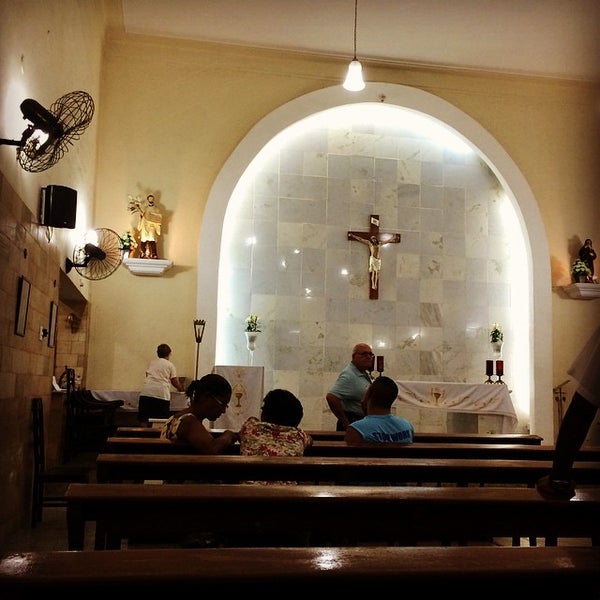
Santo Antônio Maria Zaccaria - Church in Rio de JaneiroReadings at MassLiturgical Colour: Green. Year: C(I).
| First reading |
|---|
| Genesis 27:1-5,15-29 |
|---|
Jacob obtains Isaac's blessing by fraudIsaac had grown old, and his eyes were so weak that he could no longer see. He summoned his elder son Esau. ‘My son!’ he said to him, and the latter answered, ‘I am here.’ Then he said, ‘See, I am old and do not know when I may die. Now take your weapons, your quiver and bow; go out into the country and hunt me some game. Make me the kind of savoury I like and bring it to me, so that I may eat, and give you my blessing before I die.’ Rebekah happened to be listening while Isaac was talking to his son Esau. So when Esau went into the country to hunt game for his father, Rebekah took her elder son Esau’s best clothes, which she had in the house, and dressed her younger son Jacob in them, covering his arms and the smooth part of his neck with the skins of the kids. Then she handed the savoury and the bread she had made to her son Jacob. He presented himself before his father and said, ‘Father.’ ‘I am here;’ was the reply ‘who are you, my son?’ Jacob said to his father, ‘I am Esau your first-born; I have done as you told me. Please get up and take your place and eat the game I have brought and then give me your blessing.’ Isaac said to his son, ‘How quickly you found it, my son!’ ‘It was the Lord your God’ he answered ‘who put it in my path.’ Isaac said to Jacob, ‘Come here, then, and let me touch you, my son, to know if you are my son Esau or not.’ Jacob came close to his father Isaac, who touched him and said, ‘The voice is Jacob’s voice but the arms are the arms of Esau!’ He did not recognise him, for his arms were hairy like his brother Esau’s, and so he blessed him. He said, ‘Are you really my son Esau?’ And he replied, ‘I am.’ Isaac said, ‘Bring it here that I may eat the game my son has brought, and so may give you my blessing.’ He brought it to him and he ate; he offered him wine, and he drank. His father Isaac said to him, ‘Come closer, and kiss me, my son.’ He went closer and kissed his father, who smelled the smell of his clothes. He blessed him, saying: ‘Yes, the smell of my son is like the smell of a fertile field blessed by the Lord. May God give you dew from heaven, and the richness of the earth, abundance of grain and wine! May nations serve you and peoples bow down before you! Be master of your brothers; may the sons of your mother bow down before you! Cursed be he who curses you; blessed be he who blesses you!’
| Responsorial Psalm |
|---|
| Psalm 134(135):1-6 |
|---|
Praise the Lord, for the Lord is good. or Alleluia! Praise the name of the Lord, praise him, servants of the Lord, who stand in the house of the Lord in the courts of the house of our God. Praise the Lord, for the Lord is good. or Alleluia! Praise the Lord for the Lord is good. Sing a psalm to his name for he is loving. For the Lord has chosen Jacob for himself and Israel for his own possession. Praise the Lord, for the Lord is good. or Alleluia! For I know the Lord is great, that our Lord is high above all gods. The Lord does whatever he wills, in heaven, on earth, in the seas. Praise the Lord, for the Lord is good. or Alleluia!
| Gospel Acclamation | Ps118:135 |
|---|
Alleluia, alleluia! Let your face shine on your servant, and teach me your decrees. Alleluia! Alleluia, alleluia! The sheep that belong to me listen to my voice, says the Lord, I know them and they follow me. Alleluia!
When the bridegroom is taken from them, then they will fastJohn’s disciples came to him and said, ‘Why is it that we and the Pharisees fast, but your disciples do not?’ Jesus replied, ‘Surely the bridegroom’s attendants would never think of mourning as long as the bridegroom is still with them? But the time will come for the bridegroom to be taken away from them, and then they will fast. No one puts a piece of unshrunken cloth on to an old cloak, because the patch pulls away from the cloak and the tear gets worse. Nor do people put new wine into old wineskins; if they do, the skins burst, the wine runs out, and the skins are lost. No; they put new wine into fresh skins and both are preserved.’ Universalis podcast: The week ahead – from 6 to 12 JulySaint Benedict and his rule; and how to live it when we are not monks. (20 minutes)
Episode notes.Play Christian Art Each day, The Christian Art website gives a picture and reflection on the Gospel of the day. The readings on this page are from the Jerusalem Bible, which is used at Mass in most of the English-speaking world. The New American Bible readings, which are used at Mass in the United States, are available in the Universalis apps, programs and downloads.
You can also view this page with the Gospel in Greek and English. |
TOPICS: Catholic; General Discusssion; Prayer; Worship
KEYWORDS: catholic; mt9; ordinarytime; prayer
For your reading, reflection, faith-sharing, comments, questions, discussion.
1
posted on
07/05/2025 9:15:34 AM PDT
by
annalex
To: All
KEYWORDS: catholic; mt9; ordinarytime; prayer;
2
posted on
07/05/2025 9:16:12 AM PDT
by
annalex
(fear them not)
To: nickcarraway; NYer; ELS; Pyro7480; livius; ArrogantBustard; Catholicguy; RobbyS; marshmallow; ...

Alleluia Ping Please FReepmail me to get on/off the Alleluia Ping List.
3
posted on
07/05/2025 9:17:35 AM PDT
by
annalex
(fear them not)
To: annalex
4
posted on
07/05/2025 9:18:05 AM PDT
by
annalex
(fear them not)
To: annalex
| Matthew |
| | English: Douay-Rheims | Latin: Vulgata Clementina | Greek NT: Byzantine/Majority Text (2000) |
| | Matthew 9
|
| 14. | Then came to him the disciples of John, saying: Why do we and the Pharisees fast often, but thy disciples do not fast? | Tunc accesserunt ad eum discipuli Joannis, dicentes : Quare nos, et pharisæi, jejunamus frequenter : discipuli autem tui non jejunant ? | τοτε προσερχονται αυτω οι μαθηται ιωαννου λεγοντες δια τι ημεις και οι φαρισαιοι νηστευομεν πολλα οι δε μαθηται σου ου νηστευουσιν |
| 15. | And Jesus said to them: Can the children of the bridegroom mourn, as long as the bridegroom is with them? But the days will come, when the bridegroom shall be taken away from them, and then they shall fast. | Et ait illis Jesus : Numquid possunt filii sponsi lugere, quamdiu cum illis est sponsus ? Venient autem dies cum auferetur ab eis sponsus : et tunc jejunabunt. | και ειπεν αυτοις ο ιησους μη δυνανται οι υιοι του νυμφωνος πενθειν εφ οσον μετ αυτων εστιν ο νυμφιος ελευσονται δε ημεραι οταν απαρθη απ αυτων ο νυμφιος και τοτε νηστευσουσιν |
| 16. | And nobody putteth a piece of raw cloth unto an old garment. For it taketh away the fullness thereof from the garment, and there is made a greater rent. | Nemo autem immittit commissuram panni rudis in vestimentum vetus : tollit enim plenitudinem ejus a vestimento, et pejor scissura fit. | ουδεις δε επιβαλλει επιβλημα ρακους αγναφου επι ιματιω παλαιω αιρει γαρ το πληρωμα αυτου απο του ιματιου και χειρον σχισμα γινεται |
| 17. | Neither do they put new wine into old bottles. Otherwise the bottles break, and the wine runneth out, and the bottles perish. But new wine they put into new bottles: and both are preserved. | Neque mittunt vinum novum in utres veteres : alioquin rumpuntur utres, et vinum effunditur, et utres pereunt. Sed vinum novum in utres novos mittunt : et ambo conservantur. | ουδε βαλλουσιν οινον νεον εις ασκους παλαιους ει δε μηγε ρηγνυνται οι ασκοι και ο οινος εκχειται και οι ασκοι απολουνται αλλα βαλλουσιν οινον νεον εις ασκους καινους και αμφοτεροι συντηρουνται |
5
posted on
07/05/2025 9:21:18 AM PDT
by
annalex
(fear them not)
To: annalex

Catena Aurea by St. Thomas Aguinas
9:14–17
14. Then came to him the disciples of John, saying, Why do we and the Pharisees fast oft, but thy disciples fast not?
15. And Jesus said unto them, Can the children of the bridechamber mourn, as long as the bridegroom is with them? but the days will come, when the bridegroom shall be taken from them, and then shall they fast.
16. No man putteth a piece of new cloth unto an old garment, for that which is put in to fill it up taketh from the garment, and the rent is made worse.
17. Neither do men put new wine into old bottles; else the bottles break, and the wine runneth out, and the bottles perish: but they put new wine into new bottles, and both are preserved.
GLOSS. (ap. Anselm.) When He had replied to them respecting eating and converse with sinners, they next assault Him on the matter of food; Then came to him the disciples of John, saying, Why do we and the Pharisees fast often, but thy disciples fast not?
JEROME. O boastful enquiry and ostentation of fasting much to be blamed, nor can John’s disciples be excused for their taking part with the Pharisees who they knew had been condemned by John, and for bringing a false accusation against Him whom they knew their master had preached.
CHRYSOSTOM. What they say comes to this, Be it that you do this as Physician of souls, but why do your disciples neglect fasting and approach such tables? And to augment the weight of their charge by comparison, they put themselves first, and then the Pharisees. They fasted as they learnt out of the Law, as the Pharisee spoke, I fast twice in the week; (Luke 18:12.) the others learnt it of John.
RABANUS. For John drank neither wine, nor strong drink, increasing his merit by abstinence, because he had no power over nature. But the Lord who has power to forgive sins, why should He shun sinners that eat, since He has power to make them more righteous than those that eat not? Yet doth Christ fast, that you should not avoid the command; but He eats with sinners that you may know His grace and power.
AUGUSTINE. (ubi sup.) Though Matthew mentions only the disciples of John as having made this enquiry, the words of Mark rather seem to imply that some other persons spoke of others, that is, the guests spoke concerning the disciples of John and the Pharisees—this is still more evident from Luke; why then does Matthew here say, Then came unto him the disciples of John, (Luck 5:33.) unless that they were there among other guests, all of whom with one consent put this objection to Him?
CHRYSOSTOM. Or; Luke relates that the Pharisees, but Matthew that the disciples of John, said thus, because the Pharisees had taken them with them to ask the question, as they afterwards did the Herodians. Observe how when strangers, as before the Publicans, were to be defended, He accuses heavily those that blamed them; but when they brought a charge against His disciples, He makes answer with mildness. And Jesus saith unto them, Can the children of the bridegroom mourn as long as the bridegroom is with them? Before He had styled Himself Physician, now Bridegroom, calling to mind the words of John which he had said, He that hath the bride is the bridegroom. (John 3:29.)
JEROME. Christ is the Bridegroom and the Church the Bride. Of this spiritual union the Apostles were born; they cannot mourn so long as they see the Bridegroom in the chamber with the Bride. But when the nuptials are past, and the time of passion and resurrection is come, then shall the children of the Bridegroom fast. The days shall come when the bridegroom shall be taken from them, and then shall they fast.
CHRYSOSTOM. He means this; The present is a time of joy and rejoicing; sorrow is therefore not to be now brought forward; and fasting is naturally grievous, and to all those that are yet weak; for to those that seek to contemplate wisdom, it is pleasant; He therefore speaks here according to the former opinion. He also shews that this they did was not of gluttony, but of a certain dispensation.
JEROME. Hence some think that a fast ought to follow the forty days of Passion, although the day of Pentecost and the coming of the Holy Spirit immediately bring back our joy and festival. From this text accordingly, Montanus, Prisca, and Maximilla enjoin a forty days’ abstinence after Pentecost, but it is the use of the Church to come to the Lord’s passion and resurrection through humiliation of the flesh, that by carnal abstinence we may better be prepared for spiritual fulness.
CHRYSOSTOM. Here again He confirms what He has said by examples of common things; No man putteth a patch of undressed cloth into an old garment; for it taketh away its wholeness from, the garment, and the rent is made worse; which is to say, My disciples are not yet become strong, but have need of much consideration; they are not yet renewed by the Spirit. On men in such a state it is not behoveful to lay a burden of precepts. Herein He establishes a rule for His disciples, that they should receive with leniency disciples from out of the whole world.
REMIGIUS. By the old garment He means His disciples, who had not yet been renewed in all things. The patch of undressed, that is, of new cloth, means the new grace, that is, the Gospel doctrine, of which fasting is a portion; and it was not meet that the stricter ordinances of fasting should be entrusted to them, lest they should be broken down by their severity, and forfeit that faith which they had; as He adds, It taketh its wholeness from the garment, and the rent is made worse.
GLOSS. (ap. Anselm.) As much as to say, An undressed patch, that is, a new one, ought not to be put into an old garment, because it often takes away from the garment its wholeness, that is, its perfection, and then the rent is made worse. For a heavy burden laid on one that is untrained often destroys that good which was in him before.
REMIGIUS. After two comparisons made, that of the wedding, and that of the undressed cloth, He adds a third concerning wine skins; Neither do men put new wine into old skins. By the old skins He means His disciples, who were not yet perfectly renewed. The new wine is the fulness of the Holy Spirit, and the depths of the heavenly mysteries, which His disciples could not then bear; but after the resurrection they became as new skins, and were filled with new wine when they received the Holy Spirit into their hearts. Whence also some said, These men are full of new wine. (Acts 2:13.)
CHRYSOSTOM. Herein He also shews us the cause of those condescending words which He often addressed to them because of their weakness.
JEROME. Otherwise; By the old garment, and old skins, we must understand the Scribes and Pharisees; and by the piece of new cloth, and new wine, the Gospel precepts, which the Jews were not able to bear; so the rent was made worse. Something such the Galatians sought to do, to mix the precepts of the Law with the Gospel, and to put new wine into old skins. The word of the Gospel is therefore to be poured into the Apostles, rather than into the Scribes and Pharisees, who, corrupted by the traditions of the elders, were unable to preserve the purity of Christ’s precepts.
GLOSS. (non occ.) This shews that the Apostles being hereafter to be replenished with newness of grace, ought not now to be bound to the old observances.
AUGUSTINE. (Serm. 210. 3.) Otherwise; Every one who rightly fasts, either humbles his soul in the groaning of prayer, and bodily chastisement, or suspends the motion of carnal desire by the joys of spiritual meditation. And the Lord here makes answer respecting both kinds of fasting; concerning the first, which is in humiliation of soul, He says, The children of the bridegroom cannot mourn. Of the other which has a feast of the Spirit, He next speaks, where He says, No man putteth a patch of undressed cloth. Then we must mourn because the Bridegroom is taken away from us. And we rightly mourn if we burn with desire of Him. Blessed they to whom it was granted before His passion to have Him present with them, to enquire of Him what they would, to hear what they ought to hear. Those days the fathers before His coming sought to see, and saw them not, because they were placed in another dispensation, one in which He was proclaimed as coming, not one in which He was heard as present. For in us was fulfilled that He speaks of, The days shall come when ye shall desire to see one of these days, and shall not be able. (Luke 17:22.) Who then will not mourn this? Who will not say, My tears have been my meat day and night, while they daily say unto me, Where is now thy God? (Ps. 42:3.) With reason then did the Apostle seek to die and to be with Christ.
AUGUSTINE. (De Cons. Ev. ii. 27.) That Matthew writes here mourn, where Mark and Luke write fast, shews that the Lord spake of that kind of fasting which pertains to humbling one’s self in chastisement; as in the following comparisons He may be supposed to have spoken of the other kind which pertains to the joy of a mind wrapt in spiritual thoughts, and therefore averted from the food of the body; shewing that those who are occupied about the body, and owing to this retain their former desires, are not fit for this kind of fasting.
HILARY. Figuratively; This His answer, that while the Bridegroom was present with them, His disciples needed not to fast, teaches us the joy of His presence, and the sacrament of the holy food, which none shall lack, while He is present, that is, while one keeps Christ in the eye of the mind. He says, they shall fast when He is taken away from them, because all who do not believe that Christ is risen, shall not have the food of life. For in the faith of the resurrection the sacrament of the heavenly bread is received.
JEROME. Or; When He has departed from us for our sins, then is a fast to be proclaimed, then is mourning to be put on.
HILARY. By these examples He shews that neither our souls nor bodies, being so weakened by inveteracy of sin, are capable of the sacraments of the new grace.
RABANUS. The different comparisons all refer to the same thing, and yet are they different; the garment by which we are covered abroad signifies our good works, which we perform when we are abroad; the wine with which we are refreshed within is the fervor of faith and charity, which creates us anew within.
Catena Aurea Matthew 9
6
posted on
07/05/2025 9:22:54 AM PDT
by
annalex
(fear them not)
To: annalex
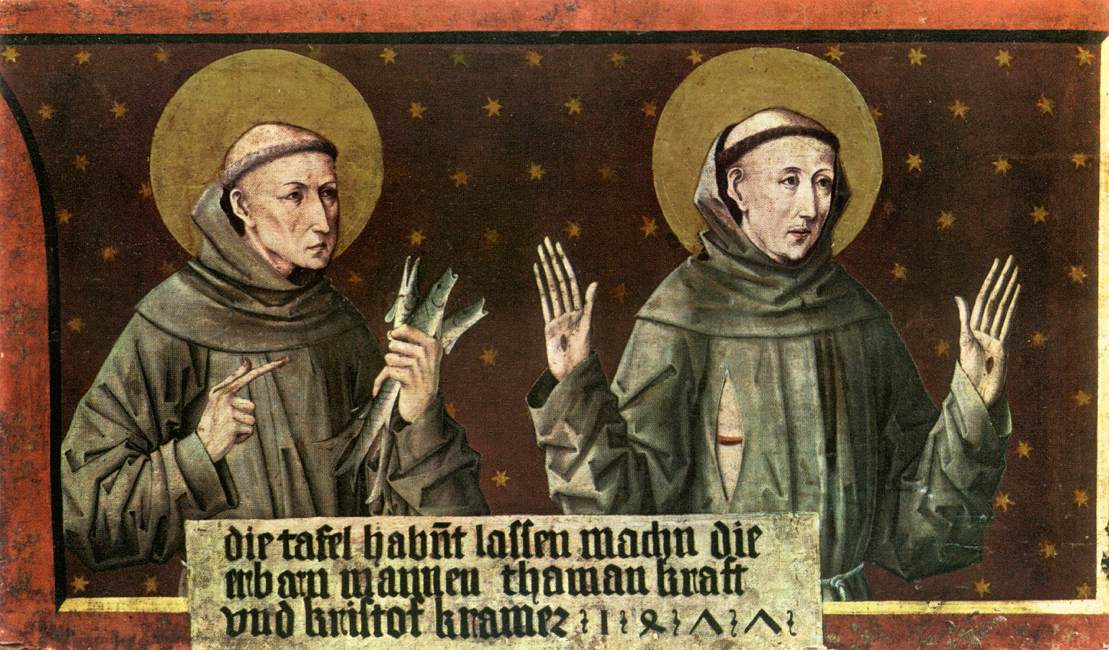
St Anthony of Padua and St Francis of Assisi
1477
Tempera oan pine panel, 54,5 x 93,5 cm
Szépmûvészeti Múzeum, Budapest
7
posted on
07/05/2025 9:23:25 AM PDT
by
annalex
(fear them not)
To: annalex
Saint of the Day for July 5
(1502 – July 5, 1539)
Saint Anthony Zaccaria’s Story
At the same time that Martin Luther was attacking abuses in the Church, a reformation within the Church was already being attempted. Among the early movers of the Counter-Reformation was Anthony Zaccaria. His mother became a widow at 18, and devoted herself to the spiritual education of her son. He received a medical doctorate at 22, and while working among the poor of his native Cremona in Italy, was attracted to the religious apostolate. He renounced his rights to any future inheritance, worked as a catechist, and was ordained a priest at the age of 26. Called to Milan in a few years, he laid the foundations of three religious congregations, one for men, one for women, and an association of married couples. Their aim was the reform of the decadent society of their day, beginning with the clergy, religious, and lay people.
Greatly inspired by Saint Paul—his congregation is named the Barnabites, after the companion of that saint—Anthony preached with great vigor in church and street, conducted popular missions, and was not ashamed of doing public penance.
Anthony encouraged such innovations as the collaboration of the laity in the apostolate, frequent Communion, the Forty Hours devotion, and the ringing of church bells at 3:00 p.m. on Fridays. His holiness moved many to reform their lives, but as with all saints, it also moved many to oppose him. Twice his community had to undergo official religious investigation, and twice it was exonerated.
While on a mission of peace, Anthony became seriously ill and was brought home for a visit to his mother. He died at Cremona at the age of 36.
Reflection
The austerity of Anthony’s spirituality and the Pauline ardor of his preaching would probably “turn off” many people today. When even some psychiatrists complain at the lack of a sense of sin, it may be time to tell ourselves that not all evil is explained by emotional disorder, subconscious and unconscious drives, parental influence, and so on. The old-time “hell and damnation” mission sermons have given way to positive, encouraging, biblical homilies. We do indeed need assurance of forgiveness, relief from existential anxiety, and future shock. But we still need prophets to stand up and tell us, “If we say ‘We are without sin,’ we deceive ourselves and the truth is not in us” (1 John 1:8).
franciscanmedia.org
8
posted on
07/05/2025 9:27:38 AM PDT
by
annalex
(fear them not)
To: annalex
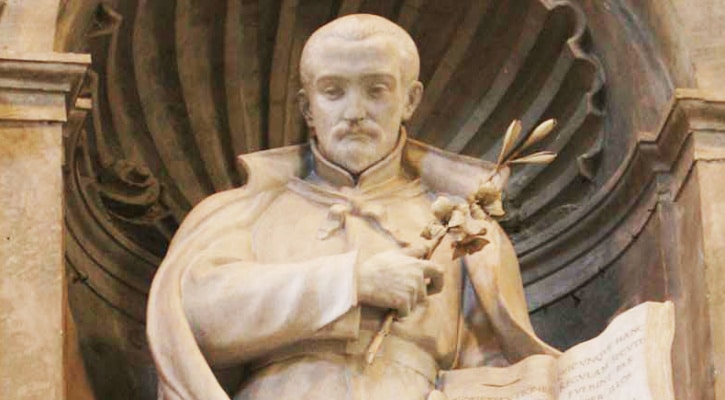
Sculpture of Saint Anthony Mary Zaccaria, at St. Peter’s Basilica, Vatican
9
posted on
07/05/2025 9:31:08 AM PDT
by
annalex
(fear them not)
To: annalex
NAVARRE BIBLE COMMENTARY(RSV)
Ad Majorem Dei Gloriam (To the Greater Glory of God)
First Reading:
From: Genesis 27:1-5, 15-29
Jacob Obtains Isaac's Blessing by Cunning
-----------------------------------------
[1] When Isaac was old and his eyes were dim so that he could not see, he called Esau his older son, and said to him, "My son"; and he answered, "Here I am." [2] He said, "Behold, 1 am old; I do not know the day of my death. [3] Now then, take your weapons, your quiver and your bow, and go out to the field, and hunt game for me, [4] and prepare for me savory food, such as I love, and bring it to me that I may eat; that I may bless you before I die."
[5] Now Rebekah was listening when Isaac spoke to his son Esau. So when Esau went to the field to hunt for game and bring it, [15] (Then) Rebekah took the best garments of Esau her older son, which were with her in the house and put them on Jacob her younger son; [16] and the skins of the kids she put upon his hands and upon the smooth part of his neck; [17] and she gave the savory food and the bread, which she had prepared, into the hand of her son Jacob.
[18] So he went in to his father, and said, "My father"; and said, "Here I am; who are you, my son?" [19] Jacob said to his father "I am Esau your first-born. I have done as you told me; now sit and eat of my game, that you may bless me." [20] But Isaac said to his son, "How is it that you have found it so quickly, my son?" He answered, "Because the Lord your God granted me success." [21] Then Isaac said to Jacob, "Come near, that I may feel you, my son, to know whether you are really my son Esau or not." [22] Jacob went near to Isaac his father, who felt him and said, "The voice is Jacob's voice, but the hands are the hands of Esau." [23] And he did not recognize him, because his hands were hairy like his brother Esau's hands; so he blessed him. He said, "Are you really my son Esau?" He answered, "I am." Then he said, "Bring it to me, that I may eat of my son's game and bless you." So he brought it to him, and he ate; and he brought him wine, and he drank. [26] Then his father Isaac said to him, "Come near and kiss me, my son." [27] So he came near and kissed him; and he smelled the smell of his garments, and blessed him, and said, "See, the smell of my son is as the smell of a field which the Lord has blessed! [28] May God give you of the dew of heaven, and of the fatness of the earth, and plenty of grain and wine. [29] Let peoples serve you, and nations bow down to you."
***********************************************************************
Commentary:
27:1-45. Jacob managed to get the birthright; now he is going to get the blessing his father intended for his firstborn son. Seemingly, this blessing meant he acquired a right to the inheritance he had already bought from Esau and it meant he would be the head of the family (cf. v. 29). Moreover, by getting his father's blessing he also received God's blessing. The Bible does not make a judgment about the methods Jacob used to deflect his father's blessing to himself; but it does make it clear, once again, that he had no right to it as far as human laws were concerned; no, he received both the birthright and the blessing as a gratuitous gift from God, who chose the younger son (cf. 25:23). Here too, as in the case of Isaac (cf. 21:8-13), the part played by the mother is stressed; she ignores custom, and plays an active part in the furthering of God's plans. The passage also stresses how shrewd the patriarch is by comparison with Esau. Jacob's action is justified in the overall context of the narrative, given that he bought the birthright previously from his brother. However, the prophet Hosea was of the opinion that Jacob had done something he should be sorry for; in which case Jacob prefigures the people of Israel, whom the prophet calls to repentance (cf. Hos 12:37).
This account is in a style similar to what we saw in chapter 24: the action unfolds over five scenes, each of which includes a dialogue between two people (their psychology is captured very well); dramatic tension is maintained by curiosity as to who will end up winning the blessing; the story is well told, and rather amusing.
27:5-17. Rebekah apparently acts out of human motives, impelled by her love for her favorite younger) son (cf. 25:28). God will use this favoritism to guide events so that his plans for the two sons take effect (cf. 25:23). Holy Scripture does not justify Rebekah's action, but God draws great good from it: the promises made to Abraham pass, through Jacob, to the people of Israel, his descendants.
27:20. Jacob's reply, invoking the name of God as it does, is not a little astute: he does not explain how he obtained the game, but the reader is led to believe that it was Rebekah's doing.
27:26-29. The blessing Isaac gives Jacob evokes the fine qualities of this son, the fruitfulness of the land and lordship over the nations—three things connected with the call to Abraham and the promise of land and descendants, as will be pointed out later on when Isaac reaffirms his blessing after he discovers he has been deceived (cf. 28:3-4). The Letter to the Hebrews (cf. Heb 11:20) teaches that this blessing and also that received by Esau (cf. Gen 27:39-40), are inspired by faith and are given with a view to the future, that is, to the fullness of time. And so St Augustine interprets that "what the blessing of Jacob typifies is, then, the preaching of Christ to all nations. [...] Isaac is the law and prophecy by which Christ is blessed by means of the mouth of the Jews. But, since law and prophecy was not understood, it was as though it came from one who spoke in ignorance. It is with the aroma of Christ's name that the world, like a field, is filled. His is the blessing of the dew from heaven (meaning the shower of His divine words) and of the fruitfulness of the earth (in the sense of the gathering in of the peoples of the earth). His is the harvest of grain and of wine (interpreted as the multitude of those who gather the grain and wine in the sacrament of his Body and Blood. [...] His Father's sons, in the sense of the sons of Abraham according to faith, adore Him who is, in turn, a son of Abraham according to the flesh. Anyone who curses Him is cursed, and anyone who blesses Him is blessed. What I mean is that it is our Christ who is blessed (in the sense of being truly announced) even by the Jews themselves, who, for all their errors of hoping for some other Messiah and of thinking that it is he who is being blessed, still sing in their synagogues the Laws and the Prophets" ("De Civitate Dei", 16, 37).
10
posted on
07/05/2025 10:22:17 AM PDT
by
fidelis
(Ecce Crucem Domini! Fugite partes adversae! Vicit Leo de tribu Juda, Radix David! Alleluia!)
Gospel Reading: From: Matthew 9:14-17
The Question of John’s Disciples About Fasting
---------------------------------------------------------
[14] Then the disciples of John (the Baptist) came to Him (Jesus), saying, "Why do we and the Pharisees fast, but Your disciples do not fast?" [15] And Jesus said them, "Can the wedding guests mourn as long as the bridegroom is with them? The days will come, when the bridegroom is taken away from them, and then they will fast. [16] And no one puts a piece of unshrunk cloth on an old garment, for the patch tears away from the garment, and a worse tear is made. [17] Neither is new wine put into old wineskins; if it is, the skins burst, and the wine is spilled, and the skins are destroyed; but new wine is put into fresh wineskins, and so both are preserved."
***********************************************************************
Commentary:
14-17. This passage is interesting, not so much because it tells us about the sort of fasting practised by the Jews of the time--particularly the Pharisees and John the Baptist's disciples—but because of the reason Jesus gives for not requiring His disciples to fast in that way. His reply is both instructive and prophetic. Christianity is not a mere mending or adjusting of the old suit of Judaism. The redemption wrought by Jesus involves a total regeneration. Its spirit is too new and too vital to be suited to old forms of penance, which will no longer apply.
We know that in our Lord's time Jewish theology schools were in the grip of a highly complicated casuistry to do with fasting, purifications, etc., which smothered the simplicity of genuine piety. Jesus' words point to that simplicity of heart with which His disciples might practise prayer, fasting and almsgiving (cf. Matthew 6:1-18 and notes to same). From apostolic times onwards it is for the Church, using the authority given it by our Lord to set out the different forms fasting should take in different periods and situations.
15. "The wedding guests": literally, "the sons of the house where the wedding is being celebrated"--an expression meaning the bridegroom's closest friends. This is an example of how St. Matthew uses typical Semitic turns of phrase, presenting Jesus' manner of speech.
This "house" to which Jesus refers has a deeper meaning; set beside the parable of the guests at the wedding (Matthew 22:1 ff), it symbolizes the Church as the house of God and the body of Christ: "Moses was faithful in all God's house as a servant, to testify to the things that were to be spoken later, but Christ was faithful over God's house as a son. And we are His house if we hold fast our confidence and pride in our hope" (Hebrews 3:5-6).
The second part of the verse refers to the violent death Jesus would meet.
11
posted on
07/05/2025 10:22:35 AM PDT
by
fidelis
(Ecce Crucem Domini! Fugite partes adversae! Vicit Leo de tribu Juda, Radix David! Alleluia!)
12
posted on
07/05/2025 10:23:20 AM PDT
by
fidelis
(Ecce Crucem Domini! Fugite partes adversae! Vicit Leo de tribu Juda, Radix David! Alleluia!)
Disclaimer:
Opinions posted on Free Republic are those of the individual
posters and do not necessarily represent the opinion of Free Republic or its
management. All materials posted herein are protected by copyright law and the
exemption for fair use of copyrighted works.
FreeRepublic.com is powered by software copyright 2000-2008 John Robinson
