Posted on 06/27/2025 4:58:32 AM PDT by annalex
The Most Sacred Heart of Jesus Solemnity ![]() St. Cyril of Alexandria Church, Tucson, Arizona Readings at MassLiturgical Colour: White. Year: C(I).

I will look after my flock myself and keep all of it in viewThe Lord God says this: I am going to look after my flock myself and keep all of it in view. As a shepherd keeps all his flock in view when he stands up in the middle of his scattered sheep, so shall I keep my sheep in view. I shall rescue them from wherever they have been scattered during the mist and darkness. I shall bring them out of the countries where they are; I shall gather them together from foreign countries and bring them back to their own land. I shall pasture them on the mountains of Israel, in the ravines and in every inhabited place in the land. I shall feed them in good pasturage; the high mountains of Israel will be their grazing ground. There they will rest in good grazing ground; they will browse in rich pastures on the mountains of Israel. I myself will pasture my sheep, I myself will show them where to rest – it is the Lord who speaks. I shall look for the lost one, bring back the stray, bandage the wounded and make the weak strong. I shall watch over the fat and healthy. I shall be a true shepherd to them.
The Lord is my shepherd: there is nothing I shall want. The Lord is my shepherd; there is nothing I shall want. Fresh and green are the pastures where he gives me repose. Near restful waters he leads me, to revive my drooping spirit. The Lord is my shepherd: there is nothing I shall want. He guides me along the right path; he is true to his name. If I should walk in the valley of darkness no evil would I fear. You are there with your crook and your staff; with these you give me comfort. The Lord is my shepherd: there is nothing I shall want. You have prepared a banquet for me in the sight of my foes. My head you have anointed with oil; my cup is overflowing. The Lord is my shepherd: there is nothing I shall want. Surely goodness and kindness shall follow me all the days of my life. In the Lord’s own house shall I dwell for ever and ever. The Lord is my shepherd: there is nothing I shall want.
Now we have been reconciled by the death of his Son, surely we may count on being saved by the life of his SonThe love of God has been poured into our hearts by the Holy Spirit which has been given us. We were still helpless when at his appointed moment Christ died for sinful men. It is not easy to die even for a good man – though of course for someone really worthy, a man might be prepared to die – but what proves that God loves us is that Christ died for us while we were still sinners. Having died to make us righteous, is it likely that he would now fail to save us from God’s anger? When we were reconciled to God by the death of his Son, we were still enemies; now that we have been reconciled, surely we may count on being saved by the life of his Son? Not merely because we have been reconciled but because we are filled with joyful trust in God, through our Lord Jesus Christ, through whom we have already gained our reconciliation.
Alleluia, alleluia! Shoulder my yoke and learn from me, for I am gentle and humble in heart. Alleluia!
Alleluia, alleluia! I am the good shepherd, says the Lord; I know my own sheep and my own know me. Alleluia!
There will be rejoicing in heaven over one repentant sinnerJesus spoke this parable to the scribes and Pharisees: ‘What man among you with a hundred sheep, losing one, would not leave the ninety-nine in the wilderness and go after the missing one till he found it? And when he found it, would he not joyfully take it on his shoulders and then, when he got home, call together his friends and neighbours? “Rejoice with me,” he would say “I have found my sheep that was lost.” In the same way, I tell you, there will be more rejoicing in heaven over one repentant sinner than over ninety-nine virtuous men who have no need of repentance.’ Universalis podcast: The week ahead – from 29 June to 5 JulyWhy choose St Peter? How to like St Paul? Abraham the negotiator. (20 minutes) Christian Art![]() Each day, The Christian Art website gives a picture and reflection on the Gospel of the day. The readings on this page are from the Jerusalem Bible, which is used at Mass in most of the English-speaking world. The New American Bible readings, which are used at Mass in the United States, are available in the Universalis apps, programs and downloads. |
KEYWORDS: catholic; lk15; ordinarytime; prayer

Please FReepmail me to get on/off the Alleluia Ping List.
| Luke | |||
| English: Douay-Rheims | Latin: Vulgata Clementina | Greek NT: Byzantine/Majority Text (2000) | |
| Luke 15 | |||
| 3. | And he spoke to them this parable, saying: | Et ait ad illos parabolam istam dicens : | ειπεν δε προς αυτους την παραβολην ταυτην λεγων |
| 4. | What man of you that hath an hundred sheep: and if he shall lose one of them, doth he not leave the ninety-nine in the desert, and go after that which was lost, until he find it? | Quis ex vobis homo, qui habet centum oves, et si perdiderit unam ex illis, nonne dimittit nonaginta novem in deserto, et vadit ad illam quæ perierat, donec inveniat eam ? | τις ανθρωπος εξ υμων εχων εκατον προβατα και απολεσας εν εξ αυτων ου καταλειπει τα ενενηκοντα εννεα εν τη ερημω και πορευεται επι το απολωλος εως ευρη αυτο |
| 5. | And when he hath found it, lay it upon his shoulders, rejoicing: | Et cum invenerit eam, imponit in humeros suos gaudens : | και ευρων επιτιθησιν επι τους ωμους εαυτου χαιρων |
| 6. | And coming home, call together his friends and neighbours, saying to them: Rejoice with me, because I have found my sheep that was lost? | et veniens domum convocat amicos et vicinos, dicens illis : Congratulamini mihi, quia inveni ovem meam, quæ perierat. | και ελθων εις τον οικον συγκαλει τους φιλους και τους γειτονας λεγων αυτοις συγχαρητε μοι οτι ευρον το προβατον μου το απολωλος |
| 7. | I say to you, that even so there shall be joy in heaven upon one sinner that doth penance, more than upon ninety-nine just who need not penance. | Dico vobis quod ita gaudium erit in cælo super uno peccatore pœnitentiam agente, quam super nonaginta novem justis, qui non indigent pœnitentia. | λεγω υμιν οτι ουτως χαρα εσται εν τω ουρανω επι ενι αμαρτωλω μετανοουντι η επι ενενηκοντα εννεα δικαιοις οιτινες ου χρειαν εχουσιν μετανοιας |

15:1–7
1. Then drew near unto him all the Publicans and sinners for to hear him.
2. And the Pharisees and Scribes murmured, saying, This man receiveth sinners, and eateth with them.
3. And he spake this parable unto them, saying,
4. What man of you, having an hundred sheep, if he lose one of them, doth not leave the ninety and nine in the wilderness, and go after that which is lost, until he find it?
5. And when he hath found it, he layeth it on his shoulders, rejoicing.
6. And when he cometh home, he calleth together his friends and neighbours, saying unto them, Rejoice with me; for I have found my sheep which was lost.
7. I say unto you, that likewise joy shall be in heaven over one sinner that repenteth, more than over ninety and nine just persons, which need no repentance.
AMBROSE. Thou hadst learnt by what went before not to be occupied by the business of this world, not to prefer transitory things to eternal. But because the frailty of man can not keep a firm step in so slippery a world, the good Physician has shewn thee a remedy even after falling; the merciful Judge has not denied the hope of pardon; hence it is added, Then drew near unto him all the publicans.
GLOSS. (interlin.) That is, those who collect or farm the public taxes, and who make a business of following after worldly gain.
THEOPHYLACT. For this was His wont, for the sake whereof He had taken upon Him the flesh, to receive sinners as the physician those that are sick. But the Pharisees, the really guilty, returned murmurs for this act of mercy, as it follows, And the Pharisees and Scribes murmured, saying, &c.
GREGORY. (in Hom. 34. in Evang.) From which we may gather, that true justice feels compassion, false justice scorn, although the just are wont rightly to repel sinners. But there is one act proceeding from the swelling of pride, another from the zeal for discipline. For the just, though without they spare not rebukes for the sake of discipline, within cherish sweetness from charity. In their own minds they set above themselves those whom they correct, whereby they keep both them under by discipline, and themselves by humility. But, on the contrary, they who from false justice are wont to pride themselves, despise all others, and never in mercy condescend to the weak; and thinking themselves not to be sinners, are so much the worse sinners. Of such were the Pharisees, who condemning our Lord because He received sinners, with parched hearts reviled the very fountain of mercy. But because they were so sick that they knew not of their sickness, to the end that they might know what they were, the heavenly Physician answers them with mild applications. For it follows, And he spake this parable unto them, saying, What man of you having an hundred sheep, and if he lose one of them, does not go after it, &c. He gave a comparison which man might recognise in himself, though it referred to the Creator of men. For since a hundred is a perfect number, He Himself had a hundred sheep, seeing that He possessed the nature of the holy angels and men. Hence he adds, Having an hundred sheep.
CYRIL OF ALEXANDRIA. We may hence understand the extent of our Saviour’s kingdom. For He says there are a hundred sheep, bringing to a perfect sum the number of rational creatures subject to Him. For the number hundred is perfect, being composed of ten decades. But out of these one has wandered, namely, the race of man which inhabits earth.
AMBROSE. Rich then is that Shepherd of whom we all are a hundredth part; and hence it follows, And if he lose one of them, does he not leave &c.
GREGORY. One sheep then perished when man by sinning left the pastures of life. But in the wilderness the ninety and nine remained, because the number of the rational creatures, that is to say of Angels and men who were formed to see God, was lessened when man perished; and hence it follows, Does he not leave the ninety and nine in the wilderness, because in truth he left the companies of the Angels in heaven. But man then forsook heaven when he sinned. And that the whole body of the sheep might be perfectly made up again in heaven, the lost man was sought for on earth; as it follows, And go after that &c.
CYRIL OF ALEXANDRIA. But was He then angry with the rest, and moved by kindness only to one? By no means. For they are in safety, the right hand of the Most Mighty being their defence. It behoved Him rather to pity the perishing, that the remaining number might not seem imperfect. For the one being brought back, the hundred regains its own proper form.
AUGUSTINE. (de Quæst. Ev. lib. 2. qu. 32.) Or He spoke of those ninety and nine whom He left in the wilderness, signifying the proud, who bear solitude as it were in their mind, in that they wish to appear themselves alone, to whom unity is wanting for perfection. For when a man is torn from unity, it is by pride; since desiring to be his own master, he follows not that One which is God, but to that One God ordains all who are reconciled by repentance, which is obtained by humility.
GREGORY OF NYSSA. (Hom. de Mul. Pecc.) But when the shepherd had found the sheep, he did not punish it, he did not get it to the flock by driving it, but by placing it upon his shoulder, and carrying it gently, he united it to his flock. Hence it follows, And when he hath found it, he layeth it upon his shoulders rejoicing.
GREGORY. (in Hom. 34.) He placed the sheep upon his shoulders, for taking man’s nature upon Him he bore our sins. But having found the sheep, he returns home; for our Shepherd having restored man, returns to his heavenly kingdom. And hence it follows, And coming he collects together his friends and neighbours, saying to them, Rejoice with me, for I have found my sheep which was lost. (1 Pet. 2:24, Isai. 53.) By His friends and neighbours He means the companies of Angels, who are His friends because they are keeping His will in their own stedfastness; they are also His neighbours, because by their own constant waiting upon Him they enjoy the brightness of His sight.
THEOPHYLACT. The heavenly powers thus are called sheep, because every created nature as compared with God is as the beasts, but inasmuch as it is rational, they are called friends and neighbours.
GREGORY. (in Hom. 34.) And we must observe that He says not, “Rejoice with the sheep that is found,” but with me, because truly our life is His joy, and when we are brought home to heaven we fill up the festivity of His joy.
AMBROSE. Now the angels, inasmuch as they are intelligent beings, do not unreasonably rejoice at the redemption of men, as it follows, I say unto you, that likewise joy shall be in heaven over one sinner that repenteth, more than over ninety and nine just persons who need no repentance. Let this serve as an incentive to goodness, for a man to believe that his conversion will be pleasing to the assembled angels, whose favour he ought to court, or whose displeasure to fear.
GREGORY. (ubi sup.) But he allows there is more joy in heaven over the converted sinner, than over the just who remain stedfast; for the latter for the most part, not feeling themselves oppressed by the weight of their sins, stand indeed in the way of righteousness, but still do not anxiously sigh after the heavenly country, frequently being slow to perform good works, from their confidence in themselves that they have committed no grievous sins. But, on the other hand, sometimes those who remember certain iniquities that they have committed, being pricked to the heart, from their very grief grow inflamed towards the love of God; and because they consider they have wandered from God, make up for their former losses by the succeeding gains. Greater then is the joy in heaven, just as the leader in battle loves that soldier more who having turned from flight, bravely pursues the enemy, than him who never turned his back and never did a brave act. So the husbandman rather loves that land which after bearing thorns yields abundant fruit, than that which never had thorns, and never gave him a plentiful crop. But in the mean time we must be aware that there are very many just men in whose life there is so much joy, that no penitence of sinners however great can in any way be preferred to them. Whence we may gather what great joy it causes to God when the just man humbly mourns, if it produces joy in heaven when the unrighteous by his repentance condemns the evil that he has done.
Catena Aurea Luke 15

Saint Cyril of Alexandria’s Story
Saints are not born with halos around their heads. Cyril, recognized as a great teacher of the Church, began his career as archbishop of Alexandria, Egypt, with impulsive, often violent, actions. He pillaged and closed the churches of the Novatian heretics—who required those who denied the faith to be re-baptized—participated in the deposing of Saint John Chrysostom, and confiscated Jewish property, expelling the Jews from Alexandria in retaliation for their attacks on Christians.
Cyril’s importance for theology and Church history lies in his championing the cause of orthodoxy against the heresy of Nestorius, who taught that in Christ there were two persons, one human and one divine.
The controversy centered around the two natures in Christ. Nestorius would not agree to the title “God-bearer” for Mary. He preferred “Christ-bearer,” saying there are two distinct persons in Christ—divine and human—joined only by a moral union. He said Mary was not the mother of God but only of the man Christ, whose humanity was only a temple of God. Nestorianism implied that the humanity of Christ was a mere disguise.
Presiding as the pope’s representative at the Council of Ephesus in 431, Cyril condemned Nestorianism and proclaimed Mary truly the “God-bearer”—the mother of the one Person who is truly God and truly human. In the confusion that followed, Cyril was deposed and imprisoned for three months, after which he was welcomed back to Alexandria.
Besides needing to soften some of his opposition to those who had sided with Nestorius, Cyril had difficulties with some of his own allies, who thought he had gone too far, sacrificing not only language but orthodoxy. Until his death, his policy of moderation kept his extreme partisans under control. On his deathbed, despite pressure, he refused to condemn the teacher of Nestorius.
Reflection
Lives of the saints are valuable not only for the virtue they reveal but also for the less admirable qualities that also appear. Holiness is a gift of God to us as human beings. Life is a process. We respond to God’s gift, but sometimes with a lot of zigzagging. If Cyril had been more patient and diplomatic, the Nestorian church might not have risen and maintained power so long. But even saints must grow out of immaturity, narrowness, and selfishness. It is because they—and we—do grow, that we are truly saints, persons who live the life of God.


First Reading:
From: Ezekiel 34:11-16
The Lord, the Shepherd of Israel
--------------------------------
[11] “For thus says the Lord God: Behold, I, I myself will search for my sheep, and will seek them out. [12] As a shepherd seeks out his flock when some of his sheep” have been scattered abroad, so will I seek out my sheep; and I will rescue them from all places where they have been scattered on a day of clouds and thick darkness. [13] And I will bring them up from the peoples, and gather them from the countries, and will bring them into their own land; and I will feed them on the mountains of Israel, by the fountains, and in all the inhabited places of the country. [14] I will feed them with good pasture, and upon the mountain heights of Israel shall be their pasture; there they shall lie down in good grazing land, and on fat pasture they shall feed on the mountains of Israel. [15] I myself will be the shepherd of my sheep, and I will make them lie down, says the Lord God. [16] I will seek the lost, and I will bring back the strayed, and I will bind up the crippled, and I will strengthen the weak, and the fat and the strong I will watch over;” I will feed them in justice.
***********************************************************************
Commentary:
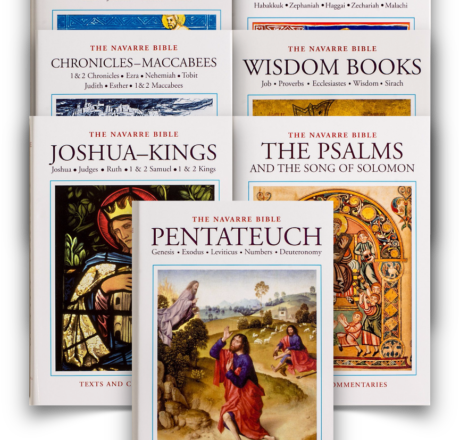
34:11-22. Ezekiel says that God has made himself a shepherd for his people (v. 11); he always looks out for them (vv. 12-16), neglecting none. This solicitude includes the practice of justice (vv. 17-22); in this new stage it becomes clearer that divine love and mercy are compatible with condemnation of the wicked (v. 20): in fact, love can never exclude justice. This beautiful oracle resounds in our Lord’s parable of the Good Shepherd who takes care of his sheep (ef. Jn 10:1-21), in what he says about the Father’s joy on finding the lost sheep (cf. Mt 18:12-14; Lk 15:4-7), and in things he has to say about the Last Judgment as reported by St Matthew (Mt 25:31-46). In a sermon on pastors, St Augustine comments: “He stands guard over us when we are awake and while we sleep. If an earthly flock is safe in the vigilant care of a human shepherd, how much more secure are we, who have God as our shepherd, not only because he desires to teach and help us, but because he is our creator. "As for you, my flock, thus says the Lord God: Behold, I judge between sheep and sheep, rams and he-goats" (Ezek 34:17). Why are he-goats to be found among God’s flock? Goats who will be sent to the left, and sheep that will be called to the right side of God, are to be found in the same fields and by the same streams; and He tends together those who will later be separated. The meek patience of sheep is an imitation of the patience of God. He will separate the flock later, sending some to the right and some to the left” ("Sermones", 47).
From: Romans 5:5b-11
Reconciliation Through Christ's Sacrifice, the Basis of our Hope
----------------------------------------------------------------
[5b] God's love has been poured into our hearts through the Holy Spirit who has been given to us.
[6] While we were yet helpless, at the right time Christ died for the ungodly. [7] Why, one will hardly die for a righteous man—though perhaps for a good man one will dare even to die. [8] But God shows His love for us in that while we were yet sinners Christ died for us.
[9] Since, therefore, we are now justified by His blood, much more shall we be saved by Him from the wrath of God. [10] For, if while we were enemies we were reconciled to God by the death of His Son, much more, now that we are reconciled, shall we be saved by His life. [11] Not only so, but we also rejoice in God through our Lord Jesus Christ, through whom we have now received our reconciliation.
***********************************************************************
Commentary:
1-5. In this very moving passage God helps us see "the divine interlacing of the three theological virtues which form the backing upon which the true life of every Christian man or woman has to be woven" (St. J. Escriva, "Friends of God", 205). Faith, hope and charity act in us in turn, causing us to grow in the life of grace. Thus, faith leads us to know and be sure of things we hope for (cf. Hebrews 11:1); hope ensures that we shall attain them, and enlivens our love of God; charity, for its part, gives us energy to practise the other two theological virtues. The definitive outcome of this growth in love, faith and hope is the everlasting peace that is of the essence of eternal life.
As long as we are in this present life we do have peace to some degree--but with tribulation. Therefore, the peace attainable in this life does not consist in the contentment of someone who wants to have no problems, but rather in the resoluteness full of hope ("character") of someone who manages to rise above suffering and stays faithful through endurance. Suffering is necessary for us, because it is the normal way to grow in virtue (cf. James 1:2-4; 1 Peter 1:5-7); that is why it is providential (cf. Philippians 1:19; Colossians 1:24) and leads to joy and happiness (1 Thessalonians 1:6).
"A person who hopes for something and strives eagerly to attain it is ready to endure all kinds of difficulty and distress. Thus, for example, a sick person if he is eager to be healthy, is happy to take the bitter medicine which will cure him. Therefore, one sign of the ardent hope that is ours thanks to Christ is that we glory not only in the hope of future glory, but also in the afflictions which we suffer in order to attain it" (St. Thomas Aquinas, "Commentary on Romans, ad. loc.").
A person who lives by faith, hope and charity realizes that suffering is not something meaningless but rather is designed by God for our perfecting. Perfection consists "in the bringing of our wills so closely into conformity with the will of God that, as soon as we realize He wills anything, we desire it ourselves with all our might, and take the bitter with the sweet, knowing that to be His Majesty's will [...]. If our love is perfect, it has this quality of leading us to forget our own pleasure in order to please Him whom we love. And that is indeed what happens" (St. Teresa of Avila, "Book of Foundations", Chapter 5).
5. The love which St. Paul speaks of here is, at one and the same time, God's love for us--manifested in His sending the Holy Spirit--and the love which God places in our soul to enable us to love Him. The Second Council of Orange, quoting St. Augustine, explains this as follows: "To love God is entirely a gift of God. He, without being loved, loves us and enabled us to love Him. We were loved when we were still displeasing to Him, so that we might be given something whereby we might please Him. So it is that the Spirit of the Father and the Son, whom we love with the Father and the son, pours charity into our hearts" (Second Council of Orange, "De Gratia", Canon 25; cf. St. Augustine, "In Ioann. Evang.", 102, 5).
6-11. The friendship which reigned in Paradise between God and man was followed by the enmity created by Adam's sin. By promising a future redeemer, God once more offered mankind His friendship. The scale of God's love for us can be seen in the "reconciliation" which the Apostle speaks about, which took place on the Cross, when Christ did away with this enmity, making our peace with God and reconciling us to Him (cf. Ephesians 2:15-16).
The petition in the Our Father, "Forgive us our trespasses as we forgive those that trespass against us", is an invitation to imitate the way God treats us, because by loving our enemies "there shines forth in us some likeness to God our Father, who, by the death of His Son, ransomed from everlasting perdition and reconciled to Himself the human race, which before was most unfriendly and hostile to Him" ("St. Pius V Catechism", IV, 14, 19).
From: Luke 15:3-7
The Lost Sheep
-------------------
[3] So He told them this parable: [4] "What man of you, having a hundred sheep, if he has lost one of them, does not leave the ninety-nine in the wilderness, and go after the one which is lost, until he finds it? [5] And when he has found it, he lays it on his shoulders, rejoicing. [6] And when he comes home he calls together his friends and his neighbors, saying to them, `Rejoice with me, for I have found my sheep which was lost.' [7] Just so, I tell you, there will be more joy in Heaven over one sinner who repents than over ninety-nine righteous persons who need no repentance.
***********************************************************************
Commentary:
1-32. Jesus' actions manifest God's mercy: He receives sinners in order to convert them. The scribes and Pharisees, who despised sinners, just cannot understand why Jesus acts like this; they grumble about Him; and Jesus uses the opportunity to tell these Mercy parables. "The Gospel writer who particularly treats of these themes in Christ's teaching is Luke, whose Gospel has earned the title of `the Gospel of mercy'" (John Paul II, "Dives In Misericordia", 3).
In this chapter St. Luke reports three of these parables in which Jesus describes the infinite, fatherly mercy of God and His joy at the conversion of the sinner.
The Gospel teaches that no one is excluded from forgiveness and that sinners can become beloved children of God if they repent and are converted. So much does God desire the conversion of sinners that each of these parables ends with a refrain, as it were, telling of the great joy in Heaven over sinner who repents.
1-2. This is not the first time that publicans and sinners approach Jesus (cf. Matthew 9:10). They are attracted by the directness of the Lord's preaching and by His call to self-giving and love. The Pharisees in general were jealous of His influence over the people (cf. Matthew 26:2-5; John 11:47) a jealousy which can also beset Christians; a severity of outlook which does not accept that, no matter how great his sins may have been, a sinner can change and become a saint; a blindness which prevents a person from recognizing and rejoicing over the good done by others. Our Lord criticized this attitude when He replied to His disciples' complaints about others casting out devils in His name: "Do not forbid him; for no one who does a mighty work in My name will be able soon after to speak evil of Me" (Mark 9:39). And St. Paul rejoiced that others proclaimed Christ and even overlooked the fact they did so out of self-interest, provided Christ was preached (cf. Philippians 1:17-18).
5-6. Christian tradition, on the basis of this and other Gospel passages (cf. John 10:11), applies this parable to Christ, the Good Shepherd, who misses and then seeks out the lost sheep: the Word, by becoming man, seeks out mankind, which has strayed through sinning. Here is St. Gregory the Great's commentary: "He put the sheep on His shoulders because, on taking on human nature, He burdened Himself with our sins" ("In Evangelia Homiliae", II, 14).
The Second Vatican Council applies these verses of St. Luke to the way priests should approach their pastoral work: "They should be mindful that by their daily conduct and solicitude they display the reality of a truly priestly and pastoral ministry both to believers and unbelievers alike, to Catholics and non-Catholics; that they are bound to bear witness before all men of the truth and of the life, and as good shepherds seek after those too who, whilst having been baptized in the Catholic Church, have given up the practice of the Sacraments, or even fallen away from the faith" ("Lumen Gentium", 28). However, every member of the faithful should show this same kind of concern—expressed in a fraternal way--towards his brothers and sisters, towards everyone on the road to sanctification and salvation.
7. This does not mean that our Lord does not value the perseverance of the just: He is simply emphasizing the joy of God and the saints over the conversion of a sinner. This is clearly a call to repentance, to never doubt God's readiness to forgive. "Another fall, and what a fall!... Must you give up hope? No. Humble yourself and, through Mary, your Mother, have recourse to the merciful Love of Jesus. A "miserere", and lift up your heart! And now begin again" (St J. Escriva, "The Way", 711).
The heart stands for love. The human heart of Jesus stands both for His human love and for the infinite love of His divine Person. His love was not just a shimmering, dreamy softness; it was wisely strong and true to its eternal purposes. Despite the anguish of Gethsemane, His love yielded His human life to crucifixion. His love had all the majesty and fullness of God, a height and a depth that make paltry the wisdom of men. Every mystery of His life, every miracle, sermon, and kindness, was a new revelation of divine love that enlightens and warms mankind.
......................................................
Adorable Heart of Jesus, glowing with love for us and inflamed with zeal for our salvation, O Heart ever sensible of our misery and of the wretchedness to which our sins have reduced us, Heart infinitely rich in mercy to heal the wounds of our souls: behold us prostrate before Thee to express the sorrow that fills our hearts for the coldness and indifference with which we have so long repaid the numberless benefits Thou has conferred upon us. With a deep sense of the offenses that have been heaped upon Thee by our sins and the sins of others, we come to make a solemn reparation of honor to Thy most sacred majesty. It was our sins that overwhelmed Thy heart with bitterness; it was the weight of our iniquities that pressed down Thy face to the earth in the Garden of Olives, and that caused Thee to expire in anguish and agony on the cross. But now, repenting and sorrowful, we cast ourselves at Thy feet and implore forgiveness.
Adorable Heart of Jesus, source of true contrition and ever merciful to the penitent sinner, impart to our hearts the spirit of penance and give to our eyes a fountain of tears, that we may sincerely bewail our sins now and for the rest of our days. Oh, would that we could blot them out, even with our blood! Pardon them, O Lord, in Thy mercy; and pardon and convert to Thyself all who have committed sacrileges or irreverences against Thee in the Sacrament of Thy love. Thus wilt Thou give another proof that Thy mercy is above all Thy works.
Divine Jesus, with Thee there is mercy and plentiful redemption: deliver us from our sins and accept the sincere desire we now entertain, together with our holy resolution, relying on the assistance of Thy grace, henceforth to be faithful to Thee. And in order to make reparation for the sins of ingratitude by which we have grieved Thy most tender and loving Heart, we are resolved in the future ever to love and honor Thee in the most adorable Sacrament of the altar, where Thou art ever present to hear and grant our petitions, and to be the food and life of our souls. Be Thou, O compassionate Jesus, our Mediator with Thy heavenly Father, whom we have so grievously offended; strengthen our weakness, confirm these our resolutions of amendment; and as Thy Sacred Heart is our refuge and our hope when we have sinned, so may it be the strength and support of our repentance, that nothing in life or death may ever again separate us from Thee. Amen.
Disclaimer: Opinions posted on Free Republic are those of the individual posters and do not necessarily represent the opinion of Free Republic or its management. All materials posted herein are protected by copyright law and the exemption for fair use of copyrighted works.