Posted on 04/05/2025 10:30:06 AM PDT by annalex
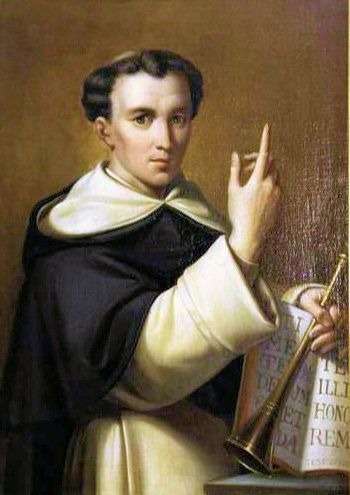
Saturday of the 4th week of Lent (optional commemoration of Saint Vincent Ferrer, Priest) ![]() Church of St. Vincent Ferrer, NY City Readings at MassLiturgical Colour: Violet. Year: C(I).
'Let us cut him off from the land of the living, so that his name may be quickly forgotten'The Lord revealed it to me; I was warned. O Lord, that was when you opened my eyes to their scheming. I for my part was like a trustful lamb being led to the slaughter-house, not knowing the schemes they were plotting against me, ‘Let us destroy the tree in its strength, let us cut him off from the land of the living, so that his name may be quickly forgotten!’ But you, the Lord of Hosts, who pronounce a just sentence, who probe the loins and heart, let me see the vengeance you will take on them, for I have committed my cause to you.
Lord God, I take refuge in you. Lord God, I take refuge in you. From my pursuer save me and rescue me, lest he tear me to pieces like a lion and drag me off with no one to rescue me. Lord God, I take refuge in you. Give judgement for me, Lord; I am just and innocent of heart. Put an end to the evil of the wicked! Make the just stand firm, you who test mind and heart, O just God! Lord God, I take refuge in you. God is the shield that protects me, who saves the upright of heart. God is a just judge slow to anger; but he threatens the wicked every day. Lord God, I take refuge in you.
Praise and honour to you, Lord Jesus! I take pleasure, not in the death of a wicked man – it is the Lord who speaks – but in the turning back of a wicked man who changes his ways to win life. Praise and honour to you, Lord Jesus!
Praise and honour to you, Lord Jesus! Blessed are those who, with a noble and generous heart, take the word of God to themselves and yield a harvest through their perseverance. Praise and honour to you, Lord Jesus!
The Law does not allow us to pass judgement on a man without hearing himSeveral people who had been listening to Jesus said, ‘Surely he must be the prophet’, and some said, ‘He is the Christ’, but others said, ‘Would the Christ be from Galilee? Does not scripture say that the Christ must be descended from David and come from the town of Bethlehem?’ So the people could not agree about him. Some would have liked to arrest him, but no one actually laid hands on him. The police went back to the chief priests and Pharisees who said to them, ‘Why haven’t you brought him?’ The police replied, ‘There has never been anybody who has spoken like him.’ ‘So’ the Pharisees answered ‘you have been led astray as well? Have any of the authorities believed in him? Any of the Pharisees? This rabble knows nothing about the Law – they are damned.’ One of them, Nicodemus – the same man who had come to Jesus earlier – said to them, ‘But surely the Law does not allow us to pass judgement on a man without giving him a hearing and discovering what he is about?’ To this they answered, ‘Are you a Galilean too? Go into the matter, and see for yourself: prophets do not come out of Galilee.’ Universalis podcast: The week ahead – from 6 to 12 AprilThe inevitable tragedy: tragedy, not melodrama. Caiaphas the prophet; Caiaphas in the confessional. More about Confession. The Mission to the Rusty: a dream. (21 minutes) Christian Art![]() Each day, The Christian Art website gives a picture and reflection on the Gospel of the day. \ The readings on this page are from the Jerusalem Bible, which is used at Mass in most of the English-speaking world. The New American Bible readings, which are used at Mass in the United States, are available in the Universalis apps, programs and downloads. |
KEYWORDS: catholic; jn7; lent; prayer

Please FReepmail me to get on/off the Alleluia Ping List.
| John | |||
| English: Douay-Rheims | Latin: Vulgata Clementina | Greek NT: Byzantine/Majority Text (2000) | |
| John 7 | |||
| 40. | Of that multitude therefore, when they had heard these words of his, some said: This is the prophet indeed. | Ex illa ergo turba cum audissent hos sermones ejus, dicebant : Hic est vere propheta. | πολλοι ουν εκ του οχλου ακουσαντες τον λογον ελεγον ουτος εστιν αληθως ο προφητης |
| 41. | Others said: This is the Christ. But some said: Doth the Christ come out of Galilee? | Alii dicebant : Hic est Christus. Quidam autem dicebant : Numquid a Galilæa venit Christus ? | αλλοι ελεγον ουτος εστιν ο χριστος αλλοι ελεγον μη γαρ εκ της γαλιλαιας ο χριστος ερχεται |
| 42. | Doth not the scripture say: That Christ cometh of the seed of David, and from Bethlehem the town where David was? | nonne Scriptura dicit : Quia ex semine David, et de Bethlehem castello, ubi erat David, venit Christus ? | ουχι η γραφη ειπεν οτι εκ του σπερματος δαυιδ και απο βηθλεεμ της κωμης οπου ην δαυιδ ο χριστος ερχεται |
| 43. | So there arose a dissension among the people because of him. | Dissensio itaque facta est in turba propter eum. | σχισμα ουν εν τω οχλω εγενετο δι αυτον |
| 44. | And some of them would have apprehended him: but no man laid hands on him. | Quidam autem ex ipsis volebant apprehendere eum : sed nemo misit super eum manus. | τινες δε ηθελον εξ αυτων πιασαι αυτον αλλ ουδεις επεβαλεν επ αυτον τας χειρας |
| 45. | The ministers therefore came to the chief priests and the Pharisees. And they said to them: Why have you not brought him? | Venerunt ergo ministri ad pontifices et pharisæos. Et dixerunt eis illi : Quare non adduxistis illum ? | ηλθον ουν οι υπηρεται προς τους αρχιερεις και φαρισαιους και ειπον αυτοις εκεινοι δια τι ουκ ηγαγετε αυτον |
| 46. | The ministers answered: Never did man speak like this man. | Responderunt ministri : Numquam sic locutus est homo, sicut hic homo. | απεκριθησαν οι υπηρεται ουδεποτε ουτως ελαλησεν ανθρωπος ως ουτος ο ανθρωπος |
| 47. | The Pharisees therefore answered them: Are you also seduced? | Responderunt ergo eis pharisæi : Numquid et vos seducti estis ? | απεκριθησαν ουν αυτοις οι φαρισαιοι μη και υμεις πεπλανησθε |
| 48. | Hath any one of the rulers believed in him, or of the Pharisees? | numquid ex principibus aliquis credidit in eum, aut ex pharisæis ? | μη τις εκ των αρχοντων επιστευσεν εις αυτον η εκ των φαρισαιων |
| 49. | But this multitude, that knoweth not the law, are accursed. | sed turba hæc, quæ non novit legem, maledicti sunt. | αλλ ο οχλος ουτος ο μη γινωσκων τον νομον επικαταρατοι εισιν |
| 50. | Nicodemus said to them, (he that came to him by night, who was one of them:) | Dixit Nicodemus ad eos, ille qui venit ad eum nocte, qui unus erat ex ipsis : | λεγει νικοδημος προς αυτους ο ελθων νυκτος προς αυτον εις ων εξ αυτων |
| 51. | Doth our law judge any man, unless it first hear him, and know what he doth? | Numquid lex nostra judicat hominem, nisi prius audierit ab ipso, et cognoverit quid faciat ? | μη ο νομος ημων κρινει τον ανθρωπον εαν μη ακουση παρ αυτου προτερον και γνω τι ποιει |
| 52. | They answered, and said to him: Art thou also a Galilean? Search the scriptures, and see, that out of Galilee a prophet riseth not. | Responderunt, et dixerunt ei : Numquid et tu Galilæus es ? scrutare Scripturas, et vide quia a Galilæa propheta non surgit. | απεκριθησαν και ειπον αυτω μη και συ εκ της γαλιλαιας ει ερευνησον και ιδε οτι προφητης εκ της γαλιλαιας ουκ εγηγερται |
| 53. | And every man returned to his own house. | Et reversi sunt unusquisque in domum suam. | και απηλθεν εκαστος εις τον οικον αυτου |

40. Many of the people therefore, when they heard this saying, said, Of a truth this is the Prophet.
41. Others said, This is the Christ. But some said, Shall Christ come out of Galilee?
42. Hath not the Scripture said, That Christ cometh of the seed of David, and out of the town of Bethlehem, where David was?
43. So there was a division among the people because of him.
44. And some of them would have taken him; but no man laid hands on him.
45. Then came the officers to the chief priests and Pharisees; and they said unto them, Why have ye not brought him?
46. The officers answered, Never man spake like this man.
47. Then answered them the Pharisees, Are ye also deceived?
48. Have any of the rulers or of the Pharisees believed on him?
49. But this people who knoweth not the law are cursed.
50. Nicodemus saith unto them, (he that came to Jesus by night, being one of them,)
51. Doth our law judge any man, before it hear him, and know what he doeth?
52. They answered and said unto him, Art thou also of Galilee? Search, and look: for out of Galilee ariseth no prophet.
53. And every man went unto his own house.
AUGUSTINE. (Tract. xxxiii. 1) Our Lord having invited those, who believed in Him, to drink of the Holy Spirit, a dissension arose among the multitude: Many of the people therefore, when they heard this saying, said, Of a truth this is the Prophet.
THEOPHYLACT. The one, that is, who was expected. Others, i. e. the people said, This is the Christ.
ALCUIN. These had now begun to drink in that spiritual thirst1, and had laid aside the unbelieving thirst. But others still remained dried up in their unbelief: But some said, Shall Christ come out of Galilee? Hath not the Scripture said, That Christ cometh of the seed of David, and out of the town of Bethlehem, where David was? They knew what were the predictions of the Prophets respecting Christ, but knew not that they all were fulfilled in Him. They knew that He had been brought up at Nazareth, but the place of His birth they did not know; and did not believe that it answered to the prophecies.
CHRYSOSTOM. (Hom. li. 2.) But be it so, they knew not His birth-place: were they ignorant also of His extraction? that He was of the house and family of David? Why did they ask, Hath not the Scripture said, that Christ cometh of the seed of David? They wished to conceal His extraction, and therefore put forward where He had been educated. For this reason, they do not go to Christ and ask, How say the Scriptures that Christ must come from Bethlehem, whereas Thou comest from Galilee? purposely and of malice prepense they do not do this. And because they were thus inattentive, and indifferent about knowing the truth, Christ did not answer them: though He had lauded Nathanael, when he said, Can any good thing come out of Nazareth? and called Him an Israelite indeed, as being a lover of truth, and well learned in the ancient Scriptures.
So there was a division among the people concerning Him.
THEOPHYLACT. Not among the rulers; for they were resolved one way, viz. not to acknowledge Him as Christ. The more moderate of them only used malicious words, in order to oppose Christ’s path to glory; but the more malignant wished to lay hands on Him: And some of them would have taken Him.
CHRYSOSTOM. (Hom. li. 2) The Evangelist says this to shew, that they had no concern for, and no anxiety to learn, the truth.
But no man laid hands on Him.
ALCUIN. That is, because He Who had the power to control their designs, did not permit it.
CHRYSOSTOM. (Hom. li. 2) This were sufficient to have raised some compunction in them; but no, such malignity believes nothing; it looks only to one thing, blood.
AUGUSTINE. (Tract. xxxiii. 1) They however who were sent to take Him, returned guiltless of the offence, and full of admiration: Then came the officers to the chief priests and Pharisees; and they said unto them, Why have ye not brought Him?
ALCUIN. They who wished to take and stone Him, reprove the officers for not bringing Him.
CHRYSOSTOM. (Hom. lii. 1) The Pharisees and Scribes profited nothing by seeing the miracles, and reading the Scriptures; but their officers, who had done neither, were captivated with once hearing Him; and they who went to take hold of Him, were themselves taken hold of by the miracle. Nor did they say, We could not because of the multitude: but made themselves proclaimers of Christ’s wisdom: The officers answered, Never man spake like this Man.
AUGUSTINE. (Tract. xxxiii. 1) He spoke thus, because He was both God and man.
CHRYSOSTOM. (Hom. lii. 1) Not only is their wisdom to be admired, for not wanting miracles, but being convinced by His teaching only, (for they do not say, Never man did such miracles as this Man, but, Never man spake like this Man,) but also their boldness, in saying this to the Pharisees, who were such enemies of Christ. They had not heard a long discourse, but minds unprepossessed against Him did not require one.
AUGUSTINE. (Tract. xxxiii. 1) The Pharisees however rejected their testimony: Then answered them the Pharisees, Are ye also led away? As if to say, We see that you are charmed by His discourse.
ALCUIN. And so they were led away; and laudably too, for they had left the evil of unbelief, and were gone over to the faith.
CHRYSOSTOM. (Hom. lii. 1) They make use of the most foolish argument against them: Have any of the rulers or of the Pharisees believed on Him? but this people who knoweth not the law are cursed? This then was their ground of accusation, that the people believed, but they themselves did not.
AUGUSTINE. (Tract. xxxiii. 1) They who knew not the law, believed on Him who had given the law, and they who taught the law condemned Him; thus fulfilling our Lord’s words, I am come, that they which see not might see, and that they which see might be made blind. (c. 19:39)
CHRYSOSTOM. (Hom. lii. 1) How then are they cursed, who are convinced by the law? Rather are ye cursed, who have not observed the law.
THEOPHYLACT. The Pharisees answer the officers courteously and gently; because they are afraid of their forthwith separating from them, and joining Christ.
CHRYSOSTOM. (Hom. lii. 1) As they said that none of the rulers believed on Him, the Evangelist contradicts them: Nicodemus saith unto them, (he that came to Jesus by night, being one of them.)
AUGUSTINE. (Tract. xxxiii. 1) He was not unbelieving, but fearful; and therefore came by night to the light, wishing to be enlightened, but afraid of being known to go. He replies, Doth our law judge any man before it hear him, and know what he doeth? He thought that, if they would only hear Him patiently, they would be overcome, as the officers had been. But they preferred obstinately condemning Him, to knowing the truth.
AUGUSTINE. He calls the law of God, our law; because it was given to men.
CHRYSOSTOM. (Hom. lii. 1, 2) Nicodemus shews that they knew the law, and did not act according to the law. They, instead of disproving this, take to rude and angry contradiction: They answered and said unto him, Art thou also of Galilee?
AUGUSTINE. (Tract. xxxiii. 2) i. e. led away by a Galilean. Our Lord was called a Galilean, because His parents were of the town of Nazareth; I mean by parents, Mary.
CHRYSOSTOM. (Hom. lii. 2.) Then, by way of insult, they direct Him to the Scriptures, as if He were ignorant of them; Search and look, for out of Galilee ariseth no prophet: as if to say, Go, learn what the Scriptures say.
ALCUIN. They knew the place where He had resided, but never thought of enquiring where He was born; and therefore they not only denied that He was the Messiah, but even that He was a prophet.
AUGUSTINE. (Tract. xxxiii. 2.) No prophet indeed ariseth out of Galilee, but the Lord of prophets arose thence.
And every man went unto his own house.
ALCUIN. Having effected nothing, devoid of faith, and therefore incapable of being benefited, they returned to their home of unbelief and ungodliness.
Catena Aurea John 7

The Bible teaches that when Lord Jesus raised Lazarus from the dead, there were Pharisees and religious leaders there, and the Bible says that at that moment when they saw Lazarus come out of the grave, they decided to put Him to death. Can you imagine what those religious leaders must’ve felt like? They thought Lord Jesus was just some idiot. Some pretender, but He spoke and the dead came back to life right in front of him and they couldn’t deny that. I can’t imagine the terror that they felt.
After this Vincent carried on his apostolic work while in Pedro de Luna's suite. At Valladolid he converted a rabbi, later well known as Bishop Paul of Burgos. At Salamanca Queen Yolanda of Aragon chose him for her confessor, 1391-5. About this time he was cited before the Inquisiton for preaching publicly "the Judas had done penance", but Pedro de Luna, recently raised to the papal chair as Benedict XIII, cited the case before his tribunal and burned the papers. Benedict then called him to Avignon and appointed him confessor and Apostolic penitentiary. Notwithstanding the indifference of so many prelates in the papal Court, he laboured zealously among the people. He steadfastly refused the honours, including the cardinalate, which were offered to him. France withdrew from the obedience of Avignon in September, 1398, and the troops of Charles VI laid siege to the city. An attack of fever at this time brought Vincent to death's door, but during an apparition of Christ accompanied by St. Dominic and St. Francis he was miraculously cured and sent to preach penance and prepare men for the coming judgment. Not until November, 1399, did Benedict allow Vincent Ferrer to begin his apostolate, furnished with full powers of a legate a latere Christi. For twenty years he traversed western Europe, preaching penance for sin and preparation for judgment. Provence was the first field of his apostolate; he was obliged to preach in squares and open places, such were the numbers that flocked to hear him. In 1401 he evangelized Dauphiny, Savoy, and the Alpine region, converting many Catharins and Waldensians. Thence he penetrated into Lombardy. While preaching at Alexandria he singled out from among the hearers a youth who was destined to evangelize Italy, Bernadine of Siena. Another chosen soul with whom Vincent came in contact while in Italy was Margaret of Savoy. During the years 1403-4 Switzerland, Savoy, and Lyons received the missionary. He was followed by an army of penitents drawn from every rank of society, who desired to remain under his guidance. Vincent was ever watchful of his disciples, and never did the breath of scandal touch this strange assemblage, which numbered at times 10,000. Genoa, Flanders, Northern France, all heard Vincent in turn. It would be difficult to understand how he could make himself understood by the many nationalities he evangelized, as he could speak only Limousin, the language of Valencia. Many of his biographers hold that he was endowed with the gift of tongues, an opinion supported by Nicholas Clemangis, a doctor of the University of Paris, who had heard him preach.
In 1408 Vincent was at Genoa consoling the plague-stricken. A meeting had been arranged there between Gregory XII and Benedict XIII in the hope of putting an end to the schism. Vincent again urged Benedict to have pity on the afflicted Church, but in vain. Disappointed, he returned to Spain. It would be difficult to overestimate the influence which he exercised in the Iberian peninsula. Castile, Aragon, Valencia, Murcia, Granada, Andalusia, and Asturias were visited in turn, and everywhere miracles marked his progress; Christians, Jews, and Moslems were all lost in admiration of the thaumaturgus. From 1408 until 1416 he worked almost continuously south of the Pyrenees. At different times in Spanish history strenuous attempts had been made to convert the Jewish people, baptism or spoliation being the alternatives offered to them. This state of affairs existed when Vincent began to work among them; multitudes were won over by his preaching. Ranzano, his first biographer, estimates the number of Jews converted at 25,000. In the Kingdom of Granada he converted thousands of Moors. Vincent was often called upon to aid his country in temporal affairs, as the counsellor of kings and at one time the arbiter of the destiny of Spain. In 1409 he was commissioned by Benedict XIII to announce to Martin of Aragon the death of his only son and heir.
After Martin's death, the representatives of the Kingdoms of Aragon, Valencia, and Catalonia appointed Vincent one of the judges to determine the succession to the Crown. At the judgment, known as the Compromise of Caspe, he took the leading part and helped to elect Ferdinand of Castile. Vincent was one of the most resolute and faithful adherents of Benedict XIII, and by his word, sanctity, and miracles he did much to strengthen Benedict's position. It was not until 1416, when pressed by Ferdinand, King of Aragon, that he abandoned him. On 6 January, preaching at Perpignan, he declared anew to the vast throng gathered around his pulpit that Benedict XIII was the legitimate pope, but that, since he would not resign to bring peace to the Church, Ferdinand had withdrawn his states from the obedience of Avignon. This act must have caused Vincent much sorrow, for he was deeply attached to Benedict. Nevertheless, it was thought that Vincent was the only person sufficiently esteemed to announce such a step to the Spanish races. John Dominici was more fortunate in his attempts to pave the way for reunion, when he announced to the Council of Constance the resignation of Gregory XII. Vincent did not go to the Council of Constance; he continued his apostolic journeys through France, and spent the last two years of his life in Brittany, where consciences without number were reformed and instructed in a Christian way of life.
Vincent felt that he was the messenger of penance sent to prepare men for the judgment. For twenty years he traversed Western Europe preaching penance and awakening the dormant consciences of sinners by his wondrous eloquence. His austere life was but the living expression of his doctrine. The floor was his usual bed; perpetually fasting, he arose at two in the morning to chant the Office, celebrating Mass daily, afterwards preaching, sometimes three hours, and frequently working miracles. After his midday meal he would tend the sick children; at eight o'clock he prepared his sermon for the following day. He usually travelled on foot, poorly clad. Among St. Vincent's writings are: De suppositionibus dialecticis"; "De natura universalis"; "De monderno ecclesiae schismate", a defence of the Avignon pontiffs; and "De vita spirituali". His "Sermons" were published at Antwerp (1570), Augsburg (1729), and Lyons (1816); and his complete works at Valence (1591). He was canonized by Calixtus III at the Dominican Church of Santa Maria Sopra Minerva, Rome, 3 June, 1455.
(Taken from Catholic Encyclopedia)


First Reading:
From: Jeremiah 11:18-20
Jeremiah’s First “Confession”
-----------------------------
[18] The LORD made it known to me and I knew; then thou didst show me their evil deeds. [19] But I was like a gentle lamb led to the slaughter. I did not know it was against me they devised schemes, saying, “Let us destroy the tree with its fruit, let us cut him off from the land of the living, that his name be remembered no more." [20] But, O LORD of hosts, who judgest righteously, who triest the heart and the mind, let me see thy vengeance upon them, for to thee have I committed my cause.
***********************************************************************
Commentary:
11:18-12:6. Then are five passages in the book usually called the. “confessions of Jeremiah”, (cf. the note on 11:1-20:18)--trusting prayers in which the prophet opens his heart to the Lord and tells him his deepest feelings. They are given this name because they are reminiscent of St Augustine’s well-known book with that title.
Some commentators think that this first “confession” goes back to the early years of the prophet’s ministry when the priests of Anathoth opposed him because his preaching provided backing for Josiah’s religious reform (the preceding passage, .11:1-17, would only go to show that). The reform went against the vested, interests of those priests, because it sought to concentrate all formal religious worship in the temple of Jerusalem. In any event, Jeremiah complains to God about being persecuted by his fellow citizens and even by members of his own family (11:18—21; 12:6). That explains why Christian tradition has seen Jeremiah as a figure of Jesus Christ, who was also rejected by his own people (cf. Mt 13:57; Mk 6:4; Lk 4:24; In 7:3-5) and who was sacrificed as the Lamb of God to atone for the sins of men (11:19; cf. Is 53:7; Jn 1:29; 19:31). St Jerome, commenting on this passage, says: “All of the churches believe that what is said of Jeremiah refers also to the person of Christ” ("Commentarii in Ieremiam", 2, 11).
The words of the prophet, similar to those found in Job and in the Psalms (cf. Job 21:7-13; Ps 37, 49, 73), express the pain, puzzlement and feelings of someone who sees the wicked prosper and is only too aware of his personal limitations when he tries to do what God asks of him (12:1-4). The Lord’s answer seems very harsh: the opposition shown the prophet by his family is only the start: he needs to be more circumspect and to be ready to cope with even more difficult situations (12:5-6).
The fact that Jeremiah puts on record not only his inner complaint to God but also the uncompromising answer he is given, indicates that he accepted that answer, it invites us always to respond, to God generously and bravely and not to give importance to obstacles. Commenting on this passage, St John of the Cross has this to say to those who seem to want to serve God but who baulk at the effort entailed: “If you continue to satisfy the comfort and tastes of the flesh your sensuality, and never arm yourself for battle or deny your body in anything, how will you ever desire to enter the troubled waters of the spiritual trials and works that lie deep within? O souls that desire to journey calmly and safely through the life of the Spirit! If only you knew that suffering is the source of true calm and safety, [...] you would never seek consolation front God or take comfort in created things. You would take up the cross, and be crucified, and drink the vinegar and gall (cf. Jn 19:29), and you would discover that by dying to this life and to yourself, you are brought to life in the joy of God” ("Flame of Living Love", 2:27-28).
From: John 7:40-53
Different Opinions About Jesus (Continuation)
---------------------------------------------
[40] When they heard these words, some of the people said, "This is really the prophet." [41] Others said, "This is the Christ." But some said, "Is the Christ to come from Galilee? [42] Has not the Scripture said that the Christ is descended from David, and comes from Bethlehem, the village where David was?" [43] So there was a division among the people over Him. [44] Some of them wanted to arrest Him, but no one laid hands on Him.
[45] The officers then went back to the chief priests and Pharisees, who said to them, "Why did you not bring Him?" [46] The officers answered, "No man ever spoke like this man!" [47] The Pharisees answered them, "Are you led astray, you also? [48] Have any of the authorities or of the Pharisees believed in Him? [49] But this crowd, who do not know the law, are accursed." [50] Nicodemus, who had gone to Him before, and who was one of them, said to them, [51] "Does our law judge a man without first giving him a hearing and learning what he does?" [52] They replied, "Are you from Galilee too? Search and you will see that no prophet is to rise from Galilee." [53] They went each to his own house, but Jesus went to the Mount of Olives.
***********************************************************************
Commentary:
40-43. "The prophet" refers to Deuteronomy 18:18, which predicts the coming of a prophet during the last times, a prophet to whom all must listen (cf. John 1:21; 6:14); and "the Christ" ("the Messiah") was the title most used in the Old Testament to designate the future Savior whom God would send. This passage shows us, once again, the range of people's attitudes towards Jesus. Many Jews--not taking the trouble to check--did not know that He had been born in Bethlehem, the city of David, where Micah (5:2) says the Lord will be born. It was their own fault that they used this ignorance as an excuse for not accepting Christ. Others, however, realized from His miracles that He must be the Messiah. The same pattern obtains throughout history: some people see Him simply as an extraordinary man, not wanting to admit that His greatness comes precisely from the fact the He is the Son of God.
46. The truth begins to influence the straightforward souls of the servants of the Sanhedrin but it cannot make headway against the obstinacy of the Pharisees. "Notice that the Pharisees and scribes derive no benefit either from witnessing miracles or reading the Scriptures; whereas their servants, without these helps, were captivated by a single discourse, and those who set out to arrest Jesus went back under the influence of His authority. And they did not say, `We cannot arrest Him, the people will not let us'; instead they extolled Christ's wisdom. Not only is their prudence admirable, for they did not need signs; it is also impressive that they were won over by His teaching on its own; they did not say, in effect, `No man has ever worked such miracles,' but `No man ever spoke like this man.' Their conviction also is worthy of admiration: they go to the Pharisees, who were opposed to Christ, and address them in the way they do" (St. John Chrysostom, "Hom. On St. John", 9).
Disclaimer: Opinions posted on Free Republic are those of the individual posters and do not necessarily represent the opinion of Free Republic or its management. All materials posted herein are protected by copyright law and the exemption for fair use of copyrighted works.