Free Republic
Browse · Search
Religion
Topics · Post Article

Skip to comments.

Catholic Caucus: Daily Mass Readings 17-March-2025
Universalis/Jerusalem Bible ^

Posted on 03/17/2025 4:26:54 AM PDT by annalex

17 March 2025

Monday of the 2nd week of Lent
(optional commemoration of Saint Patrick, Bishop, Missionary)


Saint Patrick's Cathedral, New York

Readings at Mass

Liturgical Colour: Violet. Year: C(I).


First readingDaniel 9:4-10

Yours is the integrity, Lord; ours the shame

O Lord, God great and to be feared, you keep the covenant and have kindness for those who love you and keep your commandments: we have sinned, we have done wrong, we have acted wickedly, we have betrayed your commandments and your ordinances and turned away from them. We have not listened to your servants the prophets, who spoke in your name to our kings, our princes, our ancestors, and to all the people of the land. Integrity, Lord, is yours; ours the look of shame we wear today, we, the people of Judah, the citizens of Jerusalem, the whole of Israel, near and far away, in every country to which you have dispersed us because of the treason we have committed against you. To us, Lord, the look of shame belongs, to our kings, our princes, our ancestors, because we have sinned against you. To the Lord our God mercy and pardon belong, because we have betrayed him, and have not listened to the voice of the Lord our God nor followed the laws he has given us through his servants the prophets.

Responsorial Psalm
Psalm 78(79):8-9,11,13
Do not treat us according to our sins, O Lord.
Do not hold the guilt of our fathers against us.
  Let your compassion hasten to meet us;
  we are left in the depths of distress.
Do not treat us according to our sins, O Lord.
O God our saviour, come to our help.
  Come for the sake of the glory of your name.
O Lord our God, forgive us our sins;
  rescue us for the sake of your name.
Do not treat us according to our sins, O Lord.
Let the groans of the prisoners come before you;
  let your strong arm reprieve those condemned to die.
But we, your people, the flock of your pasture,
  will give you thanks for ever and ever.
  We will tell your praise from age to age.
Do not treat us according to our sins, O Lord.

Gospel Acclamation
Praise and honour to you, Lord Jesus!
The seed is the word of God, Christ the sower;
whoever finds this seed will remain for ever.
Praise and honour to you, Lord Jesus!
Or:cf.Jn6:63,68
Praise and honour to you, Lord Jesus!
Your words are spirit, Lord, and they are life;
you have the message of eternal life.
Praise and honour to you, Lord Jesus!

GospelLuke 6:36-38

Grant pardon, and you will be pardoned

Jesus said to his disciples: ‘Be compassionate as your Father is compassionate. Do not judge, and you will not be judged yourselves; do not condemn, and you will not be condemned yourselves; grant pardon, and you will be pardoned. Give, and there will be gifts for you: a full measure, pressed down, shaken together, and running over, will be poured into your lap; because the amount you measure out is the amount you will be given back.’

Universalis podcast: The week ahead – from 16 to 22 March

The Transfiguration in Lent and out of it: two views of the same landscape. "Do not judge", and when and how we have to judge. Judgement as love and justice as virtue. How to donate: universalis.com/donate (19 minutes)
Episode notes.Play

Christian Art

Illustration

Each day, The Christian Art website gives a picture and reflection on the Gospel of the day.

The readings on this page are from the Jerusalem Bible, which is used at Mass in most of the English-speaking world. The New American Bible readings, which are used at Mass in the United States, are available in the Universalis apps, programs and downloads.

You can also view this page with the Gospel in Greek and English.


TOPICS: Catholic; General Discusssion; Prayer; Worship
KEYWORDS: catholic; lent; lk6; mt5; prayer
For your reading, reflection, faith-sharing, comments, questions, discussion.

1 posted on 03/17/2025 4:26:54 AM PDT by annalex
[ Post Reply | Private Reply | View Replies]

To: All

KEYWORDS: catholic; lent; mt5; prayer;


2 posted on 03/17/2025 4:27:20 AM PDT by annalex (fear them not)
[ Post Reply | Private Reply | To 1 | View Replies]

To: All

KEYWORDS: catholic; lent; lk6; prayer;


3 posted on 03/17/2025 4:28:16 AM PDT by annalex (fear them not)
[ Post Reply | Private Reply | To 2 | View Replies]

To: annalex
Luke
 English: Douay-RheimsLatin: Vulgata ClementinaGreek NT: Byzantine/Majority Text (2000)
 Luke 6
36Be ye therefore merciful, as your Father also is merciful. Estote ergo misericordes sicut et Pater vester misericors est.γινεσθε ουν οικτιρμονες καθως και ο πατηρ υμων οικτιρμων εστιν
37Judge not, and you shall not be judged. Condemn not, and you shall not be condemned. Forgive, and you shall be forgiven. Nolite judicare, et non judicabimini : nolite condemnare, et non condemnabimini. Dimitte, et dimittemini.και μη κρινετε και ου μη κριθητε μη καταδικαζετε και ου μη καταδικασθητε απολυετε και απολυθησεσθε
38Give, and it shall be given to you: good measure and pressed down and shaken together and running over shall they give into your bosom. For with the same measure that you shall mete withal, it shall be measured to you again. Date, et dabitur vobis : mensuram bonam, et confertam, et coagitatam, et supereffluentem dabunt in sinum vestrum. Eadem quippe mensura, qua mensi fueritis, remetietur vobis.διδοτε και δοθησεται υμιν μετρον καλον πεπιεσμενον και σεσαλευμενον και υπερεκχυνομενον δωσουσιν εις τον κολπον υμων τω γαρ αυτω μετρω ω μετρειτε αντιμετρηθησεται υμιν

4 posted on 03/17/2025 4:31:22 AM PDT by annalex (fear them not)
[ Post Reply | Private Reply | To 3 | View Replies]

To: annalex
My dad is back in the hospital. [JimRob update at 242]
Jim still needs our prayers. Thread 2
Prayer thread for Salvation's recovery
Pray for Ukraine
Prayer thread for Fidelis' recovery
Update on Jim Robinson's health issues
5 posted on 03/17/2025 4:32:04 AM PDT by annalex (fear them not)
[ Post Reply | Private Reply | To 4 | View Replies]

To: nickcarraway; NYer; ELS; Pyro7480; livius; ArrogantBustard; Catholicguy; RobbyS; marshmallow; ...

Alleluia Ping

Please FReepmail me to get on/off the Alleluia Ping List.


6 posted on 03/17/2025 4:32:46 AM PDT by annalex (fear them not)
[ Post Reply | Private Reply | To 5 | View Replies]

To: annalex

Catena Aurea by St. Thomas Aguinas

6:37–38

37. Judge not, and ye shall not be judged: condemn not, and ye shall not be condemned: forgive, and ye shall be forgiven:

38. Give, and it shall be given unto you: good measure, pressed down, and shaken together, and running over, shall men give into your bosom. For with the same measure that ye mete withal it shall be measured to you again.

AMBROSE. The Lord added, that we must not readily judge others, lest when conscious of guilt thyself, thou shouldest be compelled to pass sentence upon another.

CHRYSOSTOM. Judge not thy superior, that is, thou a disciple must not judge thy master, nor a sinner the innocent. Thou must not blame them, but advise and correct with love; neither must we pass judgment in doubtful and indifferent matters, which bear no resemblance to sin, or which are not serious or forbidden.

CYRIL OF ALEXANDRIA. He here expresses that worst inclination of our thoughts or hearts, which is the first beginning and origin of a proud disdain. For although it becomes men to look into themselves and walk after God, this they do not, but look into the things of others, and while they forget their own passions, behold the infirmities of some, and make them a subject of reproach.

CHRYSOSTOM. You will not easily find any one, whether a father of a family or an inhabitant of the cloister, free from this error. But these are the wiles of the tempter. For he who severely sifts the fault of others, will never obtain acquittal for his own. Hence it follows, And ye shall not be judged. For as the merciful and meek man dispels the rage of sinners, so the harsh and cruel adds to his own crimes.

GREGORY OF NYSSA. Be not then rash to judge harshly of your servants, lest ye suffer the like. For passing judgment calls down a heavier condemnation; as it follows, Condemn not, and ye shall not be condemned. For he does not forbid judgment with pardon.

BEDE. Now in a short sentence he concisely sums up all that he had enjoined with respect to our conduct towards our enemies, saying, Forgive, and ye shall be forgiven, wherein he bids us forgive injuries, and shew kindness, and our sins shall be forgiven us, and we shall receive eternal life.

CYRIL OF ALEXANDRIA. But that we shall receive more abundant recompense from God, who gives bountifully to those who love him, he explains as follows, Good measure, pressed down, and shaken together, and running over, shall they give into your bosom.

THEOPHYLACT. As if he says, As when you wish to measure meal without sparing, you press it down, shake it together, and let it pour over abundantly; so the Lord will give a large and overflowing measure into your bosom.

AUGUSTINE. (de Qu. Ev. l. ii. q. 8.) But he says, shall they give, (Mat. 10:42.) because through the merits of those to whom they have given even a cup of cold water in the name of a disciple, shall they be thought worthy to receive a heavenly reward. It follows, For with the same measure that ye mete withal it shall be measured to you again.

BASIL. (Hom. in Ps. 61.) For according to the same measure with which each one of you metes, that is, in doing good works or sinning, will he receive reward or punishment.

THEOPHYLACT. But some one will put the subtle question, “If the return is made overabundantly, how is it the same measure?” to which we answer, that He said not, “In just as great a measure shall it be measured to you again, but in the same measure.” For he who has shewn mercy, shall have mercy shewn unto him, and this is measuring again with the same measure; but our Lord spoke of the measure running over, because to such a one He will shew mercy a thousand times. So also in judging; for he that judges and afterwards is judged receives the same measure. But as far as he was judged the more severely that he judged one like unto himself, was the measure running over.

CYRIL OF ALEXANDRIA. But the Apostle explains this when he says, He who sows sparingly, (that is, scantily, and with a niggardly hand,) shall also reap sparingly, (2 Cor. 6:9.) (that is, not abundantly,) and he who sows blessings, shall reap also blessings, that is, bountifully. But if a man has not, and performs not, he is not guilty. For a man is accepted in that which he has, not in that which he has not.

Catena Aurea Luke 6


7 posted on 03/17/2025 4:34:16 AM PDT by annalex (fear them not)
[ Post Reply | Private Reply | To 4 | View Replies]

To: annalex


Christ the Merciful

Early 12c.

8 posted on 03/17/2025 4:35:21 AM PDT by annalex (fear them not)
[ Post Reply | Private Reply | To 7 | View Replies]

To: annalex
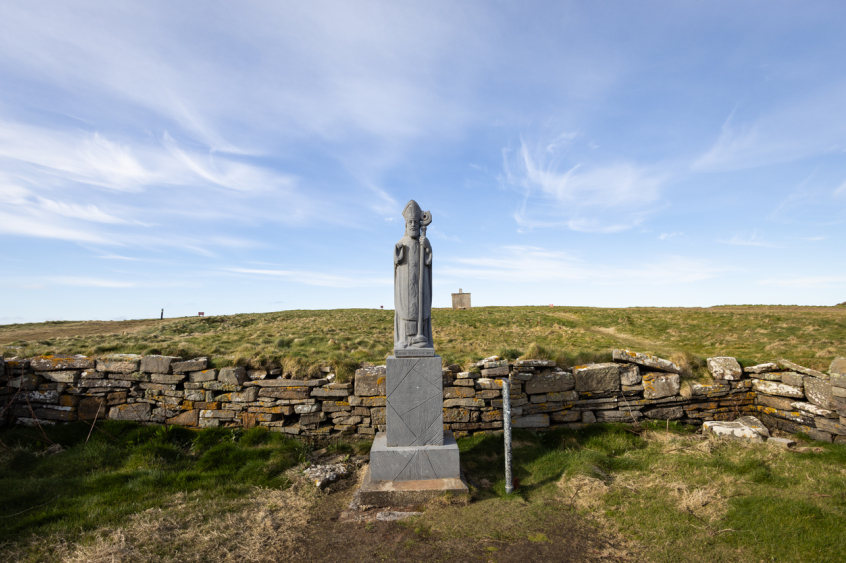
St PatrickA statue of St.Patrick at the site of St Patrick's Chapel in County Mayo, Ireland. (Photo: Getty/iStock)

The 17 of March is St Patrick’s Day. Who was St Patrick and why is he the patron saint of Ireland? This is the story ...

Who was St Patrick?

Patrick was a key figure in the spread of Christianity in Ireland. There are many stories and legends about him, but we do know quite a lot about Patrick’s life because we have some of his writings. In his old age, he wrote an autobiographical account in Latin called “Confessio”. In English, his account is usually called “The Confessions of St Patrick”, and it is a brief story of his life, told through his own eyes. His writings reflect those of a godly, honest, and humble man, with love of the Irish people.

St Patrick's World

It is helpful to understand the background at the time of St Patrick, in order to put him in historical context. In AD 380 Christianity became the official religion of the Roman Empire, and the Christian faith became widely adopted, including in the Roman northern province of Britannia, which included what is today England, Wales and lowland Scotland. The official language of Britannia (Britain) and the Church was Latin, but the native Britons spoke ancient British, a Celtic language which is the forerunner of modern Welsh.

Meanwhile, Hibernia (Ireland) and Caledonia (northern Scotland) had never been conquered by the Romans, and had a religion led by druids. It is into this period that Patrick lived. This was all before the fall of the Roman Empire and before the coming of the ‘English’ to Britain.

Early Life

We can piece together Patrick’s life from his own writings and other early histories, although the exact dates are open to debate. Although Patrick is heavily associated with Ireland, he was not actually Irish by birth. He was born as a native Briton and was also a Roman citizen. He wrote that he grew up in a small villa with his father Calpurnius, who was a town official, near the settlement of Bannavem Taburniae.

His family were Christian, and his father was a church deacon, and his late grandfather Potitus had been a priest. The town of Kilpatrick on the River Clyde near Glasgow is so named because it was believed he came from there, although alternative theories include places in southern Wales, Cumbria or Somerset.

Taken to Ireland

He wrote that when he was about sixteen years of age, he was captured by Irish raiders, and as had happened to many thousands of other people, he was taken into captivity in Ireland and sold as a slave. He was bought and put to work as a shepherd, tending sheep. We do not know where, but it was inland, and according to one tradition it was on Mount Slemish in County Antrim, and according to another it was in County Mayo. He used the time to pray many times a day, and as he did so he wrote that his love of God and his faith increased, and he felt the Holy Spirit at work.

Escape back to Britain

He wrote that after about six years he escaped and went about 200 miles to a port, where he got a lift on a ship. He then spent three days at sea and came to Britain. After some adventures, he eventually found his home and family and returned to them. However, after a while he said that he had a vision of a man begging him to return to Ireland and bring the Gospel. In preparation he spent about fifteen years in training as a deacon, then as a priest. It is believed he spent time training in Gaul (modern day France) under Germanus, bishop of Auxerre. He took or was given the Latin name “Patricius”, from which we get the name in English as Patrick. Before he returned, Patrick was ordained as a missionary bishop to pastor the Christians already in Ireland, and to mission among the pagan Irish.

Return to Ireland

When Patrick returned to Ireland, he seems to have started in Ulster. About 432, he started his first church which met in a barn in the village of Saul near Downpatrick. There is now a small stone church there, which marks the reputed site. He wrote that he longed to go back to his homeland and his family, and visit Gaul again, but he felt compelled by the Holy Spirit to remain in Ireland where God wanted him to be, because there was much work to be done. Patrick and his followers would go from village to village. Typically, they would enter a village, preach, baptise, form a church, train the leaders, and then as a bishop he would ordain priests. He wrote that he had baptised many thousands of people, and ordained hundreds of priests.

One story, which he did not record but has been popularly attributed to St Patrick, is that he used the shamrock, which is a green clover with three leaves, as a metaphor to explain the Trinity, because it is one plant with three distinct parts. This then became an Irish symbol, and as a result green became a colour associated with St Patrick and Ireland.Patrick’s mission lasted about thirty years, during which time he and his disciples had evangelised most of Ireland. As a result, he became known as the ‘Apostle of Ireland’. He says that he gave gifts and payments to others, but never accepted any gifts himself, in order to avoid any accusations of dishonesty, or that he was doing it for selfish purposes.

He also tried to establish good and honest governance and worked to abolish slavery and improve social justice. In old age he retired to Saul where he had started, which is likely where he wrote his Confessions. According to the annals he died there on March 17 usually given as in AD 461. Unlike other saints he has no elaborate shrine nor tomb, and one disputed tradition has it that he is buried in the grounds of Down Cathedral in Downpatrick.

Patron Saint

Unlike St Andrew who never went to Scotland, and St George who never went to England, St Patrick actually ministered in Ireland. Although there were some Christians in Ireland before Patrick came, it was during his ministry that the Church was properly established across Ireland. By the seventh century, Patrick had already come to be revered as the patron saint of Ireland. He was an ancient Celtic saint but was never formally canonised by the Roman Catholic Church. His story has become associated with Irish identity and history.

Legacy

The groundwork put in by Patrick helped Christianity to take hold in Ireland. The Celtic Church which Patrick developed became part of a network of Celtic churches which covered the Celtic world of Ireland, western Britain, and Brittany, but connected to the main Western Church. What is remarkable is the importance of Latin. All the evangelism and church planting were done without the Bible in Irish. The preaching was done in Irish, but the Bible was the Latin Vulgate. Missionary saints from Ireland then took the Gospel beyond their shores. For example, St Columba went to the Picts, St Aidan to the Northumbrians, St Columbanus to the Burgundians, St Papar to Iceland, and St Brendan may even have gone as far as North America.

Churches named after St Patrick

All over Ireland are many churches dedicated to St Patrick, either because historically he founded them, or because they are named after him. Patrick reputedly founded a church at Armagh, in or around the year 445, which later became the seat of the first archbishop of Ireland. It has a status like Canterbury has in England. Armagh remains the ecclesiastical capital for All Ireland. It has two cathedrals both dedicated to St Patrick - one for the Catholic Archbishop of All Ireland (Catholic Church in Ireland), and the other for the Anglican Archbishop of All Ireland (Church of Ireland). The largest cathedral in Ireland, founded in 1191, is St Patrick’s Anglican Cathedral in Dublin. Around the world many churches were dedicated to St Patrick because they had some link to an Irish community. There are many in the US, and the most famous is St. Patrick’s Cathedral, in Manhattan, New York which opened in 1879.

St Patrick’s Day

St Patrick is celebrated on the anniversary of his death on 17 March. At first it was a day of remembrance, but over time St Patrick’s Day has evolved into a major national and patriotic holiday in Ireland, and sometimes more so, among Irish communities and people of Irish heritage around the world. St Patrick’s Day falls during Lent, and it has often been a one-day reprieve, which may also have helped its popularity. Mass migration from Ireland to North America and Australia took St Patrick’s Day around the world, but it only became a public holiday in Ireland in 1903. Sometimes Irish people wear shamrocks on St Patrick’s day, and they use it as an excuse for a good craic.

St Patrick’s Flag

Over time a cross developed known as St Patrick’s cross, which is a red diagonal cross on a white background, called the red saltire. In 1801, St Patrick’s Cross was added to the Union Flag of Great Britain, which already included the cross of St George over the cross of St Andrew. The red cross of St Patrick was placed inside the white diagonal of the cross of St Andrew to create the Union Flag of the United Kingdom. St Patrick’s flag is still flown on churches of the Church of Ireland, and is flown on Anglican churches on St Patrick’s Day. It can sometimes be seen at other Irish events.

Parades

The tradition of St Patrick’s parades started with Irish communities in North America. The earliest recorded St Patrick’s Day celebration in America is believed to have been held in 1601, in what is now St Augustine, Florida. The first St Patrick’s Day parade is believed to have taken place in Boston in 1737, and the more famous New York parade began in 1764. A parade has been held in Montreal, Canada since 1824. In more recent decades, the idea of St Patrick’s Day parades has been adopted in towns and cities in Ireland, and other places round the world with Irish communities. The first St Patrick’s parade in Ireland was held in Waterford in 1903, and the first official parade in Dublin was in 1931.

Legacy

Today Patrick is a common name in Ireland, often shortened to Paddy. St Patrick is a unifying character and is adopted and loved by all Irish people, whether Catholic or Protestant. He is a saint for all of Ireland. He is part of the common shared ancient Church history which predates the modern divisions. Increasingly St Patrick’s Day has become a national day of Irish patriotism embraced by all Irish people. It is more than likely that St Patrick himself would not approve of the unholy aspects of some of the celebrations. A good place to end is the beautiful collect for St Patrick’s Day, which reads, “O God, who chose the Bishop Saint Patrick to preach your glory to the peoples of Ireland, grant, through his merits and intercession, that those who glory in the name of Christian may never cease to proclaim your wondrous deeds to all.”


christiantoday.com

9 posted on 03/17/2025 4:40:06 AM PDT by annalex (fear them not)
[ Post Reply | Private Reply | To 8 | View Replies]

To: annalex

10 posted on 03/17/2025 4:43:33 AM PDT by annalex (fear them not)
[ Post Reply | Private Reply | To 9 | View Replies]

To: annalex

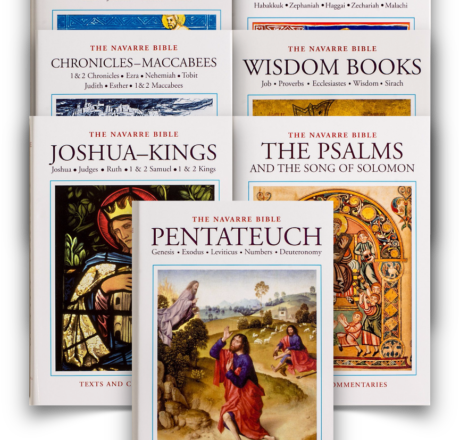
NAVARRE BIBLE COMMENTARY(RSV)

Ad Majorem Dei Gloriam (To the Greater Glory of God)

First Reading:

From: Daniel 9:4b-10

Daniel’s Penitential Prayer
------------------------------
[4b] “O Lord, the great and terrible God, who keepest covenant and steadfast love with those, who love him and’ keep his commandments, [5] we have sinned and done wrong’ and acted wickedly and rebelled, turning aside from thy commandments and ordinances; [6] we have not listened to thy servants the prophets, who spoke in thy name to our kings, our princes, and our fathers, and to all the people of the land. [7] To thee, O LORD, belongs righteousness, but to us confusion of face, as at this day, to the men of Judah, to the inhabitants of Jerusalem, and to all Israel, those that are near and those that are far away, in all the lands to which thou hast driven them, because of the treachery which they have committed against thee. [8] To us, O LORD, belongs confusion of face, to, our kings, to our princes, and to our fathers; because we have sinned against thee. [9] To the Lord our God belong mercy and forgiveness; because we have rebelled against him, [10] and have not obeyed the voice of the LORD our God by following his laws, which he set before us by his servants the prophets."

***********************************************************************
Commentary:

9:4-19. This is a penitential prayer in which Daniel speaks in solidarity with his people and intercedes on their behalf. He acknowledges that God has acted justly in punishing the people by driving them out of the chosen land (vv. 4-8), but he reminds God that he is also forgiving and merciful (v. 9). They have been punished in line with the Law of Moses (v. 13), but God, who delivered them from Egypt (v. 15), will surely listen to his servants when they appeal to him, for his mercy is great (v. 18). If he forgives them, it will redound to the honor of God’s name (vv. 17, 19). Commenting on v. 18, St Jerome observes: “Daniel expresses himself in human terms: when we are listened to, it seems as if God has inclined his ear to us; when he turns to look at us, it seems as if he has opened his eyes; and when he turns his face away, it is as if we are not worthy of being heard or to appear in his sight” ("Commentarii in Danielem", 9, 18). St Basil, on another point, notes that Daniel’s fasting prepares the ground for the revelation that follows: “Daniel would not have seen the vision if he had not first refined his soul by fasting” ("De Jejunio", 1,9). For penitential prayers similar to this, see Ezra 9:6-15; Neh 9; Ps 51; Bar 1:15-3:8. Although Daniel’s prayer is about the ordeal of exile, it is valid at all times. The Church, too, “embracing in her bosom sinners, at same time holy and always in need of being purified, always follows the way, of penance and renewal” (Vatican II, "Lumen Gentium", 8).

11 posted on 03/17/2025 9:50:07 AM PDT by fidelis (Ecce Crucem Domini! Fugite partes adversae! Vicit Leo de tribu Juda, Radix David! Alleluia!)
[ Post Reply | Private Reply | To 10 | View Replies]

Gospel Reading:

From: Luke 6:36-38

Love of Enemies
---------------
[36] Be merciful, even as your Father is merciful.

[37] "Judge not, and you will not be judged; condemn not, and you will not be condemned; forgive, and you will be forgiven; [38] give, and it will be given to you; good measure, pressed down, shaken together, running over, will be put into your lap. For the measure you give will be the measure you get back."

***********************************************************************
Commentary:

27. "In loving our enemies there shines forth in us some likeness to God our Father, who, by the death of His Son, ransomed from everlasting perdition and reconciled to Himself the human race, which previously was most unfriendly and hostile to Him" ("St. Pius V Catechism", IV, 14, 19). Following the example of God our Father, we must desire for everyone (even those who say they are our enemies) eternal life, in the first place; additionally, a Christian has a duty to respect and understand everyone without exception, because of his or her intrinsic dignity as a human person, made in the image and likeness of the Creator.

28. Jesus Christ teaches us by example that this is a real precept and not just a pious recommendation; even when nailed to the cross He prayed to His Father for those who had brought Him to such a pass: "Father, forgive them, for they know not what they do" (Lk 23:34). In imitation of the Master, St Stephen, the first martyr of the Church, when he was being stoned, prayed to our Lord not to hold the sin against his persecutors (cf. Acts 7:60). In the liturgy of Good Friday the Church offers prayers and suffrages to God on behalf of those outside the Church, asking Him to give them the grace of faith; to release from their ignorance those who do not know Him; to give Jews the light to the truth; to bring non-Catholic Christians, linked by true charity, into full communion with our Mother the Church.

29. Our Lord gives us more examples to show us how we should act if we want to imitate the mercy of God. The first has to do with one of what are traditionally called the "spiritual works of mercy"—forgiving injuries and being patient with other people's defects. This is what He means in the first instance about turning the other cheek.

To understand what our Lord is saying here, St. Thomas comments that "Sacred Scripture needs to be understood in the light of the example of Christ and the saints. Christ did not offer the cheek to be struck in the house of Annas (Jn 18:22ff), nor did St. Paul when, as we are told in the Acts of the Apostles, he was beaten in Philippi (Acts 16:22f). Therefore, we should not take it that Christ literally meant that you should offer the other cheek to some to hit you; what He was referring to was your interior disposition; that is, if necessary, we should be ready not to be intolerant of anyone who hurts us, and we should be ready to put up with this kind of treatment, or worse than that. That was how the Lord acted when He surrendered His body to death" ("Commentary on St John", 18, 37).

36. The model of mercy which Christ sets before us is God Himself, of whom St. Paul says, 'Blessed be the God and Father of our Lord Jesus Christ, the Father of mercies and God of all comfort, who comforts us in all our afflictions" (2 Cor 1:3-4). "The first quality of this virtue", Fray Luis de Granada explains, "is that it makes men like God and like the most glorious thing in Him, His mercy (Lk 6:36). For certainly the greatest perfection a creature can have is to be like his Creator, and the more like Him he is, the more perfect he is. Certainly one of the things which is most appropriate to God is mercy, which is what the Church means when it says that prayer: 'Lord God, to whom it is proper to be merciful and forgiving...'. It says that this is proper to God, because just as a creature, as creature, is characteristically poor and needy (and therefore characteristically receives and does not give), so, on the contrary, since God is infinitely rich and powerful, to Him alone does it belong to give and not to receive, and therefore it is appropriate for Him to be merciful and forgiving" ("Book of Prayer and Meditation", third part, third treatise).

This is the rule a Christian should apply: be compassionate towards other people's afflictions as if they were one's own, and try to remedy them. The Church spells out this rule by giving us a series of corporal works of mercy (visiting and caring for the sick, giving food to the hungry, drink to the thirsty...) and spiritual works of mercy (teaching the ignorant, correcting the person who has erred, forgiving injuries...): cf. "St Pius X Catechism", 944f.

We should also show understanding towards people who are in error: "Love and courtesy of this kind should not, of course, make us indifferent to truth and goodness. Love, in fact, impels the followers of Christ to proclaim to all men the truth which saves. But we must distinguish between the error (which must always be rejected) and the person in error, who never loses his dignity as a person even though he flounders amid false or inadequate religious ideas. God alone is the judge and searcher of hearts; He forbids us to pass judgment on the inner guilt of others" (Vatican II, "Gaudium Et Spes", 28).

38. We read in Sacred Scripture of the generosity of the widow of Zarephath, whom God asked to give food to Elijah the prophet even though she had very little left; He then rewarded her generosity by constantly renewing her supply of meal and oil (1 Kings 17:9ff). The same sort of thing happened when the boy supplied the five loaves and two fish which our Lord multiplied to feed a huge crowd of people (cf. Jn 6:9)—a vivid example of what God does when we give Him whatever we have, even if it does not amount to much.

God does not let Himself be outdone in generosity: "Go, generously and like a child ask Him, 'What can You mean to give me when You ask me for "this"?'" (St J. Escriva, "The Way", 153). However much we give God in this life, He will give us more in life eternal.

12 posted on 03/17/2025 9:50:27 AM PDT by fidelis (Ecce Crucem Domini! Fugite partes adversae! Vicit Leo de tribu Juda, Radix David! Alleluia!)
[ Post Reply | Private Reply | To 11 | View Replies]

Click here to go to the My Catholic Life! Devotional thread for a meditation on today’s Gospel Reading.

13 posted on 03/17/2025 9:51:19 AM PDT by fidelis (Ecce Crucem Domini! Fugite partes adversae! Vicit Leo de tribu Juda, Radix David! Alleluia!)
[ Post Reply | Private Reply | To 12 | View Replies]

Disclaimer: Opinions posted on Free Republic are those of the individual posters and do not necessarily represent the opinion of Free Republic or its management. All materials posted herein are protected by copyright law and the exemption for fair use of copyrighted works.

Free Republic
Browse · Search
Religion
Topics · Post Article

FreeRepublic, LLC, PO BOX 9771, FRESNO, CA 93794
FreeRepublic.com is powered by software copyright 2000-2008 John Robinson