
Posted on 03/09/2025 9:07:12 AM PDT by fidelis
Filled with the Holy Spirit, Jesus returned from the Jordan and was led by the Spirit into the desert for forty days, to be tempted by the devil. Luke 4:1–2
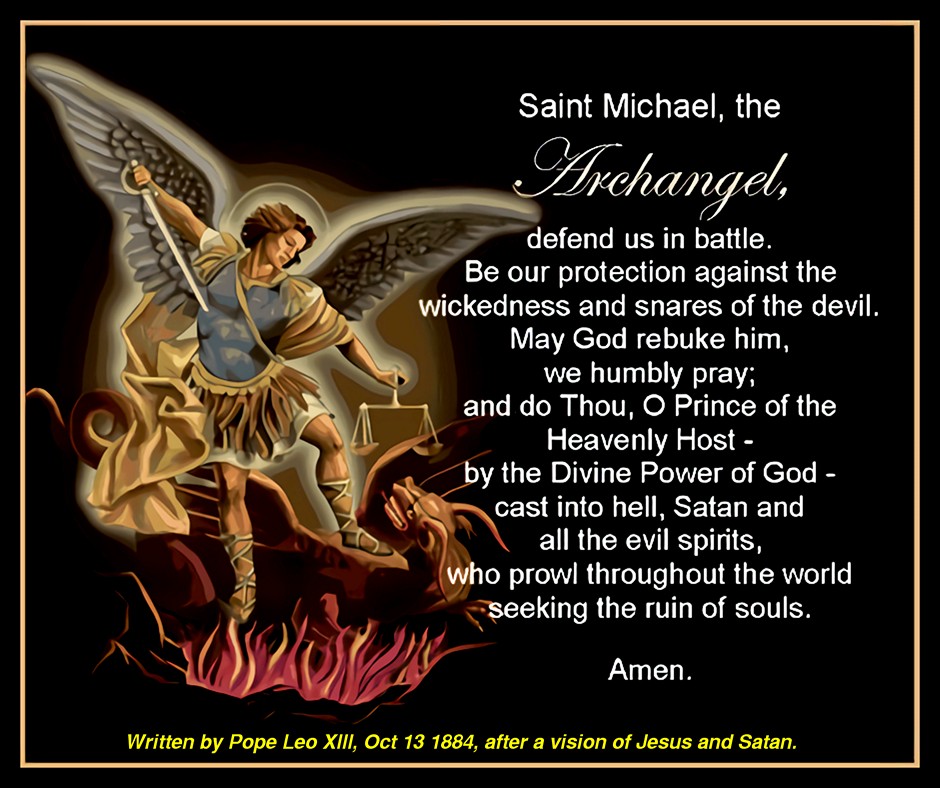
If someone is attacked or feels threatened, it is common to be defensive. For example, if soldiers suddenly find themselves under attack from an enemy, they will most likely take up a defensive position. Similarly, when we feel personally attacked by another or are tempted by the devil, we will often try to defend ourselves. However, within the worlds of games, sports and military activity, there is a common adage that says, “the best defense is a good offense.” In other words, the best way to keep the opponent from winning is to go on the offensive rather than to sit back and take up a defensive position.
In many ways, this is what Jesus did when He entered the desert. He was aware that the evil one wanted to destroy Him. Therefore, when Jesus entered the desert for 40 days to pray and fast, He did so in a sort of offensive attack upon the devil. Jesus’ temptations in the desert were not primarily difficulties He had to endure and resist. Rather, they were first and foremost ineffective attacks from the evil one, because Jesus had already embraced the opposite virtues.
What temptations and sins are among your greatest struggles? In what ways do you find yourself experiencing defeat? In what ways have you taken up a defensive position to try to overcome your struggles? Too often we approach temptations in the wrong way. We see them as attacks from the evil one that we must resist and defend ourselves against. And though that is true, it is not the full truth. The full truth is that the best way to overcome the struggles we face is to confront them directly in a vigorous and offensive way by choosing the opposite virtue.
Consider the three temptations Jesus overcame in the desert: gluttony, vainglory and greed. Jesus’ entrance into the desert for those 40 days was the way by which He destroyed these temptations before they were even presented to Him. By voluntarily choosing to fast from food for those 40 days, Jesus rendered the temptation toward gluttony ineffective. By choosing the humility of entering into the solitude of the desert to be alone with His Father, Jesus robbed the temptation toward vainglory of its power. By choosing a life of poverty and simplicity, He overcame any temptation toward earthly wealth, even before it was offered to Him.
As we begin this forty-day Lenten journey, reflect, today, upon the sins and temptations in your life that need to be overcome. If you find yourself in an ongoing defensive position toward certain struggles, especially if you find yourself losing the battle at times, it’s time to change your strategy. Embrace the opposite virtue of the sins you are most tempted with this Lent. Embrace those virtues in an offensive manner. Choose kindness if you struggle with anger. Choose fasting if you struggle with gluttony. Choose generosity if you struggle with greed. Whatever your struggle, turn to the virtue you need the most and make it your focus this Lent so that you, too, will be well-prepared to reject the evil one and his lies when temptation comes your way.
My tempted Lord, You resisted all temptation in Your life by choosing every good virtue and living them to perfection. Please help me to see the virtues I need the most right now and give me the strength I need to run toward them this Lent with all my heart. Jesus, I trust in You.
Please keep in mind that this is a Catholic Caucus/Devotional thread for the purpose of prayerful reflection on the Sacred Scriptures and is closed to debate of any kind. Per FR policy on Religion Caucus threads, off-topic, argumentative, and abusive comments are not allowed and will be submitted to the Mods for deletion. Thanks, and God bless you.
March is the month dedicated to devotion to St. Joseph, Spouse of the Blessed Virgin Mary:

“Behold, an angel of the Lord appeared to him in a dream, saying, “Joseph, son of David, do not fear to take Mary your wife,
for that which is conceived in her is of the Holy Spirit; she will bear a son, and you shall call his name Jesus, for he will save his people from their sins.”
(Matthew 1:20-21)
First Reading:
From: Deuteronomy 26:4-10
First Fruits
------------
(Moses spoke to the people saying,) [4] "Then the priest shall take the basket from your hand and set it down before the altar of the Lord your God.
[5] "And you shall make response before the Lord your God, 'A wandering Aramean was my father; and he went down into Egypt and sojourned there, few in number; and there he became a nation, great, mighty, and populous. [6] And the Egyptians treated us harshly, and afflicted, us, and laid upon us hard bondage. [7] Then we cried to the Lord the God of our fathers, and the Lord heard our voice, and saw our affliction, our toil, and. our oppression; [8] and the Lord brought us out of Egypt with a mighty hand and an outstretched arm, with great terror, with signs and wonders; [9] and he brought us into this place and gave us this land, a land flowing with milk and honey. [10] And behold, now I bring the first of the fruit of the ground, which thou, O Lord, hast given me.' And you shall set it down before the Lord your God, and worship before the Lord your God.
***********************************************************************
Commentary:
26:1-11. The Deuteronomic Code, which began by specifying that there should be only one sanctuary (cf. chap. 12), concludes by giving the prayers that were to be said in that sanctuary in connection with the offering of the first fruits.
The offering of the first fruits was an appropriate way for Israel to express gratitude for the great deeds done by God, the "magnalia Dei", the wonders he worked in liberating the people from bondage and establishing them in the promised land.
The prayer that is said on this occasion (vv. 5-9) is a kind of historical-religious Creed, a very important one, which takes in all the main features of Old Testament faith. It is a summary of the history of Israel, centered on its deliverance from Egypt and settlement in the promised land. These two saving actions form a paradigm: they are the hinges on which this "creed" (vv. 8-9) turns. Other Old Testament passages containing similar "professions of faith" are to be found in Deut 6:20-23; Josh 24:1-13; Neh 9:4ff; Jer 32:16-25 and Ps 136.
Jacob is portrayed as a key figure in the early history of the people of Israel; he personifies the patriarchal era. The reference to him not by name but as a "wandering Aramaean" (v. 5) underlines the contrast between the miserable circumstances of Israel earlier and settlement in the promised land. Jacob could be called an Aramaean because Abraham may have been connected with the.migrations of Aramaean tribes. Moreover, one must bear in mind the long years Jacob spent in north-eastern Mesopotamia, and his Aramaean wives (Gen 29-30). The prayer at the first-fruits offering heightens the contrast between the poverty of the homeless, landless Aramaean and the prosperity of the rich landowner enjoying his freedom in a land flowing with milk and honey.
----------------------------
Second Reading:
From: Romans 10:8-13
Israel's Infidelity (Continuation)
---------------------------------------
[8] But what does it [Moses' writing] say? The word is near you, on your lips and in your heart (that is, the word of faith which we preach); [9] because, if you confess with your lips that Jesus is Lord and believe in your heart that God raised him from the dead, you will be saved. [10] For man believes with his heart and so is justified, and he confesses with his lips and so is saved. [11] The scripture says, "No one who believes in him will be put to shame." [12] For there is no distinction between Jew and Greek; the same Lord is Lord of all and bestows his riches upon all who call upon him. [13] For, "everyone who calls upon the name of the Lord will be saved."
***********************************************************************
Commentary:
6-8. St Paul here quotes and applies some words from Deuteronomy: "This commandment," Moses tells the people of Israel, "which I command you this day is not too hard for you, neither is it far off. It is not in heaven, that you should say, 'Who will go up for us to heaven, and bring it to us, that we may hear it and do it? [...] Who will go over the sea for us, and bring it to us, that we may hear it and do it?' But the word is very near you; it is in your mouth and in your heart, so that you can do it" (Deut 30:11-14). The law which God handed to Moses, then, clearly revealed his will and made it much easier to fulfill. By the Incarnation, the Word of God became flesh and dwelt among us and showed us the way to God. For the Christian the life and teaching of the Word made flesh are divine precepts and commandments. Through his Incarnation Jesus Christ brought us grace and truth; by rising from the dead he conquered death; and by ascending into heaven and, with the Father, sending the Holy Spirit, he perfected his work of redemption.
9. At least from the third century B.C. we have documentary evidence that, out of respect, the Jews did not utter the name "Yahweh" but generally referred to God instead as "Lord". The first Christians, by giving Christ the title of "Lord", were making a profession of faith in the divinity of Jesus.
10. To make the act of faith, human free will must necessarily be involved as St Thomas explains when commenting on this passage: "He very rightly says that man believes with his heart. Because everything else to do with external worship of God, man can do it against his will, but he cannot believe if he does not want to believe. So, the mind of a believer is not obliged to adhere to the truth by rational necessity, as is the case with human knowledge: it is moved by the will" ("Commentary on Rom, ad loc.")
However, in order to live by faith, in addition to internal assent external profession of faith is required; man is made up of body and soul and therefore he tends by nature to express his inner convictions externally; when the honor of God or the good of one's neighbor requires it, one even has an obligation to profess one's faith externally. For example, in the case of persecution we are obliged to profess our faith, even at the risk of life, if, on being interrogated about our beliefs, our silence would lead people to suppose that we did not believe or that we did not hold our faith to be the true faith and our bad example would cause others to fall away from the faith. However, external profession is an obligation not only in extreme situations of that kind. In all situations--be they ordinary or exceptional--God will always help us to confess our faith boldly (cf. Mt 10:32-33; Lk 12:8).
----------------------------
Gospel Reading:
From: Luke 4:1-13
Jesus Fasts and Is Tempted in the Wilderness
-------------------------------------------------------
[1] And Jesus, full of the Holy Spirit, returned from the Jordan and was led by the Spirit [2] for forty days in the wilderness, tempted by the devil. And He ate nothing in those days; and when they were ended, He was hungry. [3] The devil said to Him, "If You are the Son of God, command this stone to become bread." [4] And Jesus answered him, "It is written, `Man shall not live by bread alone.'" [5] And the devil took Him up, and showed Him all the kingdoms of the world in a moment of time, [6] and said to Him, "To You I will give all this authority and glory; for it has been delivered to me, and I give it to whom I will. [7] If you, then, will worship me, it shall all be yours." [8] And Jesus answered, "It is written, `You shall worship the Lord your God, and Him only shall you serve.'"
[9] And he took Him to Jerusalem, and set Him on the pinnacle of the temple, and said to Him, "If You are the Son of God, throw Yourself down from here; [10] for it is written, `He will give His angels charge of you, to guard you,' [11] and `On their hands they will bear you up, lest you strike your foot against a stone.'"
[12] And Jesus answered him, "It is said, `You shall not tempt the Lord your God.'" [13] And when the devil had ended every temptation, he departed from Him until an opportune time.
***********************************************************************
Commentary:
1-13. Here we see the devil interfere with Jesus' life for the first time. He does so very brazenly. Our Lord is about to begin His public ministry, so it is a particularly important point in His work of salvation.
"The whole episode is a mystery which man cannot hope to understand--God submitting to temptation, letting the Evil One have his way. But we can meditate upon it, asking our Lord to help us understand the teaching it contains" (St J. Escriva, "Christ Is Passing By", 61).
Christ, true God and true man, made Himself like us in everything except sin (cf. Philippians 2:7; Hebrews 2:7; 4:15) and voluntarily underwent temptation. "How fortunate we are," exclaims the Cure of Ars, "how lucky to have a God as a model. Are we poor? We have a God who is born in a stable, who lies in a manger. Are we despised? We have a God who led the way, who was crowned with thorns, dressed in a filthy red cloak and treated as a madman. Are we tormented by pain and suffering? Before our eyes we have a God covered with wounds, dying in unimaginable pain. Are we being persecuted? How can we dare complain when we have a God who is being put to death by executioners? Finally, are we being tempted by the demon? We have our lovable Redeemer; He was also tempted by the demon and was twice taken up by that hellish spirit: therefore, no matter what sufferings, pains or temptations we are experiencing, we always have, everywhere, our God leading the way for us and assuring us of victory as long as we genuinely desire it" ("Selected Sermons", First Sunday of Lent).
Jesus teaches us therefore that no one should regard himself as incorruptible and proof against temptation; He shows us how we should deal with temptation and exhorts us to have confidence in His mercy, since He Himself experienced temptation (cf. Hebrews 2:18).
For further explanation of this passage, see the notes on Matthew 4:3-11.
Notes on Matthew 4:3-11: 1: Jesus, our Savior, allowed Himself to be tempted because He so chose; and He did so out of love for us and to instruct us. However, since He was perfect He could only be tempted externally. Catholic teaching tells us that there are three levels of temptation: 1) suggestion, that is, external temptation, which we can undergo without committing any sin; 2) temptation in which we take a certain delight, whether prolonged or not, even though we do not give clear consent; this level of temptation has now become internal and there is some sinfulness in it; 3) temptation to which we consent; this is always sinful, and since it affects the deepest part of the soul, it is definitely internal. By allowing Himself to be tempted, Jesus wanted to teach us how to fight and conquer our temptations. We will do this by having trust in God and prayer, with the help of God's grace and by having fortitude.
Jesus' temptations in the desert have a deep significance in salvation history. All the most important people throughout sacred history were tempted--Adam and Eve, Abraham, Moses, and the Chosen People themselves. Similarly with Jesus. By rejecting the temptations of the devil, our Lord atones for the falls of those who went before Him and those who come after Him. He is an example for us in all the temptations we were subsequently to have, and also for the battles between the Church and the power of the devil. Later Jesus teaches us in the "Our Father" to ask God to help us with His grace not to fall at the time of temptation.
2. Before beginning His work as Messiah, that is, before promulgating the New Law or New Testament, Jesus prepares Himself by prayer and fasting in the desert. Moses acted in the same way before proclaiming, in God's name, the Old Law on Mount Sinai (Exodus 34:28). Elijah, too, journeyed for forty days in the desert to fulfill the Law (1 Kings 19:5-8).
The Church follows Jesus' footsteps by prescribing the yearly Lenten fast. We should practice Lent each year with this spirit of piety. "It can be said that Christ introduced the tradition of forty days fast into the Church's liturgical year, because He Himself 'fasted forty days and forty nights' before beginning to teach. By this Lenten fast the Church is in a certain sense called every year to follow her Master and Lord if she wishes to preach His Gospel effectively" ([Pope] John Paul II, "General Audience", 28 February 1979). In the same way, Jesus' withdrawal into the desert invites us to prepare ourselves by prayer and penance before any important decision or action.
3. Jesus had fasted forty days and forty nights. Naturally He is very hungry and the devil makes use of this opportunity to tempt Him. Our Lord rejects the temptation and in doing so He uses a phrase from Deuteronomy (8:3). Although He could do this miracle, He prefers to continue to trust His Father since performing the miracle is not part of His plan of salvation. In return for this trust, angels come and minister to Him (Matthew 4:11).
Miracles in the Bible are extraordinary and wonderful deeds done by God to make His words or actions understood. They do not occur as isolated outpourings of God's power but rather as part of the work of Redemption. What the devil proposes in this temptation would be for Jesus' benefit only and therefore could not form part of the plan for Redemption. This suggests that the devil, in tempting Him in this way, wanted to check if Jesus is the "Son of God". For, although he seems to know about the voice from Heaven at Jesus' baptism, he cannot see how the Son of God could be hungry. By the way He deals with the temptation, Jesus teaches us that when we ask God for things we should not ask in the first place for what we can obtain by our own efforts. Neither should we ask for what is exclusively for our own convenience, but rather for what will help towards our holiness or that of others.
4. Jesus' reply is an act of trust in God's fatherly providence. God led Him into the desert to prepare Him for His messianic work, and now He will see to it that Jesus does not die. This point is underlined by the fact that Jesus' reply evokes Deuteronomy 8:3, where the sons of Israel are reminded how Yahweh fed them miraculously with manna in the desert. Therefore, in contrast to the Israelites who were impatient when faced with hunger in the desert, Jesus trustingly leaves His well-being to His Father's providence. The words of Deuteronomy 8:3, repeated here by Jesus, associate "bread" and "word" as having both come from the mouth of God: God speaks and gives His Law; God speaks and makes manna appear as food.
Also, manna is commonly used in the New Testament (see, for example, in 6:32-58) and throughout Tradition as a symbol of the Eucharist.
The Second Vatican Council points out another interesting aspect of Jesus' words when it proposes guidelines for international cooperation in economic matters: "In many instances there exists a pressing need to reassess economic structures, but caution must be exercised with regard to proposed solutions which may be untimely, especially those which offer material advantages while militating against man's spiritual nature and advancement. For 'man shall not live by bread alone, but by every word that proceeds from the mouth of God'" ("Gaudium Et Spes", 86).
5. Tradition suggests that this temptation occurred at the extreme southern corner of the temple wall. At this point, the wall was at its highest, since the ground beneath sloped away steeply to the Cedron River. Looking down from this point one could easily get a feeling of vertigo.
St. Gregory the Great ("In Evangelia Homiliae", 16) says that if we consider how our Lord allowed Himself to be treated during His passion, it is not surprising that He allowed the devil also to treat Him as he did.
6. "Holy Scripture is good, but heresies arise through its not being understood properly" (St. Augustine, "In Ioann. Evang., 18, 1). Catholics should be on their guard against arguments which, though they claim to be founded on Scripture, are nevertheless untrue. As we can see in this passage of the Gospel, the devil can also set himself up at times as an interpreter of Scripture, quoting it to suit himself. Therefore, any interpretation which is not in line with the teaching contained in the Tradition of the Church should be rejected.
The error proposed by a heresy normally consists in stressing certain passages to the exclusion of others, interpreting them at will, losing sight of the unity that exists in Scripture and the fact that the faith is all of a piece.
7. Jesus rejects the second temptation as He did the first; to do otherwise would have been to tempt God. In rejecting it, He uses a phrase from Deuteronomy (6:16): "You shall not put the Lord your God to the test". In this way He alludes to the passage in Exodus where the Israelites demand a miracle of Moses. The latter replies, "Why do you put the Lord to the proof?"
To tempt God is the complete opposite of having trust in Him. It means presumptuously putting ourselves in the way of unnecessary danger, expecting God to help us by an exceptional use of His power. We would also tempt Him if, by our unbelief and arrogance, we were to ask Him for signs or proof. The very first lesson from this passage of the Gospel is that if ever a person were to ask or demand extraordinary proofs or signs from God, he would clearly be tempting Him.
8-10. The third temptation is the most pseudo-messianic of the three: Jesus is urged to appropriate to Himself the role of an earthly messianic king of the type so widely expected at the time. Our Lord's vigorous reply, "Begone, Satan!" is an uncompromising rejection of an earthly messianism--an attempt to reduce His transcendent, God-given mission to a purely human and political use. By His attitude, Jesus, as it were, rectifies and makes amends for the worldly views of the people of Israel. And, for the same reason, it is a warning to the Church, God's true Israel, to remain faithful to its God-given mission of salvation in the world. The Church's pastors should be on the alert and not allow themselves to be deceived by this temptation of the devil.
"We should learn from Jesus' attitude in these trials. During His life on earth He did not even want the glory that belonged to Him. Though He had the right to be treated as God, He took the form of a servant, a slave (cf. Philippians 2:6-7). And so the Christian knows that all the glory is due to God and that he must not make use of the sublimity and greatness of the Gospel to further his own interests or human ambitions.
"We should learn from Jesus. His attitude in rejecting all human glory is in perfect balance with the greatness of His unique mission as the beloved Son of God who takes flesh to save men [...]. And the Christian, who, following Christ, has this attitude of complete adoration of the Father, also experiences our Lord's loving care: 'because he cleaves to Me in love, I will deliver him; I will protect him, because he knows My name' (Psalm 90:14)" (St J. Escriva, "Christ Is Passing By", 62).
11. If we struggle constantly, we will attain victory. And nobody is crowned without having first conquered: "Be faithful unto death, and I will give you the crown of life" (Revelation 2:10). By coming to minister to Jesus after He rejects the temptations, the angels teach us the interior joy given by God to the person who fights energetically against the temptations of the devil. God has given us also powerful defenders against such temptations--our guardian angels, on whose aid we should call.]
13. Our Lord's temptations sum up every kind of temptation man can experience: "Scripture would not have said", St. Thomas comments, "that once all the temptation ended the devil departed from Him, unless the matter of all sins were included in the three temptations already related. For the causes of temptation are the causes of desires—namely, lust of the flesh, desire for glory, eagerness for power" ("Summa Theologiae", III, q. 41, a. 4 ad 4).
By conquering every kind of temptation, Jesus shows us how to deal with the snares of the devil. It was as a man that He was tempted and as a man that He resisted: "He did not act as God, bringing His power into play; if He had done so, how could we have availed of His example? Rather, as a man He made use of the resources which He has in common with us" (St. Ambrose, "Expositio Evangelii Sec. Lucam, in loc.").
He wanted to show us the methods to use to defeat the devil--prayer, fasting, watchfulness, not dialoguing with temptation, having the words of God's Scripture on our lips and putting our trust in the Lord.
"Until an opportune time", that is, until it is time for Jesus to undergo His passion. The devil often appears in the course of our Lord's public life (cf., for example, Mark 12:28), but it will be at the Passion--"this is your hour, and the power of darkness" (Luke 22:53)—that he will be most clearly seen in his role as tempter. Jesus will forewarn His disciples about this and once more assure them of victory (cf. John 12:31; 14:30). Through the passion, death and resurrection of Christ, the devil will be overpowered once and for all. And by virtue of Christ's victory we are enabled to overcome all temptations.
Disclaimer: Opinions posted on Free Republic are those of the individual posters and do not necessarily represent the opinion of Free Republic or its management. All materials posted herein are protected by copyright law and the exemption for fair use of copyrighted works.


