Free Republic
Browse · Search
Religion
Topics · Post Article

Skip to comments.

Catholic Caucus: Daily Mass Readings 12-February-2025
Universalis/Jerusalem Bible ^

Posted on 02/12/2025 5:47:43 AM PST by annalex

12 February 2025

Wednesday of week 5 in Ordinary Time


St. Eulalia - Winchester, MA

Readings at Mass

Liturgical Colour: Green. Year: C(I).


First reading
Genesis 2:4-9,15-17

The Lord God fashioned man out of dust

At the time when the Lord God made earth and heaven there was as yet no wild bush on the earth nor had any wild plant yet sprung up, for the Lord God had not sent rain on the earth, nor was there any man to till the soil. However, a flood was rising from the earth and watering all the surface of the soil. The Lord God fashioned man of dust from the soil. Then he breathed into his nostrils a breath of life, and thus man became a living being.
  The Lord God planted a garden in Eden which is in the east, and there he put the man he had fashioned. The Lord God caused to spring up from the soil every kind of tree, enticing to look at and good to eat, with the tree of life and the tree of the knowledge of good and evil in the middle of the garden. The Lord God took the man and settled him in the garden of Eden to cultivate and take care of it. Then the Lord God gave the man this admonition, ‘You may eat indeed of all the trees in the garden. Nevertheless of the tree of the knowledge of good and evil you are not to eat, for on the day you eat of it you shall most surely die.’

Responsorial Psalm
Psalm 103(104):1-2,27-30
Bless the Lord, my soul!
  Lord God, how great you are,
clothed in majesty and glory,
  wrapped in light as in a robe!
Bless the Lord, my soul!
All of these look to you
  to give them their food in due season.
You give it, they gather it up:
  you open your hand, they have their fill.
Bless the Lord, my soul!
You take back your spirit, they die,
  returning to the dust from which they came.
You send forth your spirit, they are created;
  and you renew the face of the earth.
Bless the Lord, my soul!

Gospel Acclamationcf.2Tim1:10
Alleluia, alleluia!
Our Saviour Jesus Christ abolished death
and he has proclaimed life through the Good News.
Alleluia!
Or:Jn17:17
Alleluia, alleluia!
Your word is truth, O Lord:
consecrate us in the truth.
Alleluia!

GospelMark 7:14-23

It is what comes out of a man that makes him unclean

Jesus called the people to him and said, ‘Listen to me, all of you, and understand. Nothing that goes into a man from outside can make him unclean; it is the things that come out of a man that make him unclean. If anyone has ears to hear, let him listen to this.’
  When he had gone back into the house, away from the crowd, his disciples questioned him about the parable. He said to them, ‘Do you not understand either? Can you not see that whatever goes into a man from outside cannot make him unclean, because it does not go into his heart but through his stomach and passes out into the sewer?’ (Thus he pronounced all foods clean.) And he went on, ‘It is what comes out of a man that makes him unclean. For it is from within, from men’s hearts, that evil intentions emerge: fornication, theft, murder, adultery, avarice, malice, deceit, indecency, envy, slander, pride, folly. All these evil things come from within and make a man unclean.’

Christian Art

Illustration

Each day, The Christian Art website gives a picture and reflection on the Gospel of the day.

The readings on this page are from the Jerusalem Bible, which is used at Mass in most of the English-speaking world. The New American Bible readings, which are used at Mass in the United States, are available in the Universalis apps, programs and downloads.

You can also view this page with the Gospel in Greek and English.


TOPICS: Catholic; General Discusssion; Prayer; Worship
KEYWORDS: catholic; mk7; ordinarytime; prayer
For your reading, reflection, faith-sharing, comments, questions, discussion.

1 posted on 02/12/2025 5:47:43 AM PST by annalex
[ Post Reply | Private Reply | View Replies]

To: All

KEYWORDS: catholic; mk7; ordinarytime; prayer;


2 posted on 02/12/2025 5:48:14 AM PST by annalex (fear them not)
[ Post Reply | Private Reply | To 1 | View Replies]

To: nickcarraway; NYer; ELS; Pyro7480; livius; ArrogantBustard; Catholicguy; RobbyS; marshmallow; ...

Alleluia Ping

Please FReepmail me to get on/off the Alleluia Ping List.


3 posted on 02/12/2025 5:49:14 AM PST by annalex (fear them not)
[ Post Reply | Private Reply | To 2 | View Replies]

To: annalex
My dad is back in the hospital. [JimRob update at 242]
Jim still needs our prayers. Thread 2
Prayer thread for Salvation's recovery
Pray for Ukraine
Prayer thread for Fidelis' recovery
Update on Jim Robinson's health issues
4 posted on 02/12/2025 5:49:38 AM PST by annalex (fear them not)
[ Post Reply | Private Reply | To 3 | View Replies]

To: annalex
Mark
 English: Douay-RheimsLatin: Vulgata ClementinaGreek NT: Byzantine/Majority Text (2000)
 Mark 7
14And calling again the multitude unto him, he said to them: Hear ye me all, and understand. Et advocans iterum turbam, dicebat illis : Audite me omnes, et intelligite.και προσκαλεσαμενος παντα τον οχλον ελεγεν αυτοις ακουετε μου παντες και συνιετε
15There is nothing from without a man that entering into him, can defile him. But the things which come from a man, those are they that defile a man. Nihil est extra hominem introiens in eum, quod possit eum coinquare, sed quæ de homine procedunt illa sunt quæ communicant hominem.ουδεν εστιν εξωθεν του ανθρωπου εισπορευομενον εις αυτον ο δυναται αυτον κοινωσαι αλλα τα εκπορευομενα απ αυτου εκεινα εστιν τα κοινουντα τον ανθρωπον
16If any man have ears to hear, let him hear. Si quis habet aures audiendi, audiat.ει τις εχει ωτα ακουειν ακουετω
17And when he was come into the house from the multitude, his disciples asked him the parable. Et cum introisset in domum a turba, interrogabant eum discipuli ejus parabolam.και οτε εισηλθεν εις οικον απο του οχλου επηρωτων αυτον οι μαθηται αυτου περι της παραβολης
18And he saith to them: So are you also without knowledge? understand you not that every thing from without, entering into a man cannot defile him: Et ait illis : Sic et vos imprudentes estis ? Non intelligitis quia omne extrinsecus introiens in hominem, non potest eum communicare :και λεγει αυτοις ουτως και υμεις ασυνετοι εστε ου νοειτε οτι παν το εξωθεν εισπορευομενον εις τον ανθρωπον ου δυναται αυτον κοινωσαι
19Because it entereth not into his heart, but goeth into the belly, and goeth out into the privy, purging all meats? quia non intrat in cor ejus, sed in ventrum vadit, et in secessum exit, purgans omnes escas ?οτι ουκ εισπορευεται αυτου εις την καρδιαν αλλ εις την κοιλιαν και εις τον αφεδρωνα εκπορευεται καθαριζον παντα τα βρωματα
20But he said that the things which come out from a man, they defile a man. Dicebat autem, quoniam quæ de homine exeunt, illa communicant hominem.ελεγεν δε οτι το εκ του ανθρωπου εκπορευομενον εκεινο κοινοι τον ανθρωπον
21For from within out of the heart of men proceed evil thoughts, adulteries, fornications, murders, Ab intus enim de corde hominum malæ cogitationes procedunt, adulteria, fornicationes, homicidia,εσωθεν γαρ εκ της καρδιας των ανθρωπων οι διαλογισμοι οι κακοι εκπορευονται μοιχειαι πορνειαι φονοι
22Thefts, covetousness, wickedness, deceit, lasciviousness, an evil eye, blasphemy, pride, foolishness. furta, avaritiæ, nequitiæ, dolus, impudicitiæ, oculus malus, blasphemia, superbia, stultitia.κλοπαι πλεονεξιαι πονηριαι δολος ασελγεια οφθαλμος πονηρος βλασφημια υπερηφανια αφροσυνη
23All these evil things come from within, and defile a man. Omnia hæc mala ab intus procedunt, et communicant hominem.παντα ταυτα τα πονηρα εσωθεν εκπορευεται και κοινοι τον ανθρωπον

5 posted on 02/12/2025 5:50:55 AM PST by annalex (fear them not)
[ Post Reply | Private Reply | To 4 | View Replies]

To: annalex

Catena Aurea by St. Thomas Aguinas

7:14–23

14. And when he had called all the people unto him, he said unto them, Hearken unto me every one of you, and understand:

15. There is nothing from without a man, that entering into him can defile him: but the things which come out of him, those are they that defile the man.

16. If any man have ears to hear, let him hear.

17. And when he was entered into the house from the people, his disciples asked him concerning the parable.

18. And he saith unto them, Are ye so without understanding also? Do ye not perceive, that whatsoever thing from without entereth into the man, it cannot defile him;

19. Because it entereth not into his heart, but into the belly, and goeth out into the draught, purging all meats?

20. And he said, That which cometh out of the man, that defileth the man.

21. For from within, out of the heart of men, proceed evil thoughts, adulteries, fornications, murders,

22. Thefts, covetousness, wickedness, deceit, lasciviousness, an evil eye, blasphemy, pride, foolishness:

23. All these evil things come from within, and defile the man.

PSEUDO-CHRYSOSTOM. (Vict. Ant. e Cat. in Marc.) The Jews regard and murmur about only the bodily purification of the law; our Lord wishes to bring in the contrary. Wherefore it is said, And when he had called all the people unto him, he said unto them, Hearken unto me every one, and understand; there is nothing from without a man, that entering into him can defile him, but the things which come out of a man, those are they which defile a man; that is, which make him unclean. The things of Christ have relation to the inner man, but those which are of the law are visible and external, to which, as being bodily, the cross of Christ was shortly to put an end.

THEOPHYLACT. But the intention of the Lord in saying this was to teach men, that the observing of meats, which the law commands, should not be taken in a carnal sense, and from this He began to unfold to them the intent of the law.

PSEUDO-CHRYSOSTOM. (Vict. Ant. e Cat. in Marc.) Again He subjoins, If any man have ears to hear, let him hear. For He had not clearly shewn them, what those things are which proceed out of a man, and defile a man; and on account of this saying, the Apostles thought that the foregoing discourse of the Lord implied some other deep thing; wherefore there follows: And when he was entered into the house from the people, his disciples asked him concerning the parable; they called it parable, because it was not clear.

THEOPHYLACT. The Lord begins by chiding them, wherefore there follows, Are ye so without understanding also?

BEDE. (ubi sup.) For that man is a faulty hearer who considers what is obscure to be a clear speech, or what is clear to be obscurely spoken.

THEOPHYLACT. Then the Lord shews them what was hidden, saying, Do ye not perceive, that whatsoever thing from without entereth into the man, it cannot make him common?

BEDE. (ubi sup.) For the Jews, boasting themselves to be the portion of God, call common those meats which all men use, as shellfish, hares, and animals of that sort. Not even however what is offered to idols is unclean, in as far as it is food and God’s creature; it is the invocation of devils which makes it unclean; and He adds the cause of it, saying, Because it entereth not into his heart. The principal seat of the soul according to Plato is the brain, but according to Christ, it is in the heart.

GLOSS.a It says therefore into his heart, that is, into his mind, which is the principal part of his soul, on which his whole life depends; wherefore it is necessary, that according to the state of his heart a man should be called clean or unclean, and thus whatsoever does not reach the soul, cannot bring pollution to the man. Meats therefore, since they do not reach the soul, cannot in their own nature defile a man; but an inordinate use of meats, which proceeds from a want of order in the mind, makes men unclean. But that meats cannot reach the mind, He shews by that which He adds, saying, But into the belly, and goeth out into the draught, purging all meats. This however He says, without referring to what remains from the food in the body, for that which is necessary for the nourishment and growth of the body remains. But that which is superfluous goes out, and thus as it were purges the nourishment, which remains.

AUGUSTINE. (Lib. oct. Quæs. 73) For some things are joined to others in such a way as both to change and be changed, just as food, losing its former appearance, is both itself turned into our body, and we too are changed, and our strength is refreshed by it.b Further, a most subtle liquid, after the food has been prepared and digested in our veins, and other arteries, by some hidden channels, called from a Greek word, pores, passes through us, and goes into the draught.

BEDE. Thus then it is not meat that makes men unclean, but wickedness, which works in us the passions which come from within; wherefore it goes on: And he said, That which cometh out of a man, that defileth a man.

GLOSS. (non occ.) The meaning of which He points out, when He subjoins, for from within, out of the heart of men, proceed evil thoughts. And thus it appears that evil thoughts belong to the mind, which is here called the heart, and according to which a man is called good or bad, clean or unclean.

BEDE. (ubi sup.) From this passage are condemned those men who suppose that thoughts are put into them by the devil, and do not arise from their own evil will. The devil may excite and help on evil thoughts, he cannot be their author.

GLOSS. (non in Gloss. sed v. de Lyra in loc.) From evil thoughts, however, evil actions proceed to greater lengths, concerning which it is added, adulteries, that is, acts which consist in the violation of another man’s bed; fornications, which are unlawful connexions between persons, not bound by marriage; murders, by which hurt is inflicted on the person of one’s neighbour; thefts, by which his goods are taken from him; covetousness, by which things are unjustly kept; wickedness, which consists in calumniating others; deceit, in overreaching them; lasciviousness, to which belongs any corruption of mind or body.

THEOPHYLACT. An evil eye, that is, hatred and flattery, for he who hates turns an evil and envious eye on him whom he hates, and a flatterer, looking askance at his neighbour’s goods, leads him into evil; blasphemies, that is, faults committed against God; pride, that is, contempt of God, when a man ascribes the good, which he does, not to God, but to his own virtue; foolishness, that is, an injury against one’s neighbour.

GLOSS. (non occ. sed v. Summa 2, 2. Qu. 46. 1. et 1, 2. Qu. 1, 1) Or, foolishness consists in wrong thoughts concerning God; for it is opposed to wisdom, which is the knowledge of divine things. It goes on, All these evil things come from within, and defile the man. For whatsoever is in the power of a man, is imputed to him as a fault, because all such things proceed from the interior will, by which man is master of his own actions.

Catena Aurea Mark 7


6 posted on 02/12/2025 5:51:29 AM PST by annalex (fear them not)
[ Post Reply | Private Reply | To 5 | View Replies]

To: annalex


Christ and the Woman Taken in Adultery

Lucas Cranach the Younger

after 1532

7 posted on 02/12/2025 5:51:58 AM PST by annalex (fear them not)
[ Post Reply | Private Reply | To 6 | View Replies]

To: annalex

Eulalia of Barcelona

, Saint, a Spanish martyr in the persecution of Diocletian (February 12, 304), patron of the cathedral and city of Barcelona, also of sailors. The Acts of her life and martyrdom were copied early in the twelfth century, and with elegant conciseness, by the learned ecclesiastic Renallus Grammaticus (Bol. acad. hist., Madrid, 1902, XLI, 253-55). Their chief historical source is a Latin hymn of the middle of the seventh century by Quiricus, Bishop of Barcelona, friend and correspondent of St. Ildephonsus of Toledo and of Tajo, Bishop of Saragossa. This hymn, identical with that of Prudentius (Peristephanon, III) for the feast of St. Eulalia of Merida (December 10, 304), was preserved in the Visigothic Church and has reached us through the Mozarabic Liturgy.

There is no reason to doubt the existence of two distinct saints of this name, despite the over-hasty and hypercritical doubts of some. The aforesaid Quiricus of Barcelona and Oroncius of Merida were present at the tenth council of Toledo (656). The latter had already founded (651) a convent of nuns close by the basilica of the celebrated martyr of his episcopal city, had written a rule for its guidance, and given it for abbess the noble lady Eugenia. Quiricus now did as much for the basilica and sepulchre of the martyr of Barcelona, close to whom he wished to be buried, as we read in the last lines of the hymn. The inscriptions on many Visigothic altars show that they contained relics of St. Eulalia; except in the context, however, they do not distinguish between the martyr of Barcelona and the one of Merida. On an altar in the village of Morera, Province of Badajoz, we find enumerated consecutively Sts. Fructuosus and Augurius (Tarragona), St. Eulalia (Barcelona), St. Baudilius (Nimes), and St. Paulus (Narbonne). The Visigothic archaeology of Eastern Spain has been hitherto poor in hagiological remains; nevertheless, a trans-Pyrenean inscription found at Montady near Beziers mentions a basilica dedicated to the martyrs Sts. Vincentius, Ines, and Eulalia (of Barcelona). Until November 23, 874, the body of the Barcelona martyr reposed outside the walls of the city in the church of Santa Maria del March On that date both the body and the tomb were transferred to his cathedral by Bishop Frodoinus. In memory of this act he set up an inscription yet preserved in the Muséo Provincial of Barcelona (no. 864); see also volume XX of Florez, “España Sagrada”, for a reproduction of the same. Not long before this the martyr, St. Eulogius, having occasion to defend the martyrs of Cordova for their spontaneous confession of the Christian Faith before the Mussulman magistrates, quoted the example of St. Eulalia of Barcelona, and referred to the ancient Acts of her martyrdom. Her distinct personality is also confirmed by the existence of an ancient church and monastery in Cordova that bear the name of the Barcelona martyr; this important evidence is borne out by the Mozarabic calendars examined by the learned Dom Ferotin (below).

F. FITA


catholic.com
8 posted on 02/12/2025 5:55:12 AM PST by annalex (fear them not)
[ Post Reply | Private Reply | To 7 | View Replies]

To: annalex

9 posted on 02/12/2025 5:56:29 AM PST by annalex (fear them not)
[ Post Reply | Private Reply | To 8 | View Replies]

To: annalex

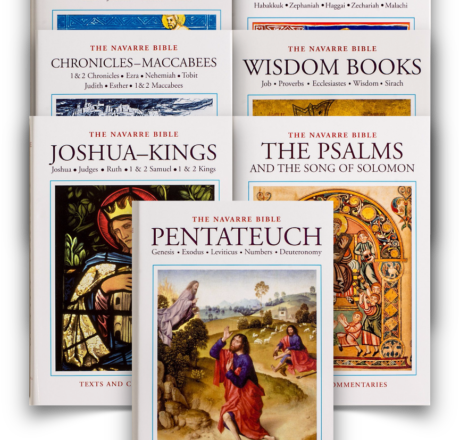
NAVARRE BIBLE COMMENTARY (RSV)

Ad Majorem Dei Gloriam (To the Greater Glory of God)

First Reading:

From: Genesis 2:4b-9; 15-17

The Creation of Adam
----------------------------
[4] In the day that the Lord God made the earth and the heavens, [5] when no plant of the field was yet in the earth and no herb of the field had yet sprung up—for the Lord God had not caused it to rain upon the earth, and there was no man to till the ground; [6] but a mist went up from the earth and watered the whole face of the ground—[7] then the Lord God formed man of dust from, the ground, and breathed into his nostrils the breath of life; and man became a living being.

Man in Paradise
--------------------
[8] And the Lord God planted a garden in Eden, in the east; and there he put the man whom he had formed. [9] And out of the ground the Lord God made to grow every tree that is pleasant to the sight and good for food, the tree of life also in the midst of the garden, and the tree of the knowledge of good and evil. [15] The Lord God took the man and put him in the garden of Eden to till it and keep it. [16] And the Lord God commanded the man, saying, "You may freely eat of every tree of the garden; [17] but of the tree of the knowledge of good and evil you shall not eat, for in the day that you eat of it you shall die."

****************************************************************************
Commentary:

2:5-6. These verses are designed to show that the first and most important thing on earth is man, on whose behalf all other things were made. The text does not discuss whether any other types of vegetative or animal life existed on the planet prior to man's appearance on the scene--much less whether any type of evolution into higher forms could have taken place.

Giving due weight to the data of faith and to scientific discoveries about the evolution of species, Catholic theology is not opposed to the idea that God could have infused a soul into an already-existing being, having previously prepared a body to suit it, thereby making it a man . This way of explaining things is called "moderate evolutionism". In this connection, John Paul II, in his 22 October 1996 message to the Pontifical Academy of Sciences, after recalling the teachings of Pius XlI's 1950 encyclical "Humani Generis", pointed out that recent advances in scholarship "lead one no longer to regard the theory of evolution as a mere hypothesis". But at the same time he said that there is not just one "theory of evolution" but a number of such theories, and he indicated which ones are contrary to faith: "The theories of evolution which, in line with the philosophies which inspire them, regard the spirit as something that emerges from the forces of living matter or as a mere epiphenomenon of that matter, are incompatible with the truth about man" (ibid.).

So, it is not only "a question of knowing when and how the universe arose physically, or when man appeared, but rather of discovering the meaning of such an origin: is the universe governed by chance, blind fate, anonymous necessity, or by a transcendent, intelligent and good Being called 'God'?" ("Catechism of the Catholic Church", 284).

2:7. As far as his body is concerned, man belongs to the earth. To affirm this, the sacred writer must have been always conscious of the fact that when a person dies, his/her body will turn into dust, as Genesis 3:19 will in due course tell us. Or it may be that this sort of account (a special one like the literary genre of all these chapters) is based on the similarity between the word "adam", which means man in general, and "adamah", which means "reddish soil"; and given that the words look alike, the sacred writer may have drawn the conclusion that there is in fact a connection between the two very things (unsophisticated etymology goes in for this sort of thing). But the fact that man belongs to the earth is not his most characteristic feature: as the author sees it, animals too are made up of the stuff of the earth. What makes man different is the fact that he receives his life from God. Life is depicted here in terms of breathing, because only living animals breathe. The fact that God infuses life into man in this way means that although man on account of his corporeal nature is material, his existence as a living being comes directly from God, that is, it is animated by a vital principle--the soul or the spirit—which does not derive from the earth. This principle of life received from God also endows man's body with its own dignity and puts it on a higher level than that of animals.

God is portrayed as a potter who models man's body in clay; this means that man is supposed to live in accordance with a source of life that is higher than that deriving from matter. The image of God as a potter shows that man (all of him) is in God's hands just like clay in a potter's hands; he should not resist or oppose God's will (cf. Is 29:16; Jer 18:6; Rom 9:20-21).

2:8-15. Here we have a scenario in which God and man are friends; there is no such thing as evil or death. The garden is described as being a leafy oasis, with the special feature of having two trees in the center, the tree of life and the tree of the knowledge of good and evil--symbolizing the power to give life, and the ultimate reference-point for man's moral behavior. Out of the garden flow the four rivers the author is most familiar with; these water the entire earth and make it fertile. What the Bible is teaching here is that man was created to be happy, to enjoy the life and goodness which flow from God. "The Church interpreting the symbolism of biblical language in an authentic way, in the light of the New Testament and Tradition teaches that our first parents, Adam and Eve, were constituted in an original 'state of holiness and justice' (Council of Trent, "De Peccato Originali"). This grace of original holiness was 'to share in…divine life' ("Lumen Gentium", 2)" ("Catechism the Catholic Church", 375).

From the outset, man is charged with cultivating the garden--working it, protecting it and making it bear fruit. Here again we can see that work is a commission that God gives man from the start. "From the beginning of creation man has had to work," St J. Escriva said. 'This is not something that I have invented. It is enough to turn to the opening pages of the Bible. There you can read that, before sin entered the world, and in its wake death, punishment and misery (cf. Rom 5:12). God made Adam from the clay of the earth, and created for him and his descendants this beautiful world we live in, "ut operaretur et custodiret illum" (Gen 2:15), so that we might cultivate it and look after it" ("Friends of God", 57). But man needs to recognize God's mastery over creation and over himself by obeying the commandment God gives him as a kind of covenant, telling him not to eat the forbidden fruit. If man lost the original happiness he was created to enjoy (the writer will later explain), it was because he broke that covenant.

2:16-17. The fact that man had access to the "tree of the knowledge of good and evil" means that God left the way open to the possibility of evil in order to ensure a greater good--the freedom which is man's endowment. By using his reason and following his conscience, man is able to discern what is good and what is evil; but he himself cannot "make" something good or evil. So, God's command to our first parents implies that they have a duty to recognize that they are creatures and have a duty to reverence and respect goodness, as reflected in the laws of creation and in the dignity proper to man as a person. Were man to want to decide on good and evil for himself, ignoring the goodness God impressed on things when he created them, it would mean man wanted to be like God. Man is always being tempted towards absolute moral autonomy--and he gives in to that temptation when he forgets that there exists a God who is the Creator and Lord of all, man included. "The tree of the knowledge of good and evil," John Paul II comments, "was to express and constantly remind man of the 'limit' impassable for a created being" ("Dominum Et Vivificantem", 36).

10 posted on 02/12/2025 7:33:00 AM PST by fidelis (Ecce Crucem Domini! Fugite partes adversae! Vicit Leo de tribu Juda, Radix David! Alleluia!)
[ Post Reply | Private Reply | To 9 | View Replies]

Gospel Reading:

From: Mark 7:14-23

What Defiles a Man
------------------
[14] And He (Jesus) called the people to meet Him, and said to them, "Hear Me, all of you, and understand: [15] there is nothing outside a man which by going into him can defile him; but the things that come out of a man are what defile him." [17] And when He had entered the house, and left the people, His disciples asked Him about the parable. [18] And He said to them, "Then are you also without understanding? Do you not see that whatever goes into a man from outside cannot defile him, [19] since it enters, not his heart but his stomach, and so passes on?" (Thus He declared all foods clean.) [20] And He said, "What comes out of a man is what defiles a man. [21] For from within, out of the heart of man, come evil thoughts, fornication, theft, murder, adultery, [22] coveting, wickedness, deceit, licentiousness, envy, slander, pride, foolishness. [23] All these evil things come from within, and they defile a man.

***********************************************************************
Commentary:

15. Some important codexes add here: "If any man has ears to hear, let him hear," which would form verse 16.

18-19. We know from Tradition that St. Mark was the interpreter of St. Peter and that, in writing his Gospel under the inspiration of the Holy Spirit, he gathered up the Roman catechesis of the head of the Apostles.

The vision which St. Peter had in Joppa (Acts 10:10-16) showed him the full depth of what Jesus teaches here about food. When he returns to Jerusalem, St. Peter himself tells us this in his report on the conversion of Cornelius: "I remembered the word of the Lord" (Acts 11:16). The now non-obligatory character of such prescriptions laid down by God in the Old Testament (cf. Leviticus 11) would have been something St. Peter included in his preaching. For interpretation of this text cf. also note on Matthew 15:10-20.

[Note on Matthew 15:10-20 states: 10-20. Our Lord proclaims the true meaning of moral precepts and makes it clear that man has to answer to God for his actions. The scribes' mistake consisted in concentrating on externals and not giving pride of place to interior purity of heart. For example they saw prayer in terms of exact recital of fixed forms of words rather than as a raising of the soul to God (cf. Matthew 6:5-6). The same thing happened in the case of dietary regulations.

Jesus avails Himself of the particular cases dealt with in this passage to teach us where to find the true center of moral action: it lies in man's personal decision, good or evil, a decision which is shaped in his heart and which then is expressed in the form of action. For example, the sins which our Lord lists are sins committed in the human heart prior to being acted out. In the Sermon on the Mount He already said this: "Every one who looks at a woman lustfully has already committed adultery with her in his heart" (Matthew 5:28). ]

20-23. "In order to help us understand divine things, Scripture uses the _expression `heart' in its full meaning, as the summary and source, expression and ultimate basis, of one's thoughts, words and actions" (St. J. Escriva, "Christ Is Passing By", 164).

The goodness or malice, the moral quality, of our actions does not depend on their spontaneous, instinctive character. The Lord Himself tells us that sinful actions can come from the human heart.

We can understand how this can happen if we realize that, after original sin, man "was changed for the worse" in both body and soul and was, therefore, prone to evil (cf. Council of Trent, "De Peccato Originali"). Our Lord here restores morality in all its purity and intensity.

11 posted on 02/12/2025 7:33:28 AM PST by fidelis (Ecce Crucem Domini! Fugite partes adversae! Vicit Leo de tribu Juda, Radix David! Alleluia!)
[ Post Reply | Private Reply | To 10 | View Replies]

Click here to go to the My Catholic Life! Devotional thread for a meditation on today’s Gospel Reading.

12 posted on 02/12/2025 7:34:37 AM PST by fidelis (Ecce Crucem Domini! Fugite partes adversae! Vicit Leo de tribu Juda, Radix David! Alleluia!)
[ Post Reply | Private Reply | To 11 | View Replies]

Disclaimer: Opinions posted on Free Republic are those of the individual posters and do not necessarily represent the opinion of Free Republic or its management. All materials posted herein are protected by copyright law and the exemption for fair use of copyrighted works.

Free Republic
Browse · Search
Religion
Topics · Post Article

FreeRepublic, LLC, PO BOX 9771, FRESNO, CA 93794
FreeRepublic.com is powered by software copyright 2000-2008 John Robinson