Skip to comments.
Catholic Caucus: Daily Mass Readings 8-February-2025
Universalis/Jerusalem Bible ^
Posted on 02/09/2025 12:32:12 PM PST by annalex
8 February 2025
Saturday of week 4 in Ordinary Time
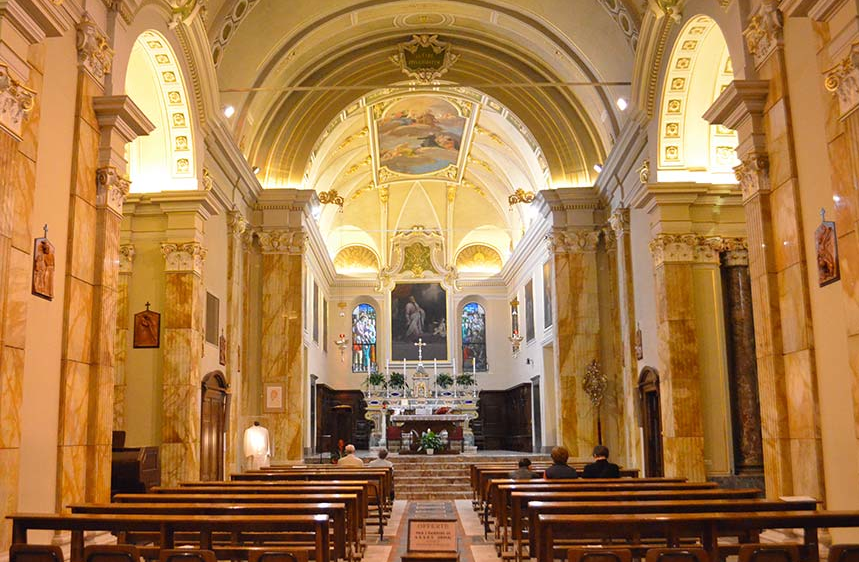
St. Gerolamo Emiliani Sanctuary Vercurago, ItalyReadings at MassLiturgical Colour: Green. Year: C(I).
| First reading |
|---|
| Hebrews 13:15-17,20-21 |
|---|
May God turn us all into whatever is acceptable to himself through Jesus ChristThrough Christ, let us offer God an unending sacrifice of praise, a verbal sacrifice that is offered every time we acknowledge his name. Keep doing good works and sharing your resources, for these are sacrifices that please God. Obey your leaders and do as they tell you, because they must give an account of the way they look after your souls; make this a joy for them to do, and not a grief – you yourselves would be the losers. I pray that the God of peace, who brought our Lord Jesus back from the dead to become the great Shepherd of the sheep by the blood that sealed an eternal covenant, may make you ready to do his will in any kind of good action; and turn us all into whatever is acceptable to himself through Jesus Christ, to whom be glory for ever and ever, Amen.
| Responsorial Psalm | Psalm 22(23) |
|---|
The Lord is my shepherd: there is nothing I shall want. The Lord is my shepherd; there is nothing I shall want. Fresh and green are the pastures where he gives me repose. Near restful waters he leads me, to revive my drooping spirit. The Lord is my shepherd: there is nothing I shall want. He guides me along the right path; he is true to his name. If I should walk in the valley of darkness no evil would I fear. You are there with your crook and your staff; with these you give me comfort. The Lord is my shepherd: there is nothing I shall want. You have prepared a banquet for me in the sight of my foes. My head you have anointed with oil; my cup is overflowing. The Lord is my shepherd: there is nothing I shall want. Surely goodness and kindness shall follow me all the days of my life. In the Lord’s own house shall I dwell for ever and ever. The Lord is my shepherd: there is nothing I shall want.
| Gospel Acclamation | Jn10:27 |
|---|
Alleluia, alleluia! The sheep that belong to me listen to my voice, says the Lord, I know them and they follow me. Alleluia!
They were like sheep without a shepherdThe apostles rejoined Jesus and told him all they had done and taught. Then he said to them, ‘You must come away to some lonely place all by yourselves and rest for a while’; for there were so many coming and going that the apostles had no time even to eat. So they went off in a boat to a lonely place where they could be by themselves. But people saw them going, and many could guess where; and from every town they all hurried to the place on foot and reached it before them. So as he stepped ashore he saw a large crowd; and he took pity on them because they were like sheep without a shepherd, and he set himself to teach them at some length. Universalis podcast: The week ahead – from 9 to 15 FebruarySaint Scholastica; the Shipwreck of St Paul; Our Lady of Lourdes; Saints Cyril and Methodius, and the Basilica of San Clemente. (20 minutes)
Episode notes.Play The readings on this page are from the Jerusalem Bible, which is used at Mass in most of the English-speaking world. The New American Bible readings, which are used at Mass in the United States, are available in the Universalis apps, programs and downloads.
You can also view this page with the Gospel in Greek and English. |
TOPICS: Catholic; General Discusssion; Prayer; Worship
KEYWORDS: catholic; mk6; ordinarytime; prayer
For your reading, reflection, faith-sharing, comments, questions, discussion.
1
posted on
02/09/2025 12:32:12 PM PST
by
annalex
To: All
KEYWORDS: catholic; mk6; ordinarytime; prayer;
2
posted on
02/09/2025 12:32:39 PM PST
by
annalex
(fear them not)
To: nickcarraway; NYer; ELS; Pyro7480; livius; ArrogantBustard; Catholicguy; RobbyS; marshmallow; ...

Alleluia Ping Please FReepmail me to get on/off the Alleluia Ping List.
3
posted on
02/09/2025 12:33:21 PM PST
by
annalex
(fear them not)
To: annalex
| Mark |
| | English: Douay-Rheims | Latin: Vulgata Clementina | Greek NT: Byzantine/Majority Text (2000) |
| | Mark 6
|
| 30. | And the apostles coming together unto Jesus, related to him all things that they had done and taught. | Et convenientes Apostoli ad Jesum, renuntiaverunt ei omnia quæ egerant, et docuerant. | και συναγονται οι αποστολοι προς τον ιησουν και απηγγειλαν αυτω παντα και οσα εποιησαν και οσα εδιδαξαν |
| 31. | And he said to them: Come apart into a desert place, and rest a little. For there were many coming and going: and they had not so much as time to eat. | Et ait illis : Venite seorsum in desertum locum, et requiescite pusillum. Erant enim qui veniebant et redibant multi : et nec spatium manducandi habebant. | και ειπεν αυτοις δευτε υμεις αυτοι κατ ιδιαν εις ερημον τοπον και αναπαυεσθε ολιγον ησαν γαρ οι ερχομενοι και οι υπαγοντες πολλοι και ουδε φαγειν ευκαιρουν |
| 32. | And going up into a ship, they went into a desert place apart. | Et ascendentes in navim, abierunt in desertum locum seorsum. | και απηλθον εις ερημον τοπον τω πλοιω κατ ιδιαν |
| 33. | And they saw them going away, and many knew: and they ran flocking thither on foot from all the cities, and were there before them. | Et viderunt eos abeuntes, et cognoverunt multi : et pedestres de omnibus civitatibus concurrerunt illuc, et prævenerunt eos. | και ειδον αυτους υπαγοντας και επεγνωσαν αυτον πολλοι και πεζη απο πασων των πολεων συνεδραμον εκει και προηλθον αυτους και συνηλθον προς αυτον |
| 34. | And Jesus going out saw a great multitude: and he had compassion on them, because they were as sheep not having a shepherd, and he began to teach them many things. | Et exiens vidit turbam multam Jesus : et misertus est super eos, quia erant sicut oves non habentes pastorem, et cœpit docere multa. | και εξελθων ειδεν ο ιησους πολυν οχλον και εσπλαγχνισθη επ αυτοις οτι ησαν ως προβατα μη εχοντα ποιμενα και ηρξατο διδασκειν αυτους πολλα |
4
posted on
02/09/2025 12:34:26 PM PST
by
annalex
(fear them not)
To: annalex

Catena Aurea by St. Thomas Aguinas
Mark CHAP. 6
6:30–34
30. And the apostles gathered themselves together unto Jesus, and told him all things, both what they had done, and what they had taught.
31. And he said unto them, Come ye yourselves apart into a desert place, and rest a while: for there were many coming and going, and they had no leisure so much as to eat.
32. And they departed into a desert place by ship privately.
33. And the people saw them departing, and many knew him, and ran afoot thither out of all cities, and outwent them, and came together unto him.
34. And Jesus, when he came out, saw much people, and was moved with compassion toward them, because they were as sheep not having a shepherd: and he began to teach them many things.
GLOSS. (non occ.) The Evangelist, after relating the death of John, gives an account of those things which Christ did with His disciples after the death of John, saying, And the Apostles gathered themselves together unto Jesus, and told him all things, both what they had done, and what they had taught.
PSEUDO-JEROME. For they return to the fountain-head whence the streams flow; those who are sent by God, always offer up thanks for those things which they have received.
THEOPHYLACT. Let us also learn, when we are sent on any mission, not to go far away, and not to overstep the bounds of the office committed, but to go often to him, who sends us, and report all that we have done and taught; for we must not only teach but act.
BEDE. (ubi sup.) Not only do the Apostles tell the Lord what they themselves had done and taught, but also his own and John’s disciples together tell Him what John had suffered, during the time that they were occupied in teaching, as Matthew relates. It goes on: And he said to them, Come ye yourselves apart, &c.
AUGUSTINE. (de Con. Evan. 2. 45) This is said to have taken place, after the passion of John, therefore what is first related took place last, for it was by these events that Herod was moved to say, This is John the Baptist, whom I beheaded.
THEOPHYLACT. Again, He goes into a desert place from His humility. But Christ makes His disciples rest, that men who are set over others may learn, that they who labour in any work or in the word deserve rest, and ought not to labour continually.
BEDE. (ubi sup.) How arose the necessity for giving rest to His disciples, He shews, when He adds, For there were many coming and going, and they had no leisure so much as to eat; we may then see how great was the happiness of that time, both from the toil of the teachers, and from the diligence of the learners. It goes on, And embarking in a ship, they departed into a desert place privately. The disciples did not enter into the ship alone, but taking up the Lord with them, they went to a desert place, as Matthew shews. (Matt. 14) Here He tries the faith of the multitude, and by seeking a desert place He would see whether they care to follow Him. And they follow Him, and that not on horseback, nor in carriages, but laboriously coming on foot, they shew how great is their anxiety for their salvation. There follows, And the people saw them departing, and many knew him, and ran afoot thither out of all cities, and outwent them. In saying that they outwent them on foot, it is proved that the disciples with the Lord did not reach the other bank of the sea, or of the Jordan, but they went to the nearest places of the same country, where the people of those parts could come to them on foot.
THEOPHYLACT. So do thou not wait for Christ till He Himself call you, but outrun Him, and come before Him. There follows, And Jesus when he came out saw much people, and was moved with compassion towards them, because they were as sheep having no shepherd. The Pharisees being ravening wolves did not feed the sheep, but devoured them; for which reason they gather themselves to Christ, the true Shepherd, who gave them spiritual food, that is, the word of God. Wherefore it goes on, And he began to teach them many things. For seeing that those who followed Him on account of His miracles were tired from the length of the way, He pitied them, and wished to satisfy their wish by teaching them.
BEDE. (in Marc. 2, 26) Matthew says that He healed their sick, for the real way of pitying the poor is to open to them the way of truth by teaching them, and to take away their bodily pains.
PSEUDO-JEROME. Mystically, however, the Lord took apart those whom He chose, that though living amongst evil men, they might not apply their minds to evil things, as Lot in Sodom, Job in the land of Uz, and Obadiah in the house of Ahab.
BEDE. (in Marc. 2, 25) Leaving also Judæa, the holy preachers, in the desert of the Church, overwhelmed by the burden of their tribulations amongst the Jews, obtained rest by the imparting of the grace of faith to the Gentiles.
PSEUDO-JEROME. Little indeed is the rest of the saints here on earth, long is their labour, but afterwards, they are bidden to rest from their labours. But as in the ark of Noah, the animals that were within were sent forth, and they that were without rushed in, so is it in the Church, Judas went, the thief came to Christ. But as long as men go back from the faith, the Church can have no refuge from grief; for Rachel weeping for her children would not be comforted. Moreover, this world is not the banquet, in which the new wine is drank, when the new song will be sung by men made anew, when this mortal shall have put on immortality.
BEDE. (in Marc. 2, 26) But when Christ goes to the deserts of the Gentiles, many bauds of the faithful leaving the walls of their cities, that is their old manner of living, follow Him.
Catena Aurea Mark 6
5
posted on
02/09/2025 12:34:55 PM PST
by
annalex
(fear them not)
To: annalex
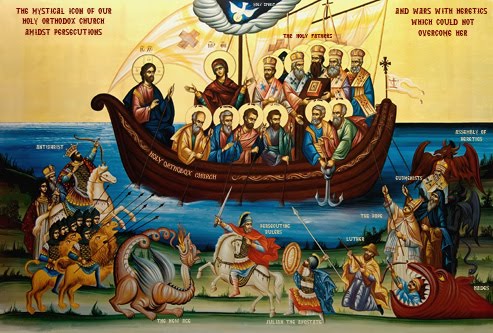
The Church Amidst Persecutions
Attribution unknown
6
posted on
02/09/2025 12:35:34 PM PST
by
annalex
(fear them not)
To: annalex
Saint Jerome Emiliani
Feast Day: February 8
Death: February 8, 1537
Biography
Saint Jerome Emiliani, also known as Geronimo, Gerolamo Miani, Girolamo, or Jerom Aemiliani, was born in 1481 in Venice, Italy. He was born into a wealthy family, the son of Angelo and Eleanor Mauroceni Emiliani. However, tragedy struck when Jerome's father passed away when he was just a teenager. Left to his own devices, Jerome ran away from home at the young age of 15.
During his youth, Jerome led a dissolute lifestyle, succumbing to worldly pleasures and vices. However, a turning point came in his life when he joined the military in Venice in 1506. He rose through the ranks and eventually commanded the League of Cambrai forces at the fortress of Castelnuovo near Treviso, Italy.
It was during his military service that an event occurred that would change Jerome's life forever. On August 27, 1511, he was captured by Venetian forces and thrown into a dungeon, where he was chained. In his darkest hour, he turned to Our Lady for help and miraculously, an apparition of Mary appeared and freed him from his chains. As a token of gratitude, Jerome hung his chains on a church wall as an offering.
After his release, Jerome became the mayor of Treviso while simultaneously studying for the priesthood. In 1518, during the spotted-fever plague, he was ordained as a priest. Despite the dangers posed by the epidemic, Jerome dedicated himself to caring for the sick. He even opened his own home to house and care for orphans who had been abandoned.
Jerome's compassion knew no bounds, and he often took to the streets at night to bury those who had succumbed to the disease and died unattended. His dedication and selflessness earned him the admiration of many.
In addition to his work with orphans and the sick, Jerome established six orphanages, a shelter for penitent prostitutes, and a hospital. His devotion to the welfare of others was unwavering, and his compassion became a guiding light for those he encountered.
Recognizing the need for a structured organization to continue and expand his charitable work, Jerome founded the Order of Somaschi (Company of Servants of the Poor, or Somascan Fathers, or Regular Clergy of Somasca) in approximately 1532. This congregation of clerks regular committed themselves to the care of orphans. They took their name from the town of Somasca, where they started and founded a seminary. The society received approval from Pope Paul III in 1540 and continues its work to this day in various countries.
Furthermore, Saint Jerome Emiliani is believed to have developed the question-and-answer catechism technique, which has proved to be an effective means of teaching children about their faith.
Saint Jerome Emiliani was declared the patron saint of orphans and abandoned children by Pope Pius XI in 1928. He is also revered as the patron saint of Venice, Italy. He is often depicted with a ball and chain, symbolizing his former imprisonment, and as a man shackled with a ball and chain who attends to the sick. There are also depictions of Saint Jerome Emiliani wearing a ball and chain, receiving an apparition of Mary and the Child Jesus.
Saint Jerome Emiliani died on February 8, 1537, in Italy. He had contracted a disease while tending to the sick, but his spirit and legacy lived on. Pope Benedict XIV beatified him on April 23, 1747, and he was later canonized by Pope Clement XIII on July 16, 1767.
The life of Saint Jerome Emiliani serves as an inspiring example of selfless service, compassion, and the transformative power of faith. His dedication to the welfare of the less fortunate and his tireless efforts to alleviate suffering continue to inspire people around the world today.
saintforaminute.com
7
posted on
02/09/2025 12:40:13 PM PST
by
annalex
(fear them not)
To: annalex
8
posted on
02/09/2025 12:41:46 PM PST
by
annalex
(fear them not)
To: annalex
NAVARRE BIBLE COMMENTARY (RSV)
Ad Majorem Dei Gloriam (To the Greater Glory of God)
First Reading:
From: Isaiah 6:1-8
The Lord calls Isaiah
------------------------------
[1] In the year that King Uzziah died I saw the Lord sitting upon a throne, high and lifted up; and his train filled the temple. [2a] Above him stood the seraphim. [3] And one called to another and said:
"Holy, holy, holy is the Lord of hosts;
the whole earth is full of his glory."
[4] And the foundations of the thresholds shook at the voice of him who called, and the house was filled with smoke. [5] And I said: "Woe is me! For I am lost; for I am a man of unclean lips, and I dwell in the midst of a people of unclean lips; for my eyes have seen the King, the Lord of hosts!"
[6] Then flew one of the seraphim to me, having in his hand a burning coal which he had taken with tongs from the altar. [7] And he touched my mouth, and said: "Behold, this has touched your lips; your guilt is taken away, and your sin forgiven." [8] And I heard the voice of the Lord saying, "Whom shall I send, and who will go for us?" Then I said, "Here am I! Send me."
**********************************
Commentary:
6:1-13. As an introduction to what is called the "Book of Immanuel" (7:1-12:6) we get this account of how the Lord called Isaiah to be a prophet, sending him to his people at the time of the Syrian-Ephraimite coalition to explain to them what is going on and how they should act.
The account begins with a theophany (vv. 1-4), which is one of the key points in this book's message. God manifests himself seated in the manner of eastern kings, surrounded by his angelic court (the "seraphim"), who extol the holiness of the Lord: he clearly is Lord of all. In this vision, God is depicted as the thrice holy (v. 3), the highest form of superlative available in Hebrew. Being holy implies standing apart -- standing above everything else. God stands far above all other beings and he is their creator. In Hebrew "holy includes the idea of "sacred". It means that God has none of the limitations and imperfections that created beings have.
The holiness and majesty of God fill Isaiah with a sense of his own uncleanness and that of his people (v. 5). Typically, visions of God in biblical history induce feelings of fear in the seer; we even see this in the angel's announcement to Mary (cf. Lk 1:30): "Do not be afraid, Mary, for you have found favour with God."
"Faced with God's fascinating and mysterious presence, man discovers his own insignificance. Before the burning bush, Moses takes off his sandals and veils his face (cf. Ex 3:5-6) in the presence of God's holiness. Before the glory of the thrice-holy God, Isaiah cries out: 'Woe is me! I am lost; for I am a man of unclean lips' (Is 6:5). Before the divine signs wrought by Jesus, Peter exclaims: 'Depart from me, for I am a sinful man, O Lord' (Lk 5:8). But because God is holy, he can forgive the man who realizes that he is a sinner before him: 'I will not execute my fierce anger . . . for I am God and not man, the Holy One in your midst (Hos 11:9)'" (“Catechism of the Catholic Church,” 208).
Isaiah is cleansed and consoled as soon as he humbly acknowledges his unworthiness and insignificance before God (vv. 6-7). His instinctive sense of fear is immediately replaced by a generous and trusting response on the prophet's part: he is ready to do what God wants (v. 8). "In their 'one to one' encounters with God the prophets draw light and strength for their mission. Their prayer is not flight from this unfaithful world, but rather attentiveness to the Word of God. At times their prayer is an argument or a complaint, but it is always an intercession that awaits and prepares for the intervention of the Saviour God, the Lord of history (cf. Amos 7:2, 5; Is 6:5, 8, 11; Jer 1:6; 15:15-18; 20:7-18)" (“Catechism of the Catholic Church,” 2584).
Finally, the Lord entrusts him with his mission. The message he is to deliver is hard-hitting and full of paradoxes (vv. 9-10). The task given him is not, as one might at first think, to render the people incapable of hearing and understanding the word of God that could move their hearts. It is, rather, to tell them that if they fail to listen to the word of God, their hearts will be blinded: they will not be able to see things right and, because of that, the sinner will feel no need to take stock of his position and be converted. The Synoptic Gospels interpret Jesus' preaching as a fulfillment of what is said here in vv. 9-10 (Mt 13:13-15; Mk 4:11-12). The Gospel of St John sees these same words as anticipating what will happen to those who reject Jesus' message: "Therefore they could not believe. For Isaiah again said, 'He has blinded their eyes and hardened their heart, lest they should see with their eyes and perceive with their heart, and turn for me to heal them.' Isaiah said this because he saw his glory and spoke of him" (Jn 12:27-41). And St Paul also uses vv. 9-10 to reproach the Jews of Rome for rejecting the Good News of salvation in Christ which he is proclaiming to them (cf. Acts 28:23-28).
The people's hardness of heart will merit severe punishment; cities and houses will he laid waste, but all will not be lost: a holy seed will remain and from it the tree will grow back again (v. 11-13). These verses carry a message for people in all ages. Isaiah approaches God in all humility, showing him every reverence, and at the same time he puts his trust in God. For his part, the Lord cleanses his chosen ones and sends them out to help in his work of salvation. Origen, who commented on this passage a number of times, points out: "May burning coals he brought from the altar of heaven to burn my lips. If the burning coals of the Lord touch my lips, they will he purified; and when they are purified and cleansed of all sin, […] my mouth will he opened to the Word of God and I will not utter another impure word [...]. The seraphim who was sent to purify the prophet's lips did not purify the lips of the people […]; therefore, they continued to live in sin, and now they deny the Lord Jesus Christ and curse him from their unclean mouths. For my part, I pray that the seraphim will come to cleanse my lips (“Homiliae in Isaiam,” 1, 4). All we need is the same humble docility that Isaiah had: "Having received the grace God, he did not want it to be a gift granted to him to no avail, without being put to work in everything that needed to be done. Seeing the seraphim and the Lord of hosts seated on high, on his throne of glory, he said: 'Woe me ...'. By speaking thus and making himself 'unworthy', he received the help of God because He took in account his humility" (ibid., 6:2). And St John Chrysostom, commenting on Isaiah's response to God, says that the prophet shows readiness to carry out his mission to the people because "since the saints are friends of God, they, too, love all men dearly" (“In Isaiam,” 6, 5).
9
posted on
02/09/2025 12:52:23 PM PST
by
fidelis
(Ecce Crucem Domini! Fugite partes adversae! Vicit Leo de tribu Juda, Radix David! Alleluia!)
Second Reading: From: 1 Corinthians 15:1-11
Christ's Resurrection and His Appearances
-----------------------------------------
[1] Now I would remind you, brethren, in what terms I preached to you the gospel, which you received, in which you stand, [2] by which you are saved, if you hold it fast--unless you believed in vain.
[3] For I delivered to you as of first importance what I also received, that Christ died for our sins in accordance with the scriptures, [4] that he was buried, that he was raised on the third day in accordance with the scriptures, [5] and that he appeared to Cephas, then to the twelve. [6] Then he appeared to more than five hundred brethren at one time, most of whom are still alive, though some have fallen asleep. [7] Then he appeared to James, then to all the apostles. [8] Last of all, as to one untimely born, he appeared also to me. [9] For I am the least of the apostles, unfit to be called an apostle, because I persecuted the church of God. [10] But by the grace of God I am what I am, and his grace toward me was not in vain. On the contrary, I worked harder than any of them, though it was not I, but the grace of God which is with me. [11] Whether then it was I or they, so we preach and so you believed.
***********************************************************************
Commentary:
1-58. Some of the Corinthian Christians were objecting to the doctrine of the resurrection of the dead, because this was a belief with which Greeks were unfamiliar, even those Greeks who held that the soul was immortal. Given the great importance of this doctrine, St Paul replies at length, pointing first to the historical fact of Christ's resurrection (vv. 1-11) and how it necessarily connects up with the resurrection of the dead in general (vv. 12-34). He then goes on to discuss what form this resurrection will take (vv. 35-58). This epistle, which began with an exposition on Jesus Christ crucified, the power and wisdom of God (cf. 1:18-2:5), ends with a development of doctrine on the resurrection of Christ and the consequent resurrection of the members of his mystical body.
To understand what St Paul is saying it is useful to bear in mind that here he is referring only to the glorious resurrection of the just. Elsewhere in Sacred Scripture it is clearly stated that all men will rise from the dead (cf., e.g., Jn 5:28-29; Acts 24:15).
1-11. The resurrection of Jesus Christ is one of the essential doctrines of the Catholic faith, explicitly stated in the first creeds or symbols of the faith. It is in fact the supreme argument in favor of the divinity of Jesus and his divine mission: our Lord proclaimed it many times (cf., e.g., Mt 16:21-28; 17:22-27; 20:17-19), and by rising from the dead he provided the sign which he had promised those who did not believe him (cf. Mt 12:38-40).
This point is so important that the primary role of the Apostles is to bear witness to Christ's resurrection (cf. Acts 1:22; 2:32; 3:15; etc.); the proclamation of the resurrection of the Lord is the very core of apostolic catechesis (cf., e.g., the discourses of St Peter and St Paul reported in the Acts of the Apostles).
3-8. On the verbs "deliver" and "receive" see the note on 1 Cor 11:23-26. St Paul reminds the Corinthians of certain basic points in his preaching--that Jesus Christ died for our sins; "that he was buried, that he was raised on the third day in accordance with the scriptures" (a statement which has passed directly into the Creed) and was seen by many people.
It should be pointed out that the Greek verb translated as "appeared" refers to being seen by the eye. This is relevant to studying the nature of the appearances of the risen Jesus: St Paul is speaking of true, ocular, sight; there seems to be no way this can be identified with imagination or intellectual vision.
The appearances of the risen Christ are a direct proof of the historical fact of his resurrection. This argument gains special force when one remembers that at the time this letter was written many people who had seen the risen Lord were still alive (v. 6). Some of the appearances referred to by St Paul are also mentioned in the Gospels and in Acts--that to Peter (cf. Lk 24:34), those to the Apostles (cf., e.g., Lk 24:36-49; Jn 20:19-29), that to St Paul himself (cf. Acts 9:1-6); others--that to James and to the five hundred brethren—are mentioned only here.
The importance of this passage is enhanced by the fact that it is the earliest documentary record earlier than the Gospels--of our Lord's resurrection, which had taken place scarcely twenty years earlier.
4. "Was buried": in recounting the death of Christ, all four evangelists expressly mention that his body was buried (cf. Mt 27:57-61 and par.). St Paul also confirms the fact in this letter, written very soon after the time, thereby confirming a tradition which had come down from the beginning (v. 3). The fact that Christ's body was buried eliminates any doubt about his death, and underlines the miracle of the Resurrection: Jesus Christ rose by his own power, rejoining his soul with his body, and leaving the tomb with the same human body (not merely the appearance of a body) as died and was buried, although now that body was glorified and had certain special properties (cf. note on 15:42-44). The Resurrection, therefore, is an objective, physical event, witnessed to by the empty tomb (cf. Mt 28:1ff and par) and by Christ's appearances.
"He was raised on the third day": Jesus died and was buried on the evening of Good Friday; his body lay in the tomb the entire sabbath, and rose on the Sunday. It is correct to say that he rose on the third day after his death, even though it was not a full seventy-two hours later.
"According to the scriptures": St Paul may be referring to certain passages of the Old Testament which--"after" the event--were seen to foreshadow the Resurrection--for example, the episode of Jonah (chaps.1-2), which Jesus in fact applied to himself (cf. Mt 12:39-40; cf. also Hos 6:1-2 and Ps 16:9-10).
9-10. St Paul's humility, which leads him to think that his past faults render him unworthy of the grace of the apostolate, is precisely what gives God's grace scope to work in him. "Admit outright that you are a servant whose duty it is to perform very many services. Do not pride yourself on being called a son of God: let us recognize grace, yet be mindful of our nature; do not be proud of having rendered good service, of having done what you were supposed to do. The sun fulfills its function; the moon obeys, the angels carry out their charge. The Lord's chosen instrument for the Gentiles says, 'I am unfit to be called an apostle, because I persecuted the church of God' (1 Cor 15:9) [...]. Neither should we seek to be praised on our own account" (St Ambrose, "Expositio Evangelii sec. Lucam", VIII, 32).
However, the grace of God is not enough on its own. As in St Paul's case, man's cooperation is needed, because God has chosen to rely on our free response to grace: "God, who created you without you, will not save you without you" (St Augustine, "Sermon" 169, 13). And, commenting on St Paul's words--"Not I, but the grace of God which is with me"-- Augustine points out, "that is, not just me, but God with me; and therefore not the grace of God alone, nor myself alone, but the grace of God and myself" ("De Gratia Et Libero Arbitrio", V, l2).
10
posted on
02/09/2025 12:53:00 PM PST
by
fidelis
(Ecce Crucem Domini! Fugite partes adversae! Vicit Leo de tribu Juda, Radix David! Alleluia!)
Gospel Reading: From: Luke 5:1-11
The Miraculous Catch of Fish and the Calling of the First Disciples
-------------------------------------------------------------------
[1] While the people pressed upon Him (Jesus) to hear the word of God, He was standing by the Lake of Gennesaret. [2] And He saw two boats by the lake, but the fishermen had gone out of them and were washing their nets. [3] Getting into one of the boats, which was Simon's, He asked him to put out a little from the land. And He sat down and taught the people from the boat. [4] And when He had ceased speaking, He said to Simon, "Put out into the deep and let down your nets for a catch." [5] And Simon answered, "Master, we toiled all night and took nothing! But at your word I will let down the nets." [6] And when they had done this, they enclosed a great shoal of fish; and as their nets were breaking, [7] they beckoned to their partners in the other boat to come and help them. And they came and filled both the boats, so that they began to sink. [8] But when Simon Peter saw it, he fell down at Jesus' knees, saying, "Depart from me, for I am a sinful man, O Lord." [9] For he was astonished, and all that were with Him, at the catch of fish which they had taken; [10] And so also were James and John, sons of Zebedee, who were partners with Simon. And Jesus said to Simon, "Do not be afraid; henceforth you will be catching men." [11] And when they had brought their boats to land, they left everything and followed Him.
***********************************************************************
Commentary:
1. "Just as they do today! Can't you see? They want to hear God's message, even though outwardly they may not show it. Some perhaps have forgotten Christ's teachings. Others, through no fault of their own, have never known them and they think that religion is something odd. But of this we can be sure, that in every man's life there comes a time sooner or later when his soul draws the line. He has had enough of the usual explanations. The lies of the false prophets no longer satisfy. Even though they may not admit it at the time, such people are longing to quench their thirst with the teachings of our Lord" (St J. Escriva, "Friends of God", 260). 3. The Fathers saw in Simon's boat a symbol of the pilgrim Church on earth. "This is the boat which according to St. Matthew was in danger of sinking and according to St. Luke was filled with fish. Here we can see the difficult beginnings of the Church and its later fruitfulness" (St. Ambrose, "Expositio Evangelii sec. Lucam, in loc."). Christ gets into the boat in order to teach the crowds--and from the barque of Peter, the Church, He continues to teach the whole world.
Each of us can also see himself as this boat Christ uses for preaching. Externally no change is evident: "What has changed? There is a change inside our soul, now that Christ has come aboard, as He went aboard Peter's boat. Its horizon has been expanded. It feels a greater ambition to serve and an irrepressible desire to tell all creation about the "magnalia Dei" (Acts 2:11), the marvellous doings of our Lord, if only we let Him work" (St J. Escriva, "Friends of God", 265).
4. "When He had finished His catechizing, He told Simon: `Put out into the deep, and lower your nets for a catch.' Christ is the master of this boat. He it is who prepares the fishing. It is for this that He has come into the world, to do all He can so that His brothers may find the way to glory and to the love of the Father" ("Friends of God", 260). To carry this task out, our Lord charges all of them to cast their nets, but it is only Peter He tells to put out into the deep.
This whole passage refers in some way to the life of the Church. In the Church the bishop of Rome, Peter's successor, "is the vicar of Jesus Christ because he represents Him on earth and acts for Him in the government of the Church" ("St. Pius X Catechism", 195). Christ is also addressing each one of us, urging us to be daring in apostolate: `"Duc in altum. Put out into deep water!' Throw aside the pessimism that makes a coward of you. `Et laxate retia vestra in capturam. And pay out you nets for a catch.' Don't you see that you, like Peter, can say: `In nomine tuo, laxabo rete': Jesus, if You say so, I will search for souls?" (St J. Escriva, "The Way", 792).
"If you were to fall into the temptation of wondering, `Who's telling me to embark on this?', we would have reply, `Christ Himself is telling you, is begging you.' `The harvest is plentiful enough, but the laborers are few. You must ask the Lord to whom the harvest belongs to send laborers out for the harvesting' (Matthew 9:37-38). Don't take the easy way out. Don't say, `I'm no good at this sort of thing; there are others who can do it; it isn't my line.' No, for this sort of thing, there is no one else: if you could get away with that argument, so could everyone else. Christ's plea is addressed to each and every Christian. No one can consider himself exempt, for whatever reason--age, health or occupation. There are no excuses whatsoever. Either we carry out a fruitful apostolate, or our faith will prove barren" ("Friends of God", 272).
5. When Christ gives him these instructions, Peter states the difficulties involved. "A reasonable enough reply. The night hours were the normal time for fishing, and this time the catch had yielded nothing. What was the point of fishing by day? But Peter has faith: `But at Your word I will let down the nets.' He decides to act on Christ's suggestion. He undertakes the work relying entirely on the word of our Lord" ("Friends of God", 261).
8. Peter does not want Christ to leave him; aware of his sins, he declares his unworthiness to be near Christ. This reminds us of the attitude of the centurion who confesses his unworthiness to receive Jesus into his house (Matthew 8:8). The Church requires her children to repeat these exact words of the centurion before receiving the Blessed Eucharist. She also teaches us to show due external reverence to the Blessed Sacrament when going to Communion: by falling down on his knees Peter also shows that internal adoration of God should be also be expressed externally.
11. Perfection is not simply a matter of leaving all things but of doing so in order to follow Christ--which is what the Apostles did: they gave up everything in order to be available to do what God's calling involved. We should develop this attitude of availability, for "Jesus isn't satisfied `going halves': He wants the lot" (St J. Escriva, "The Way", 155).
If we don't give ourselves generously we will find it very difficult to follow Jesus: "Detach yourself from people and things until you are stripped of them. For, says Pope St. Gregory, the devil has nothing of his own in this world, and naked he comes to battle. If you go clothed to fight him, you will soon be pulled to the ground: for he will have something to catch you by" ("The Way", 149).
11
posted on
02/09/2025 12:53:17 PM PST
by
fidelis
(Ecce Crucem Domini! Fugite partes adversae! Vicit Leo de tribu Juda, Radix David! Alleluia!)
12
posted on
02/09/2025 12:54:51 PM PST
by
fidelis
(Ecce Crucem Domini! Fugite partes adversae! Vicit Leo de tribu Juda, Radix David! Alleluia!)
13
posted on
02/09/2025 12:56:16 PM PST
by
fidelis
(Ecce Crucem Domini! Fugite partes adversae! Vicit Leo de tribu Juda, Radix David! Alleluia!)
Disclaimer:
Opinions posted on Free Republic are those of the individual
posters and do not necessarily represent the opinion of Free Republic or its
management. All materials posted herein are protected by copyright law and the
exemption for fair use of copyrighted works.
FreeRepublic.com is powered by software copyright 2000-2008 John Robinson


