Skip to comments.
Catholic Caucus: Daily Mass Readings 30-January-2025
Universalis/Jerusalem Bible ^
Posted on 01/31/2025 9:58:55 AM PST by annalex
30 January 2025
Thursday of week 3 in Ordinary Time

BLESSED SEBASTIANO VALFRÈ AND ST. PHILIP NERI ALTAR, Parish of the Immaculate Conception and San Donato, Turin (Italy) Readings at MassLiturgical Colour: Green. Year: C(I).
| First reading |
|---|
| Hebrews 10:19-25 |
|---|
Let us keep firm in the hope we professThrough the blood of Jesus we have the right to enter the sanctuary, by a new way which he has opened for us, a living opening through the curtain, that is to say, his body. And we have the supreme high priest over all the house of God. So as we go in, let us be sincere in heart and filled with faith, our minds sprinkled and free from any trace of bad conscience and our bodies washed with pure water. Let us keep firm in the hope we profess, because the one who made the promise is faithful. Let us be concerned for each other, to stir a response in love and good works. Do not stay away from the meetings of the community, as some do, but encourage each other to go; the more so as you see the Day drawing near.
| Responsorial Psalm |
|---|
| Psalm 23(24):1-6 |
|---|
Such are the men who seek your face, O Lord. The Lord’s is the earth and its fullness, the world and all its peoples. It is he who set it on the seas; on the waters he made it firm. Such are the men who seek your face, O Lord. Who shall climb the mountain of the Lord? Who shall stand in his holy place? The man with clean hands and pure heart, who desires not worthless things. Such are the men who seek your face, O Lord. He shall receive blessings from the Lord and reward from the God who saves him. Such are the men who seek him, seek the face of the God of Jacob. Such are the men who seek your face, O Lord.
| Gospel Acclamation | Ph2:15-16 |
|---|
Alleluia, alleluia! You will shine in the world like bright stars because you are offering it the word of life. Alleluia! Alleluia, alleluia! Your word is a lamp for my steps and a light for my path. Alleluia!
A lamp is to be put on a lampstand. The amount you measure out is the amount you will be givenJesus said to the crowd, ‘Would you bring in a lamp to put it under a tub or under the bed? Surely you will put it on the lamp-stand? For there is nothing hidden but it must be disclosed, nothing kept secret except to be brought to light. If anyone has ears to hear, let him listen to this.’ He also said to them, ‘Take notice of what you are hearing. The amount you measure out is the amount you will be given – and more besides; for the man who has will be given more; from the man who has not, even what he has will be taken away.’ The readings on this page are from the Jerusalem Bible, which is used at Mass in most of the English-speaking world. The New American Bible readings, which are used at Mass in the United States, are available in the Universalis apps, programs and downloads.
You can also view this page with the Gospel in Greek and English. |
TOPICS: Catholic; General Discusssion; Prayer; Worship
KEYWORDS: catholic; mk4; ordinarytime; prayer
For your reading, reflection, faith-sharing, comments, questions, discussion.
1
posted on
01/31/2025 9:58:55 AM PST
by
annalex
To: All
KEYWORDS: catholic; mk4; ordinarytime; prayer
2
posted on
01/31/2025 9:59:17 AM PST
by
annalex
(fear them not)
To: nickcarraway; NYer; ELS; Pyro7480; livius; ArrogantBustard; Catholicguy; RobbyS; marshmallow; ...

Alleluia Ping Please FReepmail me to get on/off the Alleluia Ping List.
3
posted on
01/31/2025 10:00:03 AM PST
by
annalex
(fear them not)
To: annalex
Check the date, posting late.
4
posted on
01/31/2025 10:00:31 AM PST
by
annalex
(fear them not)
To: annalex
| Mark |
| | English: Douay-Rheims | Latin: Vulgata Clementina | Greek NT: Byzantine/Majority Text (2000) |
| | Mark 4
|
| 21. | And he said to them: Doth a candle come in to be put under a bushel, or under a bed? and not to be set on a candlestick? | Et dicebat illis : Numquid venit lucerna ut sub modo ponatur, aut sub lecto ? nonne ut super candelabrum ponatur ? | και ελεγεν αυτοις μητι ο λυχνος ερχεται ινα υπο τον μοδιον τεθη η υπο την κλινην ουχ ινα επι την λυχνιαν επιτεθη |
| 22. | For there is nothing hid, which shall not be made manifest: neither was it made secret, but that it may come abroad. | Non est enim aliquid absconditum, quod non manifestetur : nec factum est occultum, sed ut in palam veniat. | ου γαρ εστιν τι κρυπτον ο εαν μη φανερωθη ουδε εγενετο αποκρυφον αλλ ινα εις φανερον ελθη |
| 23. | If any man have ears to hear, let him hear. | Si quis habet aures audiendi, audiat. | ει τις εχει ωτα ακουειν ακουετω |
| 24. | And he said to them: Take heed what you hear. In what measure you shall mete, it shall be measured to you again, and more shall be given to you. | Et dicebat illis : Videte quid audiatis. In qua mensura mensi fueritis, remetietur vobis, et adjicietur vobis. | και ελεγεν αυτοις βλεπετε τι ακουετε εν ω μετρω μετρειτε μετρηθησεται υμιν και προστεθησεται υμιν τοις ακουουσιν |
| 25. | For he that hath, to him shall be given: and he that hath not, that also which he hath shall be taken away from him. | Qui enim habet, dabitur illi : et qui non habet, etiam quod habet auferetur ab eo. | ος γαρ αν εχη δοθησεται αυτω και ος ουκ εχει και ο εχει αρθησεται απ αυτου |
5
posted on
01/31/2025 10:01:13 AM PST
by
annalex
(fear them not)
To: annalex

Catena Aurea by St. Thomas Aguinas
4:21–25
21. And he said unto them, Is a candle brought to be put under a bushel, or under a bed? and not to be set on a candlestick?
22. For there is nothing hid, which shall not be manifested; neither was any thing kept secret, but that it should come abroad.
23. If any man have ears to hear, let him hear.
24. And he saith unto them, Take heed what ye hear: with what measure ye mete, it shall be measured to you: and unto you that hear shall more be given.
25. For he that hath, to him shall be given: and he that hath not, from him shall be taken even that which he hath.
CHRYSOSTOM. (non occ.) After the question of the disciples concerning the parable, and its explanation, He well subjoins, And he said unto them, Is a candle brought, &c. As if he said, A parable is given, not that it should remain obscure, and hidden as if under a bed or a bushel, but that it should be manifested to those who are worthy. The candle within us is that of our intellectual nature, and it shines either clearly or obscurely according to the proportion of our illumination. For if meditations which feed the light, and the recollection with which such a light is kindled, are neglected, it is presently extinguished.
PSEUDO-JEROME. Or else the candle is the discourse concerning the three sorts of seed. The bushel or the bed is the hearing of the disobedient. The Apostles are the candlestick, whom the word of the Lord hath enlightened; wherefore it goes on, For there is nothing hidden, &c. The hidden and secret thing is the parable of the seed, which comes forth to light, when it is spoken of by the Lord.
THEOPHYLACT. Or else the Lord warns His disciples to be as light, in their life and conversation; as if He said, As a candle is put so as to give light, so all will look to your life. Therefore be diligent to lead a good life; sit not in corners, but be ye a candle. For a candle gives light, not when placed under a bed, but on a candlestick; this light indeed must be placed on a candlestick, that is, on the eminence of a godly life, that it may be able to give light to others. Not under a bushel, that is, in things pertaining to the palate, nor under a bed, that is, in idleness. For no one who seeks after the delights of his palate and loves rest can be a light shining over all.
BEDE. (in Marc. i. 20) Or, because the time of our life is contained under a certain measurement of Divine Providence, it is rightly compared to a bushel. But the bed of the soul is the body, in which it dwells and reposes for a time. He therefore who hides the word of God under the love of this transitory life, and of carnal allurements, covers his candle with a bushel or a bed. But he puts his light on a candlestick, who employs his body in the ministry of the word of God; therefore under these words He typically teaches them a figure of preaching. Wherefore it goes on, For there is nothing hidden, which shall not be revealed, nor is there any thing made secret, which shall not come abroad. As if He said, Be not ashamed of the Gospel, but amidst the darkness of persecution raise the light of the word of God upon the candlestick of your body, keeping fixedly in your mind that day, when the Lord will throw light upon the hidden places of darkness, for then everlasting praise awaits you, and everlasting punishment your adversaries.
CHRYSOSTOM. (in Matt. Hom. 15) Or else, There is nothing hid; as if He said, If ye conduct your life with care, accusation will not be able to obscure your light.
THEOPHYLACT. For each of us, whether he have done good or evil, is brought to light in this life, much more in that which is to come. For what can be more hidden than God, nevertheless He Himself is manifested in the flesh. It continues, If any man have ears to ear, let him hear.
BEDE. (ubi sup.) That is, if any man have a sense for understanding the word of God, let him not withdraw himself, let him not turn his ear to fables, but let him lend his ear to search those things which truth hath spoken, his hands for fulfilling them, his tongue for preaching them. There follows, And he said unto them, Take heed what ye hear.
THEOPHYLACT. That is, that none of those things which are said to you by me should escape you. With what measure ye mete, it shall be measured to you, that is, whatsoever degree of application ye bring, in that degree ye will receive profit.
BEDE. (ubi sup.) Or else, If ye diligently endeavour to do all the good which ye can, and to teach it to your neighbours, the mercy of God will come in, to give you both in the present life a sense to take in higher things, and a will to do better things, and will add for the future an everlasting reward. And therefore it is subjoined, And to you shall more be given.
PSEUDO-JEROME. According to the measure of his faith the understanding of mysteries is divided to every man, and the virtues of knowledge will also be added to them. It goes on: For he that hath, to him shall be given; that is, he who hath faith shall have virtue, and he who hath obedience to the word, shall also have the understanding of the mystery. Again, he who, on the other hand, has not faith, fails in virtue; and he who has not obedience to the word, shall not have the understanding of it; and if he does not understand, he might as well not have heard.
PSEUDO-CHRYSOSTOM. (Vict. Ant. e Cat. in Marc.) Or else, He who has the desire and wish to hear and to seek, to him shall be given. But he who has not the desire of hearing divine things, even what he happens to have of the written law is taken from him.
BEDE. (ubi sup.) For sometimes a clever reader by neglecting his mind, deprives himself of wisdom, of which he tastes the sweetness, who, though slow in intellect, works more diligently.
CHRYSOSTOM. (non occ.) Again it may be said, that he hath not, who has not truth. But our Lord says that he hath, because he has a lie, for every one whose understanding believes a lie, thinks that he has something.
Catena Aurea Mark 4
6
posted on
01/31/2025 10:01:51 AM PST
by
annalex
(fear them not)
To: annalex

The Last Judgment
Master of the Bambino Vispo
1422
Alte Pinakothek, Munich, Germany
7
posted on
01/31/2025 10:02:36 AM PST
by
annalex
(fear them not)
To: annalex
Blessed Sebastian Valfrè
Amongst the Oratorians – to whom I owe more than I could ever give back – Blessed Sebastian Valfrè is celebrated on this day, the anniversary of his death in 1710. I’m a bit short on time to write a bio – but may do so soon, as I have a devotion to this particular beatus – but here is one from the Birmingham Oratory, which Cardinal Newman founded.
Father Sebastian joined the Turin Oratory on May 26th, 1651 – now the feast of Saint Philip – and was devoted to his sacramental ministry, especially in the confessional, to the poor and to preaching and educating his flock. He wrote much – his works fill 22 volumes, including an influential catechism that was widely used until that of Pope Pius X. One thing I have always recalled was that Father Sebastian was renowned for his patience, kindness and equanimity, even though he once privately admitted that he had an ungovernable temper, but the long work of constant small acts of mortification led him over time to sanctity. We can only imagine what that cost him.
As Saint Philip would say, we don’t become a saint in a day, and that what we know of the saints is the least part of them, which is comforting to us who still display the weaknesses and foibles of fallen humanity. We’re all – or should be – saints in the making, and may the good Pater Sebastian intercede for us on that pilgrimage.
catholicinsight.com
8
posted on
01/31/2025 10:04:58 AM PST
by
annalex
(fear them not)
To: annalex
9
posted on
01/31/2025 10:06:02 AM PST
by
annalex
(fear them not)
To: annalex
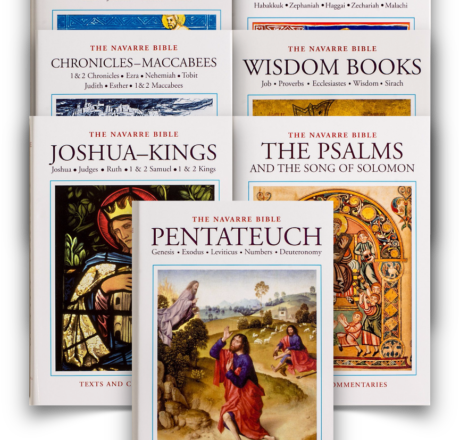
NAVARRE BIBLE COMMENTARY (RSV)
Ad Majorem Dei Gloriam (To the Greater Glory of God)
First Reading:
From: Hebrews 10:32-39
Motives for Perseverance (Continuation)
---------------------------------------
[32] But recall the former days when, after you were enlightened, you endured a hard struggle with sufferings, [33] sometimes being publicly exposed to abuse and affliction, and sometimes being partners with those so treated. [34] For you had compassion on the prisoners, and you joyfully accepted the plundering of your property, since you knew that you yourselves had a better possession and an abiding one. [35] Therefore do not throw away your confidence, which has a great reward. [36] For you have need of endurance, so that you may do the will of God and receive what is promised. [37] "For yet a little while, and the coming one shall come and shall not tarry; [38] but my righteous one shall live by faith, and if he shrinks back, my soul has no pleasure in him." [39] But we are not of those who shrink back and are destroyed, but of those who have faith and keep their souls.
***********************************************************************
Commentary:
32-34. A Christian is called to share the persecution which Christ suffered. "A disciple is not above his teacher", our Lord said (cf. Mt 10:22-25; Lk 12:11-12; In 15:18); anyone who wanted to follow him would have to carry his cross (cf. Mt 10:38; 16:24; Mk 8:34; Lk 9:23; 14:27). These words of our Lord have always been borne out in practice. In the Acts of the Apostles we are told of how the Sanhedrin persecuted the Apostles, and of how certain Jews acted against Stephen, and Herod against James and Peter, etc. The early Christians bore these afflictions bravely and even availed of them to spread the faith—first to Samaria, then to Antioch, and later throughout the whole Roman empire. The text here speaks of their courage. It may be thinking of the severe persecution instituted by Nero after the burning of Rome. Given these circumstances, the addressees, and Christians in general, need to keep their baptismal faith, their "enlightenment", intact: they should be mindful of "the former days" and copy those who compete and fight in public not minding that they are making a "public exhibition" of themselves (cf. 1 Cor 4:9).
Undoubtedly the persecution suffered by Christians who were converted from Judaism was severe. They were subject to "abuse" and "affliction", words which point to affronts, insults, ridicule, and treatment typical of religious persecution--confiscation of property, imprisonment and even flogging and other forms of punishment. Our early brethren in the faith not only bore these afflictions but also showed their solidarity and charity by generously sharing the suffering of those who were thrown in prison.
And yet even these persecutions had very good effects (cf. 1 Pet 1:6-9; Jas 1 :3-4), in that they helped the people concerned to be detached from material things and place their hope in divine rewards. In the same type of way, every Christian needs to face up to the difficulties and contradictions he experiences in life.
"Are things going against you? Are you going through a rough time? Say very slowly, as if relishing it, this powerful and courageous prayer: 'May the most just and lovable will of God be done, be fulfilled, be praised and eternally exalted above all things. Amen. Amen.' I assure you that you will find peace" ("The Way", 691). 35-39. The "confidence" mentioned in v. 35 is a translation of a Greek word which refers to the ease and trusting frankness with which a person addresses a good friend or God.
The sacred writer renews his call to endurance in the face of persecution. St John Chrysostom compares the situation of the Christians addressed in this letter with that of an athlete who has won a competition and is now simply waiting for the president of the games to award him the laurels. "From now on there is no further combat; all you must do is hold on to the merit you have won, and you will not lose your reward [...]. No further combat is called for: all that is necessary is perseverance. Just hold out and you will gain your laurels; you have already suffered all you need to obtain them--contentions, chains, pain, loss of property. What more could you have done? All that remains for you to do is wait patiently for the prize to be given you. If there is a delay, it will only be for a short while" ("Hom. on Heb., ad loc.").
Here, as St Thomas comments, endurance refers to two things—the strength that enables one to stay loyal despite persecution, and the assurance of one who is confident of obtaining certain things he does not yet possess. The letter's exhortation to endurance is supported by two quotations from Sacred Scripture. The first, from Isaiah 26:20, is a reminder that God will soon judge the impious; the second from Habakkuk 2:3-4 (also quoted by St Paul in Rom 1:17; Gal 3: 11), announces the coming liberation of the people of Israel. The sacred text accurately prophesied that those Jews who remained faithful to God would be released from captivity in Babylon and survive the experience. Moved by the Holy Spirit, the present writer states that the ancient prophecy has been fulfilled in Christ; he is "the coming one", that is, he will come a second time. Therefore, the Christian should await the outcome of persecution loyally and cheerfully. "Stand your ground like an anvil under the hammer. The mark of a true champion is to stand up to punishment and still come out victorious. It is our duty, particularly when the cause is God's, to accept trials of all kinds, if we ourselves are to be accepted by him" (St Ignatius of Antioch, "Letter to Polycarp", III, 1).
10
posted on
01/31/2025 10:48:14 AM PST
by
fidelis
(👈 Under no obligation to respond to rude, ignorant, abusive, bellicose, and obnoxious posts.)
Gospel Reading: From: Mark 4:26-34
Parables of the Seed and of the Mustard Seed
--------------------------------------------
[26] And He (Jesus) said, "The Kingdom of God is as if a man should scatter seed upon the ground, [27] and should sleep and rise night and day, and the seed should sprout and grow, he knows not how. [28] The earth produces of itself, first the blade, then the ear, then the full grain in the ear. [29] But when the grain is ripe, at once he puts in the sickle, because the harvest is come."
[30] And He said, "With what can we compare the Kingdom of God, or what parable shall we use for it? [31] It is like a grain of mustard seed, which, when sown upon the ground, is the smallest of all the seeds on earth; [32] yet when it is sown it grows up and becomes the greatest of all shrubs, and puts forth large branches, so that the birds of the air can make nests in its shade."
The End of the Parables Discourse
---------------------------------
[33] With many such parables He spoke the word to them, as they were able to hear it; [34] He did not speak to them without a parable, but privately to His own disciples He explained everything.
***********************************************************************
Commentary:
26-29. Farmers spare no effort to prepare the ground for the sowing; but once the grain is sown there is nothing more they can do until the harvest; the grain develops by itself. Our Lord uses this comparison to describe the inner strength that causes the Kingdom of God on earth to grow up to the day of harvest (cf. Joel 3:13 and Revelation 14:15), that is, the day of the Last Judgment.
Jesus is telling His disciples about the Church: the preaching of the Gospel, the generously sown seed, will unfailingly yield its fruit, independently of who sows or who reaps: it is God who gives the growth (cf. 1 Corinthians 3:5-9). It will all happen "he knows not how", without men being fully aware of it.
The Kingdom of God also refers to the action of grace in each soul: God silently works a transformation in us, whether we sleep or watch, causing resolutions to take shape in our soul--resolutions to be faithful, to surrender ourselves, to respond to grace--until we reach "mature manhood" (cf. Ephesians 4:13). Even though it is necessary for man to make this effort, the real initiative lies with God, "because it is the Holy Spirit who, with His inspirations, gives a supernatural tone to our thoughts, desires and actions. It is He who leads us to receive Christ's teaching and to assimilate it in a profound way. It is He who gives us the light by which we perceive our personal calling and the strength to carry out all that God expects of us. If we are docile to the Holy Spirit, the image of Christ will be found more and more fully in us, and we will be brought closer every day to God the Father. `For whoever are led by the Spirit of God, they are the children of God' (Romans 8:14)" (St J. Escriva, "Christ Is Passing By", 135).
30-32. The main meaning of this parable has to do with the contrast between the great and the small. The seed of the Kingdom of God on earth is something very tiny to begin with (Luke 12:32; Acts 1:15); but it will grow to be a big tree. Thus we see how the small initial group of disciples grows in the early years of the Church (cf Acts 2:47; 6:7; 12:24), and spreads down the centuries and becomes a great multitude "which no man could number" (Revelation 7:9). This mysterious growth which our Lord refers to also occurs in each soul: "the Kingdom of God is in the midst of you" (Luke 17:21); we can see a prediction of this in the words of Psalm 92:12: "The righteous grow like a cedar in Lebanon." To allow the mercy of God to exalt us, to make us grow, we must make ourselves small, humble (Ezekiel 17:22-24; Luke 18:9-14).
11
posted on
01/31/2025 10:48:37 AM PST
by
fidelis
(👈 Under no obligation to respond to rude, ignorant, abusive, bellicose, and obnoxious posts.)
12
posted on
01/31/2025 10:49:29 AM PST
by
fidelis
(👈 Under no obligation to respond to rude, ignorant, abusive, bellicose, and obnoxious posts.)
Disclaimer:
Opinions posted on Free Republic are those of the individual
posters and do not necessarily represent the opinion of Free Republic or its
management. All materials posted herein are protected by copyright law and the
exemption for fair use of copyrighted works.
FreeRepublic.com is powered by software copyright 2000-2008 John Robinson

