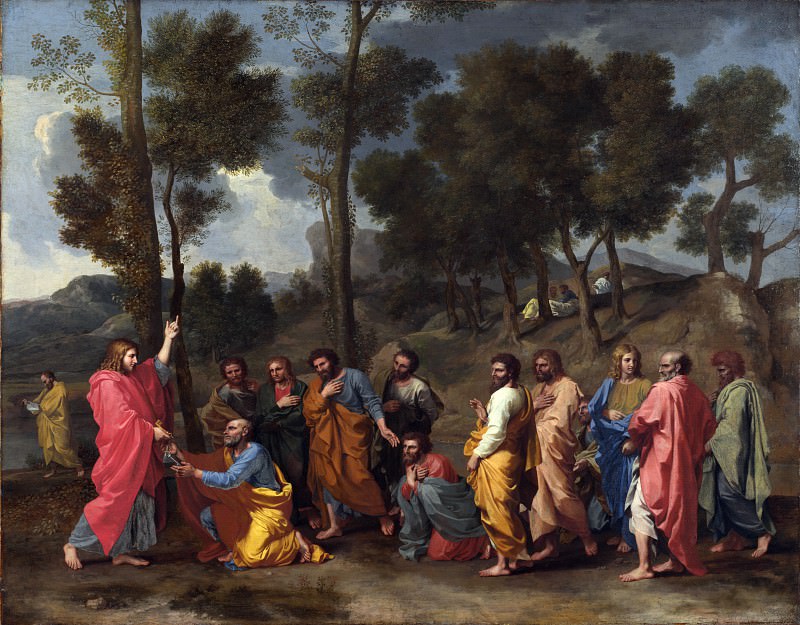
Posted on 01/17/2025 7:58:29 AM PST by annalex
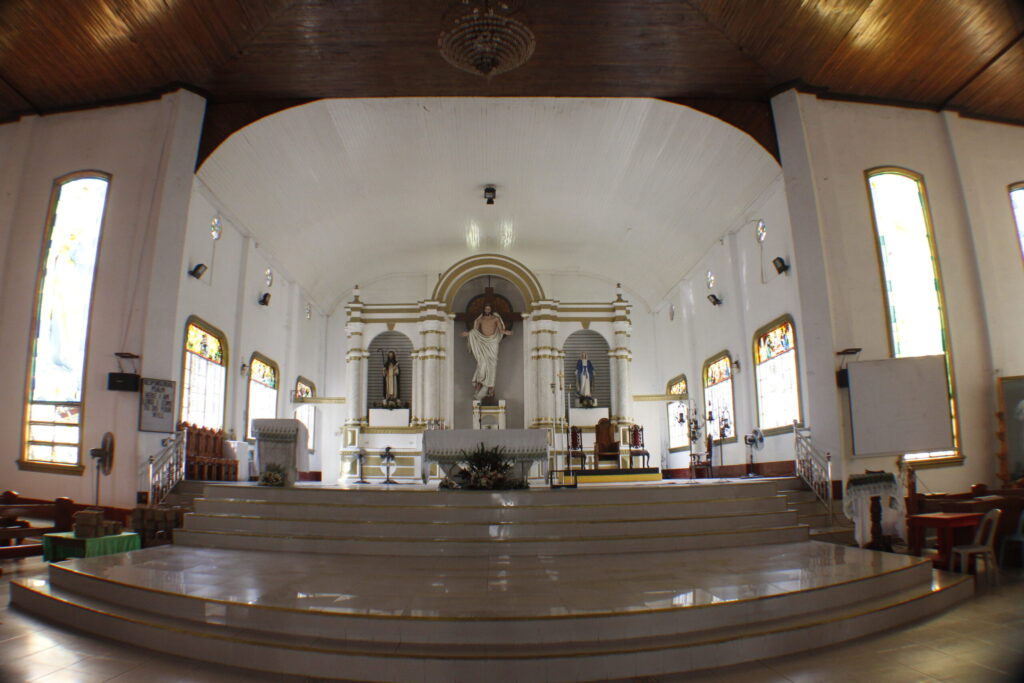
Saint Antony, Abbot on Friday of week 1 in Ordinary Time ![]() St. Anthony Abbot Parish Church, Pangasinan, Philippines Readings at MassLiturgical Colour: White. Year: C(I). These are the readings for the feria
None of you has come too late for God's promiseBe careful: the promise of reaching the place of rest that God had for the Israelites still holds good, and none of you must think that he has come too late for it. We received the Good News exactly as they did; but hearing the message did them no good because they did not share the faith of those who listened. We, however, who have faith, shall reach a place of rest, as in the text: And so, in anger, I swore that not one would reach the place of rest I had for them. God’s work was undoubtedly all finished at the beginning of the world; as one text says, referring to the seventh day: After all his work God rested on the seventh day. The text we are considering says: They shall not reach the place of rest I had for them. We must therefore do everything we can to reach this place of rest, or some of you might copy this example of disobedience and be lost.
Never forget the deeds of the Lord. The things we have heard and understood, the things our fathers have told us, these we will not hide from their children but will tell them to the next generation: the glories of the Lord and his might and the marvellous deeds he has done. Never forget the deeds of the Lord. They too should arise and tell their sons that they too should set their hope in God and never forget God’s deeds but keep every one of his commands. Never forget the deeds of the Lord. So that they might not be like their fathers, a defiant and rebellious race, a race whose heart was fickle, whose spirit was unfaithful to God. Never forget the deeds of the Lord.
Alleluia, alleluia! May the Father of our Lord Jesus Christ enlighten the eyes of our mind, so that we can see what hope his call holds for us. Alleluia!
Alleluia, alleluia! A great prophet has appeared among us; God has visited his people. Alleluia!
The Son of Man has authority on earth to forgive sinsWhen Jesus returned to Capernaum, word went round that he was back; and so many people collected that there was no room left, even in front of the door. He was preaching the word to them when some people came bringing him a paralytic carried by four men, but as the crowd made it impossible to get the man to him, they stripped the roof over the place where Jesus was; and when they had made an opening, they lowered the stretcher on which the paralytic lay. Seeing their faith, Jesus said to the paralytic, ‘My child, your sins are forgiven.’ Now some scribes were sitting there, and they thought to themselves, ‘How can this man talk like that? He is blaspheming. Who can forgive sins but God?’ Jesus, inwardly aware that this was what they were thinking, said to them, ‘Why do you have these thoughts in your hearts? Which of these is easier: to say to the paralytic, “Your sins are forgiven” or to say, “Get up, pick up your stretcher and walk”? But to prove to you that the Son of Man has authority on earth to forgive sins,’ – he turned to the paralytic – ‘I order you: get up, pick up your stretcher, and go off home.’ And the man got up, picked up his stretcher at once and walked out in front of everyone, so that they were all astounded and praised God saying, ‘We have never seen anything like this.’ These are the readings for the memorial
Put on God's armour and resist the devilGrow strong in the Lord, with the strength of his power. Put God’s armour on so as to be able to resist the devil’s tactics. For it is not against human enemies that we have to struggle, but against the Sovereignties and the Powers who originate the darkness in this world, the spiritual army of evil in the heavens. That is why you must rely on God’s armour, or you will not be able to put up any resistance when the worst happens, or have enough resources to hold your ground. Pray all the time, asking for what you need, praying in the Spirit on every possible occasion. Never get tired of staying awake to pray for all the saints.
You are my inheritance, O Lord. Preserve me, God, I take refuge in you. I say to the Lord: ‘You are my God.’ O Lord, it is you who are my portion and cup; it is you yourself who are my prize. You are my inheritance, O Lord. I will bless the Lord who gives me counsel, who even at night directs my heart. I keep the Lord ever in my sight: since he is at my right hand, I shall stand firm. You are my inheritance, O Lord. You will show me the path of life, the fullness of joy in your presence, at your right hand happiness for ever. You are my inheritance, O Lord.
Alleluia, alleluia! If you make my word your home you will indeed be my disciples, and you will learn the truth, says the Lord. Alleluia!
It is easier for a camel to pass through the eye of a needle than for a rich man to enter the kingdom of heavenThere was a man who came to Jesus and asked, ‘Master, what good deed must I do to possess eternal life?’ Jesus said to him, ‘Why do you ask me about what is good? There is one alone who is good. But if you wish to enter into life, keep the commandments.’ He said, ‘Which?’ ‘These:’ Jesus replied ‘You must not kill. You must not commit adultery. You must not bring false witness. Honour your father and mother, and: you must love your neighbour as yourself.’ The young man said to him, ‘I have kept all these. What more do I need to do?’ Jesus said, ‘If you wish to be perfect, go and sell what you own and give the money to the poor, and you will have treasure in heaven; then come, follow me.’ But when the young man heard these words he went away sad, for he was a man of great wealth. Then Jesus said to his disciples, ‘I tell you solemnly, it will be hard for a rich man to enter the kingdom of heaven. Yes, I tell you again, it is easier for a camel to pass through the eye of a needle than for a rich man to enter the kingdom of heaven.’ When the disciples heard this they were astonished. ‘Who can be saved, then?’ they said. Jesus gazed at them. ‘For men’ he told them ‘this is impossible; for God everything is possible.’
Christian Art![]() Each day, The Christian Art website gives a picture and reflection on the Gospel of the day. The readings on this page are from the Jerusalem Bible, which is used at Mass in most of the English-speaking world. The New American Bible readings, which are used at Mass in the United States, are available in the Universalis apps, programs and downloads. |
KEYWORDS: catholic; mk2; ordinarytime; prayer;

Please FReepmail me to get on/off the Alleluia Ping List.
| Mark | |||
| English: Douay-Rheims | Latin: Vulgata Clementina | Greek NT: Byzantine/Majority Text (2000) | |
| Mark 2 | |||
| 1. | AND again he entered into Capharnaum after some days. | Et iterum intravit Capharnaum post dies, | και εισηλθεν παλιν εις καπερναουμ δι ημερων και ηκουσθη οτι εις οικον εστιν |
| 2. | And it was heard that he was in the house, and many came together, so that there was no room; no, not even at the door; and he spoke to them the word. | et auditum est quod in domo esset, et convenerunt multi, ita ut non caperet neque ad januam, et loquebatur eis verbum. | και ευθεως συνηχθησαν πολλοι ωστε μηκετι χωρειν μηδε τα προς την θυραν και ελαλει αυτοις τον λογον |
| 3. | And they came to him, bringing one sick of the palsy, who was carried by four. | Et venerunt ad eum ferentes paralyticum, qui a quatuor portabatur. | και ερχονται προς αυτον παραλυτικον φεροντες αιρομενον υπο τεσσαρων |
| 4. | And when they could not offer him unto him for the multitude, they uncovered the roof where he was; and opening it, they let down the bed wherein the man sick of the palsy lay. | Et cum non possent offerre eum illi præ turba, nudaverunt tectum ubi erat : et patefacientes submiserunt grabatum in quo paralyticus jacebat. | και μη δυναμενοι προσεγγισαι αυτω δια τον οχλον απεστεγασαν την στεγην οπου ην και εξορυξαντες χαλωσιν τον κραββατον εφ ω ο παραλυτικος κατεκειτο |
| 5. | And when Jesus had seen their faith, he saith to the sick of the palsy: Son, thy sins are forgiven thee. | Cum autem vidisset Jesus fidem illorum, ait paralytico : Fili, dimittuntur tibi peccata tua. | ιδων δε ο ιησους την πιστιν αυτων λεγει τω παραλυτικω τεκνον αφεωνται σοι αι αμαρτιαι σου |
| 6. | And there were some of the scribes sitting there, and thinking in their hearts: | Erant autem illic quidam de scribis sedentes, et cogitantes in cordibus suis : | ησαν δε τινες των γραμματεων εκει καθημενοι και διαλογιζομενοι εν ταις καρδιαις αυτων |
| 7. | Why doth this man speak thus? he blasphemeth. Who can forgive sins, but God only? | Quid hic sic loquitur ? blasphemat. Quis potest dimittere peccata, nisi solus Deus ? | τι ουτος ουτως λαλει βλασφημιας τις δυναται αφιεναι αμαρτιας ει μη εις ο θεος |
| 8. | Which Jesus presently knowing in his spirit, that they so thought within themselves, saith to them: Why think you these things in your hearts? | Quo statim cognito Jesus spiritu suo, quia sic cogitarent intra se, dicit illis : Quid ista cogitatis in cordibus vestris ? | και ευθεως επιγνους ο ιησους τω πνευματι αυτου οτι ουτως αυτοι διαλογιζονται εν εαυτοις ειπεν αυτοις τι ταυτα διαλογιζεσθε εν ταις καρδιαις υμων |
| 9. | Which is easier, to say to the sick of the palsy: Thy sins are forgiven thee; or to say: Arise, take up thy bed, and walk? | Quid est facilius dicere paralytico : Dimittuntur tibi peccata tua : an dicere : Surge, tolle grabatum tuum, et ambula ? | τι εστιν ευκοπωτερον ειπειν τω παραλυτικω αφεωνται σου αι αμαρτιαι η ειπειν εγειραι και αρον σου τον κραββατον και περιπατει |
| 10. | But that you may know that the Son of man hath power on earth to forgive sins, (he saith to the sick of the palsy,) | Ut autem sciatis quia Filius hominis habet potestatem in terra dimittendi peccata (ait paralytico), | ινα δε ειδητε οτι εξουσιαν εχει ο υιος του ανθρωπου αφιεναι επι της γης αμαρτιας λεγει τω παραλυτικω |
| 11. | I say to thee: Arise, take up thy bed, and go into thy house. | tibi dico : Surge, tolle grabatum tuum, et vade in domum tuam. | σοι λεγω εγειραι και αρον τον κραββατον σου και υπαγε εις τον οικον σου |
| 12. | And immediately he arose; and taking up his bed, went his way in the sight of all; so that all wondered and glorified God, saying: We never saw the like. | Et statim surrexit ille : et, sublato grabato, abiit coram omnibus, ita ut mirarentur omnes, et honorificent Deum, dicentes : Quia numquam sic vidimus. | και ηγερθη ευθεως και αρας τον κραββατον εξηλθεν εναντιον παντων ωστε εξιστασθαι παντας και δοξαζειν τον θεον λεγοντας οτι ουδεποτε ουτως ειδομεν |

2:1–12
1. And again he entered into Capernaum after some days; and it was noised that he was in the house.
2. And straightway many were gathered together, insomuch that there was no room to receive them, no, not so much as about the door: and he preached the word unto them.
3. And they came unto him, bringing one sick of the palsy, which was borne of four.
4. And when they could not come nigh unto him for the press, they uncovered the roof where he was: and when they had broken it up, they let down the bed wherein the sick of the palsy lay.
5. When Jesus saw their faith, he said unto the sick of the palsy, Son, thy sins be forgiven thee.
6. But there were certain of the Scribes sitting there, and reasoning in their hearts,
7. Why doth this man thus speak blasphemies? who can forgive sins but God only?
8. And immediately when Jesus perceived in his spirit that they so reasoned within themselves, he said unto them, Why reason ye these things in your hearts?
9. Whether is it easier to say to the sick of the palsy, Thy sins be forgiven thee; or to say, Arise, and take up thy bed, and walk?
10. But that ye may know that the Son of man hath power on earth to forgive sins, (he saith to the sick of the palsy,)
11. I say unto thee, Arise, and take up thy bed, and go thy way into thine house.
12. And immediately he arose, took up the bed, and went forth before them all; insomuch that they were all amazed, and glorified God, saying, We never saw it on this fashion.
BEDE. (in Marc. 1. 10) Because the compassion of God deserts not even carnal persons, He accords to them the grace of His presence, by which even they may be made spiritual. After the desert, the Lord returns into the city; wherefore it is said, And again he entered into Capernaum, &c.
AUGUSTINE. (de Con. Evan. ii. 25) But Matthew writes this miracle as if it were done in the city of the Lord, whilst Mark places it in Capernaum, which would be more difficult of solution, if Matthew had also named Nazareth. But seeing that Galilee itself might be called the city of the Lord, who can doubt but that the Lord did these things in His own city, since He did them in Capernaum, a city of Galilee; particularly as Capernaum was of such importance in Galilee as to be called its metropolis? Or else, Matthew passed by the things which were done after He came into His own city, until He came to Capernaum, and so adds on the story of the paralytic healed, subjoining, And, behold, they presented to him a man sick of the palsy, after he had said that He came into His own city.
PSEUDO-CHRYSOSTOM. (Vict. Aut. e Cat. in Marc.) Or else, Matthew called Capernaum His city because He went there frequently, and there did many miracles. It goes on: And it was noised that he was in the house, &c. For the desire of hearing Him was stronger than the toil of approaching Him. After this, they introduce the paralytic, of whom Matthew and Luke speak; wherefore there follows: And they came unto him bearing one sick of the palsy, who was carried by four. Finding the door blocked up by the crowd, they could not by any means enter that way. Those who carried him, however, hoping that he could merit the grace of being healed, raising the bed with their burden, and uncovering the roof, lay him with his bed before the face of the Saviour. And this is that which is added: And when they could not lay him before him, &c. There follows: But when Jesus saw their faith, he said to the sick of the palsy, Son, thy sins be forgiven thee. He did not mean the faith of the sick man, but of his bearers; for it sometimes happens, that a man is healed by the faith of another.
BEDE. (ubi sup.) It may indeed be seen, how much each person’s own faith weighs with God, when that of another had such influence that the whole man at once rose up, healed body and soul, and by one man’s merit, another should have his sins forgiven him.
THEOPHYLACT. He saw the faith of the sick man himself, since he would not have allowed himself to be carried, unless he had had faith to be healed.
BEDE. (ubi sup.) Moreover, the Lord being about to cure the man of the palsy, first loosed the chains of his sins, in order to shew that he was condemned to the loosening of his joints, because of the bonds of his sins, and could not be healed to the recovery of his limbs, unless these were first loosened. But Christ’s wonderful humility calls this man, despised, weak, with all the joints of his limbs unstrung, a son, when the priests did not deign to touch him. Or at least, He therefore calls him a son, because his sins are forgiven him. It goes on: But there were certain of the scribes sitting there, and reasoning in their hearts, Why doth this man speak blasphemies?
CYRIL OF ALEXANDRIA.a; Now they accuse Him of blasphemy, anticipating the sentence of His death: for there was a command in the Law, that whosoever blasphemed should be put to death. And this charge they laid upon Him, because He claimed for Himself the divine power of remitting sins: wherefore it is added, Who can forgive sin, save God only? For the Judge of all alone has power to forgive sin.
BEDE. (ubi sup.) Who remits sin by those also to whom He has assigned the power of remitting, and therefore Christ is proved to be very God, for He is able to remit sins as God. The Jews then are in error, who although they hold the Christ both to be God, and to be able to remit sins, do not however believe that Jesus is the Christ. But the Arians err much more madly, who although overwhelmed with the words of the Evangelist, so that they cannot deny that Jesus is the Christ, and can remit sin, nevertheless fear not to deny that He is God. But He Himself, desiring to shame the traitors both by His knowledge of things hidden and by the virtue of His works, manifests Himself to be God. For there follows: And immediately when Jesus perceived in his spirit that they so reasoned, he said unto them, Why reason ye these things in your hearts? In which He shews Himself to be God, since He can know the hidden things of the heart; and in a manner though silent He speaks thus, With the same power and majesty, by which I look upon your thoughts, I can forgive the sins of men.
THEOPHYLACT. But though their thoughts were laid bare, still they remain insensible, refusing to believe that He who knew their hearts could forgive sins, wherefore the Lord proves to them the cure of the soul by that of the body, shewing the invisible by the visible, that which is more difficult by that which is easier, although they did not look upon it as such. For the Pharisees thought it more difficult to heal the body, as being more open to view; but the soul more easy to cure, because the cure is invisible; so that they reasoned thus, Lo, He does not now cure the body, but heals the unseen soul; if He had had more power, He would at once have cured the body, and not have fled for refuge to the unseen world. The Saviour, therefore, shewing that He can do both, says, Which is the easier? as if He said, I indeed by the healing of the body, which is in reality more easy, but appears to you more difficult, will prove to you the health of the soul, which is really more difficult.
PSEUDO-CHRYSOSTOM. (Vict. Ant. e Cat. in Marc.) And because it is easier to say than to do, there was still manifestly something to say in opposition, for the work was not yet manifested; wherefore He subjoins, But that ye may know, &c. as if He said, Since ye doubt my word, I will bring on a work which will confirm what was unseen. But He says in a marked manner, On earth to forgive sins, that He might shew that He has joined the power of the divinity to the human nature by an inseparable union, because although He was made man, yet He remained the Word of God; and although by an economy He conversed on the earth with men, nevertheless He was not prevented from working miracles and from giving remission of sins. For His human nature did not in any thing take away from these things which essentially belonged to His Divinity, nor the Divinity hinder the Word of God from becoming on earth, according to the flesh, the Son of Man without change and in truth.
THEOPHYLACT. Again, He says, Take up thy bed, to prove the greater certainty of the miracle, shewing that it is not a mere illusion; and at the same time to shew that He not only healed, but gave strength; thus He not only turns away souls from sin, but gives them the power of working out the commandments.
BEDE. (ubi sup.) A carnal sign therefore is given, that the spiritual sign may be proved, although it belongs to the same power to do away with the distempers of both soul and body; whence it follows: And immediately he arose, took up the bed, and went forth before them all.
CHRYSOSTOM. (non occ.) Further, He first healed by the remission of sins that which He had come to seek, that is, a soul, so that when they faithlessly doubted, then He might bring forward a work before them, and in this way His word might be confirmed by the work, and a hidden sign be proved by an open one, that is, the health of the soul by the healing of the body.
BEDE. (ubi sup.) We are also informed, that many sicknesses of body arise from sins, and therefore perhaps sins are first remitted, that the causes of sickness being taken away, health may be restored. For men are afflicted by fleshly troubles for five causes, in order to increase their merits, as Job and the Martyrs; or to preserve their lowliness, as Paul by the messenger of Satan; or that they may perceive and correct their sins, as Miriam, the sister of Moses, and this paralytic; or for the glory of God, as the man born blind and Lazarus; or as the beginnings of the pains of damnation, as Herod and Antiochus. But wonderful is the virtue of the Divine power, where without the least interval of time, by the command of the Saviour, a speedy health accompanies His words. Wherefore there follows: Insomuch that they were all amazed. Leaving the greater thing, that is, the remission of sins, they only wonder at that which is apparent, that is, the health of the body.
THEOPHYLACT. This is not however the paralytic, whose cure is related by John, (John 5) for he had no man with him, this one had four; he is cured in the pool of the sheep market, but this one in a house. It is the same man, however, whose cure is related by Matthew (Matt. 9) and Mark. But mystically, Christ is still in Capernaum, in the house of consolation.
BEDE. (ubi sup.) Moreover, whilst the Lord is preaching in the house, there is not room for them, not even at the door, because whilst Christ is preaching in Judæa, the Gentiles are not yet able to enter to hear Him, to whom, however, though placed without, he directed the words of His doctrine by His preachers.
PSEUDO-JEROME. Again, the palsy is a type of the torpor, in which man lies slothful in the softness of the flesh, though desiring health.
THEOPHYLACT. If therefore I, having the powers of my mind unstrung, remain, whenever I attempt any thing good without strength, as a palsied man, and if I be raised on high by the four Evangelists, and be brought to Christ, and there hear myself called son, then also are my sins quitted by me; for a man is called the son of God because he works the commandments.
BEDE. Or else, because there are four virtues, by which a man is through an assured heart exalted so that he merits safety; which virtues some call prudence, fortitude, temperance, and justice. Again, they desire to bring the palsied man to Christ, but they are impeded on every side by the crowd which is between them, because often the soul desires to be renewed by the medicine of Divine grace, but through the sluggishness of the grovelling body is held back by the hindrance of old custom. Oftentimes amidst the very sweetnesses of secret prayer, and, as it may be called, the pleasant converse with God, a crowd of thoughts, cutting off the clear vision of the mind, shuts out Christ from its sight. Let us not then remain in the lowest ground, where the crowds are bustling, but aim at the roof of the house, that is, the sublimity of the Holy Scripture, and meditate on the law of the Lord.
THEOPHYLACT. But how should I be borne to Christ, if the roof be not opened. For the roof is the intellect, which is set above all those things which are within us; here it has much earth about it in the tiles which are made of clay, I mean, earthly things: but if these be taken away, the virtue of the intellect within us is freed from its load. After this let it be let down, that is, humbled. For it does not teach us to be puffed up, because our intellect has its load cleared away, but to be humbled still more.
BEDE. (ubi sup.) Or else, the sick man is let down after the roof is opened, because, when the Scriptures are laid open to us, we arrive at the knowledge of Christ, that is, we descend to His lowliness, by the dutifulness of faith. But by the sick man being let down with his bed, it is meant that Christ should be known by man, whilst yet in the flesh. But by rising from the bed is meant the soul’s rousing itself from carnal desires, in which it was lying in sickness. To take up the bed is to bridle the flesh itself by the bands of continence, and to separate it from earthly pleasures, through the hope of heavenly rewards. But to take up the bed and to go home is to return to paradise. Or else the man, now healed, who had been sick carries back home his bed, when the soul, after receiving remission of sins, returns, even though encompassed with the body, to its internal watch over itself.
THEOPHYLACT. It is necessary to take up also one’s bed, that is the body, to the working of good. For then shall we be able to arrive at contemplation, so that our thoughts should say within us, never have we seen in this way before, that is never understood as we have done since we have been cured of the palsy; for he who is cleansed from sin, sees more purely.
Catena Aurea Mark 2

| Matthew | |||
| English: Douay-Rheims | Latin: Vulgata Clementina | Greek NT: Byzantine/Majority Text (2000) | |
| Matthew 19 | |||
| 16. | And behold one came and said to him: Good master, what good shall I do that I may have life everlasting? | Et ecce unus accedens, ait illi : Magister bone, quid boni faciam ut habeam vitam æternam ? | και ιδου εις προσελθων ειπεν αυτω διδασκαλε αγαθε τι αγαθον ποιησω ινα εχω ζωην αιωνιον |
| 17. | Who said to him: Why asketh thou me concerning good? One is good, God. But if thou wilt enter into life, keep the commandments. | Qui dixit ei : Quid me interrogas de bono ? Unus est bonus, Deus. Si autem vis ad vitam ingredi, serva mandata. | ο δε ειπεν αυτω τι με λεγεις αγαθον ουδεις αγαθος ει μη εις ο θεος ει δε θελεις εισελθειν εις την ζωην τηρησον τας εντολας |
| 18. | He said to him: Which? And Jesus said: Thou shalt do no murder, Thou shalt not commit adultery, Thou shalt not steal, Thou shalt not bear false witness. | Dicit illi : Quæ ? Jesus autem dixit : Non homicidium facies ; non adulterabis ; non facies furtum ; non falsum testimonium dices ; | λεγει αυτω ποιας ο δε ιησους ειπεν το ου φονευσεις ου μοιχευσεις ου κλεψεις ου ψευδομαρτυρησεις |
| 19. | Honour thy father and thy mother: and, Thou shalt love thy neighbor as thyself. | honora patrem tuum, et matrem tuam, et diliges proximum tuum sicut teipsum. | τιμα τον πατερα και την μητερα και αγαπησεις τον πλησιον σου ως σεαυτον |
| 20. | The young man saith to him: All these I have kept from my youth, what is yet wanting to me? | Dicit illi adolescens : Omnia hæc custodivi a juventute mea : quid adhuc mihi deest ? | λεγει αυτω ο νεανισκος παντα ταυτα εφυλαξαμην εκ νεοτητος μου τι ετι υστερω |
| 21. | Jesus saith to him: If thou wilt be perfect, go sell what thou hast, and give to the poor, and thou shalt have treasure in heaven: and come follow me. | Ait illi Jesus : Si vis perfectus esse, vade, vende quæ habes, et da pauperibus, et habebis thesaurum in cælo : et veni, sequere me. | εφη αυτω ο ιησους ει θελεις τελειος ειναι υπαγε πωλησον σου τα υπαρχοντα και δος πτωχοις και εξεις θησαυρον εν ουρανω και δευρο ακολουθει μοι |
| 22. | And when the young man had heard this word, he went away sad: for he had great possessions. | Cum audisset autem adolescens verbum, abiit tristis : erat enim habens multas possessiones. | ακουσας δε ο νεανισκος τον λογον απηλθεν λυπουμενος ην γαρ εχων κτηματα πολλα |
| 23. | Who turning, said to Peter: Go behind me, Satan, thou art a scandal unto me: because thou savourest not the things that are of God, but the things that are of men. | Qui conversus, dixit Petro : Vade post me Satana, scandalum es mihi : quia non sapis ea quæ Dei sunt, sed ea quæ hominum. | ο δε στραφεις ειπεν τω πετρω υπαγε οπισω μου σατανα σκανδαλον μου ει οτι ου φρονεις τα του θεου αλλα τα των ανθρωπων |
| 24. | Then Jesus said to his disciples: If any man will come after me, let him deny himself, and take up his cross, and follow me. | Tunc Jesus dixit discipulis suis : Si quis vult post me venire, abneget semetipsum, et tollat crucem suam, et sequatur me. | τοτε ο ιησους ειπεν τοις μαθηταις αυτου ει τις θελει οπισω μου ελθειν απαρνησασθω εαυτον και αρατω τον σταυρον αυτου και ακολουθειτω μοι |
| 25. | For he that will save his life, shall lose it: and he that shall lose his life for my sake, shall find it. | Qui enim voluerit animam suam salvam facere, perdet eam : qui autem perdiderit animam suam propter me, inveniet eam. | ος γαρ αν θελη την ψυχην αυτου σωσαι απολεσει αυτην ος δ αν απολεση την ψυχην αυτου ενεκεν εμου ευρησει αυτην |
| 26. | For what doth it profit a man, if he gain the whole world, and suffer the loss of his own soul? Or what exchange shall a man give for his soul? | Quid enim prodest homini, si mundum universum lucretur, animæ vero suæ detrimentum patiatur ? aut quam dabit homo commutationem pro anima sua ? | τι γαρ ωφελειται ανθρωπος εαν τον κοσμον ολον κερδηση την δε ψυχην αυτου ζημιωθη η τι δωσει ανθρωπος ανταλλαγμα της ψυχης αυτου |
| 27. | For the Son of man shall come in the glory of his Father with his angels: and then will he render to every man according to his works. | Filius enim hominis venturus est in gloria Patris sui cum angelis suis : et tunc reddet unicuique secundum opera ejus. | μελλει γαρ ο υιος του ανθρωπου ερχεσθαι εν τη δοξη του πατρος αυτου μετα των αγγελων αυτου και τοτε αποδωσει εκαστω κατα την πραξιν αυτου |

16. And, behold, one came and said unto him, Good Master, what good thing shall I do, that I may have eternal life?
17. And he said unto him, Why callest thou me good? there is none good but one, that is, God: but if thou wilt enter into life, keep the commandments.
18. He saith unto him, Which? Jesus said, Thou shalt do no murder, Thou shalt not commit adultery, Thou shalt not steal, Thou shalt not bear false witness,
19. Honour thy father and thy mother: and, Thou shalt love thy neighbour as thyself.
20. The young man saith unto him, All these things have I kept from my youth up: what lack I yet?
21. Jesus said unto him, If thou wilt be perfect, go and sell that thou hast, and give to the poor, and thou shalt have treasure in heaven: and come and follow me.
22. But when the young man heard that saying, he went away sorrowful: for he had great possessions.
RABANUS. (e Bed. in Luc. Mat. 18:3.) This man had, it may be, heard of the Lord, that only they who were like to little children were worthy to enter into the heavenly kingdom; but desiring to know more certainly, he asks to have it declared to him not in parables, but expressly, by what merits he might attain eternal life. Therefore it is said And, behold, one came and said unto him, Good Master, what good thing shall I do that I may have eternal life?
JEROME. He that asks this question is both young, rich, and proud, and he asks not as one that desires to learn, but as tempting Him. This we can prove by this, that when the Lord had said unto him, If thou wilt enter into life, keep the commandments, he further insidiously asks, which are the commandments? as if he could not read them for himself, or as if the Lord could command any thing contrary to them.
CHRYSOSTOM. (Hom. lxiii.) But I for my part, though I deny not that he was a lover of money, because Christ convicts him as such, cannot consider him to have been a hypocrite, because it is unsafe to decide in uncertain cases, and especially in making charges against any. Moreover Mark removes all suspicion of this kind, for he says that he came to Him, and knelt before Him; (Mark 10:17.) and that Jesus when He looked on him, loved him. And if he had come to tempt Him, the Evangelist would have signified as much, as he has done in other places. Or if he had said nothing thereof, Christ would not have suffered him to be hid, but would either have convicted him openly, or have covertly suggested it. But He does not this; for it follows, He saith unto him, Why askest thou me concerning good?
AUGUSTINE. (de Cons. Ev. ii. 63.) This may seem a discrepancy, that Matthew here gives it, Why askest thou me concerning good? whereas Mark and Luke have, Why callest thou me good? For this, Why askest thou me concerning good? may seem rather to be referred to his question, What good thing shall I do? for in that he both mentioned good, and asked a question. But this, Good Master, is not yet a question. Either sentence may be understood thus very appropriately to the passage.
JEROME. But because he had styled Him Good Master, and had not confessed Him as God, or as the Son of God, He tells him, that in comparison of God there is no saint to be called good, of whom it is said, Confess unto the Lord, for he is good; (Ps. 118:1.) and therefore He says, There is one good, that is, God. But that none should suppose that by this the Son of God is excluded from being good, we read in another place, The good Shepherd layeth down his life for his sheep. (John 10:11.)
AUGUSTINE. (de Trin. i. 13.) Or, because he sought eternal life, (and eternal life consists in such contemplation in which God is beheld not for punishment, but for everlasting joy,) and knew not with whom he spake, but thought Him only a Son of Man, therefore He says, Why askest thou me concerning good, calling me in respect of what you see in me, Good Master? This form of the Son of Man shall appear in the judgment, not to the righteous only, but to the wicked, and the very sight shall be to them an evil, and their punishment. But there is a sight of My form, in which I am equal to God. That one God therefore, Father, Son, and Holy Spirit, is alone good, because none see Him to mourning and sorrow, but only to salvation and true joy.
JEROME. For Our Saviour does not reject this witness to His goodness, but corrected the error of calling Him Good Master apart from God.
CHRYSOSTOM. Wherein then was the profit that He answered thus? He leads him by degrees, and teaches him to lay aside false flattery, and rising above the things which are upon earth to cleave to God, to seek things to come, and to know Him that is truly good, the root and source of every good.
ORIGEN. Christ also answers thus, because of that He said, What good thing shall I do? For when we depart from evil and do good, that which we do is called good by comparison with what other men do. But when compared with absolute good, in the sense in which it is here said, There is one good, our good is not good. But some one may say, that because the Lord knew that the purpose of him who thus asked Him was not even to do such good as man can do, that therefore He said, Why askest thou me concerning good? as much as to say, Why do you ask me concerning good, seeing you are not prepared to do what is good. But after this He says, If thou wilt enter into life, keep the commandments. Where note, that He speaks to him as yet standing without life; for that man is in one sense without life, who is without Him who said, I am the life. Otherwise, every man upon earth may be, not in life itself, but only in its shadow, while he is clad in a body of death. But any man shall enter into life, if he keep himself from dead works, and seek living works. But there are dead words and living words, also dead thoughts and living thoughts, and therefore He says, If thou wilt enter into life, keep the commandments.
AUGUSTINE. (Serm. 84, 1.) And He said not, If thou desirest life eternal; but, If thou wilt enter into life, calling that simply life, which shall be everlasting. Here we should consider how eternal life should be loved, when this miserable and finite life is so loved.
REMIGIUS. These words prove that the Law gave to such as kept it not only temporal promises, but also life eternal. And because the hearing these things made him thoughtful, He saith unto him, Which?
CHRYSOSTOM. This he said not to tempt Him, but because he supposed that they were other than the commandments of the Law, which should be the means of life to him.
REMIGIUS. And Jesus, condescending as to a weak one, most graciously set out to him the precepts of the Law; Jesus said, Thou shalt do no murder; and of all these precepts follows the exposition, And thou shalt love thy neighbour as thyself. For the Apostle says, Whoso loveth his neighbour has fulfilled the Law? (Prov. 13:10.) But it should be enquired, why the Lord has enumerated only the precepts of the Second Table? Perhaps because this young man was zealous in the love of God, or because love of our neighbour is the step by which we ascend to the love of God.
ORIGEN. Or perhaps these precepts are enough to introduce one, if I may say so, to the entrance of life; but neither these, nor any like them, are enough to conduct one to the more inward parts of life. But whoso transgresses one of these commandments, shall not even come to the entrance in unto life.
CHRYSOSTOM. But because all the commandments that the Lord had recounted were contained in the Law, The young man saith unto him. All these have I kept from my youth up. And did not even rest there, but asked further, What lack I yet? which alone is a mark of his intense desire.
REMIGIUS. But to those who would be perfect in grace, He shews how they may come to perfection, Jesus saith unto him, If thou wilt be perfect, go, and sell all that thou hast, and give to the poor. Mark the words; He said not, Go, and consume all thou hast; but Go, and sell; and not some, as did Ananias and Sapphira, but All. And well He added, that thou hast, for what we have are our lawful possessions. Those therefore that he justly possessed were to be sold; what had been gained unjustly were to be restored to those from whom they had been taken. And He said not, Give to thy neighbours, nor to the rich, but to the poor.
AUGUSTINE. (de. Op. Monach. 25.) Nor need it be made a scruple in what monasteries, or to the indigent brethren of what place, any one gives those things that he has, for there is but one commonwealth of all Christians. Therefore wheresoever any Christian has laid out his goods, in all places alike he shall receive what is necessary for himself, shall receive it of that which is Christ’s.
RABANUS. See two kinds of life which we have heard set before men; the Active, to which pertains, Thou shalt not kill, and the rest of the Law; and the Contemplative, to which pertains this, If thou wilt be perfect. The active pertains to the Law, the contemplative to the Gospel; for as the Old Testament went before the New, so good action goes before contemplation.
AUGUSTINE. (cont. Faust. v. 9.) Nor are such only partakers in the kingdom of heaven, who, to the end they may be perfect, sell or part with all that they have; but in these Christian ranks are numbered by reason of a certain communication of their charity a multitude of hired troops; those to whom it shall be said in the end, I was hungry, and ye gave me to eat; (Mat. 25:35.) whom be it far from us to consider excluded from life eternal, as they who obey not the commands of the Gospel.
JEROME. (cont. Vigilant. 15.) That Vigilantius asserts that they who retain the use of their property, and from time to time divide their incomes among the poor, do better than they who sell their possessions and lavish them in one act of charity, to him, not I, but God shall make answer, If thou wilt be perfect, Go and sell. That which you so extol, is but the second or third grade; which we indeed admit, only remembering that what is first is to be set before what is third or second.
PSEUDO-AUGUSTINE. (Gennadius, de Eccles. Dogm. 36.) It is good to distribute with discrimination to the poor; it is better, with resolve of following the Lord, to strip one’s self of all at once, and freed from anxiety to suffer want with Christ.
CHRYSOSTOM. And because He spake of riches warning us to strip ourselves of them, He promises to repay things greater, by how much heaven is greater than earth, and therefore He says, And thou shalt have treasure in heaven. By the word treasure He denotes the abundance and endurance of the reward.
ORIGEN. If every commandment is fulfilled in this one word, Thou shalt love thy neighbour as thyself, and if he is perfect who has fulfilled every command, how is it that the Lord said to the young man, If thou wilt be perfect, when he had declared, All these have I kept from my youth up. Perhaps that he says, Thou shalt love thy neighbour as thyself, was not said by the Lord, but added by some one, for neither Mark nor Luke have given it in this place. Or otherwise; It is written in the Gospela according to the Hebrews, that, when the Lord said, Go, and sell all that thou hast, the rich man began to scratch his head, being displeased with the saying. Then the Lord said unto him, How sayest thou, I have kept the Law, and the Prophets, since it is written in the Law, Thou shalt love thy neighbour as thyself? For how many of thy brethren sons of Abraham, clothed in filth, perish for hunger? Thy house is full of many good things, and nothing goes thereout to them. The Lord then, desiring to convict this rich man, says to him, If thou will be perfect, go and sell all that thou hast, and give to the poor; for so it will be seen if thou dost indeed love thy neighbour as thyself. But if he is perfect who has all the virtues, how does he become perfect who sells all that he has and gives to the poor? For suppose one to have done this, will he thereby become forthwith free from anger, desire, having every virtue, and abandoning all vice? Perhaps wisdom may suggest, that he that has given his goods to the poor, is aided by their prayers, receiving of their spiritual abundance to his want, and is made in this way perfect, though he may have some human passions. Or thus; He that thus exchanged his riches for poverty, in order that he might become perfect, shall have assistance to become wise in Christ, just, chaste also, and devoid of all passion; but not so as that in the moment when he gave up all his goods, he should forthwith become perfect; but only that from that day forward the contemplation of God will begin to bring him to all virtues. Or again, it will pass into a moral exposition, and say, that the possessions of a man are the acts of his mind. Christ then bids a man to sell all his evil possessions, and as it were to give them over to the virtues which should work the same, which were poor in all that is good. For as the peace of the Apostles returns to them again, (Mat. 10:13.) unless there be a son of peace, so all sins return upon their actors, when one will no longer indulge his evil propensities; and thus there can be no doubt that he will straightway become perfect who in this sense sells all his possessions. It is manifest that he that does these things, has treasure in heaven, and is himself become of heaven; and he will have in heaven treasure of God’s glory, and riches in all God’s wisdom. Such an one will be able to follow Christ, for he has no evil possession to draw him off from so following
JEROME. For many who leave their riches do not therefore follow the Lord; and it is not sufficient for perfection that they despise money, unless they also follow the Saviour, that unless having forsaken evil, they also do what is good. For it is easier to contemn the hoard than quit the propensityb; therefore it follows, And come and follow me; for he follows the Lord who is his imitator, and who walks in his steps. It follows, And when the young man had heard these words, he went away sorrowful. This is the sorrow that leads to death. And the cause of his sorrow is added, for he had great possessions, thorns, that is, and briars, which choked the holy leaven.
CHRYSOSTOM. For they that have little, and they that abound, are not in like measure encumbered. For the acquisition of riches raises a greater flame, and desire is more violently kindled.
AUGUSTINE. (Ep. 31, 5.) I know not how, but in the love of worldly superfluities, it is what we have already got, rather than what we desire to get, that most strictly enthrals us. For whence went this young man away sorrowful, but that he had great possessions? It is one thing to lay aside thoughts of further acquisition, and another to strip ourselves of what we have already made our own; one is only rejecting what is not ours, the other is like parting with one of our own limbs.
ORIGEN. But historically, the young man is to be praised for that he did not kill, did not commit adultery; but is to be blamed for that he sorrowed at Christ’s words calling him to perfection. He was young indeed in soul, and therefore leaving Christ, he went his way.
19:23–26
23. Then said Jesus unto his disciples, Verily I say unto you, That a rich man shall hardly enter into the kingdom of heaven.
24. And again I say unto you, It is easier for a camel to go through the eye of a needle, than for a rich man to enter into the kingdom of God.
25. When his disciples heard it, they were exceedingly amazed, saying, Who then can be saved?
26. But Jesus beheld them, and said unto them, With men this is impossible; but with God all things are possible.
GLOSS. (ap. Anselm.) The Lord took occasion from this rich man to hold discourse concerning the covetous; Then said Jesus unto his disciples, Verily I say unto you, &c.
CHRYSOSTOM. What He spoke was not condemning riches in themselves, but those who were enslaved by them; also encouraging His disciples that being poor they should not be ashamed by reason of their poverty.
HILARY. To have riches is no sin; but moderation is to be observed in our havings. For how shall we communicate to the necessities of the saints, if we have not out of what we may communicate?
RABANUS. But though there be a difference between having and loving riches, yet it is safer neither to have nor to love them.
REMIGIUS. Whence in Mark the Lord expounding the meaning of this saying, speaks thus, It is hard for them that trust in riches to enter into the kingdom of heaven (Mark 10:24.) They trust in riches, who build all their hopes on them.
JEROME. Because riches once gained are hard to be despised, He saith not it is impossible, but it is hard. Difficulty does not imply the impossibility, but points out the infrequency of the occurrence.
HILARY. It is a dangerous toil to become rich; and guiltlessness occupied in increasing its wealth has taken upon itself a sore burden; the servant of God gains not the things of the world, clear of the sins of the world. Hence is the difficulty of entering the kingdom of heaven.
CHRYSOSTOM. Having said that it was hard for a rich man to enter into the kingdom of heaven, He now proceeds to shew that it is impossible, And again I say unto you, It is easier for a camel to go through the eye of a needle, than for a rich man to enter into the kingdom of heaven, (Is. 60:6.)
JEROME. According to this, no rich man can be saved. But if we read Isaiah, how the camels of Midian and Ephah came to Jerusalem with gifts and presents, and they who once were crooked and bowed down by the weight of their sins, enter the gates of Jerusalem, we shall see how these camels, to which the rich are likened when they have laid aside the heavy load of sins, and the distortion of their whole bodies, may then enter by that narrow and strait way that leads to life.
PSEUDO-CHRYSOSTOM. The Gentile souls are likened to the deformed body of the camel, in which is seen the humpback of idolatry; for the knowledge of God is the exaltation of the soul. The needle is the Son of God, the fine point of which is His divinity, and the thicker part what He is according to His incarnation. But it is altogether straight and without turning; and through the womb of His passion, the Gentiles have entered into life eternal. By this needle is sewn the robe of immortality; it is this needle that has sewn the flesh to the spirit, that has joined together the Jews and the Gentiles, and coupled man in friendship with angels. It is easier therefore for the Gentiles to pass through the needle’s eye, than for the rich Jews to enter into the kingdom of heaven. For if the Gentiles are with such difficulty withdrawn from the irrational worship of idols, how much more hardly shall the Jews be withdrawn from the reasonable service of God?
GLOSS. (ap. Anselm.) It is explained otherwise; That at Jerusalem there was a certain gate, called, The needle’s eye, through which a camel could not pass, but on its bended knees, and after its burden had been taken off; and so the rich should not be able to pass along the narrow way that leads to life, till he had put off the burden of sin, and of riches, that is, by ceasing to love them.
GREGORY. (Mor. xxxv. 16.) Or, by the rich man He intends any one who is proud, by the camel he denotes the right humility. The camel passed through the needle’s eye, when our Redeemer through the narrow way of suffering entered in to the taking upon Him death; for that passion was as a needle which pricked the body with pain. But the camel enters the needle’s eye easier than the rich man enters the kingdom of heaven; because if He had not first shewn us by His passion the form of His humility, our proud stiffness would never have bent itself to His lowliness.
CHRYSOSTOM. The disciples though poor are troubled for the salvation of others, beginning even now to have the bowels of doctors.
AUGUSTINE. (Quæst. Ev. 1, 26.) Whereas the rich are few in comparison of the multitude of the poor, we must suppose that the disciples understood all who wish for riches, as included in the number of the rich.
CHRYSOSTOM. This therefore He proceeds to shew is the work of God, there needing much grace to guide a man in the midst of riches; But Jesus beheld them, and said unto them, With men this is impossible, but with God all things are possible. By the word beheld them, the Evangelist conveys that He soothed their troubled soul by His merciful eye.
REMIGIUS. This must not be so understood as though it were possible for God to cause that the rich, the covetous, the avaricious, and the proud should enter into the kingdom of heaven; but to cause him to be converted, and so enter.
CHRYSOSTOM. And this is not said that you should sit supinely, and let alone what may seem impossibilities; but considering the greatness of righteousness, you should strive to enter in with entreaty to God.<
Catena Aurea Matthew 19
Ad Majorem Dei Gloriam (To the Greater Glory of God)
First Reading:
From: Hebrews 4:1-5, 11
Through Faith We Can Attain God's "Rest"
----------------------------------------
[1] Therefore, while the promise of entering his rest remains, let us fear lest any of you be judged to have failed to reach it. [2] For good news came to us just as to them; but the message which they heard did not benefit them, because it did not meet with faith in the hearers. [3] For we who have believed enter that rest, as he has said, "As I swore in my wrath, 'They shall never enter my rest,"' although his works were finished from the foundation of the world. [4] For he has somewhere spoken of the seventh day in this way, "And God rested on the seventh day from all his works." [5] And again in this place he said, "They shall never enter my rest."
[11] Let us therefore strive to enter that rest, that no one fall by the same sort of disobedience.
***********************************************************************
Commentary:
1-11. This chapter is a further exhortation to fidelity and develops the theme of that "rest" which the people of Israel failed to attain. The comparison between Moses and Jesus (cf. 3:1ff) is now extended to Jews and Christians. Moses had tried to get the people of Israel to stay true to God and so enter their place of rest (cf. Deut 12:9-10). He laid down the precept of sabbath rest (Deut 5:12-15; Ex 20:8-11; 35:1-3; Num 15:32-36) in memory of God's resting after the Creation, and as a sign of the Covenant and a symbol of eternal rest. In the Gospel Christ promises a new kind of rest, an eternal one, in the house of the Father (cf. In 14:1-3, 27).
The history of the chosen people is not, then, a mere chronicle of past events. It is something meaningful to us today and full of lessons for Christian living. To Christians also, as members of the new Israel, God offers a "rest", one which is richer than the temporal rest the Jews obtained when they took possession of the promised land, for the rest promised to Christians is rest in heaven.
However, the Jews disobeyed God's commandments; they soiled themselves by worshipping idols and failed to grasp the significance of their own history. And they confused God's rest, their true destiny, with the sabbath rest--a physical rest which they practised in an almost exclusively external way (cf. Mk 3:1-6; Lk 13:10-17). Christians also can run a similar risk if they fail to hold on to everything which Jesus Christ, the mediator of the New Covenant has won for them.
1. God's promise of rest remains valid, but to attain it one needs to be faithful and obedient--to have a vigilance which comes from holy fear of God, a fear of being excluded from eternal blessedness. The text can also be interpreted as meaning "Let us fear, lest any one of you despair because he thinks he has been excluded permanently"; that is, "let us fear despair".
In this context "rest" refers to all the supernatural graces we obtain through grace, particularly that of seeing and enjoying God in the future life. This rest, which will reach its perfection in heaven and which begins in this life with faith and grace, is man's true end or destiny. "God works with creative power by sustaining in existence the world that he called into being from nothing, and he works with salvific power in the hearts of those whom from the beginning he has destined for 'rest"' (John Paul II, "Laborem Exercens", 25).
The saints have often liked to describe the joy which heaven gives, that eternal rest which God deigns to grant souls who depart this world. "Who can measure the happiness of heaven, where no evil at all can touch us, no good will be out of reach; where life is to be one long laud extolling God, who will be all in all [...]. This, indeed, will be that ultimate Sabbath that has no evening and which the Lord foreshadowed in the account of his creation [...]. Only when we are remade by God and perfected by a greater grace shall we have the eternal stillness of that rest in which we shall see that he is God. Then only shall we be filled with him when he will be all in all" (St Augustine, "The City of God", XXII, 30).
Losing this "rest" is the only thing one should really fear.
2. The good news was proclaimed to the Jews in the sense that they also heard the preaching of Moses which aimed at preparing the chosen people to be generous in their fidelity to the Lord's promises. The Israelites, however, rebelled against those who were the first to hear the divine message--Abraham, Isaac, Jacob, Moses himself, Joshua and the prophets.
The preaching of the Word can actually harden a person's heart if he does not listen to it with the right dispositions. "To obtain salvation it is not enough to hear the words. One needs to take them in with faith and keep a firm hold on them. What good was God's promise to those who received it if they did not receive it faithfully or failed to put their trust in his power--if they did not, so to speak, fuse with, become one with, the divine words?" (Theodoret of Cyrus, "Interpretatio Ep. Ad Haebreos", IV). What proves a person's true obedience to God's word is his solidarity with those to whom God had given the authority to proclaim it.
3-8. The believer can be said to "enter God's rest" because in this life he already begins to be intimate with the three divine Persons. In biblical terms the "rest" is connected with the Covenant which God establishes with men. "Rest" is the reward for faithfulness to the Covenant; it begins in this life in the form of serenity and interior peace and the enjoyment of material things (such as the promised land), but will reach its perfection only in heaven. In this sense, as Psalm 95 reminds us, God promised his people rest repeatedly: the psalm speaks of a "today" when they will enter his "rest": everyone can begin to enjoy "today" the rest of divine friendship, provided he does not harden his heart, provided he repents and becomes faithful again.
Christians have received a further invitation from God to enter his rest: because many Jews proved to be unfaithful, a new people of God was established. This marks a new "today", a new point when one can opt for fidelity and enter the promised land. This "today" has two characteristics: it requires our free response to God's decision to call us; and it does not happen immediately: for the new people of God, also, there is a future "sabbath", that is, heaven.
To appreciate the subtle play of words, one should remember that the same term is used in Hebrew for the word "rest" and for the sabbath as a day of the week.
11. The sacred writer ends his commentary on Psalm 95 with a short, concise exhortation summing up what he has been saying and inviting his readers to enter God's rest without delay.
"There are a number of reasons why the text speaks of striving to enter (God's) rest," St Thomas comments. "First, because, there is a long road ahead. Then because time is short--and we do not know how much time we have. Third, because ours is a pressing interior call which urges us on with the stimulus of love. Finally, because of the danger of delaying, as happened in the case of the foolish virgins (Mt 25:1-13), who arrived late and failed to gain entry" ("Commentary on Heb.", 4, 2). The central idea is not only urgency and eagerness but also dogged perseverance with the help of grace.
•Abbot
•Feast day: January 17
•251-356
St. Anthony the Abbot, also known as St. Anthony of Egypt, holds a special place in the history of Christianity as the founder of Christian monasticism and the patron of domestic animals and farmers. Born in 251 in Coma, a village in Middle Egypt, Anthony’s life and legacy continue to inspire believers around the world. His story is a testament to the power of faith, asceticism, and the pursuit of holiness.
Anthony was born into a wealthy Christian family. Following the untimely death of his parents, he inherited a large estate and became responsible for the care of his younger sister. However, his life took a dramatic turn when, at the age of 20, he attended Mass and heard the words of Jesus: “If you wish to be perfect, go, sell what you have and give to the poor, and you will have treasure in heaven. Then come, follow me” (Matthew 19:21). Deeply moved, Anthony sold most of his possessions, keeping only a portion to sustain himself and his sister.
Not long after, Anthony was inspired by another Gospel passage: “Do not worry about your life, what you will eat or drink; or about your body, what you will wear” (Matthew 6:25). He gave away his remaining property, entrusted his sister to a community of Christian virgins, and retreated to the desert to live as a hermit. His choice to embrace poverty, prayer, and solitude became the foundation for the monastic tradition.
Living in the desert, Anthony faced relentless temptations from the Devil, who tried to dissuade him from his spiritual path. The adversary appeared in various forms, including wild beasts, seductive women, and even visions of the good deeds Anthony could have accomplished had he stayed in the world. Anthony overcame these trials through intense prayer, fasting, and trust in God. His victories over temptation became legendary and were a source of inspiration for his followers.
Anthony’s holiness and wisdom drew many disciples to the desert. Though he initially sought solitude, he eventually organized his followers into the first communities of Christian monks. He emphasized the importance of prayer, manual labor, and living every moment as though it were the last. One of his famous instructions to his monks was: “Reflect every morning that perhaps you may not live till night, and every evening that perhaps you may never see the morning; and do every action as if it were the last of your life.”
In 337, Emperor Constantine and his sons wrote letters to Anthony, asking for his prayers. Anthony, unmoved by the honor, remarked to his monks: “Do not wonder that the emperor writes to us, a man as I am; rather be astounded that God should have written to us, and that He has spoken to us by His Son.”
Anthony also played a significant role in defending orthodox Christianity. In 355, at the request of St. Athanasius, he traveled to Alexandria to refute the Arian heresy. His words and miracles strengthened the faith of the people and reaffirmed the divinity of Christ. Despite invitations to remain in the city, Anthony returned to his desert solitude, saying: “As fish die if they are taken from the water, so does a monk wither away if he forsakes his solitude.”
Anthony lived to the remarkable age of 105, passing away in 356. A few days before his death, he instructed his disciples to bury him in a secret location to avoid the veneration of his remains. His humility and dedication to God remained evident until the end, as he bid farewell to his followers, saying: “Farewell, my children. Anthony is departing, and will no longer be with you.”
Anthony is often depicted in art with animals, particularly pigs, which originally symbolized the Devil’s temptations. Over time, this association evolved, and he became the patron saint of domestic animals and farmers. His feast day, celebrated on January 17, is marked in many cultures by blessings of animals and agricultural tools.
St. Anthony the Abbot’s life is a powerful example of faith, humility, and perseverance. His radical commitment to Christ, his victory over temptation, and his role as the founder of Christian monasticism make him a beacon of inspiration for all believers. As we honor his memory, may we, like Anthony, strive to live with purpose, placing our trust in God and embracing the call to holiness.
From: Mark 2:1-12
The Curing of a Paralytic
-------------------------
[1] And when He (Jesus) returned to Capernaum after some days, it was reported that He was at home. [2] And many were gathered together, so that there was no longer room for them, not even about the door; and He was preaching the word to them. [3] And they came, bringing to Him a paralytic carried by four men. [4] And when they could not get near Him because of the crowd, they removed the roof above Him; and when they had made an opening, they let down the pallet on which the paralytic lay. [5] And when Jesus saw their faith, He said to the paralytic, "My son, your sins are forgiven." [6] Now some of the scribes were sitting there, questioning in their hearts, [7] "Why does this man speak thus? It is blasphemy! Who can forgive sins but God alone?" [8] And immediately Jesus, perceiving in His spirit that they thus questioned within themselves, said to them, "Why do you question thus in your hearts? [9] Which is easier to say to the paralytic, `Your sins are forgiven,' or to say, `Rise, take up your pallet and walk?' [10] But that you may know that the Son of Man has authority on earth to forgive sins"-- He said to the paralytic-- [11] "I say to you, rise, take up your pallet and go home." [12] And he rose, and immediately took up the pallet and went out before them all; so that they were all amazed and glorified God, saying, "We never saw anything like this!"
***********************************************************************
Commentary:
4. Many Jewish houses had a terraced roof accessible by steps at the back. The same structure can be found even today.
5. Here Jesus emphasizes the connection between faith and the forgiveness of sins. The boldness of the people who brought in the paralytic shows their faith in Christ, and this faith moves Jesus to forgive the man's sins. We should question how God views our faith: the faith of these people leads to the instantaneous physical and spiritual curing of this man. We should notice also that one person's need can be helped by the merits of another.
In this man's physical paralysis, St. Jerome sees a type or figure of spiritual paralysis: the cripple was unable to return to God by his own efforts. Jesus, God and man, cured him of both kinds of paralysis (cf. "Comm. in Marcum, in loc."). Cf. notes on Matthew 9:2-7.
Jesus' words to the paralytic--"Your sins are forgiven"--reflect the fact that his pardon involves a personal encounter with Christ; the same happens in the Sacrament of Penance: "In faithfully observing the centuries-old practice of the Sacrament of Penance--the practice of individual confession with a personal act of sorrow and an intention to amend and make satisfaction--the Church is defending the human soul's individual right, man's right to a more personal encounter with the crucified forgiving Christ, with Christ saying, through the minister of the Sacrament of Reconciliation: `Your sins are forgiven'; `Go, and do not sin again' (John 8:11). As is evident, this is also a right on Christ's part with regard to every human being in the soul's life constituted by the moment of conversion and forgiveness" (John Paul II, "Redemptor Hominis", 20).
7-12. Here we find a number of indicators of Jesus' divinity: He forgives sins, He can read the human heart and has the power to instantly cure physical illnesses. The scribes know that only God can forgive sins. This is why they take issue with Our Lord's statement and call it blasphemous. They require a sign to prove the truth of what He says. And Jesus offers them a sign. Thus just as no one can deny that the paralytic has been cured, so no one can reasonably deny that he has been forgiven his sins. Christ, God and man, exercised power to forgive sins and, in His infinite mercy, He chose to extend this power to His Church. Cf. note on Matthew 9:3-7.
[Note on Matthew 9:3-7: 3-7. Here "to say" obviously means "to say and mean it", "to say producing the result which your words imply". Our Lord is arguing as follows" which is easier--to cure the paralytic's body or to forgive the sins of his soul? Undoubtedly, to cure his body; for the soul is superior to the body and therefore diseases of the soul are the more difficult to cure. However, a physical cure can be seen, whereas a cure of the soul cannot. Jesus proves the hidden cure by performing a visible one.
The Jews thought that any illness was due to personal sin (cf. John 9:1-3); so when they heard Jesus saying, "Your sins are forgiven", they reasoned in their minds as follows: only God can forgive sins (cf. Luke 5:21); this man says that He has power to forgive sins; therefore, He is claiming a power which belongs to God alone--which is blasphemy. Our Lord, however, forestalls them, using their own arguments: by curing the paralytic by saying the word, He shows them that since He has the power to cure the effects of sin (which is what they believe disease to be), then He also has power to cure the cause of illness (sin); therefore, He has divine power.
Jesus Christ passed on to the Apostles and their successors in the priestly ministry the power to forgive sins: "Receive the Holy Spirit. If you forgive sins of any, they are forgiven; if you retain the sins of any, they are retained" (John 20:22-23). "Truly, I say to you, whatever you bind on earth shall be bound in Heaven, and whatever you loose on earth shall be loosed in Heaven" (Matthew 18:18). Priests exercise this power in the Sacrament of Penance: in doing so they act not in their own name but in Christ's--"in persona Christi", as instruments of the Lord.
Hence the respect, the veneration and gratitude with which we should approach Confession: in the priest we should see Christ Himself, God Himself, and we should receive the words of absolution firmly believing that it is Christ who is uttering them through the priest. This is why the minister does not say: "Christ absolves you...", but rather "I absolve you from your sins..." He speaks in the first person. So fully is he identified with Jesus Christ Himself (cf. "St. Pius V Catechism", II, 5, 10).]

Disclaimer: Opinions posted on Free Republic are those of the individual posters and do not necessarily represent the opinion of Free Republic or its management. All materials posted herein are protected by copyright law and the exemption for fair use of copyrighted works.