Posted on 01/08/2025 5:49:31 AM PST by annalex
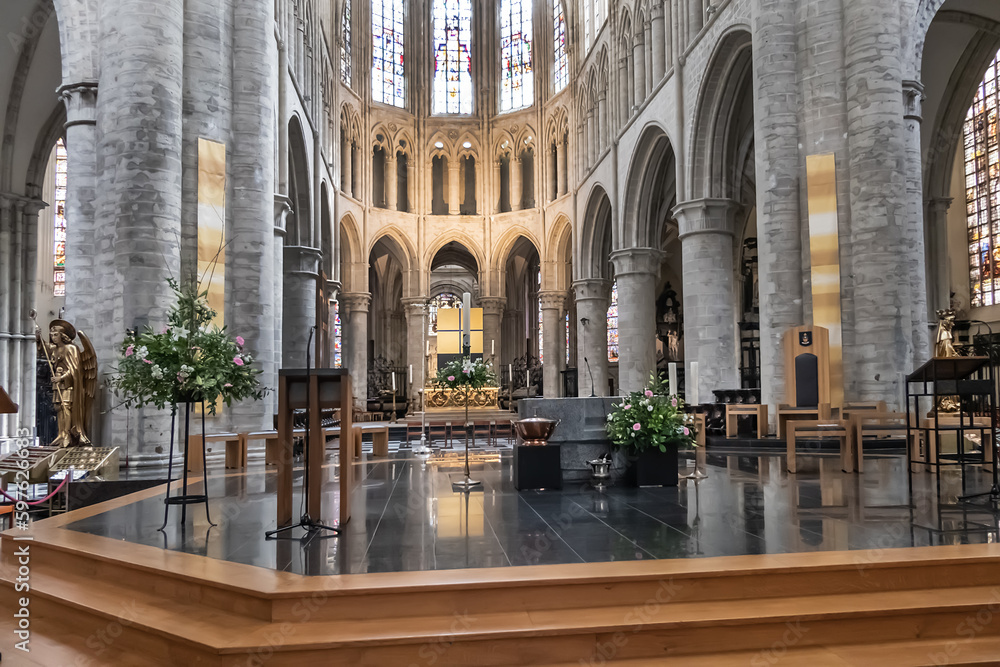
Wednesday after Epiphany Sunday ![]() St. Michael and St. Gudula Cathedral, Brussels Readings at MassThe readings shown here are for places where the Epiphany is celebrated on Sunday 5 January. Liturgical Colour: White. Year: C(I).
As long as we love one another God's love will be complete in usMy dear people, since God has loved us so much, we too should love one another. No one has ever seen God; but as long as we love one another God will live in us and his love will be complete in us. We can know that we are living in him and he is living in us because he lets us share his Spirit. We ourselves saw and we testify that the Father sent his Son as saviour of the world. If anyone acknowledges that Jesus is the Son of God, God lives in him, and he in God. We ourselves have known and put our faith in God’s love towards ourselves. God is love and anyone who lives in love lives in God, and God lives in him. Love will come to its perfection in us when we can face the day of Judgement without fear; because even in this world we have become as he is. In love there can be no fear, but fear is driven out by perfect love: because to fear is to expect punishment, and anyone who is afraid is still imperfect in love.
All nations shall fall prostrate before you, O Lord. O God, give your judgement to the king, to a king’s son your justice, that he may judge your people in justice and your poor in right judgement. All nations shall fall prostrate before you, O Lord. The kings of Tarshish and the sea coasts shall pay him tribute. The kings of Sheba and Seba shall bring him gifts. Before him all kings shall fall prostrate, all nations shall serve him. All nations shall fall prostrate before you, O Lord. For he shall save the poor when they cry and the needy who are helpless. He will have pity on the weak and save the lives of the poor. All nations shall fall prostrate before you, O Lord.
Alleluia, alleluia! The Lord has sent me to bring the good news to the poor, to proclaim liberty to captives. Alleluia!
Alleluia, alleluia! Glory to you, O Christ, proclaimed to the pagans; glory to you, O Christ, believed in by the world. Alleluia!
Alleluia, alleluia! The people that lived in darkness has seen a great light; on those who dwell in the land and shadow of death a light has dawned. Alleluia!
Alleluia, alleluia! Jesus proclaimed the Good News of the kingdom and cured all kinds of diseases among the people. Alleluia!
Alleluia, alleluia! A great prophet has appeared among us; God has visited his people. Alleluia!
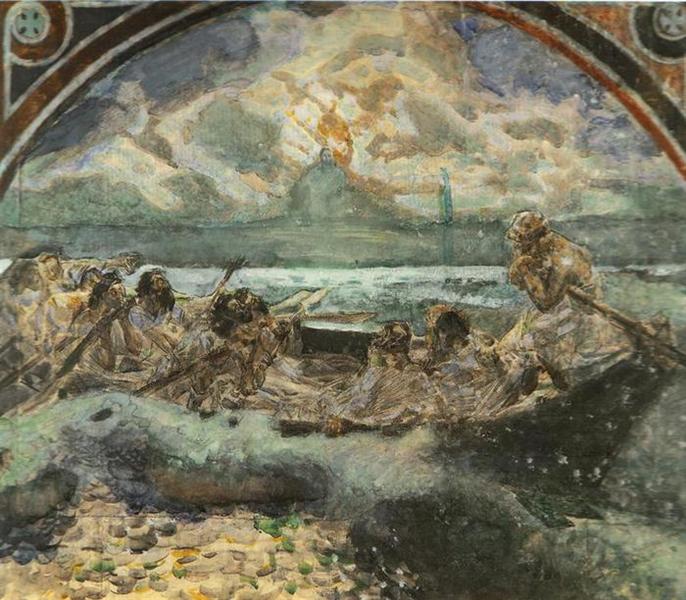
His disciples saw him walking on the lakeAfter the five thousand had eaten and were filled, Jesus made his disciples get into the boat and go on ahead to Bethsaida, while he himself sent the crowd away. After saying goodbye to them he went off into the hills to pray. When evening came, the boat was far out on the lake, and he was alone on the land. He could see they were worn out with rowing, for the wind was against them; and about the fourth watch of the night he came towards them, walking on the lake. He was going to pass them by, but when they saw him walking on the lake they thought it was a ghost and cried out; for they had all seen him and were terrified. But he at once spoke to them, and said, ‘Courage! It is I! Do not be afraid.’ Then he got into the boat with them, and the wind dropped. They were utterly and completely dumbfounded, because they had not seen what the miracle of the loaves meant; their minds were closed. Christian Art![]() Each day, The Christian Art website gives a picture and reflection on the Gospel of the day. The readings on this page are from the Jerusalem Bible, which is used at Mass in most of the English-speaking world. The New American Bible readings, which are used at Mass in the United States, are available in the Universalis apps, programs and downloads. |
KEYWORDS: catholic; christmas; mk6; prayer;

Please FReepmail me to get on/off the Alleluia Ping List.
| Mark | |||
| English: Douay-Rheims | Latin: Vulgata Clementina | Greek NT: Byzantine/Majority Text (2000) | |
| Mark 6 | |||
| 45. | And immediately he obliged his disciples to go up into the ship, that they might go before him over the water to Bethsaida, whilst he dismissed the people. | Et statim coëgit discipulos suos ascendere navim, ut præcederent eum trans fretum ad Bethsaidam, dum ipse dimitteret populum. | και ευθεως ηναγκασεν τους μαθητας αυτου εμβηναι εις το πλοιον και προαγειν εις το περαν προς βηθσαιδαν εως αυτος απολυση τον οχλον |
| 46. | And when he had dismissed them, he went up to the mountain to pray. | Et cum dimisisset eos, abiit in montem orare. | και αποταξαμενος αυτοις απηλθεν εις το ορος προσευξασθαι |
| 47. | And when it was late, the ship was in the midst of the sea, and himself alone on the land. | Et cum sero esset, erat navis in medio mari et ipse solus in terra. | και οψιας γενομενης ην το πλοιον εν μεσω της θαλασσης και αυτος μονος επι της γης |
| 48. | And seeing them labouring in rowing, (for the wind was against them,) and about the fourth watch of the night, he cometh to them walking upon the sea, and he would have passed by them. | Et videns eos laborantes in remigando (erat enim ventus contrarius eis) et circa quartam vigiliam noctis venit ad eos ambulans supra mare : et volebat præterire eos. | και ειδεν αυτους βασανιζομενους εν τω ελαυνειν ην γαρ ο ανεμος εναντιος αυτοις και περι τεταρτην φυλακην της νυκτος ερχεται προς αυτους περιπατων επι της θαλασσης και ηθελεν παρελθειν αυτους |
| 49. | But they seeing him walking upon the sea, thought it was an apparition, and they cried out. | At illi ut viderunt eum ambulantem supra mare, putaverunt phantasma esse, et exclamaverunt. | οι δε ιδοντες αυτον περιπατουντα επι της θαλασσης εδοξαν φαντασμα ειναι και ανεκραξαν |
| 50. | For they all saw him, and were troubled. And immediately he spoke with them, and said to them: Have a good heart, it is I, fear ye not. | Omnes enim viderunt eum, et conturbati sunt. Et statim locutus est cum eis, et dixit eis : Confidite, ego sum : nolite timere. | παντες γαρ αυτον ειδον και εταραχθησαν και ευθεως ελαλησεν μετ αυτων και λεγει αυτοις θαρσειτε εγω ειμι μη φοβεισθε |
| 51. | And he went up to them into the ship, and the wind ceased: and they were far more astonished within themselves: | Et ascendit ad illos in navim, et cessavit ventus. Et plus magis intra se stupebant : | και ανεβη προς αυτους εις το πλοιον και εκοπασεν ο ανεμος και λιαν εκ περισσου εν εαυτοις εξισταντο και εθαυμαζον |
| 52. | For they understood not concerning the loaves; for their heart was blinded. | non enim intellexerunt de panibus : erat enim cor eorum obcæcatum. | ου γαρ συνηκαν επι τοις αρτοις ην γαρ αυτων η καρδια πεπωρωμενη |

6:45–52
45. And straightway he constrained his disciples to get into the ship, and to go to the other side before unto Bethsaida, while he sent away the people.
46. And when he had sent them away, he departed into a mountain to pray.
47. And when even was come, the ship was in the midst of the sea, and he alone on the land.
48. And he saw them toiling in rowing; for the wind was contrary unto them: and about the fourth watch of the night he cometh unto them, walking upon the sea, and would have passed by them.
49. But when they saw him walking upon the sea, they supposed it had been a spirit, and cried out:
50. For they all saw him, and were troubled. And immediately he talked with them, and saith unto them, Be of good cheer: it is I; be not afraid.
51. And he went up unto them into the ship; and the wind ceased: and they were sore amazed in themselves beyond measure, and wondered.
52. For they considered not the miracle of the loaves: for their heart was hardened.
GLOSS. (non occ.) The Lord indeed by the miracle of the loaves shewed that He is the Creator of the world: but now by walking on the waves He proved that He had a body free from the weight of all sin, and by appeasing the winds and by calming the rage of the waves, He declared Himself to be the Master of the elements. Wherefore it is said, And straightway he constrained his disciples to get into the ship, and to go to the other side before unto Bethsaida, while he sent away the people.
PSEUDO-CHRYSOSTOM. (Vict. Ant. e Cat. in Marc.) He dismisses indeed the people with His blessing and with some cures. But He constrained His disciples, because they could not without pain separate themselves from Him, and that, not only on account of the very great affection which they had for Him, but also because they were at a loss how He would join them.
BEDE. (in Marc. 2, 27) But it is with reason that we wonder how Mark says, that after the miracle of the loaves the disciples crossed the sea of Bethsaida, when Luke relates that the miracle was done in the parts of Bethsaida, unless we understand that Luke means by the desert which is Bethsaida not the country immediately around the town, but the desert places belonging to it. (Luke 9:10.) But when Mark says that they should go before unto Bethsaida, the town itself is meant. It goes on: And when he had sent them away, he departed into a mountain to pray.
PSEUDO-CHRYSOSTOM. (Vict. Ant. e Cat. in Marc.) This we must understand of Christ, in that He is man; He does it also to teach us to be constant in prayer.
THEOPHYLACT. But when He had dismissed the crowd, He goes up to pray, for prayer requires rest and silence.
BEDE. (in Marc. 2, 28) Not every man, however, who prays goes up into a mountain, but he alone prays well, who seeks God in prayer. But he who prays for riches or worldly labour, or for the death of his enemy, sends up from the lowest depths his vile prayers to God. John says, When Jesus therefore perceived that they would come and take him by force and make him a king, he departed again into a mountain himself alone. (John 6:15) It goes on: And when even was come, the ship was in the midst of the sea, and he alone on the land.
THEOPHYLACT. Now the Lord permitted His disciples to be in danger, that they might learn patience; wherefore He did not immediately come to their aid, but allowed them to remain in danger all night, that He might teach them to wait patiently, and not to hope at once for help in tribulations. For there follows, And he saw them toiling in rowing, for the wind was contrary unto them: and about the fourth watch of the night, he cometh unto them walking upon the sea.
PSEUDO-CHRYSOSTOM. (Vict. Ant. e Cat. in Marc.) Holy Scripture reckons four watches in the night, making each division three hours; wherefore by the fourth watch it means that which is after the ninth hour, that is, in the tenth or some following hour. There follows, And would have passed them.
AUGUSTINE. (de Con. Evan. 2. 47) But how could they understand this, except from His going a different way, wishing to pass them as strangers; for they were so far from recognising Him, as to take Him for a spirit. For it goes on: But when they saw him walking upon the sea, they supposed it had been a spirit, and cried out.
THEOPHYLACT. See again how Christ, though He was about to put an end to their dangers, puts them in greater fear. But He immediately reassured them by His voice, for it continues, And immediately he talked with them, and said unto them, It is I, be not afraid.
CHRYSOSTOM. (v. Chrys. Hom. in Matt. 50) As soon then as they knew Him by His voice, their fear left them.
AUGUSTINE. (ubi sup.) How then could He wish to pass them, whose fears He so reassures, if it were not that His wish to pass them would wring from them that cry, which called for His help?
BEDE. (ubi sup.) Buty Theodorus, who was Bishop of Phanara, wrote that the Lord had no bodily weight in His flesh, and walked on the sea without weight; but the Catholic faith declares that He had weight according to the flesh. For Dionysius says, We know not how without plunging in His feet, which had bodily weight and the gravity of matter, He could walk on the wet and unstable subtance.
THEOPHYLACT. Then by entering into the ship, the Lord restrained the tempest. For it continues, And he went up unto them into the ship, and the wind ceased. Great indeed is the miracle of our Lord’s walking on the sea, but the tempest and the contrary wind were there as well, to make the miracle greater. For the Apostles, not understanding from the miracle of the five loaves the power of Christ, now more fully knew it from the miracle of the sea. Wherefore it goes on, And they were sore amazed in themselves. For they understood not concerning the loaves.
BEDE. (ubi sup.) The disciples indeed, who were still carnal, were amazed at the greatness of His virtue, they could not yet however recognise in Him the truth of the Divine Majesty. Wherefore it goes on, For their hearts were hardened. But mystically, the toil of the disciples in rowing, and the contrary wind, mark out the labours of the Holy Church, who amidst the beating waves of the world, and the blasts of unclean spirits, strives to reach the repose of her celestial country. And well is it said that the ship was in the midst of the sea, and He alone on land, for sometimes the Church is afflicted by a pressure from the Gentiles so overwhelming, that her Redeemer seems to have entirely deserted her. But the Lord sees His own, toiling on the sea, for, lest they faint in tribulations, He strengthens them by the look of His love, and sometimes frees them by a visible assistance. Further, in the fourth watch He came to them as daylight approached, for when man lifts up his mind to the light of guidance from on high, the Lord will be with him, and the dangers of temptations will be laid asleep.
PSEUDO-CHRYSOSTOM. (Vict. Ant. e Cat. in Marc.) Or else, the first watch means the time up to the deluge; the second, up to Moses; the third, up to the coming of the Lord; in the fourth the Lord came and spoke to His disciples.
BEDE. (ubi sup.) Often then does the love of heaven seem to have deserted the faithful in tribulation, so that it may be thought that Jesus wishes to pass by His disciples, as it were, toiling in the sea. And still do heretics suppose that the Lord was a phantom, and did not take upon Him real flesh from the Virgin1.
PSEUDO-JEROME. And He says to them, Be of good cheer, it is I, because we shall see Him as He is. But the wind and the storm ceased when Jesus sat down, that is, reigned in the ship, which is the Catholic Church.
BEDE. (ubi sup.) In whatsoever heart, also, He is present by the grace of His love, there soon all the strivings of vices, and of the adverse world, or of evil spirits, are kept under and put to rest.
Catena Aurea Mark 6

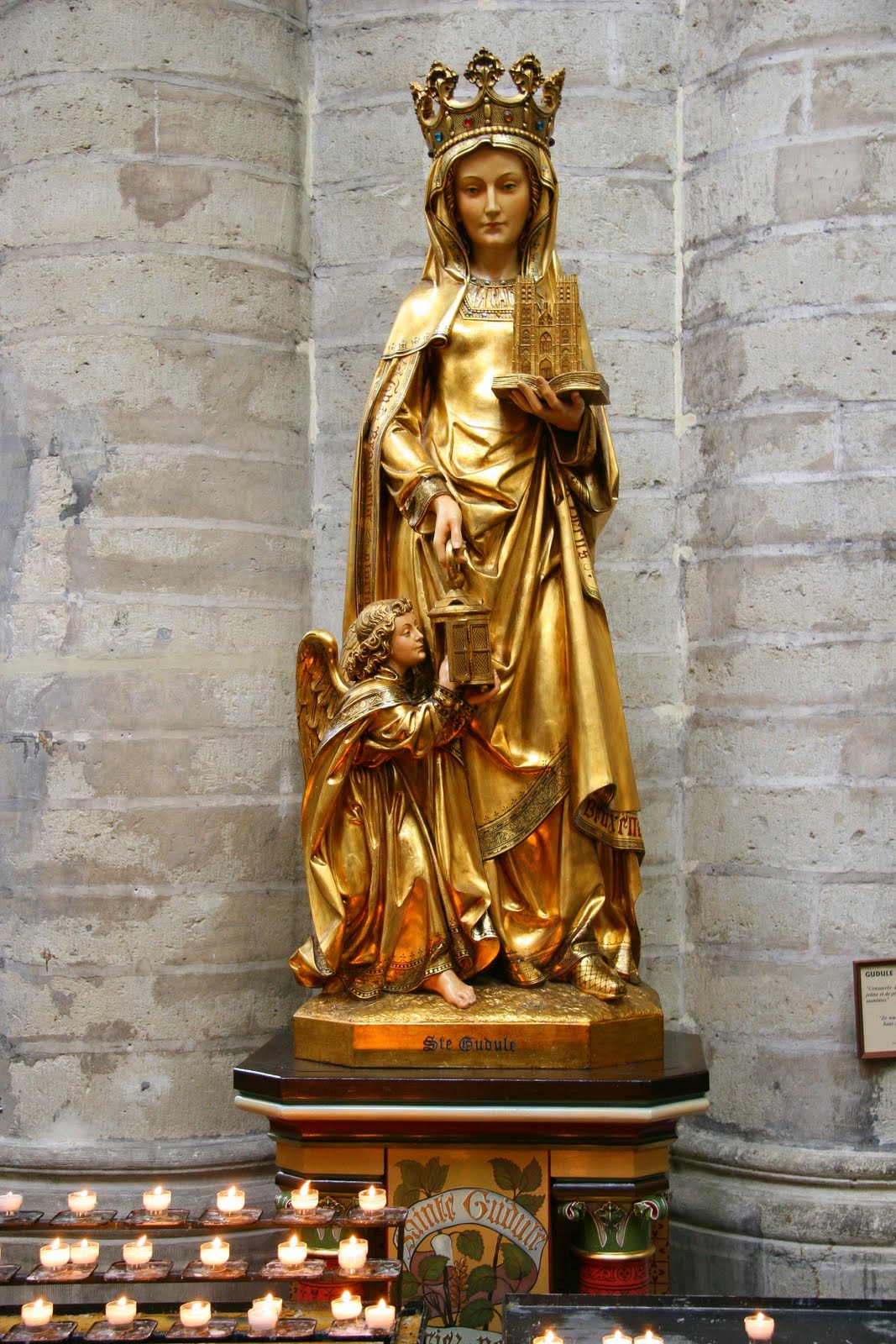
Roman martyrology: Patroness of Brussels, Belgium, also called Ergoule. The daughter She dedicated herself to God and known for her great charity.
SHORT BIOGRAPHY
[Called in Brabant Goule, or Ergoule, in Flemish Sinte-R-Goelen] Saint Amalberge, mother of this saint, was niece to Pepin mayor of the palace.
Gudula was educated at Nivelle, under the care of Saint Gertrude, her cousin and god-mother; after whose death, in 664, she returned to the house of count Witger, her father, and having by vow consecrated her virginity to God, led there a most austere holy life, in watching, fasting, and prayer.
By her profuse alms, in which she bestowed her whole revenue on the poor, she was truly the mother of all the distressed; though her father’s castle was two miles from the church of our Saviour at Morzelle, she went thither early every morning, with a maid to carry a lantern before her; and the wax taper being once put out, is said to have miraculously lighted again at her prayers, whence she is usually represented in pictures with a lantern.
She died on the 8th of January, not in 670, as Miræus says, but in 712, and was buried at Ham, near Villevord. In the reign of Charlemagne, her body was removed to the church of our Saviour at Morzelle, and placed behind the high altar; this emperor, out of veneration for her memory, often resorted thither to pray, and founded there a nunnery, which soon after changed its name of Saint Saviour for that of Saint Goule: this house was destroyed in the irruptions of the Normans. The relics of Saint Gudula, by the care of Charles, duke of Lorrain, (in which Brabant was then comprised,) were translated to Brussels, in 978, where they were first deposited in the church of Saint Gery, but in 1047, removed into the great collegiate church of Saint Michael, since called from her Saint Gudula’s.

Ad Majorem Dei Gloriam (To the Greater Glory of God)
First Reading:
From: 1 John 4:11-18
God is Love. Brotherly Love, the Mark of Christians
---------------------------------------------------
[11] Beloved, if God so loved us, we also ought to love one another. [12] No man has ever seen God; if we love one another, God abides in us and his love is perfected in us.
[13] By this we know that we abide in him and he in us, because he has given us of his own Spirit. [14] And we have seen and testify that the Father has sent his Son as the Savior of the world. [15] Whoever confesses that Jesus is the Son of God, God abides in him, and he in God. [16] So we know and believe the love God has for us. God is love, and he who abides in love abides in God, and God abides in him. [17] In this is love perfected with us, that we may have confidence for the day of judgment, because as he is so are we in this world. [18] There is no fear in love, but perfect love casts out fear. For fear has to do with punishment, and he who fears is not perfected in love.
***********************************************************************
Commentary:
11-12. The Apostle underlines here the theological basis of brotherly love: the love which God has shown us by the incarnation and redemptive death of his Son, places us in his debt: we have to respond in kind; so we "ought" to love our neighbor with the kind of gratitude and disinterest that God showed by taking the initiative in loving us.
Moreover, by loving one another we are in communion with God. The deepest desire of the human heart, which is to see and to possess God, cannot be satisfied in this life, because "no man has ever seen God" (v. 12); our neighbor, on the other hand, we do see. So, in this life, the way to be in communion with God is by brotherly love. "Love of God is the first thing in the order of commands", St Augustine explains, "and love of neighbor is the first thing in the order of practice [...]. You, who do not yet see God, will, by loving your neighbor, merit to see him. Love of neighbor cleanses our eyes to see God, as John clearly says, If you do not love your neighbor, whom you see, how can you love God, whom you do not see (cf. 1 Jn 4:20)" ("In Ioann. Evang.", 17, 8).
13. Having the gift of the Holy Spirit is the sure sign of being in communion with God. Since the Holy Spirit is the love of the Father and of the Son, his presence in the soul in grace is necessarily something dynamic, that is, it moves the person to keep all the commandments (cf. 3:24), particularly that of brotherly love. This interior impulse shows that the third Person of the Blessed Trinity is at work within us; it is a sign of union with God.
The Holy Spirit's action on the soul is a marvelous and deep mystery. "This breathing of the Holy Spirit in the soul," says St John of the Cross, "whereby God transforms it into himself, is so sublime and delicate and profound a delight to it that it cannot be described by mortal tongue, nor can human understanding, as such, attain to any conception of it" ("Spiritual Canticle", stanza 39).
14-15. Once more (cf. v. 1:4) St John vividly reminds his readers that he and the other Apostles have seen with their own eyes the Son of God, made man out of love for us. They were eyewitnesses of his redemptive life and death. And in the Son, sent by the Father as Savior of the world, the unfathomable mystery of God is revealed--that his very being is Love.
"It is 'God, who is rich in mercy' (Eph 2:4) whom Jesus Christ has revealed to us as Father: it is his very Son who, in himself, has manifested him and made him known to us (cf. Jn 1:18; Heb 1:1f)" (John Paul II, "Dives In Misericordia", 1).
16. "Knowing" and "believing" are not theoretical knowledge but intimate, experienced attachment (cf. notes on 2:3-6; 4:1-6; Jn 6:69; 17:8). Therefore when St John says that they knew and believed "the love God has for us" he is not referring to an abstract truth but to the historical fact of the incarnation and death of Christ (v. 14), the supreme manifestation of the Father's love.
"He who abides in love abides in God, and God abides in him": St Thomas Aquinas explains "that in some way the loved one is to be found in the lover. And so, he who loves God in some way possesses him, as St John says (1 Jn 4:16) [...]. Also, it is a property of love that the lover becomes transformed into the loved one; so, if we love vile and perishable things, we become vile and perishable, like those who 'became detestable like the things they loved" (Hos 9:10). Whereas, if we love God, we are made divine, for the Apostle says, 'He who is united to the Lord becomes one spirit with him' (1 Cor 6:17)" ("In Duo Praecepta", prol., 3).
17-18. The perfection of charity shows itself in serene confidence in God and consequent absence of fear. Love is perfected "in us", as a gratuitous gift from God, but it can also be said that it grows "with" us, thanks to our free response to grace.
Confidence for the day of judgment (cf. also the note on 2:28) is something we should have also in this life; a basis for it is to be found in the daring statement, "...because as he is so are we in this world". This is not just a reference to imitating Christ's virtues or qualities: it means the profound identification with Christ which the Christian should attain: "it is no longer I who live, but Christ who lives in me" (Gal 2:20).
The fear which is incompatible with charity is servile fear, which sees God only as one who punishes those who transgress his commandments. But filial fear, which "is" compatible with charity, is what gives a Christian a deep horror of sin because it is something which cuts him off from the love of God his Father. In the early stages of Christian life, fear of God is very helpful (cf., e.g., Ps 111:10; Sir 1:27): the Council of Trent teaches that sinners "by turning from a salutary fear of divine justice to a consideration of God's mercy, are encouraged to hope, confident that God will be well-disposed to them for Christ's sake" ("De Iustificatione", 6).
18. "The solution is to love", St J. Escriva says. "St John the Apostle wrote some words which really move me: 'qui autem timet, non est perfectus in caritate.' I like to translate them as follows, almost word for word: the fearful man doesn't know how to love. You, therefore, who do love and know how to show it, you musn't be afraid of anything. So, on you go!" ("The Forge", 260).
From: Mark 6:45-52
Jesus Walks on Water
--------------------
[45] Immediately he (Jesus) made his disciples get into the boat and go before him to the other side, to Bethsaida, while he dismissed the crowd. [46] And after he had taken leave of them, he went into the hills to pray. [47] And when evening came the boat was out on the sea, and he was alone on the land. [48] And he saw that they were distressed in rowing, for the wind was against them. And about the fourth watch of the night he came to them, walking on the sea. He meant to pass by them, [49] but when they saw him walking on the sea they thought it was a ghost, and cried out; [50] for they all saw him, and were terrified. But immediately he spoke to them and said, "Take heart, it is I; have no fear." [51] And he got into the boat with them and the wind ceased. And they were utterly astounded, [52] for they did not understand about the loaves, but their hearts were hardened.
***********************************************************************
Commentary:
48. The Romans divided the night into four parts or watches, whose length varied depending on the season. St Mark (13:35) gives the popular names for these watches: evening, midnight, cockcrow, morning. Therefore, it is towards dawn that Jesus comes to the disciples.
He wishes to teach us that even when we are in very pressurized and difficult situations, he is nearby, ready to help us; but he expects us to make an effort, to strengthen our hope and temper our resolve (cf. note on Mt 14:24-33); as an early Greek commentator puts it: "The Lord allowed his disciples to enter danger to make them suffer, and he did not immediately come to their aid: he left them in peril for the whole night, to teach them to be patient and not to be accustomed to receiving immediate succor in tribulation" (Theophylact, "Enarratio In Evangelium Marci, in loc.").
52. The disciples do not yet see Jesus' miracles as signs of his divinity. They witness the multiplication of the loaves and the fish (Mk 6:33-44) and the second multiplication of the loaves (Mk 8:17), but their hearts and minds are still hardened; they fail to grasp the full import of what Jesus is teaching them through his actions--that he is the Son of God. Jesus is patient and understanding with their defects, even when they fail to grasp what he says when he speaks about his own passion (Lk 18:34). Our Lord will give them further miracles and further teaching to enlighten their minds, and, later, he will send the Holy Spirit to teach them all things and remind them of everything he said (cf. Jn 14:26).
St Bede the Venerable comments on this whole episode (Mk 6:45-52) in this way: "In a mystical sense, the disciples' effort to row against the wind point to the efforts the Holy Church must make against the waves of the enemy world and the outpourings of evil spirits in order to reach the haven of its heavenly home. It is rightly said that the boat was out on the sea and He alone on the land, because the Church has never been so intensely persecuted by the Gentiles that it seemed as if the Redeemer had abandoned it completely. But the Lord sees his disciples struggling, and to sustain them he looks at them compassionately and sometimes frees them from peril by clearly coming to their aid" ("In Marci Evangelium Expositio, in loc.").
Disclaimer: Opinions posted on Free Republic are those of the individual posters and do not necessarily represent the opinion of Free Republic or its management. All materials posted herein are protected by copyright law and the exemption for fair use of copyrighted works.