Posted on 01/06/2025 10:25:02 AM PST by fidelis
From that time on, Jesus began to preach and say, “Repent, for the Kingdom of heaven is at hand.” Matthew 4:17
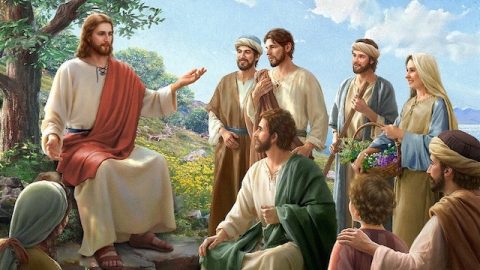
Now that our Christmas Octave and Epiphany celebrations are complete, we begin to turn our eyes to the public ministry of Christ. The above line from today’s Gospel presents us with the most central summary of all of the teachings of Jesus: Repent. However, He doesn’t say only to repent, He also says that “the Kingdom of heaven is at hand.” And that second statement is the reason we must repent.
In his spiritual classic, The Spiritual Exercises, Saint Ignatius of Loyola explains that the primary reason for our lives is to give to God the greatest glory we can. In other words, to bring forth the Kingdom of Heaven. But he also goes on to say that this can only be accomplished when we turn away from sin and all inordinate attachments in our lives so that the one and only focus of our lives is the Kingdom of Heaven. This is the goal of repentance.
Soon we will celebrate the Feast of the Baptism of the Lord, and then we return to Ordinary Time within the Liturgical Year. Throughout Ordinary Time, we will reflect upon the public ministry of Jesus and focus upon His many teachings. But all of His teachings, everything that He says and does, ultimately points us to repentance, a turning away from sin and a turning toward our glorious God.
In your own life, it is essential that you place before your mind and heart the call to repentance. It is essential that you daily hear Jesus saying those words to you: “Repent, for the Kingdom of heaven is at hand.” Do not only think about Him saying this many years ago; rather, hear it said to you, today, tomorrow and every day of your life. There will never be a time in your life when you do not need to repent with all your heart. We will never reach perfection in this life, so repentance must be our daily mission.
Reflect, today, upon this exhortation from our Lord to repent. Repent with your whole heart. Examining your actions every day is essential to this mission. See the ways that your actions keep you from God and reject those actions. And look for the ways that God is active in your life and embrace those acts of mercy. Repent and turn toward the Lord. This is Jesus’ message to you this day.
Lord, I repent of the sin in my life and pray that You give me the grace to become free from all that keeps me from You. May I not only turn from sin but also turn to You as the source of all mercy and fulfillment in my life. Help me to keep my eyes on the Kingdom of Heaven and to do all I can to share in that Kingdom here and now. Jesus, I trust in You.
Please keep in mind that this is a Catholic Caucus/Devotional thread for the purpose of prayerful reflection on the Sacred Scriptures and is closed to debate of any kind. Per FR policy on Religion Caucus threads, off-topic, argumentative, and abusive comments are not allowed and will be submitted to the Mods for deletion. Thanks, and God bless you.
January is the month dedicated to the Holy Name of Jesus:

“God has highly exalted him and bestowed on him the name which is above every name, that at the name of Jesus every knee should bow, in heaven and on earth and under the earth, and every tongue confess that Jesus Christ is Lord, to the glory of God the Father.”
(Philippians 2:9-11)
Ad Majorem Dei Gloriam (To the Greater Glory of God)
First Reading:
From: 1 John 3:22-4:6
Loving One Another
------------------
[22] And we receive from him whatever we ask, because we keep his commandments and do what pleases him. [23] And this is his commandment, that we should believe in the name of his Son Jesus Christ and love one another, just as he has commanded us. [24] All who keep his commandments abide in him, and he in them. And by this we know that he abides in us, by the Spirit which he has given us.
Faith in Christ, Not Antichrist
-------------------------------
[1] Beloved, do not believe every spirit, but test the spirits to see whether they are of God; for many false prophets have gone out into the world. [2] By this you know the Spirit of God: every spirit which confesses that Jesus Christ has come in the flesh is of God, [3] and every spirit which does not confess Jesus is not of God. This is the spirit of antichrist) of which you heard that it was coming, and now it is in the world already. [4] Little children, you are of God, and have overcome them; for he who is in you is greater than he who is in the world. [5] They are of the world, therefore what they say is of the world, and the world listens to them. [6] We are of God. Whoever knows God listens to us, and he who is not of God does not listen to us. By this we know the spirit of truth and the spirit of error.
***********************************************************************
Commentary:
19-22. The Apostle reassures us: God knows everything; not only does he know our sins and our frailties, he also knows our repentance and our good desires, and he understands and forgives us (St Peter, on the Lake of Tiberias, made the same confession to Jesus: "Lord, you know everything, you know that I love you": Jn 21:17).
St John's teaching on divine mercy is very clear: if our conscience tells us we have done wrong, we can seek forgiveness and strengthen our hope in God; if our conscience does not accuse us, our confidence in God is ardent and bold, like that of a child who has loving experience of his Father's tenderness. The love of God is mightier than our sins, Pope John Paul II reminds us: "When we realize that God's love for us does not cease in the face of our sin or recoil before our offenses, but becomes even more attentive and generous; when we realize that this love went so far as to cause the Passion and Death of the Word made flesh who consented to redeem us at the price of his own blood, then we exclaim in gratitude: 'Yes, the Lord is rich in mercy', and even: 'The Lord "is" mercy'" ("Reconciliatio Et Paenitentia", 22).
This confidence in God makes for confidence in prayer: "If you abide in me, and my words abide in you, ask whatever you will, and it shall be done for you" (Jn 15:7; cf. 14:13f; 16:23, 26-27).
23-24. The commandments of God are summed up here in terms of love for Jesus and love for the brethren. "We cannot rightly love one another unless we believe in Christ; nor can we truly believe in the name of Jesus Christ without brotherly love" (St Bede, "In I Epist. S. Ioannis, ad loc."). Faith and love cannot be separated (cf. Gal 5:6); our Lord himself told us what would mark his disciples out--their love for one another (Jn 13:34-35).
Keeping the commandments confirms to the Christian that he is abiding in God: "If you keep my commandments, you will abide in my love" (Jn 15:10). Moreover, it ensures that God abides in his soul, by the indwelling of the Holy Spirit: "If you love me you will keep my commandments. And I will pray the Father, and he will give you another Counselor, to be with you for ever" (Jn 14:15-16).
"May God be your house and you God's; dwell in God that God may dwell in you. God dwells in you to support you; you dwell in God in order not to fall. Keep the commandments, have charity" ("In 1 Epist. S. Ioannis, ad loc.").
1-6. In the third part of the letter (4:1-5:12), the sacred writer expands further on the two things which sum up God's commandments (3:23f faith in Jesus (4:1-6; 5:1-12) and brotherly love (4:7-21).
He begins by giving criteria for recognizing the true spirit of God and for identifying false teachers (4:1-6), clearly echoing what he said in the second chapter (cf. 2:18-29). There the heretics were called "antichrists", here "false prophets". There he underlined the indwelling of the Blessed Trinity in believers ("you will abide in the Son and in the Father": 2:24), the anointing "abides in you" (2:27); here he emphasizes rather the fact of belonging to God or not. This idea is developed in three points: 1) he who confesses Jesus Christ "is of God"; 2) he who does not confess him "is not of God" (vv. 2-3); you "are of God", they "are of the world" (vv. 4-5); 3) we (he must surely mean the Apostles) "are of God", and therefore apostolic teaching merits attention and must be listened to (v. 6).
"Being of God", in St John's language, does not refer to originating from God, because in fact everyone, good and bad, faithful or not, comes from God. It means, rather, belonging to a group ("to my sheep": Jn 10:26) and it also means a mode of existence: 'he who is from the earth...of the earth speaks" (Jn 3:31); "you are from below, I am from above" (In 8:23); "Everyone who is of the truth hears my voice" (Jn 18:37). Faith, therefore, is not a superficial thing, something that affects us on the outside only: it actually changes a person's inner life; belonging to the community of the children of God involves a new way of being, which can be seen from the fact that we live in accordance with the faith we profess.
2-3. "Every spirit which confesses that Jesus Christ has come in the flesh...": according to this translation (which fits certain Greek manuscripts) the Apostle would be emphasizing the fact that the Incarnation really happened, as if the false prophets opposed to the faith were saying that Christ's human nature was not real but only apparent (that was the position of the Docetists).
In the context, the alternate reading--"every spirit which confesses Jesus Christ come in the flesh"--may fit in better, since St John often insists that the Christian's faith centers on the person of Jesus Christ, who, being God, became man (cf. 2:22; 4:15; 5:1-5). By emphasizing this he is taking issue with the Gnostics particularly, who were saying that Jesus was the Son of God only from his Baptism onwards (cf. note on 1 Jn 5:6).
On the antichrist, see the note on 2:18.
4. St John repeats his conviction that Christians are assured of victory in their battle against the evil one (cf. 2:13; 5:4, 18). But what makes them victorious is the power of Christ working in them; so, while bolstering their faith he is also calling on them to be humble: "Do not become proud; recognize who has conquered in you. why did you win? 'Because he who is in you is more powerful than he who is in the world.' Be humble; carry your Lord; be a little donkey for your rider. It is in your best-interest to have him guide and direct you; because if you do not have him as your rider, you will be inclined to toss your head and kick out; but woe to you if you have no guide! That freedom would mean your ending up as prey for wild beasts" (St Augustine, "In Epist. Ioann. ad Parthos", 7, 2).
6, "Whoever knows God listens to us": as elsewhere in the letter, there is a change from "you" to "we" (cf. 2:18, 28; 3:13-14). One could argue that the Apostle is simply including himself in the Christian community as a whole, as if to say "Whoever knows God listens to the Christians." However, the obvious interpretation is that the "us" refers to those in authority in the Church, bringing it perfectly into line with what Jesus says: "He who hears you hears me" (Lk 10:16). Obedience to the living Magisterium of the Church is, therefore, the rule for distinguishing the spirit of truth from the spirit of error. It could not be otherwise, for it is the Holy Spirit himself who guides the Church in its teaching and leads the faithful to accept that teaching: "the assent of the Church can never be lacking to such definitions [of the Supreme Magisterium] on account of the same Holy Spirit's influence, through which Christ's whole flock is maintained in the unity of the faith and makes progress in it" (Vatican II, "Lumen Gentium", 25).
-------------------------
Gospel Reading:
From: Matthew 4:12-25
Preaching in Galilee. The First Disciples Called
-------------------------------------------------
[12] Now when He (Jesus) heard that John had been arrested, He withdrew into Galilee; [13] and leaving Nazareth He went and dwelt in Capernaum by the sea, in the territory of Zebulun and Naphtali, [14] that what was spoken by the prophet Isaiah might be fulfilled: [15] "The land of Zebulun and the land of Naphtali, toward the sea, across the Jordan, Galilee of the Gentiles-- [16] the people who sat in darkness have seen a great light, and for those who sat in the region and shadow of death light has dawned." [17] From that time Jesus began to preach, saying, "Repent, for the Kingdom of Heaven is at hand."
The First Disciples Called
--------------------------
[18] As He (Jesus) walked by the Sea of Galilee, He saw two brothers, Simon who is called Peter and Andrew his brother, casting a net into the sea; for they were fishermen. [19] And He said to them, "Follow Me, and I will make you fishers of men." [20] Immediately they left their nets and followed Him. [21] And going on from there He saw two other brothers, James the son of Zebedee, and John his brother, in the boat with Zebedee their father, mending their nets, and He called them. [22] Immediately, they left the boat and their father, and followed Him.
[23] And He went about all Galilee, teaching in their synagogues and preaching the Gospel of the Kingdom and healing every disease and every infirmity among the people. [24] So His fame spread throughout Syria, and they brought Him all the sick, those afflicted with various diseases and pains, demoniacs, epileptics, and paralytics, and He healed them. [25] And great crowds followed Him from Galilee and the Decapolis and Jerusalem and Judea and from beyond the Jordan.
***********************************************************************
Commentary:
15-16. Here St. Matthew quotes the prophecy of Isaiah 8:23-9:1. The territory referred to (Zebulun, Naphtali, the way of the sea, the land beyond the Jordan), was invaded by the Assyrians in the period 734-721 B.C., especially during the reign of Tilgathpilneser III. A portion of the Jewish population was deported and sizeable numbers of foreigners were planted in the region to colonize it. For this reason it is referred to in the Bible henceforth as the "Galilee of the Gentiles".
The Evangelist, inspired by God, sees Jesus' coming to Galilee as the fulfillment of Isaiah's prophecy. This land, devastated and abused in Isaiah's time, will be the first to receive the light of Christ's life and preaching. The messianic meaning of the prophecy is, therefore, clear.
17. See the note on Matthew 3:2 This verse indicates the outstanding importance of the first step in Jesus' public ministry, begun by proclaiming the imminence of the Kingdom of God. Jesus' words echo John the Baptist's proclamation: the second part of this verse is the same, word for word, as Matthew 3:2. This underlines the role played by St. John the Baptist as prophet and precursor of Jesus. Both St. John and our Lord demand repentance, penance, as a prerequisite to receiving the Kingdom of God, now beginning. God's rule over mankind is a main theme in Christ's Revelation, just as it was central to the whole Old Testament. However, in the latter, the Kingdom of God had an element of theocracy about it: God reigned over Israel in both spiritual and temporal affairs and it was through Him that Israel subjected other nations to her rule. Little by little, Jesus will unfold the new-style kingdom of God, now arrived at its fullness. He will show it to be a Kingdom of love and holiness, thereby purifying it of the nationalistic misconceptions of the people of His time.
The King invites everyone without exception to this Kingdom (cf. Matthew 22:1-4). The Banquet of the Kingdom is held on this earth and has certain entry requirements which must be preached by the proponents of the Kingdom: "Therefore the Eucharistic celebration is the center of the assembly of the faithful over which the priest presides. Hence priests teach the faithful to offer the divine Victim to God the Father in the sacrifice of the Mass, and with the Victim to make an offering of their whole lives. In the spirit of Christ the pastor, they instruct them to submit their sins to the Church with a contrite heart in the Sacrament of Penance, so that they may be daily more and more converted to the Lord, remembering His words, `Repent, for the Kingdom of Heaven is at hand'" (Vatican II, "Presbyterorum Ordinis", 5).
18-22. These four disciples had already met our Lord (John 1:35-42), and their brief meeting with Him seems to have had a powerful effect on their souls. In this way Christ prepared their vocation, a fully effective vocation which moved them to leave everything behind so as to follow Him and be His disciples. Standing out above their human defects (which the Gospels never conceal), we can see the exemplary generosity and promptness of the Apostles in answering God's call.
The thoughtful reader cannot fail to be struck by the delightful simplicity with which the evangelists describe the calling of these men in the midst of their daily work.
"God draws us from the shadows of our ignorance, our groping through history, and, no matter what our occupation in the world, He calls us in a loud voice, as He once called Peter and Andrew" (St J. Escriva, "Christ Is Passing By," 45).
"This divine and human dialogue completely changed the lives of John and Andrew, and Peter and James and so many others. It prepared their hearts to listen to the authoritative teaching which Jesus gave them beside the Sea of Galilee" ("ibid"., 108).
We should notice the words of Sacred Scripture used to describe the alacrity with which the Apostles follow our Lord. Peter and Andrew "immediately" left their nets and followed Him. Similarly, James and John "immediately" left the boats and their father and followed Him. God passes by and calls us. If we do not answer Him "immediately", He may continue on His way and we could lose sight of Him. When God passes by, He may do so rapidly; it would be sad if we were to fall behind because we wanted to follow Him while still carrying many things that are only a dead weight and a nuisance.
23. "Synagogue": this word comes from the Greek and designates the building where the Jews assembled for religious ceremonies on the Sabbath and other feast days. Such ceremonies were non-sacrificial in character (sacrifices could be performed only in the Temple of Jerusalem). The synagogue was also the place where the Jews received their religious training. The word was also used to designate local Jewish communities within and without Palestine.
24. "Epileptic" (or, in some translations, "lunatic"). This word was applied in a very general way to those who had illnesses related to epilepsy. The disease was popularly regarded as being dependent on the phases of the moon (Latin: "luna").
23-25. In these few lines, the evangelist gives us a very fine summary of the various aspects of Jesus' work. The preaching of the gospel or "good news" of the Kingdom, the healing of diseases, and the casting out of devils are all specific signs of the Messiah's presence, according to the Old Testament prophecies (Is 35:5-6; 61:1; 40:9; 52:7).
Disclaimer: Opinions posted on Free Republic are those of the individual posters and do not necessarily represent the opinion of Free Republic or its management. All materials posted herein are protected by copyright law and the exemption for fair use of copyrighted works.