Posted on 12/26/2024 9:07:57 AM PST by fidelis
“When they hand you over, do not worry about how you are to speak or what you are to say. You will be given at that moment what you are to say. For it will not be you who speak but the Spirit of your Father speaking through you.” Matthew 10:19–20
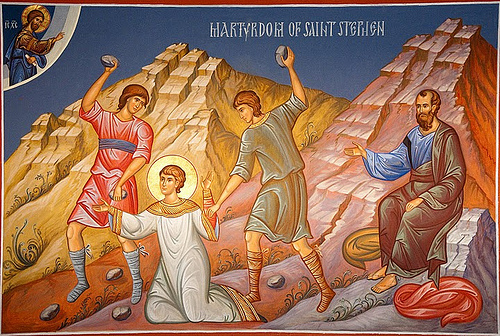
These words of our Lord came to fruition in the life of Saint Stephen, the Church’s first martyr. Saint Stephen was martyred within a couple of years after Jesus’ ascension into Heaven. He was one of seven deacons who the Apostles appointed to assist them in their work of caring for the poor as the Church began to grow.
Stephen was a man of deep faith and was filled with the Holy Spirit. After he was appointed deacon, he began to preach with boldness. Among his listeners were members of the synagogue of Hellenistic Jews. Stephen debated them vigorously and proved himself to be full of wisdom and power, performing many signs and wonders in their midst. But this only led his listeners to become outraged to the point of seeking his death. As a result, they made false claims that Stephen was preaching against the Temple and the Law of Moses.
In the Acts of the Apostles (Acts 7:2–53), Stephen responded by giving a long and detailed speech by which he explained the full truth of Jesus in light of the Old Testament. Stephen concluded by saying, “You stiff-necked people, uncircumcised in heart and ears, you always oppose the Holy Spirit; you are just like your ancestors.” This infuriated his listeners in the synagogue even more. After this, something truly miraculous happened. Stephen had a vision. He looked up to Heaven and said, “Behold, I see the heavens opened and the Son of Man standing at the right hand of God.” He saw his Lord, standing at the right hand of the Father. And it was his proclamation of this vision that finally drove the infuriated crowd to drag him out of the synagogue and city and to stone him to death. Stephen’s story, however, ended in a beautiful and inspired way. As the crowd was stoning him, he spoke two powerful statements. First, he said, “Lord Jesus, receive my spirit.” And then he prayed in a loud voice, “Lord, do not hold this sin against them.”
As mentioned above, the words our Lord speaks in the Gospel today came to fruition in the life of Saint Stephen. First of all, we see that Jesus’ prediction that some of His followers would be handed over to deaths by their own kinsmen came true in the life of Saint Stephen. But Jesus also promised that when this would happen, “You will be given at that moment what you are to say.” And it will be the Spirit of the Father “speaking through you.” And that’s exactly what happened with Saint Stephen. First, he was given a glorious vision of Heaven. Second, he was inspired to fully surrender his spirit over to Jesus. And third, he was inspired to pray for his persecutors and forgive them. These words and actions did not come from Stephen alone. They were the fulfillment of Jesus’ promise that when one is persecuted for the sake of the Gospel, the Father will be especially present and give powerful inspiration at the moment of need.
Reflect, today, upon the profound truth that God never abandons us. In fact, when we suffer the most or endure persecution, rejection or any form of mistreatment, God is especially present. Look at your own life and consider those moments that you find most challenging. Pray to Saint Stephen and ask him to pray for you so that you will be open to the inspired words and actions of our Lord when you need them the most.
Most glorious Saint Stephen, please pray for me. Pray for me especially when I experience the heaviest crosses in my life. Pray that I, like you, will be open to God’s inspiration and grace at those times I need it the most. St. Stephen, pray for me. Jesus, I trust in You.
Please keep in mind that this is a Catholic Caucus/Devotional thread for the purpose of prayerful reflection on the Sacred Scriptures and is closed to debate of any kind. Per FR policy on Religion Caucus threads, off-topic, argumentative, and abusive comments are not allowed and will be submitted to the Mods for deletion. Thanks, and God bless you.
December is the month dedicated to the Immaculate Conception:
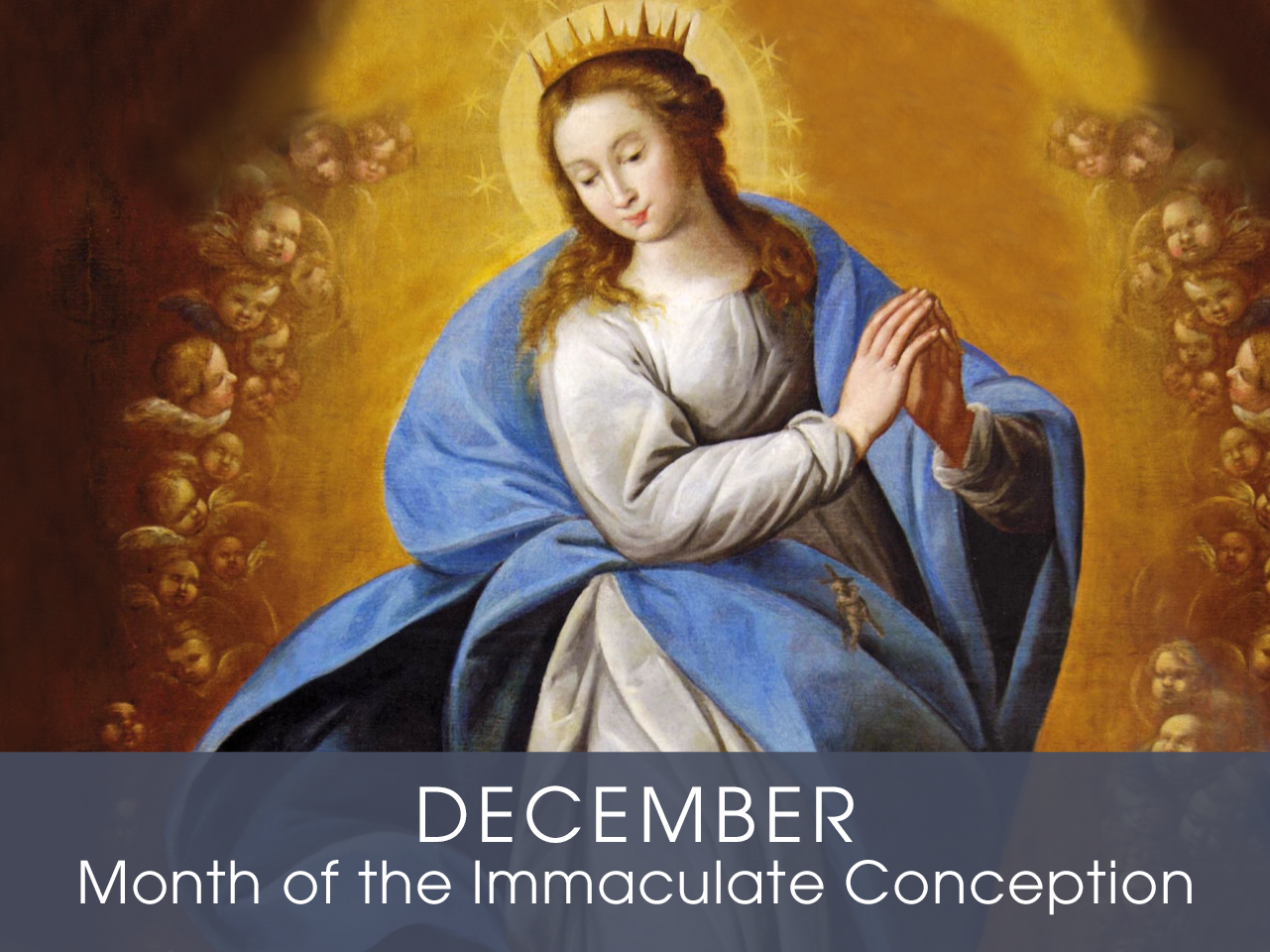
In the sixth month the angel Gabriel was sent from God to a city of Galilee named Nazareth, to a virgin betrothed to a man whose name was Joseph, of the house of David; and the virgin’s name was Mary. And he came to her and said, “Hail, full of grace, the Lord is with you!”
(Luke 1:26-28)
Ad Majorem Dei Gloriam (To the Greater Glory of God)
First Reading:
From: Acts 6:8-10; 7:54-59
Stephen's Arrest
----------------
[8] And Stephen, full of grace and power, did great wonders and signs among the people. [9] Then some of those who belonged to the synagogue of the Freedmen (as it was called), and of the Cyrenians, and of the Alexandrians, and of those from Cilicia and Asia, arose and disputed with Stephen. [10] But they could not withstand the wisdom and the Spirit with which he spoke.
The Martyrdom of Stephen
------------------------
[51] "You stiff-necked people, uncircumcised in heart and ears, you always resist the Holy Spirit. As your fathers did, so do you. [52] Which of the prophets did not your fathers persecute? And they killed those who announced beforehand the coming of the Righteous One, whom you have now betrayed and murdered, [53] you who received the law as delivered by angels and did not keep it."
[54] Now when they heard these things they were enraged, and they ground their teeth against him. [55] But he, full of the Holy Spirit, gazed into Heaven and saw the glory of God, and Jesus standing at the right hand of God; [56] and he said, "Behold, I see the heavens opened, and the Son of Man standing at the right hand of God." [57] But they cried out with a loud voice and stopped their ears and rushed together upon him. [58] Then they cast him out of the city and stoned him; and the witnesses laid down their garments at the feet of a young man named Saul. [59] And as they were stoning Stephen, he prayed, "Lord Jesus, receive my spirit."
***********************************************************************
Commentary:
8-14. From the text it would appear that Stephen preached mainly among Hellenist Jews; this was his own background. Reference is made to synagogues of Jews of the Dispersion (Diaspora). These synagogues were used for worship and as meeting places. The very fact that these Hellenist Jews were living in the Holy City shows what devotion they had to the Law of their forebears.
No longer is it only the Sanhedrin who are opposed to the Gospel; other Jews have been affected by misunderstanding and by misrepresentation of the Christian message.
The charge of blasphemy--also made against our Lord--was the most serious that could be made against a Jew. As happened in Jesus' case, the accusers here resort to producing false witnesses, who twist Stephen's words and accuse him of a crime the penalty for which is death.
15. St. John Chrysostom, commenting on this verse, recalls that the face of Moses, when he comes down from Sinai (cf. Exodus 34:29-35), reflected the glory of God and likewise made the people afraid: "It was grace, it was the glory of Moses. I think that God clothed him in this splendor because perhaps he had something to say, and in order that his very appearance would strike terror into them. For it is possible, very possible, for figures full of Heavenly grace to be attractive to friendly eyes and terrifying to the eyes of enemies" ("Hom. on Acts", 15).
55-56. "It is clear", St. Ephraem comments, "that those who suffer for Christ enjoy the glory of the whole Trinity. Stephen saw the Father and Jesus at His side, because Jesus appears only to his own, as was the case with the Apostles after the Resurrection. While the champion of the faith stood there helpless in the midst of those who had killed the Lord, just at the point when the first martyr was to be crowned, he saw the Lord, holding a crown in His right hand, as if to encourage him to conquer death and to show that he inwardly helps those who are about to die on his account. He therefore reveals what he sees, that is, the heavens opened, which were closed to Adam and only opened to Christ at the Jordan, but open now after the Cross to all who share Christ's sufferings, and in the first instance open to this man. See how Stephen reveals why his face was lit up: it was because he was on the point of contemplating this wondrous mission. That is why he took on the appearance of an angel--so that his testimony might be more reliable" ("Armenian Commentary, ad loc.").
57-59. The cursory trial of Stephen ends without any formal sentence of death: this Jewish tribunal was unable to pass such sentences because the Romans restricted its competence. In any event no sentence proves necessary: the crowd becomes a lynching party: it takes over and proceeds to stone Stephen, with the tacit approval of the Sanhedrin.
Tradition regards Stephen as the first Christian martyr, an example of fortitude and suffering for love of Christ. "Could you keep all God's commandments," St. Cyprian asks, "were it not for the strength of patience? That was what enabled Stephen to hold out: in spite of being stoned he did not call down vengeance on his executioners, but rather forgiveness.... How fitting it was for him to be Christ's first martyr, so that by being, through his glorious death, the model of all the martyrs that would come after him, he should not only be a preacher of the Lord's Passion, but should also imitate it in his meekness and immense patience" ("De Bono Patientiae", 16).
Martyrdom is a supreme act of bravery and of true prudence, but to the world it makes no sense. It is also an expression of humility, because a martyr does not act out of bravado or overweening self-confidence; he is a weak man like anyone else, but God's grace gives him the strength he needs. Although martyrdom is something which happens rarely, it does show Christians what human nature can rise to if God gives it strength, and it establishes a standard, both real and symbolic, for the behavior of every disciple of Christ.
"Since all the virtues and the perfection of all righteousness are born of love of God and one's neighbor," St. Leo says, "in no one is this love more worthily found than in the blessed martyrs, who are nearest to our Lord in terms of imitation of both His charity and His Passion.
"The martyrs have been of great help to others, because the Lord has availed of the very strength as He granted them to ensure that the pain of death and the cruelty of the Cross do not frighten any of His own, but are seen as things in which man can imitate Him....
"No example is more useful for the instruction of the people of God than that of the martyrs. Eloquence is effective for entreating, argument for convincing; but examples are worth more than words, and it is better to teach by deeds than by speech" ("Hom. on the Feast of St. Laurence").
The Second Vatican Council has reminded us of the excellence of the martyrdom as a form of witness to the faith. Although there are heroic ways of imitating and following our Lord which do not involve the drama of bloodshed and death, all Christians should realize that confession of the faith in this way is not a thing of the past and is sometimes necessary.
"Since Jesus, the Son of God, showed His love by laying down His life for us, no one has greater love than he who lays down his life for Him and for his brothers (cf. 1 John 3:16; John 15:13). Some Christians have been called from the beginning, and will always be called, to give this greatest testimony of love to all, especially to persecutors. Martyrdom makes the disciple like his Master. [...] Therefore, the Church considers it the highest gift and supreme test of love. And although it is given to few, all must be prepared to confess Christ before men and to follow him along the way of the Cross amidst the persecutions which the Church never lacks.
"Likewise the Church's holiness is fostered [...] by the manifold counsels which the Lord proposes to His disciples in the Gospel" (Vatican II, "Lumen Gentium", 42).
The Liturgy of the Church sums up the asceticism and theology of martyrdom in the preface for Christian martyrs: "Your holy martyr followed the example of Christ, and gave his life for the glory of Your name. His death reveals Your power shining through our human weakness. You choose the weak and make them strong in bearing witness to You."
Like Jesus, Stephen dies commending his soul to God and praying for his persecutors. At this point St. Luke brings in Saul who cooperates in the proceedings by watching the executioners' clothes; Saul will soon experience the benefits of Stephen's intercession. "If Stephen had not prayed to God, the Church would not have had Paul" (St. Augustine, "Sermons", 315, 7).
Stephen has died, but his example and teaching continue to speak across the world.
---------------------------------
Gospel Reading:
From: Matthew 10:17-22
Jesus' Instructions to the Apostles
------------------------------------------
(Jesus said to His disciples,) [17] “Beware of men; for they will deliver you up to councils, and flog you in their synagogues, [18] and you will be dragged before governors and kings for My sake, to bear testimony before them and the Gentiles. [19] When they deliver you up, do not be anxious how you are to speak or what you are to say; for what you are to say will be given to you in that hour; [20] for it is not you who speak, but the Spirit of your Father speaking through you. [21] Brother will deliver up brother to death, and the father his child, and children will rise against parents and have them put to death; [22] and you will be hated by all for My name's sake. But he who endures to the end will be saved.”
***********************************************************************
Commentary:
16-23. The instructions and warnings Jesus gives here apply right through the history of the Church. It is difficult for the world to understand the way of God. Sometimes there will be persecutions, sometimes indifference to the Gospel or failure to understand. Genuine commitment to Jesus always involves effort--which is not surprising, because Jesus Himself was a sign of contradiction; indeed, if that were not the experience of a Christian, he would have to ask himself whether he was not in fact a worldly person. There are certain worldly things a Christian cannot compromise about, no matter how much they are in fashion. Therefore, Christian life inevitably involves nonconformity with anything that goes against faith and morals (cf. Romans 12:2). It is not surprising that a Christian's life often involves choosing between heroism and treachery. Difficulties of this sort should not make us afraid: we are not alone, we can count on the powerful help of our Father God to give us strength and daring.
20. Here Jesus teaches the completely supernatural character of the witness He asks His disciples to bear. The documented accounts of a host of Christian martyrs prove that He has kept this promise: they bear eloquent witness to the serenity and wisdom of often uneducated people, some of them scarcely more than children. The teaching contained in this verse provides the basis for the fortitude and confidence a Christian should have whenever he has to profess his faith in difficult situations. He will not be alone, for the Holy Spirit will give him words of divine wisdom.
Disclaimer: Opinions posted on Free Republic are those of the individual posters and do not necessarily represent the opinion of Free Republic or its management. All materials posted herein are protected by copyright law and the exemption for fair use of copyrighted works.