Free Republic
Browse · Search
Religion
Topics · Post Article

Skip to comments.

Catholic Caucus: Daily Mass Readings 5-December-2024
Universalis/Jerusalem Bible ^

Posted on 12/05/2024 5:02:04 AM PST by annalex

5 December 2024

Thursday of the 1st week of Advent


Relics of Saint Sabbas, Mar Saba Monastery, the Holy Land

Readings at Mass

Liturgical Colour: Violet. Year: C(I).


First readingIsaiah 26:1-6

Open the gates; let the upright nation come in

That day, this song will be sung in the land of Judah:
We have a strong city;
to guard us he has set
wall and rampart about us.
Open the gates! Let the upright nation come in,
she, the faithful one
whose mind is steadfast, who keeps the peace,
because she trusts in you.
Trust in the Lord for ever,
for the Lord is the everlasting Rock;
he has brought low those who lived high up
in the steep citadel;
he brings it down, brings it down to the ground,
flings it down in the dust:
the feet of the lowly, the footsteps of the poor
trample on it.

Responsorial Psalm
Psalm 117(118):1,8-9,19-21,25-27
Blessed in the name of the Lord is he who comes.
or
Alleluia.
Give thanks to the Lord for he is good,
  for his love has no end.
It is better to take refuge in the Lord
  than to trust in men;
it is better to take refuge in the Lord
  than to trust in princes.
Blessed in the name of the Lord is he who comes.
or
Alleluia.
Open to me the gates of holiness:
  I will enter and give thanks.
This is the Lord’s own gate
  where the just may enter.
I will thank you for you have answered
  and you are my saviour.
Blessed in the name of the Lord is he who comes.
or
Alleluia.
O Lord, grant us salvation;
  O Lord, grant success.
Blessed in the name of the Lord
  is he who comes.
We bless you from the house of the Lord;
  the Lord God is our light.
Blessed in the name of the Lord is he who comes.
or
Alleluia.

Gospel AcclamationIs40:9-10
Alleluia, alleluia!
Shout with a loud voice, joyful messenger to Jerusalem.
Here is the Lord God coming with power.
Alleluia!
Or:Is55:6
Alleluia, alleluia!
Seek the Lord while he is still to be found,
call to him while he is still near.
Alleluia!

Gospel
Matthew 7:21,24-27

The wise man built his house on a rock

Jesus said to his disciples: ‘It is not those who say to me, “Lord, Lord,” who will enter the kingdom of heaven, but the person who does the will of my Father in heaven. Therefore, everyone who listens to these words of mine and acts on them will be like a sensible man who built his house on rock. Rain came down, floods rose, gales blew and hurled themselves against that house, and it did not fall: it was founded on rock. But everyone who listens to these words of mine and does not act on them will be like a stupid man who built his house on sand. Rain came down, floods rose, gales blew and struck that house, and it fell; and what a fall it had!’

Nothing has changed

In England, Wales and Scotland, the translation of the readings used at Mass has changed. Your current calendar setting is “United States”, so you have not been affected by this change.
This message will disappear at the end of December.

Christian Art

Illustration

Each day, The Christian Art website gives a picture and reflection on the Gospel of the day.

The readings on this page are from the Jerusalem Bible, which is used at Mass in most of the English-speaking world. The New American Bible readings, which are used at Mass in the United States, are available in the Universalis apps, programs and downloads.

You can also view this page with the Gospel in Greek and English.


TOPICS: Catholic; General Discusssion; Prayer; Worship
KEYWORDS: advent; catholic; mt7; prayer
For your reading, reflection, faith-sharing, comments, questions, discussion.

1 posted on 12/05/2024 5:02:04 AM PST by annalex
[ Post Reply | Private Reply | View Replies]

To: All

KEYWORDS: advent; catholic; mt7; prayer


2 posted on 12/05/2024 5:02:34 AM PST by annalex (fear them not)
[ Post Reply | Private Reply | To 1 | View Replies]

To: nickcarraway; NYer; ELS; Pyro7480; livius; ArrogantBustard; Catholicguy; RobbyS; marshmallow; ...

Alleluia Ping

Please FReepmail me to get on/off the Alleluia Ping List.


3 posted on 12/05/2024 5:03:40 AM PST by annalex (fear them not)
[ Post Reply | Private Reply | To 2 | View Replies]

To: annalex
My dad is back in the hospital. [JimRob update at 242]
Jim still needs our prayers. Thread 2
Prayer thread for Salvation's recovery
Pray for Ukraine
Prayer thread for Fidelis' recovery
Update on Jim Robinson's health issues
4 posted on 12/05/2024 5:04:06 AM PST by annalex (fear them not)
[ Post Reply | Private Reply | To 3 | View Replies]

To: annalex
Matthew
 English: Douay-RheimsLatin: Vulgata ClementinaGreek NT: Byzantine/Majority Text (2000)
 Matthew 7
21Not every one that saith to me, Lord, Lord, shall enter into the kingdom of heaven: but he that doth the will of my Father who is in heaven, he shall enter into the kingdom of heaven. Non omnis qui dicit mihi, Domine, Domine, intrabit in regnum cælorum : sed qui facit voluntatem Patris mei, qui in cælis est, ipse intrabit in regnum cælorum.ου πας ο λεγων μοι κυριε κυριε εισελευσεται εις την βασιλειαν των ουρανων αλλ ο ποιων το θελημα του πατρος μου του εν ουρανοις
[...]
24Every one therefore that heareth these my words, and doth them, shall be likened to a wise man that built his house upon a rock, Omnis ergo qui audit verba mea hæc, et facit ea, assimilabitur viro sapienti, qui ædificavit domum suam supra petram,πας ουν οστις ακουει μου τους λογους τουτους και ποιει αυτους ομοιωσω αυτον ανδρι φρονιμω οστις ωκοδομησεν την οικιαν αυτου επι την πετραν
25And the rain fell, and the floods came, and the winds blew, and they beat upon that house, and it fell not, for it was founded on a rock. et descendit pluvia, et venerunt flumina, et flaverunt venti, et irruerunt in domum illam, et non cecidit : fundata enim erat super petram.και κατεβη η βροχη και ηλθον οι ποταμοι και επνευσαν οι ανεμοι και προσεπεσον τη οικια εκεινη και ουκ επεσεν τεθεμελιωτο γαρ επι την πετραν
26And every one that heareth these my words, and doth them not, shall be like a foolish man that built his house upon the sand, Et omnis qui audit verba mea hæc, et non facit ea, similis erit viro stulto, qui ædificavit domum suam super arenam :και πας ο ακουων μου τους λογους τουτους και μη ποιων αυτους ομοιωθησεται ανδρι μωρω οστις ωκοδομησεν την οικιαν αυτου επι την αμμον
27And the rain fell, and the floods came, and the winds blew, and they beat upon that house, and it fell, and great was the fall thereof. et descendit pluvia, et venerunt flumina, et flaverunt venti, et irruerunt in domum illam, et cecidit, et fuit ruina illius magna.και κατεβη η βροχη και ηλθον οι ποταμοι και επνευσαν οι ανεμοι και προσεκοψαν τη οικια εκεινη και επεσεν και ην η πτωσις αυτης μεγαλη

5 posted on 12/05/2024 5:06:59 AM PST by annalex (fear them not)
[ Post Reply | Private Reply | To 4 | View Replies]

To: annalex

Catena Aurea by St. Thomas Aguinas

7:21–23

21. Not every one that saith unto me, Lord, Lord, shall enter into the kingdom of heaven; but he that doeth the will of my Father which is in heaven.

22. Many will say to me in that day, Lord, Lord, have we not prophesied in thy name? and in thy name have cast out devils? and in thy name done many wonderful works?

23. And then will I profess unto them, I never knew you: depart from me, ye that work iniquity.

JEROME. As He had said above that those who have the robe of a good life are yet not to be received because of the impiety of their doctrines; so now on the other hand, He forbids us to participate the faith with those who while they are strong in sound doctrine, destroy it with evil works. For it behoves the servants of God that both their work should be approved by their teaching and their teaching by their works. And therefore He says, Not every one that saith unto me, Lord, Lord, enters into the kingdom of heaven.

CHRYSOSTOM. (Hom. xxiv.) Wherein He seems to touch the Jews chiefly who placed every thing in dogmas; as Paul accuses them, If thou art called a Jew, and restest in the Law. (Rom. 2:17.)

PSEUDO-CHRYSOSTOM. Otherwise; Having taught that the false prophets and the true are to be discerned by their fruits, He now goes on to teach more plainly what are the fruits by which we are to discern the godly from the ungodly teachers.

AUGUSTINE. (Serm. in Mont. ii. 24.) For even in the very name of Christ we must be on our guard against heretics, and all that understand amiss and love this world, that we may not be deceived, and therefore He says, Not every one that saith unto me, Lord, Lord. But it may fairly create a difficulty how this is to be reconciled with that of the Apostle, No man can say that Jesus is the Lord, but by the Holy Ghost. (1 Cor. 12:3.) For we cannot say that those who are not to enter into the kingdom of heaven have the Holy Spirit. But the Apostle uses the word ‘say,’ to express the will and understanding of him that says it. He only properly says a thing, who by the sound of his voice expresses his will and purpose. But the Lord uses the word in its ordinary sense, for he seems to say who neither wishes nor understands what he says.

JEROME. For Scripture uses to take words for deeds; according to which the Apostle declares, They make confession that they know God, but in works deny him. (Tit. 1:16.)

AMBROSIASTER. (Comm. in 1 Cor. 12:3.) For all truth by whomsoever uttered is from the Holy Spirit.

AUGUSTINE. (non occ.) Let us not therefore think that this belongs to those fruits of which He had spoken above, when one says to our Lord, Lord, Lord; and thence seems to us to be a good tree; the true fruit spoken of is to do the will of God; whence it follows, But who doeth the will of my Father which is in heaven, he shall enter into the kingdom of heaven.

HILARY. For obeying God’s will and not calling on His name, shall find the way to the heavenly kingdom.

PSEUDO-CHRYSOSTOM. And what the will of God is the Lord Himself teaches, This is, (John 6:40.) He says, the will of him that sent me, that every man that seeth the Son and believeth on him should have eternal life. The word believe has reference both to confession and conduct. He then who does not confess Christ, or does not walk according to His word, shall not enter into the kingdom of heaven.

CHRYSOSTOM. He said not he that doth My will, but the will of my Father, for it was fit so to adapt it in the mean while to their weakness. But the one secretly implied the other, seeing the will of the Son is no other than the will of the Father.

AUGUSTINE. (Serm. in Mont. ii. 25.) Hereto it also pertains that we be not deceived by the name of Christ not only in such as bear the name and do not the deeds, but yet more by certain works and miracles, such as the Lord wrought because of the unbelieving, but yet warned us that we should not be deceived by such to suppose that there was invisible wisdom where was a visible miracle; wherefore He adds, saying, Many shall say to me in that day.

CHRYSOSTOM. See how He thus secretly brings in Himself. Here in the end of His Sermon He shews Himself as the Judge. The punishment that awaits sinners He had shewn before, but now only reveals who He is that shall punish, saying, Many shall say to me in that day.

PSEUDO-CHRYSOSTOM. When, namely, He shall come in the majesty of His Father; when none shall any more dare with strife of many words either to defend a lie, or to speak against the truth, when each man’s work shall speak, and his mouth be silent, when none shall come forward for another, but each shall fear for himself. For in that judgment the witnesses shall not be flattering men, but Angels speaking the truth, and the Judge is the righteous Lord; whence He closely images the cry of men fearful, and in straits, saying, Lord, Lord. For to call once is not enough for him who is under the necessity of terror.

HILARY. They even assure themselves of glory for their prophesying in teaching, for their casting out dæmons, for their mighty works; and hence promise themselves the kingdom of heaven, saying, Have we not prophesied in thy name?

CHRYSOSTOM. But there are that say that they spoke this falsely, and therefore were not saved. But they would not have dared to say this to the Judge in His presence. But the very answer and question prove that it was in His presence that they spoke thus. For having been here wondered at by all for the miracles which they wrought, and there seeing themselves punished, they say in wonderment, Lord, have we not prophesied in thy name? Others again say, that they did sinful deeds not while they thus were working miracles, but at a time later. But if this be so, that very thing which the Lord desired to prove would not be established, namely, that neither faith nor miracles avail ought where there is not a good life; as Paul also declares, If I have faith that I may remove mountains, but have not charity, I am nothing. (1 Cor. 13:2.)

PSEUDO-CHRYSOSTOM. But note that He says, in my name, not in My Spirit; for they prophesy in the name of Christ, but with the spirit of the Devil; such are the diviners. But they may be known by this, that the Devil sometimes speaks falsely, the Holy Spirit never. Howbeit it is permitted to the Devil sometimes to speak the truth, that he may commend his lying by this his rare truth. Yet they cast out dæmons in the name of Christ, though they have the spirit of his enemy; or rather, they do not cast them out, but seem only to cast them out, the dæmons acting in concert with them. Also they do mighty works, that is, miracles, not such as are useful and necessary, but useless and fruitless.

AUGUSTINE. (ubi sup.) Read also what things the Magi did in Egypt in withstanding Moses.

JEROME. Otherwise; To prophesy, to work wonders, to cast out dæmons by divine power, is often not of his deserts who performs the works, but either the invocation of Christ’s name has this force; or it is suffered for the condemnation of those that invoke, or for the benefit of those that see and hear, that however they despise the men who work the wonders, they may give honour to God. So Saul and Balaam and Caiaphas prophesied; the sons of Seæva in the Acts of the Apostles were seen to cast out dæmons; and Judas with the soul of a traitor is related to have wrought many signs among the other Apostles.

CHRYSOSTOM. For all are not alike fit for all things; these are of pure life, but have not so great faith; those again have the reverse. Therefore God converted these by the means of those to the shewing forth much faith; and those that had faith He called by this unspeakable gift of miracles to a better life; and to that end gave them this grace in great richness. And they say, We have done many mighty works. But because they were ungrateful towards those who thus honoured them, it follows rightly, Then will I confess unto you, I never knew you.

JEROME. Emphatically, Then will I confess, for for long time He had forebore to say it.

PSEUDO-CHRYSOSTOM. For great wrath ought to be preceded by great forbearance, that the sentence of God may be made more just, and the death of the sinners more merited. God does not know sinners because they are not worthy that they should be known of God; not that He altogether is ignorant concerning them, but because He knows them not for His own. For God knows all men according to nature, but He seems not to know them for that He loves them not, as they seem not to know God who do not serve Him worthily.

CHRYSOSTOM. He says to them, I never knew you, as it were, not at the day of judgment only, but not even then when ye were working miracles. For there are many whom He has now in abhorrence, and yet turns away His wrath before their punishment.

JEROME. Note that He says, I never knew you, as being against some that say that all men have always been among rational creatures.a

GREGORY. (Mor. xx. 7.) By this sentence it is given to us to learn, that among men charity and humility, and not mighty works, are to be esteemed. Whence also now the Holy Church, if there be any miracles of heretics, despises them, because she knows that they have not the mark of holiness. And the proof of holiness is not to work miracles, but to love our neighbour as ourselves, to think truly of God, and of our neighbour better than of ourselves.

AUGUSTINE. (Cont. Adv. Leg. ii. 4.) But never let it be said as the Manichees say, that the Lord spoke these things concerning the holy Prophets; He spoke of those who after the preaching of His Gospel seem to themselves to speak in His name not knowing what they speak.

HILARY. But thus the hypocrites boasted, as though they spoke somewhat of themselves, and as though the power of God did not work all these things, being invoked; but reading has brought them the knowledge of His doctrine, and the name of Christ casts out the dæmons. Out of our own selves then is that blessed eternity to be earned, and out of ourselves must be put forth something that we may will that which is good, that we may avoid all evil, and may rather do what He would have us do, than boast of that to which He enables us. These then He disowns and banishes for their evil works, saying, Depart from me, ye that work iniquity.

JEROME. He says not, Who have worked, but, who work iniquity, that He should not seem to take away repentance. Ye, that is, who up to the present hour when the judgment is come, though ye have not the opportunity, yet retain the desire of sinning.

PSEUDO-CHRYSOSTOM. For death separates the soul from the body, but changes not the purpose of the heart.

7:24–27

24. Therefore whosoever heareth these sayings of mine, and doeth them, I will liken him unto a wise man, which built his house upon a rock:

25. And the rain descended, and the floods came, and the winds blew, and beat upon that house; and it fell not: for it was founded upon a rock.

26. And every one that heareth these sayings of mine, and doeth them not, shall be likened unto a foolish man, which built his house upon the sand:

27. And the rain descended, and the floods came, and the winds blew, and beat upon that house; and it fell: and great was the fall of it.

CHRYSOSTOM. Because there would be some who would admire the things that were said by the Lord, but would not add that shewing forth of them which is in action, He threatens them before, saying, Every man that hears these words of mine, and does them, shall be likened to a wise man.

PSEUDO-CHRYSOSTOM. He said not, I will account him that hears and does, as wise; but, He shall be likened to a wise man. He then that is likened is a man; but to whom is he likened? To Christ; but Christ is the wise man who has built His house, that is, the Church, upon a rock, that is, upon the strength of the faith. The foolish man is the Devil, who has built his house, that is, all the ungodly, upon the sand, that is, the insecurity of unbelief, or upon the carnal, who are called the sand on account of their barrenness; both because they do not cleave together, but are scattered through the diversity of their opinions, and because they are innumerable. The rain is the doctrine that waters a man, the clouds are those from which the rain falls. Some are raised by the Holy Spirit, as the Apostles and Prophets, and some by the spirit of the Devil, as are the heretics. The good winds are the spirits of the different virtues, or the Angels who work invisibly in the senses of men, and lead them to good. The bad winds are the unclean spirits. The good floods are the Evangelists and teachers of the people; the evil floods are men full of an unclean spirit, and overflowing with many words; such are philosophers and the other professors of worldly wisdom, out of whose belly come rivers of dead water. The Church then which Christ has founded, neither the rain of false doctrine shall sap, nor the blast of the Devil overturn, nor the rush of mighty floods remove. Nor does it contradict this, that certain of the Church do fall; for not all that are called Christians, are Christ’s, but, The Lord knows them that are his. (2 Tim. 2:19.) But against that house that the Devil has built comes down the rain of true doctrine, the winds, that is, the graces of the Spirit, or the Angels; the floods, that is, the four Evangelists and the rest of the wise; and so the house falls, that is, the Gentile world, that Christ may rise; and the ruin of that house was great, its errors broken up, its falsehoods laid open, its idols throughout the whole world broken down. He then is like unto Christ, who hears Christ’s words, and does them; for he builds on a rock, that is, upon Christ, who is all good, so that on whatsoever kind of good any one shall build, he may seem to have built upon Christ. But as the Church built by Christ cannot be thrown down, so any such Christian who has built himself upon Christ, no adversity can overthrow, according to that, Who shall separate us from the love of Christ? (Rom. 8:35.) Like to the Devil is he that hears the words of Christ, and does them not. For words that are heard, and are not done, are likened to sand, they are dispersed and shed abroad. For the sand signifies all evil, or even worldly goods. For as the Devil’s house is overthrown, so such as are built upon the sand are destroyed and fall. And great is that ruin if he have suffered any thing to fail of the foundation of faith; but not if he have committed fornication, or homicide, because he has whence he may arise through penitence, as David.

RABANUS. Or the great ruin is to be understood that with which the Lord will say to them that hear and do not, Go ye into everlasting fire. (Mat. 25:41.)

JEROME. Or otherwise; On sand which is loose and cannot be bound into one mass, all the doctrine of heretics is built so as to fall.

HILARY. Otherwise; By the showers He signifies the allurements of smooth and gently invading pleasures, with which the faith is at first watered as with spreading rills, afterwards comes down the rush of torrent floods, that is, the motions of fiercer desire, and lastly, the whole force of the driving tempests rages against it, that is, the universal spirits of the Devil’s reign attack it.

AUGUSTINE. (Serm. in Mont. in fin.) Otherwise; Rain, when it is put to denote any evil, is understood as the darkness of superstition; rumours of men are compared to winds; the flood signifies the lust of the flesh, as it were flowing over the land, and because what is brought on by prosperity is broken off by adversity. None of these things does he fear who has his house founded upon a rock, that is, who not only hears the command of the Lord, but who also does it. And in all these he submits himself to danger, who hears and does not. For no man confirms in himself what the Lord commands, or himself hears, but by doing it. But it should be noted, that when he said, He that heareth these words of mine, He shews plainly enough that this sermon is made complete by all those precepts by which the Christian life is formed, so that with good reason they that desire to live according to them, may be compared to one that builds on a rock.

Catena Aurea Matthew 7


6 posted on 12/05/2024 5:08:53 AM PST by annalex (fear them not)
[ Post Reply | Private Reply | To 5 | View Replies]

To: annalex


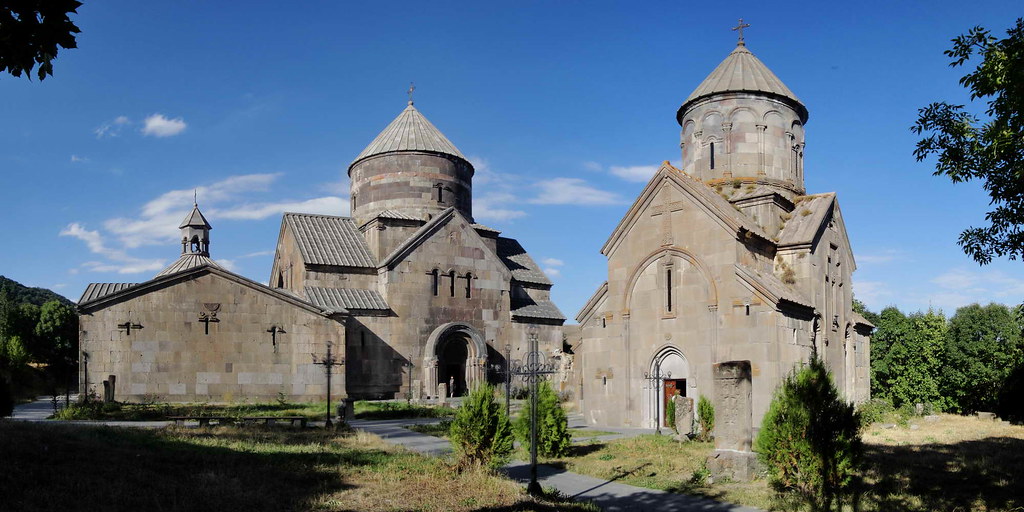
The Monastery of Kecharis

Armenia

7 posted on 12/05/2024 5:09:17 AM PST by annalex (fear them not)
[ Post Reply | Private Reply | To 6 | View Replies]

To: annalex

Saint of the Day for December 5

(439 – December 5, 532)


Saint Sabas’ Story

Born in Cappadocia, Sabas is one of the most highly regarded patriarchs among the monks of Palestine, and is considered one of the founders of Eastern monasticism.

After an unhappy childhood in which he was abused and ran away several times, Sabas finally sought refuge in a monastery. While family members tried to persuade him to return home, the young boy felt drawn to monastic life. Although the youngest monk in the house, he excelled in virtue.

At age 18 he traveled to Jerusalem, seeking to learn more about living in solitude. Soon he asked to be accepted as a disciple of a well-known local solitary, though initially he was regarded as too young to live completely as a hermit. Initially, Sabas lived in a monastery, where he worked during the day and spent much of the night in prayer. At the age of 30 he was given permission to spend five days each week in a nearby remote cave, engaging in prayer and manual labor in the form of weaving baskets. Following the death of his mentor, Saint Euthymius, Sabas moved farther into the desert near Jericho. There he lived for several years in a cave near the brook Cedron. A rope was his means of access. Wild herbs among the rocks were his food. Occasionally men brought him other food and items, while he had to go a distance for his water.

Some of these men came to him desiring to join him in his solitude. At first he refused. But not long after relenting, his followers swelled to more than 150, all of them living in individual huts grouped around a church, called a laura.

The bishop persuaded a reluctant Sabas, then in his early 50s, to prepare for the priesthood so that he could better serve his monastic community in leadership. While functioning as abbot among a large community of monks, he felt ever called to live the life of a hermit. Throughout each year—consistently in Lent—he left his monks for long periods of time, often to their distress. A group of 60 men left the monastery, settling at a nearby ruined facility. When Sabas learned of the difficulties they were facing, he generously gave them supplies and assisted in the repair of their church.

Over the years Sabas traveled throughout Palestine, preaching the true faith and successfully bringing back many to the Church. At the age of 91, in response to a plea from the Patriarch of Jerusalem, Sabas undertook a journey to Constantinople in conjunction with the Samaritan revolt and its violent repression. He fell ill and soon after his return, died at the monastery at Mar Saba. Today the monastery is still inhabited by monks of the Eastern Orthodox Church, and Saint Sabas is regarded as one of the most noteworthy figures of early monasticism.


Reflection

Few of us share Sabas’ yearning for a cave in the desert, but most of us sometimes resent the demands others place on our time. Sabas understands that. When at last he gained the solitude for which he yearned, a community immediately began to gather around him, and he was forced into a leadership role. He stands as a model of patient generosity for anyone whose time and energy are required by others—that is, for all of us.


franciscanmedia.org
8 posted on 12/05/2024 5:14:12 AM PST by annalex (fear them not)
[ Post Reply | Private Reply | To 7 | View Replies]

To: annalex

9 posted on 12/05/2024 5:15:53 AM PST by annalex (fear them not)
[ Post Reply | Private Reply | To 8 | View Replies]

To: annalex

This is the first reading at the site you linked to

That day, this song will be sung in the land of Judah:
We have a strong city;
to guard us he has set
wall and rampart about us.
Open the gates! Let the upright nation come in,
she, the faithful one
whose mind is steadfast, who keeps the peace,
because she trusts in you.
Trust in the Lord for ever,
for the Lord is the everlasting Rock;
he has brought low those who lived high up
in the steep citadel;
he brings it down, brings it down to the ground,
flings it down in the dust:
the feet of the lowly, the footsteps of the poor
trample on it.

This is the reading given at USCCB

https://bible.usccb.org/bible/readings/120524.cfm

On that day they will sing this song in the land of Judah:

“A strong city have we;
he sets up walls and ramparts to protect us.
Open up the gates
to let in a nation that is just,
one that keeps faith.
A nation of firm purpose you keep in peace;
in peace, for its trust in you.”

Trust in the LORD forever!
For the LORD is an eternal Rock.
He humbles those in high places,
and the lofty city he brings down;
He tumbles it to the ground,
levels it with the dust.
It is trampled underfoot by the needy,
by the footsteps of the poor.

They are fairly similar, is there any reason you use the Jerusalem Bible version rather than the New American Bible version?


10 posted on 12/05/2024 5:50:24 AM PST by JSM_Liberty
[ Post Reply | Private Reply | To 1 | View Replies]

To: annalex
NAVARRE BIBLE COMMENTARY (RSV)

Ad Majorem Dei Gloriam (To the Greater Glory of God)

First Reading:

From: Isaiah 26:1-6

Songs of Salvation (Continuation)
--------------------------------
[1] In that day this song will be sung in the land of Judah: “We have a strong city; he sets up salvation as walls and bulwarks. [2] Open the gates, that the righteous nation which keeps faith may enter in. [3] Thou dost keep him in perfect peace, whose mind is stayed on thee, because he trusts in thee. [4] Trust in the Lord for ever, for the Lord God is an everlasting rock. [5] For he has brought low the inhabitants of the height, the lofty city. He lays it low, lays it low to the ground, casts it to the dust. [6] The foot tramples it, the feet of the poor, the steps of the needy.”

***********************************************************************
Commentary:

25:9-26:6. After the celebration of the banquet prepared by God, two hymns are intoned that will be sung “on that day The first praises the Lord he is faithful those who put their hope of salvation in him will never be disappointed, whereas Moab will be laid low on account of its pride (25:9-12). The second hymn returns (cf. 25:1-5) to the theme of praise of the Lord for giving refuge to the poor and needy (26:1-6).

26:7-19. Now comes a personal dialogue with God in the form of a prayer or sapiential psalm (vv. 7-10). Here the greatness of the Lord is not being described to third parties nor are his works being praised: the prophet is addressing him directly, to tell him that he trusts in Him (vv. 7-8), to express his innermost feelings (v. 9a; cf. Ps 42), to ask him to reveal his righteousness (vv. 9b-10) and intervene (v. 11) and bring peace (v. 12), and to celebrate enduring fidelity to the Lord (vv. 13-19). Verse 19 is a ray of hope in personal resurrection, although here, as in 25:8, it refers to the resurgence of the nation, as in the vision of the bones restored to life in the book of Ezekiel (cf. Ezek 37:1-14). Daniel 12:1-3 clearly predicts the resurrection of people from the dead. Commenting on v. 10, St Bernard addresses God, saying: “Father of mercies, may your anger be roused against me--the anger that chastens a soul who has lost his way, not the wrath by which you seal off the path of righteousness” ("In Cantica Canticorum", 42, 4).

11 posted on 12/05/2024 8:49:48 AM PST by fidelis (Ecce Crucem Domini! Fugite partes adversae! Vicit Leo de tribu Juda, Radix David! Alleluia!)
[ Post Reply | Private Reply | To 9 | View Replies]

Gospel Reading:

From: Matthew 7:21-29

Doing the Will of God
---------------------
(Jesus said to His disciples,) [21] "Not every one who says to Me, `Lord, Lord,' shall enter the Kingdom of Heaven, but he who does the will of My Father who is in Heaven. [22] On that day many will say to Me, `Lord, Lord, did we not prophesy in Your name, and cast out demons in Your name, and do many mighty works in Your name?' [23] And then I will declare to them, `I never knew you; depart from Me, you evildoers.'

Building on Rock
----------------
[24] "Every one then who hears these words of Mine and does them will be like a wise man who built his house upon the rock; [25] and the rain fell, and the floods came, and the winds blew and beat upon that house, but it did not fall, because it had been founded on the rock. [26] And every one who hears these words of mine and does not do them will be like a foolish man who built his house upon the sand; [27] and the rain fell, and the floods came, and winds blew and beat against that house, and it fell; and great was the fall of it."

[28] And when Jesus finished these sayings, the crowds were astonished at His teaching, [29] for He taught them as one who had authority, and not as their scribes.

***********************************************************************
Commentary:

21-23. To be genuine, prayer must be accompanied by a persevering effort to do God's will. Similarly, in order to do His will it is not enough to speak about the things of God: there must consistency between what one preaches--what one says--and what one does: "The Kingdom of God does not consist in talk but in power" (1 Corinthians 4:20); "Be doers of the word, and not hearers only, deceiving yourselves" (James 1:22). Christians, "holding loyally to the Gospel, enriched by its resources, and joining forces with all who love and practice justice, have shouldered a weighty task on earth and they must render an account of it to Him who will judge all men on the last day. Not every one who says, `Lord, Lord' will enter the Kingdom of Heaven, but those who do the will of the Father, and who manfully put their hands to the work" (Vatican II, "Gaudium Et Spes", 93).

To enter the Kingdom of Heaven, to be holy, it is not enough, then, to speak eloquently about holiness. One has to practice what one preaches, to produce fruit which accords with one's words. Fray Luis de Leon puts it very graphically: "Notice that to be a good Christian it is not enough just to pray and fast and hear Mass; God must find you faithful, like another Job or Abraham, in times of tribulation" ("Guide for Sinners", Book 1, Part 2, Chapter 21).

Even if a person exercises an ecclesiastical ministry that does not assure his holiness; he needs to practice the virtues he preaches. Besides, we know from experience that any Christian (clerical, religious or lay) who does not strive to act in accordance with the demands of the faith he professes, begins to weaken in his faith and eventually parts company also with the teaching of the Church. Anyone who does not live in accordance with what he says, ends up saying things which are contrary to faith.

The authority with which Jesus speaks in these verses reveals Him as sovereign Judge of the living and the dead. No Old Testament prophet ever spoke with His authority.

22. "That day": a technical formula in biblical language meaning the day of the Judgment of the Lord or the Last Judgment.

23. This passage refers to the Judgment where Jesus will be the Judge. The sacred text uses a verb which means the public proclamation of a truth. Since in this case Jesus Christ is the Judge who makes the declaration, it takes the form of a judicial sentence.

24-27. These verses constitute the positive side of the previous passage. A person who tries to put Christ's teaching into practice, even if he experiences personal difficulties or lives during times of upheaval in the life of the Church or is surrounded by error, will stay firm in the faith, like the wise man who builds his house on rock.

Also, if we are to stay strong in times of difficulty, we need, when things are calm and peaceful, to accept little contradictions with a good grace, to be very refined in our relationship with God and with others, and to perform the duties of our state in life in a spirit of loyalty and abnegation. By acting in this way we are laying down a good foundation, maintaining the edifice of our spiritual life and repairing any cracks which make their appearance.

28-29. Jesus' listeners could clearly see the radical difference between the style of teaching of the scribes and Pharisees, and the conviction and confidence with which Jesus spoke. There is nothing tentative about His words; they leave no room for doubt.

12 posted on 12/05/2024 8:50:09 AM PST by fidelis (Ecce Crucem Domini! Fugite partes adversae! Vicit Leo de tribu Juda, Radix David! Alleluia!)
[ Post Reply | Private Reply | To 11 | View Replies]

Click here to go to the My Catholic Life! Devotional thread for a meditation on today’s Gospel Reading.

13 posted on 12/05/2024 8:51:02 AM PST by fidelis (Ecce Crucem Domini! Fugite partes adversae! Vicit Leo de tribu Juda, Radix David! Alleluia!)
[ Post Reply | Private Reply | To 12 | View Replies]

To: JSM_Liberty

I prefer Douay to both.


14 posted on 12/06/2024 3:12:09 AM PST by annalex (fear them not)
[ Post Reply | Private Reply | To 10 | View Replies]

Disclaimer: Opinions posted on Free Republic are those of the individual posters and do not necessarily represent the opinion of Free Republic or its management. All materials posted herein are protected by copyright law and the exemption for fair use of copyrighted works.

Free Republic
Browse · Search
Religion
Topics · Post Article

FreeRepublic, LLC, PO BOX 9771, FRESNO, CA 93794
FreeRepublic.com is powered by software copyright 2000-2008 John Robinson