.jpg!Large.jpg)
Posted on 11/30/2024 7:40:10 AM PST by fidelis
As Jesus was walking by the Sea of Galilee, he saw two brothers, Simon who is called Peter, and his brother Andrew, casting a net into the sea; they were fishermen. He said to them, “Come after me, and I will make you fishers of men.” Matthew 4:18–19
Today, we honor one of the Apostles: Saint Andrew. Andrew and his brother Peter were fishermen who would soon take on a new form of fishing. They would soon become “fishers of men,” as Jesus said. But prior to being sent on this mission by our Lord, they had to become His followers. And this happened as our Lord was first the fisher of these men.
Notice that in this Gospel, Jesus was simply walking by and “saw” these two brothers working hard at their occupation. First, Jesus “saw” them, and then He called them. This gaze of our Lord is worth pondering.
Imagine the profound truth that our Lord is continually gazing at you with divine love, looking for the moment that you turn your attention to Him. His gaze is perpetual and deep. His gaze is one that yearns for you to follow Him, to abandon all else so as to hear His gentle invitation not only to follow Him, but to then go forth and invite others on the journey of faith.
As we begin this Advent season, we must allow the call of Andrew and Peter to also become our own calling. We must allow ourselves to notice Jesus as He looks at us, sees who we are, is aware of everything about us, and then speaks a word of invitation. He says to you, “Come after me…” This is an invitation that must permeate every aspect of your life. To “come after” Jesus is to leave all else behind and to make the act of following our Lord the single purpose of your life.
Sadly, many people pay little attention to this calling in their lives. Few people hear Him speak and fewer respond, and even fewer respond with complete abandonment of their lives. The beginning of Advent is an opportunity to evaluate your responsiveness to the call of our Lord once again.
Reflect, today, upon Jesus speaking these words to you. First, ponder the question of whether you have said “Yes” to Him with all the powers of your soul. Second, reflect upon those whom our Lord wants you to invite on the journey. To whom is Jesus sending you to invite? Who, in your life, is open to His call? Who does Jesus want to draw to Himself through you? Imitate these Apostles as they said “Yes” to our Lord, even though they did not immediately understand all that this would entail. Say “Yes” today and be ready and willing to do whatever comes next on this glorious journey of faith.
My dear Lord, I do say “Yes” to You this day. I hear You calling me, and I choose to respond with the utmost generosity and abandonment to Your holy and perfect will. Give me the courage and wisdom I need to hold nothing back from You and Your divine calling in my life. Jesus, I trust in You.
Please keep in mind that this is a Catholic Caucus/Devotional thread for the purpose of prayerful reflection on the Sacred Scriptures and is closed to debate of any kind. Per FR policy on Religion Caucus threads, off-topic, argumentative, and abusive comments are not allowed and will be submitted to the Mods for deletion. Thanks, and God bless you.
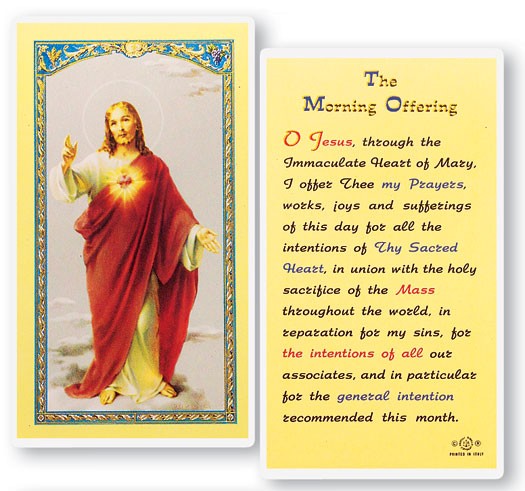
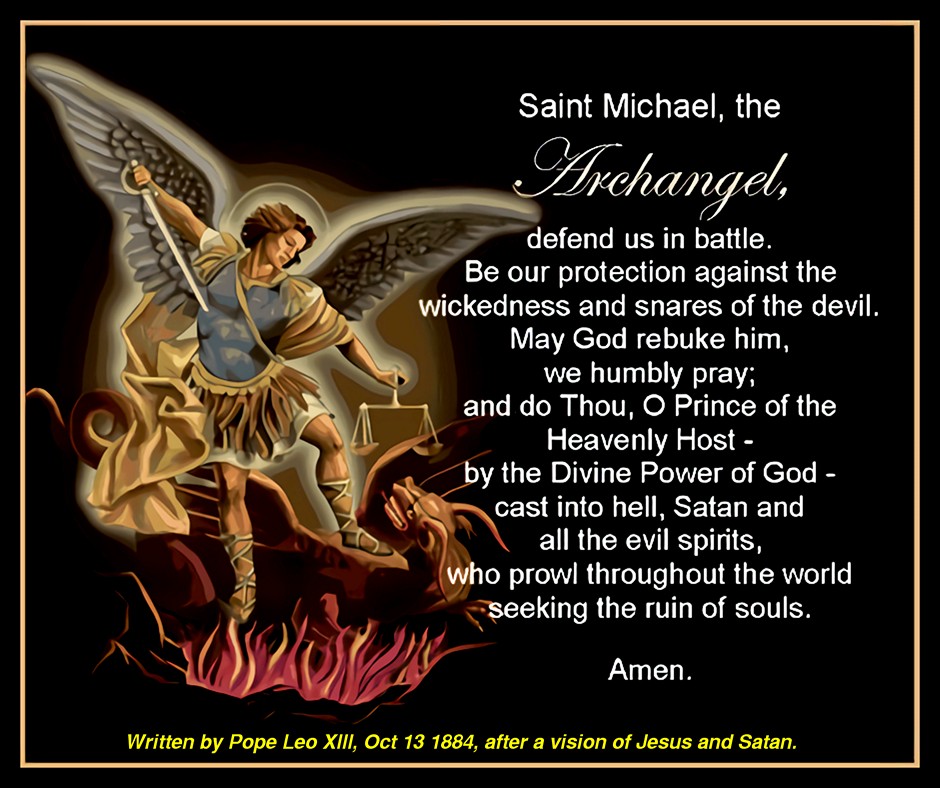
November is the month dedicated to the Holy Souls in Purgatory

"Pray at all times in the Spirit, with all prayer and supplication. To that end keep alert with all perseverance, making supplication for all the saints.”
(Ephesians 6:18)
Ad Majorem Dei Gloriam (To the Greater Glory of God)
First Reading:
From: Romans 10:9-18
Israel's Infidelity (Continuation)
----------------------------------
[9] If you confess with your lips that Jesus is Lord and believe in your heart that God raised him from the dead, you will be saved. [10] For man believes with his heart and so is justified, and he confesses with his lips and so is saved. [11] The scripture says, "No one who believes in him will be put to shame." [12] For there is no distinction between Jew and Greek; the same Lord is Lord of all and bestows his riches upon all who call upon him. [13] For, "every one who calls upon the name of the Lord will be saved." [14] But how are men to call upon him in whom they have not believed? And how are they to believe in him of whom they have never heard? And how are they to hear without a preacher? [15] And how can men preach unless they are sent? As it is written, "How beautiful are the feet of those who preach good news!" [16] But they have not all heeded the gospel; for Isaiah says, "Lord, who has believed what he has heard from us?" [17] So faith comes from what is heard, and what is heard comes by the preaching of Christ. [18] But I ask; have they not heard? Indeed they have; for "Their voice has gone out to all the earth, and their words to the ends of the world."
***********************************************************************
Commentary:
9. At least from the third century B.C. we have documentary evidence that, out of respect, the Jews did not utter the name "Yahweh" but generally referred to God instead as "Lord". The first Christians, by giving Christ the title of "Lord", were making a profession of faith in the divinity of Jesus.
10. To make the act of faith, human free will must necessarily be involved as St Thomas explains when commenting on this passage: "He very rightly says that man believes with his heart. Because everything else to do with external worship of God, man can do it against his will, but he cannot believe if he does not want to believe. So, the mind of a believer is not obliged to adhere to the truth by rational necessity, as is the case with human knowledge: it is moved by the will" ("Commentary on Rom, ad loc.")
However, in order to live by faith, in addition to internal assent external profession of faith is required; man is made up of body and soul and therefore he tends by nature to express his inner convictions externally; when the honor of God or the good of one's neighbor requires it, one even has an obligation to profess one's faith externally. For example, in the case of persecution we are obliged to profess our faith, even at the risk of life, if, on being interrogated about our beliefs, our silence would lead people to suppose that we did not believe or that we did not hold our faith to be the true faith and our bad example would cause others to fall away from the faith. However, external profession is an obligation not only in extreme situations of that kind. In all situations--be they ordinary or exceptional--God will always help us to confess our faith boldly (cf. Mt 10:32-33; Lk 12:8).
14-21. To sum up what the Apostle is saying: the Jews have no excuse for not invoking Christ as Lord, for if they do not believe in him it is due to their rebelliousness, for the Good News has indeed been preached to them.
14-17. The Church's work of evangelization is aimed at eliciting faith, moving people to conversion and reception of its sacraments, in fulfillment of the Lord's commandment, "Go into all the world and preach the Gospel to the whole of creation. He who believes and is baptized will be saved; but he who does not believe will be condemned" (Mk 16:15-16). The Acts of the Apostles give us a great deal of information about this first period of evangelization which was marked by many miracles worked by the Apostles through the power Jesus gave them.
On the very day of Pentecost we can already see how vibrant was St Peter's preaching and the miracles which accompanied it: "The men and women who have come to the city from all parts of the world listen with amazement [...]. These wonders, which take place before their very eyes, lead them to listen to the preaching of the Apostles. The Holy Spirit himself, who is acting through our Lord's disciples, moves the hearts of their listeners and leads them to the faith" (St. J. Escriva, "Christ Is Passing By", 127). It is God himself who works these miracles through the Apostles; it is he who, through the preaching of Peter and the Eleven, is revealing the mysteries; and, finally, it is he who is moving the hearts of the people. This triple divine action leads to the hearers' act of faith. "Two things are required for faith", says St Thomas. "First, the things which are of faith have to be proposed [...]; second, the assent of the believer to the things which are proposed to him" ("Summa Theologiae", II-II, q. 6, a. 1, c).
He goes on to say later that, as regards the first of these two things, faith comes from God, who reveals truths either directly, as in the case of the Apostles and the Prophets, or else indirectly through preachers of the faith sent by Him (cf. Rom 10:15). Speaking of the second, he says that in the individual's assent to the truths of faith factors come into play which are external to the person--for example, miracles, and preaching which expounds the truth of faith. But none of these factors is sufficient: even though they witness the same miracle or hear the same preaching, some believe and others do not. There must therefore be something which moves the person interiorly; although the person's free will must play a part, it cannot account for the act of faith, because that act is a supernatural one; therefore, it must be that God moves the will interiorly, by means of grace (cf. "Summa Theologiae, ibid.").
Following Jesus' example, "every catechist must constantly endeavor to transmit by his teaching and behavior the teaching and life of Jesus [...]. Every catechist should be able to apply to himself the mysterious words of Jesus: 'My teaching is not mine, but his who sent me' (Jn 7:16)" (John Paul II, "Catechesi Tradendae", 6).
Good example is not enough: apostolic action, through the spoken word, is called for. We have a mission to speak in God's name: his disciples "should everywhere on earth bear witness and give an answer to everyone who asks a reason for the hope of an eternal life which is theirs" (Vatican II, "Lumen Gentium", 10).
This was what the first Christians did. "Whenever we read the Acts of the Apostles, we are moved by the audacity, the confidence in their mission and the sacrificing joy of the disciples of Christ. They do not ask for multitudes. Even though the multitudes come, they address themselves to each particular soul, to each person, one by one. Philip, to the Ethiopian (cf. Acts 8:24-40); Peter, to the centurion Cornelius (cf. Acts 10:1-48); Paul, to Sergius Paulus (cf. Acts 13:6-12)" (St J. Escriva, "Homily" entitled "Loyalty to the Church").
Those who accept the Gospel message feel drawn towards it when those who proclaim it also bear witness to it. "It is therefore primarily by her conduct and by her life that the Church will evangelize the world [...]. This law once laid down by the Apostle Paul maintains its full force today. Preaching, the verbal proclamation of a message, is indeed always indispensable [...]. The word remains ever relevant, especially when it is the bearer of the power of God (cf. 1 Cor 2:1-5)" (Paul VI, "Evangelii Nuntiandi", 41-42).
---------------------------------------------------
Gospel Reading:
From: Matthew 4:12-25
The First Disciples Called
--------------------------
[18] As He (Jesus) walked by the Sea of Galilee, He saw two brothers, Simon who is called Peter and Andrew his brother, casting a net into the sea; for they were fishermen. [19] And He said to them, "Follow Me, and I will make you fishers of men." [20] Immediately they left their nets and followed Him. [21] And going on from there He saw two other brothers, James the son of Zebedee, and John his brother, in the boat with Zebedee their father, mending their nets, and He called them. [22] Immediately, they left the boat and their father, and followed Him.
***********************************************************************
Commentary:
18-22. These four disciples had already met our Lord (John 1:35-42), and their brief meeting with Him seems to have had a powerful effect on their souls. In this way Christ prepared their vocation, a fully effective vocation which moved them to leave everything behind so as to follow Him and be His disciples. Standing out above their human defects (which the Gospels never conceal), we can see the exemplary generosity and promptness of the Apostles in answering God's call.
The thoughtful reader cannot fail to be struck by the delightful simplicity with which the evangelists describe the calling of these men in the midst of their daily work.
"God draws us from the shadows of our ignorance, our groping through history, and, no matter what our occupation in the world, He calls us in a loud voice, as He once called Peter and Andrew" (St J. Escriva, "Christ Is Passing By," 45).
"This divine and human dialogue completely changed the lives of John and Andrew, and Peter and James and so many others. It prepared their hearts to listen to the authoritative teaching which Jesus gave them beside the Sea of Galilee" ("ibid"., 108).
We should notice the words of Sacred Scripture used to describe the alacrity with which the Apostles follow our Lord. Peter and Andrew "immediately" left their nets and followed Him. Similarly, James and John "immediately" left the boats and their father and followed Him. God passes by and calls us. If we do not answer Him "immediately", He may continue on His way and we could lose sight of Him. When God passes by, He may do so rapidly; it would be sad if we were to fall behind because we wanted to follow Him while still carrying many things that are only a dead weight and a nuisance.
Disclaimer: Opinions posted on Free Republic are those of the individual posters and do not necessarily represent the opinion of Free Republic or its management. All materials posted herein are protected by copyright law and the exemption for fair use of copyrighted works.