Skip to comments.
Catholic Caucus: Daily Mass Readings 21-November-2024
Universalis/Jerusalem Bible ^
Posted on 11/21/2024 4:05:56 AM PST by annalex
21 November 2024
The Presentation of the Blessed Virgin Mary
on Thursday of week 33 in Ordinary Time
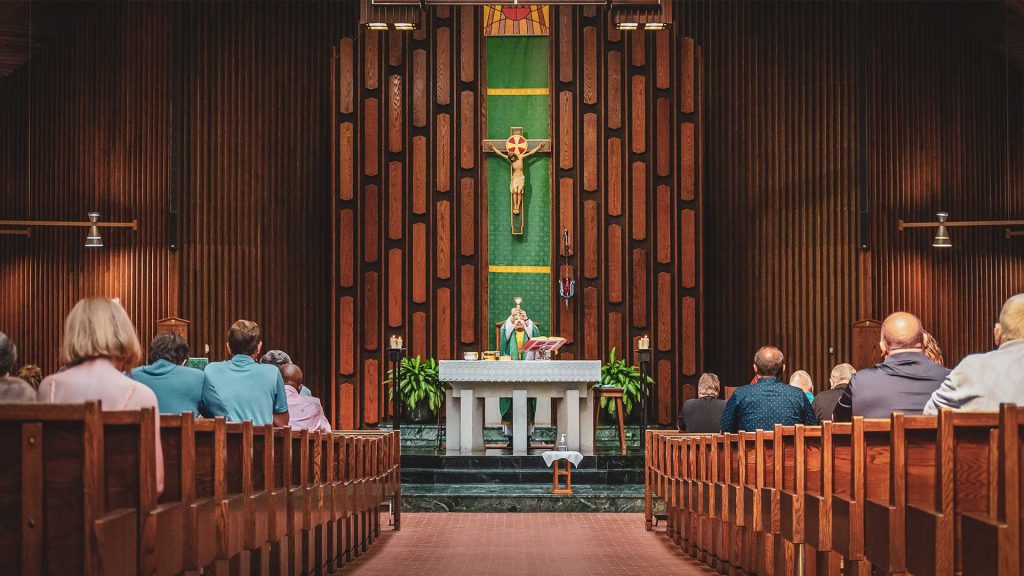
Presentation of Mary Catholic Church, Maplewood, MNReadings at MassLiturgical Colour: White. Year: B(II). Readings for the feria Readings for the memorial These are the readings for the feria
| First reading |
|---|
| Apocalypse 5:1-10 |
|---|
The blood of the Lamb bought men for GodI, John, saw that in the right hand of the One sitting on the throne there was a scroll that had writing on back and front and was sealed with seven seals. Then I saw a powerful angel who called with a loud voice, ‘Is there anyone worthy to open the scroll and break the seals of it?’ But there was no one, in heaven or on the earth or under the earth, who was able to open the scroll and read it. I wept bitterly because there was nobody fit to open the scroll and read it, but one of the elders said to me, ‘There is no need to cry: the Lion of the tribe of Judah, the Root of David, has triumphed, and he will open the scroll and the seven seals of it.’ Then I saw, standing between the throne with its four animals and the circle of the elders, a Lamb that seemed to have been sacrificed; it had seven horns, and it had seven eyes, which are the seven Spirits God has sent out all over the world. The Lamb came forward to take the scroll from the right hand of the One sitting on the throne, and when he took it, the four animals prostrated themselves before him and with them the twenty-four elders; each one of them was holding a harp and had a golden bowl full of incense made of the prayers of the saints. They sang a new hymn: ‘You are worthy to take the scroll and break the seals of it, because you were sacrificed, and with your blood you bought men for God of every race, language, people and nation and made them a line of kings and priests, to serve our God and to rule the world.’
| Responsorial Psalm | Psalm 149:1-6,9 |
|---|
You made us a line of kings and priests to serve our God. or Alleluia! Sing a new song to the Lord, his praise in the assembly of the faithful. Let Israel rejoice in its Maker, let Zion’s sons exult in their king. You made us a line of kings and priests to serve our God. or Alleluia! Let them praise his name with dancing and make music with timbrel and harp. For the Lord takes delight in his people. He crowns the poor with salvation. You made us a line of kings and priests to serve our God. or Alleluia! Let the faithful rejoice in their glory, shout for joy and take their rest. Let the praise of God be on their lips: this honour is for all his faithful. You made us a line of kings and priests to serve our God. or Alleluia!
| Gospel Acclamation | Ps118:135 |
|---|
Alleluia, alleluia! Let your face shine on your servant, and teach me your decrees. Alleluia! Alleluia, alleluia! Harden not your hearts today, but listen to the voice of the Lord. Alleluia!
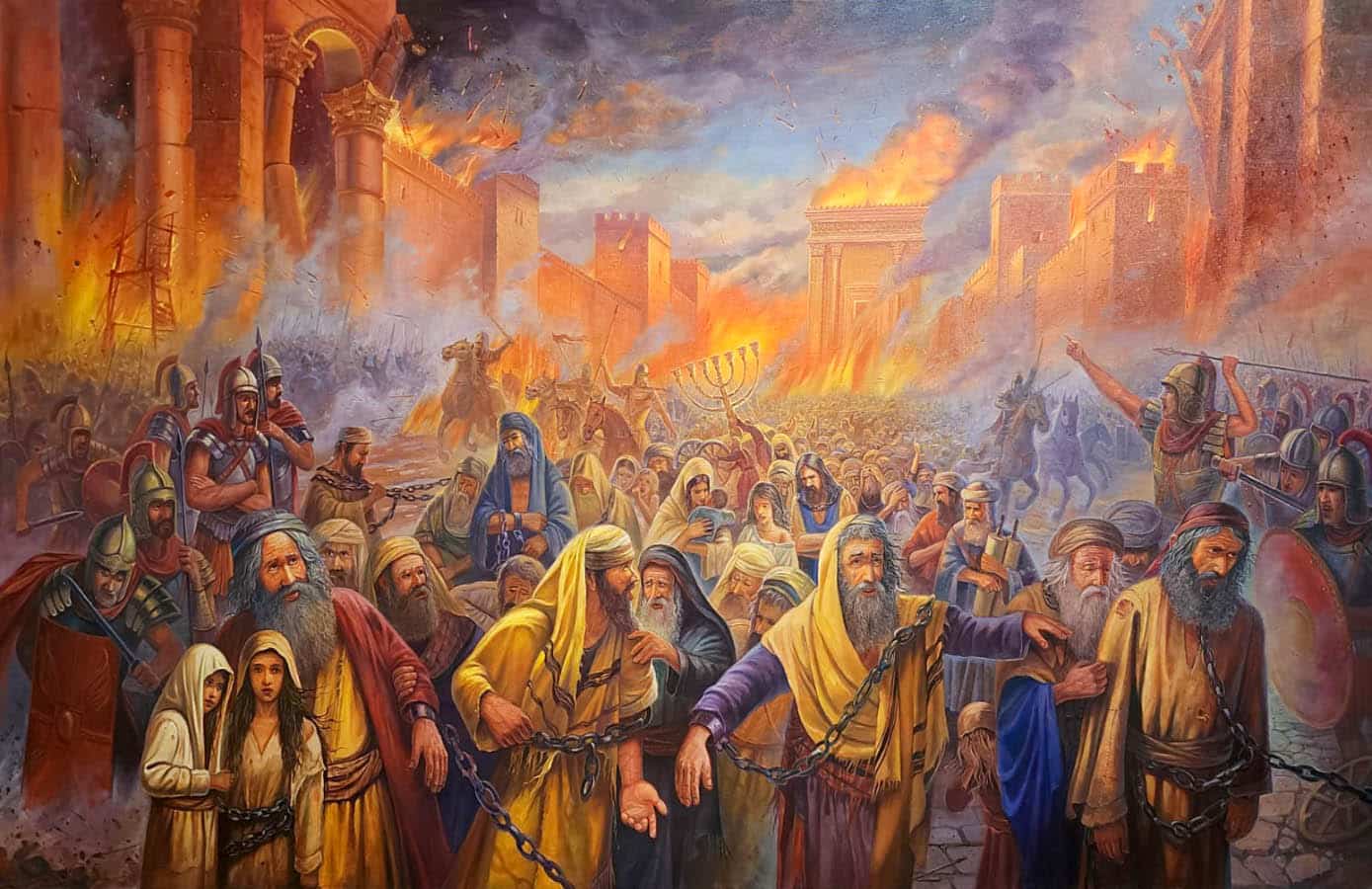
Jesus sheds tears over the coming fate of JerusalemAs Jesus drew near Jerusalem and came in sight of the city he shed tears over it and said, ‘If you in your turn had only understood on this day the message of peace! But, alas, it is hidden from your eyes! Yes, a time is coming when your enemies will raise fortifications all round you, when they will encircle you and hem you in on every side; they will dash you and the children inside your walls to the ground; they will leave not one stone standing on another within you – and all because you did not recognise your opportunity when God offered it!’ Continue These are the readings for the memorial
| First reading |
|---|
| Zechariah 2:14-17 |
|---|
'I am coming', says the LordSing, rejoice, daughter of Zion; for I am coming to dwell in the middle of you – it is the Lord who speaks. Many nations will join the Lord, on that day; they will become his people. But he will remain among you, and you will know that the Lord of Hosts has sent me to you. But the Lord will hold Judah as his portion in the Holy Land, and again make Jerusalem his very own. Let all mankind be silent before the Lord! For he is awaking and is coming from his holy dwelling.
| Responsorial Psalm | Luke 1:46-55 |
|---|
The Almighty works marvels for me. Holy is his name! or Blessed is the Virgin Mary, who bore the Son of the eternal Father. My soul glorifies the Lord, my spirit rejoices in God, my Saviour. The Almighty works marvels for me. Holy is his name! or Blessed is the Virgin Mary, who bore the Son of the eternal Father. He looks on his servant in her nothingness; henceforth all ages will call me blessed. The Almighty works marvels for me. Holy his name! The Almighty works marvels for me. Holy is his name! or Blessed is the Virgin Mary, who bore the Son of the eternal Father. His mercy is from age to age, on those who fear him. He puts forth his arm in strength and scatters the proud-hearted. The Almighty works marvels for me. Holy is his name! or Blessed is the Virgin Mary, who bore the Son of the eternal Father. He casts the mighty from their thrones and raises the lowly. He fills the starving with good things, sends the rich away empty. The Almighty works marvels for me. Holy is his name! or Blessed is the Virgin Mary, who bore the Son of the eternal Father. He protects Israel, his servant, remembering his mercy, the mercy promised to our fathers, to Abraham and his sons for ever. The Almighty works marvels for me. Holy is his name! or Blessed is the Virgin Mary, who bore the Son of the eternal Father.
| Gospel Acclamation | Lk11:28 |
|---|
Alleluia, alleluia! Happy are those who hear the word of God and keep it. Alleluia!
My mother and my brothers are anyone who does the will of my Father in heavenJesus was speaking to the crowds when his mother and his brothers appeared; they were standing outside and were anxious to have a word with him. But to the man who told him this Jesus replied, ‘Who is my mother? Who are my brothers?’ And stretching out his hand towards his disciples he said, ‘Here are my mother and my brothers. Anyone who does the will of my Father in heaven, he is my brother and sister and mother.’ Continue
Nothing is changingIn England, Wales and Scotland, the translation of the readings used at Mass is changing. Your current calendar setting is “United States”, so you will not be affected by this change. This message will disappear at the end of December. Christian Art Each day, The Christian Art website gives a picture and reflection on the Gospel of the day. The readings on this page are from the Jerusalem Bible, which is used at Mass in most of the English-speaking world. The New American Bible readings, which are used at Mass in the United States, are available in the Universalis apps, programs and downloads.
You can also view this page with the Gospel in Greek and English. |
TOPICS: Catholic; General Discusssion; Prayer; Worship
KEYWORDS: catholic; lk19; ordinarytime; prayer
For your reading, reflection, faith-sharing, comments, questions, discussion.
1
posted on
11/21/2024 4:05:56 AM PST
by
annalex
To: All
KEYWORDS: catholic; lk19; ordinarytime; prayer
2
posted on
11/21/2024 4:06:37 AM PST
by
annalex
(fear them not)
To: nickcarraway; NYer; ELS; Pyro7480; livius; ArrogantBustard; Catholicguy; RobbyS; marshmallow; ...

Alleluia Ping Please FReepmail me to get on/off the Alleluia Ping List.
3
posted on
11/21/2024 4:07:24 AM PST
by
annalex
(fear them not)
To: annalex
4
posted on
11/21/2024 4:07:46 AM PST
by
annalex
(fear them not)
To: annalex
| Luke |
| | English: Douay-Rheims | Latin: Vulgata Clementina | Greek NT: Byzantine/Majority Text (2000) |
| | Luke 19
|
| 41. | And when he drew near, seeing the city, he wept over it, saying: | Et ut appropinquavit, videns civitatem flevit super illam, dicens : | και ως ηγγισεν ιδων την πολιν εκλαυσεν επ αυτη |
| 42. | If thou also hadst known, and that in this thy day, the things that are to thy peace; but now they are hidden from thy eyes. | Quia si cognovisses et tu, et quidem in hac die tua, quæ ad pacem tibi : nunc autem abscondita sunt ab oculis tuis. | λεγων οτι ει εγνως και συ και γε εν τη ημερα σου ταυτη τα προς ειρηνην σου νυν δε εκρυβη απο οφθαλμων σου |
| 43. | For the days shall come upon thee, and thy enemies shall cast a trench about thee, and compass thee round, and straiten thee on every side, | Quia venient dies in te : et circumdabunt te inimici tui vallo, et circumdabunt te : et coangustabunt te undique : | οτι ηξουσιν ημεραι επι σε και περιβαλουσιν οι εχθροι σου χαρακα σοι και περικυκλωσουσιν σε και συνεξουσιν σε παντοθεν |
| 44. | And beat thee flat to the ground, and thy children who are in thee: and they shall not leave in thee a stone upon a stone: because thou hast not known the time of thy visitation. | et ad terram prosternent te, et filios tuos, qui in te sunt, et non relinquent in te lapidem super lapidem : eo quod non cognoveris tempus visitationis tuæ. | και εδαφιουσιν σε και τα τεκνα σου εν σοι και ουκ αφησουσιν εν σοι λιθον επι λιθω ανθ ων ουκ εγνως τον καιρον της επισκοπης σου |
5
posted on
11/21/2024 4:10:23 AM PST
by
annalex
(fear them not)
To: annalex

Catena Aurea by St. Thomas Aguinas
CHAP. 19
19:41–44
41. And when he was come near, he beheld the city, and wept over it,
42. Saying, If thou hadst known, even thou, at least in this thy day, the things which belong unto thy peace! but now they are hid from thine eyes.
43. For the days shall come upon thee, that thine enemies shall cast a trench about thee, and compass thee round, and keep thee in on every side,
44. And shall lay thee even with the ground, and thy children within thee; and they shall not leave in thee one stone upon another; because thou knewest not the time of thy visitation.
ORIGEN. All the blessings which Jesus pronounced in His Gospel He confirms by His own example, as having declared, Blessed are the meek; He afterwards sanctions it by saying, Learn of me, for I am meek; and because He had said, Blessed are they that weep, He Himself also wept over the city.
CYRIL OF ALEXANDRIA. For Christ had compassion upon the Jews, who wills that all men should be saved. Which had not been plain to us, were it not revealed by a certain mark of His humanity. For tears poured forth are the tokens of sorrow.
GREGORY. (Hom. 39. in Ev.) The merciful Redeemer wept then over the fall of the false city, which that city itself knew not was about to come upon it. As it is added, saying, If thou hadst known, even thou (we may here understand) wouldest weep. Thou who now rejoicest, for thou knowest not what is at hand. It follows, at least in this thy day. For when she gave herself up to carnal pleasures, she had the things which in her day might be her peace. But why she had present goods for her peace, is explained by what follows, But now they are hidden from thy eyes. For if the eyes of her heart had not been hidden from the future evils which were hanging over her, she would not have been joyful in the prosperity of the present. Therefore He shortly added the punishment which was near at hand, saying, For the days shall come upon thee.
CYRIL OF ALEXANDRIA. If thou hadst known, even thou. The Jews were not worthy to receive the divinely inspired Scriptures, which relate the mystery of Christ. For as often as Moses is read, a veil overshadows their heart that they should not see what has been accomplished in Christ, who being the truth puts to flight the shadow. And because they regarded not the truth, they rendered themselves unworthy of the salvation which flows from Christ.
EUSEBIUS. He here declares that His coming was to bring peace to the whole world. For unto this He came, that He should preach both to them that were near, and those that were afar off. But as they did not wish to receive the peace that was announced to them, it was hid from them. And therefore the siege which was shortly to come upon them He most expressly foretells, adding, For the days shall come upon thee, &c.
GREGORY. (ut sup.) By these words the Roman leaders are pointed out. For that overthrow of Jerusalem is described, which was made by the Roman emperors Vespasian and Titus.
EUSEBIUS. But how these things were fulfilled we may gather from what is delivered to us by Josephus, who though he was a Jew, related each event as it toot place, in exact accordance with Christ’s prophecies.
GREGORY. This too which is added, namely, They shall not leave in thee one stone upon another, is now witnessed in the altered situation of the same city, which is now built in that place where Christ was crucified without the gate, whereas the former Jerusalem, as it is called, was rooted up from the very foundation. And the crime for which this punishment of overthrow was inflicted is added, Because thou knewest not the time of thy visitation.
THEOPHYLACT. That is, of my coming. For I came to visit and to save thee, which if thou hadst known and believed on Me, thou mightest have been reconciled to the Romans, and exempted from all danger, as did those who believed on Christ.
ORIGEN. I do not deny then that the former Jerusalem was destroyed because of the wickedness of its inhabitants, but I ask whether the weeping might not perhaps concern this your spiritual Jerusalem. For if a man has sinned after receiving the mysteries of truth, he will be wept over. Moreover, no Gentile is wept over, but he only who was of Jerusalem, and has ceased to be.
GREGORY. (ut sup.) For our Redeemer does not cease to weep through His elect whenever he perceives any to have departed from a good life to follow evil ways. Who if they had known their own damnation, hanging over them, would together with the elect shed tears over themselves. But the corrupt soul here has its day, rejoicing in the passing time; to whom things present are its peace, seeing that it takes delight in that which is temporal. It shuns the foresight of the future which may disturb its present mirth; and hence it follows, But now are they hid from thine eyes.
ORIGEN. But our Jerusalem is also wept over, because after sin enemies surround it, (that is, wicked spirits,) and cast a trench round it to besiege it, and leave not a stone behind; especially when a man after long continency, after years of chastity, is overcome, and enticed by the blandishments of the flesh, has lost his fortitude and his modesty, and has committed fornication, they will not leave on him one stone upon another, according to Ezekiel, His former righteousness I will not remember. (Ezek 18:24.)
GREGORY. (Hom. 39. in Ev.) Or else; The evil spirits lay siege to the soul, as it goes forth from the body, for being seized with the love of the flesh, they caress it with delusive pleasures. They surround it with a trench, because bringing all its wickedness which it has committed before the eyes of its mind, they close confine it to the company of its own damnation, that being caught in the very extremity of life, it may see by what enemies it is blockaded, yet be unable to find any way of escape, because it can no longer do good works, since those which it might once have done it despised. On every side also they inclose the soul when its iniquities rise up before it, not only in deed but also in word and thought, that she who before in many ways greatly enlarged herself in wickedness, should now at the end be straitened every way in judgment. Then indeed the soul by the very condition of its guilt is laid prostrate on the ground, while its flesh which it believed to be its life is bid to return to dust. Then its children fall in death, when all unlawful thoughts which only proceed from it, are in the last punishment of life scattered abroad. These may also be signified by the stones. For the corrupt mind when to a corrupt thought it adds one more corrupt, places one stone upon another. But when the soul is led to its doom, the whole structure of its thoughts is rent asunder. But the wicked soul God ceases not to visit with His teaching, sometimes with the scourge and sometimes with a miracle; that the truth which it knew not it may hear, and though still despising it, may return pricked to the heart in sorrow, or overcome with mercies may be ashamed at the evil which it has done. But because it knows not the time of its visitation, at the end of life it is given over to its enemies, that with them it may be joined together in the bond of everlasting damnation.
Catena Aurea Luke 19
6
posted on
11/21/2024 4:11:37 AM PST
by
annalex
(fear them not)
To: annalex

Jesus weeps over Jerusalem
Manuscript illumination
7
posted on
11/21/2024 4:12:28 AM PST
by
annalex
(fear them not)
To: annalex
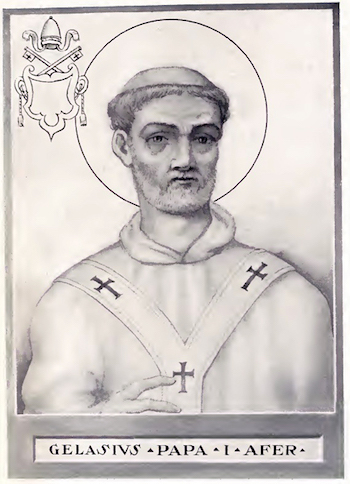
Pope St. Gelasius I
Died at Rome, 19 Nov., 496. Gelasius, as he himself states in his letter to the Emperor Anastasius (Ep. xii, n. 1), was
Romanus natus. The assertion of the "Liber Pontificalis" that he was
natione Afer is consequently taken by many to mean that he was of African origin, though Roman born. Others, however, interpreting
natione Afer as "African by birth", explain
Romanus natus as "born a Roman citizen". Before his election as pope, 1 March, 492, Gelasius had been much employed by his predecessor, Felix II (or III), especially in drawing up ecclesiastical documents, which has led some scholars to confuse the writings of the two pontiffs.
On his election to the papacy, Gelasius at once showed his strength of character and his lofty conception of his position by his firmness in dealing with the adherents of Acacius (see ACACIUS, PATRIARCH OF CONSTANTINOPLE). Despite all the efforts of the otherwise orthodox patriarch, Euphemius of Constantinople, and the threats and wiles by which the Emperor Anastasius tried to obtain recognition from the Apostolic See, Gelasius, though hard-pressed by difficulties at home, would make no peace that compromised in the slightest degree the rights and honor of the Chair of Peter. The constancy with which he combated the pretensions, lay and ecclesiastical, of the New Rome; the resoluteness with which he refused to allow the civil or temporal pre-eminence of a city to determine its ecclesiastical rank; the unfailing courage with which he defended the rights of the "second" and the "third" sees, Alexandria and Antioch, are some of the most striking features of his pontificate. It has been well said that nowhere at this period can be found stronger arguments for the primacy of Peter's See than in the works and writings of Gelasius. He is never tired of repeating that Rome owes its ecclesiastical princedom not to an oecumenical synod nor to any temporal importance it may have possessed, but to the Divine institution of Christ Himself, Who conferred the primacy over the whole Church upon Peter and his successors. (Cf. especially his letters to Eastern bishops and the decretal on the canonical and apocryphal books.) In his dealing with the emperor he is at one with the great medieval pontiffs. "There are two powers by which chiefly this world is ruled: the sacred authority of the priesthood and the authority of kings. And of these the authority of the priests is so much the weightier, as they must render before the tribunal of God an account even for the kings of men." Gelasius's pontificate was too short to effect the complete submission and reconciliation of the ambitious Church of Byzantium. Not until Hormisdas (514-23) did the contest end in the return of the East to its old allegiance. Troubles abroad were not the only occasions to draw out the energy and strength of Gelasius. The Lupercalia, a superstitious and somewhat licentious vestige of paganism at Rome, was finally abolished by the pope after a long contest. Gelasius's letter to Andromachus, the senator, covers the main lines of the controversy.
A stanch upholder of the old traditions, Gelasius nevertheless knew when to make exceptions or modifications, such as his decree obliging the reception of the Holy Eucharist under both kinds. This was done as the only effective way of detecting the Manichæans, who, though present in Rome in large numbers, sought to divert attention from their hidden propaganda by feigning Catholicism. As they held wine to be impure and essentially sinful, they would refuse the chalice and thus be recognized. Later, with the change of conditions, the old normal method of receiving Holy Communion under the form of bread alone returned into vogue. To Gelasius we owe the ordinations on the ember days (Ep. xv), as well as the enforcement of the fourfold division of all ecclesiastical revenues, whether income from estates or voluntary donations of the faithful, one portion for the poor, another for the support of the churches and the splendour of Divine service, a third for the bishop, and the fourth for the minor clergy. Though some writers ascribe the origin of this division of church funds to Gelasius, still the pontiff speaks of it (Ep. xiv, n. 27) as dudum rationabiliter decretum, having been for some time in force. Indeed, Pope Simplicius (475, Ep. i, n. 2) imposed the obligation of restitution to the poor and the Church upon a certain bishop who had failed in this duty; consequently it must have been already regarded as at least a custom of the Church. Not content with one enunciation of this charitable obligation, Gelasius frequently inculcates it in his writings to bishops. For a long time the fixing of the Canon of the Scriptures was attributed to Gelasius, but it seems now more probably the work of Damasus (367-85). As Gelasius, however, in a Roman synod (494), published his celebrated catalogue of the authentic writings of the Fathers, together with a list of apocryphal and interpolated works, as well as the proscribed books of the heretics (Ep. xlii), it was but natural to prefix to this catalogue the Canon of the Scriptures as determined by the earlier Pontiff, and thus in the course of time the Canon itself came to be ascribed to Gelasius. In his zeal for the beauty and majesty of Divine service, Gelasius composed many hymns, prefaces, and collects, and arranged a standard Mass-book, though the Missal that has commonly gone by his name, the "Sacramentarium Gelasianum", belongs properly to the next century. How much of it is the work of Gelasius is still a moot question. Though pope but for four years and a half, he exerted a deep influence on the development of church polity, of the liturgy and ecclesiastical discipline. A large number of his decrees have been incorporated into the Canon Law.
In his private life Gelasius was above all conspicuous for his spirit of prayer, penance, and study. He took great delight in the company of monks, and was a true father to the poor, dying empty-handed as a result of his lavish charity. Dionysius Exiguus in a letter to his friend, the priest Julian (P.L., LXVII, 231), gives a glowing account of Gelasius as he appeared to his contemporaries.
As a writer Gelasius takes high rank for his period. His style is vigorous and elegant, though occasionally, obscure. Comparatively little of his literary work has come down to us, though he is said to have been the most prolific writer of all the pontiffs of the first five centuries. There are extant forty-two letters and fragments of forty-nine others, besides six treatises, of which three are concerned with the Acacian schism, one with the heresy of the Pelagians, another with the errors of Nestorius and Eutyches, while the sixth is directed against the senator Andromachus and the advocates of the Lupercalia. The best edition is that of Thiel.
The feast of St. Gelasius is kept on 21 Nov., the anniversary of his interment, though many writers give this as the day of his death.
Sources
P.L., LIX, 9-191; CXXVIII, 439; CXXIX, 1210; THIEL, Epistolae Romanorum Pontificum Genuinae (Braunsberg, 1868), I, 285-613, 21-82; JAFFE, Regesta Pontificum Romanorum (Berlin), I, 53-60; DUCHESNE, Le Liber Pontificalis (Paris, 1886) I, 254-257; GRISAR, Geschichte Roms und der Päpste im Mittelalter, I, 452-457, passim; THOENES, De Gelasio I Papa (Wiesbaden, 1873); Roux, Le Pape Gélase (Bordeaux-Paris, 1880). For the Sacramentary of Gelasius see PROBST, Die ältesten römischen Sacramentarien und Ordines (Munster, 1892); BISHOP, The Earliest Roman Mass-book in Dublin Review (Octoher, 1894); WILSON. The Gelasian Sacramentary (Oxford, 1894): WILSON, A Classified Index to the Leonine, Gelasian and Gregorian Sacramentaries (Cambridge, 1890); also P.L., LXXIV, 1049.
About this page
APA citation. Murphy, J.F.X. (1909). Pope St. Gelasius I. In The Catholic Encyclopedia. New York: Robert Appleton Company. http://www.newadvent.org/cathen/06406a.htm
MLA citation. Murphy, John F.X. "Pope St. Gelasius I." The Catholic Encyclopedia. Vol. 6. New York: Robert Appleton Company, 1909. .
Transcription. This article was transcribed for New Advent by Joseph E. O'Connor.
Ecclesiastical approbation. Nihil Obstat. September 1, 1909. Remy Lafort, Censor. Imprimatur. +John M. Farley, Archbishop of New York.
Contact information. The editor of New Advent is Kevin Knight. My email address is webmaster at newadvent.org. Regrettably, I can't reply to every letter, but I greatly appreciate your feedback — especially notifications about typographical errors and inappropriate ads.
8
posted on
11/21/2024 4:18:28 AM PST
by
annalex
(fear them not)
To: annalex
9
posted on
11/21/2024 4:19:51 AM PST
by
annalex
(fear them not)
To: annalex
NAVARRE BIBLE COMMENTARY (RSV)
Ad Majorem Dei Gloriam (To the Greater Glory of God)
First Reading:
From: Revelation 5:1-10
The Sealed Scroll and the Lamb
--------------------------------------
[1] And I saw in the right hand of him who was seated on the throne a scroll written within and on the back, sealed with seven seals; [2] and I saw a strong angel proclaiming with a loud voice, "Who is worthy to open the scroll and break its seals?" [3] And no one in heaven or on earth or under the earth was able to open the scroll or to look into it, [4] and I wept much that no one was found worthy to open the scroll or to look into it. [5] Then one of the elders said to me, "Weep not; lo, the Lion of the tribe of Judah, the Root of David, has conquered, so that he can open the scroll and its seven seals."
[6] And between the throne and the four living creatures and among the elders, I saw a Lamb standing, as though it had been slain, with seven horns and with seven eyes, which are the seven spirits of God sent out into all the earth; [7] and he went and took the scroll from the right hand of him who was seated on the throne. [8] And when he had taken the scroll, the four living creatures and the twenty-four elders fell down before the Lamb, each holding a harp, and with golden bowls full of incense, which are the prayers of the saints; [9] and they sang a new song, saying, "Worthy are thou to take the scroll and to open its seals, for thou wast slain and by thy blood didst ransom men for God from every tribe and tongue and people and nation, [10] and hast made them a kingdom and priests to our God, and they shall reign on earth."
***********************************************************************
Commentary:
1-5. The sealed scroll contains God's mysterious plans for the salvation of mankind; no one on earth can disclose them (v. 3). Only the risen Christ can take the scroll and make its contents known (vv. 6-7). On this account he is praised by the four living creatures, by the elders (vv. 8-10), by a whole host of angels (vv. 11-12) and by all creation (vv. 13-14).
The image of a scroll (or book) containing God's hidden plans for mankind was used before, particularly by the prophet Daniel (cf. Dan 12:4-9; also Is 29:11), who refers to a prophecy remaining sealed until the end of time. St John uses this image to make the point that the End Time, the Last Days, have already begun with Christ, so now he can reveal God's plans. The fact that there are seven seals stresses the hidden nature of the scroll's contents; and its being written on both sides shows its richness.
The author of the Book of Revelation, and everyone in fact, really does need to know what is written on the scroll; for, if he knows God's plans he will be able to discover the meaning of life and cease to be anxious about events past, present and future. Yet no one is able to open the scroll: that is why the author weeps so bitterly.
The scroll is sealed: the Revelation of the salvation of mankind and the consolation of the Church is being delayed. Soon, however, the seer ceases to weep, for he learns that Christ (here called "the Lion of the tribe of Judah" and "the Root" or descendant of David: cf. Gen 49:9; Is 11:1, 10) has conquered and therefore is able, to break the seven seals.
The Church contemplates Christ's victory when it "believes that Christ, who died and was raised for the sake of all, can show man the way and strengthen him through the Spirit in order to be worthy of his destiny [...]. The Church likewise believes that the key, the center and the purpose of the whole of man's history is to be found in its Lord and Master" (Vatican II, "Gaudium Et Spes", 10).
"In fact," the Council adds, "it is only in the mystery of the Word made flesh that the mystery of man truly becomes clear. For Adam, the first man, was a type of him who was to come (cf. Rom 5:14). Christ the Lord, Christ the new Adam, in the very revelation of the mystery of the Father and of his love, fully reveals man to himself and brings to light his most high calling" (ibid., 22).
6-7. Christ is able to open the scroll on account of his death and resurrection--an event symbolized by the Lamb standing upright and victorious and at the same time looking as though it had been immolated. In the Fourth Gospel, John the Baptist calls Christ "the Lamb of God" (Jn 1:29, 36); in the Apocalypse this expression is the one most often used to refer to him: he is the Lamb raised to the very height of God's throne and has dominion over the entire cosmos (cf. 5:8, 12-13; 6:1, 16; 7:9-10; 13:8; 15:3; etc.). This Christological title, which is a feature of St John's writings, has great theological depth; the Church reverses it, using it frequently in the liturgy-- particularly in the Mass, after the kiss of peace when the Lamb of God is invoked three times; also, just before Holy Communion is distributed the host is shown to the faithful as him who takes away the sin of the world and those who are called to his marriage supper are described as "happy" (cf. Rev 19:9).
The image of the Lamb reminds us of the passover lamb, whose blood was smeared on the door frames of houses as a sign to the avenging angel not to inflict on Israelites the divine punishment being dealt out to the Egyptians (cf. Ex 12:7, 13). St Paul refers to the Lamb in one of his letters: "Christ, our paschal lamb, has been sacrificed" (1 Cor 5:7). At a high point in Old Testament prophecy Isaiah portrays the Messiah as the suffering Servant of Yahweh, "a lamb that is led to the slaughter" (Is 53:7). St Peter, on the basis of that text, states that our Lord "bore our sins in his body on the tree, that we might die to sin and live to righteousness" (1 Pet 2:24).
The Lamb is a sacrifice for sin, but the Apocalypse also focuses attention on the victorious power of the risen Lamb by showing him standing on the throne, in the center of the vision; the horns symbolize his power and the eyes his knowledge, both of which he has to the fullest degree as indicated by the number seven. The seven spirits of Christ also indicate the fullness of the Spirit with which Christ is endowed and which he passes on to his Church (cf. notes on Rev 1:4 and 4:5). This completes the description of the risen Christ, who through his victory reveals the mystery of God.
8-10. The greatness of Christ the Lamb is duly acknowledged and proclaimed through the worship rendered him, firstly, from the four living creatures and the twenty-four elders, then from all the angels and finally from the whole of creation (vv. 11-13). St John selects these three points to highlight on the praise rendered by the heavenly Church, with which the pilgrim Church on earth joins through its own prayer (symbolized by the image of the golden bowls). Later on (15: 7ff), seven bowls appear again, this time filled with God's wrath, which is caused by the complaint of the righteous who are being cruelly tormented by the agents of evil.
All this shows the value of the prayers of those who stay loyal to God: "the prayer of a righteous man has great power in its effects" (Jas 5: 16), for "the prayer of the humble pierces the clouds, and he will not be consoled until it reaches the Lord" (Sir 35:17).
The "new song" proclaims that Christ alone decides the destinies of the world and of mankind; this is a consequence of himself being offered in sacrifice as the atoning victim "par excellence". By shedding his blood Christ has won for himself an immense people, from every nation under heaven; in them, a holy people, his chosen ones that people which was originally assembled in the Sinai desert (cf. Ex 19:6; 1 Pet 2:9f) has come to full maturity. When it says that they have been ransomed from every tribe and nation, it is pointing out that God's salvific plans extend to the whole human race: he "desires all men to be saved and to come to the knowledge of the truth" (1 Tim 2:4). This does not exempt us from making an effort to merit salvation, for, as St Augustine teaches, "God who created you without your cooperation will not save you without your cooperation" ("Sermon" 169, 11). Here is how another early writer puts it: "we know that God will give to each individual the opportunity to be saved--to some in one way, to others in another. But whether we respond eagerly or listlessly depends on ourselves" (Cassian, "Collationes", 3, 12).
"Didst ransom men for God": in many important Greek manuscripts this reads, "you ransomed us for God", and some even change the reading of the following verse: "you made us a kingdom...and we will reign". The earlier Latin translation, the Vulgate, chose that reading, which emphasizes that those who are intoning the chant are men, that is, members of the Church triumphant in heaven. The new official Latin version, the New Vulgate, follows what it considers to be the most reliable Greek text. But the meaning does not really change.
10
posted on
11/21/2024 9:33:16 AM PST
by
fidelis
(Ecce Crucem Domini! Fugite partes adversae! Vicit Leo de tribu Juda, Radix David! Alleluia!)
Gospel Reading: From: Luke 19:41-44
Jesus Weeps Over Jerusalem
------------------------------------
[41] And when He (Jesus) drew near and saw the city He wept over it, [42] saying, "Would that even today you knew the things that make for peace! But now they are hid from your eyes. [43] For the days shall come upon you, when your enemies will cast a bank about you and surround you, and hem you in on every side, [44] and dash you to the ground, you and your children within you, and they will not leave one stone upon another in you; because you did not know the time of your visitation."
***********************************************************************
Commentary:
41-44. When the procession reaches a place where there is a good view of the city, they are disconcerted by Jesus' unexpected weeping. Our Lord explains why He is weeping, by prophesying the destruction of the city which He loved so much: not one stone will remain on another, and its inhabitants will be massacred--a prophecy which was fulfilled in the year 70, when Titus razed the city and the temple was destroyed. These historical events will be a punishment for Jerusalem failing to recognize the time of its visitation, that is, for closing its gates to the salvific coming of the Redeemer. Jesus loved the Jews with a very special love: they were the first to whom the Gospel was preached (cf. Matthew 10:5-6); to them He directed His ministry (cf. Matthew 15:24); He showed His word and by His miracles that He was the Son of God and the Messiah foretold in the Scriptures. But the Jews for the most part failed to appreciate the grace the Lord was offering them; their leaders led them to the extreme of calling for Jesus to be crucified.
Jesus visits every one of us; He comes as our Savior; He teaches us through the preaching of the Church; He gives us forgiveness and grace through the sacraments. We should not reject our Lord, we should not remain indifferent to His visit.
11
posted on
11/21/2024 9:33:36 AM PST
by
fidelis
(Ecce Crucem Domini! Fugite partes adversae! Vicit Leo de tribu Juda, Radix David! Alleluia!)
12
posted on
11/21/2024 9:34:41 AM PST
by
fidelis
(Ecce Crucem Domini! Fugite partes adversae! Vicit Leo de tribu Juda, Radix David! Alleluia!)
To: annalex; Al Hitan; Fedora; irishjuggler; Jaded; kalee; markomalley; miele man; Mrs. Don-o; ...
Presentation of the Blessed Virgin Mary–W (III)
As soon as she could walk, Mary was brought to the Temple by her holy parents, Joachim and Anne.
*-*-*-*-*-*-*-*-*-*
Religious parents never fail by devout prayer to consecrate their children to the divine service and love, both before and after their birth. Some amongst the Jews, not content with this general consecration of their children, offered them to God in their infancy, by the hands of the priests in the Temple, to be lodged in apartments belonging to the Temple, and brought up in attending the priests and Levites in the sacred ministry. It is an ancient tradition that the Blessed Virgin Mary was thus solemnly offered to God in the Temple in her infancy. This festival of the Presentation of the Blessed Virgin the Church celebrates this day. The tender soul of Mary was then adorned with the most precious graces, an object of astonishment and praise to the angels, and of the highest complacence to the adorable Trinity; the Father looking upon her as His beloved daughter, the Son as one chosen and prepared to become His mother, and the Holy Ghost as His darling spouse. Mary was the first who set up the standard of virginity; and, by consecrating it by a perpetual vow to Our Lord, she opened the way to all virgins who have since followed her example.
Reflection—Mary’s first presentation to God was an offering most acceptable in His sight. Let our consecration of ourselves to God be made under her patronage, and assisted by her powerful intercession and the union of her merits.
13
posted on
11/21/2024 3:15:35 PM PST
by
ebb tide
("The Spirit of Vatican II" is nothing more than a wicked "ideology" of the modernists.)
Disclaimer:
Opinions posted on Free Republic are those of the individual
posters and do not necessarily represent the opinion of Free Republic or its
management. All materials posted herein are protected by copyright law and the
exemption for fair use of copyrighted works.
FreeRepublic.com is powered by software copyright 2000-2008 John Robinson