Skip to comments.
Catholic Caucus: Daily Mass Readings 18-November-2024
Universalis/Jerusalem Bible ^
Posted on 11/18/2024 4:49:02 AM PST by annalex
18 November 2024
Monday of week 33 in Ordinary Time

St. Rose Philippine Duchesne, Anthem, AZ Readings at MassLiturgical Colour: Green. Year: B(II).
| First reading |
|---|
| Apocalypse 1:1-4,2:1-5 |
|---|
Think what you were before you fell, and repentThis is the revelation given by God to Jesus Christ so that he could tell his servants about the things which are now to take place very soon; he sent his angel to make it known to his servant John, and John has written down everything he saw and swears it is the word of God guaranteed by Jesus Christ. Happy the man who reads this prophecy, and happy those who listen to him, if they treasure all that it says, because the Time is close. From John, to the seven churches of Asia: grace and peace to you from him who is, who was, and who is to come, from the seven spirits in his presence before his throne. I heard the Lord saying to me: ‘Write to the angel of the church in Ephesus and say, “Here is the message of the one who holds the seven stars in his right hand and who lives surrounded by the seven golden lamp-stands: I know all about you: how hard you work and how much you put up with. I know you cannot stand wicked men, and how you tested the impostors who called themselves apostles and proved they were liars. Know, too, that you have patience, and have suffered for my name without growing tired. Nevertheless, I have this complaint to make; you have less love now than you used to. Think where you were before you fell; repent, and do as you used to at first.”’
| Responsorial Psalm | Psalm 1:1-4,6 |
|---|
Those who prove victorious I will feed from the tree of life. Happy indeed is the man who follows not the counsel of the wicked; nor lingers in the way of sinners nor sits in the company of scorners, but whose delight is the law of the Lord and who ponders his law day and night. Those who prove victorious I will feed from the tree of life. He is like a tree that is planted beside the flowing waters, that yields its fruit in due season and whose leaves shall never fade; and all that he does shall prosper. Those who prove victorious I will feed from the tree of life. Not so are the wicked, not so! For they like winnowed chaff shall be driven away by the wind: for the Lord guards the way of the just but the way of the wicked leads to doom. Those who prove victorious I will feed from the tree of life.
Alleluia, alleluia! I am the light of the world, says the Lord; anyone who follows me will have the light of life. Alleluia!
'Son of David, have pity on me'As Jesus drew near to Jericho there was a blind man sitting at the side of the road begging. When he heard the crowd going past he asked what it was all about, and they told him that Jesus the Nazarene was passing by. So he called out, ‘Jesus, Son of David, have pity on me.’ The people in front scolded him and told him to keep quiet, but he shouted all the louder, ‘Son of David, have pity on me.’ Jesus stopped and ordered them to bring the man to him, and when he came up, asked him, ‘What do you want me to do for you?’ ‘Sir,’ he replied ‘let me see again.’ Jesus said to him, ‘Receive your sight. Your faith has saved you.’ And instantly his sight returned and he followed him praising God, and all the people who saw it gave praise to God for what had happened.
Nothing is changingIn England, Wales and Scotland, the translation of the readings used at Mass is changing. Your current calendar setting is “United States”, so you will not be affected by this change. This message will disappear at the end of December. Christian Art Each day, The Christian Art website gives a picture and reflection on the Gospel of the day. The readings on this page are from the Jerusalem Bible, which is used at Mass in most of the English-speaking world. The New American Bible readings, which are used at Mass in the United States, are available in the Universalis apps, programs and downloads.
You can also view this page with the Gospel in Greek and English. |
TOPICS: Catholic; General Discusssion; Prayer; Worship
KEYWORDS: catholic; lk18; ordinarytime; prayer
For your reading, reflection, faith-sharing, comments, questions, discussion.
1
posted on
11/18/2024 4:49:02 AM PST
by
annalex
To: All
KEYWORDS: catholic; lk18; ordinarytime; prayer;
2
posted on
11/18/2024 4:49:29 AM PST
by
annalex
(fear them not)
To: nickcarraway; NYer; ELS; Pyro7480; livius; ArrogantBustard; Catholicguy; RobbyS; marshmallow; ...

Alleluia Ping Please FReepmail me to get on/off the Alleluia Ping List.
3
posted on
11/18/2024 4:50:17 AM PST
by
annalex
(fear them not)
To: annalex
4
posted on
11/18/2024 4:50:37 AM PST
by
annalex
(fear them not)
To: annalex
| Luke |
| | English: Douay-Rheims | Latin: Vulgata Clementina | Greek NT: Byzantine/Majority Text (2000) |
| | Luke 18
|
| 35. | Now it came to pass, when he drew nigh to Jericho, that a certain blind man sat by the way side, begging. | Factum est autem, cum appropinquaret Jericho, cæcus quidam sedebat secus viam, mendicans. | εγενετο δε εν τω εγγιζειν αυτον εις ιεριχω τυφλος τις εκαθητο παρα την οδον προσαιτων |
| 36. | And when he heard the multitude passing by, he asked what this meant. | Et cum audiret turbam prætereuntem, interrogabat quid hoc esset. | ακουσας δε οχλου διαπορευομενου επυνθανετο τι ειη τουτο |
| 37. | And they told him, that Jesus of Nazareth was passing by. | Dixerunt autem ei quod Jesus Nazarenus transiret. | απηγγειλαν δε αυτω οτι ιησους ο ναζωραιος παρερχεται |
| 38. | And he cried out, saying: Jesus, son of David, have mercy on me. | Et clamavit, dicens : Jesu, fili David, miserere mei. | και εβοησεν λεγων ιησου υιε δαυιδ ελεησον με |
| 39. | And they that went before, rebuked him, that he should hold his peace: but he cried out much more: Son of David, have mercy on me. | Et qui præibant, increpabant eum ut taceret. Ipse vero multo magis clamabat : Fili David, miserere mei. | και οι προαγοντες επετιμων αυτω ινα σιωπηση αυτος δε πολλω μαλλον εκραζεν υιε δαυιδ ελεησον με |
| 40. | And Jesus standing, commanded him to be brought unto him. And when he was come near, he asked him, | Stans autem Jesus jussit illum adduci ad se. Et cum appropinquasset, interrogavit illum, | σταθεις δε ο ιησους εκελευσεν αυτον αχθηναι προς αυτον εγγισαντος δε αυτου επηρωτησεν αυτον |
| 41. | Saying: What wilt thou that I do to thee? But he said: Lord, that I may see. | dicens : Quid tibi vis faciam ? At ille dixit : Domine, ut videam. | λεγων τι σοι θελεις ποιησω ο δε ειπεν κυριε ινα αναβλεψω |
| 42. | And Jesus said to him: Receive thy sight: thy faith hath made thee whole. | Et Jesus dixit illi : Respice, fides tua te salvum fecit. | και ο ιησους ειπεν αυτω αναβλεψον η πιστις σου σεσωκεν σε |
| 43. | And immediately he saw, and followed him, glorifying God. And all the people, when they saw it, gave praise to God. | Et confestim vidit, et sequebatur illum magnificans Deum. Et omnis plebs ut vidit, dedit laudem Deo. | και παραχρημα ανεβλεψεν και ηκολουθει αυτω δοξαζων τον θεον και πας ο λαος ιδων εδωκεν αινον τω θεω |
5
posted on
11/18/2024 4:54:43 AM PST
by
annalex
(fear them not)
To: annalex

Catena Aurea by St. Thomas Aguinas
18:35–43
35. And it came to pass, that as he was come nigh unto Jericho, a certain blind man sat by the way side begging:
36. And hearing the multitude pass by, he asked what it meant.
37. And they told him, that Jesus of Nazareth passeth by.
38. And he cried, saying, Jesus, thou Son of David, have mercy on me.
39. And they which went before rebuked him, that he should hold his peace: but he cried so much the more, Thou Son of David, have mercy on me.
40. And Jesus stood, and commanded him to be brought unto him: and when he was come near, he asked him,
41. Saying, What wilt thou that I shall do unto thee? And he said, Lord, that I may receive my sight.
42. And Jesus said unto him, Receive thy sight: thy faith hath saved thee.
43. And immediately he received his sight, and followed him, glorifying God: and all the people, when they saw it, gave praise unto God.
GREGORY. (Hom. 2. in Ev.) Because the disciples being yet carnal were unable to receive the words of mystery, they are brought to a miracle. Before their eyes a blind man receives his sight, that by a divine work their faith might be strengthened.
THEOPHYLACT. And to shew that our Lord did not even walk without doing good, He performed a miracle on the way, giving His disciples this example, that we should be profitable in all things, and that nothing in us should be in vain.
AUGUSTINE. We might understand the expression of being nigh to Jericho, as if they had already gone out of it, but were still near. It might, though less common in this sense, be so taken here, since Matthew relates, that as they were going out of Jericho, two men received their sight who sat by the way side. There need be no question about the number, if we suppose that one of the Evangelists remembering only one was silent about the other. Mark also mentions only one, and he too says that he received his sight as they were going out of Jericho; he has given also the name of the man and of his father, to let us understand that this one was well known, but the other not so, so that it might come to pass that the one who was known would be naturally the only one mentioned. But seeing that what follows in St. Luke’s Gospel most plainly proves the truth of his account, that while they were yet coming to Jericho, the miracle took place, we cannot but suppose that there were two such miracles, the first upon one blind man when our Lord was coming to that city, the second on two, when He was departing out of it; Luke relating the one, Matthew the other.
PSEUDO-CHRYSOSTOM. (Hom. de cæco et Zacchæo) There was a great multitude gathered round Christ, and the blind man indeed knew Him not, but felt a drawing towards Him, and grasped with his heart what his sight embraced not. As it follows, And when he heard the multitude passing by, he asked what it was. And those that saw spoke indeed according to their own opinion. And they told him that Jesus of Nazareth passeth by. But the blind man cried out. He is told one thing, he proclaims another; for it follows, And he cried out, saying, Jesus, thou Son of David, have mercy on me. Who taught thee this, O man? Hast thou that art deprived of sight read books? Whence then knowest thou the Light of the world? Verily the Lord giveth sight to the blind. (Ps. 146:8.)
CYRIL OF ALEXANDRIA. Having been brought up a Jew, he was not ignorant that of the seed of David should God be born according to the flesh, and therefore he addresses Him as God, saying, Have mercy upon me. Would that those might imitate him who divide Christ into two. For he speaks of Christ as God, yet calls Him Son of David. But they marvel at the justice of his confession, and some even wished to prevent him from confessing his faith. But by checks of this kind his ardour was not damped. For faith is able to resist all, and to triumph over all. It is a good thing to lay aside shame in behalf of divine worship. For if for money’s sake some are bold, is it not fitting when the soul is at stake, to put on a righteous boldness? As it follows, But he cried out the more, Son of David, & c. The voice of one invoking in faith stops Christ, for He looks back upon them who call upon Him in faith. And accordingly He calls the blind man to Him, and bids him draw nigh, that he in truth who had first laid hold on Him in faith, might approach Him also in the body. The Lord asks this blind man as he drew near, What will thou that I shall do? He asks the question purposely, not as ignorant, but that those who stood by might know that he sought not money, but divine power from God. And thus it follows, But he said, Lord, that I may receive my sight.
PSEUDO-CHRYSOSTOM. (Chrys. ut sup.) Or because the Jews perverting the truth might say, as in the case of him who was born blind, This is not he, but one like unto to him, (John 9:8.) He wished the blind first to make manifest the infirmity of his nature, that then he might fully acknowledge the greatness of the grace bestowed upon him. And as soon as the blind man explained the nature of his request, with words of the highest authority He commanded him to see. As it follows, And Jesus said to him, Receive thy sight. This served only still more to increase the guilt of unbelief in the Jews. For what prophet ever spoke in this way? Observe moreover what the physician claims from him whom he has restored to health. Thy faith hath saved thee. For faith then mercies are sold. Where faith is willing to accept, there grace abounds. And as from the same fountain some in small vessels draw little water, while others in large draw much, the fountain knowing no difference in measure; and as according to the windows which are opened, the sun sheds more or less of its brightness within; so according to the measure of a man’s motives does he draw down supplies of grace. The voice of Christ is changed into the light of the afflicted. For He was the Word of true light. And thus it follows, And immediately he said. But the blind man as before his restoration he shewed an earnest faith, so afterwards did he give plain tokens of his gratitude; And he followed him, glorifying God.
CYRIL OF ALEXANDRIA. From which it is clear, that he was released from a double blindness, both bodily and intellectual. For he would not have glorified Him as God, had he not truly seen Him as He is. But he also gave occasion to others to glorify God; as it follows, And all the people, when they saw it, gave praise unto God.
BEDE. Not only for the gift of light obtained, but for the merit of the faith which obtained it.
PSEUDO-CHRYSOSTOM. (Chrys. ubi sup.) We may here well inquire, why Christ forbids the healed demoniac who wished to follow Him, but permits the blind man who had received his sight. There seems to be a good reason for both the one case and the other. He sends away the former as a kind of herald, to proclaim aloud by the evidence of his own state his benefactor, for it was indeed a notable miracle to see a raving madman brought to a sound mind. But the blind man He allows to follow Him, since He was going up to Jerusalem about to accomplish the high mystery of the Cross, that men having a recent report of a miracle might not suppose that He suffered so much from helplessness as from compassion.
AMBROSE. In the blind man we have a type of the Gentile people, who have received by the Sacrament of our Lord the brightness of the light which they had lost. And it matters not whether the cure is conveyed in the case of one or two blind men, inasmuch as deriving their origin from Ham and Japhet, the sons of Noah, in the two blind men they put forward two authors of their race.
GREGORY. (Hom. 2. in Ev.) Or, blindness is a symbol of the human race, which in our first parent knowing not the brightness of heavenly light, now suffers the darkness of his condemnation. Jericho is interpreted ‘the moon,’ whose monthly wanings represent the feebleness of our mortality. While then our Creator is drawing nigh to Jericho, the blind is restored to sight, because when God took upon Him the weakness of our flesh, the human race received back the light which it had lost. He then who is ignorant of this brightness of the everlasting light, is blind. But if he does no more than believe in the Redeemer who said, I am the way, the truth, and the life; (John 13:6.) he sits by the way side. If he both believes and prays that he may receive the everlasting light, he sits by the way side and begs. Those that went before Jesus, as He was coming, represent the multitude of carnal desires, and the busy crowd of vices which before that Jesus comes to our heart, scatter our thoughts, and disturb us even in our prayers. But the blind man cried out the more; for the more violently we are assailed by our restless thoughts, the more fervently ought we to give ourselves to prayer. As long as we still suffer our manifold fancies to trouble us in our prayers, we feel in some measure Jesus passing by. But when we are very stedfast in prayer, God is fixed in our heart, and the lost light is restored. Or to pass by is of man, to stand is of God. The Lord then passing by heard the blind man crying, standing still restored him to sight, for by His humanity in compassion to our blindness He has pity upon our cries, by the power of His divinity He pours upon us the light of His grace.
Now for this reason He asks what the blind man wished, that He might stir up his heart to prayer, for He wishes that to be sought in prayer, which He knows beforehand both that we seek and He grants.
AMBROSE. Or, He asked the blind man to the end that we might believe, that without confession no man can be saved.
GREGORY. (ubi sup.) The blind man seeks from the Lord not gold, but light. Let us then seek not for false riches, but for that light which together with the Angels alone we may see, the way whereunto is faith. Well then was it said to the blind, Receive thy sight; thy faith hath saved thee. He who sees, also follows, because the good which he understands he practises.
AUGUSTINE. (de Quæst. Ev. l. ii. qu. 48.) If we interpret Jericho to mean the moon, and therefore death, our Lord when approaching His death commanded the light of the Gospel to be preached to the Jews only, who are signified by that one blind man whom Luke speaks of, but rising again from the dead and ascending to heaven, to both Jews and Gentiles; and these two nations seem to be denoted by the two blind men whom Matthew mentions.
Catena Aurea Luke 18
6
posted on
11/18/2024 4:55:59 AM PST
by
annalex
(fear them not)
To: annalex

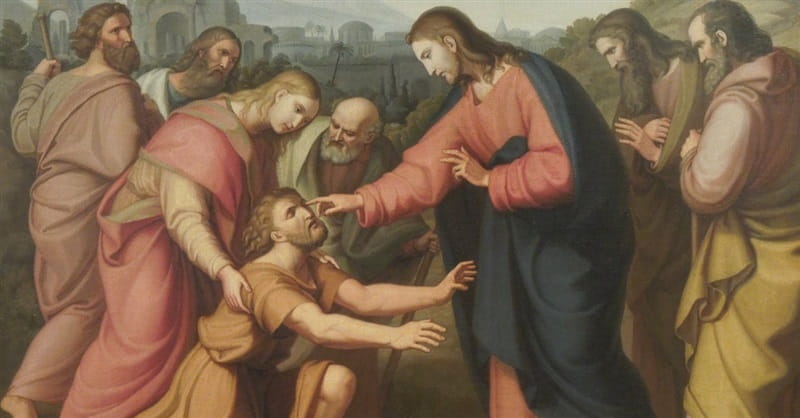
Healing the blind man of Jericho
c. 980-993
Germany
7
posted on
11/18/2024 4:56:14 AM PST
by
annalex
(fear them not)
To: annalex
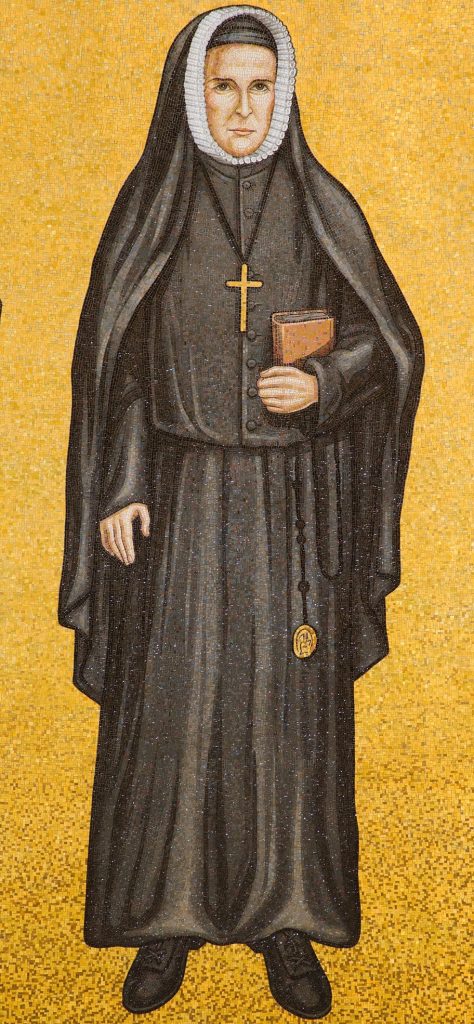
Saint of the Day for November 20
(August 29, 1769 – November 18, 1852)
Saint Rose Philippine Duchesne’s Story
Born in Grenoble, France, of a family that was among the new rich, Rose learned political skills from her father and a love of the poor from her mother. The dominant feature of her temperament was a strong and dauntless will, which became the material—and the battlefield—of her holiness. She entered the Visitation of Mary convent at 19, and remained despite family opposition. As the French Revolution broke, the convent was closed, and she began taking care of the poor and sick, opened a school for homeless children, and risked her life helping priests in the underground.
When the situation cooled, Rose personally rented the former convent, now a shambles, and tried to revive its religious life. The spirit was gone, however, and soon there were only four nuns left. They joined the infant Society of the Sacred Heart, whose young superior, Mother Madeleine Sophie Barat, would be her lifelong friend.
In a short time Rose was a superior and supervisor of the novitiate and a school. But since hearing tales of missionary work in Louisiana as a little girl, her ambition was to go to America and work among the Indians. At 49, she thought this would be her work. With four nuns, she spent 11 weeks at sea en route to New Orleans, and seven weeks more on the Mississippi to St. Louis. She then met one of the many disappointments of her life. The bishop had no place for them to live and work among Native Americans. Instead, he sent her to what she sadly called “the remotest village in the U.S.,” St. Charles, Missouri. With characteristic drive and courage, she founded the first free school for girls west of the Mississippi.
Though Rose was as hardy as any of the pioneer women in the wagons rolling west, cold and hunger drove them out—to Florissant, Missouri, where she founded the first Catholic Indian school, adding others in the territory.
“In her first decade in America, Mother Duchesne suffered practically every hardship the frontier had to offer, except the threat of Indian massacre—poor lodging, shortages of food, drinking water, fuel and money, forest fires and blazing chimneys, the vagaries of the Missouri climate, cramped living quarters and the privation of all privacy, and the crude manners of children reared in rough surroundings and with only the slightest training in courtesy” (Louise Callan, R.S.C.J., Philippine Duchesne).
Finally at age 72, retired and in poor health, Rose got her lifelong wish. A mission was founded at Sugar Creek, Kansas, among the Potawatomi and she was taken along. Though she could not learn their language, they soon named her “Woman-Who-Prays-Always.” While others taught, she prayed. Legend has it that Native American children sneaked behind her as she knelt and sprinkled bits of paper on her habit, and came back hours later to find them undisturbed. Rose Duchesne died in 1852, at the age of 83, and was canonized in 1988. Her liturgical feast is celebrated on November 18.
Reflection
Divine grace channeled Mother Duchesne’s iron will and determination into humility and selflessness, and to a desire not to be made superior. Still, even saints can get involved in silly situations. In an argument with her over a minor change in the sanctuary, a priest threatened to remove the tabernacle. She patiently let herself be criticized by younger nuns for not being progressive enough. For 31 years, she hewed to the line of a dauntless love and an unshakable observance of her religious vows.
franciscanmedia.org
8
posted on
11/18/2024 4:59:07 AM PST
by
annalex
(fear them not)
To: annalex
9
posted on
11/18/2024 5:01:41 AM PST
by
annalex
(fear them not)
To: annalex
NAVARRE BIBLE COMMENTARY (RSV)
Ad Majorem Dei Gloriam (To the Greater Glory of God)
First Reading:
From: Revelation 1:1-4, 2:1-5
Prologue
--------
[1] The revelation of Jesus Christ, which God gave him to show to his servants what must soon take place; and he made it known by sending his angel to his servant John, [2] who bore witness to the word of God and to the testimony of Jesus Christ, even to all that he saw. [3] Blessed is he who reads aloud the words of the prophecy, and blessed are those who hear, and who keep what is written therein; for the time is near.
Address and Greeting
--------------------
[4] John to the seven churches that are in Asia: Grace to you and peace from him who is and who was and who is to come, and from the seven spirits who are before his throne.
Reason for Writing
------------------
[2:1] “To the angel of the church* in Ephesus, write this: “‘The one who holds the seven stars in his right hand and walks in the midst of the seven gold lampstands says this:
[2] "'I know your works, your toil and your patient endurance, and how you cannot bear evil men but have tested those who call themselves apostles but are not, and found them to be false; [3] I know you are enduring patiently and bearing up for my name's sake, and you have not grown weary. [4] But I have this against you, that you have abandoned the love you had at first. [5] Remember then from what you have fallen, repent and do the works you did at first. If not, I will come to you and remove your lampstand from its place, unless you repent.’
***********************************************************************
Commentary:
1-20. After a brief prologue (vv. 1-3) and a letter-style greeting (vv. 4-8), St John describes a vision which acts as an introduction to the entire book; in it the risen Christ is depicted with features identifying his divinity and his position as Lord and Savior of the churches.
In the course of the book Jesus Christ will also appear as God's envoy, sent to teach Christians of the time, and subsequent generations (chaps. 2-3), and to console them in the midst of persecution by proclaiming God's design for the future of the world and of the Church (chaps. 4-22).
1-3. Despite its brevity this prologue conveys the scope of the book, its authority and the effect it hopes to have on its readers.
The "content" of the letter is a revelation made by Jesus Christ about contemporary and future events (cf. 1:19; 4:1). Its author, John, gives it its "authority": Christ's revelation has been communicated to him in a supernatural manner, and he bears faithful witness to everything revealed to him. The book's "purpose" is to have the reader prepare for his or her definitive encounter with Christ by obeying what is written in the book: blessed are those who read it and take it to heart and do what it says.
God made known his salvific purpose through everything Jesus did and said. However, after his resurrection Christ continues to speak to his Church by means of revelations such as that contained in this book and those made to St Paul (cf. Gal 1:15-16; etc.). These bring the Christian revelation to completion and apply the saving action of Jesus to concrete situations in the life of the Church. When revelations reach us through an inspired writer they have universal validity, that is, they are "public" revelation and are part and parcel of the message of salvation entrusted by Christ to his Apostles to proclaim to all nations (cf. Mt 28:18-20 and par.; Jn 17:18; 20:21). Public divine Revelation ceased with the death of the last Apostle (cf. Vatican II, "Dei Verbum", 4).
1. "The revelation of Jesus Christ": The word in Greek is "apocalypses", hence the name often given to this book of Sacred Scripture. Revelation always implies the unveiling of something previously hidden--in this case, future events. The future is known to God the Father (the Greek text uses the definite article, "the God", which is how the New Testament usually refers to God the Father); and Jesus Christ, being the Son, shares in this knowledge which is being communicated to the author of the book. It speaks of "the revelation of Jesus Christ" not only because it has come to John from Christ but also because our Lord is the main subject, the beginning and end, of this revelation: he occupies the central position in all these great visions in which the veils concealing the future are torn to allow Light (Jesus Christ himself: cf. Rev 21:23; 22:5) to dispel the darkness.
"Soon": as regards how imminent or not all those events are, one needs to remember that the notion of time in Sacred Scripture, particularly in the Apocalypse, is not quite the same as ours: it is more qualitative than quantitative. Here indeed "with the Lord one day is as a thousand years, and a thousand years as one day" (2 Pet 3:8). So, when Scripture says that something is about to happen it is not necessarily referring to a date in the near future: it is simply saying that it will happen and even in some sense is happening already. Finally, one needs to bear in mind that if events are proclaimed as being imminent, this would have a desired effect of fortifying those who are experiencing persecution and would give them hope and consolation.
3. The Book of Revelation is a pressing call to commitment in fidelity to everything our Lord has chosen to reveal to us in the New Testament, in this instance from the pen of St John.
The book seems to be designed for liturgical assemblies, where someone reads it aloud and the others listen. This is the preferential place for Sacred Scripture, as Vatican II indicates: "The Church has always venerated the divine Scriptures as she venerated the Body of the Lord, in so far as she never ceases, particularly in the sacred liturgy, to partake of the bread of life and to offer it to the faithful from the one table of the Word of God and the Body of Christ" ("Dei Verbum", 21).
"Sacred Scripture is of the greatest importance in the celebration of the liturgy. For it is from it that lessons are read and explained in the homily, and psalms are sung. It is from the scriptures that the prayers, collects, and hymns draw their inspiration and their force, and that actions and signs derive their meaning" (Vatican II, "Sacrosanctum Concilium", 24).
The situation when St John was writing called for just the sort of exhortations and warnings this text contains. Its words call for a prompt, committed response which leaves no room for any kind of doubt or hesitation. They are also a dire warning to those who try to hinder the progress of the Kingdom of God, a Kingdom which must inexorably come about and which in some way is already with us.
4-8. Following the prologue (vv. 1-3), a short reflection (vv. 4-8) introduces the series of seven letters which form the first part of the book (1:4 - 3:22). This introduction begins with a salutation to the seven churches of Asia Minor, located in the west of the region known at the time as 'proconsular Asia', the capital of which was Ephesus.
The salutation is in the usual New Testament style: it sends good wishes of grace and peace on behalf of God and Jesus Christ (vv. 4-5, cf. 1 Thess 1:1; 2 Thess 1:2; etc.); it depicts our Lord and his work of salvation (vv. 5-8) and projects that work onto the panorama of world history.
4. Even though there were other churches in Asia Minor, John addresses only seven, a number which stands for "totality", as an early ecclesiastical writer, Primasius, explains. "He writes to the seven churches, that is, to the one and only Church symbolized by these seven" ("Commentariorum Super Apoc.", 1, 1).
Grace and peace are the outstanding gifts of the messianic era (cf. Rom 1:7). This form of salutation embodies the normal forms of greeting used by Greeks ("jaire", grace) and Jews ("shalom", peace); but here the words mean the grace, forgiveness and peace extended to men by the redemptive action of Jesus Christ. Thus, St John is wishing these gifts on behalf of God, the seven spirits and Jesus Christ.
The description of God as he "who is and who was and who is to come" is an elaboration of the name of "Yahweh" ("I AM WHO I AM") which was revealed to Moses (cf. Ex 3:14), and underlines the fact that God is the Lord of history, of the past, the present and the future, and that he is at all times acting to effect salvation.
The "seven spirits" stand for God's power and omniscience and intervention in the events of history. In Zechariah 4:10 divine power is symbolized by the seven "eyes of the Lord, which range the whole earth". Further on in the Apocalypse (5:6), St John tells us that the seven spirits of God sent out into all the earth are the seven eyes of the Lamb, that is, Christ. This symbolism (also found in the Old Testament: cf. Is 11:2ff) is used to show that God the Father acts through his Spirit and that this Spirit has been communicated to Christ and by him to mankind. So, when St John wishes grace and peace from the seven spirits of God it is the same as saying "from the Holy Spirit", who is sent to the Church after the death and resurrection of Christ. Patristic tradition was in fact interpreted the seven spirits as meaning the septiform Spirit with his seven gifts as described in Isaiah 11:1-2 in St Jerome's translation, the Vulgate.
2:1-3:22. These chapters, which form the first part of the book, contain seven letters to the churches already mentioned (cf. 1:11), each represented by an angel to whom the letter is addressed. In these letters Christ (who is referred to in various ways) and the Holy Spirit speak: hence the warning at the end of each, "he who has an ear, let him hear what the Spirit says to the churches." The first part of that formula is reminiscent of things our Lord said in the Gospels (cf., e.g., Mt 11:15; 13:9, 43; Mk 9:23), while the second part underlines the influence of the Holy Spirit on the churches: one needs to belong to the Church, to "feel with" the Church, if one is to understand what the Spirit says and what is being committed to writing in this book. The book, therefore, must be taken as the true word of God. All Sacred Scripture needs to be approached in this way: "Since all that the inspired authors, or sacred writers, affirm should be regarded as affirmed by the Holy Spirit, we must acknowledge that the books of Scripture, firmly, faithfully and without error, teach that truth which God, for the sake of our salvation, wished to see confided to the sacred Scriptures. Thus 'all scripture is inspired by God, and profitable for teaching, for reproof, for correction and for training in righteousness, so that the man of God may be complete, equipped for every good work' (2 Tim 3:16-17)" (Vatican II, "Dei Verbum", 11).
Although the letters are different from one another, they all have the same basic structure: there is reference to the past, which is contrasted with the present; various warnings are given and promises made; then there is an exhortation to repentance and conversion, a reminder that the end, and Christ's definitive victory, will soon come.
1. Ephesus, with its great harbor and commercial importance, was the leading city of Asia Minor at the time. It was also the center of the cult of the goddess Artemis or Diana (cf. Acts 19:23ff).
St Paul spent three years preaching in Ephesus and had considerable success there: St Luke tells us that "the word of the Lord grew (there) and prevailed mightily" (Acts 19:20). In ancient times it was the most important Christian city in the whole region, especially after the fall of Jerusalem in the year 70. St John spent the last years of his life in Ephesus, where his burial place is still venerated.
In these letters in the Book of Revelation, Christ is depicted with attributes connected in some way with the circumstances of each church at the time. In the case of Ephesus the symbols described in the vision in 1:12, 16 appear again. The seven stars in his right hand signify his dominion over the whole Church, for he is the one who has power to instruct the angels who rule the various communities. His walking among the lampstands shows his loving care and vigilance for the churches (the lampstand symbolizing their prayer and liturgical life). Because the Church in Ephesus was the foremost of the seven, Christ is depicted to it as Lord of all the churches.
2-3. In these verses the church of Ephesus is praised for its endurance and for the resistance it has shown to false apostles. These two attributes--endurance or constancy, and holy intransigence--are basic virtues every Christian should have. Endurance means doggedly pursuing good and holding one's ground against evil influences; this virtue makes Christians "perfect and complete, lacking in nothing" (Jas 1:4). Indeed, St Paul asserts, "we rejoice in our sufferings, knowing that suffering produces endurance, and endurance produces character, and character produces hope" (Rom 5:3-4). In the Epistle to the Hebrews we read, "For you have need of endurance, so that you may do the will of God and receive what is promised" (10:36). Endurance, patience, is also the first mark of charity identified by St Paul (cf. 1 Cor 13:4) and one of the features of the true apostle (cf. 2 Cor 6:4; 12:12). Our Lord has told us that by endurance we will gain our lives, will save our souls (cf. Lk 21:19). As St Cyprian puts it, patience "is what gives our faith its firmest basis; it enables our hope to grow to the greatest heights; it guides our actions so as to enable us to stay on Christ's path and make progress with his help; it makes us persevere as children of God" ("De Bono Patientiae", 20).
Another virtue of the church of Ephesus (mentioned again in v. 6) is firm rejection of false apostles. We know from other New Testament writings especially those of St Paul (cf. 2 Cor 3:1; Gal 1:7; Col 2:8; etc.) and St John (cf. 1 Jn 2:19; etc.) that some people were falsifying the Christian message by distorting its meaning and yet seeming to be very devout and concerned about the poor. Reference is made here to the Nicolaitans, a heretical sect difficult to identify. However, the main thing to notice is the resolute way the Christians of Ephesus rejected that error. If one fails to act in this energetic way, one falls into a false kind of tolerance, "a sure sign of not possessing the truth. When a man gives way in matters of ideals, of honor or of faith, that man is a man without ideals, without honor and without faith" (St. J. Escriva, "The Way", 394).
4. "He does not say that he was without charity, but only that it was not such as in the beginning; that is, that it was not now prompt, fervent, growing in love, or fruitful: as we are wont to say of him who from being bright, cheerful and blithe, becomes sad, heavy and sullen, that he is not now the same man he was" (St Francis de Sales, "Treatise on the Love of God", 4, 2). This is why our Lord complains that their early love has grown cold.
To avoid this danger, to which all of us are prone, we need to be watchful and correct ourselves every day and return again and again to God our Father. Love of God, charity, should never be allowed to die down; it should always be kept ardent; it should always be growing.
5. This is a call to repentance, to a change of heart which involves three stages. The first is recognizing that one is at fault--having the humility to admit one is a poor sinner: "To acknowledge one's sin, indeed--penetrating still more deeply into the consideration of one's own personhood--to recognize oneself as being a sinner, capable of sin and inclined to commit sin, is the essential first step in returning to God" (John Paul II, "Reconciliatio Et Paenitentia", 13). Then comes "love-sorrow" or contrition, which leads us to mend our ways. This is followed by acts of penance which enable us to draw closer to God and live in intimacy with him.
Evangelization is always calling us to repent. "To evoke conversion and penance in man's heart and to offer him the gift of reconciliation is the specific mission of the Church as she continues the redemptive work of her divine Founder" ("ibid.", 23). The church of Ephesus is given a warning that if it does not change its course it will lose its leading position and possibly disappear altogether.
10
posted on
11/18/2024 9:26:22 AM PST
by
fidelis
(Ecce Crucem Domini! Fugite partes adversae! Vicit Leo de tribu Juda, Radix David! Alleluia!)
Gospel Reading: From: Luke 18:35-43
The Cure of the Blind Man of Jericho
--------------------------------------------
[35] As He (Jesus) drew near to Jericho, a blind man was sitting by the roadside begging; [36] and hearing a multitude going by, he inquired what this meant. [37] They told him, "Jesus of Nazareth is passing by." [38] And he cried, "Jesus, Son of David, have mercy on me!" [39] And those who were in front rebuked him, telling him to be silent; but he cried out all the more, "Son of David, have mercy on me!" [40] And Jesus stopped, and commanded him to be brought to Him; and when he came near, He asked him, [41] "What do you want Me to do for you?" He said, "Lord, let me receive my sight." [42] And Jesus said to him, "Receive your sight; your faith has made you well." [43] And immediately he received his sight and followed Him, glorifying God; and all the people, when they saw it, gave praise to God.
***********************************************************************
Commentary:
35-43. The blind man of Jericho is quick to use the opportunity presented by Christ's presence. We should not neglect the Lord's graces, for we do not know whether He will offer us them again. St. Augustine described very succinctly the urgency with which we should respond to God's gift, to His passing us on the road: "`Timeo Jesum praetereuntem et non redeuntem': I fear Jesus may pass by and not come back." For, at least on some occasion, in some way, Jesus passes close to everyone.
The blind man of Jericho acclaims Jesus as the Messiah--he gives Him the messianic title of Son of David--and asks Him to meet his need, to make him see. His is an active faith; he shouts out, he persists, despite the people getting in his way. And he manages to get Jesus to hear him and call him. God wanted this episode to be recorded in the Gospel, to teach us how we should believe and how we should pray—with conviction, with urgency, with constancy, in spite of the obstacles, with simplicity, until we manage to get Jesus to listen to us.
"Lord, let me receive my sight": this simple ejaculatory prayer should be often on our lips, flowing from the depths of our heart. It is a very good prayer to use in moments of doubt and vacillation, when we cannot understand the reason behind God's plans, when the horizon of our commitment becomes clouded. It is even a good prayer for people who are sincerely trying to find God but who do not yet have the great gift of faith.
11
posted on
11/18/2024 9:26:39 AM PST
by
fidelis
(Ecce Crucem Domini! Fugite partes adversae! Vicit Leo de tribu Juda, Radix David! Alleluia!)
12
posted on
11/18/2024 9:27:27 AM PST
by
fidelis
(Ecce Crucem Domini! Fugite partes adversae! Vicit Leo de tribu Juda, Radix David! Alleluia!)
Disclaimer:
Opinions posted on Free Republic are those of the individual
posters and do not necessarily represent the opinion of Free Republic or its
management. All materials posted herein are protected by copyright law and the
exemption for fair use of copyrighted works.
FreeRepublic.com is powered by software copyright 2000-2008 John Robinson