Skip to comments.
Catholic Caucus: Daily Mass Readings 10-November-2024
Universalis/Jerusalem Bible ^
Posted on 11/10/2024 6:25:49 AM PST by annalex
https://universalis.com/usa/20241110/mass.htm
32nd Sunday in Ordinary Time

Side Altar of The Theatine Saint, Andrew Avellino, Church of Saint Cajetan, Salzburg, AustriaReadings at MassLiturgical Colour: Green. Year: B(II).
| First reading |
|---|
| 1 Kings 17:10-16 |
|---|
'Jar of meal shall not be spent, jug of oil shall not be emptied'Elijah the Prophet went off to Sidon. And when he reached the city gate, there was a widow gathering sticks; addressing her he said, ‘Please bring me a little water in a vessel for me to drink.’ She was setting off to bring it when he called after her. ‘Please’ he said ‘bring me a scrap of bread in your hand.’ ‘As the Lord your God lives,’ she replied ‘I have no baked bread, but only a handful of meal in a jar and a little oil in a jug; I am just gathering a stick or two to go and prepare this for myself and my son to eat, and then we shall die.’ But Elijah said to her, ‘Do not be afraid, go and do as you have said; but first make a little scone of it for me and bring it to me, and then make some for yourself and for your son. For thus the Lord speaks, the God of Israel: “Jar of meal shall not be spent, jug of oil shall not be emptied, before the day when the Lord sends rain on the face of the earth.”’ The woman went and did as Elijah told her and they ate the food, she, himself and her son. The jar of meal was not spent nor the jug of oil emptied, just as the Lord had foretold through Elijah.
| Responsorial Psalm |
|---|
| Psalm 145(146):7-10 |
|---|
My soul, give praise to the Lord. or Alleluia! It is the Lord who keeps faith for ever, who is just to those who are oppressed. It is he who gives bread to the hungry, the Lord, who sets prisoners free. My soul, give praise to the Lord. or Alleluia! It is the Lord who gives sight to the blind, who raises up those who are bowed down. It is the Lord who loves the just, the Lord, who protects the stranger. My soul, give praise to the Lord. or Alleluia! The Lord upholds the widow and orphan but thwarts the path of the wicked. The Lord will reign for ever, Zion’s God, from age to age. My soul, give praise to the Lord. or Alleluia!
| Second reading | Hebrews 9:24-28 |
|---|
Christ, our high priest, has done away with sin by sacrificing himselfIt is not as though Christ had entered a man-made sanctuary which was only modelled on the real one; but it was heaven itself, so that he could appear in the actual presence of God on our behalf. And he does not have to offer himself again and again, like the high priest going into the sanctuary year after year with the blood that is not his own, or else he would have had to suffer over and over again since the world began. Instead of that, he has made his appearance once and for all, now at the end of the last age, to do away with sin by sacrificing himself. Since men only die once, and after that comes judgement, so Christ, too, offers himself only once to take the faults of many on himself, and when he appears a second time, it will not be to deal with sin but to reward with salvation those who are waiting for him.
Alleluia, alleluia! Even if you have to die, says the Lord, keep faithful, and I will give you the crown of life. Alleluia! Alleluia, alleluia! How happy are the poor in spirit: theirs is the kingdom of heaven. Alleluia!
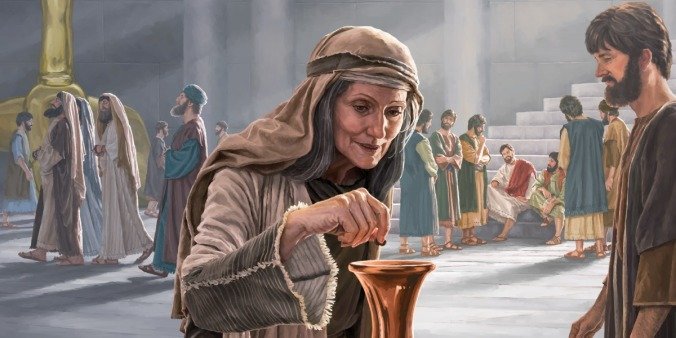
This poor widow has put in more than allIn his teaching Jesus said, ‘Beware of the scribes who like to walk about in long robes, to be greeted obsequiously in the market squares, to take the front seats in the synagogues and the places of honour at banquets; these are the men who swallow the property of widows, while making a show of lengthy prayers. The more severe will be the sentence they receive.’ He sat down opposite the treasury and watched the people putting money into the treasury, and many of the rich put in a great deal. A poor widow came and put in two small coins, the equivalent of a penny. Then he called his disciples and said to them, ‘I tell you solemnly, this poor widow has put more in than all who have contributed to the treasury; for they have all put in money they had over, but she from the little she had has put in everything she possessed, all she had to live on.’
Nothing is changingIn England, Wales and Scotland, the translation of the readings used at Mass is changing. Your current calendar setting is “United States”, so you will not be affected by this change. This message will disappear at the end of December. Universalis podcast: The week ahead – from 10 to 16 NovemberSaints Martin of Tours, Margaret of Scotland, Elizabeth of Hungary and Albert the Great. Friar Julian, the lost Hungarians and the Mongols. More of the gift of death. (15 minutes)
Episode notes.Play Christian Art Each day, The Christian Art website gives a picture and reflection on the Gospel of the day. The readings on this page are from the Jerusalem Bible, which is used at Mass in most of the English-speaking world. The New American Bible readings, which are used at Mass in the United States, are available in the Universalis apps, programs and downloads.
You can also view this page with the Gospel in Greek and English. |
TOPICS: Catholic; General Discusssion; Prayer; Worship
KEYWORDS: catholic; mk12; ordinarytime; prayer
For your reading, reflection, faith-sharing, comments, questions, discussion.
1
posted on
11/10/2024 6:25:49 AM PST
by
annalex
To: All
KEYWORDS: catholic; mk12; ordinarytime; prayer
2
posted on
11/10/2024 6:26:19 AM PST
by
annalex
(fear them not)
To: nickcarraway; NYer; ELS; Pyro7480; livius; ArrogantBustard; Catholicguy; RobbyS; marshmallow; ...

Alleluia Ping Please FReepmail me to get on/off the Alleluia Ping List.
3
posted on
11/10/2024 6:26:49 AM PST
by
annalex
(fear them not)
To: annalex
4
posted on
11/10/2024 6:27:05 AM PST
by
annalex
(fear them not)
To: annalex
| Mark |
| | English: Douay-Rheims | Latin: Vulgata Clementina | Greek NT: Byzantine/Majority Text (2000) |
| | Mark 12
|
| 38. | And he said to them in his doctrine: Beware of the scribes, who love to walk in long robes, and to be saluted in the marketplace, | Et dicebat eis in doctrina sua : Cavete a scribis, qui volunt in stolis ambulare, et salutari in foro, | και ελεγεν αυτοις εν τη διδαχη αυτου βλεπετε απο των γραμματεων των θελοντων εν στολαις περιπατειν και ασπασμους εν ταις αγοραις |
| 39. | And to sit in the first chairs, in the synagogues, and to have the highest places at suppers: | et in primis cathedris sedere in synagogis, et primos discubitus in cœnis : | και πρωτοκαθεδριας εν ταις συναγωγαις και πρωτοκλισιας εν τοις δειπνοις |
| 40. | Who devour the houses of widows under the pretence of long prayer: these shall receive greater judgment. | qui devorant domos viduarum sub obtentu prolixæ orationis : hi accipient prolixius judicium. | οι κατεσθιοντες τας οικιας των χηρων και προφασει μακρα προσευχομενοι ουτοι ληψονται περισσοτερον κριμα |
| 41. | And Jesus sitting over against the treasury, beheld how the people cast money into the treasury, and many that were rich cast in much. | Et sedens Jesus contra gazophylacium, aspiciebat quomodo turba jactaret æs in gazophylacium, et multi divites jactabant multa. | και καθισας ο ιησους κατεναντι του γαζοφυλακιου εθεωρει πως ο οχλος βαλλει χαλκον εις το γαζοφυλακιον και πολλοι πλουσιοι εβαλλον πολλα |
| 42. | And there came a certain poor widow, and she cast in two mites, which make a farthing. | Cum venisset autem vidua una pauper, misit duo minuta, quod est quadrans, | και ελθουσα μια χηρα πτωχη εβαλεν λεπτα δυο ο εστιν κοδραντης |
| 43. | And calling his disciples together, he saith to them: Amen I say to you, this poor widow hath cast in more than all they who have cast into the treasury. | et convocans discipulos suos, ait illis : Amen dico vobis, quoniam vidua hæc pauper plus omnibus misit, qui miserunt in gazophylacium. | και προσκαλεσαμενος τους μαθητας αυτου λεγει αυτοις αμην λεγω υμιν οτι η χηρα αυτη η πτωχη πλειον παντων βεβληκεν των βαλλοντων εις το γαζοφυλακιον |
| 44. | For all they did cast in of their abundance; but she of her want cast in all she had, even her whole living. | Omnes enim ex eo, quod abundabat illis, miserunt : hæc vero de penuria sua omnia quæ habuit misit totum victum suum. | παντες γαρ εκ του περισσευοντος αυτοις εβαλον αυτη δε εκ της υστερησεως αυτης παντα οσα ειχεν εβαλεν ολον τον βιον αυτης |
5
posted on
11/10/2024 6:29:55 AM PST
by
annalex
(fear them not)
To: annalex

Catena Aurea by St. Thomas Aguinas
38. And he said unto them in his doctrine, Beware of the scribes, which love to go in long clothing, and love salutations in the marketplaces,
39. And the chief seats in the synagogues, and the uppermost rooms at feasts:
40. Which devour widows’ houses, and for a pretence make long prayers: these shall receive greater damnation.
PSEUDO-JEROME. After confuting the Scribes and Pharisees, He burns up as a fire their dry and withered examples; wherefore it is said, And he said unto them in his doctrine, Beware of the Scribes, which love to go in long clothing.
BEDE. (ubi sup.) To walk in long clothing is to go forth into public clad in garments too much ornamented, in which amongst other things, that rich man, who fared sumptuously every day, is said to have sinned.
THEOPHYLACT. But they used to walk in honourable garments, because they wished to be highly esteemed for it, and in like manner they desired other things, which lead to glory. For it goes on: And love salutations in the marketplaces, and the chief seats in the synagogues, and the uppermost rooms at feasts.
BEDE. (ubi sup.) We must observe that He does not forbid that those, to whom it falls by the rule of their office, should be saluted in the marketplace, or have chief seats and places at feasts, but He teaches that those who love those things unduly, whether they have them or no, are to be avoided by the faithful as wicked men: that is, He blames the intention and not the office; although this too is culpable, that the very men who wish to be called masters of the synagogue in Moses’ seat, should have to do with lawsuits in the marketplace. We are in two ways ordered to beware of those who are desirous of vain glory; first, we should not be seduced by their hypocrisy into thinking that what they do is good; nor secondly, should we be excited to imitate them, through a vain rejoicing in being praised for those virtues which they affect.
THEOPHYLACT. He also especially teaches the Apostles, not to have any communication with the scribes, but to imitate Christ Himself; and in ordaining them to be masters in the duties of life, He places others under themv.
BEDE. (ubi sup.) But they do not only seek for praise from men, but also for gain. Wherefore there follows, Which devour widows’ houses, under the pretence of long prayers. For there are men who pretending to be just hesitate not to receive money from persons who are troubled in conscience, as though they would be their advocates in the judgment. A hand stretched out to the poor is always an accompaniment to prayer, but these men pass the night in prayer, that they may take away money from the poor.
THEOPHYLACT. But the Scribes used to come to women, who were left without the protection of their husbands, as though they were their protectors; and by a pretence of prayer, a reverend exterior and hypocrisy, they used to deceive widows, and thus also devour the houses of the rich. It goes on, These shall receive a greater damnation, that is, than the other Jews, who sinned.
12:41–44
41. And Jesus sat over against the treasury, and beheld how the people cast money into the treasury: and many that were rich cast in much.
42. And there came a certain poor widow, and she threw in two mites, which make a farthing.
43. And he called unto him his disciples, and saith unto them, Verily I say unto you, That this poor widow hath cast more in, than all they which have cast into the treasury:
44. For all they did cast in of their abundance; but she of her want did cast in all that she had, even all her living.
BEDE. (ubi sup.) The Lord, who had warned them to avoid the desire of high place and vain glory, now distinguishes by a sure test those who brought in gifts. Wherefore it is said, And Jesus sat over against the treasury, and beheld how the people cast money into the treasury. In the Greek language, phylassein means to keep, and gaza is a Persian word for treasure; wherefore the word gazophylacium. which is here used means a place where riches are kept, which name also was applied to the chest in which the offerings of the people were collected, for the necessary uses of the temple, and to the porch in which they were kept. You have a notice of the porch in the Gospel, These words spake Jesus in the treasury as He taught in the temple; and of the chest in the book of Kings, But Jehoiada the priest took a chest. (John 8:20. 2 Kings 12:9)
THEOPHYLACT. Now there was a praiseworthy custom amongst the Jews, that those who were able and willing should put something into the treasury, for the maintenance of the priests, the poor, and the widows; wherefore there is added, And many that were rich cast in much. But whilst many people were so engaged, a poor widow came up, and shewed her love by offering money according to her ability; wherefore it is said, And there came a certain poor widow, and she threw in two mites, which make a farthing.
BEDE. (ubi sup.) Reckoners use the word ‘quadrans’ for the fourth part of any thing, be it place, money, or time. Perhaps then in this place is meant the fourth part of a shekel, that is, five pence. It goes on, And he called unto him his disciples, and saith unto them, Verily I say unto you, That this poor widow hath cast more in, than all they which have cast into the treasury: for God does not weigh the property but the conscience of those who offer; nor did He consider the smallness of the sum in her offering, but what was the store from which it came. Wherefore He adds, For all they did cast in of their abundance, but she of her want did cast in all that she had, even all her living.
PSEUDO-JEROME. But in a mystical sense, they are rich, who bring forth from the treasure of their heart things new and old, which are the obscure and hidden things of Divine wisdom in both testaments; but who is the poor woman, if it be not I and those like me, who cast in what I can, and have the will to explain to you, where I have not the power. For God does not consider how much ye hear, but what is the store from which it comes; but each at all events can bring his farthing, that is, a ready will, which is called a farthing, because it is accompanied by three things, that is, thought, word, and deed. And in that it is said that she cast in all her living, it is implied that all that the body wants is that by which it lives1; wherefore it is said, All the labour of man is for his mouth. (Eccl. 6:7)
THEOPHYLACT. Or else; That widow is the soul of man, which leaving Satan to which it had been joined, casts into the temple two mites, that is, the flesh and the mind, the flesh by abstinence, the mind by humility, that so it may be able to hear that it has cast away all its living, and has consecrated it, leaving nothing for the world of all that it possessed.
BEDE. (ubi sup) Again, in an allegorical way, the rich men, who cast gifts into the treasury, point out the Jews puffed up with the righteousness of the law; the poor widow is the simplicity of the Church: poor indeed, because she has cast away the spirit of pride and of the desires of worldly things; and a widow, because Jesus her husband has suffered death for her. She casts two mites into the treasury, because she brings the love of God and of her neighbour, or the gifts of faith and prayer; which are looked upon as mites in their own insignificance, but measured by the merit of a devout intention are superior to all the proud works of the Jews. The Jew sends of his abundance into the treasury, because he presumes on his own righteousness; but the Church sends her whole living into God’s treasury, because she understands that even her very living is not of her own desert, but of Divine grace.
Catena Aurea Mark 12
6
posted on
11/10/2024 6:31:18 AM PST
by
annalex
(fear them not)
To: annalex
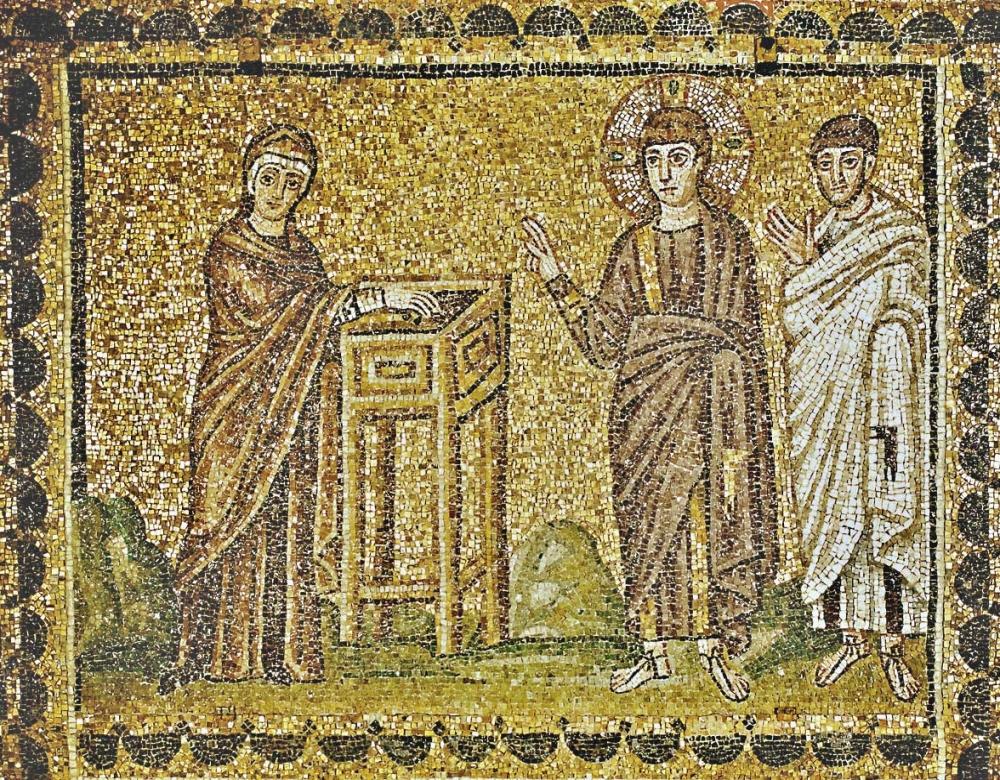
Basilica di Sant’Apollinare Nuovo
6th century
Ravenna, Italy
7
posted on
11/10/2024 6:32:11 AM PST
by
annalex
(fear them not)
To: annalex
This Day in History: November 11 Posted
by Maggie Bell for IASblog


![]()
By Maggie Bell
November 10 is the feast day of Sant’Andrea Avellino, the patron saint of Naples and Sicily. Andrea was born in Castronuovo in 1521 with the baptismal name of Lancelotto, which he later changed to Andrea. Andrea pursued a life of piety and learning, beginning his studies with his uncle, the archpriest of Castronuovo. He chose to pursue a religious education at the age of seventeen, and became ordained as a priest in 1545 when he was twenty-four. After the death of his father, Andrea traveled to Naples, where he was heavily influenced by Jesuit teaching, and sought to achieve a more perfect spiritual life. He was then charged with the task of reforming the Monastery of the Archangel in Baiano according to the strict practices he had adopted.
Soon afterwards, Andrea traveled to Rome on a pilgrimage to visit the tombs of the Apostles and the martyrs. There, he joined the Theatine Order, which was particularly dedicated to virtue and upholding the doctrine of the Church. In 1570, Andrea was elected vicar of two Theatine houses, one in Piacenza and one at San Calimero in Milan, where he began a friendship with Carlo Borromeo, one of the leading voices of the Counterreformation.
In 1584 he returned to Naples as the prior of San Paolo Maggiore and Santi Apostoli. On November 10, 1608, Andrea collapsed suddenly while saying mass, and died later that night in his room, which has since been converted into a chapel.
Further Reading
Andreu, Francesco. Andrea Avellino, Santo. Dizionario Treccani. http://www.treccani.it/enciclopedia/santo-andrea-avellino_(Dizionario-Biografico)
Tazzini, Giacomo. Andrea Avellino, Statue from the facade of Sant’Antonio Abate in Milan, Italy, 1832.
Body of Andrew Avellino in San Paolo Maggiore in Naples
San Paolo Maggiore, Naples, facade
italianartsociety.org
8
posted on
11/10/2024 6:39:27 AM PST
by
annalex
(fear them not)
To: annalex
9
posted on
11/10/2024 6:43:03 AM PST
by
annalex
(fear them not)
To: annalex
NAVARRE BIBLE COMMENTARY (RSV)
Ad Majorem Dei Gloriam (To the Greater Glory of God)
First Reading:
From: 1 Kings 17:7-16
Miracle of the flour and the oil
-------------------------------------
[10] So he arose and went to Zarephath; and when he came to the gate of the city, behold, a widow was there gathering sticks; and he called to her and said, "Bring me a little water in a vessel, that I may drink." [11] And as she was going to bring it, he called to her and said, "Bring me a morsel of bread in your hand." [12] And she said, "As the Lord your God lives, I have nothing baked, only a handful of meal in a jar, and a little oil in a cruse; and now, I am gathering a couple of sticks, that I may go in and prepare it for myself and my son, that we may eat it, and die." [13] And Elijah said to her, "Fear not; go and do as you have said; but first make me a little cake of it and bring it to me, and afterward make for yourself and your son. [14] For thus says the Lord the God of Israel, 'The jar of meal shall not be spent, and the cruse of oil shall not fail, until the day that the Lord sends rain upon the earth.'" [15] And she went and did as Elijah said; and she, and he, and her household ate for many days. [16] The jar of meal was not spent, neither did the cruse of oil fail, according to the word of the Lord which he spoke by Elijah.
************************************************************
Commentary:
17:8-16. Zarephath was 15 km. (9 miles) to the south of Sidon, the area where Jezebel, Ahab's wife, came from (cf. 16:31). There, Elijah was certainly outside the jurisdiction of King Ahab who was persecuting him (cf. 1 Kings 18:10), but it is interesting that it was a poor widow at death's door whom God chose to give the prophet nourishment. Jesus uses the fact that it was a widow and a foreigner who was chosen, to show that God gives his gifts to whomever he pleases, not to those who think they have a right to them (cf. Lk 4:25-26).
10
posted on
11/10/2024 9:11:05 AM PST
by
fidelis
(Ecce Crucem Domini! Fugite partes adversae! Vicit Leo de tribu Juda, Radix David! Alleluia!)
Second Reading: From: Hebrews 9:24-28
The Rites of the Old Covenant Prefigure Those of the New
-------------------------------------------------------------------------
[24] For Christ has entered, not into a sanctuary made with hands, a copy of the true one, but into heaven itself, now to appear in the presence of God on our behalf. [25] Nor was it to offer himself repeatedly, as the high priest enters the Holy Place yearly with blood not his own; [26] for then he would have had to suffer repeatedly since the foundation of the world. But as it is, he has appeared once for all at the end of the age to put away sin by the sacrifice of himself. [27] And just as it is appointed for men to die once, and after that comes judgment, [28] so Christ, having been offered once to bear the sins of many, will appear a second time, not to deal with sin but to save those who are eagerly waiting for him.
**********************************************
Commentary:
23-28. In these verses the sacred writer adds some additional considerations to the main line of his argument. His thought centers on linking the sanctuary, the sacrifices which were offered in the Old Testament sanctuary, and the sacrifice of the New Covenant. It was "necessary" for Christ to shed his blood so that men might" receive the promised eternal inheritance" (9:15), that is, forgiveness of their sins (cf. 9:14). This shedding of blood is also necessary for the "purification" of the heavenly things (9:23). The sacrifices of the Mosaic liturgy purified the things of the old sanctuary and, in some way, pointed to forgiveness of sins (9:9, 10). The sacrifice of Christ, on the other hand, really does blot out sin and opens for us the way to heaven itself, giving us entry into that new sanctuary (7:25; 9:12). But the parallel is not a perfect one, for the old sacrifices were multiple and were constantly repeated in petition of forgiveness (9:25). The sacrifice of Christ, on the contrary, is a unique sacrifice, because it is eternally effective (7:27; 9:12). Moreover, whereas the high priest offered a sacrifice not with his own blood but with the blood of animals, Christ offered his own blood in sacrifice. Therefore, Christ has offered himself "once" (7:28; 9:12, 26, 28) in the same sort of way as every man has to die only once and then undergoes judgment. Furthermore, through his sacrifice Christ has passed through the heavens once and for all and will not return to earth to renew his sacrifice. He will not return until the end of time, when he will come in glory.
Two truths interweave here a number of times. The first is that Christ entered forever not into a temple made by man but into heaven itself (9:24; 7:26; 8:1). The second is that Christ also enables us to enter into glory; that is, his sacrifice and his entry into heaven enable man to attain his last end.
27-28. These verses look at three basic truths of Christian belief about the last things--1) the immutable decree of death; 2) the fact that there is a judgment immediately after death; 3) the second coming of Christ, in glory.
"Not to deal with sin": this phrase means that the second coming of Christ or Parousia, will not be for the purpose of redeeming men from sin but rather to bring salvation, that is, glory, to those who placed their hope in him. Christ will come into the world for a second time, but not as Redeemer, for his sacrifice has already eliminated sin once for all; rather, he will come as Judge of all. His coming "is appointed": it is as necessary as death and judgment. These three truths are closely interconnected.
Although man is mortal, "a spiritual element survives and subsists after death, an element endowed with consciousness and will, so that the 'human self' subsists. To designate this element, the Church uses the word 'soul', the accepted term in the usage of Scripture and Tradition" (SCDF, "Letter on Certain Questions Concerning Eschatology", 17 May 1979).
Man, then, is made up of a spiritual and immortal soul and a corruptible body. However, when God originally endowed man with supernatural grace, he gave him additional gifts, the so-called "preternatural" gifts, which included bodily immortality. Adam's disobedience resulted in the loss of his friendship with God and the loss of this preternatural gift. From that point onwards death is "the wages of sin" (Rom 6:23), and it is to this divine decision that the text refers when it says that it "is appointed for men to die" (cf. Gen 3:19, 23; Rom 5:12). The Church has repeatedly stressed that death is a punishment; cf., for example, Pius VI, "Auctorem Fidei", prop. 1, 7: "in our present state (death) is inflicted as a just punishment for sin"; immortality was an "unmerited gift and not a natural condition". Verses 27-28 are an implicit exhortation to watchfulness (cf. also 1 Cor 7:29; Sir 14:12; and "Lumen Gentium", 48).
Immediately after death everyone will be judged on the conduct of his life. All "are to give an account of their lives; those who have done good deeds will go into eternal life; those who have done evil will go into everlasting fire" ("Athanasian Creed"). This is something which reason with the help of God's Word can discover, because people with a correct moral sense realize that good deserves to be rewarded and evil punished, and that it is impossible for this to occur completely in this life. It is difficult to say whether Hebrews 9:27 is referring to the "particular judgment", which happens immediately after death, or to the general judgment, which will take place on the last day. Both interpretations can be supported, for the judgment the verse refers to is connected, on the one hand, with death, and on the other with the second coming of Christ. In any event, it is clear that what is meant is a "personal" judgment, a trial at which each individual will be judged by Christ (cf. 2 Cor 5:10; Rom 14:10). The existence of a general judgment does not conflict with the certainty that there is a particular judgment, for the Church, in line with Sacred Scripture, although it awaits the glorious revealing of our Lord Jesus Christ on the last day, sees that event as distinct from and separate in time from the judgment which every individual will undergo immediately after death (cf. "Letter on Eschatology, op. cit.").
The idea of death and judgment, however, should not only inspire fear; it should also lead us to hope in Christ, for our Lord will come a second time to show himself a merciful judge to "those who are eagerly waiting for him".
Christians, therefore, combine their joyful hope in the establishment of the Kingdom of God, which they wholeheartedly desire, with a desire to make the best possible use of the time allotted to them in this life. "This urgent solicitude of the Church, the Spouse of Christ, for the needs of men--for their joys and hopes, their griefs and labors—is nothing other than her intense desire to share them in full, in order to illuminate men with the light of Christ and to gather together and unite all in him who alone is the Savior of each one of them. This solicitude must never be taken to mean that the Church conforms herself to the things of this world, or that her longing for the coming of her Lord and his eternal reign grows cold" (Paul VI, "Creed of the People of God").
11
posted on
11/10/2024 9:11:41 AM PST
by
fidelis
(Ecce Crucem Domini! Fugite partes adversae! Vicit Leo de tribu Juda, Radix David! Alleluia!)
Gospel Reading: From: Mark 12:38-44
Jesus Censures the Scribes
-------------------------------
[38] And in His (Jesus') teaching He said, "Beware of the scribes, who like to go about in long robes, and to have salutations in the market places [39] and the best seats in the synagogues and the places of honor at feasts, [40] who devour widow's houses and for a pretense make long prayers. They will receive the greater condemnation."
The Widow's Mite
----------------------
[41] And He sat down opposite the treasury, and watched the multitude putting money into the treasury. Many rich people put in large sums. [42] And a poor widow came, and put in two copper coins, which make a penny. [43] And He called His disciples to Him, and said to them, "Truly, I say to you, this poor widow has put in more than all those who are contributing to the treasury. [44] For they all contributed out of their abundance; but she out of her poverty has put in everything she had, her whole living."
*************************************************
Commentary:
38-40. Our Lord reproves disordered desire for human honors: "We should notice that salutations in the marketplace are not forbidden, nor people taking the best seats if that befits their position; rather, the faithful are warned to avoid, as they would evil men, those who set too much store by such honors" (St. Bede, "In Marci Evangelium Expositio, in loc."). See also notes on Matthew 23:2-3, 5, 11 and 14.
41-44. Our Lord uses this little event to teach us the importance of things which apparently are insignificant. He puts it somewhat paradoxically; the poor widow has contributed more than all the rich. In God's sight the value of such an action lies more in upright intention and generosity of spirit than in the quantity one gives. "Didn't you see the light in Jesus' eyes as the poor widow left her little alms in the temple? Give Him what you can: the merit is not in whether it is big or small, but in the intention with which you give it" (St J. Escriva, "The Way", 829).
By the same token, our actions are pleasing to God even if they are not as perfect as we would like. St. Francis de Sales comments: "Now as among the treasures of the temple, the poor widow's mite was much esteemed, so the least little good works, even though performed somewhat coldly and not according to the whole extent of the charity which is in us, are agreeable to God, and esteemed by Him; so that though of themselves they cannot cause and increase in the existing love [...] yet Divine Providence, counting on them and, out of His goodness, valuing them, forthwith rewards them with increase in charity for the present, and assigns to them a greater Heavenly glory for the future" (St. Francis de Sales, "Treatise on the Love of God", Book 3, Chapter 2).
12
posted on
11/10/2024 9:11:58 AM PST
by
fidelis
(Ecce Crucem Domini! Fugite partes adversae! Vicit Leo de tribu Juda, Radix David! Alleluia!)
13
posted on
11/10/2024 9:12:44 AM PST
by
fidelis
(Ecce Crucem Domini! Fugite partes adversae! Vicit Leo de tribu Juda, Radix David! Alleluia!)
Disclaimer:
Opinions posted on Free Republic are those of the individual
posters and do not necessarily represent the opinion of Free Republic or its
management. All materials posted herein are protected by copyright law and the
exemption for fair use of copyrighted works.
FreeRepublic.com is powered by software copyright 2000-2008 John Robinson