Skip to comments.
Catholic Caucus: Daily Mass Readings 5-November-2024
Universalis/Jerusalem Bible ^
Posted on 11/05/2024 5:14:51 AM PST by annalex
5 November 2024
Tuesday of week 31 in Ordinary Time

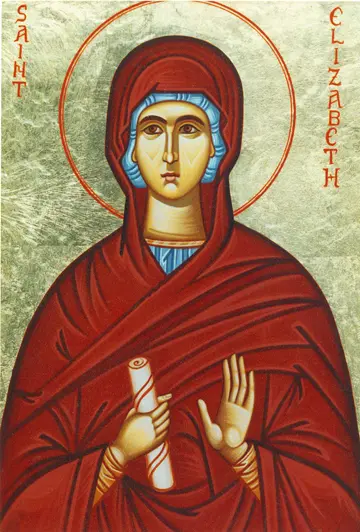
Saint Elizabeth, Mother of John the Baptist Roman Catholic Church in Saint Louis, Missouri,Readings at MassLiturgical Colour: Green. Year: B(II).
| First reading |
|---|
| Philippians 2:5-11 |
|---|
Christ humbled himself but God raised him highIn your minds you must be the same as Christ Jesus: His state was divine, yet he did not cling to his equality with God but emptied himself to assume the condition of a slave, and became as men are; and being as all men are, he was humbler yet, even to accepting death, death on a cross. But God raised him high and gave him the name which is above all other names so that all beings in the heavens, on earth and in the underworld, should bend the knee at the name of Jesus and that every tongue should acclaim Jesus Christ as Lord, to the glory of God the Father.
| Responsorial Psalm |
|---|
| Psalm 21(22):26-32 |
|---|
You are my praise, O Lord, in the great assembly. My vows I will pay before those who fear the Lord. The poor shall eat and shall have their fill. They shall praise the Lord, those who seek him. May their hearts live for ever and ever! You are my praise, O Lord, in the great assembly. All the earth shall remember and return to the Lord, all families of the nations worship before him; for the kingdom is the Lord’s, he is ruler of the nations. They shall worship him, all the mighty of the earth. You are my praise, O Lord, in the great assembly. And my soul shall live for him, my children serve him. They shall tell of the Lord to generations yet to come, declare his faithfulness to peoples yet unborn: ‘These things the Lord has done.’ You are my praise, O Lord, in the great assembly.
| Gospel Acclamation | cf.Ep1:17,18 |
|---|
Alleluia, alleluia! May the Father of our Lord Jesus Christ enlighten the eyes of our mind, so that we can see what hope his call holds for us. Alleluia! Alleluia, alleluia! Come to me, all you who labour and are overburdened, and I will give you rest, says the Lord. Alleluia!
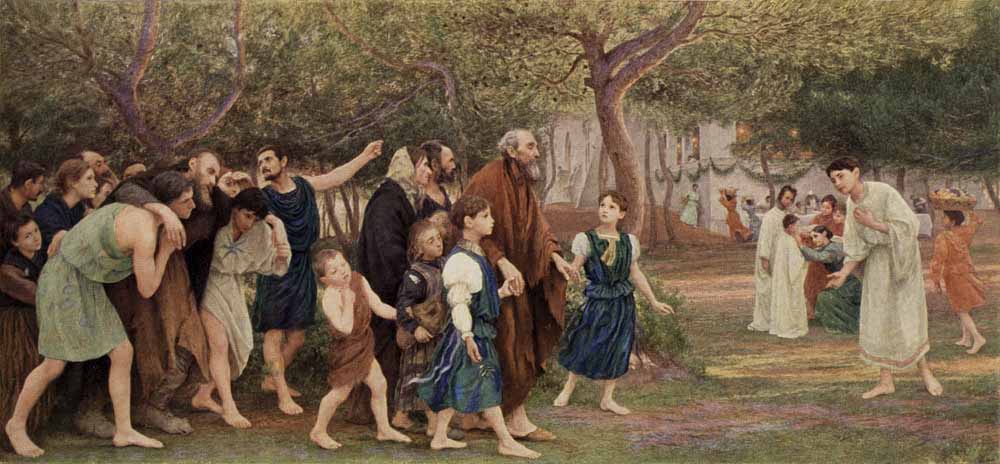
'Not one of those who were invited shall have a taste of my banquet'One of those gathered round the table said to Jesus, ‘Happy the man who will be at the feast in the kingdom of God!’ But he said to him, ‘There was a man who gave a great banquet, and he invited a large number of people. When the time for the banquet came, he sent his servant to say to those who had been invited, “Come along: everything is ready now.” But all alike started to make excuses. The first said, “I have bought a piece of land and must go and see it. Please accept my apologies.” Another said, “I have bought five yoke of oxen and am on my way to try them out. Please accept my apologies.” Yet another said, “I have just got married and so am unable to come.” ‘The servant returned and reported this to his master. Then the householder, in a rage, said to his servant, “Go out quickly into the streets and alleys of the town and bring in here the poor, the crippled, the blind and the lame.” “Sir” said the servant “your orders have been carried out and there is still room.” Then the master said to his servant, “Go to the open roads and the hedgerows and force people to come in to make sure my house is full; because, I tell you, not one of those who were invited shall have a taste of my banquet.”’
Nothing is changingIn England, Wales and Scotland, the translation of the readings used at Mass is changing. Your current calendar setting is “United States”, so you will not be affected by this change. This message will disappear at the end of December. Christian Art Each day, The Christian Art website gives a picture and reflection on the Gospel of the day. The readings on this page are from the Jerusalem Bible, which is used at Mass in most of the English-speaking world. The New American Bible readings, which are used at Mass in the United States, are available in the Universalis apps, programs and downloads.
You can also view this page with the Gospel in Greek and English. |
TOPICS: Catholic; General Discusssion; Prayer; Worship
KEYWORDS: catholic; lk14; ordinarytime; prayer
For your reading, reflection, faith-sharing, comments, questions, discussion.
1
posted on
11/05/2024 5:14:51 AM PST
by
annalex
To: nickcarraway; NYer; ELS; Pyro7480; livius; ArrogantBustard; Catholicguy; RobbyS; marshmallow; ...

Alleluia Ping Please FReepmail me to get on/off the Alleluia Ping List.
2
posted on
11/05/2024 5:16:07 AM PST
by
annalex
(fear them not)
To: annalex
3
posted on
11/05/2024 5:16:29 AM PST
by
annalex
(fear them not)
To: annalex
| Luke |
| | English: Douay-Rheims | Latin: Vulgata Clementina | Greek NT: Byzantine/Majority Text (2000) |
| | Luke 14
|
| 15. | When one of them that sat at table with him, had heard these things, he said to him: Blessed is he that shall eat bread in the kingdom of God. | Hæc cum audisset quidam de simul discumbentibus, dixit illi : Beatus qui manducabit panem in regno Dei. | ακουσας δε τις των συνανακειμενων ταυτα ειπεν αυτω μακαριος ος φαγεται αριστον εν τη βασιλεια του θεου |
| 16. | But he said to him: A certain man made a great supper, and invited many. | At ipse dixit ei : Homo quidam fecit cœnam magnam, et vocavit multos. | ο δε ειπεν αυτω ανθρωπος τις εποιησεν δειπνον μεγα και εκαλεσεν πολλους |
| 17. | And he sent his servant at the hour of supper to say to them that were invited, that they should come, for now all things are ready. | Et misit servum suum hora cœnæ dicere invitatis ut venirent, quia jam parata sunt omnia. | και απεστειλεν τον δουλον αυτου τη ωρα του δειπνου ειπειν τοις κεκλημενοις ερχεσθε οτι ηδη ετοιμα εστιν παντα |
| 18. | And they began all at once to make excuse. The first said to him: I have bought a farm, and I must needs go out and see it: I pray thee, hold me excused. | Et cœperunt simul omnes excusare. Primus dixit ei : Villam emi, et necesse habeo exire, et videre illam : rogo te, habe me excusatum. | και ηρξαντο απο μιας παραιτεισθαι παντες ο πρωτος ειπεν αυτω αγρον ηγορασα και εχω αναγκην εξελθειν και ιδειν αυτον ερωτω σε εχε με παρητημενον |
| 19. | And another said: I have bought five yoke of oxen, and I go to try them: I pray thee, hold me excused. | Et alter dixit : Juga boum emi quinque, et eo probare illa : rogo te, habe me excusatum. | και ετερος ειπεν ζευγη βοων ηγορασα πεντε και πορευομαι δοκιμασαι αυτα ερωτω σε εχε με παρητημενον |
| 20. | And another said: I have married a wife, and therefore I cannot come. | Et alius dixit : Uxorem duxi, et ideo non possum venire. | και ετερος ειπεν γυναικα εγημα και δια τουτο ου δυναμαι ελθειν |
| 21. | And the servant returning, told these things to his lord. Then the master of the house, being angry, said to his servant: Go out quickly into the streets and lanes of the city, and bring in hither the poor, and the feeble, and the blind, and the lame. | Et reversus servus nuntiavit hæc domino suo. Tunc iratus paterfamilias, dixit servo suo : Exi cito in plateas et vicos civitatis : et pauperes, ac debiles, et cæcos, et claudos introduc huc. | και παραγενομενος ο δουλος εκεινος απηγγειλεν τω κυριω αυτου ταυτα τοτε οργισθεις ο οικοδεσποτης ειπεν τω δουλω αυτου εξελθε ταχεως εις τας πλατειας και ρυμας της πολεως και τους πτωχους και αναπηρους και χωλους και τυφλους εισαγαγε ωδε |
| 22. | And the servant said: Lord, it is done as thou hast commanded, and yet there is room. | Et ait servus : Domine, factum est ut imperasti, et adhuc locus est. | και ειπεν ο δουλος κυριε γεγονεν ως επεταξας και ετι τοπος εστιν |
| 23. | And the Lord said to the servant: Go out into the highways and hedges, and compel them to come in, that my house may be filled. | Et ait dominus servo : Exi in vias, et sæpes : et compelle intrare, ut impleatur domus mea. | και ειπεν ο κυριος προς τον δουλον εξελθε εις τας οδους και φραγμους και αναγκασον εισελθειν ινα γεμισθη ο οικος μου |
| 24. | But I say unto you, that none of those men that were invited, shall taste of my supper. | Dico autem vobis quod nemo virorum illorum qui vocati sunt, gustabit cœnam meam. | λεγω γαρ υμιν οτι ουδεις των ανδρων εκεινων των κεκλημενων γευσεται μου του δειπνου [πολλοι γαρ εισιν κλητοι ολιγοι δε εκλεκτοι] |
|
(*) [πολλοι γαρ εισιν κλητοι ολιγοι δε εκλεκτοι] (many are called, few, however, are elected), as indicated by square brackets, is not in the translations.
4
posted on
11/05/2024 5:20:14 AM PST
by
annalex
(fear them not)
To: annalex

Catena Aurea by St. Thomas Aguinas
14:15–24
15. And when one of them that sat at meat with him heard these things, he said unto him, Blessed is he that shall eat bread in the kingdom of God.
16. Then said he unto him, A certain man made a great supper, and bade many:
17. And sent his servant at supper time to say to them that were bidden, Come; for all things are now ready.
18. And they all with one consent began to make excuse. The first said unto him, I have bought a piece of ground, and I must needs go and see it: I pray thee have me excused.
19. And another said, I have bought five yoke of oxen, and I go to prove them: I pray thee have me excused.
20. And another said, I have married a wife, and therefore I cannot come.
21. So that servant came, and shewed his lord these things. Then the master of the house being angry said to his servant, Go out quickly into the streets and lanes of the city, and bring in hither the poor, and the maimed, and the halt, and the blind.
22. And the servant said, Lord, it is done as thou hast commanded, and yet there is room.
23. And the lord said unto the servant, Go out into the highways and hedges, and compel them to come in, that my house may be filled.
24. For I say unto you, That none of those men which were bidden shall taste of my supper.
EUSEBIUS. Our Lord had just before taught us to prepare our feasts for those who cannot repay, seeing that we shall have our reward at the resurrection of the just. Some one then, supposing the resurrection of the just to be one and the same with the kingdom of God, commends the above-mentioned recompense; for it follows, When one of them that sat at meat with him heard these things, he said unto him, Blessed is he that shall eat bread in the kingdom of God.
CYRIL OF ALEXANDRIA. That man was carnal, and a careless hearer of the things which Christ delivered, for he thought the reward of the saints was to be bodily.
AUGUSTINE. (Serm. 112.) Or because he sighed for something afar off, and that bread which he desired lay before him. For who is that Bread of the kingdom of God but He who says, I am the living bread which came down from heaven? (John 6:51.) Open not thy mouth, but thy heart.
BEDE. But because some receive this bread by faith merely, as if by smelling, but its sweetness they loathe to really touch with their mouths, our Lord by the following parable condemns the dulness of those men to be unworthy of the heavenly banquet. For it follows, But he said unto him, A certain man made a great supper, and bade many.
CYRIL OF ALEXANDRIA. This man represents God the Father just as images are formed to give the resemblance of power. For as often as God wishes to declare His avenging power, He is called by the names of bear, leopard, lion, and others of the same kind; but when He wishes to express mercy, by the name of man. The Maker of all things, therefore, and Father of Glory, or the Lord, prepared the great supper which was finished in Christ.
For in these latter times, and as it were the setting of our world, the Son of God has shone upon us, and enduring death for our sakes, has given us His own body to eat. Hence also the lamb was sacrificed in the evening according to the Mosaic law. Rightly then was the banquet which was prepared in Christ called a supper.
GREGORY. (Hom. 36. in Evan.) Or he made a great supper, as having prepared for us the full enjoyment of eternal sweetness. He bade many, but few came, because sometimes they who themselves are subject to him by faith, by their lives oppose his eternal banquet. And this is generally the difference between the delights of the body and the soul, that fleshly delights when not possessed provoke a longing desire for them, but when possessed and devoured, the eater soon turns from satiety to loathing; spiritual delights, on the other hand, when not possessed are loathed, when possessed the more desired. But heavenly mercy recalls those despised delights to the eyes of our memory, and in order that we should drive away our disgust, bids us to the feast. Hence it follows, And he sent his servant, &c.
CYRIL OF ALEXANDRIA. That servant who was sent is Christ Himself, who being by nature God and the true Son of God, emptied Himself, and took upon Him the form of a servant. But He was sent at supper time. For not in the beginning did the Word take upon Him our nature, but in the last time; and he adds, For all things are ready. For the Father prepared in Christ the good things bestowed upon the world through Him, the removal of sins, the participation of the Holy Spirit, the glory of adoption. To these Christ bade men by the teaching of the Gospel.
AUGUSTINE. (ubi sup.) Or else, the Man is the Mediator between God and man, Christ Jesus; He sent that they who were bidden might come, i. e. those who were called by the prophets whom He had sent; who in the former times invited to the supper of Christ, were often sent to the people of Israel, often bade them to come at supper time. They received the inviters, refused the supper. They received the prophets and killed Christ, and thus ignorantly prepared for us the supper. The supper being now ready, i. e. Christ being sacrificed, the Apostles were sent to those, to whom prophets had been sent before.
GREGORY. By this servant then who is sent by the master of the family to bid to supper, the order of preachers is signified. But it is often the case that a powerful person has a despised servant, and when his Lord orders any thing through him, the servant speaking is not despised, because respect for the master who sends him is still kept up in the heart. Our Lord then offers what he ought to be asked for, not ask others to receive. He wishes to give what could scarcely be hoped for; yet all begin at once to make excuse, for it follows, And they all began with one consent to make excuse. Behold a rich man invites, and the poor hasten to come. We are invited to the banquet of God, and we make excuse.
AUGUSTINE. (ubi sup.) Now there were three excuses, of which it is added, The first said unto him, I have bought a piece of ground, and I must needs go and see it. The bought piece of ground denotes government. Therefore pride is the first vice reproved. For the first man wished to rule, not willing to have a master.
GREGORY. (ubi sup.) Or by the piece of ground is meant worldly substance. Therefore he goes out to see it who thinks only of outward things for the sake of his living.
AMBROSE. Thus it is that the worn out soldier is appointed to serve degraded offices, as he who intent upon things below buys for himself earthly possessions, can not enter into the kingdom of heaven. Our Lord says, Sell all that thou hast, and follow me.
It follows, And another said, I have bought five yoke of oxen, and I go to prove them.
AUGUSTINE. (Serm. 112.) The five yoke of oxen are taken to be the five senses of the flesh; in the eyes sight, in the ears hearing, in the nostrils smelling, in the mouth taste, in all the members touch. But the yoke is more easily apparent in the three first senses; two eyes, two ears, two nostrils. Here are three yoke. And in the mouth is the sense of taste which is found to be a kind of double, in that nothing is sensible to the taste, which is not touched both by the tongue and palate. The pleasure of the flesh which belongs to the touch is secretly doubled. It is both outward and inward. But they are called yoke of oxen, because through those senses of the flesh earthly things are pursued. For the oxen till the ground, but men at a distance from faith, given up to earthly things, refuse to believe in any thing, but what they arrive at by means of the five-fold sense of the body. “I believe nothing but what I see.” If such were our thoughts, we should be hindered from the supper by those five yoke of oxen. But that you may understand that it is not the delight of the five senses which charms and conveys pleasure, but that a certain curiosity is denoted, he says not, I have bought five yoke of oxen, and go to feed them, but go to prove them.
GREGORY. (in Hom. 36. in Ev.) By the bodily senses also because they cannot comprehend things within, but take cognizance only of what is without, curiosity is rightly represented, which while it seeks to shake off a life which is strange to it, not knowing its own secret life, desires to dwell upon things without. But we must observe, that the one who for his farm, and the other who to prove his five yoke of oxen, excuse themselves from the supper of their Inviter, mix up with their excuse the words of humility. For when they say, I pray thee, and then disdain to come, the word sounds of humility, but the action is pride. It follows, And this said, I have married a wife, and therefore I cannot come.
AUGUSTINE. (ubi sup.) That is, the delight of the flesh which hinders many, I wish it were outward and not inward. For he who said, I have married a wife, taking pleasure in the delights of the flesh, excuses himself from the supper; let such a one take heed lest he die from inward hunger.
BASIL. But he says, I cannot come, because that the human mind when it is degenerating to worldly pleasures, is feeble in attending to the things of God.
GREGORY. (Hom. 36.) But although marriage is good, and appointed by Divine Providence for the propagation of children, some seek therein not fruitfulness of offspring, but the lust of pleasure. And so by means of a righteous thing may not unfitly an unrighteous thing be represented.
AMBROSE. Or marriage is not blamed; but purity is held up to greater honour, since the unmarried woman careth for the things of the Lord, that she may be holy in body and spirit, but she that is married careth for the things of the world. (1 Cor. 7:34.)
AUGUSTINE. (ubi sup.) Now John when he said, all that is in the world is the lust of the flesh, and the lust of the eyes, and the pride of life, (1 John 2:16.) began from the point where the Gospel ended. The lust of the flesh, I have married a wife; the lust of the eyes, I have bought fire yoke of oxen; the pride of life, I have bought a farm. But proceeding from a part to the whole, the five senses have been spoken of under the eyes alone, which hold the chief place among the five senses. Because though properly the sight belongs to the eyes, we are in the habit of ascribing the act of seeing to all the five senses.
CYRIL OF ALEXANDRIA. But whom can we suppose these to be who refused to come for the reason just mentioned, but the rulers of the Jews, whom throughout the sacred history we find to have been often reproved for these things?
ORIGEN. Or else, they who have bought a piece of ground and reject or refuse the supper, are they who have taken other doctrines of divinity, but have despised the word which they possessed. But he who has bought five yoke of oxen is he who neglects his intellectual nature, and follows the things of sense, therefore he cannot comprehend a spiritual nature. But he who has married a wife is he who is joined to the flesh, a lover of pleasure rather than of God. (1 Tim. 3:4.)
AMBROSE. Or let us suppose that three classes of men are excluded from partaking of that supper, Gentiles, Jews, Heretics. The Jews by their fleshly service impose upon themselves the yoke of the law, for the five yoke are the yoke of the Ten Commandments, of which it is said, And he declared unto you his covenant, which he commanded you to perform, even ten commandments; and he wrote them upon two tables of stone. (Deut. 4:13.) That is, the commands of the Decalogue. Or the five yoke are the five books of the old law. But heresy indeed, like Eve with a woman’s obstinacy, tries the affection of faith. And the Apostle says that we must flee from covetousness, lest entangled in the customs of the Gentiles we be unable to come to the kingdom of Christ. (Eph. 5:3, Col. 3:5, Heb. 13:5, 1 Tim. 6:11.) Therefore both he who has bought a farm is a stranger to the kingdom, and he who has chosen the yoke of the law rather than the gift of grace, and he also who excuses himself because he has married a wife.
It follows, And the servant returned, and told these things to his Lord.
AUGUSTINE. (in Gen. ad lit. c. 19.) Not for the sake of knowing inferior beings does God require messengers, as though He gained aught from them, for He knows all things stedfastly and unchangeably. But he has messengers for oursakes and their own, because to be present with God, and stand before Him so as to consult Him about His subjects, and obey His heavenly commandments, is good for them in the order of their own nature.
CYRIL OF ALEXANDRIA. But with the rulers of the Jews who refused their call, as they themselves confessed, Have any of the rulers believed on him? (John 7:48.) the Master of the household was wroth, as with them that deserved His indignation and anger; whence it follows, Then the master of the house being angry, &c.
PSEUDO-BASIL. (app. Hom. in Ps. 37.) Not that the passion of anger belongs to the Divine substance, but an operation such as in us is caused by anger, is called the anger and indignation of God.
CYRIL OF ALEXANDRIA. Thus it was that the master of the house is said to have been enraged with the chiefs of the Jews, and in their stead were called men taken from out of the Jewish multitude, and of weak and impotent minds. For at Peter’s preaching, first indeed three thousand, then five thousand believed, and afterwards much people; whence it follows, He said unto his servant, Go out straightway into the streets and lanes of the city, and bring in hither the poor, and the maimed, and the halt, and the blind. (Acts 2:41, 44.
AMBROSE. He invites the poor, the weak, and the blind, to shew that weakness of body shuts out no one from the kingdom of heaven, and that he is guilty of fewer sins who lacks the incitement to sin; or that the infirmities of sin are forgiven through the mercy of God. Therefore he sends to the streets, that from the broader ways they may come to the narrow way.
Because then the proud refuse to come, the poor (Greg. Hom. 36.) are chosen, since they are called weak and poor who are weak in their own judgment of themselves, for there are poor, and yet as it were strong, who though lying in poverty are proud; the blind are they who have no brightness of understanding; the lame are they who have walked not uprightly in their works. But since the faults of these are expressed in the weakness of their members, as those were sinners who when bidden refused to come, so also are these who are invited and come; but the proud sinners are rejected, the humble are chosen. God then chooses those whom the world despises, because for the most part the very act of contempt recals a man to himself. And men so much the sooner hear the voice of God, as they have nothing in this world to take pleasure in. When then the Lord calls certain from the streets and lanes to supper, He denotes that people who had learnt to observe in the city the constant practice of the law. But the multitude who believed of the people of Israel did not fill the places of the upper feast room. Hence it follows, And the servant said, Lord, it is done as thou hast commanded, and yet there is room. For already had great numbers of the Jews entered, but yet there was room in the kingdom for the abundance of the Gentiles to be received. Therefore it is added, And the Lord said unto the servant, Go out into the highways and hedges, and compel them to come in, that my house may be filled. When He commanded His guests to be collected from the wayside and the hedges, He sought for a rural people, that is, the Gentiles.
AMBROSE. Or, He sends to the highways and about the hedges, because they are fit for the kingdom of God, who, not absorbed in the desire for present goods, are hastening on to the future, set in a certain fixed path of good will. And who like a hedge which separates the cultivated ground from the uncultivated, and keeps off the incursion of the cattle, know how to distinguish good and evil, and to hold up the shield of faith against the temptations of spiritual wickedness.
AUGUSTINE. (Serm. 112.) The Gentiles came from the streets and lanes, the heretics come from the hedges. For they who make a hedge seek for a division; let them be drawn away from the hedges, plucked asunder from the thorns. But they are unwilling to be compelled. By our own will, say they, will we enter. Compel them to enter, He says. Let necessity be used from without, thence arises a will.
GREGORY. (in Hom. 36.) They then who, broken down by the calamities of this world, return to the love of God, are compelled to enter. But very terrible is the sentence which comes next. For I say unto you, That none of those men which were bidden shall taste of my supper. Let no one then despise the call, lest if when bidden he make excuse, when he wishes to enter he shall not be able.
Catena Aurea Luke 14
5
posted on
11/05/2024 5:21:48 AM PST
by
annalex
(fear them not)
To: annalex

The Parable of the Guests at the Wedding of the King's Son
Francisco Jose de Goya y Lucientes
1796-97
Museo Historico Municipal, Cadiz, Spain
6
posted on
11/05/2024 5:22:05 AM PST
by
annalex
(fear them not)
To: annalex
SAINT ELIZABETH, MOTHER OF JOHN THE BAPTISTFeast: November 5
The name Elizabeth, which has been borne by several saints, means in Hebrew "worshiper of God." All that we know of Elizabeth, wife of Zachary and mother of John the Baptist, is to be found in the book of Luke. A descendant of the priestly line of Aaron, she was a kinswomanhow close we are not toldof the Virgin Mary. According to the Gospel, Elizabeth had lived a blameless life with her husband in one of the hill-towns of Judea. Having reached an advanced age with her prayers for a son unanswered, she thought that her barrenness was a reproach. One day, while Zachary was serving in the temple, the Angel Gabriel appeared at the right of the altar, and announced that a son would be born to Elizabeth. It was in the sixth month of her pregnancy that the Virgin Mary came to visit hera touching and beautiful scene pictured by many great artists. The Angel Gabriel, having lately announced to Mary the destiny that awaited her, also told her that her kinswoman Elizabeth was with child. The Virgin Mary, eager to share in Elizabeth's happiness and to confide that she too would bear a child, traveled down the dusty road from Nazareth. On Mary's arrival, she was amazed when Elizabeth, having foreseen knowledge, greeted her as "mother of my Lord." Elizabeth's salutation was in these words: "Blessed art thou among women and blessed is the fruit of thy womb. And how have I deserved that the mother of my Lord should come to me? For behold, the moment that the sound of thy greeting came to my ears, the babe in my womb leapt for joy. And blessed is she who has believed, because the things promised her by the Lord shall be accomplished." The Gospel story tells us further that at Elizabeth's delivery her friends and neighbors rejoiced with her, and when the child was brought to be circumcised, they were going to call him after his father Zachary, but his mother said, "His name shall be John."
Saint Elizabeth, Mother of John the Baptist. Scriptural Saint. Celebration of Feast Day is November 5.
Taken from "Lives of Saints", Published by John J. Crawley & Co., Inc.
ewtn.com
7
posted on
11/05/2024 5:27:12 AM PST
by
annalex
(fear them not)
To: annalex
8
posted on
11/05/2024 5:29:42 AM PST
by
annalex
(fear them not)
To: annalex
NAVARRE BIBLE COMMENTARY (RSV)
Ad Majorem Dei Gloriam (To the Greater Glory of God)
First Reading:
From: Philippians 2:5-11
Hymn in Praise of Christ's Self-Emptying
---------------------------------------------------
[5] Have this mind among yourselves, which was in Christ Jesus,) [6] who, though He was in the form of God, did not count equality with God a thing to be grasped, [7] but emptied Himself, taking the form of a servant, being born in the likeness of men. [8] And being found in human form He humbled Himself and became obedient unto death, even death on a cross. [9] Therefore God has highly exalted Him and bestowed on Him the name which is above every name, [10] that at the name of Jesus every knee should bow, in Heaven and on earth and under the earth, [11] and every tongue confess that Jesus Christ is Lord, to the glory of God the Father.
***********************************************************************
Commentary:
3-11. Verse 3 exhorts us to see others as better than ourselves. Our Lord, although he was our superior in all respects, did not see his divinity as something to boast about before men (v. 6). In fact, he humbled himself and emptied himself (vv. 7-8), was not motivated by conceit or selfishness (cf. v. 3), did not look to his own interests (cf. v. 4), and "became obedient unto death" (v. 8), thereby carrying out the Father's plan for man's salvation. By reflecting on his example we shall come to see that suffering for Christ is a sign of salvation (cf. 1:28-29): after undergoing the sufferings of his passion and death, Christ was publicly exalted above all creation (cf. vv. 9-11).
Our Lord offers us a perfect example of humility. "The coming of our Lord Jesus Christ, the Scepter of God's Majesty, was in no pomp of pride and haughtiness--as it could so well have been--but in self-abasement [...]. You see, dear friends, what an example we have been given. If the Lord humbled himself in this way, what ought we to do, who through him have come under the yoke of his guidance?" (St Clement of Rome, "Letter to the Corinthians", 13).
"Christian charity cannot confine itself to giving things or money to the needy. It seeks, above all, to respect and understand each person for what he is, in his intrinsic dignity as a man and child of God" (St. J. Escriva, "Christ Is Passing By", 72).
5. The Apostle's recommendation, "'Have this mind among yourselves, which was in Christ Jesus, requires all Christians, so far as human power allows, to reproduce in themselves the sentiments that Christ had when He was offering Himself in sacrifice--sentiments of humility, of adoration, praise, and thanksgiving to the divine majesty. It requires them also to become victims, as it were; cultivating a spirit of self-denial according to the precepts of the Gospel, willingly doing works of penance, detesting and expiating their sins. It requires us all, in a word, to die mystically with Christ on the Cross, so that we may say with the same Apostle: 'I have been crucified with Christ' (Galatians 2:19)" (Pope Pius XII, "Mediator Dei", 22).
6-11. In what he says about Jesus Christ, the Apostle is not simply proposing Him as a model for us to follow. Possibly transcribing an early liturgical hymn (and) adding some touches of his own, he is--under the inspiration of the Holy Spirit--giving a very profound exposition of the nature of Christ and using the most sublime truths of faith to show the way Christian virtues should be practiced.
This is one of the earliest New Testament texts to reveal the divinity of Christ. The epistle was written around the year 62 (or perhaps before that, around 55) and if we remember that the hymn of Philippians 2:6-11 may well have been in use prior to that date, the passage clearly bears witness to the fact that Christians were proclaiming, even in those very early years, that Jesus, born in Bethlehem, crucified, died and buried, and risen from the dead, was truly both God and man.
The hymn can be divided into three parts. The first (verses 6 and the beginning of 7) refers to Christ's humbling Himself by becoming man. The second (the end of verse 7 and verse 8) is the center of the whole passage and proclaims the extreme to which His humility brought Him: as man He obediently accepted death on the cross. The third part (verses 9-11) describes His exaltation in glory. Throughout St. Paul is conscious of Jesus' divinity: He exists from all eternity. But he centers his attention on His death on the cross as the supreme example of humility. Christ's humiliation lay not in His becoming a man like us and cloaking the glory of His divinity in His sacred humanity: it also brought Him to lead a life of sacrifice and suffering which reached its climax on the cross, where He was stripped of everything He had, like a slave. However, now that He has fulfilled His mission, He is made manifest again, clothed in all the glory that befits His divine nature and which His human nature has merited.
The man-God, Jesus Christ, makes the cross the climax of His earthly life; through it He enters into His glory as Lord and Messiah. The Crucifixion puts the whole universe on the way to salvation.
Jesus Christ gives us a wonderful example of humility and obedience. "We should learn from Jesus' attitude in these trials," [St.] Monsignor Escriva reminds us. "During His life on earth He did not even want the glory that belonged to Him. Though He had the right to be treated as God, He took the form of a servant, a slave (cf. Philippians 2:6-7). And so the Christian knows that all glory is due God and that he must not use the sublimity and greatness of the Gospel to further his own interests or human ambitions.
"We should learn from Jesus. His attitude in rejecting all human glory is in perfect balance with the greatness of His unique mission as the beloved Son of God who becomes incarnate to save men" ("Christ Is Passing By", 62).
6-7. "Though He was in the form of God" or "subsisting in the form of God": "form" is the external aspect of something and manifests what it is. When referring to God, who is invisible, His "form" cannot refer to things visible to the senses; the "form of God" is a way of referring to Godhead. The first thing that St. Paul makes clear is that Jesus Christ is God, and was God before the Incarnation. As the "Nicene-Constantinopolitan Creed" professes it, "the only-begotten Son of God, born of the Father before time began, light from light, true God from true God."
"He did not count equality with God as something to be grasped": the Greek word translated as "equality" does not directly refer to equality of nature but rather the equality of rights and status. Christ was God and He could not stop being God; therefore, He had a right to be treated as God and to appear in all His glory. However, He did not insist on this dignity of His as if it were a treasure which He possessed and which was legally His: it was not something He clung to and boasted about. And so He took "the form of a servant". He could have become man without setting His glory aside--He could have appeared as He did, momentarily, as the Transfiguration (cf. Matthew 17:1ff); instead He chose to be like men, in all things but sin (cf. verse 7). By becoming man in the way He did, He was able, as Isaiah prophesied in the Song of the Servant of Yahweh, to bear our sorrows and to be stricken (cf. Isaiah 53:4).
"He emptied Himself", He despoiled Himself: this is literally what the Greek verb means. But Christ did not shed His divine nature; He simply shed its glory, its aura; if He had not done so it would have shone out through His human nature. From all eternity He exists as God and from the moment of the Incarnation He began to be man. His self-emptying lay not only in the fact that the Godhead united to Himself (that is, to the person of the Son) something which was corporeal and finite (a human nature), but also in the fact that this nature did not itself manifest the divine glory, as it "ought" to have done. Christ could not cease to be God, but He could temporarily renounce the exercise of rights that belonged to Him as God--which was what He did.
Verses 6-8 bring the Christian's mind the contrast between Jesus and Adam. The devil tempted Adam, a mere man, to "be like God" (Genesis 3:5). By trying to indulge this evil desire (pride is a disordered desire for self-advancement) and by committing the sin of disobeying God (cf. Genesis 3:6), Adam drew down the gravest misfortunes upon himself and on his whole line (present potentially in him): this is symbolized in the Genesis passage by his expulsion from Paradise and by the physical world's rebellion against his lordship (cf. Genesis 3:16-24). Jesus Christ, on the contrary, who enjoyed divine glory from all eternity, "emptied Himself": He chooses the way of humility, the opposite way to Adam's (opposite, too, to the way previously taken by the devil). Christ's obedience thereby makes up for the disobedience of the first man; it puts mankind in a position to more than recover the natural and supernatural gifts with which God endowed human nature at the Creation. And so, after focusing on the amazing mystery of Christ's humiliation or self-emptying ("kenosis" in Greek), this hymn goes on joyously to celebrate Christ's exaltation after death.
Christ's attitude in becoming man is, then, a wonderful example of humility. "What is more humble", St. Gregory of Nyssa asks, "than the King of all creation entering into communion with our poor nature? The King of kings and Lord of lords clothes Himself with the form of our enslavement; the Judge of the universe comes to pay tribute to the princes of this world; the Lord of creation is born in a cave; He who encompasses the world cannot find room in the inn...; the pure and incorrupt one puts on the filthiness of our nature and experiences all our needs, experiences even death itself" ("Oratio I In Beatitudinibus").
This self-emptying is an example of God's infinite goodness in taking the initiative to meet man: "Fill yourselves with wonder and gratitude at such a mystery and learn from it. All the power, all the majesty, all the beauty, all the infinite harmony of God, all His great and immeasurable riches. God whole and entire was hidden for our benefit in the humanity of Christ. The Almighty appears determined to eclipse His glory for a time, so as to make it easy for His creatures to approach their Redeemer." (St. J. Escriva, "Friends of God", 111).
8. Jesus Christ became man "for us men and for our salvation", we profess in the Creed. Everything He did in the course of His life had a salvific value; His death on the cross represents the climax of His redemptive work for, as St. Gregory of Nyssa says, "He did not experience death due to the fact of being born; rather, He took birth upon Himself in order to die" ("Oratio Catechetica Magna", 32).
Our Lord's obedience to the Father's saving plan, involving as it did death on the cross, gives us the best of all lessons in humility. For, in the words of St. Thomas Aquinas, "obedience is the sign of true humility" ("Commentary on Phil., ad loc."). In St. Paul's time death by crucifixion was the most demeaning form of death, for it was inflicted only on criminals. By becoming obedient "unto death, even death on a cross", Jesus was being humble in the extreme. He was perfectly within His rights to manifest Himself in all His divine glory, but He chose instead the route leading to the most ignominious of deaths.
His obedience, moreover, was not simply a matter of submitting to the Father's will, for, as St. Paul points out, He made Himself obedient: His obedience was active; He made the Father's salvific plans His own. He chose voluntarily to give Himself up to crucifixion in order to redeem mankind. "Debasing oneself when one is forced to do so is not humility", St. John Chrysostom explains; "humility is present when one debases oneself without being obliged to do so" ("Hom. on Phil., ad loc.").
Christ's self-abasement and his obedience unto death reveals His love for us, for "greater love has no man than this, that a man lay down his life for his friends" (John 15:13). His loving initiative merits a loving response on our part: we should show that we desire to be one with Him, for love "seeks union, identification with the beloved. United to Christ, we will be drawn to imitate His life of dedication, His unlimited love and His sacrifice unto death. Christ brings us face to face with the ultimate choice: either we spend our life in selfish isolation, or we devote ourselves and all our energies to the service of others" (St. J. Escriva, "Friends of God", 236).
9-11. "God highly exalted Him": the Greek compounds the notion of exaltation, to indicate the immensity of His glorification. Our Lord Himself foretold this when He said, "He who humbles himself will be exalted" (Luke 14:11).
Christ's sacred humanity was glorified as a reward for His humiliation. The Church's Magisterium teaches that Christ's glorification affects his human nature only, for "in the form of God the Son was equal to the Father, and between the Begetter and the Only-begotten there was no difference in essence, no difference in majesty; nor did the Word, through the mystery of incarnation, lose anything which the Father might later return to Him as a gift" ([Pope] St. Leo the Great, "Promisisse Me Memini", Chapter 8). Exaltation is public manifestation of the glory which belongs to Christ's humanity by virtue of its being joined to the divine person of the Word. This union to the "form of a servant" (cf. verse 7) meant an immense act of humility on the part of the Son, but it led to the exaltation of the human nature He took on.
For the Jews the "name that is above every name" is the name of God (Yahweh), which the Mosaic Law required to be held in particular awe. Also, they regarded a name given to someone, especially if given by God, as not just a way of referring to a person but as expressing something that belonged to the very core of his personality. Therefore, the statement that God "bestowed on Him the name which is above every name" means that God the Father gave Christ's human nature the capacity to manifest the glory of divinity which was His by virtue of the hypostatic union: therefore, it is to be worshipped by the entire universe.
St. Paul describes the glorification of Jesus Christ in terms similar to those used by the prophet Daniel of the Son of Man: "To Him was given dominion and glory and kingdom, that all peoples, nations and languages should serve His Kingdom, one that shall not be destroyed" (Daniel 7:14). Christ's lordship extends to all created things. Sacred Scripture usually speaks of "heaven and earth" when referring to the entire created universe; by mentioning here the underworld it is emphasizing that nothing escapes His dominion. Jesus Christ can here be seen as the fulfillment of Isaiah's prophecy about the universal sovereignty of Yahweh: "To Me every knee shall bow, every tongue shall swear" (Isaiah 45:23). All created things come under His sway, and men are duty-bound to accept the basic truth of Christian teaching: "Jesus Christ is Lord." The Greek word "Kyrios" used here by St. Paul is the word used by the Septuagint, the early Greek version of the Old Testament, to translate the name of God ("Yahweh"). Therefore, this sentence means "Jesus Christ is God."
The Christ proclaimed here as having been raised on high is the man-God who was born and died for our sake, attaining the glory of His exaltation after undergoing the humiliation of the cross. In this also Christ sets us an example: we cannot attain the glory of Heaven unless we understand the supernatural value of difficulties, ill-health and suffering: these are manifestations of Christ's cross present in our ordinary life. "We have to die to ourselves and be born again to a new life. Jesus Christ obeyed in this way, even unto death on a cross (Philippians 2:18); that is why God exalted Him. If we obey God's will, the cross will mean our own resurrection and exaltation. Christ's life will be fulfilled step by step in our own lives. It will be said of us that we have tried to be good children of God, who went about doing good in spite of our weakness and personal shortcomings, no matter how many" (St. J. Escriva, "Christ Is Passing By", 21).
9
posted on
11/05/2024 8:19:47 AM PST
by
fidelis
(Ecce Crucem Domini! Fugite partes adversae! Vicit Leo de tribu Juda, Radix David! Alleluia!)
Gospel Reading: From: Luke 14:15-24
Parable of the Invited Guests
-----------------------------------
[15] When one of those who sat at table with Him (Jesus) heard this, he said to Him, "Blessed is he who shall eat bread in the Kingdom of God!" [16] But He said to him, "A man once gave a great banquet, and invited many; [17] and at the time for the banquet he sent his servant to say to those who had been invited, 'Come; for all is now ready.' [18] But they all alike began to make excuses. The first said to him, 'I have bought a field, and I must go out and see it; I pray you, have me excused.' [19] And another said, 'I have bought five yoke of oxen, and I go to examine them; I pray you, have me excused.' [20] And another said, 'I have married a wife, and therefore I cannot come.' [21] So the servant came and reported this to his master. Then the householder in anger said to his servant, 'Go out quickly to the streets and lanes of the city, and bring in the poor and maimed and blind and lame.' [22] And the servant said, 'Sir, what you commanded has been done, and still there is room.' [23] And the master said to the servant, 'Go out to the highways and hedges, and compel people to come in, that my house may be filled. [24] For I tell you, none of those who were invited shall taste my banquet.'"
***********************************************************************************
Commentary:
15. In biblical language the expression "to eat bread in the Kingdom of God" means sharing in eternal beatitude, of which this great banquet is a symbol (cf. Isaiah 25:6; Matthew 22:1-4).
16-24. If God invites someone to know Him in faith, he should sacrifice any human interest which gets in the way of replying to God's call, no matter how lawful and noble it be. The objections we tend to put forward, the duties we appeal to, are really just excuses. This is why the ungrateful invitees are blameworthy.
"Compel people to come in": it is not a matter of forcing anyone's freedom --God does not want us to love Him under duress--but of helping a person to make right decisions, to shrug off any human respect, to avoid occasions of sin, to do what he can to discover the truth .... A person is "compelled to come in" through prayer, the example of a Christian life, friendship--in a word, apostolate. "If in order to save an earthly life it is praiseworthy to use force to stop a man from committing suicide, are we not to be allowed use of the same force -- holy coercion -- to save the Life (with a capital) of many who are stupidly bent on killing their souls?" (St. J. Escriva, "The Way", 399).
10
posted on
11/05/2024 8:20:08 AM PST
by
fidelis
(Ecce Crucem Domini! Fugite partes adversae! Vicit Leo de tribu Juda, Radix David! Alleluia!)
11
posted on
11/05/2024 8:21:31 AM PST
by
fidelis
(Ecce Crucem Domini! Fugite partes adversae! Vicit Leo de tribu Juda, Radix David! Alleluia!)
To: annalex
Thanks for posting these excerpts from Catena Aurea — I wouldn’t normally read them along with the daily Gospel but for your posts here. Much appreciated!
12
posted on
11/05/2024 8:27:10 AM PST
by
nicollo
(Remember when we had to close tags?)
Whether you have already voted, or are voting today (and do everything you can to cast your vote!), remember our fight is only partly political: it is a battle between good and evil, between light and darkness, between the kingdom of the prince of darkness, and the Kingdom of God. In the words of Padre Pio, "Pray, and don't worry."
"Finally, be strong in the Lord and in the strength of his might. Put on the whole armor of God, that you may be able to stand against the wiles of the devil. For we are not contending against flesh and blood, but against the principalities, against the powers, against the world rulers of this present darkness, against the spiritual hosts of wickedness in the heavenly places." (Ephesians 6:10-12)

13
posted on
11/05/2024 8:30:45 AM PST
by
fidelis
(Ecce Crucem Domini! Fugite partes adversae! Vicit Leo de tribu Juda, Radix David! Alleluia!)
To: nicollo
14
posted on
11/06/2024 5:07:33 AM PST
by
annalex
(fear them not)
Disclaimer:
Opinions posted on Free Republic are those of the individual
posters and do not necessarily represent the opinion of Free Republic or its
management. All materials posted herein are protected by copyright law and the
exemption for fair use of copyrighted works.
FreeRepublic.com is powered by software copyright 2000-2008 John Robinson