Skip to comments.
Catholic Caucus: Daily Mass Readings 4-November-2024
Universalis/Jerusalem Bible ^
Posted on 11/04/2024 4:25:28 AM PST by annalex
4 November 2024
Saint Charles Borromeo, Bishop on Monday of week 31 in Ordinary Time

Church of St. Charles Borromeo, Saint Anthony, MinnesotaReadings at MassLiturgical Colour: White. Year: B(II). Readings for the feria Readings for the memorial These are the readings for the feria
| First reading |
|---|
| Philippians 2:1-4 |
|---|
Be united in your loveIf our life in Christ means anything to you, if love can persuade at all, or the Spirit that we have in common, or any tenderness and sympathy, then be united in your convictions and united in your love, with a common purpose and a common mind. That is the one thing which would make me completely happy. There must be no competition among you, no conceit; but everybody is to be self-effacing. Always consider the other person to be better than yourself, so that nobody thinks of his own interests first but everybody thinks of other people’s interests instead.
| Responsorial Psalm | Psalm 130(131) |
|---|
Keep my soul in peace before you, O Lord. O Lord, my heart is not proud nor haughty my eyes. I have not gone after things too great nor marvels beyond me. Keep my soul in peace before you, O Lord. Truly I have set my soul in silence and peace. A weaned child on its mother’s breast, even so is my soul. Keep my soul in peace before you, O Lord. O Israel, hope in the Lord both now and forever. Keep my soul in peace before you, O Lord.
| Gospel Acclamation | Ps118:18 |
|---|
Alleluia, alleluia! Open my eyes, O Lord, that I may consider the wonders of your law. Alleluia! Alleluia, alleluia! If you make my word your home you will indeed be my disciples, and you will learn the truth, says the Lord. Alleluia!
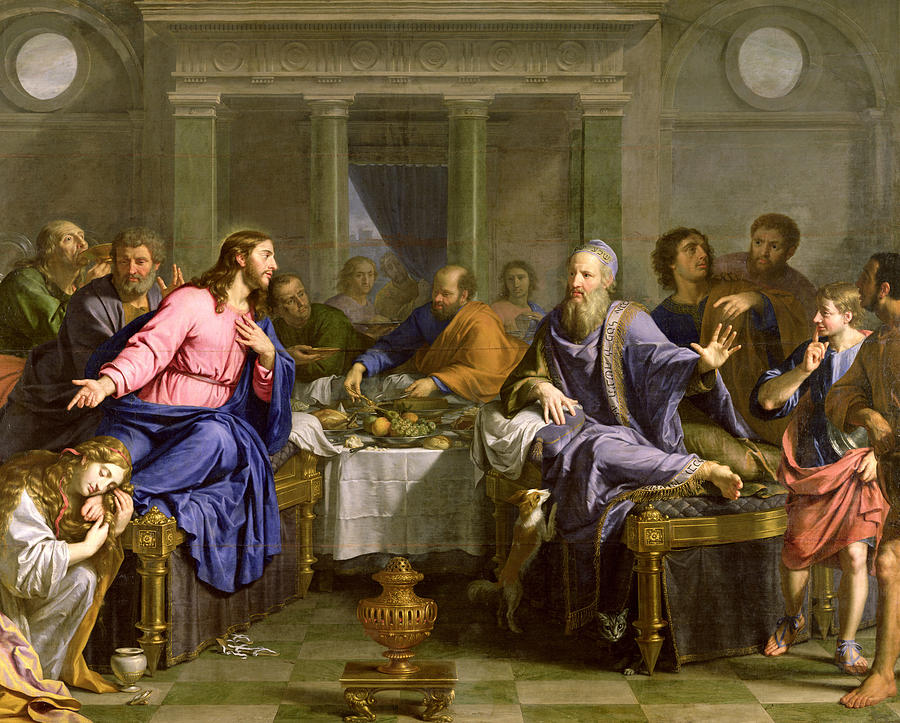
Do not invite those who might be able to invite you backJesus said to his host, one of the leading Pharisees, ‘When you give a lunch or a dinner, do not ask your friends, brothers, relations or rich neighbours, for fear they repay your courtesy by inviting you in return. No; when you have a party, invite the poor, the crippled, the lame, the blind; that they cannot pay you back means that you are fortunate, because repayment will be made to you when the virtuous rise again.’ Continue These are the readings for the memorial
| First reading | Romans 12:3-13 |
|---|
Use the gifts you have been givenIn the light of the grace I have received I want to urge each one among you not to exaggerate his real importance. Each of you must judge himself soberly by the standard of the faith God has given him. Just as each of our bodies has several parts and each part has a separate function, so all of us, in union with Christ, form one body, and as parts of it we belong to each other. Our gifts differ according to the grace given us. If your gift is prophecy, then use it as your faith suggests; if administration, then use it for administration; if teaching, then use it for teaching. Let the preachers deliver sermons, the almsgivers give freely, the officials be diligent, and those who do works of mercy do them cheerfully. Do not let your love be a pretence, but sincerely prefer good to evil. Love each other as much as brothers should, and have a profound respect for each other. Work for the Lord with untiring effort and with great earnestness of spirit. If you have hope, this will make you cheerful. Do not give up if trials come; and keep on praying. If any of the saints are in need you must share with them; and you should make hospitality your special care.
| Responsorial Psalm |
|---|
| Psalm 88(89):2-5,21-22,25,27 |
|---|
I will sing for ever of your love, O Lord. I will sing for ever of your love, O Lord; through all ages my mouth will proclaim your truth. Of this I am sure, that your love lasts for ever, that your truth is firmly established as the heavens. I will sing for ever of your love, O Lord. ‘I have made a covenant with my chosen one; I have sworn to David my servant: I will establish your dynasty for ever and set up your throne through all ages. I will sing for ever of your love, O Lord. ‘I have found David my servant and with my holy oil anointed him. My hand shall always be with him and my arm shall make him strong. I will sing for ever of your love, O Lord. ‘My truth and my love shall be with him; by my name his might shall be exalted. He will say to me: “You are my father, my God, the rock who saves me.”’ I will sing for ever of your love, O Lord.
| Gospel Acclamation | Jn10:14 |
|---|
Alleluia, alleluia! I am the good shepherd, says the Lord; I know my own sheep and my own know me. Alleluia!
The good shepherd is one who lays down his life for his sheepJesus said: ‘I am the good shepherd: the good shepherd is one who lays down his life for his sheep. The hired man, since he is not the shepherd and the sheep do not belong to him, abandons the sheep and runs away as soon as he sees a wolf coming, and then the wolf attacks and scatters the sheep; this is because he is only a hired man and has no concern for the sheep. ‘I am the good shepherd; I know my own and my own know me, just as the Father knows me and I know the Father; and I lay down my life for my sheep. And there are other sheep I have that are not of this fold, and these I have to lead as well. They too will listen to my voice, and there will be only one flock, and one shepherd.’ Continue
Nothing is changingIn England, Wales and Scotland, the translation of the readings used at Mass is changing. Your current calendar setting is “United States”, so you will not be affected by this change. This message will disappear at the end of December. Christian Art Each day, The Christian Art website gives a picture and reflection on the Gospel of the day. The readings on this page are from the Jerusalem Bible, which is used at Mass in most of the English-speaking world. The New American Bible readings, which are used at Mass in the United States, are available in the Universalis apps, programs and downloads.
You can also view this page with the Gospel in Greek and English. |
TOPICS: Catholic; General Discusssion; Prayer; Worship
KEYWORDS: catholic; lk14; ordinarytime; prayer
For your reading, reflection, faith-sharing, comments, questions, discussion.
1
posted on
11/04/2024 4:25:28 AM PST
by
annalex
To: All
KEYWORDS: catholic; lk14; ordinarytime; prayer
2
posted on
11/04/2024 4:25:57 AM PST
by
annalex
(fear them not)
To: nickcarraway; NYer; ELS; Pyro7480; livius; ArrogantBustard; Catholicguy; RobbyS; marshmallow; ...

Alleluia Ping Please FReepmail me to get on/off the Alleluia Ping List.
3
posted on
11/04/2024 4:26:43 AM PST
by
annalex
(fear them not)
To: annalex
4
posted on
11/04/2024 4:26:59 AM PST
by
annalex
(fear them not)
To: annalex
| Luke |
| | English: Douay-Rheims | Latin: Vulgata Clementina | Greek NT: Byzantine/Majority Text (2000) |
| | Luke 14
|
| 12. | And he said to him also that had invited him: When thou makest a dinner or a supper, call not thy friends, nor thy brethren, nor thy kinsmen, nor thy neighbours who are rich; lest perhaps they also invite thee again, and a recompense be made to thee. | Dicebat autem et ei, qui invitaverat : Cum facis prandium, aut cœnam, noli vocare amicos tuos, neque fratres tuos, neque cognatos, neque vicinos divites : ne forte te et ipsi reinvitent, et fiat tibi retributio ; | ελεγεν δε και τω κεκληκοτι αυτον οταν ποιης αριστον η δειπνον μη φωνει τους φιλους σου μηδε τους αδελφους σου μηδε τους συγγενεις σου μηδε γειτονας πλουσιους μηποτε και αυτοι σε αντικαλεσωσιν και γενηται σοι ανταποδομα |
| 13. | But when thou makest a feast, call the poor, the maimed, the lame, and the blind; | sed cum facis convivium, voca pauperes, debiles, claudos, et cæcos : | αλλ οταν ποιης δοχην καλει πτωχους αναπηρους χωλους τυφλους |
| 14. | And thou shalt be blessed, because they have not wherewith to make thee recompense: for recompense shall be made thee at the resurrection of the just. | et beatus eris, quia non habent retribuere tibi : retribuetur enim tibi in resurrectione justorum. | και μακαριος εση οτι ουκ εχουσιν ανταποδουναι σοι ανταποδοθησεται γαρ σοι εν τη αναστασει των δικαιων |
5
posted on
11/04/2024 4:30:37 AM PST
by
annalex
(fear them not)
To: annalex

Catena Aurea by St. Thomas Aguinas
14:12–14
12. Then said he also to him that bade him, When thou makest a dinner or a supper, call not thy friends, nor thy brethren, neither thy kinsmen, nor thy rich neighbours; lest they also bid thee again, and a recompence be made thee.
13. But when thou makest a feast, call the poor, the maimed, the lame, the blind:
14. And thou shalt be blessed; for they cannot recompense thee: for thou shalt be recompensed at the resurrection of the just.
THEOPHYLACT. The supper being composed of two parties, the invited and the inviter, and having already exhorted the invited to humility, He next rewards by His advice the inviter, guarding him against making a feast to gain the favour of men. Hence it is said, Then said he also to him that bade him, When thou makest a dinner or a supper, call not thy friends.
CHRYSOSTOM. (Hom. 1, 3. in ep. Col.) Many are the sources from which friendships are made. Leaving out all unlawful ones, we shall speak only of those which are natural and moral; the natural are, for instance, between father and son, brother and brother, and such like; which He meant, saying, Nor thy brethren, nor thy kinsmen; the moral, when a man has become your guest or neighbour; and with reference to these He says, nor thy neighbours.
BEDE. Brothers then, and friends, and the rich, are not forbidden, as though it were a crime to entertain one another, but this, like all the other necessary intercourse among men, is shewn to fail in meriting the reward of everlasting life; as it follows, Lest perchance they also bid thee again, and a recompense be made thee. He says not, “and sin be committed against thee.” And the like to this He speaks in another place, And if ye do good to those who do good to you, what thank have ye? (Luke 6:33.) There are however certain mutual feastings of brothers and neighbours, which not only incur a retribution in this life, but also condemnation hereafter. And these are celebrated by the general gathering together of all, or the hospitality in turn of each one of the company; and they meet together that they may perpetrate foul deeds, and through excess of wine be provoked to all kinds of lustful pleasure.
CHRYSOSTOM. Let us not then bestow kindness on others under the hope of return. For this is a cold motive, and hence it is that such a friendship soon vanishes. But if you invite the poor, God, who never forgets, will be your debtor, as it follows, But when ye make a feast, call the poor, the maimed, the lame, and the blind.
CHRYSOSTOM. (Hom. 45. in Act.) For the humbler our brother is, so much the more does Christ come through him and visit us. For he who entertains a great man does it often from vainglory. And elsewhere, But very often interest is his object, that through such a one he may gain promotion. I could indeed mention many who for this pay court to the most distinguished of the nobles, that through their assistance they may obtain the greater favour from the prince. Let us not then ask those who can recompense us, as it follows, And thou shalt be blessed, for they cannot recompense thee. And let us not be troubled when we receive no return of a kindness, but when we do; for if we have received it we shall receive nothing more, but if man does not repay us, God will. As it follows, For thou shall be recompensed at the resurrection of the just.
BEDE. And though all rise again, yet it is called the resurrection of the just, because in the resurrection they doubt not that they are blessed. Whoever then bids the poor to his feast shall receive a reward hereafter. But he who invites his friends, brothers, and the rich, has received his reward. But if he does this for God’s sake after the example of the sons of Job, God, who Himself commanded all the duties of brotherly love, will reward him.
CHRYSOSTOM. But thou sayest, the poor are unclean and filthy. Wash him, and make him to sit with thee at table. If he has dirty garments, give him clean ones. Christ comes to thee through him, and dost thou stand trifling?
GREGORY OF NYSSA. Do not then let them lie as though they were nothing worth. Reflect who they are, and thou wilt discover their preciousness. They have put on the image of the Saviour. Heirs of future blessings, bearing the keys of the kingdom, able accusers and excusers, not speaking themselves, but examined by the judge.
CHRYSOSTOM. (Hom. 45. in Act.) It would become thee then to receive them above in the best chamber, but if thou shrinkest, at least admit Christ below, where are the menials and servants. Let the poor man be at least thy door keeper. For where there is alms, the devil durst not enter. And if thou sittest not down with them, at any rate send them the dishes from thy table.
ORIGEN. But mystically, he who shuns vain-glory calls to a spiritual banquet the poor, that is, the ignorant, that he may enrich them; the weak, that is, those with offended consciences, that he may heal them; the lame, that is, those who have wandered from reason, that he may make their paths straight; the blind, that is, those who discern not the truth, that they may behold the true light. But it is said, They cannot recompense thee, i. e. they know not how to return an answer.
Catena Aurea Luke 14
6
posted on
11/04/2024 4:31:19 AM PST
by
annalex
(fear them not)
To: annalex

Miraculous Mass
Simone Martini
1312-17
Fresco, 390 x 200 cm
Cappella di San Martino, Lower Church, San Francesco, Assisi In the bay to the right we find the scene of the Miraculous Mass, an episode that is only very rarely included in Italian fresco cycles. This was the first time it was depicted. The event took place in Albenga and was similar to what happened in Amiens. After having given a beggar his tunic, Martin is about to celebrate mass. During the elevation, the most deeply spiritual moment in the mass, two angels appear and give Martin a very beautiful and precious piece of fabric. There is extraordinary spontaneity and beauty in the deacon's expression of surprise, in his almost fearful gesture: his astonishment is so great that he instinctively reaches out towards his bishop. The scene is a masterful composition of volumes and shapes with the linear elements (the candlesticks and the decoration of the altar-cloth) alternating with the solid structures of the altar and the dais, beneath a barrel-vaulted ceiling.
Source
7
posted on
11/04/2024 4:32:44 AM PST
by
annalex
(fear them not)
To: annalex
Saint of the Day for November 4
(October 2, 1538 – November 3, 1584)
Saint Charles Borromeo’s Story
The name of Charles Borromeo is associated with reform. He lived during the time of the Protestant Reformation, and had a hand in the reform of the whole Church during the final years of the Council of Trent.
Although he belonged to the Milanese nobility and was related to the powerful Medici family, Charles desired to devote himself to the Church. In 1559, when his uncle, Cardinal de Medici was elected Pope Pius IV, he made Charles cardinal-deacon and administrator of the Archdiocese of Milan. At the time Charles was still a layman and a young student. Because of his intellectual qualities Charles was entrusted with several important offices connected with the Vatican, and later appointed secretary of state with responsibility for the papal states. The untimely death of his elder brother brought Charles to a definite decision to be ordained a priest, despite his relatives’ insistence that he marry. Soon after being ordained a priest at age 25, Borromeo was consecrated bishop of Milan.
Working behind the scenes, Saint Charles deserves the credit for keeping the Council of Trent in session when at several points it was on the verge of breaking up. Borromeo encouraged the pope to renew the Council in 1562, after it had been suspended for 10 years. He took upon himself the task of the entire correspondence during the final phase. Because of his work at the Council, Borromeo was unable to take up residence in Milan until the Council concluded.
Eventually, Borromeo was allowed to devote his time to the Archdiocese of Milan, where the religious and moral picture was far from bright. The reform needed in every phase of Catholic life among both clergy and laity was initiated at a provincial council of all the bishops under him. Specific regulations were drawn up for bishops and other clergy: If the people were to be converted to a better life, Borromeo had to be the first to give a good example and renew their apostolic spirit.
Charles took the initiative in giving a good example. He allotted most of his income to charity, forbade himself all luxury, and imposed severe penances upon himself. He sacrificed wealth, high honors, esteem, and influence to become poor. During the plague and famine of 1576, Borromeo tried to feed 60,000 to 70,000 people daily. To do this he borrowed large sums of money that required years to repay. Whereas the civil authorities fled at the height of the plague, he stayed in the city, where he ministered to the sick and the dying, helping those in want.
Work and the heavy burdens of his high office began to affect Archbishop Borromeo’s health, leading to his death at the age of 46.
Reflection
Saint Charles Borromeo made his own the words of Christ: “…I was hungry and you gave me food, I was thirsty and you gave me drink, a stranger and you welcomed me, naked and you clothed me, ill and you cared for me, in prison and you visited me” (Matthew 25:35-36). Borromeo saw Christ in his neighbor, and knew that charity done for the least of his flock was charity done for Christ.
Saint Charles Borromeo is a Patron Saint of:
Catechists
Catechumens
Seminarians
franciscanmedia.org
8
posted on
11/04/2024 4:36:04 AM PST
by
annalex
(fear them not)
To: annalex
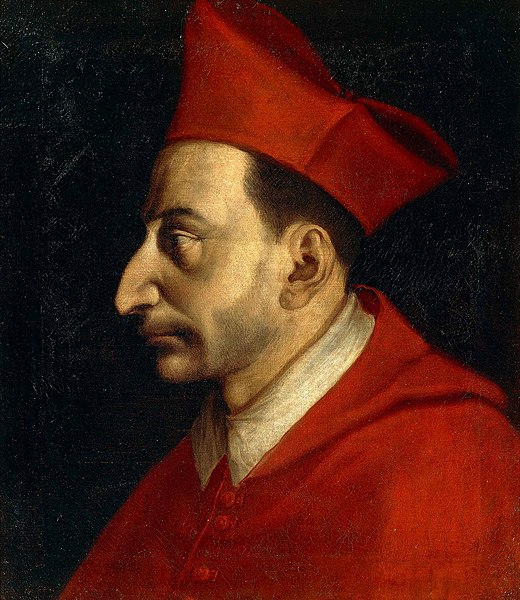
Portrait of Charles Borromeo
Attributed to Giovanni Ambrogio Figino (–1608)
9
posted on
11/04/2024 4:38:31 AM PST
by
annalex
(fear them not)
To: annalex
NAVARRE BIBLE COMMENTARY (RSV)
Ad Majorem Dei Gloriam (To the Greater Glory of God)
First Reading:
From: Philippians 2:1-4
Unity and Humility
-----------------------
[1] So if there is any encouragement in Christ, any incentive of love, any participation in the Spirit, any affection and sympathy, [2] complete my joy by being of the same mind, having the same love, being in full accord and of one mind. [3] Do nothing from selfishness or conceit, but in humility count others better than yourselves. [4] Let each of you look not only to his own interests, but also to the interests of others.
***********************************************************************
Commentary:
1-4. Verse 1 begins with a very awkwardly constructed clause, which the New Vulgate and the RSV translate literally. It is a conditional, rhetorical clause, rather than an affirmative statement, and its meaning is clarified by the rest of the sentence.
St Paul is making an affectionate appeal to the Christian good sense of the faithful; he seems to be saying: "If you want to console me in Christ, complete my joy by paying attention to the advice I am now going to give you" (cf. St Thomas Aquinas, "Commentary on Phil, ad loc.").
The Apostle recommends that they should always act humbly and with an upright intention (vv. 3-4) if they want charity to reign among them (v. 2). In their work and social life ordinary Christians should be upright in all their dealings. They should go about everything, even apparently unimportant things, in a humble way, doing them for God. But they should also remember that their behavior has an effect on others. "Don't forget that you are also in the presence of men, and that they expect from you, from you personally, a Christian witness. Thus, as regards the human dimension of our job, we must work in such a way that we will not feel ashamed when those who know us and love us see us at our work, nor give them cause to feel embarrassed" (St. J. Escriva, "Friends of God", 66).
This fact that our behavior can encourage others and set a headline for them means that we need to act very responsibly: "Let us try therefore, brethren," St Augustine says, "not only to be good but to conduct ourselves well in the eyes of others. Let us try to see that there is nothing that our conscience upbraids us for, and also, bearing in mind our weakness, do all that we can, to avoid disedifying our less mature brother" ("Sermon 47", 14).
3-11. Verse 3 exhorts us to see others as better than ourselves. Our Lord, although he was our superior in all respects, did not see his divinity as something to boast about before men (v. 6). In fact, he humbled himself and emptied himself (vv. 7-8), was not motivated by conceit or selfishness (cf. v. 3), did not look to his own interests (cf. v. 4), and "became obedient unto death" (v. 8), thereby carrying out the Father's plan for man's salvation. By reflecting on his example we shall come to see that suffering for Christ is a sign of salvation (cf. 1:28-29): after undergoing the sufferings of his passion and death, Christ was publicly exalted above all creation (cf. vv. 9-11).
Our Lord offers us a perfect example of humility. "The coming of our Lord Jesus Christ, the Scepter of God's Majesty, was in no pomp of pride and haughtiness--as it could so well have been--but in self-abasement [...]. You see, dear friends, what an example we have been given. If the Lord humbled himself in this way, what ought we to do, who through him have come under the yoke of his guidance?" (St Clement of Rome, "Letter to the Corinthians", 13).
3-4. "'In every man,' writes St Thomas Aquinas, 'there are some grounds for others to look on him as superior, according to the Apostle's words, "Each of us must have the humility to think others better men than himself" (Phil 2:3). It is in this spirit that all men are bound to honor one another' ("Summa Theologiae", II-II, q. 103, a. 2). Humility is the virtue that teaches us that signs of respect for others--their good name, their good faith, their privacy--are not external conventions, but the first expressions of charity and justice.
10
posted on
11/04/2024 7:35:38 AM PST
by
fidelis
(Ecce Crucem Domini! Fugite partes adversae! Vicit Leo de tribu Juda, Radix David! Alleluia!)
Gospel Reading: From: Luke 14:12-14
Attitude to the Poor
--------------------------
[12] He (Jesus) said to the man who had invited Him, "When you give a dinner or a banquet, do not invite your friends or your brothers or your kinsmen or rich neighbours, lest they also invite you in return, and you be repaid. [13] But when you give a feast, invite the poor, the maimed, the lame, the blind, [14] and you will be blessed, because they cannot repay you. You will be repaid at the resurrection of the just."
*********************************************************************
Commentary:
11. Humility is necessary for salvation that Jesus takes every opportunity to stress its importance. Here He uses the attitudes of people at banquet to remind us again that it is God who assigns the places at the Heavenly banquet. "Together with humility, the realization of the greatness of man's dignity--and of the overwhelming fact that, by grace, we are made children of God--forms a single attitude. It is not our own efforts that save us and gives us life; it is the grace of God. This is a truth which must never be forgotten" (St. J. Escriva, "Christ Is Passing By", 133).
14. A Christian acts in the world in the same way anyone else does; but his dealings with his colleagues and others should not be based on pursuit of reward or vainglory: the first thing he should seek is God's glory, desiring Heaven as his only reward (cf. Luke 6:32-34).
11
posted on
11/04/2024 7:36:16 AM PST
by
fidelis
(Ecce Crucem Domini! Fugite partes adversae! Vicit Leo de tribu Juda, Radix David! Alleluia!)
12
posted on
11/04/2024 7:37:09 AM PST
by
fidelis
(Ecce Crucem Domini! Fugite partes adversae! Vicit Leo de tribu Juda, Radix David! Alleluia!)
Disclaimer:
Opinions posted on Free Republic are those of the individual
posters and do not necessarily represent the opinion of Free Republic or its
management. All materials posted herein are protected by copyright law and the
exemption for fair use of copyrighted works.
FreeRepublic.com is powered by software copyright 2000-2008 John Robinson