Free Republic
Browse · Search
Religion
Topics · Post Article

Skip to comments.

Catholic Caucus: Daily Mass Readings 20-October-2024
Universalis/Jerusalem Bible ^

Posted on 10/20/2024 4:38:20 PM PDT by annalex

20 October 2024

29th Sunday in Ordinary Time


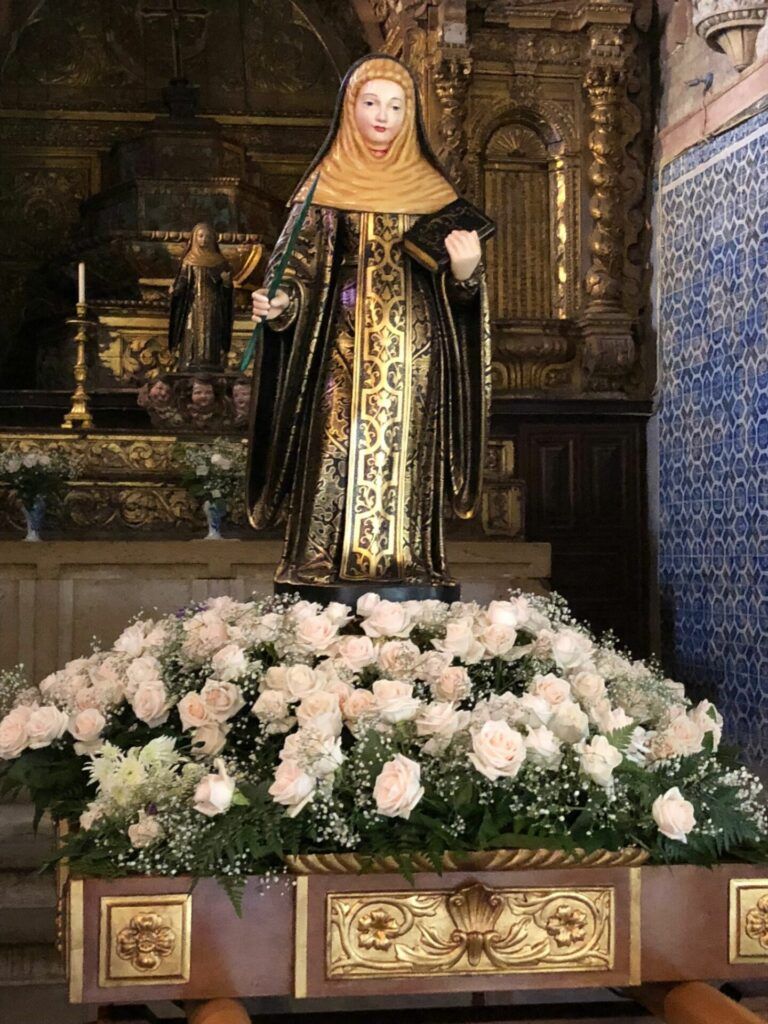
Santa Iria chapel, Tomar, Portugal

Readings at Mass

Liturgical Colour: Green. Year: B(II).


First readingIsaiah 53:10-11

If he offers his life in atonement, what the Lord wishes will be done

The Lord has been pleased to crush his servant with suffering.
If he offers his life in atonement,
he shall see his heirs, he shall have a long life
and through him what the Lord wishes will be done.
His soul’s anguish over,
he shall see the light and be content.
By his sufferings shall my servant justify many,
taking their faults on himself.

Responsorial Psalm
Psalm 32(33):4-5,18-20,22
May your love be upon us, O Lord, as we place all our hope in you.
The word of the Lord is faithful
  and all his works to be trusted.
The Lord loves justice and right
  and fills the earth with his love.
May your love be upon us, O Lord, as we place all our hope in you.
The Lord looks on those who revere him,
  on those who hope in his love,
to rescue their souls from death,
  to keep them alive in famine.
May your love be upon us, O Lord, as we place all our hope in you.
Our soul is waiting for the Lord.
  The Lord is our help and our shield.
May your love be upon us, O Lord,
  as we place all our hope in you.
May your love be upon us, O Lord, as we place all our hope in you.

Second readingHebrews 4:14-16

Our high priest is one who has been tempted in every way that we are

Since in Jesus, the Son of God, we have the supreme high priest who has gone through to the highest heaven, we must never let go of the faith that we have professed. For it is not as if we had a high priest who was incapable of feeling our weaknesses with us; but we have one who has been tempted in every way that we are, though he is without sin. Let us be confident, then, in approaching the throne of grace, that we shall have mercy from him and find grace when we are in need of help.

Gospel AcclamationJn14:6
Alleluia, alleluia!
I am the Way, the Truth and the Life, says the Lord;
No one can come to the Father except through me.
Alleluia!
Or:Mk10:45
Alleluia, alleluia!
The Son of Man came to serve
and to give his life as a ransom for many.
Alleluia!

GospelMark 10:35-45

The Son of Man came to give his life as a ransom for many

James and John, the sons of Zebedee, approached Jesus. ‘Master,’ they said to him ‘we want you to do us a favour.’ He said to them, ‘What is it you want me to do for you?’ They said to him, ‘Allow us to sit one at your right hand and the other at your left in your glory.’ ‘You do not know what you are asking’ Jesus said to them. ‘Can you drink the cup that I must drink, or be baptised with the baptism with which I must be baptised?’ They replied, ‘We can.’ Jesus said to them, ‘The cup that I must drink you shall drink, and with the baptism with which I must be baptised you shall be baptised, but as for seats at my right hand or my left, these are not mine to grant; they belong to those to whom they have been allotted.’
  When the other ten heard this they began to feel indignant with James and John, so Jesus called them to him and said to them, ‘You know that among the pagans their so-called rulers lord it over them, and their great men make their authority felt. This is not to happen among you. No; anyone who wants to become great among you must be your servant, and anyone who wants to be first among you must be slave to all. For the Son of Man himself did not come to be served but to serve, and to give his life as a ransom for many.’

Nothing is changing

In England, Wales and Scotland, the translation of the readings used at Mass is changing. Your current calendar setting is “United States”, so you will not be affected by this change.
This message will disappear at the end of December.

Universalis podcast: The week ahead – from 20 to 26 October

Pope Saint John Paul II. (16 minutes)Play

Christian Art

Illustration

Each day, The Christian Art website gives a picture and reflection on the Gospel of the day.

The readings on this page are from the Jerusalem Bible, which is used at Mass in most of the English-speaking world. The New American Bible readings, which are used at Mass in the United States, are available in the Universalis apps, programs and downloads.

You can also view this page with the Gospel in Greek and English.


TOPICS: Catholic; General Discusssion; Prayer; Worship
KEYWORDS: catholic; mk10; ordinarytime; prayer
For your reading, reflection, faith-sharing, comments, questions, discussion.

1 posted on 10/20/2024 4:38:20 PM PDT by annalex
[ Post Reply | Private Reply | View Replies]

To: All

KEYWORDS: catholic; mk10; ordinarytime; prayer


2 posted on 10/20/2024 4:38:48 PM PDT by annalex (fear them not)
[ Post Reply | Private Reply | To 1 | View Replies]

To: nickcarraway; NYer; ELS; Pyro7480; livius; ArrogantBustard; Catholicguy; RobbyS; marshmallow; ...

Alleluia Ping

Please FReepmail me to get on/off the Alleluia Ping List.


3 posted on 10/20/2024 4:39:37 PM PDT by annalex (fear them not)
[ Post Reply | Private Reply | To 2 | View Replies]

To: annalex
My dad is back in the hospital. [JimRob update at 242]
Jim still needs our prayers. Thread 2
Prayer thread for Salvation's recovery
Pray for Ukraine
Prayer thread for Fidelis' recovery
Update on Jim Robinson's health issues
4 posted on 10/20/2024 4:39:55 PM PDT by annalex (fear them not)
[ Post Reply | Private Reply | To 3 | View Replies]

To: annalex
Mark
 English: Douay-RheimsLatin: Vulgata ClementinaGreek NT: Byzantine/Majority Text (2000)
 Mark 10
35And James and John the sons of Zebedee, come to him, saying: Master, we desire that whatsoever we shall ask, thou wouldst do it for us: Et accedunt ad eum Jacobus et Joannes filii Zebedæi, dicentes : Magister, volumus ut quodcumque petierimus, facias nobis.και προσπορευονται αυτω ιακωβος και ιωαννης οι υιοι ζεβεδαιου λεγοντες διδασκαλε θελομεν ινα ο εαν αιτησωμεν ποιησης ημιν
36But he said to them: What would you that I should do for you? At ille dixit eis : Quid vultis ut faciam vobis ?ο δε ειπεν αυτοις τι θελετε ποιησαι με υμιν
37And they said: Grant to us, that we may sit, one on thy right hand, and the other on thy left hand, in thy glory. Et dixerunt : Da nobis ut unus ad dexteram tuam, et alius ad sinistram tuam sedeamus in gloria tua.οι δε ειπον αυτω δος ημιν ινα εις εκ δεξιων σου και εις εξ ευωνυμων σου καθισωμεν εν τη δοξη σου
38And Jesus said to them: You know not what you ask. Can you drink of the chalice that I drink of: or be baptized with the baptism wherewith I am baptized? Jesus autem ait eis : Nescitis quid petatis : potestis bibere calicem, quem ego bibo, aut baptismo, quo ego baptizor, baptizari ?ο δε ιησους ειπεν αυτοις ουκ οιδατε τι αιτεισθε δυνασθε πιειν το ποτηριον ο εγω πινω και το βαπτισμα ο εγω βαπτιζομαι βαπτισθηναι
39But they said to him: We can. And Jesus saith to them: You shall indeed drink of the chalice that I drink of: and with the baptism wherewith I am baptized, you shall be baptized. At illi dixerunt ei : Possumus. Jesus autem ait eis : Calicem quidem, quem ego bibo, bibetis ; et baptismo, quo ego baptizor, baptizabimini :οι δε ειπον αυτω δυναμεθα ο δε ιησους ειπεν αυτοις το μεν ποτηριον ο εγω πινω πιεσθε και το βαπτισμα ο εγω βαπτιζομαι βαπτισθησεσθε
40But to sit on my right hand, or on my left, is not mine to give to you, but to them for whom it is prepared. sedere autem ad dexteram meam, vel ad sinistram, non est meum dare vobis, sed quibus paratum est.το δε καθισαι εκ δεξιων μου και εξ ευωνυμων ουκ εστιν εμον δουναι αλλ οις ητοιμασται
41And the ten hearing it, began to be much displeased at James and John. Et audientes decem, cœperunt indignari de Jacobo et Joanne.και ακουσαντες οι δεκα ηρξαντο αγανακτειν περι ιακωβου και ιωαννου
42But Jesus calling them, saith to them: You know that they who seem to rule over the Gentiles, lord it over them: and their princes have power over them. Jesus autem vocans eos, ait illis : Scitis quia hi, qui videntur principari gentibus, dominantur eis : et principes eorum potestatem habent ipsorum.ο δε ιησους προσκαλεσαμενος αυτους λεγει αυτοις οιδατε οτι οι δοκουντες αρχειν των εθνων κατακυριευουσιν αυτων και οι μεγαλοι αυτων κατεξουσιαζουσιν αυτων
43But it is not so among you: but whosoever will be greater, shall be your minister. Non ita est autem in vobis, sed quicumque voluerit fieri major, erit vester minister :ουχ ουτως δε εσται εν υμιν αλλ ος εαν θελη γενεσθαι μεγας εν υμιν εσται υμων διακονος
44And whosoever will be first among you, shall be the servant of all. et quicumque voluerit in vobis primus esse, erit omnium servus.και ος εαν θελη υμων γενεσθαι πρωτος εσται παντων δουλος
45For the Son of man also is not come to be ministered unto, but to minister, and to give his life a redemption for many. Nam et Filius hominis non venit ut ministraretur ei, sed ut ministraret, et daret animam suam redemptionem pro multis.και γαρ ο υιος του ανθρωπου ουκ ηλθεν διακονηθηναι αλλα διακονησαι και δουναι την ψυχην αυτου λυτρον αντι πολλων

(*) "το βαπτισμα ο εγω βαπτιζομαι βαπτισθησεσθε". Amusing that it takes 11 words to translate: "with the baptism wherewith I am baptized, you shall be baptized"

5 posted on 10/20/2024 4:43:56 PM PDT by annalex (fear them not)
[ Post Reply | Private Reply | To 4 | View Replies]

To: annalex

Catena Aurea by St. Thomas Aguinas

10:35–40

35. And James and John, the sons of Zebedee, come unto him, saying, Master, we would that thou shouldest do for us whatsoever we shall desire.

36. And he said unto them, What would ye that I should do for you?

37. They said unto him, Grant unto us that we may sit, one on thy right hand, and the other on thy left hand, in thy glory.

38. But Jesus said unto them, Ye know not what ye ask: can ye drink of the cup that I drink of? and be baptized with the baptism that I am baptized with?

39. And they said unto him, We can. And Jesus said unto them, Ye shall indeed drink of the cup that I drink of; and with the baptism that I am baptized withal shall ye be baptized:

40. But to sit on my right hand and on my left hand is not mine to give; but it shall be given to them for whom it is prepared.

CHRYSOSTOM. (v. Chrys. ubi sup.) The disciples hearing Christ oftentimes speaking of His kingdom, thought that this kingdom was to be before His death, and therefore now that His death was foretold to them, they came to Him, that they might immediately be made worthy of the honours of the kingdom: wherefore it is said, And James and John, the sons of Zebedee, came unto him, saying, Master, we would that thou shouldest do for us whatsoever we shall desire. For ashamed of the human weakness which they felt, they came to Christ, taking Him apart from the disciples; but our Saviour, not from ignorance of what they wanted to ask, but from a wish of making them answer Him, puts this question to them; And he said unto them, What would ye that I should do for you?

THEOPHYLACT. Now the abovementioned disciples thought that He was going up to Jerusalem, to reign there, and then to suffer what He had foretold. And with these thoughts, they desired to sit on the right and the left hand; wherefore there follows, They said unto him, Grant unto us that we may sit, one on thy right hand, the other on thy left hand, in thy glory.

AUGUSTINE. (de Con. Evan. ii. 64) Matthew has expressed that this was said not by themselves, but by their mother, since she brought their wishes to the Lord; wherefore Mark briefly implies rather that they themselves, than that their mother, had used the words.

CHRYSOSTOM. (ubi sup.) Or we may fitly say that both took place; for seeing themselves honoured above the rest, they thought that they could easily obtain the foregoing petition; and that they might the more easily succeed in their request, they took their mother with them, that they might pray unto Christ together with her.

AUGUSTINE. (ubi sup.) Then the Lord both according to Mark, and to Matthew, answered them rather than their mother. For it goes on, But Jesus said unto them, Ye know not what ye ask.

THEOPHYLACT. It will not be as ye think, that I am to reign as a temporal king in Jerusalem, but all these things, that is, these which belong to My kingdom, are beyond your understanding; for to sit on My right hand is so great a thing that it surpasses the Angelic orders.

BEDE. (ubi sup.) Or else, they know not what they ask, who seek from the Lord a seat of glory, which they do not yet merit.

CHRYSOSTOM. (ubi sup.) Or else He says, Ye know not what ye ask; as if He said, Ye speak of honours, but I am discoursing of wrestlings and toil; for this is not a time of rewards, but of blood, of battles, and dangers. Wherefore He adds, Can ye drink of the cup that I drink of, and be baptized with the baptism that I am baptized withal? He draws them on by way of question, that by communication with Himself, their eagerness might increase.

THEOPHYLACT. But by the cup and baptism, He means the cross; the cup, that is, as being a potion by Him sweetly received, but baptism as the cause of the cleansing of our sins. And they answer Him, without understanding what He had said; wherefore it goes on: And they said unto him, We can; for they thought that He spoke of a visible cup, and of the baptism of which the Jews made use, that is, the washings before their meals.

CHRYSOSTOM. (ubi sup.) And they answered thus quickly, because they expected that what they had asked would be listened to; it goes on: And Jesus said unto them, Ye shall indeed drink of the cup that I drink of, and with the baptism that I am baptized withal shall ye be baptized; t at is, ye shall be worthy of martyrdom, and suffer even as I.

BEDE. (ubi sup.) A question is raised, however, how James and John drank the cup of martyrdom, or how they were baptized with the baptism of the Lord, when the Scripture relates, that only James the Apostle was beheaded by Herod whilst John finished his life by a natural death. But if we read ecclesiastical histories, in which it is related, that he also on account of the witness which he bore was cast into a cauldron of burning oil, and was immediately sent away to the island of Patmos, we shall then see that the spirit of martyrdom was in him, and that John drank the cup of confession, which the Three Children also drank in the furnace of fire, though the persecutor did not spill their blood. It goes on: But to sit on my right hand and on my left hand is not mine to give, but it shall be given to them for whom it is prepared.

CHRYSOSTOM. (ubi sup.) Where two questions are raised, one is, whether a seat on His right hand is prepared for any one; the other, whether the Lord of all has it not in His power to give it to those for whom it is prepared. To the first then we say, that no one sits on His right hand or on His left, for that throne is inaccessible to a creature. How then did He say, To sit on my right hand or on my left is not mine to give you, as though it belonged to some who were to sit there? He however answers the thoughts of those who asked Him, condescending to their meaning; for they did not know that lofty throne and seat, which is on the right hand of the Father, but sought one thing alone, that is, to possess the chief place, and to be set over others. And since they had heard it said of the Apostles, that they were to sit on twelve thrones, they begged for a place higher than all the rest, not knowing what was said. To the second question we must say, that such a gift does not transcend the power of the Son of God, but what is said by Matthew (Matt. 20:23), it is prepared by My Father, is the same as if it were said, “by Me,” wherefore also Mark did not say here, by My Father. What therefore Christ says here is this, Ye shall die, He says, for Me, but this is not enough to enable you to obtain the highest place, for if another person comes possessing besides martyrdom all other virtues, he will possess much more than you; for the chief place is prepared for those, who by works are enabled to become the first. Thus then the Lord instructed them not to trouble themselves vainly and absurdly for high places; at the same time He would not have them made sad.

BEDE. (ubi sup.) Or else, it is not mine to give to you, that is, to proud persons, for such as yet they were. It is prepared for other persons, and be ye other, that is, lowly, and it is prepared for you.

10:41–45

41. And when the ten heard it, they began to be much displeased with James and John.

42. But Jesus called them to him, and saith unto them, Ye know that they which are accounted to rule over the Gentiles exercise lordship over them; and their great ones exercise authority upon them.

43. But so shall it not be among you: but whosoever will be great among you, shall be your minister:

44. And whosoever of you will be the chiefest, shall be servant of all.

45. For even the Son of man came not to be ministered unto, but to minister, and to give his life a ransom for many.

THEOPHYLACT. The other Apostles are indignant at seeing James and John seeking for honour; wherefore it is said, And when the ten heard it, they began to be much displeased with James and John. For being influenced by human feelings, they were moved with envy; and their first displeasure arose from their seeing that they were not taken up by the Lord; before that time they were not displeased because they saw that they themselves were honoured before other men. At this time the Apostles were thus imperfect, but afterwards they yielded the chief place one to another. Christ however cures them; first indeed by drawing them to Himself in order to comfort them; and this is meant, when it is said, But Jesus called them to him; then by shewing them that to usurp honour, and to desire the chief place, belongs to Gentiles. Wherefore there follows: And saith unto them, Ye know that they which are accounted to rule over the Gentiles exercise lordship; and their great ones exercise authority over them. The great ones of the Gentiles thrust themselves into the chief place tyrannically and as lords. It goes on: But so shall it not be among you.

BEDE. (ubi sup.) In which He teaches, that he is the greater, who is the less, and that he becomes the lord, who is servant of all: vain, therefore, was it both for the one party to seek for immoderate things, aud the other to be annoyed at their desiring greater things, since we are to arrive at the height of virtue not by power but by humility. Then He proposes an example, that if they lightly regarded His words, His deeds might make them ashamed, saying, For even the Son of man came not to be ministered unto, but to minister, and to give his life a ransom for many.

THEOPHYLACT. Which is a greater thing than to minister. For what can be greater or more wonderful than that a man should die for him to whom he ministers? Nevertheless, this serving and condescension of humility was His glory, and that of all; for before He was made man, He was known only to the Angels; but now that He has become man and has been crucified, He not only has glory Himself, but also has taken up others to a participation in His glory, and ruled by faith over the whole world.

BEDE. (ubi sup.) He did not say, however, that He gave His life a ransom for all, but for many, that is, for those who would believe on Him.

Catena Aurea Mark 10


6 posted on 10/20/2024 4:44:42 PM PDT by annalex (fear them not)
[ Post Reply | Private Reply | To 5 | View Replies]

To: annalex


Christ Carrying the Cross

Hans Multscher

1437
Gemäldegalerie, Berlin

7 posted on 10/20/2024 4:45:15 PM PDT by annalex (fear them not)
[ Post Reply | Private Reply | To 6 | View Replies]

To: annalex

Santa Iria of Tomar

 
On October 20th each year in Tomar, a procession takes place to commemorate Santa Iria (Saint Irene). The entire city stops to honor this young martyr with a beautiful tradition.

 
The story of Santa Iria has been passed on by word of mouth since the 7th century, which means that in nearly 1400 years there have been a few variations on the tale. But some things remain constant in the various versions. Iria was born in 635 in the town of Nabância, in present-day Tomar, and from a young age moved to a convent and devoted herself to God. Iria’s beauty was such that a young nobleman, Britaldo, fell madly in love with her and became sick with desire for her. When young Iria went to visit him, she refused his love saying she was already married to God. He said something to the degree of, “I can accept that, but you must promise me that the love you have refused me you will refuse to all other men as well”. Iria agreed and Britaldo was overcame his love-sickness.

 
Some time later, a monk named Remígio also made advances at Iria who (naturally) rejected the monk. Remígio was furious and decided to take revenge on her: he slipped her a potion that made her stomach swell. Britaldo, seeing Iria’s changing figure, assumed she had gone back on her word and become pregnant. He hired a soldier to kill her. The soldier followed Iria on the morning of October 20th, 653 to the place on the Nabão River where she would say her morning prayers, slit her throat with a sword, and threw her body in the river. When God revealed to Iria’s uncle what had happened, the entire town went to search for the body in the river. They looked far and wide and just as they were about to give up, they found a sealed marble tomb in the Tagus River near the city of Scalabis with Iria’s body buried inside. As the villagers tried to reach her body, the waters rose up, and the tomb remains underwater to this day.

 
Statue Santa Iria

 
According to legend, when Isabel of Aragon wanted to pray to Saint Irene at the site of the tomb, the waters miraculously pulled back to allow her to pray on the tombstone, before covering the stone again. To thank God and the saint for this, the queen renamed the city of Scalabis to Santarém (which sounds like Santa Iria or Santa Irene) and placed a marker at the site of the saint’s tomb… which is still there to this day.

 
Bridge in Tomar

 
Ducks in the Nabao River

 
Tomar celebrates this young saint’s life and death annually by having a mass in her honor, and then carrying a statue of her throughout the city. The procession stops at the bridge, where flower petals are thrown into the Nabão River and flow downstream just as her body did. Normally, school children are active participants in this, but as October 20th fell on a Saturday this year, only the Sunday school children participated. After the petals, the procession continues towards the Santa Iria chapel, where the statue is kept. Below is a video of this year’s procession.


I’m always fascinated by Portugal’s steadfast commitment to certain traditions, such as this one. I hope that, in a world of globalization and increasing external influence, we don’t lose these unique traits that add so much charm and culture to our country.


aportugueseaffair.com

8 posted on 10/20/2024 4:56:17 PM PDT by annalex (fear them not)
[ Post Reply | Private Reply | To 7 | View Replies]

To: annalex
NAVARRE BIBLE COMMENTARY (RSV)

Ad Majorem Dei Gloriam (To the Greater Glory of God)

First Reading:

From: Isaiah 53:10-11

Fourth Song of the Servant of the Lord (Continuation)
------------------------------------------------------------------
[10] Yet it was the will of the LORD to bruise him; he has put him to grief; when he makes himself an offering for sin, he shall see his offspring, he shall prolong his days; the will of the LORD shall prosper in his hand; [11] he shall see the fruit of the travail of his soul and be satisfied; by his knowledge shall the righteous one, my servant, make many to be accounted righteous; and be shall bear their iniquities.

*******************************************************
Commentary:

52:13-53:12. This fourth Song of the Servant is one of the most commented on passages in the Bible, as regards both its literary structure and its content. From the point of view of structure, it interrupts the hymn-style of chapter 52 (which is taken up again in chapter 54); the style here is more reflective; the theme, the value of suffering. In terms of content, the song is unusual in that it shows the servant triumphing through his humiliation and suffering. Even more than that—he makes the pains and sins of others his own, in order to heal them and set them free. Prior to this, the idea of "vicarious expiation" was unknown in the Bible. The passage is original even in its vocabulary: it contains forty words that are not to be found elsewhere in the Bible.

The poem, which is very carefully composed, divides into three stanzas: the first (52:13-15) is put on the Lord's lips and it acts as a kind of overture to what follows--taking in the themes of the triumph of the servant (v. 13), his humiliation and suffering (v. 14), and the stunning effect that this has on his own people and on strangers.

The second stanza (53:1-11a) celebrates the servant's trials, and the good effects they produce. This is spoken in the first-person plural, standing for the people and the prophet: both feel solidarity with the servant of the Lord. This stanza has four stages to it: first (53:1-3) it describes the servant's noble origins (he grew up before the Lord like a young plant: cf. v. 2) and the low esteem in which he is held as a "man of sorrows". Then we learn that all this suffering is atonement for the sins of others (53:4-6). Traditionally, suffering was interpreted as being a punishment for sins, but here it is borne on behalf of others. This is the first lesson to be learned by those who see him "stricken, smitten by God, and afflicted", and it marks the climax of the poem. Thirdly (53:7-9), the point is made, again that he has freely accepted suffering and meekly, offers himself as a sacrifice of atonement (he is like a lamb, like a sheep). His death is as ignominious as the suffering that precedes it. Finally (vv. 10-11a) we are told how fruitful all this suffering is: like the patriarchs of old (the text seems to imply) the servant will have many offspring and a long life and be a man of great wisdom.

In the, third stanza (53:11b-12) the Lord speaks again, finally acknowledging that his servant's sacrifice is truly efficacious: he will cause many to be accounted "righteous", that is, he will win their salvation (v. 11) and will share in the Lord's spoils (v. 12).

The fourth song of the servant of the Lord was from very early on interpreted as having a current application. When the Jews of Alexandria made the Greek translation of the Old Testament (the Septuagint) around the second century BC, they tinkered a little with the text to indicate that the servant in the poem stood for the people of Israel in the diaspora. Those Jews, who encountered huge obstacles in their effort to maintain their identity in that Hellenistic and polytheistic environment, found comfort in the hope that they would emerge enhanced, just like the servant.

Jews of Palestine identified the victorious servant with the Messiah, but they reinterpreted the sufferings described here to apply them to the pagan nations. The Dead Sea Scrolls interpret this song in the light of the ignominy experienced by the Teacher of Righteousness, the probable founder of the group that established itself at Qumran.

Jesus revealed his redemptive mission to be that of the suffering servant prophesied by Isaiah here. He referred to him on a number of occasions--in his reply to the request made by the sons of Zebedee ("the Son of man came not to be served but to serve, and to give his life as a ransom for many": Mt 20:28 and par.); at the Last Supper, when he announced his ignominious death among transgressors, quoting 53:12 (Lk 22:37); in some passages in the fourth Gospel (Jn 12:32, 37-38); etc. He also seems to refer to it in his conversation with the disciples of Emmaus (Lk 24:25ff) to explain his passion and death. Therefore, the first Christians interpreted Jesus' death and resurrection in terms of this poem; evidence of this is the expression "in accordance with the scriptures" in 1 Corinthians 15:3; the words "for our trespasses" (Rom 4:25; 1 Cor 15:3-5); the Christological hymn in the Letter to the Philippians (Phil 2:6-11); and expressions used in the First Letter of Peter (1 Pet 2:22-25) and in other New Testament passages (Mt 8:17; 27:29; Acts 8:26-40; Rom 10:16; etc.).

Patristic tradition reads the song as a prophecy that found fulfillment in Christ (cf. St Clement of Rome, "Ad Corinthios", 16:1-14; St Ignatius Martyr, "Epistula ad Polycarpum", 1, 3; the so-called "Letter of Barnabas", 5, 2 and "Epistula ad Diognetuin", 9, 2; etc.). The Church uses it in the Good Friday liturgy.

9 posted on 10/20/2024 5:13:51 PM PDT by fidelis (Ecce Crucem Domini! Fugite partes adversae! Vicit Leo de tribu Juda, Radix David! Alleluia!)
[ Post Reply | Private Reply | To 8 | View Replies]

Second Reading:

From: Hebrews 4:14-16

Our Confidence is Based on Christ's Priesthood
------------------------------------------------------------
[14] Since then we have a great high priest who has passed through the heavens, Jesus, the Son of God, let us hold fast our confession. [15] For we have not a high priest who is unable to sympathize with our weaknesses, but one who in every respect has been tempted as we are, yet without sinning. [16] Let us then with confidence draw near to the throne of grace, that we may receive mercy and find grace to help in time of need.

***********************************************************************
Commentary:

14-16. The text now reverts to its main theme (cf. 2:17), that is, the priesthood of Christ. It highlights the dignity of the new high priest, who has passed through the heavens; and His mercy, too, for He sympathizes with our weaknesses. We have, therefore, every reason to approach Him with confidence. "The believers were at that time in a storm of temptation; that is why the Apostle is consoling them, saying that our High Priest not only knows, as God, the weaknesses of our nature: as man, He has also experienced the sufferings that affect us, although He was free from sin. Since He knows our weaknesses so well, He can give us the help we need, and when He comes to judge us, He will take that weakness into account in His sentence" ("Interpretatio Ep. ad Haebreos, ad loc.").

We should respond to the Lord's goodness by staying true to our profession of faith. The confession or profession of faith referred to here is not simply an external declaration: external confession is necessary but there must also be commitment and a spirit of fidelity. A Christian needs to live up to all the demands of his calling; he should be single-minded and free from doubts.

15. "If we should some time find ourselves sorely tempted by our enemies, it will greatly help us to remember that we have on our side a high priest who is most compassionate, for He chose to experience all kinds of temptation" ("St. Pius V Catechism", IV, 15, 14). In order to understand and help a sinner to get over his falls and cope with temptation, one does not oneself need to have experience of being tempted; in fact, only one who does not sin knows the full force of temptation, because the sinner gives in prior to resisting to the end. Christ never yielded to temptation. He therefore experienced much more than we do (because we are often defeated by temptation) the full rigor and violence of those temptations which He chose to undergo as man at particular points in His life. Our Lord, then, allowed Himself to be tempted, in order to set us an example and prevent us from ever losing confidence in our ability to resist temptation with the help of grace (cf. notes on Matthew 4:1-11—Jesus’ temptation in the wilderness—and notes).

"There is no man", St. Jerome comments, "who can resist all tests except He who, made in our likeness, has experienced everything but sin" ("Comm. In Ionam", II, 46). Christ's sinlessness, often affirmed in Sacred Scripture (Romans 8:3; 2 Corinthians 5:21; John 8:46; 1 Peter 1:19; 2:21-24), follows logically from His being God and from His human integrity and holiness. At the same time Christ's weakness, which He chose to experience out of love for us, is a kind of invitation from God to pray for strength to resist sin. "Let us adore Christ who emptied Himself to assume the condition of a slave. He was tempted in every way that we are, but did not sin. Let us turn in prayer to Him, saying, 'You took on our human weakness. Be the eyes of the blind, the strength of the weak, the friend of the lonely'" ("Liturgy of the Hours", Christmas Day, Evening Prayer I).

16. The "throne" is the symbol of Christ's authority; He is King of the living and the dead. But here it speaks of a "throne of grace": through the salvation worked by Christ, the compassionate Priest and Intercessor, God's throne has become a judgment seat from which mercy flows. Christ has initiated for mankind a time of forgiveness and sanctification in which He does not yet manifest His position as Sovereign Judge. Christ's priesthood did not cease to operate with His death; it continues in Heaven, where He forever pleads on our behalf, and therefore we should have confident recourse to Him.

"What security should be ours in considering the mercy of the Lord! 'He has but to cry for redress, and I, the Ever-Merciful, will listen to him' (Exodus 22:27). It is an invitation, a promise that He will not fail to fulfill. 'Let us then with confidence draw near to the throne of grace, and we may receive mercy and find grace to help in time of need'. The enemies of our sanctification will be rendered powerless if the mercy of God goes before us. And if through our own fault and human weakness we should fall, the Lord comes to our aid and raises us up" (St J. Escriva, "Christ Is Passing By", 7).

10 posted on 10/20/2024 5:14:22 PM PDT by fidelis (Ecce Crucem Domini! Fugite partes adversae! Vicit Leo de tribu Juda, Radix David! Alleluia!)
[ Post Reply | Private Reply | To 9 | View Replies]

Gospel Reading:

From: Mark 10:35-45

The Sons of Zebedee Make Their Request
---------------------------------------------------
[35] And James and John, the sons of Zebedee, came forward to Him, and said to Him, "Teacher, we want You to do for us whatever we ask of You." [36] And He said to them, "What do you want Me to do for you?" [37] And they said to Him, "Grant us to sit, one at your right hand and one at your left, in your glory." [38] But Jesus said to them, "You do not know what you are asking. Are you able to drink the cup that I drink, or to be baptized with the baptism with which I am baptized?" [39] And they said to Him, "We are able." And Jesus said to them, "The cup that I drink you will drink; and with the baptism with which I am baptized, you will be baptized; [40] but to sit at My right hand or at My left is not Mine to grant, but it is for those for whom it has been prepared." [41] And when the ten heard it, they began to be indignant at James and John. [42] And Jesus called them to Him and said to them, "You know that those who are supposed to rule over the Gentiles lord it over them, and their great men exercise authority over them. [43] But it shall not be so among you; but whoever would be great among you must be your servant, [44] and whoever would be first among you must be slave of all. [45] For the Son of Man also came not to be served but to serve, and to give His life as a ransom of many."

***********************************************************************
Commentary:

35-44. We can admire the Apostles' humility: they do not disguise their earlier weakness and shortcomings from the first Christians. God also has wanted the Holy Gospel to record the earlier weaknesses of those who will become the unshakeable pillars of the Church. The grace of God works wonders in people's souls: so we should never be pessimistic in the face of our own wretchedness: "I can do all things in Him who strengthens me" (Philippians 4:13).

38. When we ask for anything in prayer, we should be ready, always, to accept God's will, even if it does not coincide with our own: "His Majesty knows best what is suitable for us; it is not for us to advise Him what to give us, for He can rightly reply that we know not what we ask" (St. Teresa, "Mansions", II, 8).

43-45. Our Lord's word and example encourage in us a genuine spirit of Christian service. Only the Son of God who came down from Heaven and freely submitted to humiliation (at Bethlehem, Nazareth, Calvary, and in the Sacred Host) can ask a person to make himself last, if he wishes to be first.

The Church, right through history, continues Christ's mission of service to mankind: "Experienced in human affairs, the Church, without attempting to interfere in any way in the politics of States, `seeks but a solitary goal: to carry forward the work of Christ Himself under the lead of the befriending Spirit. And Christ entered this world to give witness to the truth, to rescue and not to sit in judgment, to serve and not to be served' (Vatican II, "Gaudium Et Spes", 3). Sharing the noblest aspirations of men and suffering when she sees them not satisfied, she wishes to help them attain their full flowering, and that is why she offers men what she possesses as her characteristic attribute: a global vision of man and of the human race" (Paul VI, "Populorum Progressio", 13).

Our attitude should be that of our Lord: we should seek to serve God and men with a truly supernatural outlook, not expecting any return; we should serve even those who do not appreciate the service we do them. This undoubtedly does not make sense, judged by human standards. However, the Christian identified with Christ takes "pride" precisely in serving others; by so doing he shares in Christ's mission and thereby attains his true dignity: "This dignity is expressed in readiness to serve, in keeping with the example of Christ, who `came not to be served but to serve.' If, in the light of this attitude of Christ's, `being a king' is truly possible only by `being a servant', then `being a servant' also demands so much spiritual maturity that it must really be described as `being a king.' In order to be able to serve others worthily and effectively we must be able to master ourselves, possess the virtues that make this mastery possible" (John Paul II, "Redemptor Hominis", 21). Cf. note on Matthew 20:27-28.

11 posted on 10/20/2024 5:14:37 PM PDT by fidelis (Ecce Crucem Domini! Fugite partes adversae! Vicit Leo de tribu Juda, Radix David! Alleluia!)
[ Post Reply | Private Reply | To 10 | View Replies]

Click here to go to the My Catholic Life! Devotional thread for today’s Gospel Reading.

12 posted on 10/20/2024 5:15:48 PM PDT by fidelis (Ecce Crucem Domini! Fugite partes adversae! Vicit Leo de tribu Juda, Radix David! Alleluia!)
[ Post Reply | Private Reply | To 11 | View Replies]

Disclaimer: Opinions posted on Free Republic are those of the individual posters and do not necessarily represent the opinion of Free Republic or its management. All materials posted herein are protected by copyright law and the exemption for fair use of copyrighted works.

Free Republic
Browse · Search
Religion
Topics · Post Article

FreeRepublic, LLC, PO BOX 9771, FRESNO, CA 93794
FreeRepublic.com is powered by software copyright 2000-2008 John Robinson