Free Republic
Browse · Search
Religion
Topics · Post Article

Skip to comments.

Catholic Caucus: Daily Mass Readings 5-October-2024
Universalis/Jerusalem Bible ^

Posted on 10/05/2024 8:01:29 AM PDT by annalex

5 October 2024

Saturday of week 26 in Ordinary Time


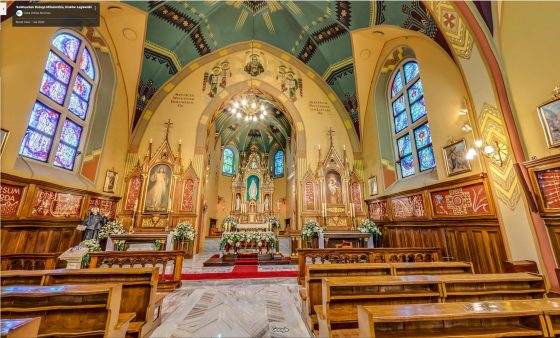
Chapel of the miraculous image of the Merciful Jesus and the tomb of St. Faustina, Łagiewniki Shrine, Krakow

Readings at Mass

Liturgical Colour: Green. Year: B(II).


First reading
Job 42:1-3,5-6,12-17

In dust and in ashes I repent

This was the answer Job gave to the Lord:
I know that you are all-powerful:
  what you conceive, you can perform.
I am the man who obscured your designs
  with my empty-headed words.
I have been holding forth on matters I cannot understand,
  on marvels beyond me and my knowledge.
I knew you then only by hearsay;
  but now, having seen you with my own eyes,
I retract all I have said,
  and in dust and ashes I repent.
The Lord blessed Job’s new fortune even more than his first one. He came to own fourteen thousand sheep, six thousand camels, a thousand yoke of oxen and a thousand she-donkeys. He had seven sons and three daughters; his first daughter he called ‘Turtledove’, the second ‘Cassia’ and the third ‘Mascara.’ Throughout the land there were no women as beautiful as the daughters of Job. And their father gave them inheritance rights like their brothers.
  After his trials, Job lived on until he was a hundred and forty years old, and saw his children and his children’s children up to the fourth generation. Then Job died, an old man and full of days.

Responsorial Psalm
Psalm 118(119):66,71,75,91,125,130
Let your face shine on your servant, O Lord.
Teach me discernment and knowledge
  for I trust in your commands.
It was good for me to be afflicted,
  to learn your statutes.
Let your face shine on your servant, O Lord.
Lord, I know that your decrees are right,
  that you afflicted me justly.
By your decree it endures to this day;
  for all things serve you.
Let your face shine on your servant, O Lord.
I am your servant, give me knowledge;
  then I shall know your will.
The unfolding of your word gives light
  and teaches the simple.
Let your face shine on your servant, O Lord.

Gospel AcclamationMt11:25
Alleluia, alleluia!
Blessed are you, Father,
Lord of heaven and earth,
for revealing the mysteries of the kingdom
to mere children.
Alleluia!

GospelLuke 10:17-24

Rejoice that your names are written in heaven

The seventy-two came back rejoicing. ‘Lord,’ they said ‘even the devils submit to us when we use your name.’ He said to them, ‘I watched Satan fall like lightning from heaven. Yes, I have given you power to tread underfoot serpents and scorpions and the whole strength of the enemy; nothing shall ever hurt you. Yet do not rejoice that the spirits submit to you; rejoice rather that your names are written in heaven.’
  It was then that, filled with joy by the Holy Spirit, he said:
  ‘I bless you, Father, Lord of heaven and of earth, for hiding these things from the learned and the clever and revealing them to mere children. Yes, Father, for that is what it pleased you to do. Everything has been entrusted to me by my Father; and no one knows who the Son is except the Father, and who the Father is except the Son and those to whom the Son chooses to reveal him.’
  Then turning to his disciples he spoke to them in private, ‘Happy the eyes that see what you see, for I tell you that many prophets and kings wanted to see what you see, and never saw it; to hear what you hear, and never heard it.’

Universalis podcast: The week ahead – from 6 to 12 October

Saint John Henry Newman; the Feast of the Holy Rosary. (16 minutes)
Episode notes.Play

Christian Art

Illustration

Each day, The Christian Art website gives a picture and reflection on the Gospel of the day.

The readings on this page are from the Jerusalem Bible, which is used at Mass in most of the English-speaking world. The New American Bible readings, which are used at Mass in the United States, are available in the Universalis apps, programs and downloads.

You can also view this page with the Gospel in Greek and English.


TOPICS: Catholic; General Discusssion; Prayer; Worship
KEYWORDS: catholic; lk10; ordinarytime; prayer
For your reading, reflection, faith-sharing, comments, questions, discussion.

1 posted on 10/05/2024 8:01:29 AM PDT by annalex
[ Post Reply | Private Reply | View Replies]

To: All

KEYWORDS: catholic; lk10; ordinarytime; prayer


2 posted on 10/05/2024 8:02:06 AM PDT by annalex (fear them not)
[ Post Reply | Private Reply | To 1 | View Replies]

To: nickcarraway; NYer; ELS; Pyro7480; livius; ArrogantBustard; Catholicguy; RobbyS; marshmallow; ...

Alleluia Ping

Please FReepmail me to get on/off the Alleluia Ping List.


3 posted on 10/05/2024 8:02:33 AM PDT by annalex (fear them not)
[ Post Reply | Private Reply | To 2 | View Replies]

To: annalex
My dad is back in the hospital. [JimRob update at 242]
Jim still needs our prayers. Thread 2
Prayer thread for Salvation's recovery
Pray for Ukraine
Prayer thread for Fidelis' recovery
Update on Jim Robinson's health issues
4 posted on 10/05/2024 8:02:50 AM PDT by annalex (fear them not)
[ Post Reply | Private Reply | To 3 | View Replies]

To: annalex
Luke
 English: Douay-RheimsLatin: Vulgata ClementinaGreek NT: Byzantine/Majority Text (2000)
 Luke 10
17And the seventy-two returned with joy, saying: Lord, the devils also are subject to us in thy name. Reversi sunt autem septuaginta duo cum gaudio, dicentes : Domine, etiam dæmonia subjiciuntur nobis in nomine tuo.υπεστρεψαν δε οι εβδομηκοντα μετα χαρας λεγοντες κυριε και τα δαιμονια υποτασσεται ημιν εν τω ονοματι σου
18And he said to them: I saw Satan like lightening falling from heaven. Et ait illis : Videbam Satanam sicut fulgor de cælo cadentem.ειπεν δε αυτοις εθεωρουν τον σαταναν ως αστραπην εκ του ουρανου πεσοντα
19Behold, I have given you power to tread upon serpents and scorpions, and upon all the power of the enemy: and nothing shall hurt you. Ecce dedi vobis potestatem calcandi supra serpentes, et scorpiones, et super omnem virtutem inimici : et nihil vobis nocebit.ιδου διδωμι υμιν την εξουσιαν του πατειν επανω οφεων και σκορπιων και επι πασαν την δυναμιν του εχθρου και ουδεν υμας ου μη αδικηση
20But yet rejoice not in this, that spirits are subject unto you; but rejoice in this, that your names are written in heaven. Verumtamen in hoc nolite gaudere quia spiritus vobis subjiciuntur : gaudete autem, quod nomina vestra scripta sunt in cælis.πλην εν τουτω μη χαιρετε οτι τα πνευματα υμιν υποτασσεται χαιρετε δε οτι τα ονοματα υμων εγραφη εν τοις ουρανοις
21In that same hour, he rejoiced in the Holy Ghost, and said: I confess to thee, O Father, Lord of heaven and earth, because thou hast hidden these things from the wise and prudent, and hast revealed them to little ones. Yea, Father, for so it hath seemed good in thy sight. In ipsa hora exsultavit Spiritu Sancto, et dixit : Confiteor tibi Pater, Domine cæli et terræ, quod abscondisti hæc a sapientibus et prudentibus, et revelasti ea parvulis. Etiam Pater : quoniam sic placuit ante te.εν αυτη τη ωρα ηγαλλιασατο τω πνευματι ο ιησους και ειπεν εξομολογουμαι σοι πατερ κυριε του ουρανου και της γης οτι απεκρυψας ταυτα απο σοφων και συνετων και απεκαλυψας αυτα νηπιοις ναι ο πατηρ οτι ουτως εγενετο ευδοκια εμπροσθεν σου
22All things are delivered to me by my Father; and no one knoweth who the Son is, but the Father; and who the Father is, but the Son, and to whom the Son will reveal him. Omnia mihi tradita sunt a Patre meo. Et nemo scit quis sit Filius, nisi Pater : et quis sit Pater, nisi Filius, et cui voluerit Filius revelare.και στραφεις προς τους μαθητας ειπεν παντα μοι παρεδοθη υπο του πατρος μου και ουδεις γινωσκει τις εστιν ο υιος ει μη ο πατηρ και τις εστιν ο πατηρ ει μη ο υιος και ω εαν βουληται ο υιος αποκαλυψαι
23And turning to his disciples, he said: Blessed are the eyes that see the things which you see. Et conversus ad discipulos suos, dixit : Beati oculi qui vident quæ vos videtis.και στραφεις προς τους μαθητας κατ ιδιαν ειπεν μακαριοι οι οφθαλμοι οι βλεποντες α βλεπετε
24For I say to you, that many prophets and kings have desired to see the things that you see, and have not seen them; and to hear the things that you hear, and have not heard them. Dico enim vobis quod multi prophetæ et reges voluerunt videre quæ vos videtis, et non viderunt : et audire quæ auditis, et non audierunt.λεγω γαρ υμιν οτι πολλοι προφηται και βασιλεις ηθελησαν ιδειν α υμεις βλεπετε και ουκ ειδον και ακουσαι α ακουετε και ουκ ηκουσαν

5 posted on 10/05/2024 8:05:01 AM PDT by annalex (fear them not)
[ Post Reply | Private Reply | To 4 | View Replies]

To: annalex

Catena Aurea by St. Thomas Aguinas

10:17–20

17. And the seventy returned again with joy, saying, Lord, even the devils are subject unto us through thy name.

18. And he said unto them, I beheld Satan as lightning fall from heaven.

19. Behold, I give unto you power to tread on serpents and scorpions, and over all the power of the enemy: and nothing shall by any means hurt you.

20. Notwithstanding in this rejoice not, that the spirits are subject unto you; but rather rejoice, because your names are written in heaven.

CYRIL OF ALEXANDRIA. It was said above that our Lord sent forth His disciples sealed with the grace of the Holy Spirit, and that being made ministers of preaching, they received power over the unclean spirits. But now when they returned, they confess the power of Him who honoured them, as it is said, And the seventy returned again with joy, saying, Lord, even the devils are subject unto us, &c. They seemed indeed to rejoice rather that they were made workers of miracles, than that they had become ministers of preaching. But they had better have rejoiced in those whom they had taken, as St. Paul says to them that were called by him, My joy and my crown. (Phil. 4:1.)

GREGORY. (23. Mor. c. 4.) Now our Lord, in a remarkable manner, in order to put down high thoughts in the hearts of His disciples, Himself related the account of the fall which the teacher of pride suffered; that they might learn by the example of the author of pride, what they would have to dread from the sin of pride. Hence it follows, I beheld Satan as lightning fall from heaven.

BASIL. (Hom. Quod Deus non est auctor mali.) He is called Satan, because he is an enemy to God, (for this the Hebrew word signifies,) but he is called the Devil, because he assists us in doing evil, and is an accuser. His nature is incorporeal, his abode in the air.

BEDE. He says not, ‘I see now,’ but referring to past time, I saw, when he fell. But by the words as lightning, He signifies either a fall headlong from the high places to the lowest, or that now cast down, he transforms himself into an angel of light. (2 Cor. 11:14.)

TITUS BOSTRENSIS. Now He says that He saw it, as being Judge, for He knew the sufferings of the spirits. Or He says, as lightning, because by nature Satan shone as lightning, but became darkness through his affections, since what God made good he changed in himself to evil.

BASIL. (adv. Eunom. l. 3.) For the heavenly Powers are not naturally holy, but according to the analogy of divine love they receive their measure of sanctification. And as iron placed in the fire does not cease to be iron, though by the violent application of the flame, both in effect and appearance, it passes into fire; so also the Powers on high, from their participation in that which is naturally holy, have a holiness implanted in them. For Satan had not fallen, if by nature he had been unsusceptible of evil.

CYRIL OF ALEXANDRIA. Or else, I saw Satan as lightning fall from heaven, that is, from the highest power to the lowest impotence. For before the coming of our Saviour, he had subdued the world to him, and was worshipped by all men. But when the only-begotten Word of God came down from heaven, he fell as lightning, seeing that he is trodden under foot by those who worship Christ. As it follows, And, behold, I give unto you power to tread upon serpents, &c.

TITUS BOSTRENSIS. Serpents indeed at one time under a figure were made to bite the Jews, and kill them because of their unbelief. But there came One who should destroy those serpents; even the Brazen Serpent, (Numb. 21:8.) the Crucified, so that if any one should look on Him believing, he might be healed from his wounds and saved.

CHRYSOSTOM. Then lest we should suppose this was spoken of beasts, He added, And over all the power of the enemy.

BEDE. That is, I give you the power of casting out every kind of unclean spirit, from the bodies possessed. And as far as regards themselves, He adds, And nothing shall hurt you. Although it might also be taken literally. For Paul when attacked by a viper suffered no injury. (Acts 28:5.) John having drunk poison is not harmed by ita. But I think there is this difference between serpents who bite with the teeth, and scorpions who sting with the tail, that the serpents signify men or spirits raging openly, scorpions signify them plotting in secret. Or serpents are those which east the poison of evil persuasion upon virtues just beginning, scorpions which go about to corrupt at last virtues which have been brought to perfection.

THEOPHYLACT. Or serpents are those which visibly hurt, as the evil spirit of adultery and murder. But those are called scorpions which invisibly injure, as in the sins of the spirit.

GREGORY OF NYSSA. (Hom. in Cant.) For pleasure is called in Scripture a serpent, which by nature is such that if its head has reached a wall so as to press upon it, it drags its whole body after it. So nature has given man the habitation which was necessary for him. But by means of this necessity, pleasure assaults the heart, and perverts it to the indulgence of immoderate ornament; in addition to this it brings in its train covetousness, which is followed by lust, that is, the last member or tail of the beast. But as it is not possible to draw back the serpent by its tail, so to remove pleasure we must not begin with the last, unless one has closed the first entrance to evil.

ATHANASIUS. (Orat. in Pass. et cruce Domini.) But now through the power of Christ boys make a mock at pleasure, which formerly led away the aged, and virgins stedfastly trample upon the desires of serpentine pleasure. Some also tread upon the very sting of the scorpion, that is, of the devil, namely death, and fearing not destruction, become witnesses of the word. But many giving up earthly things walk with a free step in heaven, dreading not the prince of the air.

TITUS BOSTRENSIS. But because the joy with which He saw them rejoice savoured of vain-glory, for they rejoiced that they were as it were exalted, and were a terror to men and evil spirits, our Lord therefore adds, Notwithstanding in this rejoice not, that the spirits are subject unto you, &c.

BEDE. They are forbidden to rejoice in the subjection of the spirits to God, since they were flesh; for to cast out spirits and to exercise other powers is sometimes not on account of his merit who works, but is wrought through the invocation of Christ’s name to the condemnation of those who mock it, or to the advantage of those who see and hear.

CYRIL OF ALEXANDRIA. Why, O Lord, dost not Thou permit men to rejoice in the honours which are conferred by Thee, since it is written, In thy name shall they rejoice all the day? (Ps. 89:16.) But the Lord raises them up by greater joys. Hence He adds, But rejoice that your names are written in heaven.

BEDE. As if he said, It becomes you to rejoice not in the putting down of the evil spirits, but in your own exaltation. But it would be well for us to understand, that whether a man has done heavenly or earthly works, he is thereby, as if marked down by letter, for ever fixed in the memory of God.

THEOPHYLACT. For the names of the saints are written in the book of life not in ink, but in the memory and grace of God. And the devil indeed fell from above; but men being below have their names inscribed above in heaven.

BASIL. (in Esai. 4.) There are some who are written indeed not in life, but according to Jeremiah in the earth, (Jer. 17:13.) that in this way there might be a kind of double enrolment, of the one indeed to life, but of the other to destruction. But since it is said, Let them be blotted out of the book of the living, (Ps. 69:28.) this is spoken of those who were thought worthy to be written in the book of God. And in this way a name is said to be put down in writing or blotted out, when we turn aside from virtue to sin, or the contrary.

10:21–22

21. In that hour Jesus rejoiced in spirit, and said, I thank thee, O Father, Lord of heaven and earth, that thou hast hid these things from the wise and prudent, and hast revealed them unto babes: even so, Father; for so it seemed good in thy sight.

22. All things are delivered to me of my Father: and no man knoweth who the Son is, but the Father; and who the Father is, but the Son, and he to whom the Son will reveal him.

THEOPHYLACT. As a loving father rejoices to see his sons do right, so Christ also rejoices that His Apostles were made worthy of such good things. Hence it follows, In that hour, &c.

CYRIL OF ALEXANDRIA. He saw in truth that through the operation of the Holy Spirit, which He gave to the holy Apostles, the acquisition of many would be made, (or that many would be brought to the faith.) He is said therefore to have rejoiced in the Holy Spirit, that is, in the results which came forth through the Holy Spirit. For as one who loved mankind He considered the conversion of sinners to be a subject for rejoicing, for which He gives thanks. As it follows, I give thanks unto thee, O Father.

BEDE. Confessing (confiteor) does not always signify penitence, but also thanksgiving, as is frequently found in the Psalms. (Ps. 18:49; 30:12; 52:9.)

CYRIL OF ALEXANDRIA. Now here, say they whose hearts are perverted, the Son gives thanks to the Father as being inferior. But what should prevent the Son of the same substance with the Father from praising His own Father, who saves the world by Him? But if you think that because of His giving thanks He shews Himself to be inferior, observe, that He calls Him His Father, and the Lord of heaven and earth.

TITUS BOSTRENSIS. (non occ.) For all other things have been produced by Christ from nothing, but He alone was incomprehensibly begotten of His Father; Who therefore of the Only-begotten alone, as a true Son, is by nature the Father. Hence He alone says to His Father, I give thanks to thee, O Father, Lord, &c. that is, I glorify thee. Marvel not that the Son glorifies the Father. For the whole substance of the Only-begotten is the glory of the Father. For both those things which were created, and the Angels, are the glory of the Creator. But since these are placed too low in respect of His dignity, the Son alone, since He is perfect God like His Father, perfectly glorifies His Father.

ATHANASIUS. (con. Greg. Sabell. 3. con. gentes 6.) We know also that the Saviour often speaks as man. For His divine nature has human nature joined to it, yet you would not, because of His clothing Himself with a body, be ignorant that He was God. But what do they answer to this, who wish to make out a substance of evil, but form to themselves another God, other than the true Father of Christ? And they say that he is unbegotten, the creator of evil and prince of iniquity, as well as the maker of the world’s fabric. (Gen. 1:1.) Now our Lord, affirming the word of Moses, says, I give thanks unto thee, Father, Lord of heaven and earth.

EPIPHANIUS. (adv. Hær. 42.) But a Gospel composed by Marcion has, “I give thanks to Thee, O Lord,” being silent as to the words of heaven and earth, and the word Father, lest it should be supposed that He calls the Father the Creator of the heaven and the earth.

AMBROSE. Lastly, he unveils the heavenly mystery by which it pleased God to reveal His grace, rather to the little ones than the wise of the world. Hence it follows, That thou hast hid these things from the wise and prudent.

THEOPHYLACT. The distinction may be, that it is said, the wise, meaning, the Pharisees and Scribes who interpret the law, and the prudent, meaning those who were taught by the Scribes, for the wise man is he who teaches, but the prudent man he who is taught; but the Lord calls His disciples babes, whom He chose not from the teachers of the law, but out of the multitude, and by calling, fishermen; babes, that is, as devoid of malice.

AMBROSE. Or by a babe we should here understand one who knew nothing of exalting himself, and of boasting in proud words of the excellence of his wisdom, as the Pharisees often do.

BEDE. He therefore gives thanks that He had revealed to the Apostles as unto babes the sacraments of His coming, of which the Scribes and Pharisees were ignorant, who think themselves wise, and are prudent in their own sight.

THEOPHYLACT. The mysteries then were hid from those who think themselves wise, and are not; for if they had been, these would have been revealed to them.

BEDE. To the wise and prudent then He opposed not the dull and foolish, but babes; that is, the humble, to shew that He condemned pride, not quickness of mind.

ORIGEN. For a feeling of deficiency is the preparation for coming perfection. For whoever by the presence of the apparent good perceives not that he is destitute of the true good, is deprived of the true good.

CHRYSOSTOM. (Hom. 38. in Matt.) Now He does not rejoice and give thanks because the mysteries of God were hid from the Scribes and Pharisees, (for this were not a subject of rejoicing, but of lament,) but for this cause gives He thanks, that what the wise knew not, babes knew. But moreover He gives thanks to the Father, together with whom He Himself does this, to shew the great love wherewith He loves us. He explains in the next place, that the cause of this thing was first His own will and the Father’s, who of His own will did this. As it follows, Even so, Father; for so it seemed good in thy sight.

GREGORY. (25. Moral. c. 14.) We receive these words as an example of humility, that we should not rashly presume to scan the heavenly counsel, concerning the calling of some, and the rejection of others; for that cannot be unjust which seemed good to the Just One. In all things therefore, externally disposed, the cause of the visible system is the justice of the hidden will.

CHRYSOSTOM. (Hom. 38. in Matt.) But after He had said, I thank thee that thou hast revealed them to babes, lest you should suppose that Christ was destitute of the power to do this, He adds, All things are delivered to me of my Father.

ATHANASIUS. (Tract. in Matt. 11:22.) The followers of Arius, not rightly understanding this, rave against our Lord, saying, If all things were given to him, that is, the dominion of the creatures, there was a time when He had them not, and so was not of the substance of the Father. For if He had been, there would be no need for Him to receive. But hereby is their madness the rather detected. For if before He had received them, the creature was independent of the Word, how will that verse stand, In him all things consist? (Col. 4:17.) But if as soon as the creatures were made, they were all given to Him, where was the need to give, for by him were all things made? (John 13.) The dominion of the creation is not then, as they think, here meant, but the words signify the dispensation made in the flesh. For after that man sinned, all things were confounded; the Word then was made flesh, that He might restore all things. All things therefore were given Him, not because He was wanting in power, but that as Saviour He should repair all things; that as by the Word all things at the beginning were brought into being, so when the Word was made flesh, He should restore all things in Himself.

BEDE. Or by the words, All things are delivered to me, He means not the elements of the world, but those babes to whom by the Spirit the Father made known the Sacraments of His Son; and in whose salvation when He here spoke He was rejoicing.

AMBROSE. Or, when you read all things, you acknowledge the Almighty, not the Son lower than the Father; when you read delivered, you confess the Son, to whom by the nature of one substance all things rightly belong, not conferred as a gift by grace.

CYRIL OF ALEXANDRIA. Now having said that all things were given Him by His Father, He rises to His own glory and excellence, shewing that in nothing He is surpassed by His Father. Hence He adds, And no one knoweth who the Son is but the Father, &c. For the mind of the creatures is not able to comprehend the manner of the Divine substance, which passes all understanding, and His glory transcends our highest contemplations. By Itself only is known what the Divine nature is. Therefore the Father, by that which He is, knoweth the Son; the Son, by that which He is, knoweth the Father, no difference intervening as regards the Divine nature. And in another place. For that God is, we believe, but what He is by nature, is incomprehensible. But if the Son was created, how could He alone know the Father, or how could He be known only by the Father. For to know the Divine nature is impossible to any creature, but to know each created thing what it is, does not surpass every understanding, though it is far beyond our senses.

ATHANASIUS. (Orat. 1. cont. Arian.) But though our Lord says this, it is plain that the Arians object to Him, saying, that the Father is not seen by the Son. But their folly is manifest, as if the Word did not know Itself which reveals to all men the knowledge of the Father and Itself; for it follows, And to whomsoever the Son will reveal him.

TITUS BOSTRENSIS. Now a revelation is the communication of knowledge in proportion to each man’s nature and capacity; and when indeed the nature is congenial, there is knowledge without teaching; but here the instruction is by revelation.

ORIGEN. (non occ.) He wishes to reveal as the Word, not without the exercise of reason; and as Justice, who knoweth rightly both the times for revealing, and the measures of revelation; but He reveals by removing the opposing veil from the heart, (2 Cor. 3:15) and the darkness which He has made His secret place. (Ps. 18:11.) But since upon this men who are of another opinion think to build up their impious doctrine, that in truth the Father of Jesus was sent down to the ancient saints, we must tell them that the words, To whomsoever the Son will reveal him, not only refer to the future time, after our Saviour uttered this, but also to the past time. But if they will not take this word reveal for what is past, they must be told, that it is not the same thing to know and to believe. To one is given by the Spirit the word of knowledge; to another faith by the same Spirit. (1 Cor. 12:8, 9.) There were then those who believed, but did not know.

AMBROSE. But that you may know that as the Son revealed the Father to whom He will, the Father also reveals the Son to whom He will, hear our Lord’s words, Blessed art thou, Simon Barjona, for flesh and blood have not revealed it to thee, but my Father which is in heaven.

10:23–24

23. And he turned him unto his disciples, and said privately, Blessed are the eyes which see the things that ye see:

24. For I tell you, that many prophets and kings have desired to see those things which ye see, and have not seen them; and to hear those things which ye hear, and have not heard them.

THEOPHYLACT. Having said above, No one knoweth who the Father is but the Son, and to whomsoever the Son will reveal him; He pronounces a blessing upon His disciples, to whom the Father was revealed through Him. Hence it is said, And he turned him unto his disciples, and said, Blessed are the eyes, &c.

CYRIL OF ALEXANDRIA. He turns to them indeed, since He rejected the Jews, who were deaf, with their understandings blinded, and not wishing to see, and gives Himself wholly to those who love Him; and He pronounces those eyes blessed which see the things no others had seen before. We must however know this, that seeing does not signify the action of the eyes, but the pleasure which the mind receives from benefits conferred. For instance, if any one should say, He hath seen good times, that is, he has rejoiced in good times, according to the Psalm, Thou shall see the good of Jerusalem. (Ps. 128:5.) For many Jews have seen Christ performing divine works, that is to say, with their bodily sight, yet all were not fitted to receive the blessing, for they believed not; but these saw not His glory with their mental sight. Blessed then are our eyes, since we see by faith the Word who is made man for us, shedding upon us the glory of His Godhead, that He may make us like unto Him by sanctification and righteousness.

THEOPHYLACT. Now He blesses them, and all truly who look with faith, because the ancient prophets and kings desired to see and hear God in the flesh, as it follows; For I say unto you, that many prophets and kings have desired, &c. (Matt. 13:17.)

BEDE. Matthew more clearly calls them prophets, and righteous men. For those are great kings, who have known how, not by yielding to escape from the assaults of temptations, but by mastering to gain the rule over them.

CHRYSOSTOM. (in Joan. Hom. 8.) Now from this saying many imagine that the prophets were without the knowledge of Christ. But if they desired to see what the Apostles saw, they knew that He would come to men, and dispense those things which He did. For no one desires what he has no conception of; they therefore knew the Son of God. Hence He does not merely say, They desired to see me, but those things which ye see, nor to hear me, but those things which ye hear. For they saw Him, but not yet Incarnate, nor thus conversing with men, nor speaking with such authority to them.

BEDE. For those looking afar off saw Him in a glass and darkly, but the Apostles having our Lord present with them, whatever things they wished to learn had no need to he taught by angels or any other kind of vision.

ORIGEN. (in Cant. 1:2.) But why does he say that many prophets desired, and not all? Because it is said of Abraham, That he saw the day of Christ and was glad, (John 8:56.) which sight not many, but few attained to; but there were other prophets and just men not so great as to reach to Abraham’s vision, and the experience of the Apostles, who, He says, saw not, but desired to see.

Catena Aurea Luke 10
6 posted on 10/05/2024 8:07:36 AM PDT by annalex (fear them not)
[ Post Reply | Private Reply | To 5 | View Replies]

To: annalex


The Last Judgment

Lucas van Leyden

1527
Stedelijk Museum De Lakenhal, Leiden, Holland

7 posted on 10/05/2024 8:07:49 AM PDT by annalex (fear them not)
[ Post Reply | Private Reply | To 6 | View Replies]

To: annalex

Saint Maria Faustina Kowalska

The Humble Instrument

alt

Sister Faustina was a young, uneducated nun in a convent of the Congregation of Sisters of Our Lady of Mercy in Poland during the 1930s.  She came from a poor family that struggled during the years of World War I.  She had only three years of simple education, so hers were the humblest tasks in the convent, usually in the kitchen or garden.  However, she received extraordinary revelations — or messages — from our Lord Jesus.  Jesus asked Sr. Faustina to record these experiences, which she compiled into notebooks.  These notebooks are known today as the Diary of Saint Maria Faustina Kowalska, and the words contained within are God's loving message of Divine Mercy.

Though the Divine Mercy message is not new to the teachings of the Church, Sr. Faustina's Diary sparked a great movement, and a strong and significant focus on the mercy of Christ.  Saint John Paul II canonized Sr. Faustina in 2000 making her the "first saint of the new millennium."  Speaking of Sr. Faustina and the importance of the message contained in her Diary, the Pope called her "the great apostle of Divine Mercy in our time."

Today, we continue to rely on St. Faustina as a constant reminder of the message to trust in Jesus' endless mercy, and to live life mercifully toward others.  We also turn to her in prayer and request her intercession to our merciful Savior on our behalf.  At the National Shrine of The Divine Mercy in Stockbridge, Massachusetts, we include the following in our 3 o'clock prayers:

Saint Faustina,
you told us that your mission would continue after your death and that you would not forget us.  Our Lord also granted you a great privilege, telling you to "distribute graces as you will, to whom you will, and when you will."  Relying on this, we ask your intercession for the graces we need, especially for the intentions just mentioned.  Help us, above all, to trust in Jesus as you did and thus to glorify His mercy every moment of our lives.  Amen


On Sept. 1, 2015, the Marian Fathers in Stockbridge launched a petition drive requesting the Holy See to name St. Faustina a Doctor of the Church.  The Church bestows this ecclesiastical title on saints of extraordinary holiness, those whose theological writings have been declared exemplary and beneficial for the countless faithful worldwide in teaching the truth, beauty, and splendor of the faith.


thedivinemercy.org
8 posted on 10/05/2024 8:11:19 AM PDT by annalex (fear them not)
[ Post Reply | Private Reply | To 7 | View Replies]

To: annalex

9 posted on 10/05/2024 8:12:24 AM PDT by annalex (fear them not)
[ Post Reply | Private Reply | To 8 | View Replies]

To: annalex
NAVARRE BIBLE COMMENTARY (RSV)

Ad Majorem Dei Gloriam (To the Greater Glory of God)

First Reading:

From: Job 42.1-3, 5-6, 12-17

Job accepts that God has acted rightly
--------------------------------------------------
[1] Then Job answered the Lord:
[2] I know that thou canst do all things,
and that no purpose of thine can he thwarted.
[3] Who is this that hides counsel without knowledge?'
Therefore I have uttered what I did not understand,
things too wonderful for me, which I did not know.

[5] I had heard of thee by the hearing of the ear,
but now my eye sees thee;
[6] therefore I despise myself,
and repent in dust and ashes."

God's blessing on Job
---------------------------
[12] And the Lord blessed the latter days of Job more than his beginning; and he had fourteen thousand sheep, six thousand camels, a thousand yoke of oxen, and a thousand she-asses. [13] had also seven sons and three daughters. [14] And he called the name of the first Jemimah; and the name of the second Keziah; and the name of the third Keren-happuch. [15] And in all the land there were no women so fair as Job's daughters; and their father gave them inheritance among their brothers. [16] And after this Job lived a hundred and forty years, and saw his sons, and his sons' sons, four generations. [17] And Job died, an old man, and full of days.

*******************************************************************************
Commentary:

42:1-6. The last verses of the poetical section of the book are given to Job to speak. In them he answers two challenges raised by the Lord. To the first (v. 3) Job replies by confessing that he did speak without knowing all the facts, that is, without appreciating the harmony with which creation is imbued, the awesome fact that even seemingly useless and destructive things have their part to play. This is a sort of "sapiential' response. To God's second appeal (v. 4). Job's reply is full of faith: he acknowledges that God has manifested himself in person: now he has seen him with his eyes (v. 5), as Moses and the prophets saw him, Job feels consoled, and he is moved to repentance now that he has actually met God. This meeting, more than the words he has heard, is what brings about his conversion: "It is one thing to hear your voice and another to see you before our eyes; for just as all things are made clear in the light of the sun, and darkness and every trace of shadow is banished, so the sight of your resplendent face, when it dawns over the soul. dissipates all ignorance and error. When I see you before me, I berate and reprove myself, and I suffer bitter pain for ever having offended you" (Fray Luis de Leon, “Expositio libri lob,” 42, 6).

42:7-17. The prose epilogue describes Job's remarkable rehabilitation. He is indeed appreciated as a wise man, for he spoke rightly, and as a good person, who will successfully intercede on behalf of his opponents. This passage, almost certainly, must (like the prologue) have been part of the original text; prologue and epilogue are closely interconnected and have literary features in common. Some commentators have suggested that this happy ending does not fit in well with the message in the book, because it seems to confirm the idea that good people enjoy success and wrongdoers do not. But that is not really the point. The epilogue displays the mercy of God who, as supreme judge, desires that all should be saved; Job, in his case, has found salvation through suffering.

A number of small details help us to see why the book is given this ending: it contains no mention of Satan, perhaps because his presence was irrelevant to the question posed in the book. Eliphaz and his friends, who thought that they were speaking on God's side, now have to admit they were wrong: they have not "spoken what is right" (vs. 7-8); they must turn to the Lord; that is the only way to discover the truth. Finally, Job is comforted and accepted by all his relatives and friends (v. 10-11), and is blessed by God with children, wealth and a long life (vv. 12-17). So, God does not conform to the way human beings see things; they, rather, must respect what he does and conform to his wishes.

42:12-17. God's blessing on Job brings with it many children and much wealth. It is interesting to see the importance given to his daughters: they enjoy the same inheritance as their brothers, they are the fairest in all the land (as their names imply). Jemima (Jamama), according to Arabic etymology means Dove; Keziah/Cassia is the name of a tree (which must he the acacia, which was considered in that region to be very beautiful); and Kerena-happuch or "Horn of Antimony" referred to a container for very expensive perfume.

As we have pointed out a number of times, the Fathers see Job as prefiguring Jesus; this applies also to the restoration of his fortunes: "Job recovered both his health and his wealth. In the same way, the Lord, through his resurrection, brings not only good health to those who believe in him, but immortality; and he restores the whole kingdom of nature, as he himself assured us when he said: Everything has been given to me by my Father. New children are born of Job to replace those who died. Similarly, the holy apostles are sons of the Lord in the same line as were the prophets of old. Job is filled with happiness and in the end rests in peace. And the Lord is blessed forever, as he was in the beginning, is now, and ever shall be" (St Zeno of Verona, “Tractatus,” 1, 15).

42:17. This is the same wording as is used in the accounts of the lives of the patriarchs (Gen 25:8; 35:29). The Fathers of the Church usually interpreted these words in a broad sense, as a sort of resume of the good things enjoyed by the blessed in heaven. In line with this, St Thomas writes: "By 'fullness of days' is meant not only the possession of many material goods but also an abundance of spiritual graces, by whose power Job entered into the glory that lasts forever" (“Expositio super Iob,” 42, 17).

10 posted on 10/05/2024 12:47:08 PM PDT by fidelis (👈 Under no obligation to respond to rude, ignorant, abusive, bellicose, and obnoxious posts.)
[ Post Reply | Private Reply | To 9 | View Replies]

Gospel Reading:

From: Luke 10:17-24

The Seventy Return from their Mission
--------------------------------------------------
[17] The seventy returned with joy, saying, "Lord, even the demons are subject to us in your name!" [18] And He said to them, "I saw Satan fall like lightning from Heaven. [19] Behold, I have given you authority to tread upon serpents and scorpions, and over all the power of the enemy; and nothing shall hurt you." [20] Nevertheless do not rejoice in this, that the spirits are subject to you; but rejoice that your names are written in Heaven." [21] In that same hour He rejoiced in the Holy Spirit and said, "I thank Thee, Father, Lord of Heaven and earth, that thou hast hidden these things from the wise and understanding and revealed them to babes; yea, Father, for such was Thy gracious will. [22] All things have been delivered to Me by My Father; and no one knows who the Son is except the Father, or who the Father is except the Son and any one to whom the Son chooses to reveal Him."

[23] Then turning to the disciples He said privately, "Blessed are the eyes which see what you see! [24] For I tell you that many prophets and kings desired to see what you see, and did not see it, and to hear what you hear, and did not hear it."

****************************************
Commentary:

20. Our Lord corrects His disciples, making them see that the right reason for rejoicing lies in hope of reaching Heaven, not in the power to do miracles which He gave them for their mission. As He said on another occasion, "On that day many will say to Me, `Lord, Lord, did we not prophesy in Your name, and cast our demons in Your name, and do many mighty works in Your name?' And then will I declare to them, `I never knew you; depart from Me, you evildoers'" (Matthew 7:22-23). In other words, in the eyes of God doing His holy will at all times is more important than working miracles.

21. This passage of the Gospel is usually called our Lord's "hymn of joy" and is also found in St. Matthew (11:25-27). It is one of those moments when Jesus rejoices to see humble people understanding and accepting the word of God.

Our Lord also reveals one of the effects of humility--spiritual childhood. For example, in another passage He says: "Truly, I say to you, unless you turn and become like children, you will never enter the Kingdom of Heaven" (Matthew 18:3). But spiritual childhood does not involve weakness, softness or ignorance: "I have often meditated on this life of spiritual childhood, which is not incompatible with fortitude, because it demands a strong will, proven maturity, an open and firm character [...]. To become children we must renounce our pride and self-sufficiency, recognizing that we can do nothing by ourselves. We must realize that we need grace, and the help of God our Father to find our way and keep it. To be little, you have to abandon yourself as children do, believe as children, beg as children beg" (St J. Escriva, "Christ Is Passing By", 10 and 143).

22. "This statement is a wonderful help to our faith," St. Ambrose comments, "because when you read `all' you realize that Christ is all-powerful, that He is not inferior to the Father, or less perfect than He; when you read `have been delivered to me', you confess that Christ is the Son, to whom everything belongs by right of being one in substance [with the Father] and not by grace of gift" ("Expositio Evangelii Sec. Lucam, in loc.").

Here we see Christ as almighty Lord and God, consubstantial with the Father, and the only one capable of revealing who the Father is. At the same time, we can recognize the divine nature of Jesus only if the Father gives us the grace of faith--as He did to St. Peter (cf. Matthew 16:17).

23-24. Obviously, seeing Jesus with one's own eyes was a wonderful thing for people who believed in him. However, our Lord will say to Thomas, "Blessed are those who have not seen and yet believe" (John 20:29). St. Peter, for his part, tells us: "Without having seen Him you love Him; though you do not see Him you believe in Him and rejoice with unutterable and exalted joy. As the outcome of your faith you obtain the salvation of your souls" (1 Peter 1:8-9).

11 posted on 10/05/2024 12:47:59 PM PDT by fidelis (👈 Under no obligation to respond to rude, ignorant, abusive, bellicose, and obnoxious posts.)
[ Post Reply | Private Reply | To 10 | View Replies]

Click here to go to the My Catholic Life! Devotional thread for today’s Gospel Reading.

12 posted on 10/05/2024 12:49:23 PM PDT by fidelis (👈 Under no obligation to respond to rude, ignorant, abusive, bellicose, and obnoxious posts.)
[ Post Reply | Private Reply | To 11 | View Replies]

Disclaimer: Opinions posted on Free Republic are those of the individual posters and do not necessarily represent the opinion of Free Republic or its management. All materials posted herein are protected by copyright law and the exemption for fair use of copyrighted works.

Free Republic
Browse · Search
Religion
Topics · Post Article

FreeRepublic, LLC, PO BOX 9771, FRESNO, CA 93794
FreeRepublic.com is powered by software copyright 2000-2008 John Robinson