Skip to comments.
Catholic Caucus: Daily Mass Readings 27-September-2024
Universalis/Jerusalem Bible ^
Posted on 09/27/2024 7:49:04 AM PDT by annalex
27 September 2024
Saint Vincent de Paul, Priest
on Friday of week 25 in Ordinary Time
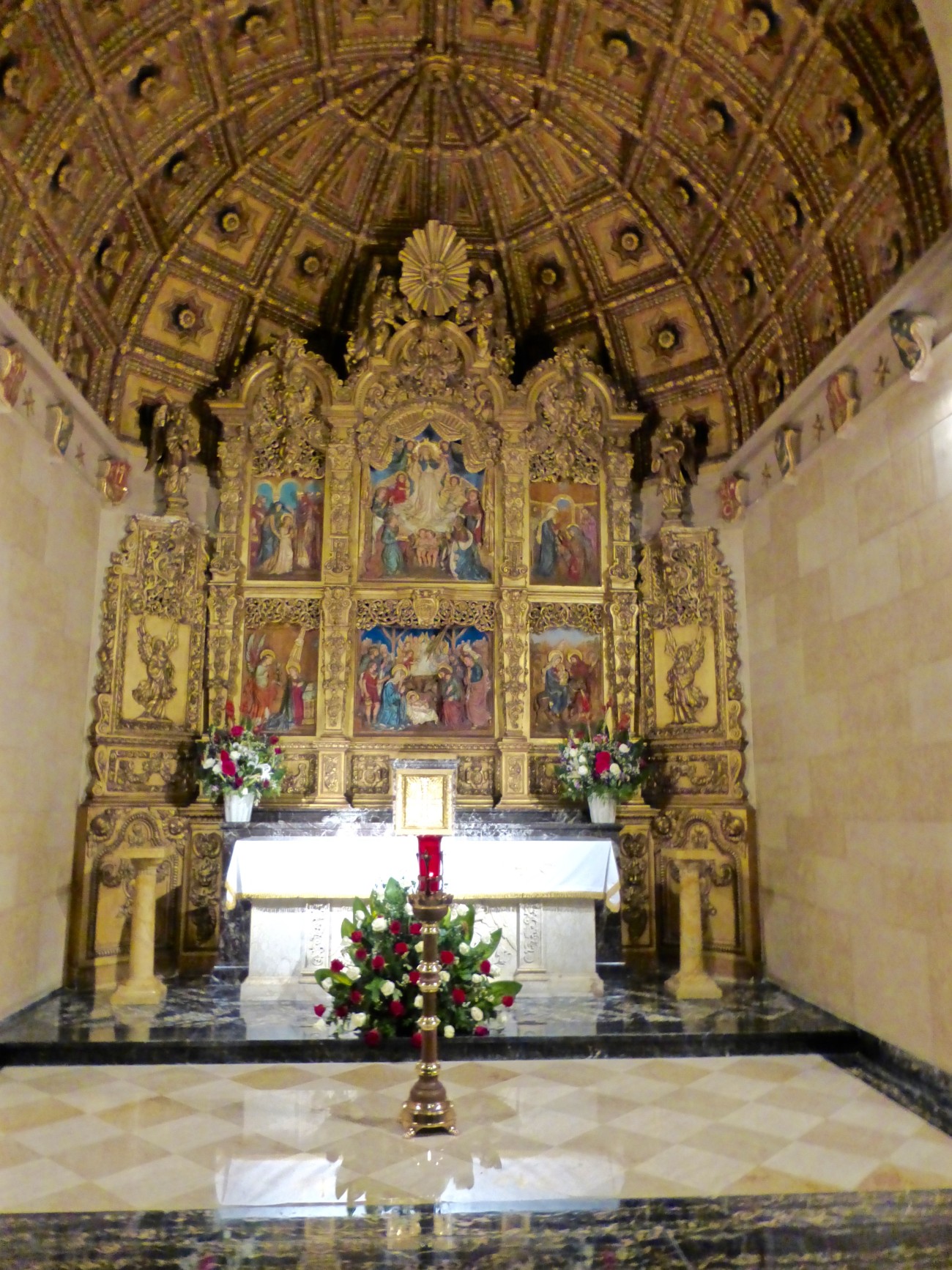
St. Vincent De Paul Los AngelesReadings at MassLiturgical Colour: White. Year: B(II). Readings for the feria Readings for the memorial These are the readings for the feria
| First reading |
|---|
| Ecclesiastes 3:1-11 |
|---|
There is a time for every occupation under heavenThere is a season for everything, a time for every occupation under heaven: A time for giving birth, a time for dying; a time for planting, a time for uprooting what has been planted. A time for killing, a time for healing; a time for knocking down, a time for building. A time for tears, a time for laughter; a time for mourning, a time for dancing. A time for throwing stones away, a time for gathering them up; a time for embracing, a time to refrain from embracing. A time for searching, a time for losing; a time for keeping, a time for throwing away. A time for tearing, a time for sewing; a time for keeping silent, a time for speaking. A time for loving, a time for hating; a time for war, a time for peace. What does a man gain for the efforts that he makes? I contemplate the task that God gives mankind to labour at. All that he does is apt for its time; but though he has permitted man to consider time in its wholeness, man cannot comprehend the work of God from beginning to end.
| Responsorial Psalm |
|---|
| Psalm 143(144):1-4 |
|---|
Blessed be the Lord, my rock. Blessed be the Lord, my rock. He is my love, my fortress; he is my stronghold, my saviour my shield, my place of refuge. Blessed be the Lord, my rock. Lord, what is man that you care for him, mortal man, that you keep him in mind; man, who is merely a breath whose life fades like a passing shadow? Blessed be the Lord, my rock.
| Gospel Acclamation | cf.Ep1:17,18 |
|---|
Alleluia, alleluia! May the Father of our Lord Jesus Christ enlighten the eyes of our mind, so that we can see what hope his call holds for us. Alleluia! Alleluia, alleluia! The Son of Man came to serve and to give his life as a ransom for many. Alleluia!
'You are the Christ of God'One day when Jesus was praying alone in the presence of his disciples he put this question to them, ‘Who do the crowds say I am?’ And they answered, ‘John the Baptist; others Elijah; and others say one of the ancient prophets come back to life.’ ‘But you,’ he said ‘who do you say I am?’ It was Peter who spoke up. ‘The Christ of God’ he said. But he gave them strict orders not to tell anyone anything about this. ‘The Son of Man’ he said ‘is destined to suffer grievously, to be rejected by the elders and chief priests and scribes and to be put to death, and to be raised up on the third day.’ Continue These are the readings for the memorial
| First reading |
|---|
| 1 Corinthians 1:26-31 |
|---|
God chose what is foolish by human reckoning, to shame the wiseTake yourselves for instance, brothers, at the time when you were called: how many of you were wise in the ordinary sense of the word, how many were influential people, or came from noble families? No, it was to shame the wise that God chose what is foolish by human reckoning, and to shame what is strong that he chose what is weak by human reckoning; those whom the world thinks common and contemptible are the ones that God has chosen – those who are nothing at all to show up those who are everything. The human race has nothing to boast about to God, but you, God has made members of Christ Jesus and by God’s doing he has become our wisdom, and our virtue, and our holiness, and our freedom. As scripture says: if anyone wants to boast, let him boast about the Lord.
| Responsorial Psalm |
|---|
| Psalm 111(112):1-9 |
|---|
Happy the man who fears the Lord. or Alleluia! Happy the man who fears the Lord, who takes delight in all his commands. His sons will be powerful on earth; the children of the upright are blessed. Happy the man who fears the Lord. or Alleluia! Riches and wealth are in his house; his justice stands firm for ever. He is a light in the darkness for the upright: he is generous, merciful and just. Happy the man who fears the Lord. or Alleluia! The good man takes pity and lends, he conducts his affairs with honour. The just man will never waver: he will be remembered for ever. Happy the man who fears the Lord. or Alleluia! He has no fear of evil news; with a firm heart he trusts in the Lord. With a steadfast heart he will not fear; he will see the downfall of his foes. Happy the man who fears the Lord. or Alleluia! Open-handed, he gives to the poor; his justice stands firm for ever. His head will be raised in glory. Happy the man who fears the Lord. or Alleluia!
| Gospel Acclamation | Jn10:14 |
|---|
Alleluia, alleluia! I am the good shepherd, says the Lord; I know my own sheep and my own know me. Alleluia!
The harvest is rich but the labourers are fewJesus made a tour through all the towns and villages, teaching in their synagogues, proclaiming the Good News of the kingdom and curing all kinds of diseases and sickness. And when he saw the crowds he felt sorry for them because they were harassed and dejected, like sheep without a shepherd. Then he said to his disciples, ‘The harvest is rich but the labourers are few, so ask the Lord of the harvest to send labourers to his harvest.’ Continue Christian Art Each day, The Christian Art website gives a picture and reflection on the Gospel of the day. The readings on this page are from the Jerusalem Bible, which is used at Mass in most of the English-speaking world. The New American Bible readings, which are used at Mass in the United States, are available in the Universalis apps, programs and downloads.
You can also view this page with the Gospel in Greek and English. |
TOPICS: Catholic; General Discusssion; Prayer; Worship
KEYWORDS: catholic; lk9; mt9; ordinarytime; prayer
For your reading, reflection, faith-sharing, comments, questions, discussion.
1
posted on
09/27/2024 7:49:04 AM PDT
by
annalex
To: All
KEYWORDS: catholic; lk9; mt9; ordinarytime; prayer
2
posted on
09/27/2024 7:49:46 AM PDT
by
annalex
(fear them not)
To: nickcarraway; NYer; ELS; Pyro7480; livius; ArrogantBustard; Catholicguy; RobbyS; marshmallow; ...

Alleluia Ping Please FReepmail me to get on/off the Alleluia Ping List.
3
posted on
09/27/2024 7:50:46 AM PDT
by
annalex
(fear them not)
To: annalex
4
posted on
09/27/2024 7:51:12 AM PDT
by
annalex
(fear them not)
To: annalex
| Luke |
| | English: Douay-Rheims | Latin: Vulgata Clementina | Greek NT: Byzantine/Majority Text (2000) |
| | Luke 9
|
| 18. | And it came to pass, as he was alone praying, his disciples also were with him: and he asked them, saying: Whom do the people say that I am? | Et factum est cum solus esset orans, erant cum illo et discipuli : et interrogavit illos, dicens : Quem me dicunt esse turbæ ? | και εγενετο εν τω ειναι αυτον προσευχομενον καταμονας συνησαν αυτω οι μαθηται και επηρωτησεν αυτους λεγων τινα με λεγουσιν οι οχλοι ειναι |
| 19. | But they answered, and said: John the Baptist; but some say Elias; and others say that one of the former prophets is risen again. | At illi responderunt, et dixerunt : Joannem Baptistam, alii autem Eliam, alii vero unus propheta de prioribus surrexit. | οι δε αποκριθεντες ειπον ιωαννην τον βαπτιστην αλλοι δε ηλιαν αλλοι δε οτι προφητης τις των αρχαιων ανεστη |
| 20. | And he said to them: But whom do you say that I am? Simon Peter answering, said: The Christ of God. | Dixit autem illis : Vos autem quem me esse dicitis ? Respondens Simon Petrus, dixit : Christum Dei. | ειπεν δε αυτοις υμεις δε τινα με λεγετε ειναι αποκριθεις δε ο πετρος ειπεν τον χριστον του θεου |
| 21. | But he strictly charging them, commanded they should tell this to no man. | At ille increpans illos, præcepit ne cui dicerent hoc, | ο δε επιτιμησας αυτοις παρηγγειλεν μηδενι ειπειν τουτο |
| 22. | Saying: The Son of man must suffer many things, and be rejected by the ancients and chief priests and scribes, and be killed, and the third day rise again. | dicens : Quia oportet Filium hominis multa pati, et reprobari a senioribus, et principibus sacerdotum, et scribis, et occidi, et tertia die resurgere. | ειπων οτι δει τον υιον του ανθρωπου πολλα παθειν και αποδοκιμασθηναι απο των πρεσβυτερων και αρχιερεων και γραμματεων και αποκτανθηναι και τη τριτη ημερα αναστηναι |
5
posted on
09/27/2024 7:54:10 AM PDT
by
annalex
(fear them not)
To: annalex

Catena Aurea by St. Thomas Aguinas
9:18–22
18. And it came to pass, as he was alone praying, his disciples were with him: and he asked them, saying, Whom say the people that I am?
19. They answering said, John the Baptist; but some say, Elias; and others say, that one of the old prophets is risen again.
20. He said unto them, But whom say ye that I am? Peter answering said, The Christ of God.
21. And he straitly charged them, and commanded them to tell no man that thing;
22. Saying, The Son of man must suffer many things, and be rejected of the elders and Chief Priests and Scribes, and be slain, and be raised the third day.
CYRIL OF ALEXANDRIA. Our Lord having retired from the multitude, and being in a place apart, was engaged in prayer. As it is said, And it came to pass, as he was alone praying. For He ordained Himself as an example of this, instructing His disciples by an easy method of teaching. For I suppose the rulers of the people ought to be superior also in good deeds, to those that are under them, ever holding converse with them in all necessary things, and treating of those things in which God delights.
BEDE. Now the disciples were with the Lord, but He alone prayed to the Father, since the saints may be joined to the Lord in the bond of faith and love, but the Son alone is able to penetrate the incomprehensible secrets of the Father’s will. Every where then He prays alone, for human wishes comprehend not the counsel of God, nor can any one be a partaker with Christ of the deep things of God.
CYRIL OF ALEXANDRIA. Now His engaging in prayer might perplex His disciples. For they saw Him praying like a man, Whom before they had seen performing miracles with divine power. In order then to banish all perplexity of this kind, He asks them this question, not because He did not know the reports which they had gathered from without, but that He might rid them of the opinion of the many, and instil into them the true faith. Hence it follows, And he asked them, saying, Whom say the people that I am?
BEDE. Rightly does our Lord, when about to enquire into the faith of the disciples, first inquire into the opinion of the multitudes, lest their confession should appear not to be determined by their knowledge, but to be formed by the opinion of the generality, and they should be considered not to believe from experience, but like Herod to be perplexed by different reports which they heard.
AUGUSTINE. (de Con. Ev. l. ii. c. 53.) Now it may raise a question, that Luke says that our Lord asked His disciples, Whom do men say that I am, at the same time that He was alone praying, and they also were with Him; whereas Mark says, that they were asked this question by our Lord on the way; but this is difficult only to him who never prayed on the way.
AMBROSE. But it is no trifling opinion of the multitude which the disciples mention, when it is added, But they answering said, John the Baptist, (whom they knew to be beheaded;) but some say, Elias, (whom they thought would come,) but others say that one of the old Prophets is risen again. But to make this enquiry belongs to a different kind of wisdom from ours, for if it were enough for the Apostle Paul to know nothing but Christ Jesus, and Him crucified, what more can I desire to know than Christ? (1 Cor. 2:2.)
CYRIL OF ALEXANDRIA. But mark the subtle skill of the question. For he directs them first to the praises of strangers, that having overthrown these, He might beget in them the right opinion. So when the disciples had given the opinion of the people, He asks them their own opinion; as it is added, And He said unto them, Whom say ye that I am? How marked is ye! He excludes them from the other, that they may avoid their opinions; as if He said, Ye who by my decree are called to the Apostleship, the witnesses of my miracles, whom do ye say that I am? But Peter anticipated the rest, and becomes the mouthpiece of the whole company, and launching forth into the eloquence of divine love, utters the confession of faith, as it is added, Peter answering said, The Christ of God. He says not merely that He was Christ of God, but now He uses the article. Hence it is in the Greek, τὸν χριστόν. For many divinely accounted persons are in diverse ways called Christs, for some were anointed kings, some prophets. But we through Christ have been anointed by the holy Spirit, have obtained the name of Christ. But there is only one who is the Christ of God and the Father, He alone as it were having His own Father who is in heaven. And so Luke agrees indeed in the same opinion as Matthew, who relates Peter to have said, Thou art Christ, the Son of the living God, but speaking briefly Luke says that Peter answered, the Christ of God.
AMBROSE. In this one name there is the expression both of His divinity and incarnation, and the belief of His passion. He has therefore comprehended every thing, having expressed both the nature and the name wherein is all virtue. (summa virtutum)
CYRIL OF ALEXANDRIA. But we must observe, that Peter most wisely confessed Christ to be one, against those who presumed to divide Immanuel into two Christs. For Christ did not enquire of them, saying, Whom do men say the divine Word is? but the Son of man, whom Peter confessed to be the Son of God. Herein then is Peter to be admired, and thought worthy of such chief honour, seeing that Him whom he marvelled at in our form, he believed to be the Christ of the Father, that is to say, that the Word which proceeded of the Father’s Substance was become man.
AMBROSE. But our Lord Jesus Christ was at first unwilling to be preached, lest an uproar should arise; as it follows, And he straitly charged them, and commanded them to tell no man any thing. For many reasons He commands His disciples to be silent; to deceive the prince of this world, to reject boasting, to teach humility. Christ then would not boast and dost thou boast who art of ignoble birth? Likewise He did it to prevent rude and as yet imperfect disciples from being oppressed with the wonder of this awful announcement. They are then forbid to preach Him as the Son of God, that they might afterwards preach Him crucified.
CHRYSOSTOM. (Hom. 54. in Matt.) Timely also was our Lord’s command that no one should tell that He was Christ, in order that when offences should be taken away and the sufferings of the cross completed, a proper opinion of Him might be firmly rooted in the minds of the hearers. For that which has once taken root and afterwards been torn up. when fresh planted will scarcely ever be preserved. But that which when once planted continues undisturbed, grows up securely. For if Peter was offended merely by what he heard, what would be the feelings of those many who, after they had heard that He was the Son of God, saw Him crucified, and spit upon?
CYRIL OF ALEXANDRIA. It was the duty then of the disciples to preach Him throughout the world. For this was the work of those who were chosen by Him to the office of the Apostleship. But as holy Scripture bears witness, There is a time for every thing. For it was fitting that the cross and resurrection should be accomplished, and then should follow the preaching of the Apostles; as it is spoken, saying, The Son of man must needs suffer many things.
AMBROSE. Perhaps because the Lord knew that the disciples would believe even the difficult mystery of the Passion and Resurrection, He wished to be Himself the proclaimer of His own Passion and Resurrection.
Catena Aurea Luke 9
6
posted on
09/27/2024 7:55:07 AM PDT
by
annalex
(fear them not)
To: annalex

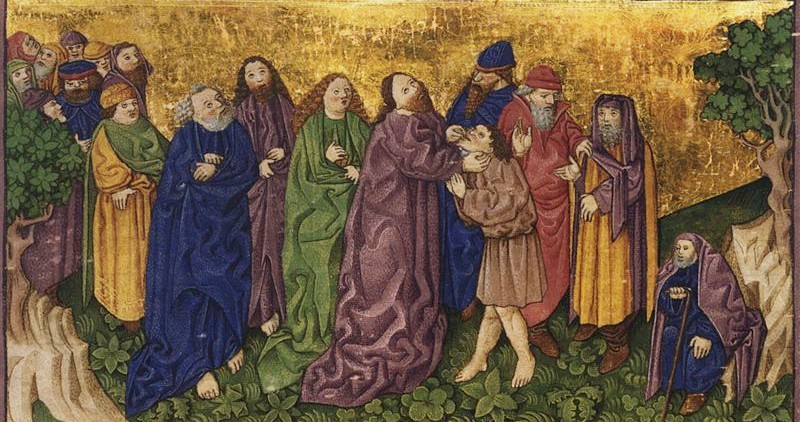
The Stefaneschi Triptych: Martyrdom of Peter
Giotto di Bondone
c. 1330
Tempera on panel
Pinacoteca, Vatican
7
posted on
09/27/2024 7:55:35 AM PDT
by
annalex
(fear them not)
To: annalex
| Matthew |
| | English: Douay-Rheims | Latin: Vulgata Clementina | Greek NT: Byzantine/Majority Text (2000) |
| | Matthew 9
|
| 32. | And when they were gone out, behold they brought him a dumb man, possessed with a devil. | Egressis autem illis, ecce obtulerunt ei hominem mutum, dæmonium habentem. | αυτων δε εξερχομενων ιδου προσηνεγκαν αυτω ανθρωπον κωφον δαιμονιζομενον |
| 33. | And after the devil was cast out, the dumb man spoke, and the multitudes wondered, saying, Never was the like seen in Israel. | Et ejecto dæmonio, locutus est mutus, et miratæ sunt turbæ, dicentes : Numquam apparuit sic in Israël. | και εκβληθεντος του δαιμονιου ελαλησεν ο κωφος και εθαυμασαν οι οχλοι λεγοντες ουδεποτε εφανη ουτως εν τω ισραηλ |
| 34. | But the Pharisees said, By the prince of devils he casteth out devils. | Pharisæi autem dicebant : In principe dæmoniorum ejicit dæmones. | οι δε φαρισαιοι ελεγον εν τω αρχοντι των δαιμονιων εκβαλλει τα δαιμονια |
| 35. | And Jesus went about all the cities, and towns, teaching in their synagogues, and preaching the gospel of the kingdom, and healing every disease, and every infirmity. | Et circuibat Jesus omnes civitates, et castella, docens in synagogis eorum, et prædicans Evangelium regni, et curans omnem languorem, et omnem infirmitatem. | και περιηγεν ο ιησους τας πολεις πασας και τας κωμας διδασκων εν ταις συναγωγαις αυτων και κηρυσσων το ευαγγελιον της βασιλειας και θεραπευων πασαν νοσον και πασαν μαλακιαν εν τω λαω |
| 36. | And seeing the multitudes, he had compassion on them: because they were distressed, and lying like sheep that have no shepherd. | Videns autem turbas, misertus est eis : quia erant vexati, et jacentes sicut oves non habentes pastorem. | ιδων δε τους οχλους εσπλαγχνισθη περι αυτων οτι ησαν εσκυλμενοι και ερριμμενοι ωσει προβατα μη εχοντα ποιμενα |
| 37. | Then he saith to his disciples, The harvest indeed is great, but the labourers are few. | Tunc dicit discipulis suis : Messis quidem multa, operarii autem pauci. | τοτε λεγει τοις μαθηταις αυτου ο μεν θερισμος πολυς οι δε εργαται ολιγοι |
| 38. | Pray ye therefore the Lord of the harvest, that he send forth labourers into his harvest. | Rogate ergo Dominum messis, ut mittat operarios in messem suam. | δεηθητε ουν του κυριου του θερισμου οπως εκβαλη εργατας εις τον θερισμον αυτου |
8
posted on
09/27/2024 7:58:04 AM PDT
by
annalex
(fear them not)
To: annalex
Catena Aurea by St. Thomas Aguinas
9:32–35
32. As they went out, behold, they brought to him a dumb man possessed with a devil.
33. And when the devil was east out, the dumb spake: and the multitudes marvelled, saying, It was never so seen in Israel.
34. But the Pharisees said, He casteth out devils through the prince of the devils.
35. And Jesus went about all the cities and villages, teaching in their synagogues, and preaching the Gospel of the kingdom, and healing every sickness and every disease among the people.
REMIGIUS. Observe the beautiful order of His miracles; how after He had given sight to the blind, He restored speech to the dumb, and healed the possessed of the dæmon; by which He shews Himself the Lord of power, and the author of the heavenly medicine. For it was said by Isaiah, Then shall the eyes of the blind be opened, the ears of the deaf shall be unstopped, and the tongue of the dumb loosed. (Is. 35:6.) Whence it is said, When they were gone forth, they brought unto him a man dumb, and possessed with a dæmon.
JEROME. The Greek word here (κωφὸς) is more frequent in common speech in the sense of ‘deaf,’ but it is the manner of Scripture to use it indifferently as either.
CHRYSOSTOM. This was not a mere natural defect; but was from the malignity of the dæmon; and therefore he needed to be brought of others, for he could not ask any thing of others as living without voice, and the dæmon chaining his spirit together with his tongue. Therefore Christ does not require faith of him, but immediately healed his disorder; as it follows, And when the dæmon was cast out, the dumb spake.
HILARY. The natural order of things is here preserved; the dæmon is first cast out, and there the functions of the members proceed. And the multitude marvelled, saying, It was never so seen in Israel.
CHRYSOSTOM. They set Him thus above others, because He not only healed, but with such ease, and quickness; and cured diseases both infinite in number, and in quality incurable. This most grieved the Pharisees, that they set Him before all others, not only those that then lived, but all who had lived before, on which account it follows, But the Pharisees said, He casteth out dæmons through the Prince of dæmons.
REMIGIUS. Thus the Scribes and Pharisees denied such of the Lord’s miracles as they could deny; and such as they could not they explained by an evil interpretation, according to that, In the multitude of thy excellency thy enemies shall lie unto thee. (Ps. 66:3.)
CHRYSOSTOM. What can be more foolish than this speech of theirs? For it cannot be pretended that one dæmon would cast out another; for they are wont to consent to one another’s deeds, and not to be at variance among themselves. But Christ not only cast out dæmons, but healed the lepers, raised the dead, forgave sins, preached the kingdom of God, and brought men to the Father, which a dæmon neither could nor would do.
RABANUS. Figuratively; As in the two blind men were denoted both nations, Jews and Gentiles, so in the man dumb and afflicted with the dæmon is denoted the whole human race.
HILARY. Or; By the dumb and deaf, and dæmoniae, is signified the Gentile world, needing health in every part; for sunk in evil of every kind, they are afflicted with disease of every part of the body.
REMIGIUS. For the Gentiles were dumb; not being able to open their mouth in the confession of the true faith, and the praises of the Creator, or because in paying worship to dumb idols they were made like unto them. They were afflicted with a dæmon, because by dying in unbelief they were made subject to the power of the Devil.
HILARY. But by the knowledge of God the frenzy of superstition being chased away, the sight, the hearing, and the word of salvation is brought in to them.
JEROME. As the blind receive light, so the tongue of the dumb is loosed, that he may confess Him whom before he denied. The wonder of the multitude is the confession of the nations. The scoff of the Pharisees is the unbelief of the Jews, which is to this day.
HILARY. The wonder of the multitude is followed up by the confession, It was never so seen in Israel; because he, for whom there was no help under the Law, is saved by the power of the Word.
REMIGIUS. They who brought the dumb to be healed by the Lord, signify the Apostles and preachers, who brought the Gentile people to be saved before the face of divine mercy.
AUGUSTINE. (De Cons. Ev. ii. 29.) This account of the two blind men and the dumb dæmon is read in Matthew only. The two blind men of whom the others speak are not the same as these, though something similar was done with them. So that even if Matthew had not also recorded their cure, we might have seen that this present narrative was of a different transaction. And this we ought diligently to remember, that many actions of our Lord are very much like one another, but are proved not to be the same action, by being both related at different times by the same Evangelist. So that when we find cases in which one is recorded by one Evangelist, and another by another, and some difference which we cannot reconcile between their accounts, we should suppose that they are like, but not the same, events.
9:36–38
36. But when he saw the multitudes, he was moved with compassion on them, because they fainted, and were scattered abroad, as sheep having no shepherd.
37. Then saith he unto his disciples, The harvest truly is plenteous, but the labourers are few;
38. Pray ye therefore the Lord of the harvest, that he will send forth labourers into his harvest.
CHRYSOSTOM. The Lord would refute by actions the charge of the Pharisees, who said, He casteth out dæmons by the Prince of the dæmons; for a dæmon having suffered rebuke, does not return good but evil to those who have not shewn him honour. But the Lord on the other hand, when He has suffered blasphemy and contumely, not only does not punish, but does not utter a hard speech, yea He shews kindness to them that did it, as it here follows, And Jesus went about all their towns and villages. Herein He teaches us not to return accusations to them that accuse us, but kindness. For he that ceases to do good because of accusation, shews that his good has been done because of men. But if for God’s sake you do good to your fellow-servants, you will not cease from doing good whatever they do, that your reward may be greater.
JEROME. Observe how equally in villages, cities, and towns, that is to great as well as small, He preaches the Gospel, not respecting the might of the noble, but the salvation of those that believe. It follows, Teaching in their synagogues; this was His meat, going about to do the will of His Father, and saving by His teaching such as yet believed not.
GLOSS. (non occ.) He taught in their synagogues the Gospel of the Kingdom, as it follows, Preaching the Gospel of the Kingdom.
REMIGIUS. Understand, ‘of God;’ for though temporal blessings are also proclaimed, yet they are not called The Gospel. Hence the Law was not called a Gospel, because to such as kept it, it held out not heavenly, but earthly, goods.
JEROME. He first preached and taught, and then proceeded to heal sicknesses, that the works might convince those who would not believe the words. Hence it follows, Healing every sickness and every disease, for to Him alone nothing is impossible.
GLOSS. (ap. Anselm.) By disease we may understand complaints of long standing, by sickness any lesser infirmity.
REMIGIUS. It should be known that those whom He healed outwardly in their bodies, He also healed inwardly in their souls. Others cannot do this of their own power, but can by God’s grace.
CHRYSOSTOM. Nor does Christ’s goodness rest here, but He manifests His care for them, opening the bowels of His mercy towards them; whence it follows, And seeing the multitudes, he had compassion upon them.
REMIGIUS. Herein Christ shews in Himself the disposition of the good shepherd and not that of the hireling. Why He pitied them is added, Because they were troubled1, and sick1 as sheep that have no shepherd—troubled either by dæmons, or by divers sicknesses and infirmities.
GLOSS. (ap. Anselm.) Or, troubled by dæmons, and sick, that is, benumbed and unable to rise; and though they had shepherds, yet they were as though they had them not.
CHRYSOSTOM. This is an accusation against the rulers of the Jews, that being shepherds they appeared like wolves; not only not improving the multitude, but hindering their progress. For when the multitude marvelled and said, It was never so seen in Israel, these opposed themselves, saying, He casteth out dæmons by the prince of the dæmons. (vid. Ps. 102:19.)
REMIGIUS. But when the Son of God looked down from heaven upon the earth, to hear the groans of the captives, straight a great harvest began to ripen; for the multitude of the human race would never have come near to the faith, had not the Author of human salvation looked down from heaven; and it follows, Then said he unto his disciples, The harvest truly is great, but the labourers are few.
GLOSS. (ap. Anselm.) The harvest are those men who can be reaped by the preachers, and separated from the number of the damned, as grain is beaten out from the chaff that it may be laid up in granaries.
JEROME. The great harvest denotes the multitude of the people; the few labourers, the want of instructors.
REMIGIUS. For the number of the Apostles was small in comparison of so great crops to be reaped. The Lord exhorts His preachers, that is, the Apostles and their followers, that they should daily desire an increase of their number; Pray ye therefore the Lord of the harvest, that he would send forth labourers into his harvest.
CHRYSOSTOM. He privately insinuates Himself to be the Lord; for it is He Himself who is Lord of the harvest. For if He sent the Apostles to reap what they had not sown, it is manifest that He sent them not to reap the things of others, but what He had sown by the Prophets. But since the twelve Apostles are the labourers, He said, Pray ye the Lord of the harvest, that he would send labourers into his harvest; and notwithstanding He added none to their number, but rather He multiplied those twelve many times, not by increasing their numbers, but by giving them more abundant grace.
REMIGIUS. Or, He then increased their number when He chose the seventy and two, and then when many preachers were made what time the Holy Spirit descended upon the believers.
CHRYSOSTOM. He shews us that it is a great gift that one should have the power of rightly preaching, in that He tells them that they ought to pray for it. Also we are here reminded of the words of John concerning the threshing-floor, and the fan, the chaff, and the wheat.
HILARY. Figuratively; When salvation was given to the Gentiles, then all cities and towns were enlightened by the power and entrance of Christ, and escaped every former sickness and infirmity. The Lord pities the people troubled with the violence of the unclean Spirit, and sick under the burden of the Law, and having no shepherd at hand to bestow on them the guardianship of the Holy Spirit. But of that gift there was a most abundant fruit, whose plenty far exceeded the multitude of those that drank thereof; how many soever take of it, yet an inexhaustible supply remains; and because it is profitable that there should be many to minister it, He bids us ask the Lord of the harvest, that God would provide a supply of reapers for the ministration of that gift of the Holy Spirit which was made ready; for by prayer this gift is poured out upon us from God.
Catena Aurea Matthew 9
9
posted on
09/27/2024 8:00:03 AM PDT
by
annalex
(fear them not)
To: annalex
10
posted on
09/27/2024 8:00:17 AM PDT
by
annalex
(fear them not)
To: annalex
Saint of the Day for September 27
(1580 – September 27, 1660)
Saint Vincent de Paul’s Story
The deathbed confession of a dying servant opened Vincent de Paul’s eyes to the crying spiritual needs of the peasantry of France. This seems to have been a crucial moment in the life of the man from a small farm in Gascony, France, who had become a priest with little more ambition than to have a comfortable life.
The Countess de Gondi—whose servant he had helped—persuaded her husband to endow and support a group of able and zealous missionaries who would work among poor tenant farmers and country people in general. Vincent was too humble to accept leadership at first, but after working for some time in Paris among imprisoned galley slaves, he returned to be the leader of what is now known as the Congregation of the Mission, or the Vincentians. These priests, with vows of poverty, chastity, obedience, and stability, were to devote themselves entirely to the people in smaller towns and villages.
Later, Vincent established confraternities of charity for the spiritual and physical relief of the poor and sick of each parish. From these, with the help of Saint Louise de Marillac, came the Daughters of Charity, “whose convent is the sickroom, whose chapel is the parish church, whose cloister is the streets of the city.” He organized the rich women of Paris to collect funds for his missionary projects, founded several hospitals, collected relief funds for the victims of war, and ransomed over 1,200 galley slaves from North Africa. He was zealous in conducting retreats for clergy at a time when there was great laxity, abuse, and ignorance among them. He was a pioneer in clerical training and was instrumental in establishing seminaries.
Most remarkably, Vincent was by temperament a very irascible person—even his friends admitted it. He said that except for the grace of God he would have been “hard and repulsive, rough and cross.” But he became a tender and affectionate man, very sensitive to the needs of others.
Pope Leo XIII made him the patron of all charitable societies. Outstanding among these, of course, is the Society of St. Vincent de Paul, founded in 1833 by his admirer Blessed Frédéric Ozanam.
Reflection
The Church is for all God’s children, rich and poor, peasants and scholars, the sophisticated and the simple. But obviously the greatest concern of the Church must be for those who need the most help—those made helpless by sickness, poverty, ignorance, or cruelty. Vincent de Paul is a particularly appropriate patron for all Christians today, when hunger has become starvation, and the high living of the rich stands in more and more glaring contrast to the physical and moral degradation in which many of God’s children are forced to live.
Saint Vincent de Paul is the Patron Saint of:
Charitable Societies
franciscanmedia.org
11
posted on
09/27/2024 8:03:24 AM PDT
by
annalex
(fear them not)
To: annalex

Saint Vincent de Paul bringing galley slaves to the faith
Lecomte du Nouÿ
1876
12
posted on
09/27/2024 8:07:16 AM PDT
by
annalex
(fear them not)
To: annalex
NAVARRE BIBLE COMMENTARY (RSV)
Ad Majorem Dei Gloriam (To the Greater Glory of God)
First Reading:
From: Ecclesiastes 3:1-11
For everything there is a season
----------------------------------------------
[1] For everything there is a season, and a time for every matter under heaven:
[2] a time to be born, and a time to die;
a time to plant, and a time to pluck up what is planted;
[3] a time to kill, and a time to heal;
a time to break down, and a time to build up;
[4] a time to weep, and a time to laugh;
a time to mourn, and a time to dance;
[5] a time to cast away stones, and a time to gather stones together;
a time to embrace, and a time to refrain from embracing;
[6] a time to seek, and a time to lose;
a time to keep, and a time to cast away;
[7] a time to rend, and a time to sew;
a time to keep silence, and a time to speak;
[8] a time to love, and a time to hate;
a time for war, and a time for peace.
[9] What gain has the worker from his toil?
Man cannot see far
----------------------------
[10] have seen the business that God has given to the sons of men to be busy with. He has made everything beautiful in its time; also he has put eternity into man’s mind, yet so that he cannot find out what God has done from the beginning to the end.
***************************************************************
Commentary:
3:1-15. After arriving at the previous conclusion, the sacred writer picks up the thread of his discourse to say something along the same lines as 1:3-7, but this time focusing not on the created world but on “seasonal” changes in human life. These, too, are fixed in advance and man can do nothing to alter them (vv. 1-9). However, even though he may not be able to make sense of them, man has to accept that it is God who makes “everything beautiful in its time” (vv. 10-11), and therefore man should enjoy life as a gift from God (vv. 12-13), conscious that God controls what happens now and in the future (vv. 14-15; cf. 1:9).
3:1-9. In this passage the teacher of Israel uses some ideas from the Greek philosophers. He lists fourteen pairs of “times” in the ordinary life of man. In Hebrew culture, numbers had symbolic values, multiples of seven denoting completeness; so this list is meant to include all the stages and tasks of life. By putting birth and death first he is giving them pride of place: all the other pairs fit in between birth and death. The Stoic philosophers claimed that the human mind can know the season fixed for each activity, and that a virtuous man knows and respects the appropriate time for each thing. As the Preacher sees it, man can know them, but he cannot change them, because it is God who has established those times and he has charged man with the task of discovering them. Moreover, the “seasons of life, the times at which events in man’s life happen, are presented here as transcending man’s understanding, while, at the same time, they lie at the core of his existence. Believing, as we do, that the coming of Christ marks the fullness of time, we see time to be the backdrop against which the salvation history unfolds: “In Christianity, time has a fundamental importance, says John Paul II. “Within the dimension of time the world was created; within it the history of salvation unfolds, finding its culmination in the ‘fullness of time’ of the Incarnation, and its goal in the glorious return of the Son of God at the end of time.
In Jesus Christ, the Word made flesh, time becomes a dimension of God, who is himself eternal. With the coming of Christ there begin ‘the last days’ (cf. Heb 1:2), the ‘last hour’ (cf. 1 Jn 2:18), and the time of the Church, which will last until the Parousia. From this relationship of God with time there arises the duty to sanctify time. This is done, for example, when individual times, days or weeks, are dedicated to God, as once happened in the religion of the Old Covenant, and as happens still, though in a new way, in Christianity. In the liturgy of the Easter Vigil the celebrant, as he blesses the candle which symbolizes the Risen Christ, proclaims: ‘Christ yesterday and today, the beginning and the end. Alpha and Omega, all time belongs to him, and all the ages, to him be glory and power through every age for ever.’ He says these words as he inscribes on the candle the numerals of the current year. The meaning of this rite is clear: it emphasizes the fact that Christ is the Lord of time; he is its beginning and its end; every year, every day and every moment are embraced by his Incarnation and Resurrection, and thus become part of the ‘fullness of time’” (Tertio millenio adveniente, 10). Thus, every time, every moment, is not purely transitory; it is an eternal dimension. So, “what is important is to make good use of time, that time which is always slipping from our grasp and which to a Christian is more precious than gold, because it represents a foretaste of the glory that will he granted us hereafter” (St. J. Escriva, Friends of God, 212).
3:10-15. Earlier, the sacred writer spoke about his personal reflections (“I said to myself”: 1:16; 2:1, 15); now he is going to speak about what he sees, what his own experience has been (“I have seen”: v. 10; cf. 3:16; 4:1; etc.). He sees man’s activity as the “business” entrusted to him by God. Although man does not grasp the full import of his actions, he can still take some pleasure from them and benefit from them.
13
posted on
09/27/2024 8:24:50 AM PDT
by
fidelis
(Ecce Crucem Domini! Fugite partes adversae! Vicit Leo de tribu Juda, Radix David! Alleluia!)
Gospel Reading: From: Luke 9:18-22
Peter's Confession of Faith
----------------------------------
[18] Now it happened that as He (Jesus) was praying alone the disciples were with Him; and He asked them, "Who do the people say that I am?" [19] And they answered, "John the Baptist; but others say, Elijah; and others, that one of the old prophets has risen." [20] And He said to them, "But who do you say that I am?" And Peter answered, "The Christ of God."
First Prophecy of the Passion
-------------------------------------
[21] But He charged and commanded them to tell this to no one, [22] saying, "The Son of Man must suffer many things, and be rejected by the elders and chief priests and scribes, and be killed, and on the third day be raised."
***********************************************************************
Commentary:
20. "Christ" means "anointed" and is a name indicating honor and office. In the Old Law "priests" were anointed (Exodus 29:7 and 40:13), as were "kings" (1 Samuel 9:16), because God laid down that they should receiving anointing in view of their position; there was also a custom to anoint "prophets" (1 Samuel 16:13) because they were interpreters and intermediaries of God. "When Jesus Christ our Savior came into the world, He assumed the position and obligations of the three offices of priest, king and prophet and was therefore called Christ" ("St. Pius V Catechism", I, 3, 7).
22. Jesus prophesied His passion and death in order to help His disciples believe in him. It also showed that He was freely accepting these sufferings He would undergo. "Christ did not seek to be glorified: He chose to come without glory in order to undergo suffering; and you, who have been born without glory, do you wish to be glorified? The route you must take is the one Christ took. This means recognizing Him and it means imitating Him both in His ignominy and in His good repute; thus you will glory in the Cross, which was His path to glory. That was what Paul did, and therefore he glorified in saying, `Far be it from me to glory except in the cross of our Lord Jesus Christ' (Galatians 6:14)" (St. Ambrose, "Expositio Evangelii Sec. Lucam, in loc.").
14
posted on
09/27/2024 8:25:25 AM PDT
by
fidelis
(Ecce Crucem Domini! Fugite partes adversae! Vicit Leo de tribu Juda, Radix David! Alleluia!)
15
posted on
09/27/2024 8:26:35 AM PDT
by
fidelis
(Ecce Crucem Domini! Fugite partes adversae! Vicit Leo de tribu Juda, Radix David! Alleluia!)
Disclaimer:
Opinions posted on Free Republic are those of the individual
posters and do not necessarily represent the opinion of Free Republic or its
management. All materials posted herein are protected by copyright law and the
exemption for fair use of copyrighted works.
FreeRepublic.com is powered by software copyright 2000-2008 John Robinson