Free Republic
Browse · Search
Religion
Topics · Post Article

Skip to comments.

Catholic Caucus: Daily Mass Readings 13-September-2024
Universalis/Jerusalem Bible ^

Posted on 09/13/2024 12:04:52 PM PDT by annalex

Mmm dd, 2024

TITLE


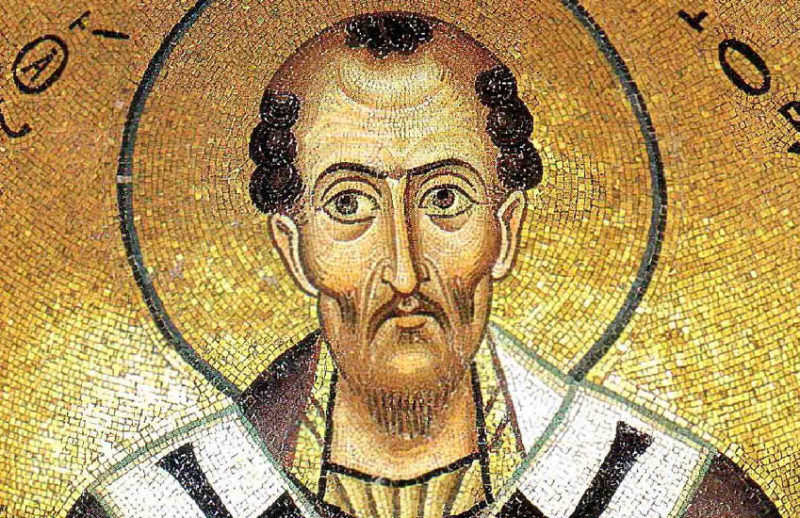
St. John Chrysostom, Eminence, KY

Readings at Mass

Liturgical Colour: White. Year: B(II).

Readings for the feria

Readings for the memorial

These are the readings for the feria


First reading
1 Corinthians 9:16-19,22-27

We go into strict training, like fighters at the games

I do not boast of preaching the gospel, since it is a duty which has been laid on me; I should be punished if I did not preach it! If I had chosen this work myself, I might have been paid for it, but as I have not, it is a responsibility which has been put into my hands. Do you know what my reward is? It is this: in my preaching, to be able to offer the Good News free, and not insist on the rights which the gospel gives me.
  So though I am not a slave of any man I have made myself the slave of everyone so as to win as many as I could. I made myself all things to all men in order to save some at any cost; and I still do this, for the sake of the gospel, to have a share in its blessings.
  All the runners at the stadium are trying to win, but only one of them gets the prize. You must run in the same way, meaning to win. All the fighters at the games go into strict training; they do this just to win a wreath that will wither away, but we do it for a wreath that will never wither. That is how I run, intent on winning; that is how I fight, not beating the air. I treat my body hard and make it obey me, for, having been an announcer myself, I should not want to be disqualified.

Responsorial Psalm
Psalm 83(84):3-6,12
How lovely is your dwelling-place, Lord, God of hosts.
My soul is longing and yearning,
  is yearning for the courts of the Lord.
My heart and my soul ring out their joy
  to God, the living God.
How lovely is your dwelling-place, Lord, God of hosts.
The sparrow herself finds a home
  and the swallow a nest for her brood;
she lays her young by your altars,
  Lord of hosts, my king and my God.
How lovely is your dwelling-place, Lord, God of hosts.
They are happy, who dwell in your house,
  for ever singing your praise.
They are happy, whose strength is in you,
  in whose hearts are the roads to Zion.
How lovely is your dwelling-place, Lord, God of hosts.
For the Lord God is a rampart, a shield;
  he will give us his favour and glory.
The Lord will not refuse any good
  to those who walk without blame.
How lovely is your dwelling-place, Lord, God of hosts.

Gospel AcclamationPs147:12,15
Alleluia, alleluia!
O praise the Lord, Jerusalem!
He sends out his word to the earth.
Alleluia!
Or:Jn17:17
Alleluia, alleluia!
Your word is truth, O Lord:
consecrate us in the truth.
Alleluia!

GospelLuke 6:39-42

Can the blind lead the blind?

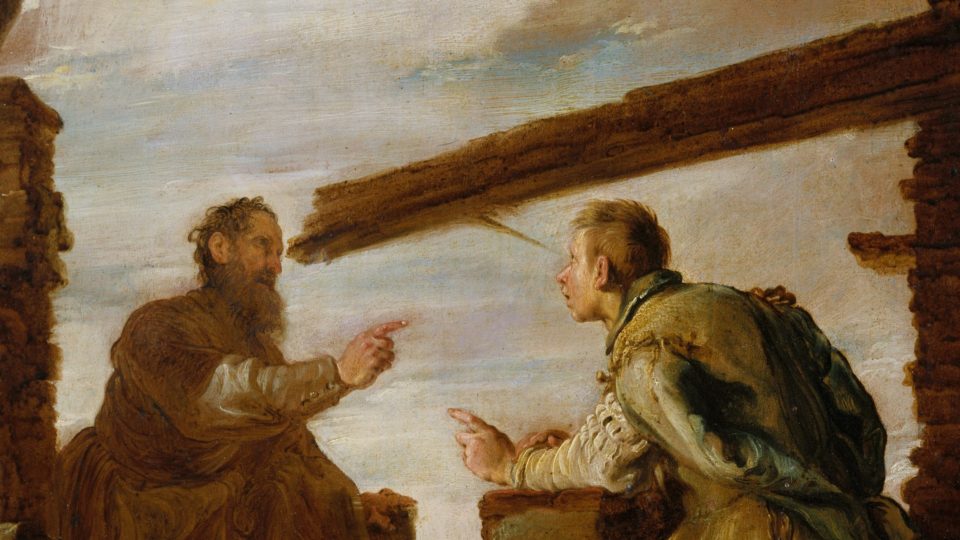
Jesus told a parable to the disciples: ‘Can one blind man guide another? Surely both will fall into a pit? The disciple is not superior to his teacher; the fully trained disciple will always be like his teacher. Why do you observe the splinter in your brother’s eye and never notice the plank in your own? How can you say to your brother, “Brother, let me take out the splinter that is in your eye,” when you cannot see the plank in your own? Hypocrite! Take the plank out of your own eye first, and then you will see clearly enough to take out the splinter that is in your brother’s eye.’

Continue

These are the readings for the memorial


First reading
Ephesians 4:1-7,11-13

We are all to come to unity, fully mature in the knowledge of the Son of God

I, the prisoner in the Lord, implore you to lead a life worthy of your vocation. Bear with one another charitably, in complete selflessness, gentleness and patience. Do all you can to preserve the unity of the Spirit by the peace that binds you together. There is one Body, one Spirit, just as you were all called into one and the same hope when you were called. There is one Lord, one faith, one baptism, and one God who is Father of all, over all, through all and within all.
  Each one of us, however, has been given his own share of grace, given as Christ allotted it. To some, his gift was that they should be apostles; to some, prophets; to some, evangelists; to some, pastors and teachers; so that the saints together make a unity in the work of service, building up the body of Christ. In this way we are all to come to unity in our faith and in our knowledge of the Son of God, until we become the perfect Man, fully mature with the fullness of Christ himself.

Responsorial Psalm
Psalm 39(40):2,4,7-10
Here I am, Lord! I come to do your will.
I waited, I waited for the Lord
  and he stooped down to me;
  he heard my cry.
He put a new song into my mouth,
  praise of our God.
Here I am, Lord! I come to do your will.
You do not ask for sacrifice and offerings,
  but an open ear.
You do not ask for holocaust and victim.
  Instead, here am I.
Here I am, Lord! I come to do your will.
In the scroll of the book it stands written
  that I should do your will.
My God, I delight in your law
  in the depth of my heart.
Here I am, Lord! I come to do your will.
Your justice I have proclaimed
  in the great assembly.
My lips I have not sealed;
  you know it, O Lord.
Here I am, Lord! I come to do your will.

Gospel Acclamation
Alleluia, alleluia!
The seed is the word of God, Christ the sower;
whoever finds this seed will remain for ever.
Alleluia!

Gospel
Mark 4:1-10,13-20

The parable of the sower

Jesus began to teach by the lakeside, but such a huge crowd gathered round him that he got into a boat on the lake and sat there. The people were all along the shore, at the water’s edge. He taught them many things in parables, and in the course of his teaching he said to them, ‘Listen! Imagine a sower going out to sow. Now it happened that, as he sowed, some of the seed fell on the edge of the path, and the birds came and ate it up. Some seed fell on rocky ground where it found little soil and sprang up straightaway, because there was no depth of earth; and when the sun came up it was scorched and, not having any roots, it withered away. Some seed fell into thorns, and the thorns grew up and choked it, and it produced no crop. And some seeds fell into rich soil and, growing tall and strong, produced crop; and yielded thirty, sixty, even a hundredfold.’ And he said, ‘Listen, anyone who has ears to hear!’
  When he was alone, the Twelve, together with the others who formed his company, asked what the parables meant.
  He said to them, ‘Do you not understand this parable? Then how will you understand any of the parables? What the sower is sowing is the word. Those on the edge of the path where the word is sown are people who have no sooner heard it than Satan comes and carries away the word that was sown in them. Similarly, those who receive the seed on patches of rock are people who, when first they hear the word, welcome it at once with joy. But they have no root in them, they do not last; should some trial come, or some persecution on account of the word, they fall away at once. Then there are others who receive the seed in thorns. These have heard the word, but the worries of this world, the lure of riches and all the other passions come in to choke the word, and so it produces nothing. And there are those who have received the seed in rich soil: they hear the word and accept it and yield a harvest, thirty and sixty and a hundredfold.’

Continue


Christian Art

Illustration

Each day, The Christian Art website gives a picture and reflection on the Gospel of the day.

The readings on this page are from the Jerusalem Bible, which is used at Mass in most of the English-speaking world. The New American Bible readings, which are used at Mass in the United States, are available in the Universalis apps, programs and downloads.

You can also view this page with the Gospel in Greek and English.


TOPICS: Catholic; General Discusssion; Prayer; Worship
KEYWORDS: catholic; lk6; mk4; ordinarytime; prayer
For your reading, reflection, faith-sharing, comments, questions, discussion.

1 posted on 09/13/2024 12:04:52 PM PDT by annalex
[ Post Reply | Private Reply | View Replies]

To: nickcarraway; NYer; ELS; Pyro7480; livius; ArrogantBustard; Catholicguy; RobbyS; marshmallow; ...

Alleluia Ping

Please FReepmail me to get on/off the Alleluia Ping List.


2 posted on 09/13/2024 12:05:49 PM PDT by annalex (fear them not)
[ Post Reply | Private Reply | To 1 | View Replies]

To: annalex
My dad is back in the hospital. [JimRob update at 242]
Jim still needs our prayers. Thread 2
Prayer thread for Salvation's recovery
Pray for Ukraine
Prayer thread for Fidelis' recovery
Update on Jim Robinson's health issues
3 posted on 09/13/2024 12:06:09 PM PDT by annalex (fear them not)
[ Post Reply | Private Reply | To 2 | View Replies]

To: All

KEYWORDS: catholic; lk6; mk4; ordinarytime; prayer;


4 posted on 09/13/2024 12:08:25 PM PDT by annalex (fear them not)
[ Post Reply | Private Reply | To 3 | View Replies]

To: annalex
Luke
 English: Douay-RheimsLatin: Vulgata ClementinaGreek NT: Byzantine/Majority Text (2000)
 Luke 6
39And he spoke also to them a similitude: Can the blind lead the blind? do they not both fall into the ditch? Dicebat autem illis et similitudinem : Numquid potest cæcus cæcum ducere ? nonne ambo in foveam cadunt ?ειπεν δε παραβολην αυτοις μητι δυναται τυφλος τυφλον οδηγειν ουχι αμφοτεροι εις βοθυνον πεσουνται
40The disciple is not above his master: but every one shall be perfect, if he be as his master. Non est discipulus super magistrum : perfectus autem omnis erit, si sit sicut magister ejus.ουκ εστιν μαθητης υπερ τον διδασκαλον αυτου κατηρτισμενος δε πας εσται ως ο διδασκαλος αυτου
41And why seest thou the mote in thy brother's eye: but the beam that is in thy own eye thou considerest not? Quid autem vides festucam in oculo fratris tui, trabem autem, quæ in oculo tuo est, non consideras ?τι δε βλεπεις το καρφος το εν τω οφθαλμω του αδελφου σου την δε δοκον την εν τω ιδιω οφθαλμω ου κατανοεις
42Or how canst thou say to thy brother: Brother, let me pull the mote out of thy eye, when thou thyself seest not the beam in thy own eye? Hypocrite, cast first the beam out of thy own eye; and then shalt thou see clearly to take out the mote from thy brother's eye. aut quomodo potes dicere fratri tuo : Frater, sine ejiciam festucam de oculo tuo : ipse in oculo tuo trabem non videns ? Hypocrita, ejice primum trabem de oculo tuo : et tunc perspicies ut educas festucam de oculo fratris tui.η πως δυνασαι λεγειν τω αδελφω σου αδελφε αφες εκβαλω το καρφος το εν τω οφθαλμω σου αυτος την εν τω οφθαλμω σου δοκον ου βλεπων υποκριτα εκβαλε πρωτον την δοκον εκ του οφθαλμου σου και τοτε διαβλεψεις εκβαλειν το καρφος το εν τω οφθαλμω του αδελφου σου

5 posted on 09/13/2024 12:09:01 PM PDT by annalex (fear them not)
[ Post Reply | Private Reply | To 4 | View Replies]

To: annalex

Catena Aurea by St. Thomas Aguinas

6:39–42

39. And he spake a parable unto them, Can the blind lead the blind? shall they not both fall into the ditch?

40. The disciple is not above his master: but every one that is perfect shall be as his master.

41. And why beholdest thou the mote that is in thy brother’s eye, but perceivest not the beam that is in thine own eye?

42. Either how canst thou say to thy brother, Brother, let me pull out the mote that is in thine eye, when thou thyself beholdest not the beam that is in thine own eye? Thou hypocrite, cast out first the beam out of thine own eye, and then shalt thou see clearly to pull out the mote that is in thy brother’s eye.

CYRIL OF ALEXANDRIA. The Lord added to what had gone before a very necessary parable, as it is said, And he spake a parable to them, for His disciples were the future teachers of the world, and it therefore became them to know the way of a virtuous life, having their minds illuminated as it were by a divine brightness, that they should not be blind leaders of the blind. And then he adds, Can the blind lead the blind? But if any should chance to attain unto an equal degree of virtue with their teachers, let them stand in the measure of their teachers, and follow their footsteps. Hence it follows, The disciple is not above his master. Hence also Paul says, Be ye also followers of me, as I am of Christ (1 Cor. 1:11.). Since Christ therefore judged not, why judgest thou? for He came not to judge the world, but to shew mercy.

THEOPHYLACT. Or else, If thou judgest another, and in the very same way sinnest thyself, art not thou like to the blind leading the blind? For how canst thou lead him to good when thou also thyself committest sin? For the disciple is not above his master. If therefore thou sinnest, who thinkest thyself a master and guide, where will he be who is taught and led by thee? For he will be the perfect disciple who is as his master.

BEDE. Or the sense of this sentence depends upon the former, in which we are enjoined to give alms, and forgive injuries. If, says He, anger has blinded thee against the violent, and avarice against the grasping, how canst thou with thy corrupt heart cure his corruption? If even thy Master Christ, who as God might revenge His injuries, chose rather by patience to render His persecutors more merciful, it is surely binding on His disciples, who are but men, to follow the same rule of perfection.

AUGUSTINE. (de Qu. Ev. l. ii. q. 9.) Or, He has added the words, Can the blind, lead the blind, in order that they might not expect to receive from the Levites that measure of which He says, They shall give into thy bosom, because they gave tithes to them. And these He calls blind, because they received not the Gospel, that the people might the rather now begin to hope for that reward through the disciples of the Lord, whom wishing to point out as His imitators, He added, The disciple is not above his master.

THEOPHYLACT. But the Lord introduces another parable taken from the same figure, as follows, But why seest thou the mote (that is, the slight fault) which is in thy brother’s eye, but the beam which is in thine own eye (that is, thy great sin) thou regardest not?

BEDE. Now this has reference to the previous parable, in which He forewarned them that the blind cannot be led by the blind, that is, the sinner corrected by the sinner. Hence it is said, Or, how canst thou say to thy brother, Brother let me cast out the mote that is in thine eye, if thou seest not the beam that is in thine own eye?

CYRIL OF ALEXANDRIA. As if He said, How can he who is guilty of grievous sins, (which He calls the beam,) condemn him who has sinned only slightly, or even in some cases not at all? For this the mote signifies.

THEOPHYLACT. But these words are applicable to all, and especially to teachers, who while they punish the least sins of those who are put under them, leave their own unpunished. Wherefore the Lord calls them hypocrites, because to this end judge they the sins of others, that they themselves might seem just. Hence it follows, Thou hypocrite, first cast the beam out of thine own eye, &c.

CYRIL OF ALEXANDRIA. That is to say, first shew thyself clean from great sins, and then afterwards shalt thou give counsel to thy neighbour, who is guilty only of slight sins.

BASIL. (Hom. 9, in Hexameron.) In truth, self knowledge seems the most important of all. For not only the eye, looking at outward things, fails to exercise its sight upon itself, but our understanding also, though very quick in apprehending the sin of another, is slow to perceive its own defects.

Catena Aurea Luke 6


6 posted on 09/13/2024 12:09:52 PM PDT by annalex (fear them not)
[ Post Reply | Private Reply | To 5 | View Replies]

To: annalex


Christ separates the lambs from the goats

early 6th-century
the Church of Appolinare Nuovo
Ravenna

7 posted on 09/13/2024 12:10:09 PM PDT by annalex (fear them not)
[ Post Reply | Private Reply | To 6 | View Replies]

To: annalex
Mark
 English: Douay-RheimsGreek NT: Byzantine/Majority Text (2000)Latin: Vulgata Clementina
 Mark 4
1AND again he began to teach by the sea side; and a great multitude was gathered together unto him, so that he went up into a ship, and sat in the sea; and all the multitude was upon the land by the sea side. και παλιν ηρξατο διδασκειν παρα την θαλασσαν και συνηχθη προς αυτον οχλος πολυς ωστε αυτον εμβαντα εις το πλοιον καθησθαι εν τη θαλασση και πας ο οχλος προς την θαλασσαν επι της γης ηνEt iterum cœpit docere ad mare : et congregata est ad eum turba multa, ita ut navim ascendens sederet in mari, et omnis turba circa mare super terram erat :
2And he taught them many things in parables, and said unto them in his doctrine: και εδιδασκεν αυτους εν παραβολαις πολλα και ελεγεν αυτοις εν τη διδαχη αυτουet docebat eos in parabolis multa, et dicebat illis in doctrina sua :
3Hear ye: Behold, the sower went out to sow. ακουετε ιδου εξηλθεν ο σπειρων του σπειραιAudite : ecce exiit seminans ad seminandum.
4And whilst he sowed, some fell by the way side, and the birds of the air came and ate it up. και εγενετο εν τω σπειρειν ο μεν επεσεν παρα την οδον και ηλθεν τα πετεινα και κατεφαγεν αυτοEt dum seminat, aliud cecidit circa viam, et venerunt volucres cæli, et comederunt illud.
5And other some fell upon stony ground, where it had not much earth; and it shot up immediately, because it had no depth of earth. αλλο δε επεσεν επι το πετρωδες οπου ουκ ειχεν γην πολλην και ευθεως εξανετειλεν δια το μη εχειν βαθος γηςAliud vero cecidit super petrosa, ubi non habuit terram multam : et statim exortum est, quoniam non habebat altitudinem terræ :
6And when the sun was risen, it was scorched; and because it had no root, it withered away. ηλιου δε ανατειλαντος εκαυματισθη και δια το μη εχειν ριζαν εξηρανθηet quando exortus est sol, exæstuavit : et eo quod non habebat radicem, exaruit.
7And some fell among thorns; and the thorns grew up, and choked it, and it yielded no fruit. και αλλο επεσεν εις τας ακανθας και ανεβησαν αι ακανθαι και συνεπνιξαν αυτο και καρπον ουκ εδωκενEt aliud cecidit in spinas : et ascenderunt spinæ, et suffocaverunt illud, et fructum non dedit.
8And some fell upon good ground; and brought forth fruit that grew up, and increased and yielded, one thirty, another sixty, and another a hundred. και αλλο επεσεν εις την γην την καλην και εδιδου καρπον αναβαινοντα και αυξανοντα και εφερεν εν τριακοντα και εν εξηκοντα και εν εκατονEt aliud cecidit in terram bonam : et dabat fructum ascendentem et crescentem, et afferebat unum triginta, unum sexaginta, et unum centum.
9And he said: He that hath ears to hear, let him hear. και ελεγεν ο εχων ωτα ακουειν ακουετωEt dicebat : Qui habet aures audiendi, audiat.
10And when he was alone, the twelve that were with him asked him the parable. οτε δε εγενετο καταμονας ηρωτησαν αυτον οι περι αυτον συν τοις δωδεκα την παραβοληνEt cum esset singularis, interrogaverunt eum hi qui cum eo erant duodecim, parabolam.
11And he said to them: To you it is given to know the mystery of the kingdom of God: but to them that are without, all things are done in parables: και ελεγεν αυτοις υμιν δεδοται γνωναι το μυστηριον της βασιλειας του θεου εκεινοις δε τοις εξω εν παραβολαις τα παντα γινεταιEt dicebat eis : Vobis datum est nosse mysterium regni Dei : illis autem, qui foris sunt, in parabolis omnia fiunt :
12That seeing they may see, and not perceive; and hearing they may hear, and not understand: lest at any time they should be converted, and their sins should be forgiven them. ινα βλεποντες βλεπωσιν και μη ιδωσιν και ακουοντες ακουωσιν και μη συνιωσιν μηποτε επιστρεψωσιν και αφεθη αυτοις τα αμαρτηματαut videntes videant, et non videant : et audientes audiant, et non intelligant : nequando convertantur, et dimittantur eis peccata.
13And he saith to them: Are you ignorant of this parable? and how shall you know all parables? και λεγει αυτοις ουκ οιδατε την παραβολην ταυτην και πως πασας τας παραβολας γνωσεσθεEt ait illis : Nescitis parabolam hanc ? Et quomodo omnes parabolas cognoscetis ?
14He that soweth, soweth the word. ο σπειρων τον λογον σπειρειQui seminat, verbum seminat.
15And these are they by the way side, where the word is sown, and as soon as they have heard, immediately Satan cometh and taketh away the word that was sown in their hearts. ουτοι δε εισιν οι παρα την οδον οπου σπειρεται ο λογος και οταν ακουσωσιν ευθεως ερχεται ο σατανας και αιρει τον λογον τον εσπαρμενον εν ταις καρδιαις αυτωνHi autem sunt, qui circa viam, ubi seminatur verbum, et cum audierint, confestim venit Satanas, et aufert verbum, quod seminatum est in cordibus eorum.
16And these likewise are they that are sown on the stony ground: who when they have heard the word, immediately recieve it with joy. και ουτοι εισιν ομοιως οι επι τα πετρωδη σπειρομενοι οι οταν ακουσωσιν τον λογον ευθεως μετα χαρας λαμβανουσιν αυτονEt hi sunt similiter, qui super petrosa seminantur : qui cum audierint verbum, statim cum gaudio accipiunt illud :
17And they have no root in themselves, but are only for a time: and then when tribulation and persecution ariseth for the word they are presently scandalized. και ουκ εχουσιν ριζαν εν εαυτοις αλλα προσκαιροι εισιν ειτα γενομενης θλιψεως η διωγμου δια τον λογον ευθεως σκανδαλιζονταιet non habent radicem in se, sed temporales sunt : deinde orta tribulatione et persecutione propter verbum, confestim scandalizantur.
18And others there are who are sown among thorns: these are they that hear the word, και ουτοι εισιν οι εις τας ακανθας σπειρομενοι οι τον λογον ακουοντεςEt alii sunt qui in spinas seminantur : hi sunt qui verbum audiunt,
19And the cares of the world, and the deceitfulness of riches, and the lusts after other things entering in choke the word, and it is made fruitless. και αι μεριμναι του αιωνος τουτου και η απατη του πλουτου και αι περι τα λοιπα επιθυμιαι εισπορευομεναι συμπνιγουσιν τον λογον και ακαρπος γινεταιet ærumnæ sæculi, et deceptio divitiarum, et circa reliqua concupiscentiæ introëuntes suffocant verbum, et sine fructu efficitur.
20And these are they who are sown upon the good ground, who hear the word, and receive it, and yield fruit, the one thirty, another sixty, and another a hundred. και ουτοι εισιν οι επι την γην την καλην σπαρεντες οιτινες ακουουσιν τον λογον και παραδεχονται και καρποφορουσιν εν τριακοντα και εν εξηκοντα και εν εκατονEt hi sunt qui super terram bonam seminati sunt, qui audiunt verbum, et suscipiunt, et fructificant, unum triginta, unum sexaginta, et unum centum.

8 posted on 09/13/2024 12:12:49 PM PDT by annalex (fear them not)
[ Post Reply | Private Reply | To 7 | View Replies]

To: annalex

Catena Aurea by St. Thomas Aguinas

4:1–20

1. And he began again to teach by the sea side: and there was gathered unto him a great multitude, so that he entered into a ship, and sat in the sea; and the whole multitude was by the sea on the land.

2. And he taught them many things by parables, and said unto them in his doctrine,

3. Hearken; Behold, there went out a sower to sow:

4. And it came to pass, as he sowed, some fell by the way side, and the fowls of the air came and devoured it up.

5. And some fell on stony ground, where it had not much earth; and immediately it sprang up, because it had no depth of earth:

6. But when the sun was up, it was scorched; and because it had no root, it withered away.

7. And some fell among thorns, and the thorns grew up, and choked it, and it yielded no fruit.

8. And other fell on good ground, and did yield fruit that sprang up and increased; and brought forth, some thirty, and some sixty, and some an hundred.

9. And he said unto them, He that hath ears to hear, let him hear.

10. And when he was alone, they that were about him with the twelve asked of him the parable.

11. And he said unto them, Unto you it is given to know the mystery of the kingdom of God: but unto them that are without, all these things are done in parables:

12. That seeing they may see, and not perceive; and hearing they may hear, and not understand; lest at any time they should be converted, and their sins should be forgiven them.

13. And he said unto them, Know ye not this parable? and how then will ye know all parables?

14. The sower soweth the word.

15. And these are they by the way side, where the word is sown; but when they have heard, Satan cometh immediately, and taketh away the word that was sown in their hearts.

16. And these are they likewise which are sown on stony ground; who, when they have heard the word, immediately receive it with gladness;

17. And have no root in themselves, and so endure but for a time: afterward, when affliction or persecution ariseth for the word’s sake, immediately they are offended.

18. And these are they which are sown among thorns; such as hear the word,

19. And the cares of this world, and the deceitfulness of riches, and the lusts of other things entering in, choke the word, and it becometh unfruitful.

20. And these are they which are sown on good ground; such as hear the word, and receive it, and bring forth fruit, some thirty-fold, some sixty, and some an hundred.

THEOPHYLACT. Although the Lord appears in the transactions mentioned above to neglect His mother, nevertheless He honours her; since on her account He goes forth about the borders of the sea: wherefore it is said, And Jesus began to teach again by the sea-side, &c.

BEDE. (in Marc. i. 18) For if we look into the Gospel of Matthew, it appears that this same teaching of the Lord at the sea, was delivered on the same day as the former. For after the conclusion of the first sermon, Matthew immediately subjoins, saying, The same day went Jesus out of the house, and sat by the sea-side.

PSEUDO-JEROME. But He began to teach at the sea, that the place of His teaching might point out the bitter feelings and instability of His hearers.

BEDE. (ubi sup.) After leaving the house also, He began to teach at the sea, because, quitting the synagogue, He came to gather together the multitude of the Gentile people by the Apostles. Wherefore it continues: And there was gathered unto him a great multitude, so that he entered into a ship, and sat in the sea.

CHRYSOSTOM. (Hom. in Matt. 44) Which we must understand was not done without a purpose, but that He might not leave any one behind Him, but have all His hearers before His face.

BEDE. Now this ship shewed in a figure the Church, to be built in the midst of the nations, in which the Lord consecrates for Himself a beloved dwelling-place. It goes on: And he taught them many things by parables.

PSEUDO-JEROME. A parable is a comparison made between things discordant by nature, under some similitude. For parable is the Greek for a similitude, when we point out by some comparisons what we would have understood. In this way we say an iron man, when we desire that he should be understood to be hardy and strong; when to be swift, we compare him to winds and birds. But He speaks to the multitudes in parables, with His usual providence, that those who could not take in heavenly things, might conceive what they heard by an earthly similitude.

CHRYSOSTOM. (ubi sup.) For He rouses the minds of His hearers by a parable, pointing out objects to the sight, to make His discourse more manifest.

THEOPHYLACT. And in order to rouse the attention of those who heard, the first parable that He proposes is concerning the seed, which is the word of God. Wherefore it goes on, And he said to them in his doctrine. Not in that of Moses, nor of the Prophets, because He preaches His own Gospel. Hearken: behold, there went out a sower to sow. Now the Sower is Christ.

CHRYSOSTOM. (ubi sup.) Not that He went out in space, Who is present in all space, and fills all, but in the form and economy by which He is made more near to us through the clothing of flesh. For since we were not able to go to Him, because sins impeded our path, He went out to us. But He went out, preaching in order to sow the word of piety, which He spake abundantly. Now He does not needlessly repeat the same word, when He says, A sower went out to sow, for sometimes a sower goes out that he may break up land for tillage, or to pull up weeds, or for some other work. But this one went out to sow.

BEDE. (in Marc. i. 19) Or else, He went out to sow, when after calling to His faith the elect portion of the synagogue, He poured out the gifts of His grace in order to call the Gentiles also.

CHRYSOSTOM. (ubi sup.) Further, as a sower does not make a distinction in the ground which is beneath him, but simply and without distinction puts in the seed, so also He Himself addresses all. And to signify this, He says, And as he sowed, some Jell by the way-side.

THEOPHYLACT. Take notice, that He says not that He threw it in the way, but that it fell, for a sower, as far as he can, throws it into good ground, but if the ground be bad, it corrupts the seed. Now the way is Christ; but infidels are by the way-side, that is, out of Christ.

BEDE. (ubi sup.) Or else, the way is a mind which is a path for bad thoughts, preventing the seed of the word from growing in it. And therefore whatsoever good seed comes in contact with such a way, perishes, and is carried off by devils. Wherefore there follows, And the fowls of the air came and devoured it up. And well are the devils called fowls of the air, either because they are of a heavenly and spiritual origin, or because they dwell in the air. Or else, those who are about the way are negligent and slothful men. It goes on: And some fell on stony ground. He calls stone, the hardness of a wanton mind; He calls ground, the inconstancy of a soul in its obedience; and sun, the heat of a raging persecution. Therefore the depth of earth, which ought to have received the seed of God, is the honesty of a mind trained in heavenly discipline, and regularly brought up in obedience to the Divine words. But the stony places, which have no strength for fixing the root firmly, are those breasts which are delighted only with the sweetness of the word which they hear, and for a time with the heavenly promises, but in a season of temptation fall away, for there is too little of healthful desire in them to conceive the seed of life.

THEOPHYLACT. Or, the stony persons are those who adhering a little to the rock, that is, to Christ, up to a short time, receive the word, and afterwards, falling back, cast it away. It goes on: And some fell among thorns; by which are marked souls which care for many things. For thorns are cares.

CHRYSOSTOM. (ubi sup.) But further He mentions good ground, saying, And other fell on good ground. For the difference of the fruits follows the quality of the ground. But great is the love of the Sower for men, for the first He commends, and rejects not the second, and gives a place to the third.

THEOPHYLACT. See also how the bad are the greatest number, and the few are those who are saved, for the fourth part of the ground is found to be saved.

CHRYSOSTOM. (ubi sup.) This, however, the greater portion of the seed is not lost through the fault of the owner, but of the earth, which received it, that is, of the soul, which hears. And indeed the real husbandman, if he sowed in this way, would be rightly blamed; for he is not ignorant that rock, or the road, or thorny ground, cannot become fertile. But in spiritual things it is not so; for there it is possible that stony ground may become fertile; and that the road should not be trodden down, and that the thorns may be destroyed, for if this could not take place, he would not have sown there. By this therefore He gives to us hope of repentance. It goes on, And he said unto them, He that hath ears to hear, let him hear.

BEDE. (ubi sup.) As often as this is inserted in the Gospel or in the Apocalypse of John, that which is spoken is mystical, and is pointed out as healthful to be heard and learnt. For the ears by which they are heard belong to the heart, and the ears by which men obey and do what is commanded, are those of an interior sense. There follows, And when he was alone, the twelve that were with him asked of him the parable; and he said unto them, Unto you it is given to know the mystery of the kingdom of God, but to them that are without all things are done in parables.

PSEUDO-CHRYSOSTOM. (Vict. Ant. c Cat. in Marc.) As if He said unto them, You that are worthy to be taught all things which are fitted for teaching, shall learn the manifestation of parables; but I use parables with them who are unworthy to learn, because of their wickedness. For it was right that they who did not hold fast their obedience to that law which they had received, should not have any share in a new teaching, but should be estranged from both; for He shewed by the obedience of His disciples, that, on the other hand, the others were become unworthy of mystical doctrine. But afterwards, by bringing in a voice from prophecy, He confounds their wickedness, as having been long before reproved; wherefore it goes on, that seeing they might see, and not perceive, &c. (Isa. 6:9) as if He said, that the prophecy might be fulfilled which foretells these things.

THEOPHYLACT. For it was God Who made them to see, that is, to understand what is good. But they themselves see not, of their own will making themselves not to see, lest they should be converted and correct themselves, as if they were displeased at their own salvation. It goes on, Lest at any time they should be converted, and their sins be forgiven them.

PSEUDO-CHRYSOSTOM. (Vict. Ant. e Cat. in Marc.) Thus, therefore, they see and they do not see, they hear and do not understand, for their seeing and hearing comes to them from God’s grace, but their seeing and not understanding comes to them from their unwillingness to receive grace, and closing their eyes, and pretending that they could not see; neither do they acquiesce in what was said, and so are not changed as to their sins by hearing and seeing, but rather are made worse.

THEOPHYLACT. Or we may understand in a different way His speaking to the rest in parables, that seeing they might not perceive, and hearing, not understand. For God gives sight and understanding to men who seek for them, but the rest He blinds, lest it become a greater accusation against them, that though they understood, they did not choose to do what they ought. Wherefore it goes on, Lest at any time they should be, &c.

AUGUSTINE. (Quæst. 14, in Matt.) Or else they deserved this, their not understanding, and yet this in itself was done in mercy to them, that they might know their sins, and, being converted, merit pardon.

BEDE. (ubi sup.) To those then who are without, all things are done in parables, that is, both the actions and the words of the Saviour, because neither in those miracles which He was working, nor in those mysteries which He preached, were they able to acknowledge Him as God. Therefore they are not able to attain to the remission of their sins.

PSEUDO-CHRYSOSTOM. (Vict. Ant. e Cat. in Marc.) But His speaking to them only in parables, and yet not leaving off speaking to them entirely, shews that to those who are placed near to what is good, though they may have no good in themselves, still good is shewn disguised. But when a man approaches it with reverence and a right heart, he wins for himself an abundant revelation of mysteries; when on the contrary his thoughts are not sound, he will be neither made worthy of those things which are easy to many men, nor even of hearing them. There follows, And he said unto them, Know ye not this parable, how then shall ye know all parables?

PSEUDO-JEROME. For it was necessary that they to whom He spoke in parables should ask for what they did not understand, and learn by the Apostle whom they despised, the mystery of the kingdom which they themselves had not.

GLOSS. (non occ.) And for this reason, the Lord in saying these things, shews that they ought to understand both this first, and all following miracles. Wherefore explaining it, He goes on, The sower soweth the word.

CHRYSOSTOM. (in Matt. Hom. 44.) And indeed the prophet has compared the teaching of the people to the planting of a vine; (Isa. 5) in this place however it is compared to sowing, to shew that obedience is now shorter and more easy, and will sooner yield fruit.

BEDE. (ubi Sup.) But in this exposition of the Lord there is embraced the whole range of those who might hear the words of truth, but are unable to attain to salvation. For there are some to whom no faith, no intellect, nay no opportunity of trying its usefulness, can give a perception of the word which they hear; of whom He says, And these are by the wayside. For unclean spirits take away at once the word committed to their hearts, as birds carry away the seed of the trodden way. There are some who both experience its usefulness and feel a desire for it, but some of them the calamities of this world frighten, and others its prosperity allures, so that they do not attain to that which they approve. Of the first of whom He says, And these are they who fell on stony ground; of the latter, And these are they which are sown among thorns. But riches are called thorns, because they tear the soul with the piercing of its own thoughts, and after bringing it to sin, they, as one may say, make it bleed by inflicting a wound. Again He says, And the toil of this world, and the deceitfulness of riches; for the man who is deceived by an empty desire of riches must soon be afflicted by the toils of continual cares. He adds, And the lusts of other things; because, whosoever despises the commandments of God, and wanders away lustfully seeking other things, is unable to attain to the joy of beatitude. And concupiscences of this sort choke the word, because they do not allow a good desire to enter into the heart, and, as it were, stifle the entrance of vital breath. There are, however, excepted from these different classes of men, the Gentiles who do not even have grace to hear the words of life.

THEOPHYLACT. Further, of those who receive the seed as they ought there are three degrees. Wherefore it goes on, And these are they who are sown on good ground. Those who bear fruit an hundred-fold are those who lead a perfect and an obedient life, as virgins and hermits. Those who bear fruit sixty-fold are those who are in the mean as continent personsr and those who are living in convents. Those who bear thirty-fold are those who though weak indeed, bear fruit according to their own virtue, as laymen and married persons.

BEDE. (ubi sup.) Or he bears thirty-fold, who instills into the minds of the elect faith in the Holy Trinity; sixty-fold, who teaches the perfection of good works; a hundred-fold, who shews the rewards of the heavenly kingdom. For in counting a hundred, we pass on to the right hands; therefore that number is fitly made to signify everlasting happiness. But the good ground is the conscience of the elect, which does the contrary to all the former three, which both receives with willingness the seed of the word committed to it, and keeps it when received up to the season of fruit.

PSEUDO-JEROME. Or else the fruits of the earth are contained in thirty, sixty, and a hundred-fold, that is, in the Law, the Prophets, and the Gospel.

Catena Aurea Mark 4


9 posted on 09/13/2024 12:14:10 PM PDT by annalex (fear them not)
[ Post Reply | Private Reply | To 8 | View Replies]

To: annalex


The Parable of the Sower

Abel Grimmer (c. 1570 - c. 1619)

The Bowes Museum

10 posted on 09/13/2024 12:14:39 PM PDT by annalex (fear them not)
[ Post Reply | Private Reply | To 9 | View Replies]

To: annalex

Saint of the Day for September 13

(c. 349 – September 14, 407)


Saint John Chrysostom’s Story

The ambiguity and intrigue surrounding John, the great preacher (his name means “golden-mouthed”) from Antioch, are characteristic of the life of any great man in a capital city. Brought to Constantinople after a dozen years of priestly service in Syria, John found himself the reluctant victim of an imperial ruse to make him bishop in the greatest city of the empire. Ascetic, unimposing but dignified, and troubled by stomach ailments from his desert days as a monk, John became a bishop under the cloud of imperial politics.

If his body was weak, his tongue was powerful. The content of his sermons, his exegesis of Scripture, were never without a point. Sometimes the point stung the high and mighty. Some sermons lasted up to two hours.

His lifestyle at the imperial court was not appreciated by many courtiers. He offered a modest table to episcopal sycophants hanging around for imperial and ecclesiastical favors. John deplored the court protocol that accorded him precedence before the highest state officials. He would not be a kept man.

His zeal led him to decisive action. Bishops who bribed their way into office were deposed. Many of his sermons called for concrete steps to share wealth with the poor. The rich did not appreciate hearing from John that private property existed because of Adam’s fall from grace any more than married men liked to hear that they were bound to marital fidelity just as much as their wives were. When it came to justice and charity, John acknowledged no double standards.

Aloof, energetic, outspoken, especially when he became excited in the pulpit, John was a sure target for criticism and personal trouble. He was accused of gorging himself secretly on rich wines and fine foods. His faithfulness as spiritual director to the rich widow, Olympia, provoked much gossip attempting to prove him a hypocrite where wealth and chastity were concerned. His actions taken against unworthy bishops in Asia Minor were viewed by other ecclesiastics as a greedy, uncanonical extension of his authority.

Theophilus, archbishop of Alexandria, and Empress Eudoxia were determined to discredit John. Theophilus feared the growth in importance of the Bishop of Constantinople and took occasion to charge John with fostering heresy. Theophilus and other angered bishops were supported by Eudoxia. The empress resented his sermons contrasting gospel values with the excesses of imperial court life. Whether intended or not, sermons mentioning the lurid Jezebel and impious Herodias were associated with the empress, who finally did manage to have John exiled. He died in exile in 407.


Reflection

John Chrysostom’s preaching, by word and example, exemplifies the role of the prophet to comfort the afflicted and to afflict the comfortable. For his honesty and courage, he paid the price of a turbulent ministry as bishop, personal vilification, and exile.


Saint John Chrysostom is the Patron Saint of:

Orators
Preachers
Speakers


franciscanmedia.org
11 posted on 09/13/2024 12:17:40 PM PDT by annalex (fear them not)
[ Post Reply | Private Reply | To 10 | View Replies]

To: annalex

12 posted on 09/13/2024 12:18:52 PM PDT by annalex (fear them not)
[ Post Reply | Private Reply | To 11 | View Replies]

To: annalex
NAVARRE BIBLE COMMENTARY (RSV)

Ad Majorem Dei Gloriam (To the Greater Glory of God)

First Reading:

From: 1 Corinthians 9:16-19, 22b-27

St Paul Does Not Exercise This Right
----------------------------------------------
[16] For if I preach the gospel, that gives me no ground for boasting. For necessity is laid upon me. Woe to me if I do not preach the gospel! [17] For if I do this of my own will, I have a reward; but if not of my own will, I am entrusted with a commission. [18] What then is my reward? Just this: that in my preaching I may make the gospel free of charge, not making full use of my right in the gospel.

[19] For though I am free from all men, I have made myself a slave to all, that I might win the more. [22b] I have become all things to all men, that I might by all means save some. [23] I do it all for the sake of the gospel, that I may share in its blessings.

The Need for Asceticism
------------------------------
[24] Do you not know that in a race all the runners compete, but only one receives the prize? So run that you may obtain it. [25] Every athlete exercises self-control in all things. They do it to receive a perishable wreath, but we an imperishable. [26] Well, I do not run aimlessly, I do not box as one beating the air, but I pommel my body and subdue it, lest after preaching to others I myself should be disqualified.

***********************************************************************
Commentary:

15-18. As he already said in v. 12, St Paul makes it clear that he has not exercised so far, nor does he envisage doing so, his right to be supported by the faithful. Conscious that his God-given calling obliges him to preach the Gospel, he prefers to carry out that mission without receiving anything in exchange. His attitude shows both his greatness and his humility: he faces every kind of suffering, privation and danger for the sake of the Gospel (cf. 2 Cor 11:23-33), and yet he considers that he is doing no more than his duty. His policy recalls our Lord's teaching: "When you have done all that is commanded you, say, 'We are unworthy servants; we have only done what was our duty"' (Lk 17:10; cf. Mt 10:8).

To keep to this self-imposed policy, St Paul had to add to all his work of evangelization the additional effort to earn his own living. In the Acts of the Apostles, for example, we learn of his manual work in Corinth (18:3) and Ephesus (20:34); and he himself tells the Thessalonians that "we worked night and day, that we would not burden any of you, while we preached to you the gospel of God" (1 Thess 2:9; 2 Thess 3:9). Only in the case of the Philippians for whom he had very particular affection, did he allow any exception to this rule (cf. Phil 4:15-16). However, at no time did he feel that others were doing wrong in acting differently, "for the Lord had disposed that those who proclaim the Gospel be supported by it [...]. But he [Paul] went further and chose not even to take what was his due" (St Augustine, "Sermon" 46, 4).

16. The Church has often used these words of St Paul to remind the faithful that our Lord has called them to the apostolate through the sacraments of Baptism and Confirmation. The Second Vatican Council explains what this apostolate involves: "The witness of life, however, is not the sole element in the apostolate; the true apostle is on the lookout for occasions of announcing Christ by word, either to unbelievers to draw them towards the faith, or to the faithful to instruct them, strengthen them, incite them to a more fervent life; 'for Christ's love urges us on' (2 Cor 5:14), and in the hearts of all should the Apostle's words find echo: 'Woe to me if I do not preach the Gospel' (1 Cor 9:16)" ("Apostolicam Actuositatem", 6).

St John Chrysostom anticipates the kinds of excuse people might offer to avoid this duty: "There is nothing colder than a Christian who is not concerned about the salvation of others [...]. Do not say, I cannot help others: for, if you are truly a Christian it is impossible not to. Natural objects have properties that cannot be denied; the same is true of what I have just said, because it is the nature of a Christian to act in that way. Do not offend God by deception. If you said that the sun cannot shine, you would be committing an offense against God and making a liar of him. It is easier for the sinner to shine or give warmth than for a Christian to cease to give light: it is easier for that to happen than for light to become darkness. Do not say that that is impossible: what is impossible is the contrary [...]. If we behave in the correct way, everything else will follow as a natural consequence. The light of Christians cannot be hidden, a lamp shining so brightly cannot be hidden" ("Hom. on Acts", 20).

19-23. Because he is one with Christ (cf. Gal 2:20), who "came not to be served but to serve, and to give us his life as a ransom for many" (Mt 20:28), the Apostle makes himself "all things to all men", so generous is he and so eager to save as many souls as possible, at the cost of whatever sacrifice and humiliation might be involved. "A Christian has to be ready to share his life with everyone at all times, giving to everyone the chance to come nearer to Christ Jesus. He has to sacrifice his own desires willingly for the sake of others, without separating people into watertight compartments, without pigeonholing them or putting tags on them as though they were merchandise or insect specimens. A Christian cannot afford to separate himself from others, because, if he did that, his life would be miserably selfish. He must become 'all things to all men, in order to save all men' (1 Cor 9:22)" (St. J. Escriva, "Christ Is Passing By", 124).

Obviously this concern for others should not lead to diluting the truths of faith. Referring to this point, Pope Paul VI wrote: "The apostle's art is a risky one. The desire to come together as brothers must not lead to a watering down or subtracting from the truth. Our dialogue must not weaken our attachment to our faith. In our apostolate we cannot make vague compromises about the principles of faith and action on which our profession of Christianity is based. An immoderate desire to make peace and sink differences at all costs is, fundamentally, a kind of skepticism about the power and content of the Word of God which we desire to preach. Only one who is completely faithful to the teaching of Christ can be an apostle. And only he who lives his Christian life to the full can remain uncontaminated by the errors with which he comes into contact" ("Ecclesi am Suam", 33).

24-27. These similes taken from athletics would have been appropriate for the Corinthians, for their city hosted the biennial Isthmus games. Often, when speaking about the Christian life, the Apostle uses metaphors taken from sport-races (cf. Gal 5:7; Phil 3:12-14; 2 Tim 4:7), combats (1 Tim 6:12; 2 Tim 4:7) and laurel crowns (2 Tim 4:8).

A Christian's life on earth must needs involve interior striving; he should approach this with in a competitive, sportive spirit, facing up to any sacrifices that prove necessary, and not letting obstacles, failures or personal limitation get him down: "We should not be surprised to find, in our body and soul, the needle of pride, sensuality, envy, laziness and the desire to dominate others. This is a fact of life, proven by our personal experience. It is the point of departure and the normal context for winning in this intimate sport, this race toward our Father's house. St Paul says: "I do not run aimlessly, I do not box as one beating the air; but I pommel my body and subdue it, lest after preaching to others I myself should be disqualified' (1 Cor 9:26) [...]. In this adventure of love we should not be depressed by our falls, not even by serious falls, if we go to God in the sacrament of Penance contrite and resolved to improve. A Christian is not a neurotic collector of good behavior reports. Jesus Christ our Lord was moved as much by Peter's repentance after his fall as by John's innocence and faithfulness. Jesus understands our weakness and draws us to himself on an inclined plane. He wants us to make an effort to climb a little each day" ("Christ Is Passing By", 75).

27. While we are in this present life, our perseverance can never be taken for granted: "Let no one feel assured of this gift with an absolute certainty, although all ought to have most secure hope in the help of God. For unless we are unfaithful to his grace, God will bring the good work to perfection, just as he began it, working both the will, and the performance (cf. Phil 2:13)" (Council of Trent, "De Iustificatione", chap. 13). Therefore, the Apostle points out, the ascetical effort which every person must keep on making in this life includes physical mortification and self-control. Helped by God's grace and confident of his mercy, a Christian who makes this effort will be able to say as St Paul did at the end of his life, "there is laid up for me a crown of righteousness which the Lord, the righteous judge, will award to me on that day" (2 Tim 4:8).

13 posted on 09/13/2024 12:54:20 PM PDT by fidelis (Ecce Crucem Domini! Fugite partes adversae! Vicit Leo de tribu Juda, Radix David! Alleluia!)
[ Post Reply | Private Reply | To 12 | View Replies]

Gospel Reading:

From: Luke 6:39-42

Integrity
---------
[39] He (Jesus) told them a parable: "Can a blind man lead a blind man? Will they not both fall into a pit? [40] A disciple is not above his teacher, but every one when he is fully taught will be like his teacher. [41] Why do you see the speck that is in your brother's eye, but do not notice the log that is in your eye? [42] Or how can you say to your brother, `Brother, let me take out the speck that is in your eye,' when you yourself do not see the log that is in your eye? You hypocrite, first take the log out of your own eye, and then you will see clearly to take out the speck that is in your brother's eye."

***********************************************************************
Commentary:

[None for Luke 6:39-42. Below is a commentary on a similar theme from Matthew 7:1-5:]

1. Jesus is condemning any rash judgments we make maliciously or carelessly about our brothers' behavior or feelings or motives. "Think badly and you will not be far wrong" is completely at odds with Jesus' teaching.

In speaking of Christian charity St. Paul lists its main features: "Love is patient and kind [...]. Love bears all things, believes all things, hopes all things, endures all things" (1 Corinthians 13:4, 5, 7). Therefore, "Never think badly of anyone, not even if the words or conduct of the person in question give you good grounds for doing so" (St. J. Escriva, "The Way", 442).

"Let us be slow to judge.--Each one sees things from his own point of view, as his mind, with all its limitations, tells him, and through eyes that are often dimmed and clouded by passion" ("ibid"., 451).

1-2. As elsewhere, the verbs in the passive voice ("you will be judged", "the measure you will be given") have God as their subject, even though He is not explicitly mentioned: "Do not judge OTHERS, that you be not judged BY GOD". Clearly the judgment referred to here is always a condemnatory judgment; therefore, if we do not want to be condemned by God, we should never condemn our neighbor. "God measures out according as we measure out and forgives as we forgive, and comes to our rescue with the same tenderness as He sees us having towards others" (Fray Luis de Leon, "Exposicion Del Libro De Job", chapter 29).

3-5. A person whose sight is distorted sees things as deformed, even though in fact they are not deformed. St. Augustine gives this advice: "Try to acquire those virtues which you think your brothers lack, and you will no longer see their defects, because you will not have them yourselves" ("Enarrationes In Psalmos", 30, 2, 7). In this connection, the saying, "A thief thinks that everyone else is a thief" is in line with this teaching of Jesus.

Besides: "To criticize, to destroy, is not difficult; any unskilled laborer knows how to drive his pick into the noble and finely-hewn stone of a cathedral. To construct: that is what requires the skill of a master" (St. J. Escriva, "The Way", 456).

14 posted on 09/13/2024 12:54:40 PM PDT by fidelis (Ecce Crucem Domini! Fugite partes adversae! Vicit Leo de tribu Juda, Radix David! Alleluia!)
[ Post Reply | Private Reply | To 13 | View Replies]

Click here to go to the My Catholic Life! Devotional thread for today’s Gospel Reading.

15 posted on 09/13/2024 12:55:35 PM PDT by fidelis (Ecce Crucem Domini! Fugite partes adversae! Vicit Leo de tribu Juda, Radix David! Alleluia!)
[ Post Reply | Private Reply | To 14 | View Replies]

Disclaimer: Opinions posted on Free Republic are those of the individual posters and do not necessarily represent the opinion of Free Republic or its management. All materials posted herein are protected by copyright law and the exemption for fair use of copyrighted works.

Free Republic
Browse · Search
Religion
Topics · Post Article

FreeRepublic, LLC, PO BOX 9771, FRESNO, CA 93794
FreeRepublic.com is powered by software copyright 2000-2008 John Robinson